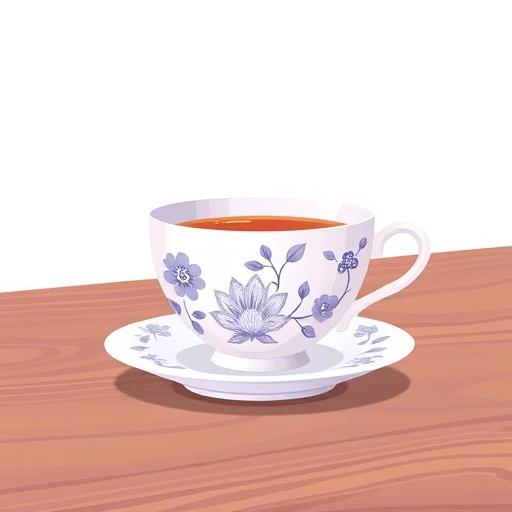
china in 30 Seconds
- China is a massive East Asian country with a rich history and a global economic presence.
- The word 'china' (lowercase) refers to fine, delicate ceramic material often used for expensive dishes.
- When referring to the country, always capitalize the 'C'; for dishes, use a lowercase 'c'.
- In the context of dishes, 'china' is an uncountable noun and usually implies high quality and fragility.
The word china is a fascinating noun in the English language because it functions in two distinct ways: as a proper noun referring to the world's most populous nation in East Asia, and as a common noun referring to high-quality ceramic ware. When we talk about the country, we capitalize it as China. When we refer to the delicate, translucent pottery used for tea sets and fine dining, we use the lowercase china. This dual identity stems from the historical fact that the finest porcelain originally came to Europe from the East, leading people to simply call the material by the name of its place of origin. In modern usage, saying 'the good china' usually implies a set of expensive dishes reserved for special occasions like Thanksgiving, weddings, or formal dinner parties. It suggests a level of fragility and elegance that everyday plastic or stoneware lacks.
- Material Context
- In this context, china is an uncountable noun. You wouldn't say 'I have three chinas,' but rather 'I have three pieces of china' or 'a china set.' It is prized for its strength despite its thin, delicate appearance.
Be careful not to chip the heirloom china while you are washing the dishes after the party.
Geographically and politically, China refers to the People's Republic of China. It is a global superpower with a history spanning thousands of years, known for its rapid economic growth, diverse landscapes, and profound cultural influence. When using the word in this sense, it is always capitalized. It is important for learners to distinguish between these two meanings based on context: if someone says they are 'going to China,' they are traveling; if they are 'buying china,' they are shopping for kitchenware.
- Cultural Significance
- Owning 'fine china' was historically a status symbol in Western households, representing wealth and a refined domestic life. Today, it remains a common wedding gift.
The museum has an extensive collection of ancient china from the Ming Dynasty.
Many global electronics are manufactured in China before being shipped worldwide.
- Etymological Link
- The term for the ceramic is derived directly from the country's name because the Persian word 'chini' literally meant 'from China.'
She inherited a beautiful set of bone china from her grandmother.
The Great Wall of China is one of the most famous landmarks in the world.
Using the word china correctly requires an understanding of its grammatical role as either a proper noun or a common mass noun. When referring to the country, it functions like any other nation name: it does not usually take an article (you don't say 'the China' unless referring to a specific historical period or entity like 'the China of the 1920s'). When referring to the material, it is an uncountable noun, meaning it does not have a plural form. You cannot have 'many chinas'; instead, you have 'a lot of china' or 'many pieces of china'. This distinction is crucial for B1 learners who are beginning to master the nuances of countability and capitalization.
- Subject Position
- China is a major exporter of textiles. (Proper noun, country). Fine china is often very expensive. (Common noun, material).
The china cabinet in the dining room holds all of our most precious plates.
In compound nouns, china often acts as a modifier. For example, a 'china cabinet' is a piece of furniture designed to display ceramic ware. A 'china shop' is a store that sells these items. The famous idiom 'a bull in a china shop' uses this imagery to describe someone who is clumsy or reckless in a delicate situation. In these cases, 'china' describes the nature of the object or the environment. When discussing the country, we often use the adjective 'Chinese' (e.g., Chinese food, Chinese history), but we still use 'China' for the noun (e.g., the economy of China).
- Object Position
- We visited China last summer. (Proper noun). She carefully packed the china into the box. (Common noun).
He was like a bull in a china shop, knocking over several vases during the argument.
The trade agreement between the US and China was signed yesterday.
- Prepositional Phrases
- Made in China (Country). Painted on china (Material).
The delicate patterns on the china were hand-painted by local artisans.
Investment in China has increased significantly over the last decade.
You will encounter the word China (the country) almost daily in news broadcasts, economic reports, and political discussions. Because of its massive role in global manufacturing, you will also see 'Made in China' on the labels of countless products, from toys and clothing to high-tech electronics. In academic settings, China is a central topic in history, geography, and international relations courses. On the other hand, china (the material) is heard more frequently in domestic or specialized contexts. You might hear it at a wedding when people discuss the couple's registry, or at a high-end restaurant where the server mentions that the soup is served in 'fine bone china'.
- News & Media
- 'Tensions are rising between the European Union and China regarding trade tariffs.' This is a typical headline where the word refers to the nation.
The evening news featured a segment on the traditional tea ceremonies in China.
In literature and film, china is often used as a metaphor for fragility. A character might be described as having 'china-white skin' or a 'china-doll face,' suggesting a delicate, perhaps easily broken, beauty. In period dramas set in the 18th or 19th centuries, the ritual of drinking tea from china cups is a key indicator of social class. If you visit an antique shop, you will hear experts talking about 'English china,' 'Dresden china,' or 'Ming china,' where the word refers to the specific style and origin of the porcelain. In these professional contexts, the word is used with great precision to denote value and authenticity.
- Domestic Life
- 'Don't use the china for the picnic; use the paper plates instead!' This refers to the material sense.
She was terrified of breaking her mother's wedding china.
The documentary explored the rapid urbanization of rural China.
- Commercial Context
- 'We are looking for a new supplier in China to reduce our production costs.'
The antique dealer specialized in 18th-century French china.
Many students from China study at universities in the United Kingdom.
One of the most frequent errors made by English learners is failing to capitalize the word when referring to the country. In English, all proper nouns—including the names of countries, cities, and nationalities—must start with a capital letter. Writing 'i want to visit china' is grammatically incorrect; it must be 'I want to visit China.' Conversely, when referring to plates and saucers, you should not capitalize the word unless it starts a sentence. Writing 'She bought new China for the kitchen' is incorrect because it implies she bought the country, not the dishes. Another common mistake is using the word 'china' as a countable noun for the material. You cannot say 'I have five chinas' to mean five plates. You must say 'five pieces of china' or 'five china plates.'
- Capitalization Error
- Incorrect: 'The capital of china is Beijing.' Correct: 'The capital of China is Beijing.'
Mistake: I bought some China for my new apartment. (Should be lowercase 'china').
Learners also sometimes confuse the noun China with the adjective Chinese. While you can say 'China's economy' (using the possessive noun), you should use the adjective 'Chinese' when describing people, culture, or language. For example, 'He is China' is incorrect; it should be 'He is Chinese' or 'He is from China.' Similarly, 'China food' is often used by beginners, but 'Chinese food' is the standard adjective-noun pairing. Another subtle mistake is the use of the definite article 'the.' While we say 'the United Kingdom' or 'the United States,' we do not say 'the China' for the country. However, we can say 'the china' when referring to a specific set of dishes.
- Countability Error
- Incorrect: 'We need to wash all the chinas.' Correct: 'We need to wash all the china.'
Mistake: He is China. (Should be 'He is Chinese' or 'He is from China').
Mistake: The China is a large country. (Remove 'The').
- Confusing Noun and Adjective
- Incorrect: 'I love China history.' Correct: 'I love Chinese history' or 'I love the history of China.'
Mistake: We have a lot of chinas in the cupboard. (Should be 'pieces of china' or just 'china').
Mistake: My china friend is coming over. (Should be 'Chinese friend').
When referring to the material, china has several synonyms and related terms that vary in their level of specificity and formality. The most common alternative is porcelain. While often used interchangeably, 'porcelain' is a more technical and formal term for the hard, white, translucent ceramic. Another related word is ceramic, which is a broad category that includes china, pottery, and stoneware. Pottery usually refers to more rustic, opaque, and thicker items made from clay, whereas china is specifically the fine, delicate variety. In a domestic setting, you might simply hear people refer to their 'dishes' or 'tableware,' though these terms are much less specific about the material.
- China vs. Porcelain
- China is the everyday term; porcelain is the technical/artistic term. All china is porcelain, but in the US, 'china' often refers specifically to 'bone china' (which contains bone ash).
The porcelain vase was a masterpiece of the 17th century.
When referring to the country, there are fewer direct synonyms, but there are alternative ways to refer to it depending on the context. The People's Republic of China (PRC) is the official political name. In historical contexts, you might hear The Middle Kingdom, which is a translation of the Chinese name 'Zhongguo.' In very old literature, the name Cathay was sometimes used to refer to China. In modern economic discussions, you might hear the term Greater China, which usually includes Mainland China, Hong Kong, Macau, and sometimes Taiwan. However, for B1 learners, 'China' is the only term you need for 99% of conversations.
- China vs. Ceramics
- Ceramics is the umbrella term. China is a specific, high-end type of ceramic. You wouldn't call a brick 'china,' but it is a 'ceramic' product.
We need to buy new tableware for the restaurant.
The People's Republic of China celebrated its anniversary with a parade.
- China vs. Earthenware
- Earthenware is porous and opaque, whereas china is non-porous and often translucent when held up to the light.
The artisan preferred working with stoneware because of its natural, earthy texture.
In historical maps, the region was often labeled as Cathay.
How Formal Is It?
Fun Fact
For a long time, Europeans didn't know how to make china. They thought it might be made of crushed eggshells or seashells buried in the earth for a hundred years!
Pronunciation Guide
- Pronouncing the 'ch' like 'sh' (as in French 'Chine').
- Over-emphasizing the final 'a' instead of using a schwa.
- Confusing the vowel sound with 'chain'.
- Putting the stress on the second syllable.
- Dropping the 'n' sound.
Difficulty Rating
The word is easy to read, but context is needed to distinguish the two meanings.
Learners often forget to capitalize the country name.
Pronunciation is straightforward, but the idiom 'bull in a china shop' can be tricky.
Easy to recognize in speech due to its distinct sound.
What to Learn Next
Prerequisites
Learn Next
Advanced
Grammar to Know
Proper Noun Capitalization
Always capitalize 'China' when referring to the country.
Uncountable Nouns
'China' (the material) cannot be pluralized. Use 'pieces of china'.
Zero Article with Countries
We say 'I live in China', not 'I live in the China'.
Adjective Formation
Use 'Chinese' to describe things from China (e.g., Chinese food).
Compound Noun Stress
In 'china shop', the stress usually falls on the first word.
Examples by Level
China is a very big country.
China is een heel groot land.
Proper noun, always capitalized.
I want to go to China.
Ik wil naar China gaan.
Used with the preposition 'to'.
Beijing is the capital of China.
Beijing is de hoofdstad van China.
Possessive structure 'of China'.
Is China in Asia?
Ligt China in Azië?
Question form.
My shirt was made in China.
Mijn shirt is gemaakt in China.
Common phrase 'made in'.
China has many people.
China heeft veel mensen.
Third person singular verb 'has'.
The flag of China is red.
De vlag van China is rood.
Noun phrase.
I like China.
Ik hou van China.
Simple subject-verb-object.
We saw the Great Wall of China.
We hebben de Grote Muur van China gezien.
Specific landmark name.
She has a beautiful china cup.
Ze heeft een mooie porseleinen kop.
Lowercase 'china' used as a modifier.
Many toys come from China.
Veel speelgoed komt uit China.
Plural subject with 'come from'.
China is famous for its tea.
China is beroemd om zijn thee.
Adjective phrase 'famous for'.
The museum has old china plates.
Het museum heeft oude porseleinen borden.
Compound noun 'china plates'.
He is traveling around China for a month.
Hij reist een maand lang door China.
Present continuous tense.
Do you have any fine china?
Heb je mooi porselein?
Uncountable noun usage.
China's population is very large.
De bevolking van China is erg groot.
Possessive 's.
The good china is kept in the cabinet.
Het goede porselein wordt in de kast bewaard.
Uncountable noun with definite article.
China's economy has grown rapidly.
De economie van China is snel gegroeid.
Abstract noun phrase.
Be careful not to break the china.
Pas op dat je het porselein niet breekt.
Imperative sentence.
He was like a bull in a china shop.
Hij was als een olifant in een porseleinkast.
Idiomatic expression.
The tea set is made of fine bone china.
Het theeservies is gemaakt van fijn beenderporselein.
Specific material type.
China is a major player in international trade.
China is een belangrijke speler in de internationale handel.
Metaphorical 'player'.
She inherited the family china from her aunt.
Ze erfde het familieporselein van haar tante.
Collective noun.
They are planning a business trip to China.
Ze plannen een zakenreis naar China.
Compound noun 'business trip'.
The delicate china ornaments were hand-painted.
De delicate porseleinen ornamenten waren met de hand beschilderd.
Passive voice.
China's influence on global politics is undeniable.
China's invloed op de wereldpolitiek is onmiskenbaar.
Complex subject phrase.
The antique shop specializes in 18th-century china.
De antiekwinkel is gespecialiseerd in 18e-eeuws porselein.
Verb 'specializes in'.
Urbanization in China has led to massive city growth.
Verstedelijking in China heeft geleid tot enorme stadsgroei.
Gerund as subject.
We only use the fine china for Christmas dinner.
We gebruiken het mooie porselein alleen voor het kerstdiner.
Adverb 'only' for emphasis.
China has made significant investments in green energy.
China heeft aanzienlijke investeringen gedaan in groene energie.
Present perfect tense.
The vase is a rare piece of Ming china.
De vaas is een zeldzaam stuk Ming-porselein.
Historical reference as modifier.
She has a collection of china dolls on her shelf.
Ze heeft een verzameling porseleinen poppen op haar plank.
Compound noun.
The geopolitical landscape is shifting as China asserts its power.
Het geopolitieke landschap verschuift naarmate China zijn macht doet gelden.
Subordinate clause with 'as'.
The translucent quality of the china was achieved through high-temperature firing.
De doorschijnende kwaliteit van het porselein werd bereikt door bakken op hoge temperatuur.
Technical description.
Scholars debate the long-term impact of China's Belt and Road Initiative.
Geleerden debatteren over de langetermijnimpact van China's Belt and Road Initiative.
Academic context.
The display featured exquisite examples of Sèvres china.
De tentoonstelling bevatte prachtige voorbeelden van Sèvres-porselein.
Specific proper noun modifier.
Her skin had a pale, almost china-like quality.
Haar huid had een bleke, bijna porseleinachtige kwaliteit.
Simile/Adjectival phrase.
China's domestic policy remains a subject of intense scrutiny.
China's binnenlands beleid blijft een onderwerp van nauwkeurig onderzoek.
Formal register.
The restoration of the broken china required immense patience.
De restauratie van het gebroken porselein vereiste enorm geduld.
Noun phrase as subject.
The trade deficit with China has sparked numerous economic debates.
Het handelstekort met China heeft geleid tot talrijke economische debatten.
Economic terminology.
The delicate interplay between tradition and modernity in China is striking.
Het delicate samenspel tussen traditie en moderniteit in China is opvallend.
Abstract conceptualization.
The artisan's mastery over the china clay was evident in every curve.
Het meesterschap van de ambachtsman over de porseleinaarde was zichtbaar in elke curve.
Prepositional mastery.
China's ascent to global hegemony is a defining feature of the 21st century.
De opkomst van China naar wereldwijde hegemonie is een bepalend kenmerk van de 21e eeuw.
High-level academic vocabulary.
The collection was a veritable treasure trove of parian china statuettes.
De collectie was een ware schatkamer van parian porseleinen beeldjes.
Specific artistic terminology.
Critics argue that China's soft power initiatives are increasingly effective.
Critici beweren dat China's initiatieven op het gebied van 'soft power' steeds effectiever worden.
Political science terminology.
The fragility of the china served as a poignant metaphor for their relationship.
De breekbaarheid van het porselein diende als een aangrijpende metafoor voor hun relatie.
Literary analysis.
The nuances of China's environmental regulations are often misunderstood abroad.
De nuances van China's milieuregels worden in het buitenland vaak verkeerd begrepen.
Complex passive structure.
He possessed a rare set of Chelsea china, coveted by collectors worldwide.
Hij bezat een zeldzaam stel Chelsea-porselein, begeerd door verzamelaars over de hele wereld.
Relative clause.
Synonyms
Antonyms
Common Collocations
Common Phrases
— The most expensive and delicate dishes a family owns, used only for special occasions.
Mom will be furious if you use the good china for your cereal.
— A fine white clay (kaolin) used in the manufacture of porcelain.
The region is famous for its deposits of high-quality china clay.
— Another name for India ink, a simple black ink used for drawing.
The artist used china ink for the detailed illustrations.
— A single item (like a plate or cup) made of porcelain.
This piece of china is over a hundred years old.
— Tea grown in China, often referring to traditional green or black varieties.
He prefers the delicate flavor of china tea over Indian varieties.
— A type of rose originally from China, known for its repeat blooming.
The garden was filled with the scent of the China rose.
— A term often used in historical or political contexts to refer to the PRC.
Relations with Communist China changed significantly in the 1970s.
— A term encompassing Mainland China, Hong Kong, Macau, and Taiwan.
The company is expanding its operations across Greater China.
— A metaphorical term for a nuclear meltdown (not related to the material).
The movie 'The China Syndrome' popularized this frightening concept.
— A popular garden plant with colorful, daisy-like flowers.
She planted China asters along the border of the path.
Often Confused With
Chinese is the adjective or language; China is the noun (country).
This is the French spelling of the country; in English, it's China.
Porcelain is a more technical synonym for china.
Idioms & Expressions
— A person who is very clumsy or who causes trouble in a delicate situation.
When it comes to sensitive negotiations, he's like a bull in a china shop.
Informal— Used to say that nothing could persuade you to do something.
I wouldn't go skydiving, not for all the tea in China!
Informal— Cockney rhyming slang for 'mate' (friend).
How's it going, me old china?
Slang (British)— To cause a significant disruption or damage a delicate arrangement (rare/metaphorical).
The new CEO really broke the china with his aggressive restructuring.
Informal— A type of beauty that is very delicate, pale, and perhaps artificial.
The actress was known for her fragile, china-doll beauty.
Literary— An old-fashioned way of saying 'all over the world'.
He has traveled from China to Peru in search of adventure.
Literary— The lowest possible price for a manufactured good, driven by Chinese production costs.
Western companies struggle to compete with the China price.
Business— To try and fix a relationship or situation that has been damaged.
After the argument, they both tried to mend the china.
Metaphorical— Something that is fixed or established (similar to 'set in stone' but implies more fragility).
The plans aren't set in china yet; we can still change them.
Rare— Something that takes a very long time.
This software update is like a slow boat to China.
InformalEasily Confused
Both refer to the same origin.
China is the noun (the place); Chinese is the adjective (the style/people) or the language.
I am from China and I speak Chinese.
China is a type of ceramic.
Ceramic is the general category; china is a specific, high-quality type.
This mug is ceramic, but those plates are fine china.
Both are made of clay.
Pottery is usually thicker and more rustic; china is thin and translucent.
The pottery bowl is for soup, but the china cup is for tea.
Both are used for dishes.
Stoneware is heavy and durable; china is light and fragile.
Use the stoneware for every day and the china for guests.
They are often the same thing.
Porcelain is the technical term; china is the common term (especially in the US).
This is a fine porcelain vase made of high-quality china.
Sentence Patterns
I like [Country].
I like China.
[Country] is [Adjective].
China is beautiful.
The [Material] is [Adjective].
The china is fragile.
Made in [Country].
This phone was made in China.
A set of [Material].
She bought a set of fine china.
[Country]'s [Noun] is [Verb-ing].
China's economy is expanding.
Like a bull in a [Material] shop.
He acted like a bull in a china shop.
The [Noun] of [Country].
The geopolitics of China are complex.
Word Family
Nouns
Adjectives
Related
How to Use It
Very high for the country; medium for the material.
-
i am going to china.
→
I am going to China.
Country names must always be capitalized.
-
She has many chinas.
→
She has many pieces of china.
China is an uncountable noun when referring to dishes.
-
I like China food.
→
I like Chinese food.
Use the adjective 'Chinese' to describe things like food or culture.
-
He is China.
→
He is Chinese. / He is from China.
You cannot use the country name to describe a person's nationality directly.
-
The China is very big.
→
China is very big.
Most country names do not use the definite article 'the'.
Tips
Capitalization
Always remember: Big 'C' for the place, small 'c' for the plates. This is the most common mistake.
Countability
Treat 'china' like 'water' or 'furniture'. You can't count it directly. Use 'pieces of' to count individual items.
Adjective Choice
Use 'Chinese' for food, people, and language. Use 'China' for the country itself.
Gifting
China is a traditional gift for a 20th wedding anniversary in many English-speaking countries.
Stress
The stress is always on the first syllable: CHI-na. Never chi-NA.
Formal Names
In formal writing, use 'The People's Republic of China' for the first mention, then 'China' thereafter.
Bull in a Shop
Use 'like a bull in a china shop' to describe someone who lacks tact or physical grace.
No 'e'
Don't add an 'e' at the end. It's 'China', not 'Chine' (unless you are writing in French).
Context Clues
If you hear 'antique' or 'cabinet', the speaker is almost certainly talking about the material.
Origin
Remember that the material is named after the country because that's where the best porcelain came from!
Memorize It
Mnemonic
Think of a **C**ountry with a **C**apital 'C' and a **c**up with a small 'c'. Both come from the same place!
Visual Association
Imagine a map of China shaped like a giant, delicate tea cup.
Word Web
Challenge
Try to use 'China' and 'china' in the same sentence. For example: 'I bought some beautiful china while I was visiting China.'
Word Origin
The word 'China' entered English in the 16th century. It is derived from the Persian word 'Chini', which itself comes from the Sanskrit word 'Cina'. It is believed to refer to the Qin (pronounced 'chin') dynasty, which first unified China in the 3rd century BC.
Original meaning: The name originally referred to the region and its people. Later, in the 17th century, the word began to be used for the porcelain imported from that region.
Indo-European (via Persian and Sanskrit).Cultural Context
When discussing the country, be aware of the distinction between the People's Republic of China (Mainland) and the Republic of China (Taiwan).
In the UK and US, 'the good china' is a common cultural trope representing family heritage and formal manners.
Practice in Real Life
Real-World Contexts
Travel
- Flight to China
- Visa for China
- Touring China
- Guide to China
Dining
- Fine china plates
- Wash the china
- Set the china
- Bone china tea set
Business
- Import from China
- China's market
- Factory in China
- Trade with China
History
- Ancient China
- Dynasties of China
- Imperial China
- The history of China
Home Decor
- China cabinet
- Displaying china
- Antique china
- Collecting china
Conversation Starters
"Have you ever traveled to China or any other part of Asia?"
"Does your family have a set of 'fine china' that you only use for special holidays?"
"What are some famous things that you know are made in China?"
"If you were to visit China, which city would you want to see first: Beijing or Shanghai?"
"Do you think it's still common for people to give china as a wedding gift today?"
Journal Prompts
Describe a time when you felt like a 'bull in a china shop'. What happened and how did you feel?
If you could spend a month exploring China, what three places would you visit and why?
Write about an object in your home that is very fragile. Is it made of china or something else? Why is it important to you?
Discuss the pros and cons of global manufacturing in countries like China.
Imagine you are hosting a very formal dinner party. Describe the china and the food you would serve.
Frequently Asked Questions
10 questionsNo. Capitalize it as 'China' when referring to the country. Use lowercase 'china' when referring to the ceramic material (plates, cups, etc.).
In common usage, they are the same. Technically, porcelain is the material, and 'china' is the name given to it in the West because it originally came from China.
No, 'china' (the material) is an uncountable noun. You should say 'two pieces of china' or 'two china plates'.
Bone china is a type of porcelain that contains bone ash. This makes it stronger and more translucent than regular china.
Not necessarily. While some associate it with cheap goods, China also produces high-quality electronics, fashion, and luxury items.
You can say 'China's history' or 'the history of China'. Both are correct.
It is a piece of furniture, usually with glass doors, used to display and store fine dishes.
It describes someone who is very clumsy or who behaves in a way that is likely to cause damage in a delicate situation.
No, China is a country located on the continent of Asia.
It refers to high-quality, expensive porcelain dishes used for formal occasions.
Test Yourself 180 questions
Write a sentence using 'China' as a country.
Well written! Good try! Check the sample answer below.
Write a sentence using 'china' as a material.
Well written! Good try! Check the sample answer below.
Explain the difference between 'China' and 'Chinese'.
Well written! Good try! Check the sample answer below.
Describe a piece of china you have seen in a museum or at home.
Well written! Good try! Check the sample answer below.
Write a short paragraph about why China is important in global trade.
Well written! Good try! Check the sample answer below.
Use the idiom 'a bull in a china shop' in a short story.
Well written! Good try! Check the sample answer below.
What are the characteristics of fine bone china?
Well written! Good try! Check the sample answer below.
Write a letter to a friend about your dream trip to China.
Well written! Good try! Check the sample answer below.
Compare 'china' with 'stoneware'. Which do you prefer and why?
Well written! Good try! Check the sample answer below.
Discuss the historical origin of the word 'china'.
Well written! Good try! Check the sample answer below.
Write five things you know about the Great Wall of China.
Well written! Good try! Check the sample answer below.
Describe a formal dinner setting that uses fine china.
Well written! Good try! Check the sample answer below.
Explain the meaning of the phrase 'not for all the tea in China'.
Well written! Good try! Check the sample answer below.
Write a dialogue between two people shopping for a wedding gift (china).
Well written! Good try! Check the sample answer below.
Discuss the environmental impact of manufacturing in China.
Well written! Good try! Check the sample answer below.
Describe the appearance of a china doll.
Well written! Good try! Check the sample answer below.
Write a news headline about China's economy.
Well written! Good try! Check the sample answer below.
Explain why 'china' is an uncountable noun.
Well written! Good try! Check the sample answer below.
Write about a famous Chinese invention.
Well written! Good try! Check the sample answer below.
Analyze the metaphorical use of 'china' in literature.
Well written! Good try! Check the sample answer below.
Describe the country of China in three sentences.
Read this aloud:
You said:
Speech recognition is not supported in your browser. Try Chrome or Edge.
Explain what 'fine china' is to a friend.
Read this aloud:
You said:
Speech recognition is not supported in your browser. Try Chrome or Edge.
Tell a story about someone who was a 'bull in a china shop'.
Read this aloud:
You said:
Speech recognition is not supported in your browser. Try Chrome or Edge.
Pronounce 'China' and 'Chinese' correctly.
Read this aloud:
You said:
Speech recognition is not supported in your browser. Try Chrome or Edge.
Discuss whether you would prefer to visit a city or the countryside in China.
Read this aloud:
You said:
Speech recognition is not supported in your browser. Try Chrome or Edge.
Explain why capitalization is important for the word 'China'.
Read this aloud:
You said:
Speech recognition is not supported in your browser. Try Chrome or Edge.
Talk about a product you own that was made in China.
Read this aloud:
You said:
Speech recognition is not supported in your browser. Try Chrome or Edge.
Describe a formal dinner you have attended. Was there fine china?
Read this aloud:
You said:
Speech recognition is not supported in your browser. Try Chrome or Edge.
Give your opinion on China's role in the world today.
Read this aloud:
You said:
Speech recognition is not supported in your browser. Try Chrome or Edge.
Explain the idiom 'not for all the tea in China' using your own example.
Read this aloud:
You said:
Speech recognition is not supported in your browser. Try Chrome or Edge.
Discuss the pros and cons of using fragile china for everyday meals.
Read this aloud:
You said:
Speech recognition is not supported in your browser. Try Chrome or Edge.
Describe the Great Wall of China based on what you know.
Read this aloud:
You said:
Speech recognition is not supported in your browser. Try Chrome or Edge.
Talk about the history of porcelain trade.
Read this aloud:
You said:
Speech recognition is not supported in your browser. Try Chrome or Edge.
How would you handle a delicate piece of china? Describe the steps.
Read this aloud:
You said:
Speech recognition is not supported in your browser. Try Chrome or Edge.
Discuss the cultural importance of tea in China.
Read this aloud:
You said:
Speech recognition is not supported in your browser. Try Chrome or Edge.
Explain the difference between china and pottery.
Read this aloud:
You said:
Speech recognition is not supported in your browser. Try Chrome or Edge.
Roleplay: You are a salesperson in a china shop. Convince a customer to buy a set.
Read this aloud:
You said:
Speech recognition is not supported in your browser. Try Chrome or Edge.
Talk about a famous Chinese person you admire.
Read this aloud:
You said:
Speech recognition is not supported in your browser. Try Chrome or Edge.
Discuss the meaning of 'soft power' in relation to China.
Read this aloud:
You said:
Speech recognition is not supported in your browser. Try Chrome or Edge.
Describe a 'china doll' face. What features does it have?
Read this aloud:
You said:
Speech recognition is not supported in your browser. Try Chrome or Edge.
Listen to a news report. Is the speaker talking about the country or dishes?
Listen to a dialogue. Where is the woman going on vacation?
Listen to a description of a kitchen. What is in the china cabinet?
Listen to an idiom. Who is being described as a 'bull in a china shop'?
Listen to a history lecture. Which dynasty is mentioned?
Listen to a product review. Does the reviewer like the bone china?
Listen to a travel guide. What is the best time to visit China?
Listen to a business report. What is the 'China price'?
Listen to a conversation. Why is the man afraid to touch the plates?
Listen to a poem. What does 'china-blue' refer to?
Listen to a news headline. What happened in Beijing?
Listen to a recipe. What kind of tea is being made?
Listen to a museum audio guide. How old is the china vase?
Listen to a debate. What is the topic regarding China's trade?
Listen to a child speaking. Where does the panda live?
/ 180 correct
Perfect score!
Summary
The word 'china' is a homonym that bridges geography and material culture. Whether you are discussing the geopolitical influence of the nation of China or the delicate beauty of a bone china tea set, context and capitalization are your primary guides for correct usage.
- China is a massive East Asian country with a rich history and a global economic presence.
- The word 'china' (lowercase) refers to fine, delicate ceramic material often used for expensive dishes.
- When referring to the country, always capitalize the 'C'; for dishes, use a lowercase 'c'.
- In the context of dishes, 'china' is an uncountable noun and usually implies high quality and fragility.
Capitalization
Always remember: Big 'C' for the place, small 'c' for the plates. This is the most common mistake.
Countability
Treat 'china' like 'water' or 'furniture'. You can't count it directly. Use 'pieces of' to count individual items.
Adjective Choice
Use 'Chinese' for food, people, and language. Use 'China' for the country itself.
Gifting
China is a traditional gift for a 20th wedding anniversary in many English-speaking countries.