craving in 30 Seconds
- A craving is an intense, specific desire that feels much stronger than a normal 'want' or 'like'. It often feels urgent and hard to ignore.
- It is most frequently used to describe a sudden need for certain foods, such as sweets, salt, or fast food, often triggered by stress or hormones.
- Beyond food, the word can describe a deep psychological or emotional need, such as a craving for attention, adventure, or social connection.
- Grammatically, it is a noun usually followed by 'for'. You satisfy, resist, or curb a craving to manage the feeling effectively.
The word craving is a nuanced noun that describes a state of intense, focused, and often overwhelming desire. While it is frequently associated with the culinary world—specifically the sudden, nagging need for a slice of double-chocolate cake or a salty bag of potato chips—its application extends far deeper into the human psyche. A craving is not merely a preference; it is a visceral pull toward a specific object, sensation, or experience. In psychological terms, it represents a bridge between a physiological need and a mental obsession. When you have a craving, your brain is essentially sending a high-priority signal that something is missing, or more accurately, that a specific reward is anticipated.
- Biological Context
- In biology, a craving often relates to the dopamine reward system. It is the 'wanting' component of addiction or habit formation, distinct from the 'liking' or pleasure derived from the actual consumption.
People use this word in various contexts, ranging from the mundane to the clinical. In everyday conversation, it is a common way to express a strong whim. For instance, on a rainy afternoon, one might experience a craving for comfort food. In more serious discussions, such as those involving substance recovery, a craving refers to the difficult physical and mental struggle to resist a drug or alcohol. The word carries a sense of urgency and lack of control, which distinguishes it from words like 'wish' or 'want'.
Even though she had just finished a full dinner, Sarah felt a sudden, inexplicable craving for something sour, like a lemon tart or a green apple.
The term is also deeply embedded in the experience of pregnancy, where hormonal shifts can trigger unusual and specific dietary demands. These 'pregnancy cravings' are legendary in popular culture, often involving strange combinations like pickles and ice cream. Beyond food, one can have a craving for emotional states, such as a craving for attention or a craving for adventure after a long period of stagnation. This metaphorical use highlights the word's versatility in describing any powerful internal drive.
Furthermore, the word often implies a temporary state. A craving usually has a peak and a resolution—either the desire is satisfied, or it eventually fades as the brain moves on to other stimuli. However, the intensity during that peak can be all-consuming, making it difficult for the individual to focus on anything else. This 'tunnel vision' is a hallmark of the craving experience. It is a word that captures the intersection of our animal instincts and our complex emotional lives.
- Social Usage
- Socially, admitting to a craving is often seen as a relatable confession of human weakness or a simple expression of personality. It humanizes the speaker by showing they have desires they cannot always explain.
The athlete struggled with a constant craving for competition during the off-season, finding it hard to adjust to the quiet life at home.
In literature and poetry, 'craving' is used to denote a deep, soulful yearning. It suggests a void that needs filling, often a spiritual or existential one. A character might have a craving for truth or a craving for redemption. This elevates the word from the kitchen to the heights of human aspiration. Whether it is the body asking for salt or the soul asking for peace, the underlying mechanism is the same: a powerful, directed need that demands recognition.
- Psychological Depth
- Psychologists distinguish between 'homeostatic hunger' (eating because the body needs fuel) and 'hedonic craving' (eating because the brain wants the pleasure of a specific taste).
After weeks of isolation, he felt an intense craving for human conversation and the simple sound of another person's voice.
The marketing campaign was designed to trigger a craving for the new smartphone, making consumers feel that their current devices were suddenly inadequate.
She tried to ignore her craving for nicotine, but the stress of the workday made the urge nearly impossible to suppress.
Using the word craving correctly requires an understanding of its grammatical role as a noun and its typical collocations. Most commonly, it appears in the structure: [Subject] + [Verb] + [a/the] + [Adjective, optional] + craving + [for] + [Noun]. For example, 'I have a strong craving for pizza.' The verb 'have' is the most frequent partner, but verbs like 'feel,' 'experience,' 'satisfy,' 'curb,' or 'resist' are also highly common and provide different shades of meaning.
- Common Verbs
- To satisfy a craving means to give in to it; to curb a craving means to control or reduce it; to trigger a craving means to cause it to start.
When you want to describe the intensity of the feeling, adjectives are your best friend. A 'mild craving' is a slight thought, while an 'intense,' 'overwhelming,' 'insatiable,' or 'sudden' craving suggests something much more powerful. In medical or psychological writing, you might see 'physiological craving' or 'pathological craving.' Using these modifiers helps the reader understand the scale of the desire being described.
The smell of freshly baked bread triggered an immediate craving for a warm croissant, despite the fact that I had just eaten breakfast.
It is also important to note that 'craving' can be used in the plural. 'Cravings' often refers to a series of such desires or a general tendency. For example, 'She suffered from late-night cravings throughout her pregnancy.' In this plural form, it often takes on a more habitual or recurring character. You can also use it as a gerund-like noun, though it is primarily a standard noun. For instance, 'Craving is a natural part of the human experience' treats the concept as an abstract noun.
In more formal or literary contexts, 'craving' can be followed by an infinitive phrase, though this is less common than the 'for + noun' structure. An example would be 'a craving to be understood' or 'a craving to escape the city.' This usage shifts the focus from a physical object to an action or a state of being. It adds a layer of sophistication to your writing, suggesting a deeper, more existential need.
- Prepositional Patterns
- While 'for' is standard, you might occasionally see 'craving after' in older literature, though this is now considered archaic and should be avoided in modern speech.
His craving for power eventually led to his downfall, as he began to prioritize his own ambitions over the welfare of his people.
When writing about health or science, 'craving' is often linked to specific triggers. You might write, 'The study examined how sleep deprivation increases cravings for high-calorie foods.' Here, the word is used precisely to describe a measurable psychological phenomenon. It is important to maintain this precision by specifying what the craving is for, as 'craving' on its own can feel incomplete in a formal sentence.
- Sentence Variety
- Try starting a sentence with the craving to create emphasis: 'A craving for adventure is what drove him to sell his house and travel the world.'
Despite her best efforts to maintain a healthy diet, she found that her craving for sweets was strongest in the late evening.
The desert traveler had a desperate craving for water, his mind filled with images of cool, clear springs.
The artist's craving for perfection often meant that he would spend months on a single painting, never quite satisfied with the result.
In the real world, craving is a staple of lifestyle media, health podcasts, and casual social interactions. If you walk into a coffee shop or a gym, you are likely to hear someone discussing their latest 'sugar craving' or how they are trying to 'beat their cravings' for caffeine. It is a word that bridges the gap between our internal biological drives and our social identities. In the multi-billion dollar wellness industry, 'craving' is a keyword used to sell everything from herbal teas to mindfulness apps, all promising to help you manage these intense urges.
- Media and Marketing
- Advertisements for snacks often aim to create a craving in the viewer, using high-definition visuals of melting chocolate or crunchy chips to stimulate the brain's reward centers.
You will also hear this word frequently in medical settings, particularly in the fields of nutrition and addiction recovery. Doctors and therapists use 'craving' as a clinical term to assess a patient's progress. For example, a smoker trying to quit might be asked, 'How many cravings did you experience today?' In this context, the word is stripped of its casual 'foodie' connotations and becomes a metric for physiological dependence. Understanding this shift in tone is crucial for using the word appropriately in different environments.
On the morning talk show, the nutritionist explained that a craving for salt might actually be a sign of dehydration rather than a need for sodium.
Pop culture, especially movies and television, often uses 'cravings' as a plot device or a character trait. A character's specific craving can tell the audience a lot about their state of mind or their physical condition. Think of the classic trope of a pregnant woman sending her partner out in the middle of the night to satisfy a craving for pickles. Or a detective in a noir film who has a craving for justice that borders on obsession. These portrayals reinforce the idea that cravings are powerful forces that drive human behavior, often in unpredictable ways.
In the workplace, the word might appear in a more metaphorical sense. A manager might talk about the company's craving for innovation or a team's craving for feedback. While this is slightly more formal, it still carries the core meaning of a strong, directed need. It suggests that the organization is not just looking for these things, but actively yearning for them to improve or survive. This demonstrates how 'craving' has migrated from the purely physical realm into the professional and strategic lexicon.
- Scientific Research
- Neuroscientists study cravings using fMRI scans to see which parts of the brain light up when a person is shown a picture of something they desire intensely.
The documentary highlighted the craving for social connection that many elderly people feel when living alone in large cities.
Finally, you'll encounter 'craving' in the self-help and mindfulness world. Here, the focus is often on 'mindful eating'—learning to distinguish between a genuine physical craving and an emotional one. Books and seminars teach people to 'sit with their cravings' without immediately acting on them. This usage emphasizes the psychological aspect of the word, treating the craving as a mental event that can be observed and managed rather than an irresistible command from the body.
- Global Variations
- While the concept is universal, what people 'crave' is culturally dependent, reflecting the flavors and values of their specific society.
During the long winter months, many people in northern climates experience a craving for sunlight and outdoor activities.
The podcast host discussed how the 'infinite scroll' on social media is designed to feed our craving for new information and social validation.
In the middle of the boring lecture, I had a sudden craving for a strong cup of coffee to help me stay awake.
One of the most frequent mistakes learners make with craving is using the wrong preposition. As mentioned earlier, the standard preposition is 'for'. Many students mistakenly use 'of' (e.g., 'a craving of chocolate') or 'to' (e.g., 'a craving to chocolate'). While 'of' might seem logical because you are describing the contents of the craving, it is grammatically incorrect in English. Always remember: you have a craving for something. If you use a verb after it, use the infinitive: 'a craving to eat chocolate'.
- Preposition Error
- Incorrect: 'I have a craving of spicy food.' Correct: 'I have a craving for spicy food.'
Another common error is confusing the noun 'craving' with the verb 'crave'. While they are related, they function differently in a sentence. You can say 'I crave chocolate' (verb) or 'I have a craving for chocolate' (noun). A common mistake is to mix the two: 'I am craving for chocolate.' While this is actually heard in some informal dialects, in standard English, the verb 'crave' is transitive and does not take 'for'. So, it should be 'I am craving chocolate' or 'I have a craving for chocolate'.
Incorrect: 'He is craving for a new car.' Correct: 'He is craving a new car.' OR 'He has a craving for a new car.'
Learners also sometimes over-use 'craving' for very mild desires. If you simply want a glass of water because you are thirsty, 'craving' might be too strong. 'Craving' implies a level of intensity or specificity that 'want' or 'desire' does not. Using it for every minor preference can make your speech sound overly dramatic. Reserve 'craving' for those moments when the desire is truly powerful or hard to ignore.
In writing, a common mistake is failing to provide a context for the craving. Because 'craving' is such a strong word, it usually needs an explanation or a trigger to make sense to the reader. Just saying 'He had a craving' without saying what it was for or why he had it can leave the sentence feeling unfinished. Always try to complete the thought: 'He had a craving for solitude after the noisy party.'
- Spelling and Form
- Ensure you don't double the 'v' (cravving) or forget the 'e' in the root when adding 'ing' (though the 'e' is dropped in 'craving', it's a common point of confusion for beginners).
Incorrect: 'Her craving to success was inspiring.' Correct: 'Her craving for success was inspiring.'
Finally, be careful with the plural form. While 'cravings' is correct, some learners use it as a non-count noun like 'hunger'. You cannot say 'I have much craving'; you should say 'I have a lot of cravings' or 'I have an intense craving'. Treating it as a countable noun when referring to specific instances is the standard way to handle the word in English.
- Register Confusion
- Avoid using 'craving' in extremely formal legal documents unless referring to a specific psychological condition; 'desire' or 'requirement' is often preferred.
Incorrect: 'The patient reported a craving of sleep.' Correct: 'The patient reported a craving for sleep.'
Incorrect: 'I am craving for a vacation.' Correct: 'I am craving a vacation.' (Verb usage)
Incorrect: 'His craving about fame was obvious.' Correct: 'His craving for fame was obvious.'
While craving is a powerful word, English offers several alternatives that can help you be more precise depending on the context. Understanding the subtle differences between these synonyms will greatly enhance your vocabulary. For example, 'urge' is a very close synonym, but it often implies a sudden, impulsive need to do something, whereas 'craving' is more often a need to consume or have something. You might have an 'urge to scream', but a 'craving for cake'.
- Craving vs. Urge
- A craving is usually about an object or substance; an urge is usually about an action or behavior.
Another common alternative is 'longing'. This word carries a much more emotional and often melancholic tone. While a craving is visceral and immediate, a longing is often deep, sustained, and related to something distant or unattainable. You might have a 'longing for your childhood home'. It feels more poetic and less biological than 'craving'. Similarly, 'yearning' is even more intense and soulful, often used in romantic or spiritual contexts.
While his craving for nicotine was a physical battle, his longing for his family was an emotional one.
For more informal or regional flavors, you might use 'hankering' or 'yen'. 'Hankering' is a slightly old-fashioned but still common way to describe a persistent, restless desire, often for a specific food or experience (e.g., 'a hankering for some fried chicken'). 'Yen' is a more casual, almost slangy term for a sudden desire (e.g., 'I have a yen for a movie tonight'). These words add character to your speech but should be used carefully in professional settings.
In a more clinical or formal context, 'appetite' or 'desire' might be used. 'Appetite' can refer to the physical need for food, but it is also used metaphorically (e.g., 'an appetite for destruction'). 'Desire' is the most general term and can replace 'craving' in almost any sentence, though it lacks the specific intensity of a 'craving'. If you want to sound more academic, you might use 'propensity' or 'inclination', though these are much weaker and describe a tendency rather than a sharp urge.
- Comparison Table
-
- Craving: Intense, physical, specific (e.g., sugar).
- Longing: Emotional, nostalgic, distant (e.g., the past).
- Urge: Sudden, behavioral, impulsive (e.g., to run).
- Hankering: Casual, persistent, often food-related.
The explorer's craving for discovery was matched only by his yearning for the comforts of home.
Finally, consider 'thirst' and 'hunger' used metaphorically. A 'thirst for knowledge' or a 'hunger for power' are very common idioms that function similarly to 'craving'. They emphasize the essential, life-sustaining nature of the desire. Choosing between these depends on the 'flavor' you want to give your sentence—'thirst' often implies a need for input or information, while 'hunger' implies a need for status, achievement, or physical consumption.
- Formal Alternatives
- In formal reports, use 'strong preference,' 'acute desire,' or 'compulsion' depending on the severity and nature of the urge.
His craving for attention was often mistaken for confidence by those who didn't know him well.
The team had a collective craving for success after years of finishing in second place.
She felt a craving for the simplicity of her childhood, away from the complexities of adult life.
How Formal Is It?
Fun Fact
The shift from 'demanding' something from someone else to 'intensely desiring' something for oneself happened in the 14th century. It moved from an external action to an internal feeling.
Pronunciation Guide
- Pronouncing the 'a' like the 'a' in 'cat' (crav-ing). It should be a long 'a' like 'cake'.
- Adding an extra 'e' sound between the 'v' and 'i'.
- Over-emphasizing the 'g' at the end; it should be a soft 'ng' sound.
- Confusing the stress and putting it on the second syllable.
- Pronouncing the 'v' like a 'b' in some language backgrounds.
Difficulty Rating
The word is common in many types of texts, from news to novels.
Requires correct preposition use ('for') and understanding of intensity.
Very useful for natural-sounding conversation about desires.
Easy to recognize due to its distinct sound and common usage.
What to Learn Next
Prerequisites
Learn Next
Advanced
Grammar to Know
Nouns followed by 'for'
A craving for, a need for, a desire for.
Gerunds as nouns
Craving is a natural part of human biology.
Transitive verbs
I crave (verb) chocolate. (No 'for' needed here).
Compound nouns
Food cravings, sugar cravings.
Adjective placement
An intense (adj) craving (noun).
Examples by Level
I have a craving for chocolate.
I really want chocolate right now.
Use 'a craving for' + noun.
Do you have a craving for pizza?
Do you really want pizza?
Question form: 'Do you have...?'
She has a craving for an apple.
She wants an apple very much.
Third person singular: 'She has...'
I don't have a craving for milk.
I do not want milk strongly.
Negative form: 'I don't have...'
My craving for cake is big!
I want cake a lot.
Using 'my' to show possession.
He has a craving for water.
He is very thirsty for water.
Simple noun phrase.
We have a craving for snacks.
We want some snacks now.
Plural subject 'We'.
Is it a craving for chips?
Is it a strong desire for chips?
Simple 'Is it...?' question.
She had a sudden craving for ice cream last night.
She suddenly wanted ice cream very much.
Past tense 'had' and adjective 'sudden'.
Drinking water can help stop a craving.
Water can make the strong desire go away.
Using 'stop' as a verb for the craving.
I often have cravings for salty food.
I frequently want food with salt.
Plural 'cravings' for a general habit.
His craving for coffee is very strong in the morning.
He really needs coffee when he wakes up.
Adjective 'strong' modifying the craving.
Are these pregnancy cravings?
Are these desires because you are pregnant?
Compound-like use: 'pregnancy cravings'.
I have a craving for something sweet.
I want a sweet food.
Using 'something' + adjective.
She satisfied her craving with a small cookie.
She ate a cookie to stop the desire.
Verb 'satisfied' + possessive 'her'.
He tried to ignore his craving for a cigarette.
He tried not to think about wanting to smoke.
Verb 'ignore' + 'for' + noun.
Many people experience a craving for comfort food when they are stressed.
Stress makes people want familiar, heavy food.
Verb 'experience' is more formal than 'have'.
It is difficult to resist a craving when you are tired.
Being tired makes it hard to say no to the urge.
Infinitive 'to resist' as the object.
The craving for sugar usually lasts only a few minutes.
The strong desire for sugar goes away quickly.
Subject-verb agreement: 'craving... lasts'.
He has an intense craving for adventure after years of office work.
He wants a big change and excitement.
Metaphorical use of 'craving'.
She managed to curb her cravings by going for a walk.
Walking helped her control her desires.
Verb 'curb' means to control or limit.
A craving for nicotine is a common symptom of withdrawal.
Wanting a cigarette happens when you stop smoking.
Formal structure: 'A craving for [substance] is...'
Do you think this is a physical or emotional craving?
Is the desire from your body or your feelings?
Distinguishing types of cravings with adjectives.
The smell of the bakery triggered a craving for fresh bread.
The smell caused a sudden desire for bread.
Verb 'triggered' shows cause and effect.
The advertisement was specifically designed to stimulate a craving for the product.
The ad wanted to make people want the item intensely.
Passive voice 'was designed' + 'stimulate'.
She felt an insatiable craving for knowledge, spending every weekend in the library.
She had a desire for learning that could not be satisfied.
Adjective 'insatiable' (cannot be satisfied).
Cravings are often linked to specific emotional triggers like boredom or loneliness.
Urges often happen when we feel bored or alone.
Plural 'Cravings' as a general psychological concept.
He had a deep-seated craving for approval from his peers.
He really wanted his friends to like and accept him.
Compound adjective 'deep-seated'.
The study explored how lack of sleep affects food cravings.
The research looked at sleep and the desire for food.
Using 'food cravings' as a compound noun.
To overcome a craving, it is often helpful to distract yourself with a task.
Doing something else helps you forget the urge.
Infinitive phrase 'To overcome a craving' as an introduction.
His craving for power blinded him to the needs of his employees.
He wanted power so much he ignored his workers.
Abstract use in a social/professional context.
The patient described a persistent craving for alcohol despite months of sobriety.
The person still wanted to drink after a long time.
Adjective 'persistent' (lasting a long time).
The protagonist's craving for redemption is the central theme of the novel.
The main character's need to be forgiven is the main idea.
Literary use of 'craving' as a thematic element.
Neuroscientists have identified the brain regions responsible for cue-induced cravings.
Scientists found the parts of the brain that react to triggers.
Technical term: 'cue-induced cravings'.
There is a growing craving for authenticity in an increasingly digital world.
People want real things because everything is online now.
Abstract social commentary.
The politician tapped into the public's craving for stability and order.
The leader used the people's desire for a calm life.
Idiom 'tap into' + 'craving'.
Her craving for perfection often hindered her ability to complete projects on time.
Wanting everything to be perfect stopped her from finishing.
Using 'craving' to describe a personality trait.
The desert landscape evoked a visceral craving for moisture and shade.
The dry desert made the body feel a deep need for water.
Adjective 'visceral' (felt in the body).
He spoke of a spiritual craving that could not be satisfied by material wealth.
He had a soul-need that money could not fix.
Contrasting 'spiritual craving' with 'material wealth'.
The withdrawal process is characterized by intense psychological cravings.
Stopping a habit causes very strong mental urges.
Formal medical description.
The aesthetic of the film satisfies a certain contemporary craving for nostalgia.
The movie's look gives people the old-fashioned feeling they want.
Sophisticated use in cultural criticism.
One might argue that the craving for immortality is the root of all human endeavor.
Wanting to live forever might be why humans do everything.
Philosophical 'One might argue...' structure.
The poet captures the agonizing craving of a soul adrift in a secular age.
The writer describes the painful need for meaning in a non-religious time.
High-level literary analysis.
The relentless craving for growth in a finite world is a recipe for ecological disaster.
Always wanting more growth on a limited planet is dangerous.
Using 'craving' in environmental/economic discourse.
Her craving for autonomy eventually led her to sever all ties with her former life.
Her need to be independent made her leave everything behind.
Complex narrative sentence.
The dopamine-driven craving for 'likes' has fundamentally altered social interaction.
The brain's need for social media approval changed how we talk.
Scientific/Sociological synthesis.
In the absence of purpose, a craving for sensation often takes hold.
When life has no meaning, people just want to feel something intense.
Abstract philosophical observation.
The sheer intensity of his craving for justice bordered on the pathological.
He wanted justice so much it was almost like a mental illness.
Using 'pathological' to describe the extreme limit of a craving.
Common Collocations
Common Phrases
— To stop resisting and do what the craving wants. It often implies a loss of willpower.
I finally gave in to my craving for chocolate.
— To actively try to ignore or stop the intense desire. It suggests a struggle.
She is fighting a craving for a cigarette right now.
— The standard way to express that you are experiencing this desire. It is the most common phrase.
I have a craving for something salty.
— A strong desire for food that happens late at night. It is a common cultural trope.
His midnight craving for cereal woke up the whole house.
— A desire for an unusual food or a weird combination of foods. Often used regarding pregnancy.
She had a strange craving for chalk during her second trimester.
— A desire so strong that the person feels they have no choice but to satisfy it.
The drug addict suffered from uncontrollable cravings.
— A craving that is so powerful it takes over all other thoughts. It is very intense.
An overwhelming craving for sleep made him pull the car over.
— To manage or cope with the feeling without necessarily satisfying it. Often used in therapy.
He learned new techniques to deal with his cravings.
— To pay no attention to the urge and wait for it to pass. It requires mental strength.
If you ignore a craving for ten minutes, it usually goes away.
— An informal way to say that the desires have suddenly started. It sounds like an attack.
When the afternoon cravings hit, I usually reach for an apple.
Often Confused With
Hunger is a physical need for any food; a craving is a psychological desire for a specific food.
An urge is a sudden need to act; a craving is a sudden need to have or consume something.
Longing is more emotional and lasting; craving is more physical and immediate.
Idioms & Expressions
— To have a strong desire to be the center of attention or famous. It is a common metaphorical use.
Some actors really crave the limelight, while others are very private.
neutral— A metaphorical way to describe a desire for revenge or violence. Often used in stories or politics.
The angry crowd had a craving for blood after the verdict.
literary/dramatic— To feel a strong need to go somewhere new or different. Often used when bored with life.
After five years in the same office, I'm craving a change of scenery.
neutral— While not using the word 'craving', it describes the satisfaction of a deep, spiritual craving.
Music is the only thing that truly satisfies her soul.
poetic— An idiomatic way to express an intense craving. It is very informal.
I'm dying for a cold drink right now!
informal— To frequently have cravings for sugary foods. It describes a personality trait.
I have a massive sweet tooth, so I always have chocolate in the house.
informal— To have a restless craving or urge to do something. It feels like a physical sensation.
He's been itching for a chance to prove himself.
informal— An older idiom meaning to have a deep, persistent craving for something abstract.
They hunger after righteousness.
archaic/formal— To have an insatiable craving for more of something, like power or success.
The champion still has a thirst for more titles.
neutral— To suffer from a craving or jealousy. Usually used as a taunt.
I got the promotion! Eat your heart out!
informalEasily Confused
It's the verb form of the same concept.
Crave is an action (I crave it), while craving is the feeling itself (I have a craving).
I crave peace, but right now I have a craving for a burger.
Both mean a strong desire.
Hankering is more informal and often implies a restless, lingering feeling rather than a sharp, sudden urge.
I've had a hankering for a road trip all week.
Both relate to wanting food.
Appetite is the general capacity or desire to eat; craving is the specific desire for one thing.
I have a big appetite, but I have a specific craving for sushi.
Both describe strong desire.
Yearning is much more formal and emotional, often used for things like love or freedom.
A yearning for his lost homeland kept him awake.
Both involve an urge that's hard to stop.
A compulsion is an irresistible impulse to perform an act, often irrational; a craving is a desire to have something.
His hand-washing was a compulsion, not a craving.
Sentence Patterns
I have a craving for [food].
I have a craving for pizza.
She had a sudden craving for [food].
She had a sudden craving for chocolate.
It is hard to resist a craving for [noun].
It is hard to resist a craving for sweets.
The [trigger] caused a craving for [noun].
The smell of coffee caused a craving for a latte.
His craving for [abstract noun] led to [consequence].
His craving for power led to his isolation.
The [adjective] craving for [noun] is a hallmark of [condition].
The insatiable craving for novelty is a hallmark of modern life.
To satisfy a craving, one must [action].
To satisfy a craving, one must find the specific item.
Cravings for [noun] are often linked to [cause].
Cravings for salt are often linked to dehydration.
Word Family
Nouns
Verbs
Adjectives
Related
How to Use It
Very common in both spoken and written English, especially in lifestyle and health contexts.
-
I have a craving of chocolate.
→
I have a craving for chocolate.
The noun 'craving' always takes the preposition 'for' when indicating the object of desire.
-
I am craving for a burger.
→
I am craving a burger.
When using 'crave' as a verb, it is transitive and does not require a preposition.
-
My hunger for chocolate is very strong.
→
My craving for chocolate is very strong.
While 'hunger' can be used metaphorically, 'craving' is the more accurate word for a specific food desire.
-
He has much craving.
→
He has a lot of cravings / an intense craving.
'Craving' is a countable noun; you should use 'a lot of' or 'many' instead of 'much'.
-
Her craving to success was obvious.
→
Her craving for success was obvious.
Even with abstract nouns, 'for' is the standard preposition for 'craving'.
Tips
The 'For' Rule
Always use 'for' after the noun 'craving'. 'I have a craving for sweets' is correct. 'I have a craving of sweets' is wrong.
Use Modifiers
Add adjectives like 'intense', 'sudden', or 'strange' to make your description of a craving more vivid and precise.
Verb vs Noun
Remember: 'I crave (verb) pizza' but 'I have a craving (noun) for pizza'. Don't mix them up!
Beyond Food
Don't be afraid to use 'craving' for abstract things like 'a craving for peace' or 'a craving for knowledge' to sound more expressive.
Cravings vs Hunger
In health discussions, use 'craving' for specific desires and 'hunger' for the general need to eat.
Trigger Verbs
Use the verb 'trigger' when explaining what caused the craving. 'The smell triggered my craving for donuts.'
Dopamine Link
When writing about science, mention that cravings are linked to the brain's reward system and dopamine.
Relatability
Mentioning a craving is a great way to start a conversation about food or habits, as everyone experiences them.
Character Building
Give your fictional characters specific cravings to make them feel more human and unique.
Identify the Urgency
When you hear 'craving', understand that the person is describing a feeling that is hard to ignore.
Memorize It
Mnemonic
Think of a 'CRA-zy' 'WAVE' of hunger. A CRA-VING is like a crazy wave that hits you and makes you want food right now!
Visual Association
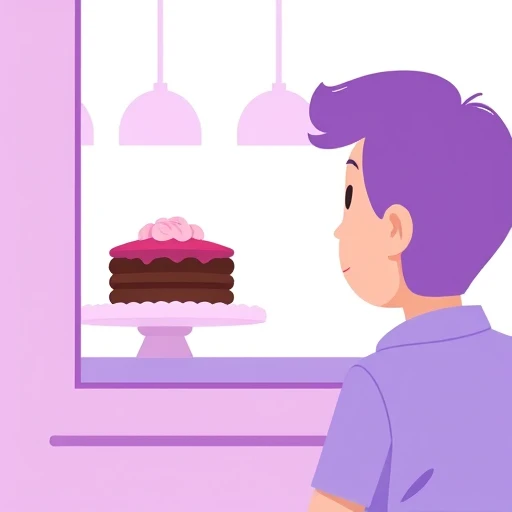
Imagine a person standing in front of a closed bakery at midnight, looking through the window at a cake. Their face shows a 'craving'.
Word Web
Challenge
Try to go a whole day without using the word 'want'. Every time you feel a strong desire for something, use the word 'craving' instead and see if it fits the intensity of your feeling.
Word Origin
The word 'craving' comes from the Old English word 'crafian', which meant 'to demand, ask, or claim'. It is of Germanic origin and is related to the Old Norse 'krefja'.
Original meaning: Originally, it didn't mean a desire for food, but rather a legal or formal demand for something that was owed.
GermanicCultural Context
Be careful when using 'craving' in the context of addiction; while it is a clinical term, it should be used with empathy and respect for the person's struggle.
In the US and UK, 'cravings' are a very common topic of small talk, especially regarding coffee, chocolate, or regional fast food.
Practice in Real Life
Real-World Contexts
Food and Diet
- sugar craving
- late-night craving
- satisfy a craving
- curb your cravings
Pregnancy
- weird cravings
- pregnancy cravings
- sudden urge
- unusual combinations
Addiction Recovery
- nicotine craving
- fight the craving
- triggering cues
- managing urges
Travel and Adventure
- craving for adventure
- craving for change
- need for excitement
- wanderlust
Emotional States
- craving for attention
- craving for love
- need for validation
- yearning for peace
Conversation Starters
"What is the strangest craving you have ever had for food?"
"Do you usually give in to your cravings or do you try to resist them?"
"If you had a craving for something right now, what would it be?"
"Do you think cravings are mostly physical or mostly in our heads?"
"Have you ever had a craving for something that wasn't food, like a place or an activity?"
Journal Prompts
Describe a time when you had an intense craving. What triggered it, and how did you feel after satisfying it?
Write about a 'craving for change' you are currently feeling in your life. What does it look like?
How do you think advertisements try to create cravings in us? Give a specific example you've seen.
If you could never satisfy a craving again, how would your life change?
Reflect on the difference between a 'need' and a 'craving' in your daily routine.
Frequently Asked Questions
10 questionsNo, while it is most commonly used for food, you can have a craving for anything intense, such as a craving for attention, a craving for success, or a craving for adventure. It describes the intensity of the desire, not just the object.
'Crave' is a verb (e.g., 'I crave chocolate'), and 'craving' is a noun (e.g., 'I have a craving for chocolate'). Note that the verb doesn't usually use 'for', but the noun does.
In standard English, it is better to say 'I am craving pizza' (using the verb) or 'I have a craving for pizza' (using the noun). Using 'for' with the verb 'craving' is common in some dialects but technically incorrect in formal grammar.
The most common way is 'I have a craving for...' followed by the thing you want. You can also use verbs like 'satisfy', 'resist', or 'curb' with it.
It is generally neutral, but it can be negative if it refers to something unhealthy (like a craving for drugs) or if it implies a lack of self-control. It depends on the context.
These are strong, often unusual food desires that women experience during pregnancy, thought to be caused by hormonal changes or nutritional needs.
It means to eat or do the thing you were desiring so that the strong feeling goes away. You have fulfilled the need.
Yes, many cravings are triggered by emotions like stress, boredom, or sadness. This is often called 'emotional eating' when it involves food.
The closest opposites are 'aversion' (a strong dislike) or 'indifference' (not caring at all).
It is a standard English word that is appropriate in most settings, from casual conversation to medical reports. However, in very formal legal writing, 'desire' might be preferred.
Test Yourself 200 questions
Write a sentence about a food craving you had recently.
Well written! Good try! Check the sample answer below.
Describe a 'craving for adventure' in three sentences.
Well written! Good try! Check the sample answer below.
Explain the difference between a craving and hunger.
Well written! Good try! Check the sample answer below.
Write a short dialogue between two people discussing their late-night cravings.
Well written! Good try! Check the sample answer below.
How can someone resist a craving? Give two tips.
Well written! Good try! Check the sample answer below.
Write a formal sentence about the impact of marketing on consumer cravings.
Well written! Good try! Check the sample answer below.
Describe a 'craving for silence' using poetic language.
Well written! Good try! Check the sample answer below.
Write a sentence using 'craving' and 'trigger' in the context of a habit.
Well written! Good try! Check the sample answer below.
List three things someone might have a 'craving for' that aren't food.
Well written! Good try! Check the sample answer below.
Explain the phrase 'give in to a craving'.
Well written! Good try! Check the sample answer below.
Write a sentence about a 'strange craving' during pregnancy.
Well written! Good try! Check the sample answer below.
Use the word 'insatiable' to modify 'craving' in a sentence.
Well written! Good try! Check the sample answer below.
Write a sentence about a 'craving for knowledge'.
Well written! Good try! Check the sample answer below.
Describe the feeling of a craving using three adjectives.
Well written! Good try! Check the sample answer below.
Write a sentence about 'curbing' a sugar craving.
Well written! Good try! Check the sample answer below.
Explain why 'I have a craving of pizza' is wrong.
Well written! Good try! Check the sample answer below.
Write a sentence using the plural 'cravings'.
Well written! Good try! Check the sample answer below.
Write a sentence about a 'craving for change'.
Well written! Good try! Check the sample answer below.
Use 'craving' in a sentence about a sport or hobby.
Well written! Good try! Check the sample answer below.
Write a sentence about a 'craving for justice'.
Well written! Good try! Check the sample answer below.
Describe a food you often have a craving for.
Read this aloud:
You said:
Speech recognition is not supported in your browser. Try Chrome or Edge.
Tell a story about a time you had a strange craving.
Read this aloud:
You said:
Speech recognition is not supported in your browser. Try Chrome or Edge.
Discuss how you handle cravings when you are trying to be healthy.
Read this aloud:
You said:
Speech recognition is not supported in your browser. Try Chrome or Edge.
What do you think causes cravings in most people?
Read this aloud:
You said:
Speech recognition is not supported in your browser. Try Chrome or Edge.
Do you think 'cravings for success' are good or bad?
Read this aloud:
You said:
Speech recognition is not supported in your browser. Try Chrome or Edge.
Explain the concept of 'pregnancy cravings' to someone who hasn't heard of it.
Read this aloud:
You said:
Speech recognition is not supported in your browser. Try Chrome or Edge.
How does marketing influence our cravings?
Read this aloud:
You said:
Speech recognition is not supported in your browser. Try Chrome or Edge.
What is your 'guilty pleasure' craving?
Read this aloud:
You said:
Speech recognition is not supported in your browser. Try Chrome or Edge.
Do you have a craving for adventure right now? Where would you go?
Read this aloud:
You said:
Speech recognition is not supported in your browser. Try Chrome or Edge.
Is it possible to have a craving for a person?
Read this aloud:
You said:
Speech recognition is not supported in your browser. Try Chrome or Edge.
What is the difference between a craving and a habit?
Read this aloud:
You said:
Speech recognition is not supported in your browser. Try Chrome or Edge.
Describe the most intense craving you've ever felt.
Read this aloud:
You said:
Speech recognition is not supported in your browser. Try Chrome or Edge.
How do you feel after you satisfy a craving?
Read this aloud:
You said:
Speech recognition is not supported in your browser. Try Chrome or Edge.
Can music trigger a craving?
Read this aloud:
You said:
Speech recognition is not supported in your browser. Try Chrome or Edge.
What is a 'craving for knowledge'?
Read this aloud:
You said:
Speech recognition is not supported in your browser. Try Chrome or Edge.
Why do people have 'midnight cravings'?
Read this aloud:
You said:
Speech recognition is not supported in your browser. Try Chrome or Edge.
Do you think technology creates new types of cravings?
Read this aloud:
You said:
Speech recognition is not supported in your browser. Try Chrome or Edge.
Is 'craving' a strong word?
Read this aloud:
You said:
Speech recognition is not supported in your browser. Try Chrome or Edge.
What would you do if you had a craving for something you couldn't get?
Read this aloud:
You said:
Speech recognition is not supported in your browser. Try Chrome or Edge.
Do you have any 'cravings' for your childhood?
Read this aloud:
You said:
Speech recognition is not supported in your browser. Try Chrome or Edge.
Listen to the speaker: 'I've been having this weird craving for olives all day.' What does the speaker want?
Listen: 'The nutritionist suggested that cravings for salt might indicate dehydration.' What is the cause of the craving?
Listen: 'I tried to resist the craving, but the smell of the pizza was just too much.' Did the speaker resist?
Listen: 'His craving for power was his ultimate downfall.' What happened to him?
Listen: 'Pregnancy cravings are a fascinating biological phenomenon.' What is the speaker's opinion?
Listen: 'I have a yen for a good mystery novel tonight.' What does the speaker want to do?
Listen: 'The intense craving for sugar usually peaks after about ten minutes.' How long does the peak last?
Listen: 'Satisfying a craving isn't always the best way to deal with it.' Does the speaker agree with satisfying cravings?
Listen: 'She felt a sudden craving for some fresh air.' Where does she want to go?
Listen: 'The advertisement was designed to trigger a craving for the new sports car.' What was the goal of the ad?
Listen: 'My craving for coffee is strongest in the morning.' When is the craving strongest?
Listen: 'An insatiable craving for novelty drives the fashion industry.' What drives the industry?
Listen: 'I'm craving some chocolate right now.' What is the speaker feeling?
Listen: 'Curbing your cravings is easier if you get enough sleep.' What helps control cravings?
Listen: 'The desert traveler had a desperate craving for water.' How did the traveler feel?
/ 200 correct
Perfect score!
Summary
The word 'craving' describes a powerful, targeted urge that is often physiological in nature. For example, 'A sudden craving for salty snacks led him to the kitchen at midnight,' illustrates its intensity and specificity.
- A craving is an intense, specific desire that feels much stronger than a normal 'want' or 'like'. It often feels urgent and hard to ignore.
- It is most frequently used to describe a sudden need for certain foods, such as sweets, salt, or fast food, often triggered by stress or hormones.
- Beyond food, the word can describe a deep psychological or emotional need, such as a craving for attention, adventure, or social connection.
- Grammatically, it is a noun usually followed by 'for'. You satisfy, resist, or curb a craving to manage the feeling effectively.
The 'For' Rule
Always use 'for' after the noun 'craving'. 'I have a craving for sweets' is correct. 'I have a craving of sweets' is wrong.
Use Modifiers
Add adjectives like 'intense', 'sudden', or 'strange' to make your description of a craving more vivid and precise.
Verb vs Noun
Remember: 'I crave (verb) pizza' but 'I have a craving (noun) for pizza'. Don't mix them up!
Beyond Food
Don't be afraid to use 'craving' for abstract things like 'a craving for peace' or 'a craving for knowledge' to sound more expressive.