finest in 30 Seconds
- Finest is the superlative of fine, meaning the absolute best in quality, skill, or purity within a specific category or group.
- It can describe physical delicacy, such as the thinnest thread or the smallest grain of sand, emphasizing precision and detail.
- The term is frequently used in luxury marketing to denote premium products and in journalism to honor public servants like the police.
- Grammatically, it usually requires the definite article 'the' and should never be combined with 'most' or 'more' as it is already a superlative.
The word finest is the superlative form of the adjective 'fine'. While 'fine' can mean 'okay' or 'thin', 'finest' almost exclusively refers to the absolute peak of quality, excellence, or delicacy. When you describe something as the finest, you are placing it at the very top of its category. This could refer to physical objects, like the finest silk or the finest jewelry, where the texture is incredibly smooth or the craftsmanship is unparalleled. It can also refer to abstract concepts, such as a person's 'finest hour', which signifies their moment of greatest achievement or courage. In social contexts, 'finest' is often used to show deep respect or to market luxury goods. It suggests a level of refinement that goes beyond just being 'good' or 'great'; it implies a meticulous attention to detail and a lack of any impurities or flaws.
- Material Quality
- Used to describe substances like gold, sand, or fabric that have been processed to the highest degree of purity or thinness.
- Human Excellence
- Refers to the most skilled or brave members of a group, such as 'the city's finest' referring to the police force.
- Temporal Peak
- Describes the best moment in a history or a career, often associated with resilience or success.
The museum displayed the finest examples of Renaissance art ever found in the region.
In everyday conversation, you might hear 'finest' used in a slightly more casual but still appreciative way. For example, a host might offer you their 'finest wine'. Here, it serves to make the guest feel valued. However, it is important to distinguish between 'finest' meaning 'best' and 'finest' meaning 'thinnest'. In technical fields like engineering or cooking, 'finest' might refer to the smallest particle size, such as the finest grind of coffee. This dual meaning is a hallmark of the word's versatility. Whether you are discussing the moral character of a hero or the thread count of Egyptian cotton, 'finest' serves as the ultimate descriptor for that which cannot be improved upon. It is a word that carries weight, history, and a sense of prestige.
He was widely regarded as one of the finest legal minds of the twenty-first century.
Historically, the word has roots in the idea of 'finishing' something. To make something 'fine' was to finish it to a high standard. Therefore, the 'finest' thing is that which has been finished most perfectly. This is why we use it for craftsmanship. When a jeweler works on a diamond, the finest cut is the one that reflects the most light and has the most precise angles. In a similar vein, when a writer crafts a story, their finest work is the one where every word is perfectly placed. The word invites us to look closer and appreciate the nuances that separate the good from the truly exceptional. It is a word of high praise, often reserved for things that are rare or hard to achieve.
This restaurant is known for using only the finest organic ingredients sourced from local farms.
The athlete’s finest performance came during the final round of the Olympic games.
We must ensure that our finest traditions are preserved for the next generation.
Using 'finest' correctly involves understanding its role as a superlative adjective. This means it is typically preceded by the definite article 'the'. You are identifying one specific thing or group of things as being at the top. For example, 'the finest detail' or 'the finest people'. It is rarely used without 'the' unless it is part of a compound noun or a specific title. When you use 'finest', you are making a comparison, even if the other things you are comparing it to are not explicitly mentioned. The comparison is implied: out of all the possible options, this one is the best.
- Adjective + Noun
- The most common structure. Example: 'The finest silk'.
- One of the + Finest + Plural Noun
- Used to group something among the best. Example: 'One of the finest actors'.
- Possessive + Finest
- Showing ownership of quality. Example: 'Her finest hour'.
She wore a gown made of the finest lace imported from France.
In terms of sentence placement, 'finest' usually comes before the noun it modifies. However, in poetic or formal English, it can occasionally follow a linking verb. For instance, 'The craftsmanship was the finest I had ever seen.' In this case, 'finest' acts as a subject complement. It is also important to consider the context of 'finest' when referring to size. If you say 'the finest powder', you are talking about the size of the particles. If you say 'the finest meal', you are talking about the quality of the food. Misusing these can lead to confusion, though context usually clarifies the speaker's intent.
The architect paid attention to even the finest details of the building's facade.
Furthermore, 'finest' can be used in the plural as a noun to refer to a specific group, most notably 'the police'. This is a collective noun usage. 'New York's finest' is a famous example. When used this way, it does not need a following noun because the noun is understood. This usage is quite formal or journalistic. In more common speech, you might use 'finest' to describe a collection of items, like 'the finest of the lot'. This highlights one or more items as being superior to the rest of the group. The word carries a sense of finality—there is nothing better than the finest.
The detective was known as one of Scotland Yard's finest.
Only the finest sand is used to create this high-quality glass.
It was truly her finest achievement in a long and storied career.
You will encounter the word 'finest' in several distinct environments. One of the most common is in the world of luxury marketing and high-end retail. Brands use 'finest' to signal to customers that their products are of the highest possible grade. Whether it is 'the finest leather' in a car or 'the finest cocoa beans' in a chocolate bar, the word is a tool for establishing value. It appeals to the consumer's desire for exclusivity and quality. You will see it on menus in expensive restaurants, on labels of premium spirits, and in the descriptions of five-star hotels. In these contexts, 'finest' is a synonym for 'best' but with an added layer of sophistication.
- Luxury Advertising
- Used to justify high prices by emphasizing superior materials and craftsmanship.
- News and Media
- Often used to describe public servants, particularly the police ('the city's finest').
- Art and History
- Used by curators and historians to categorize the most significant works or moments.
The commercial boasted that the watch was crafted from the finest Swiss components.
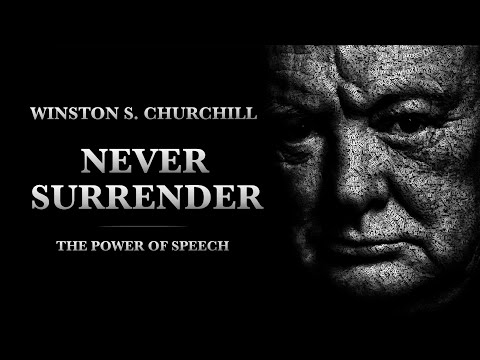
Another place you will frequently hear 'finest' is in news broadcasts and journalism. As mentioned before, 'the city's finest' is a standard way to refer to the police, while 'the nation's finest' might refer to the military. This usage is respectful and often used during ceremonies, memorials, or reports of heroic actions. It frames these individuals as the best examples of their profession. Additionally, in historical documentaries, you might hear a narrator talk about a leader's 'finest hour'. This phrase, famously used by Winston Churchill, has become a standard idiom for describing a period of great struggle that leads to a magnificent triumph.
The mayor gave a speech honoring the finest men and women of the fire department.
Finally, you will encounter 'finest' in literature and academic writing. Authors use it to describe the most delicate or intricate parts of a subject. A biologist might write about the 'finest structures' of a cell, referring to things that can only be seen under a powerful microscope. A literary critic might discuss the 'finest points' of a poem, meaning the subtle details that a casual reader might miss. In these settings, 'finest' moves away from 'luxury' and toward 'precision'. It is about the ability to perceive or create something very small, very detailed, or very complex. This versatility makes 'finest' a powerful word in both the marketplace and the laboratory.
The telescope allowed astronomers to see the finest details of the lunar surface.
He was a man of the finest character, always putting others before himself.
The orchestra's finest musician was the first violinist, whose technique was flawless.
One of the most common mistakes learners make with 'finest' is confusing its two primary meanings: 'best quality' and 'smallest size'. While they are related, they are not always interchangeable. For example, if you say 'the finest car', people will assume you mean the most luxurious or best-performing car. However, if you say 'the finest thread', they might think you mean the thinnest thread. It is important to ensure the context makes it clear which 'finest' you are using. Another mistake is using 'finest' when 'best' would be more appropriate for the register. 'Finest' is a high-register word. Using it for something mundane, like 'the finest trash can', can sound sarcastic or unintentionally funny.
- Register Mismatch
- Using 'finest' for low-quality or everyday items where 'best' or 'nicest' is better.
- Confusion with 'Thin'
- Assuming 'finest' always means 'best' when it might mean 'most granular' or 'thinnest'.
- Article Omission
- Forgetting to use 'the' before 'finest' in most sentences.
This is finest wine I have ever tasted.
This is the finest wine I have ever tasted.
Grammatically, 'finest' is already a superlative. Therefore, you should never say 'most finest'. This is a double superlative and is considered incorrect in standard English. Similarly, 'more finest' is also incorrect. If you want to compare two things, use 'finer'. If you are talking about the top of a group, use 'the finest'. Another subtle mistake is using 'finest' to describe quantity rather than quality. You wouldn't say 'the finest amount of people' to mean 'the most people'. You would use 'largest' or 'greatest'. 'Finest' is about the nature of the thing, not the number of things.
He is the most finest player on the team.
He is the finest player on the team.
Finally, be aware of the idiom 'the city's finest'. If you use this in a context that isn't about the police, it might confuse people. For example, if you are at a bakery and say 'I want the city's finest', people will understand you want the best bread. But if you are walking down the street and say 'Here come the city's finest', people will look for police officers. Understanding these cultural collocations is key to using the word naturally. Avoid using 'finest' as a generic positive adjective like 'cool' or 'awesome'. It is much more specific and formal than those words.
The chef insisted on using the finest salt, which had a very delicate texture.
It was a finest day for a walk. (Incorrect: should be 'a fine day' or 'the finest day').
She has a finest sense of humor. (Incorrect: should be 'a fine sense' or 'the finest sense').
While 'finest' is a powerful word, there are many alternatives that might fit your specific context better. If you are focusing on quality, words like 'superb', 'exquisite', or 'premium' are excellent choices. 'Superb' suggests something that is impressively good. 'Exquisite' is often used for things that are beautiful and delicate, like jewelry or art. 'Premium' is very common in business and marketing to describe high-quality goods. If you are focusing on the 'best' aspect, you could use 'top-tier', 'first-rate', or 'unrivaled'. These words emphasize that nothing else can compete with the item in question.
- Finest vs. Best
- 'Best' is general; 'finest' implies elegance, purity, or high-level craftsmanship.
- Finest vs. Exquisite
- 'Exquisite' focuses more on beauty and intense detail; 'finest' focuses on overall quality or rank.
- Finest vs. Thinnest
- 'Thinnest' is purely physical; 'finest' (in terms of size) implies a desirable level of delicacy.
The exquisite carvings on the temple walls were centuries old.
When referring to people, alternatives to 'finest' include 'most distinguished', 'most elite', or 'most accomplished'. For example, 'the most distinguished scholars' sounds more academic than 'the finest scholars'. 'Elite' is often used for military or athletic groups. If you are talking about the 'thinnest' or 'most granular' meaning of finest, you might use 'microscopic', 'minute', or 'powdery'. For example, 'the finest dust' could be 'microscopic dust'. Choosing the right word depends on whether you want to emphasize the quality, the rank, or the physical dimensions of the object.
They only hire top-tier engineers for their aerospace projects.
In summary, 'finest' is a versatile superlative that covers quality, size, and social standing. While 'best' is the most common alternative, it lacks the specific connotations of elegance and precision that 'finest' provides. When you want to describe something that is not just good, but is a masterpiece of its kind, 'finest' is usually the most appropriate word. By understanding its synonyms, you can fine-tune your descriptions to be as accurate as possible. Whether you are writing a marketing slogan, a news report, or a scientific paper, having a range of alternatives allows you to express the exact level of excellence you intend.
The superb acoustics of the hall made the concert unforgettable.
This is a first-rate example of modern architecture.
The unrivaled beauty of the landscape took our breath away.
How Formal Is It?
Fun Fact
The use of 'finest' to mean 'thinnest' (like fine sand) developed because thin things were often seen as more difficult to produce and therefore of higher quality. So, the two meanings of 'best' and 'thinnest' are historically linked by the idea of craftsmanship.
Pronunciation Guide
- Pronouncing the 'i' as a long 'ee' sound (fine-eest).
- Dropping the final 't' sound (fine-iss).
- Adding an extra syllable (fine-ness-est).
- Confusing the 'ai' sound with 'oy' (foyne-est).
- Making the 'n' sound too nasal.
Difficulty Rating
Easy to recognize in context, though the 'thin' meaning might be missed by beginners.
Requires knowledge of superlative grammar and appropriate register.
Simple to pronounce and very useful for giving compliments.
Clear pronunciation, though 'finest' and 'finds' can occasionally be confused in fast speech.
What to Learn Next
Prerequisites
Learn Next
Advanced
Grammar to Know
Superlative Adjectives
Use '-est' for short adjectives like 'fine' to make 'finest'.
Definite Article with Superlatives
Always say 'the finest', not just 'finest' in most cases.
No Double Superlatives
Never say 'most finest'. 'Finest' is already the maximum.
One of the + Plural
Say 'one of the finest examples', not 'one of the finest example'.
Adjective Order
Usually comes before other adjectives: 'the finest old wine'.
Examples by Level
This is the finest cake in the shop.
This is the best cake.
Superlative adjective with 'the'.
She has the finest cat.
She has a very good cat.
Used to show high quality.
It was the finest day for a picnic.
It was a very good day.
Describes weather/time.
He is my finest friend.
He is my best friend.
Describes a person.
The finest toy is on the top shelf.
The best toy.
Identifies the best item.
I want the finest apple.
I want the best apple.
Expressing a preference.
This is the finest house on the street.
The best house.
Comparing objects.
The finest flowers are in the garden.
The best flowers.
Plural superlative.
The shirt is made of the finest cotton.
Very high quality cotton.
Describes material quality.
They serve the finest coffee in town.
The best coffee.
Used in a commercial context.
The beach has the finest sand.
Very small/soft sand.
Refers to physical size/texture.
He is one of the finest players on the team.
One of the best players.
'One of the' + plural noun.
We saw the finest paintings at the museum.
The best paintings.
Describes artistic quality.
This is the finest hotel I have stayed in.
The best hotel.
Comparing experiences.
She used the finest brush for the small details.
The thinnest brush.
Refers to physical delicacy.
The finest students received a special prize.
The best students.
Describes human achievement.
The chef uses only the finest ingredients for his dishes.
Highest quality food items.
Emphasizes quality in cooking.
It was considered his finest work as a director.
His best movie/play.
Refers to creative output.
The city's finest were called to the scene of the accident.
The police were called.
Collective noun for police.
She paid attention to the finest details of the contract.
The smallest, most specific parts.
Refers to precision.
Winning the championship was her finest hour.
Her greatest moment of success.
Idiomatic use for a peak moment.
The museum houses the finest collection of Roman coins.
The best and most complete set.
Describes a curated group.
He is a man of the finest character and integrity.
Very high moral quality.
Describes personality traits.
The finest silk is produced in this small village.
The highest quality fabric.
Focuses on craftsmanship.
The report highlights the finest nuances of the economic situation.
The most subtle differences.
Refers to subtle distinctions.
They are widely regarded as the finest legal minds in the country.
The most intelligent lawyers.
Describes professional excellence.
The architect insisted on the finest marble for the lobby.
The highest grade of stone.
Refers to material standards.
This novel is one of the finest examples of Gothic literature.
A top-tier representative of the genre.
Categorizes artistic merit.
The telescope can detect the finest movements of distant stars.
The smallest possible changes.
Scientific precision.
The company prides itself on its finest traditions of service.
Its best and most valued customs.
Refers to organizational culture.
He gave his finest performance just before retiring.
His best ever acting/playing.
Refers to a career peak.
The finest points of the debate were lost on the audience.
The most subtle arguments.
Refers to intellectual detail.
The essay explores the finest distinctions between ethics and morality.
The most subtle differences in concept.
Academic precision.
Her finest attribute is her ability to remain calm under pressure.
Her best quality.
Refers to personal characteristics.
The symphony is a testament to the composer's finest creative period.
His most productive and best time.
Historical/Artistic categorization.
The artisan used the finest tools to carve the intricate ivory.
The most precise and high-quality tools.
Refers to specialized equipment.
It was a display of the finest statesmanship seen in decades.
The best political leadership.
Refers to high-level professional skill.
The finest details of the painting are only visible under ultraviolet light.
Hidden or extremely small details.
Technical/Scientific context.
He was a man of the finest sensibilities, easily moved by beauty.
Very refined feelings/awareness.
Describes psychological depth.
The finest minds of the generation gathered to solve the crisis.
The smartest people.
Collective noun for intellectuals.
The prose is characterized by the finest economy of language.
Using the perfect, minimal amount of words.
Literary criticism.
The decision required the finest balancing of competing interests.
Extremely precise and careful adjustment.
Refers to complex decision-making.
He possesses the finest understanding of the geopolitical landscape.
The most sophisticated and deep knowledge.
Refers to intellectual mastery.
The finest threads of the narrative are woven together in the final chapter.
The most subtle parts of the story.
Metaphorical use in literature.
The experiment measured the finest fluctuations in atmospheric pressure.
The smallest possible changes.
Scientific measurement.
It was a moment of the finest irony, which few in the room grasped.
The most subtle and clever irony.
Refers to complex social/literary tones.
The finest examples of human resilience are often found in the darkest times.
The best and most pure instances.
Philosophical observation.
The restoration revealed the finest brushstrokes of the original master.
The most delicate and original marks.
Art conservation context.
Common Collocations
Common Phrases
— Used to group something among the best of its kind. It is a common way to give a high compliment.
He is one of the finest actors of his generation.
— Refers to the best item in a specific group or collection. Often used when choosing between options.
Out of all these diamonds, this one is the finest of the lot.
— To do something with extreme precision or to the highest possible level. Focuses on the accuracy of an action.
The machine was calibrated to the finest degree.
— A very formal and somewhat old-fashioned way to end a letter or email. Similar to 'best regards'.
Please accept my finest regards, Sincerely, John.
— The most specific or subtle part of an argument or a physical object. Often used in debates.
You missed the finest point of my argument.
— Doing something in the best possible way or with great style. Emphasizes the manner of an action.
They celebrated the victory in the finest fashion.
— A colloquial expression, especially in some coastal regions, meaning 'excellent' or 'very good'.
That meal was the finest kind!
— Refers to the best part of a piece of meat or the most precise way a gemstone has been shaped.
The butcher gave us the finest cut of beef.
— Literally the thinnest string, or metaphorically the most delicate connection between ideas.
The story was held together by the finest thread of logic.
— A phrase used by companies or individuals to showcase their best achievement. Common in portfolios.
This building represents our finest work to date.
Often Confused With
Both can describe size, but 'finest' implies a high quality of delicacy, while 'thinnest' is just a measurement.
'Best' is general; 'finest' is more specific to quality, elegance, and refinement.
They share a root, but 'final' means last, while 'finest' means best quality.
Idioms & Expressions
— A time of peak achievement, especially one that occurs during a period of great difficulty.
The rescue mission was the coast guard's finest hour.
formal— A common way to refer to the police department of a city, particularly in the United States.
New York's finest were out in force for the parade.
journalistic— Similar to 'the city's finest', but usually refers to the military or a national police force.
We must support the nation's finest as they serve abroad.
formal— To make very small, often unnecessary distinctions between things. Focuses on over-analysis.
Stop splitting hairs to the finest degree and just make a decision.
informal— A variation of 'walk a fine line', meaning to be in a delicate situation where a small mistake could be bad.
The diplomat had to walk the finest line between the two warring nations.
neutral— The absolute best of an already elite group. Emphasizes extreme exclusivity.
These soldiers are the finest of the fine.
formal— A variation of 'to a T', meaning perfectly or exactly. Used for precision.
The suit fitted him to a finest T.
informal— Refers to luxury, culture, and high-quality experiences like art, food, and travel.
He spent his retirement enjoying the finest things in life.
neutral— To be in a very good, happy, or enthusiastic mood.
Despite the rain, the children were in the finest of spirits.
neutral— Used metaphorically to describe a process that catches even the smallest errors or items.
The application process is the finest sieve for finding the right candidates.
formalEasily Confused
Both are forms of 'fine'.
'Finer' compares two things; 'finest' compares three or more or describes the absolute top.
This wine is finer than that one, but this is the finest in the world.
Adverb form of fine.
'Finely' describes how an action is done (e.g., finely chopped), while 'finest' describes a noun.
The finest chef finely chopped the herbs.
Noun form of fine.
'Fineness' is the state of being fine; 'finest' is the superlative adjective.
The fineness of the silk made it the finest in the shop.
Similar spelling and root.
'Finesse' is a noun meaning skill or a verb meaning to handle skillfully; 'finest' is an adjective.
He used great finesse to create his finest work.
Similar meaning of high quality.
'Refined' often refers to the process of removing impurities; 'finest' refers to the end result of quality.
The refined sugar was of the finest quality.
Sentence Patterns
This is the finest [noun].
This is the finest cake.
It is made of the finest [material].
It is made of the finest wool.
He is one of the finest [plural noun].
He is one of the finest doctors.
It was her finest [moment/hour].
It was her finest hour.
The [noun] shows the finest [quality].
The watch shows the finest craftsmanship.
Only the finest [noun] are used.
Only the finest ingredients are used.
The finest [details/nuances] of [subject].
The finest nuances of the law.
A testament to the finest [abstract noun].
A testament to the finest human spirit.
Word Family
Nouns
Verbs
Adjectives
Related
How to Use It
Common in specific domains like marketing, news, and literature.
-
Using 'most finest'.
→
Using 'the finest'.
'Finest' is already a superlative. Adding 'most' is like saying 'most best', which is incorrect.
-
Forgetting the 'the'.
→
Always use 'the finest'.
Superlatives usually require a definite article because they refer to a unique, top-level item.
-
Using 'finest' for quantity.
→
Using 'greatest' or 'largest'.
'Finest' refers to quality or delicacy, not the number of items.
-
Confusing 'finest' with 'fine'.
→
Use 'fine' for 'okay' and 'finest' for 'best'.
'Finest' is much stronger than 'fine'. Don't use 'finest' if you just mean something is acceptable.
-
Using 'finest' in very casual slang.
→
Using 'cool' or 'awesome'.
'Finest' is a relatively formal word. Using it in a very casual way can sound out of place.
Tips
Choose the right noun
Pair 'finest' with nouns that imply quality or detail, such as 'craftsmanship', 'ingredients', or 'traditions' for maximum impact.
Always use 'the'
Since 'finest' is a superlative, it almost always needs the definite article 'the' before it to be grammatically correct.
Avoid over-use
Because 'finest' is a strong word, using it too often can make your writing sound like an advertisement. Use it only for truly exceptional things.
Learn the synonyms
Words like 'exquisite' or 'superb' can sometimes be better than 'finest' depending on whether you want to focus on beauty or general excellence.
Know the idioms
Understanding 'finest hour' and 'the city's finest' will help you understand news reports and historical documentaries much better.
Crisp 'st' sound
Make sure to pronounce the 'st' at the end clearly. If you drop it, the word might sound like 'finis', which is different.
Check the meaning
Always check if 'finest' refers to quality or size in a sentence. This is especially important in cooking and science.
Watch for hype
In advertising, 'finest' is often used to make products seem more expensive. Be a critical reader when you see it on labels.
Use for praise
Describing someone's work as their 'finest' is a very high form of praise that shows you recognize their effort and skill.
Use for precision
When writing about science or art, use 'finest' to describe the most detailed or delicate parts of your subject.
Memorize It
Mnemonic
Think of 'FINEST' as 'Final Excellent STandard'. It is the final, best version of something that meets the highest standard.
Visual Association
Imagine a gold medal on top of a mountain. The mountain represents the 'fine' things, but the gold medal at the very peak is the 'finest'.
Word Web
Challenge
Try to use 'finest' in three different ways today: once for a food you like, once for a person's skill, and once for a small detail you noticed.
Word Origin
The word 'finest' comes from the Old French word 'fin', which meant 'perfected' or 'of high quality'. This Old French word was derived from the Latin 'finis', meaning 'end' or 'boundary'. The connection is that something 'fine' is something that has been brought to its 'end' or 'completion' in a perfect way.
Original meaning: The original sense was 'finished' or 'completed', implying that no more work could be done to improve it.
Indo-European (Latinate/Romance influence via Old French).Cultural Context
Be careful when using 'the city's finest' in areas where there is tension between the community and the police, as it can be seen as controversial or ironic.
Commonly used in formal speeches and high-end advertising.
Practice in Real Life
Real-World Contexts
Dining and Food
- the finest ingredients
- the finest wine
- the finest dining experience
- the finest chocolate
Arts and Literature
- the finest details
- one of the finest works
- the finest examples of art
- the finest prose
Professional Achievements
- his finest hour
- the finest legal minds
- the finest performance
- the finest craftsmanship
Public Service
- the city's finest
- the nation's finest
- the finest men and women
- the finest traditions of service
Materials and Science
- the finest silk
- the finest sand
- the finest particles
- the finest measurements
Conversation Starters
"What do you think is the finest movie ever made?"
"Where can I find the finest coffee in this city?"
"Tell me about what you consider to be your finest achievement."
"Have you ever seen the finest details of a famous painting in person?"
"What qualities make someone one of the finest people you know?"
Journal Prompts
Describe a moment that you would call your 'finest hour'. What happened and why was it so important?
If you could own the finest version of any object (a car, a house, a watch), what would it be and why?
Write about a person you admire who you think represents the 'finest' of their profession.
Think about a time you noticed the 'finest details' of something in nature. What did you see?
How do you define the 'finest things in life'? Is it about money, or something else?
Frequently Asked Questions
10 questionsNo, you should never say 'most finest'. 'Finest' is already a superlative adjective, which means it represents the highest level. Adding 'most' is redundant and grammatically incorrect. Just say 'the finest'.
While 'finest' is often used for luxury items, it can describe anything of high quality, such as 'the finest person' or 'the finest weather'. It is about excellence, not just price.
This is a common idiom, especially in the US, used to refer to the police force. For example, 'New York's finest' means the New York City Police Department (NYPD).
Yes, in certain contexts, 'finest' refers to physical size or texture. 'Finest sand' means sand with very small grains. 'Finest thread' means very thin thread.
'Best' is a general word for the top quality. 'Finest' is more elegant and often implies craftsmanship, purity, or delicacy. You would say 'the best score' but 'the finest art'.
Yes, 'finest' is generally more formal than 'best' or 'great'. It is frequently used in literature, formal speeches, and high-end marketing.
Yes, you can use it to describe someone's character or skills. 'He is one of our finest engineers' is a high compliment.
The opposite depends on the context. If you mean quality, the opposite is 'worst'. If you mean texture (like sand), the opposite is 'coarsest'.
It refers to a person's or group's moment of greatest success or courage, especially during a difficult time.
Yes, it is used in all major varieties of English, including British, American, Australian, and Canadian English.
Test Yourself 180 questions
Write a sentence using 'finest' to describe a meal.
Well written! Good try! Check the sample answer below.
Write a sentence using 'finest' to describe a person's skill.
Well written! Good try! Check the sample answer below.
Write a sentence using the idiom 'finest hour'.
Well written! Good try! Check the sample answer below.
Write a sentence using 'finest' to mean 'thinnest'.
Well written! Good try! Check the sample answer below.
Write a sentence using 'finest' in a formal business context.
Well written! Good try! Check the sample answer below.
Write a sentence about 'the city's finest'.
Well written! Good try! Check the sample answer below.
Write a sentence using 'finest' to describe a piece of art.
Well written! Good try! Check the sample answer below.
Write a sentence using 'finest' to describe a detail.
Well written! Good try! Check the sample answer below.
Write a sentence using 'finest' to describe a tradition.
Well written! Good try! Check the sample answer below.
Write a sentence using 'finest' to describe a scientific observation.
Well written! Good try! Check the sample answer below.
Write a sentence using 'finest' in a compliment.
Well written! Good try! Check the sample answer below.
Write a sentence using 'finest' to describe a fabric.
Well written! Good try! Check the sample answer below.
Write a sentence using 'finest' to describe a person's character.
Well written! Good try! Check the sample answer below.
Write a sentence using 'finest' to describe a day.
Well written! Good try! Check the sample answer below.
Write a sentence using 'finest' to describe a collection.
Well written! Good try! Check the sample answer below.
Write a sentence using 'finest' to describe a point in an argument.
Well written! Good try! Check the sample answer below.
Write a sentence using 'finest' to describe a tool.
Well written! Good try! Check the sample answer below.
Write a sentence using 'finest' to describe a wine.
Well written! Good try! Check the sample answer below.
Write a sentence using 'finest' to describe a group of people.
Well written! Good try! Check the sample answer below.
Write a sentence using 'finest' to describe a feeling.
Well written! Good try! Check the sample answer below.
Pronounce 'finest' and explain its meaning to a friend.
Read this aloud:
You said:
Speech recognition is not supported in your browser. Try Chrome or Edge.
Describe your 'finest hour' in a short speech.
Read this aloud:
You said:
Speech recognition is not supported in your browser. Try Chrome or Edge.
Use 'finest' in a sentence about a restaurant you like.
Read this aloud:
You said:
Speech recognition is not supported in your browser. Try Chrome or Edge.
Explain the difference between 'fine' and 'finest'.
Read this aloud:
You said:
Speech recognition is not supported in your browser. Try Chrome or Edge.
Give a compliment to someone using the word 'finest'.
Read this aloud:
You said:
Speech recognition is not supported in your browser. Try Chrome or Edge.
Discuss what 'the city's finest' means in your country.
Read this aloud:
You said:
Speech recognition is not supported in your browser. Try Chrome or Edge.
Use 'finest' to describe a piece of clothing.
Read this aloud:
You said:
Speech recognition is not supported in your browser. Try Chrome or Edge.
Talk about the 'finest details' of a hobby you have.
Read this aloud:
You said:
Speech recognition is not supported in your browser. Try Chrome or Edge.
Use 'finest' in a formal greeting or closing.
Read this aloud:
You said:
Speech recognition is not supported in your browser. Try Chrome or Edge.
Explain why 'most finest' is wrong.
Read this aloud:
You said:
Speech recognition is not supported in your browser. Try Chrome or Edge.
Describe the 'finest day' you can imagine.
Read this aloud:
You said:
Speech recognition is not supported in your browser. Try Chrome or Edge.
Use 'finest' to describe a famous person.
Read this aloud:
You said:
Speech recognition is not supported in your browser. Try Chrome or Edge.
Discuss the 'finest traditions' of your family.
Read this aloud:
You said:
Speech recognition is not supported in your browser. Try Chrome or Edge.
Use 'finest' to describe a material like wood or metal.
Read this aloud:
You said:
Speech recognition is not supported in your browser. Try Chrome or Edge.
Explain what 'finest sand' feels like.
Read this aloud:
You said:
Speech recognition is not supported in your browser. Try Chrome or Edge.
Use 'finest' to describe a scientific discovery.
Read this aloud:
You said:
Speech recognition is not supported in your browser. Try Chrome or Edge.
Talk about the 'finest points' of a book you read.
Read this aloud:
You said:
Speech recognition is not supported in your browser. Try Chrome or Edge.
Use 'finest' in a sarcastic way.
Read this aloud:
You said:
Speech recognition is not supported in your browser. Try Chrome or Edge.
Describe a 'finest moment' in sports history.
Read this aloud:
You said:
Speech recognition is not supported in your browser. Try Chrome or Edge.
Explain the etymology of 'finest' briefly.
Read this aloud:
You said:
Speech recognition is not supported in your browser. Try Chrome or Edge.
Listen to the sentence: 'The finest details were overlooked.' What was overlooked?
Listen to the sentence: 'He is the finest man I know.' Is this a compliment?
Listen to the sentence: 'The city's finest are here.' Who arrived?
Listen to the sentence: 'This is the finest silk.' What is the quality of the silk?
Listen to the sentence: 'It was his finest hour.' Was he successful?
Listen to the sentence: 'Use the finest grind for the coffee.' What size should the coffee be?
Listen to the sentence: 'The finest traditions of the school.' What is being discussed?
Listen to the sentence: 'She has the finest voice.' What is her voice like?
Listen to the sentence: 'The finest points of the law.' Is this a simple or complex topic?
Listen to the sentence: 'Only the finest will do.' What does the speaker want?
Listen to the sentence: 'He is one of our finest.' What is the speaker's opinion of him?
Listen to the sentence: 'The finest sand in the world.' Where might you be?
Listen to the sentence: 'A display of the finest craftsmanship.' What are you looking at?
Listen to the sentence: 'The finest minds are gathered.' Who is there?
Listen to the sentence: 'It was a finest day.' Is this sentence correct?
/ 180 correct
Perfect score!
Summary
The word 'finest' is your go-to adjective for describing the peak of excellence. Whether you are talking about the 'finest craftsmanship' in a watch or the 'finest hour' of a hero, it signals a level of quality that is unsurpassed and deeply respected.
- Finest is the superlative of fine, meaning the absolute best in quality, skill, or purity within a specific category or group.
- It can describe physical delicacy, such as the thinnest thread or the smallest grain of sand, emphasizing precision and detail.
- The term is frequently used in luxury marketing to denote premium products and in journalism to honor public servants like the police.
- Grammatically, it usually requires the definite article 'the' and should never be combined with 'most' or 'more' as it is already a superlative.
Choose the right noun
Pair 'finest' with nouns that imply quality or detail, such as 'craftsmanship', 'ingredients', or 'traditions' for maximum impact.
Always use 'the'
Since 'finest' is a superlative, it almost always needs the definite article 'the' before it to be grammatically correct.
Avoid over-use
Because 'finest' is a strong word, using it too often can make your writing sound like an advertisement. Use it only for truly exceptional things.
Learn the synonyms
Words like 'exquisite' or 'superb' can sometimes be better than 'finest' depending on whether you want to focus on beauty or general excellence.