









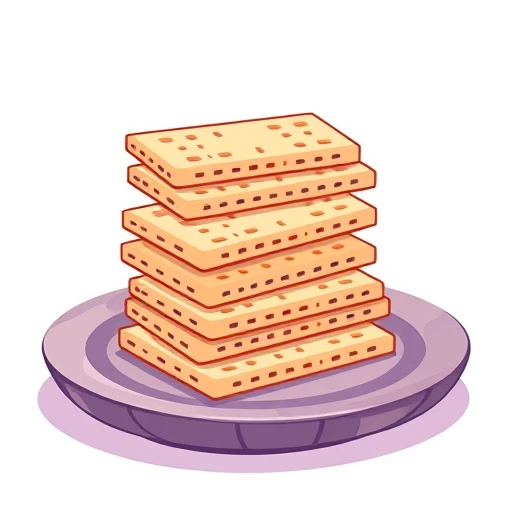
graham in 30 Seconds
- A rectangular, sweet whole-wheat cracker.
- Named after 19th-century reformer Sylvester Graham.
- Essential for s'mores and cheesecake crusts.
- A staple snack in North American households.
The term graham primarily refers to a specific type of cracker or the flour from which it is made. In the context of North American culinary traditions, a graham is a sweet, crunchy, and rectangular biscuit that serves as a staple snack and a foundational ingredient in various desserts. The name is derived from Sylvester Graham, a 19th-century dietary reformer who advocated for the consumption of whole-grain products as a means of maintaining physical and spiritual health. Unlike standard white flour, graham flour is unrefined and contains the entire wheat kernel, including the bran and germ, which are ground separately and then recombined. This gives the resulting graham cracker its characteristic nutty flavor and slightly coarse texture.
- The Modern Cracker
- Today, when someone mentions a 'graham,' they are almost always referring to the commercially produced cracker. These are typically perforated into four smaller rectangles, allowing them to be easily snapped apart. They are lightly sweetened with honey, molasses, or sugar, and often flavored with cinnamon. Their texture is unique—crisp enough to snap but tender enough to melt slightly when paired with a warm beverage or toasted marshmallow.
The child reached into the pantry to grab a single graham to snack on before dinner.
Historically, the graham cracker was intended to be a bland, health-oriented food. Sylvester Graham believed that a diet high in whole grains and low in spices and sugar would suppress 'carnal urges' and lead to a more virtuous life. However, over the decades, the recipe evolved. Manufacturers added sweeteners and fats to make the cracker more palatable to the general public, transforming it from a tool of temperance into a beloved treat. Despite these changes, the name 'graham' stuck, honoring the man who first championed the use of unrefined wheat.
- Culinary Versatility
- The graham is not just for snacking. It is the essential component of the 's'more,' a classic campfire treat consisting of a toasted marshmallow and a piece of chocolate sandwiched between two graham crackers. Furthermore, crushed grahams are mixed with melted butter and sugar to create the 'graham cracker crust,' which is the standard base for cheesecakes, key lime pies, and various refrigerator cakes.
She used a rolling pin to crush the graham crackers into fine crumbs for the pie base.
In terms of nutrition, while modern grahams are more processed than Sylvester Graham's original vision, they are still often perceived as a 'healthier' alternative to cookies or chips because they contain some whole grain and are relatively low in fat. They are a common snack in preschools and elementary schools across the United States, often served with a carton of milk or a slice of apple. The word 'graham' evokes a sense of nostalgia for many adults, reminding them of childhood lunches, summer camping trips, and family holiday baking sessions.
For many Americans, the smell of a toasted graham is synonymous with summer nights by the fire.
- Linguistic Usage
- While 'graham cracker' is the full name, it is very common in casual speech to drop the word 'cracker' entirely. You might hear someone say, 'Do we have any grahams left?' or 'I need a box of grahams for the crust.' In this way, the word functions as a count noun referring to the individual biscuits or the category of crackers as a whole.
The recipe calls for two cups of graham flour, which gives the bread a dense, rustic texture.
Using the word graham correctly requires an understanding of its dual role as an adjective (modifying 'cracker' or 'flour') and as a standalone noun. Because it is so deeply rooted in American culture, the context usually dictates which form is being used. When you are talking about baking, you will likely use it to describe the type of flour or the crumbs used for a crust. When you are talking about snacking or camping, you are referring to the cracker itself.
- As a Specific Noun
- In casual conversation, 'graham' often stands in for 'graham cracker.' This is common when the context is already established, such as when looking through a pantry or preparing a snack. For example: 'I'll take a graham with some peanut butter on it.' Here, the speaker is clearly referring to the biscuit.
Would you like a graham to go with your afternoon tea?
When using the word in a more formal or descriptive sense, it is better to use the full phrase 'graham cracker.' This avoids any potential confusion with the name 'Graham' or the unit of measurement 'gram.' For instance, in a written recipe, you would see: 'Line the bottom of the pan with whole graham crackers.' This provides clarity for the reader who might not be familiar with the shorthand.
- Describing Texture and Flavor
- You can use 'graham' to describe a specific flavor profile in other foods. For example, 'graham-flavored' yogurt or ice cream usually contains notes of honey, cinnamon, and toasted wheat. You might say, 'This ice cream has a delicious graham swirl throughout it,' indicating that it contains bits of the cracker or a syrup that tastes like it.
The artisan bread had a distinct graham quality due to the use of stone-ground wheat.
In the plural form, 'grahams' refers to multiple crackers. This is common when discussing quantities. 'We need three boxes of grahams for the party.' It can also be used to describe different varieties: 'The store sells honey grahams, cinnamon grahams, and even chocolate-covered grahams.' Each of these variations maintains the core identity of the graham cracker while adding a specific topping or flavoring.
The toddler happily munched on a handful of honey grahams during the car ride.
- In the Context of S'mores
- When making s'mores, the graham acts as the 'bread' of the sandwich. Sentences often focus on the structural integrity of the cracker. 'Be careful not to press too hard, or the graham will break before the marshmallow melts.' Or, 'Make sure you have a square of chocolate ready to put on the graham as soon as the marshmallow is hot.'
The secret to a perfect s'more is a fresh, crisp graham that doesn't crumble under pressure.
Finally, 'graham' can be used in the context of history or health discussions. 'Sylvester Graham's followers, known as Grahamites, were early adopters of the graham diet.' In this sense, the word refers back to the man and his specific philosophy of eating. While less common in everyday speech, this usage is vital for understanding the word's origins and its connection to the American temperance movement.
The museum exhibit detailed the life of Sylvester Graham and his influence on American breakfast habits.
The word graham is most frequently heard in North American households, grocery stores, and recreational settings like campgrounds. Because it is a staple of the American diet, it appears in a variety of everyday situations. If you are walking down the 'Cookie and Cracker' aisle of a supermarket in the United States or Canada, you will see the word prominently displayed on dozens of boxes. You will hear parents asking their children if they want 'grahams' for a snack, or bakers discussing the best brand of 'graham crumbs' for their cheesecake.
- In the Kitchen and Bakery
- In culinary environments, 'graham' is a technical term for a specific ingredient. You will hear it in cooking shows, YouTube tutorials, and professional kitchens. A chef might say, 'We're doing a deconstructed s'more, so I need a fine graham dust for the plating.' Or a home baker might tell a friend, 'I ran out of grahams, so I had to use digestive biscuits for the crust, but it's not quite the same.'
The pastry chef insisted on using authentic graham flour to achieve the desired earthiness in the tart shell.
The word is also a mainstay of American childhood. In preschools and daycares, 'graham crackers and milk' is a classic snack combination. You will hear teachers announcing snack time by saying, 'Everyone wash your hands, it's time for grahams!' For many, the word is inextricably linked to the sound of a crinkling wax paper sleeve and the smell of sweet, toasted wheat. It carries a connotation of comfort, simplicity, and wholesomeness.
- Around the Campfire
- Perhaps the most iconic place to hear the word is at a campsite. S'mores are a cultural phenomenon in North America, and the graham is the essential 'vessel' for the dessert. You will hear people asking, 'Who has the grahams?' or 'Can you pass me a graham? I'm ready for my second s'more.' In this context, the word is associated with fun, family, and the outdoors.
We sat around the fire, passing a box of grahams back and forth as we toasted our marshmallows.
In the world of health and nutrition, you might hear 'graham' mentioned in discussions about whole grains and fiber. Nutritionists might recommend 'graham flour' as a better alternative to highly processed white flour for home baking. While the modern cracker is often seen as a treat, the flour itself remains a symbol of unrefined, 'real' food. You might hear it in health food stores or read about it in articles concerning the history of American dietetics.
The nutritionist explained that graham flour retains the bran and germ, making it a high-fiber choice for baking.
- In Literature and Media
- You will also encounter the word in American literature and film, particularly those set in the 20th century. It is often used to establish a domestic or nostalgic setting. A character in a novel might be described as 'nibbling on a graham cracker while reading by the window.' This small detail immediately paints a picture of a simple, quiet moment in an American home.
The classic American childhood experience often includes a glass of cold milk and a graham cracker after school.
While the word graham seems straightforward, it is the source of several common linguistic and conceptual errors, especially for those who did not grow up in North America. These mistakes range from simple spelling errors to more complex misunderstandings of what the word actually represents in a culinary context.
- Spelling and Homophones
- The most frequent mistake is confusing 'graham' with its homophone 'gram.' In American English, both words are pronounced identically (/ɡræm/). This leads many people to write 'gram cracker' instead of 'graham cracker.' It is important to remember that 'gram' is a metric unit of mass, while 'graham' is a proper name used to describe the cracker. Another common misspelling is 'graeme,' which is a Scottish variant of the name but is never used in the context of the cracker.
Incorrect: I need to buy a box of gram crackers for the s'mores.
Another common error involves the pronunciation. As mentioned earlier, Americans say 'gram,' but people in the UK, Australia, and New Zealand often say 'gray-um.' If an American hears 'gray-um cracker,' they might not immediately realize what is being discussed. Conversely, a British person might be confused by an American's pronunciation of 'graham' as 'gram.' Understanding these regional variations is key to clear communication.
- Confusing the Flour and the Cracker
- In baking, a common mistake is assuming that 'graham flour' and 'graham cracker crumbs' are interchangeable. They are not. Graham flour is a raw ingredient—a type of whole wheat flour. Graham cracker crumbs are made from the already-baked, sweetened crackers. If a recipe calls for a 'graham cracker crust' and you use graham flour instead, the result will be a floury, unsweetened mess rather than a crunchy, sweet base.
Mistake: Substituting graham flour for crumbs in a cheesecake recipe will ruin the texture.
Furthermore, many people mistakenly believe that 'Graham' is a brand name, like 'Oreo' or 'Ritz.' In reality, 'graham' is a category of cracker. Many different companies, such as Nabisco (Honey Maid), Keebler, and various store brands, produce their own versions of grahams. While they all follow a similar basic recipe, there can be slight differences in sweetness and crunch. Referring to them as 'Grahams' (capitalized) as if they were a single brand is a minor but common error.
Correct: I prefer the Honey Maid brand of graham crackers over the generic ones.
- Misunderstanding the Health Aspect
- Because of their historical origins, some people assume that all grahams are 'healthy' or 'diet' foods. While they do contain some whole grain, modern commercial grahams are often high in sugar and may contain hydrogenated oils. Thinking of them as a 'health food' in the same category as raw vegetables or plain nuts is a mistake. They are a treat, albeit one that is slightly more wholesome than a double-chocolate chip cookie.
Don't be fooled; a graham cracker is still a processed snack with significant sugar content.
The graham cracker occupies a unique niche in the world of biscuits and snacks. However, there are several similar items that can serve as alternatives or are often compared to it. Understanding these comparisons helps to define the specific characteristics of the graham more clearly.
- Digestive Biscuits
- The most common international comparison is the British 'digestive biscuit.' Like grahams, digestives are made with whole wheat flour and were originally developed as a health food. However, digestives are typically thicker, rounder, and less sweet than grahams. They have a more 'mealy' or crumbly texture, whereas grahams are crisper and more 'snappy.' While they can be used as a substitute in pie crusts, the flavor will be less honey-forward.
If you can't find grahams in London, a McVitie's digestive is your best bet for a cheesecake base.
Another similar snack is the 'animal cracker.' These are often made with a very similar dough to grahams but are cut into small animal shapes and are usually slightly more vanilla-flavored and less coarse. They appeal to the same demographic (children) and share the same 'wholesome snack' reputation. However, you would rarely use animal crackers to make a s'more because their small size and irregular shapes make them impractical for sandwiching a marshmallow.
- Saltines and Savory Crackers
- While saltines are also rectangular and perforated, they are the polar opposite of grahams in terms of flavor. Saltines are salty, airy, and made with refined white flour. They are used for soups and settling upset stomachs, whereas grahams are used for desserts and sweet snacks. However, they share the same 'pantry staple' status in American homes.
Unlike the salty crunch of a saltine, a graham offers a warm, honeyed sweetness.
In the realm of baking, 'Biscoff' or speculoos cookies are sometimes used as an alternative to graham crackers for crusts. Speculoos are much more heavily spiced (with cinnamon, nutmeg, and cloves) and have a higher fat and sugar content. Using them creates a much richer, more intense crust than the relatively mild graham. While delicious, they lack the 'blank canvas' quality that makes the graham cracker so versatile in dessert making.
- Shortbread
- Shortbread is another biscuit often used for crusts. However, shortbread is extremely buttery and crumbly, made with white flour, sugar, and a large amount of butter. It lacks the whole-grain 'bite' and the specific honey-cinnamon notes of a graham. A graham cracker crust is generally considered easier to make and more 'forgiving' than a shortbread crust.
The recipe offered a choice between a buttery shortbread base or a classic graham cracker crust.
Finally, when discussing 'graham flour' itself, the closest alternatives are 'whole wheat pastry flour' or 'stone-ground whole wheat flour.' These flours retain the bran and germ, providing a similar nutritional profile and rustic texture. However, true graham flour is specifically ground to a certain coarseness that is difficult to replicate exactly with standard whole wheat flours found in most supermarkets.
To get the right texture for the homemade bread, she mixed whole wheat flour with a bit of coarse graham meal.
How Formal Is It?
Fun Fact
Sylvester Graham originally intended his crackers to be completely bland and unsweetened because he believed that flavorful foods led to 'sinful' behaviors. He would likely be shocked to see modern honey-sweetened graham crackers!
Pronunciation Guide
- Pronouncing the 'h' (e.g., 'Gray-ham'). It is always silent.
- Confusing it with 'gram' in writing due to the identical US pronunciation.
- Mispronouncing it as 'Grah-ham' with a short 'a' sound like 'apple'.
Difficulty Rating
Easy to read, but spelling can be tricky for non-natives.
The silent 'h' and the 'am' ending often lead to spelling errors.
Simple pronunciation, though regional differences exist.
Can be easily confused with 'gram' in American English.
What to Learn Next
Prerequisites
Learn Next
Advanced
Grammar to Know
Silent Letters
The 'h' in 'graham' is silent, similar to the 'h' in 'ghost' or 'honest'.
Proper Nouns as Adjectives
'Graham' is a proper noun (a name) used as an adjective to describe the flour or cracker.
Count vs. Uncountable Nouns
'Graham' is countable when referring to the cracker ('a graham') but uncountable when referring to the flour ('some graham flour').
Homophones
In US English, 'graham' and 'gram' are homophones, requiring context for differentiation.
Compound Noun Formation
'Graham cracker' is a compound noun where 'graham' modifies 'cracker'.
Examples by Level
I like to eat a graham with my milk.
J'aime manger un biscuit graham avec mon lait.
Uses 'a graham' as a count noun.
The graham is sweet and brown.
Le biscuit graham est sucré et brun.
Simple subject-adjective structure.
Can I have one graham, please?
Puis-je avoir un biscuit graham, s'il vous plaît ?
Requesting a single item.
The box of grahams is in the kitchen.
La boîte de biscuits graham est dans la cuisine.
Plural 'grahams' referring to the contents of a box.
Break the graham into two pieces.
Casse le biscuit graham en deux morceaux.
Imperative verb 'break'.
Grahams are good for a snack.
Les biscuits graham sont bons pour le goûter.
General statement about the snack.
Is that a graham cracker?
Est-ce un biscuit graham ?
Question using the full name.
I have a graham in my lunch box.
J'ai un biscuit graham dans ma boîte à lunch.
Prepositional phrase 'in my lunch box'.
We bought a box of honey grahams today.
Nous avons acheté une boîte de biscuits graham au miel aujourd'hui.
Using 'honey' as a modifier for 'grahams'.
You need grahams to make s'mores at the campfire.
Tu as besoin de biscuits graham pour faire des s'mores au feu de camp.
Plural noun in a 'need to' construction.
She crushed the graham crackers to make a crust.
Elle a écrasé les biscuits graham pour faire une croûte.
Past tense verb 'crushed'.
My little brother loves cinnamon grahams.
Mon petit frère adore les biscuits graham à la cannelle.
Third person singular 'loves'.
Do you want a plain graham or a chocolate one?
Veux-tu un biscuit graham nature ou un au chocolat ?
Offering a choice between types.
The graham was very crunchy and fresh.
Le biscuit graham était très croquant et frais.
Adjectives 'crunchy' and 'fresh'.
Put the marshmallow on top of the graham.
Mets la guimauve sur le dessus du biscuit graham.
Preposition 'on top of'.
I eat grahams when I am hungry after school.
Je mange des biscuits graham quand j'ai faim après l'école.
Temporal clause 'when I am hungry'.
The recipe calls for two cups of graham flour.
La recette demande deux tasses de farine graham.
Using 'graham' as an adjective for 'flour'.
He spread some peanut butter on a graham for a quick lunch.
Il a étalé du beurre de cacahuète sur un biscuit graham pour un déjeuner rapide.
Count noun 'a graham'.
Graham crackers were originally invented as a health food.
Les biscuits graham ont été inventés à l'origine comme un aliment de santé.
Passive voice 'were invented'.
I prefer using honey grahams for my cheesecake base.
Je préfère utiliser des biscuits graham au miel pour ma base de cheesecake.
Gerund 'using' as the object of 'prefer'.
The children were excited to snap the grahams into pieces.
Les enfants étaient excités de casser les biscuits graham en morceaux.
Infinitive 'to snap' expressing purpose/action.
You can find grahams in the baking aisle of most supermarkets.
Vous pouvez trouver des biscuits graham dans le rayon pâtisserie de la plupart des supermarchés.
Modal verb 'can' for possibility.
A graham crust provides a nice contrast to the creamy filling.
Une croûte de biscuit graham offre un beau contraste avec la garniture crémeuse.
Subject-verb agreement 'crust provides'.
Sylvester Graham believed that his flour would improve people's lives.
Sylvester Graham pensait que sa farine améliorerait la vie des gens.
Noun clause 'that his flour would improve...'.
The distinct flavor of a graham comes from the molasses and whole wheat.
La saveur distincte d'un biscuit graham provient de la mélasse et du blé entier.
Complex subject 'The distinct flavor of a graham'.
Grahams are often used as a substitute for digestive biscuits in American recipes.
Les biscuits graham sont souvent utilisés comme substitut aux biscuits digestifs dans les recettes américaines.
Passive voice with 'often used as'.
The structural integrity of the graham is crucial when assembling a s'more.
L'intégrité structurelle du biscuit graham est cruciale lors de l'assemblage d'un s'more.
Abstract noun 'integrity' modified by 'structural'.
She carefully pressed the graham crumbs into the bottom of the springform pan.
Elle a soigneusement pressé les miettes de biscuit graham au fond du moule à charnière.
Adverb 'carefully' modifying the verb 'pressed'.
Many modern grahams are more like cookies than the original health biscuits.
De nombreux biscuits graham modernes ressemblent plus à des biscuits qu'aux biscuits de santé originaux.
Comparative structure 'more like... than'.
The graham flour gives the bread a rustic, hearty texture that white flour lacks.
La farine graham donne au pain une texture rustique et copieuse que la farine blanche n'a pas.
Relative clause 'that white flour lacks'.
We ran out of grahams, so we had to improvise with vanilla wafers.
Nous n'avions plus de biscuits graham, nous avons donc dû improviser avec des gaufrettes à la vanille.
Phrasal verb 'run out of' in the past tense.
The graham cracker's popularity surged after it was included in scouting handbooks.
La popularité du biscuit graham a grimpé en flèche après son inclusion dans les manuels de scoutisme.
Possessive 'cracker's' and past tense 'surged'.
The graham cracker serves as a quintessential example of how dietary fads can evolve into cultural staples.
Le biscuit graham est un exemple parfait de la façon dont les modes alimentaires peuvent évoluer en produits de base culturels.
Complex sentence with a 'how' clause.
By utilizing graham flour, the baker achieved a depth of flavor that refined flours cannot replicate.
En utilisant de la farine graham, le boulanger a obtenu une profondeur de saveur que les farines raffinées ne peuvent pas reproduire.
Participle phrase 'By utilizing graham flour' for means/method.
The subtle sweetness of the graham complements the tartness of the lemon curd perfectly.
La douceur subtile du biscuit graham complète parfaitement l'acidité du lemon curd.
Subject-verb-object with precise vocabulary.
Sylvester Graham's ascetic philosophy is ironically preserved in the name of a sugary snack.
La philosophie ascétique de Sylvester Graham est ironiquement préservée dans le nom d'un en-cas sucré.
Adverb 'ironically' modifying the whole situation.
The graham's coarse texture is a result of the specific milling process that retains the bran.
La texture grossière du biscuit graham est le résultat du processus de mouture spécifique qui retient le son.
Defining 'coarse texture' with a 'result of' phrase.
Linguistically, 'graham' has undergone a process of genericization in the American lexicon.
Linguistiquement, 'graham' a subi un processus de généricisation dans le lexique américain.
Present perfect 'has undergone'.
The recipe suggests pulsing the grahams in a food processor until they reach the consistency of sand.
La recette suggère de mixer les biscuits graham dans un robot culinaire jusqu'à ce qu'ils atteignent la consistance du sable.
Subordinate clause 'until they reach...'.
Despite its humble origins, the graham remains an indispensable component of the American dessert repertoire.
Malgré ses origines modestes, le biscuit graham reste un élément indispensable du répertoire des desserts américains.
Concessive phrase 'Despite its humble origins'.
The ubiquity of the graham in North American pantries belies its radical origins as a tool for moral reform.
L'ubiquité du biscuit graham dans les garde-manger nord-américains cache ses origines radicales en tant qu'outil de réforme morale.
Sophisticated verb 'belies' meaning to contradict or disguise.
In the nineteenth century, the 'Graham diet' was a precursor to modern whole-food movements.
Au XIXe siècle, le 'régime Graham' était un précurseur des mouvements modernes en faveur des aliments complets.
Appositive 'the Graham diet' clarifying the subject.
The graham cracker's transition from a bland biscuit to a honey-sweetened treat mirrors the broader commercialization of health foods.
La transition du biscuit graham d'un biscuit fade à une friandise sucrée au miel reflète la commercialisation plus large des aliments de santé.
Complex gerund phrase as the subject.
To truly appreciate the graham, one must understand the socio-religious context of Sylvester Graham's temperance movement.
Pour vraiment apprécier le biscuit graham, il faut comprendre le contexte socio-religieux du mouvement de tempérance de Sylvester Graham.
Formal 'one must' construction.
The tactile experience of snapping a graham along its perforations is a shared sensory memory for generations of Americans.
L'expérience tactile de casser un biscuit graham le long de ses perforations est un souvenir sensoriel partagé par des générations d'Américains.
Gerund 'snapping' as the head of a complex noun phrase.
Linguistic nuances aside, the graham remains the gold standard for creating a stable, flavorful pie base.
Nuances linguistiques mises à part, le biscuit graham reste la référence pour créer une base de tarte stable et savoureuse.
Absolute construction 'Linguistic nuances aside'.
The industrialization of graham flour production necessitated a departure from the stone-grinding methods Graham originally advocated.
L'industrialisation de la production de farine graham a nécessité de s'écarter des méthodes de broyage à la pierre que Graham préconisait à l'origine.
Abstract subject 'industrialization' and complex verb 'necessitated'.
Whether viewed as a nostalgic snack or a culinary building block, the graham's legacy is firmly entrenched in American life.
Qu'il soit considéré comme un en-cas nostalgique ou comme un élément culinaire de base, l'héritage du biscuit graham est fermement ancré dans la vie américaine.
Correlative conjunction 'Whether... or'.
Synonyms
Antonyms
Common Collocations
Common Phrases
— A classic, simple American snack often given to children.
After his nap, the toddler had a graham cracker and milk.
— Referring to the assembly of the famous campfire dessert.
We spent the evening making s'mores on a graham.
— A pie base made from crushed crackers, butter, and sugar.
A key lime pie always tastes better with a graham crust.
— A graham cracker without additional honey or cinnamon flavoring.
He prefers a plain graham so he can taste the wheat.
— Very finely crushed graham crackers used for garnish.
The dessert was finished with a light sprinkle of graham dust.
— Graham crackers made from scratch rather than bought at a store.
Homemade grahams are much more flavorful than the boxed ones.
— One of the four sections of a full graham cracker.
Just one graham square is enough for a small snack.
— A full, un-broken rectangular graham cracker.
The recipe requires six full graham sheets.
— Small pieces of graham crackers, often found in ice cream.
This ice cream is loaded with chocolate-covered graham bits.
— A dense, whole-wheat bread made with graham flour.
Graham bread was a staple of the 19th-century health diet.
Often Confused With
A unit of weight. In the US, they sound exactly the same.
A Scottish name, pronounced 'GRAY-um', but never used for the cracker.
The British equivalent, often confused by travelers.
Idioms & Expressions
— Extremely dry or lacking moisture; can also refer to a boring personality.
The lecture was as dry as a graham cracker.
informal— A creative way to describe the foundational, perhaps 'plain' but essential part of a group.
They are the graham cracker crust of this community—reliable and sweet.
literary/metaphorical— To fall apart easily under pressure.
Under questioning, his alibi began to crumble like a graham.
informal— A pun used to say something is more than it appears (playing on 's'more').
This project is s'more than a graham; it's a huge undertaking!
humorous— Very simple, unadorned, or ordinary.
Her house was plain as a graham, but very cozy.
informal— To break cleanly or to lose one's temper suddenly.
Be careful what you say; he might snap like a graham.
informal— While a brand name, it's sometimes used to describe someone sweet and wholesome.
She's a real honey-maid type of girl.
slang— Nostalgic memories of childhood or simpler times.
The smell of the campfire brought back graham-flavored memories.
literary— Something that has lost its excitement or freshness.
That joke is a bit of a stale graham by now.
informal— Referring to a very strict or bland lifestyle.
He's been on the graham diet lately—no fun, just work.
metaphoricalEasily Confused
Identical pronunciation in American English.
A gram is a unit of mass; a graham is a cracker.
The recipe needs 100 grams of graham crumbs.
Both contain the word 'graham'.
Flour is a raw powder; a cracker is a baked snack.
Don't use graham flour when the recipe asks for graham crackers.
It is a name that sounds like the UK pronunciation of 'graham'.
Graeme is a person's name; graham is a cracker or flour.
My friend Graeme loves eating graham crackers.
Both are rectangular crackers.
Saltines are salty and white; grahams are sweet and brown.
I want a sweet graham, not a salty saltine.
Grahams are technically biscuits in some dialects.
In the US, a biscuit is a soft bread roll; a graham is a hard cracker.
Pass me the graham cracker, not the dinner biscuit.
Sentence Patterns
I like [noun].
I like grahams.
Can I have [quantity] [noun]?
Can I have two grahams?
The [noun] is used for [gerund].
The graham is used for making crusts.
If you [verb], you will need [noun].
If you go camping, you will need grahams.
Despite [noun], the [noun] remains [adjective].
Despite its age, the graham remains popular.
The [noun]'s [noun] belies its [adjective] [noun].
The graham's sweetness belies its healthy origins.
It is [adjective] to [verb] [noun].
It is easy to crush grahams.
[Noun] is often [past participle] with [noun].
Graham is often paired with milk.
Word Family
Nouns
Adjectives
Related
How to Use It
Very common in North America, rare elsewhere.
-
Writing 'gram cracker'.
→
Writing 'graham cracker'.
Even though they sound the same in the US, 'graham' is the correct spelling based on the name Sylvester Graham.
-
Using graham flour for a pie crust.
→
Using graham cracker crumbs for a pie crust.
Graham flour is raw flour; graham cracker crumbs are made from baked, sweetened crackers. They are not interchangeable.
-
Pronouncing the 'h' in graham.
→
Leaving the 'h' silent.
The 'h' in graham is never pronounced, regardless of whether you use the one-syllable or two-syllable version.
-
Assuming all grahams are honey-flavored.
→
Checking the box for cinnamon or chocolate varieties.
While honey is the classic flavor, there are many other types of graham crackers available.
-
Thinking 'Graham' is a brand like 'Oreo'.
→
Treating 'graham' as a type of cracker.
Many brands make grahams. It is a category of food, not a specific trademarked brand.
Tips
Perfect Crust
For the best graham cracker crust, make sure your crumbs are very fine. Using a food processor is much more effective than crushing them by hand in a bag.
Keep Them Crisp
Grahams go stale quickly once the wax paper sleeve is opened. Store them in an airtight container or a zip-top bag to maintain their 'snap'.
S'more Safety
When making s'mores, let the marshmallow cool for a few seconds before sandwiching it. This prevents the graham from breaking and keeps the chocolate from melting too fast.
Check the Label
If you are looking for the healthiest option, choose grahams that list 'whole wheat flour' or 'graham flour' as the first ingredient and have lower sugar content.
Variety is Key
Don't stick to just honey grahams! Cinnamon grahams make an amazing crust for pumpkin pie, and chocolate grahams are great for peanut butter desserts.
Emergency Crust
If you run out of grahams for a crust, you can use crushed vanilla wafers, pretzels, or even cornflakes mixed with a little extra sugar.
Easy Snack
Grahams are a great 'teething' snack for older toddlers because they dissolve relatively easily in the mouth compared to harder biscuits.
Impress Your Friends
Tell people the story of Sylvester Graham next time you eat s'mores. It's a great conversation starter about how food changes over time!
Bulk Buying
Graham crumbs are often sold in boxes or cans in the baking aisle. This is much cheaper and easier than buying whole crackers and crushing them yourself.
Sound Like a Local
If you are in the US, just say 'gram'. If you say 'gray-um', people will know you aren't from around there, which is fine, but 'gram' is the local standard.
Memorize It
Mnemonic
Think of a 'Gram' (weight) of 'Graham' (cracker). They sound the same in the US, and both are small but important!
Visual Association
Imagine a brown, rectangular cracker with a little 'h' hidden in the middle of the holes (perforations). The 'h' stands for 'Honey' or 'Healthy' (its original goal).
Word Web
Challenge
Try to explain the difference between a 'gram' and a 'graham' to a friend using only one sentence. Then, list three desserts that use grahams.
Word Origin
The word originates from the surname of Sylvester Graham (1794–1851), an American dietary reformer and Presbyterian minister. He advocated for a diet based on home-baked bread made from coarsely ground whole-wheat flour, which he believed was healthier and morally superior to refined white bread.
Original meaning: Originally, it referred specifically to the unrefined flour and the bread made from it, representing a lifestyle of temperance and health.
English (Proper Noun origin).Cultural Context
None. It is a neutral culinary term.
Primarily a North American term. In the UK, 'digestive biscuits' fill a similar cultural and culinary role.
Practice in Real Life
Real-World Contexts
Camping
- Roast the marshmallow
- Sandwich it between grahams
- Don't burn the cracker
- S'mores kit
Baking
- Graham cracker crust
- Pulse into crumbs
- Mix with melted butter
- Press into the pan
Parenting/Childcare
- Afternoon snack
- Grahams and milk
- Break it in half
- Finger food
History/Nutrition
- Sylvester Graham
- Whole grain movement
- Unrefined flour
- Dietary reformer
Grocery Shopping
- Baking aisle
- Box of honey grahams
- Store brand crackers
- Graham cracker crumbs
Conversation Starters
"Do you prefer honey grahams or cinnamon grahams for your s'mores?"
"Have you ever tried making a graham cracker crust from scratch?"
"Did you know that graham crackers were originally a health food?"
"What's your favorite snack to eat with a glass of cold milk?"
"In your country, do you have a cracker that is similar to a graham?"
Journal Prompts
Describe your perfect s'more. What kind of graham, chocolate, and marshmallow would you use?
Write about a childhood memory that involves a simple snack like graham crackers.
If you were a dietary reformer like Sylvester Graham, what one food would you invent to make people healthier?
Compare and contrast graham crackers with another type of biscuit or cracker you enjoy.
Imagine a world where graham crackers were never invented. How would desserts be different?
Frequently Asked Questions
10 questionsA graham cracker is primarily made of graham flour, which is a coarse whole wheat flour. It also contains sweeteners like honey, molasses, or sugar, along with some fat (like oil or butter) and leavening agents to make it crisp. Modern versions often include cinnamon for extra flavor.
While they were originally designed as a health food by Sylvester Graham, modern commercial graham crackers are more of a treat. They do contain more fiber than crackers made with white flour, but they also contain significant amounts of sugar. They are a 'healthier' cookie, but still a processed snack.
They are named after Sylvester Graham, a 19th-century American minister who believed that eating whole grains was essential for health and morality. He developed the specific type of unrefined flour used to make the original, unsweetened version of the cracker.
Yes, in most recipes, especially for pie crusts, digestive biscuits are an excellent substitute for graham crackers. They have a similar whole-wheat base and crumbly texture, though they are slightly less sweet and a bit thicker than standard grahams.
In the United States, it is almost always pronounced as one syllable, 'gram' (rhyming with 'ham'). In the United Kingdom and other English-speaking countries, it is usually pronounced with two syllables, 'GRAY-um'.
Many brands of graham crackers are vegan, but you must check the label. Some use honey as a sweetener, which some vegans avoid, and others might contain dairy products or lard, though vegetable oil is more common in modern manufacturing.
Graham flour is a type of whole wheat flour where the components (bran, germ, and endosperm) are ground separately. The bran and germ are ground coarsely, while the endosperm is ground finely. They are then mixed back together to create a flour with a very specific, rustic texture.
To make a graham cracker crust, you mix crushed graham cracker crumbs with melted butter and a little bit of sugar. You then press this mixture into the bottom and sides of a pie pan and either bake it briefly or chill it until it becomes firm.
The holes, known as 'docking,' are poked into the dough before baking to allow steam to escape. This prevents the crackers from rising too much or developing large air bubbles, ensuring they stay flat, crisp, and uniform in shape.
No, traditional graham crackers are made from wheat flour and contain gluten. However, many health food stores and supermarkets now sell gluten-free versions made from alternative flours like rice or tapioca flour that mimic the taste and texture of grahams.
Test Yourself 180 questions
Describe what a graham cracker looks and tastes like.
Well written! Good try! Check the sample answer below.
Explain how to make a s'more using a graham.
Well written! Good try! Check the sample answer below.
Who was Sylvester Graham and why is he important to this word?
Well written! Good try! Check the sample answer below.
What is the difference between graham flour and graham cracker crumbs?
Well written! Good try! Check the sample answer below.
Write a sentence using 'graham' as a count noun.
Well written! Good try! Check the sample answer below.
Compare graham crackers to digestive biscuits.
Well written! Good try! Check the sample answer below.
Why are graham crackers considered a nostalgic food in America?
Well written! Good try! Check the sample answer below.
Describe the process of making a graham cracker crust.
Well written! Good try! Check the sample answer below.
Write a short story about a camping trip that mentions grahams three times.
Well written! Good try! Check the sample answer below.
How has the graham cracker changed since its invention?
Well written! Good try! Check the sample answer below.
Write a formal sentence about the use of graham flour in artisanal baking.
Well written! Good try! Check the sample answer below.
Explain the linguistic confusion between 'gram' and 'graham'.
Well written! Good try! Check the sample answer below.
What role does the graham cracker play in the 's'more'?
Well written! Good try! Check the sample answer below.
Describe the physical features of a graham cracker that make it easy to use.
Well written! Good try! Check the sample answer below.
Write a marketing slogan for a new brand of graham crackers.
Well written! Good try! Check the sample answer below.
Why is graham flour called 'unrefined'?
Well written! Good try! Check the sample answer below.
Discuss the versatility of grahams in modern desserts.
Well written! Good try! Check the sample answer below.
Write a dialogue between two people arguing about the best way to eat a graham.
Well written! Good try! Check the sample answer below.
How does the 'snap' of a graham indicate its freshness?
Well written! Good try! Check the sample answer below.
Summarize the cultural impact of the graham cracker in North America.
Well written! Good try! Check the sample answer below.
Pronounce 'graham' in an American accent.
Read this aloud:
You said:
Speech recognition is not supported in your browser. Try Chrome or Edge.
Pronounce 'graham' in a British accent.
Read this aloud:
You said:
Speech recognition is not supported in your browser. Try Chrome or Edge.
Explain what a s'more is to someone who has never heard of it.
Read this aloud:
You said:
Speech recognition is not supported in your browser. Try Chrome or Edge.
Tell a short story about your favorite snack.
Read this aloud:
You said:
Speech recognition is not supported in your browser. Try Chrome or Edge.
Describe the texture of a graham cracker.
Read this aloud:
You said:
Speech recognition is not supported in your browser. Try Chrome or Edge.
Discuss why Sylvester Graham's ideas were controversial.
Read this aloud:
You said:
Speech recognition is not supported in your browser. Try Chrome or Edge.
How do you make a pie crust using grahams?
Read this aloud:
You said:
Speech recognition is not supported in your browser. Try Chrome or Edge.
What is the difference between a graham and a saltine?
Read this aloud:
You said:
Speech recognition is not supported in your browser. Try Chrome or Edge.
Why is the word 'graham' often misspelled?
Read this aloud:
You said:
Speech recognition is not supported in your browser. Try Chrome or Edge.
Describe the smell of a box of fresh grahams.
Read this aloud:
You said:
Speech recognition is not supported in your browser. Try Chrome or Edge.
Talk about a time you went camping and ate grahams.
Read this aloud:
You said:
Speech recognition is not supported in your browser. Try Chrome or Edge.
What are the three main flavors of graham crackers?
Read this aloud:
You said:
Speech recognition is not supported in your browser. Try Chrome or Edge.
Explain the term 'graham flour'.
Read this aloud:
You said:
Speech recognition is not supported in your browser. Try Chrome or Edge.
Why are grahams perforated?
Read this aloud:
You said:
Speech recognition is not supported in your browser. Try Chrome or Edge.
Is a graham cracker a cookie? Why or why not?
Read this aloud:
You said:
Speech recognition is not supported in your browser. Try Chrome or Edge.
What is your favorite brand of grahams?
Read this aloud:
You said:
Speech recognition is not supported in your browser. Try Chrome or Edge.
Describe the 'Graham Diet' in three sentences.
Read this aloud:
You said:
Speech recognition is not supported in your browser. Try Chrome or Edge.
How do you store grahams to keep them fresh?
Read this aloud:
You said:
Speech recognition is not supported in your browser. Try Chrome or Edge.
What would you use if you didn't have grahams for a crust?
Read this aloud:
You said:
Speech recognition is not supported in your browser. Try Chrome or Edge.
Why is the graham cracker an American icon?
Read this aloud:
You said:
Speech recognition is not supported in your browser. Try Chrome or Edge.
Listen to the sentence: 'I need a box of grahams.' What does the speaker want?
Listen: 'The graham flour is in the pantry.' Where is the flour?
Listen: 'Crush the grahams for the crust.' What should you do to the crackers?
Listen: 'Honey grahams are on sale.' Which variety is cheaper?
Listen: 'Sylvester Graham was a reformer.' What was his profession/role?
Listen: 'The s'more needs another graham.' What is missing?
Listen: 'Don't use gram when you mean graham.' What is the speaker warning about?
Listen: 'The crust is made of graham crumbs.' What is the ingredient?
Listen: 'Snap the graham in half.' How should you break it?
Listen: 'Graham crackers are crunchy.' What is the texture?
Listen: 'The recipe calls for graham meal.' What is another word for graham flour used here?
Listen: 'Cinnamon grahams are delicious.' What flavor is mentioned?
Listen: 'The graham was stale.' Is the cracker fresh?
Listen: 'Put the grahams in the bag.' Where should they go?
Listen: 'The graham diet was very plain.' How was the diet described?
/ 180 correct
Perfect score!
Summary
The graham is more than just a cracker; it is a versatile culinary building block and a cultural icon in North America, bridging the gap between 19th-century health reform and modern-day comfort food. Example: 'Without a crisp graham, a s'more is just a sticky mess.'
- A rectangular, sweet whole-wheat cracker.
- Named after 19th-century reformer Sylvester Graham.
- Essential for s'mores and cheesecake crusts.
- A staple snack in North American households.
Perfect Crust
For the best graham cracker crust, make sure your crumbs are very fine. Using a food processor is much more effective than crushing them by hand in a bag.
Keep Them Crisp
Grahams go stale quickly once the wax paper sleeve is opened. Store them in an airtight container or a zip-top bag to maintain their 'snap'.
S'more Safety
When making s'mores, let the marshmallow cool for a few seconds before sandwiching it. This prevents the graham from breaking and keeps the chocolate from melting too fast.
Check the Label
If you are looking for the healthiest option, choose grahams that list 'whole wheat flour' or 'graham flour' as the first ingredient and have lower sugar content.
Example
My kids love to eat graham crackers with a glass of milk after school.
Related Content
See it in Videos
More Food words
wheat
B1Wheat is a cereal grain that is widely cultivated as a primary food source for humans and animals. It is typically ground into flour to make bread, pasta, pastries, and many other staple food products.
buttermilk
B2Describes food or drink made with or having the characteristics of the sour, fermented liquid remaining after butter has been churned. In modern culinary contexts, it refers to a cultured dairy product used to provide a tangy flavor and tender texture to baked goods and meats.
salt
A2A common white crystalline substance, chemically sodium chloride (NaCl), used widely for seasoning and preserving food. It is an essential nutrient for humans and animals.
pineapple
A1A large, tropical fruit with a tough, scaly skin and a tuft of green leaves on top. It has sweet, juicy yellow flesh inside and is eaten fresh, canned, or as juice.
mushrooms
B1Mushrooms are the fleshy, spore-bearing fruiting bodies of fungi, typically produced above ground on soil or on their food source. While many varieties are edible and popular in cooking, others are highly toxic or even fatal if consumed.
truffles
C1Truffles are rare, edible underground fungi known for their strong aroma and high culinary value, often used as a gourmet delicacy. The term also refers to a type of rich chocolate confection coated in cocoa powder, named for its resemblance to the fungus.
snack
A1A snack is a small amount of food eaten between main meals such as breakfast, lunch, or dinner. It is typically something quick to prepare and easy to consume when you feel a little hungry.
coca
B1A tropical shrub native to the Andes whose leaves contain a stimulant alkaloid. It is widely known for its traditional use by indigenous people and as the botanical source of cocaine.
corn
A1Corn is a tall plant that produces yellow grains on a large cob, which are eaten as a vegetable or ground into flour. It is one of the most popular cereal grains in the world and is a staple food in many cultures.
salmon
B1A large, edible fish with pink or reddish-orange flesh that is known for its ability to swim upstream against strong currents to spawn. It is also the name of a pinkish-orange color that resembles the fish's meat.

