









gravy in 30 Seconds
- Gravy is a savory sauce made from meat juices and thickened with flour.
- It is a staple of traditional Western meals like Sunday roasts and Thanksgiving.
- Metaphorically, 'gravy' refers to an extra benefit or easy profit.
- Commonly served in a 'gravy boat' to add moisture to dry foods.
At its most fundamental level, gravy is a culinary preparation that transforms the byproduct of cooking meat—specifically the juices and fats that render out during roasting or frying—into a rich, flavorful liquid accompaniment. This process, often referred to as 'making gravy,' is a cornerstone of Western comfort food. The word 'gravy' carries with it a sense of warmth, abundance, and the completion of a meal. Without it, a dish of roasted turkey or mashed potatoes might feel dry or unfinished. In a literal sense, gravy is a sauce, but culturally, it represents the 'soul' of a home-cooked meal. It is used primarily to add moisture and a concentrated burst of savory flavor (umami) to relatively dry components of a dish. When people use the word 'gravy,' they are usually referring to this brown or white sauce served at the dinner table, but the term has also migrated into the realm of metaphor, where it signifies something extra, a bonus, or an easy success.
- Culinary Context
- The most common use of the word is in the kitchen or at a restaurant. It describes the liquid made by deglazing a pan (loosening the browned bits of meat with liquid) and thickening it with a roux or slurry.
The secret to a perfect Thanksgiving dinner is the gravy, which must be smooth and free of lumps.
Beyond the kitchen, 'gravy' is used in business and casual conversation to describe an unexpected benefit. If a project is already successful and you receive an additional bonus, that bonus is 'gravy.' This usage stems from the idea that the meat (the main part of the meal) is already satisfying, and the gravy is just a delicious, unnecessary but highly welcome addition. In certain American dialects, particularly among Italian-American communities, 'gravy' can also refer to a slow-cooked tomato sauce with meat, though this is a specific regional variation that often sparks friendly debates with those who call it 'sauce.'
We already hit our sales targets for the month; every sale we make now is just pure gravy.
- Metaphorical Context
- Used to describe a situation that is easy, profitable, or provides more than what was expected. 'The gravy train' is a common idiom for a job or situation that provides a lot of money for little effort.
Once the patent was approved, the company was on the gravy train for years.
Historically, the term has evolved from Old French 'gravé,' which likely referred to a spiced sauce. Over centuries, it became synonymous with the natural juices of the meat itself. Today, whether you are talking about a thick, creamy sausage gravy poured over biscuits in a Tennessee diner or a thin, dark onion gravy served with sausages and mash in a London pub, the word evokes a sense of culinary tradition and satisfaction. It is a word that bridges the gap between simple sustenance and indulgent enjoyment.
He ladled a generous amount of mushroom gravy over his vegetarian roast.
- Regional Variations
- In some parts of the world, gravy is strictly a meat product, while in others, it can be made from vegetables or even synthetic granules (instant gravy).
Is there any more gravy in the boat? The potatoes are a bit dry.
Using the word 'gravy' correctly involves understanding its role as both a concrete noun (the sauce) and an abstract noun (the benefit). In culinary sentences, 'gravy' often acts as the direct object of verbs related to cooking and serving. You can 'make,' 'prepare,' 'cook,' 'whisk,' 'thicken,' 'pour,' 'ladle,' or 'serve' gravy. Because gravy is a mass noun (uncountable), we usually don't say 'a gravy' unless we are referring to a specific type or variety (e.g., 'a delicious mushroom gravy'). Instead, we use quantifiers like 'some gravy,' 'a bit of gravy,' or 'a lot of gravy.' When describing the quality of gravy, common adjectives include 'rich,' 'savory,' 'thick,' 'lumpy,' 'smooth,' 'salty,' and 'homemade.'
- Common Verb Pairings
- To thicken the gravy, you should add a mixture of cornstarch and water. She ladled the gravy over the meat with precision.
The chef spent hours reducing the stock to create a highly concentrated gravy.
In metaphorical usage, 'gravy' often appears in the predicate of a sentence to describe a situation. Phrases like 'it's all gravy' or 'that's just gravy' are used to indicate that everything is going well or that a certain benefit is an added bonus. In these contexts, the word functions as a synonym for 'excellent' or 'extra.' It is informal and should be used cautiously in professional writing, though it is very common in spoken English and creative writing. For example, if you are discussing a budget and find you have leftover funds, you might say, 'The rest of the money is gravy,' meaning it can be used for anything since the essentials are already covered.
If we win the championship, the prize money will be gravy compared to the glory of the title.
- Descriptive Usage
- The gravy was so thick it almost looked like a paste. He preferred a thin, runny gravy that soaked into the bread.
A dash of red wine can add a wonderful depth of flavor to your beef gravy.
Furthermore, 'gravy' is frequently used in compound nouns like 'gravy boat' (the vessel used to serve it) and 'gravy train' (a situation of easy money). When using these, ensure the context supports the specific meaning. You wouldn't say 'I poured the gravy train over my potatoes.' Precision in noun-adjunct usage is key. In technical culinary writing, you might see 'gravy' contrasted with 'jus' (the unthickened natural juices). Understanding these distinctions allows for more sophisticated communication in both casual and formal settings.
Please pass the gravy boat so I can finish dressing my plate.
- Idiomatic Usage
- Everything is gravy now that the hard work is done. He's just looking for a ride on the gravy train.
After the initial investment was paid off, the monthly profits were pure gravy.
The word 'gravy' is ubiquitous in English-speaking cultures, appearing in a variety of social and professional settings. Most commonly, you will hear it in domestic environments during mealtime. It is a staple of family gatherings, especially during holidays like Thanksgiving in the United States or Christmas in the United Kingdom. In these contexts, the word is associated with tradition, comfort, and the act of sharing a meal. You might hear a parent ask, 'Who wants more gravy?' or a guest compliment the host by saying, 'This gravy is incredible.' In restaurants, particularly those serving traditional or 'comfort' food (like diners, pubs, or steakhouses), 'gravy' is a frequent menu item. Servers will often ask if you would like gravy on your fries (a popular choice in Canada, often as part of poutine) or on the side of your roast beef.
- In the Kitchen
- Professional chefs and home cooks use the word when discussing recipes. 'Don't let the gravy boil too hard, or it might separate.'
The waiter asked if I wanted my gravy in a separate dish.
In the business world, 'gravy' is a piece of slang that has persisted for decades. It is used to describe high-profit margins or effortless gains. You might hear a manager say, 'The first thousand units cover our costs; the rest is gravy.' This usage is particularly common in sales, finance, and entrepreneurship. It conveys a sense of having reached a point of safety where everything else is a bonus. Similarly, the phrase 'gravy train' is often heard in political or corporate critiques, referring to people who are perceived as receiving large sums of money for doing very little work. It’s a cynical but descriptive term that highlights perceived unfairness or excess.
He’s been on the gravy train ever since he took that consultant role.
- In Popular Culture
- The word appears in song lyrics, movies, and TV shows, often to emphasize a character's love for food or their desire for an easy life.
The movie character joked that he only came to the wedding for the free gravy.
In sports commentary, particularly in the US, you might hear 'gravy' used to describe a team's performance after they have already secured a win. 'They've already clinched the playoffs; these last few games are just gravy.' This reinforces the idea of the word representing a 'risk-free' or 'extra' period of time or effort. Whether you are in a high-stakes boardroom or a cozy kitchen, 'gravy' is a word that signals a transition from the necessary to the pleasurable. It is a word that most native speakers use instinctively to describe both a physical sauce and a psychological state of abundance.
The fans were cheering; the late-game touchdown was pure gravy.
- Social Media and Blogs
- Food bloggers frequently use the word in titles like 'The Ultimate Gravy Recipe' or 'How to Fix Lumpy Gravy,' driving significant search traffic.
I found a great video on how to make vegan gravy using nutritional yeast.
One of the most frequent mistakes learners make with the word 'gravy' is confusing it with the more general term 'sauce.' While all gravies are sauces, not all sauces are gravies. A 'sauce' can be anything from a sweet chocolate drizzle to a cold mayonnaise-based dip. 'Gravy' specifically refers to a savory sauce made from meat or vegetable juices, usually thickened. Using 'gravy' to describe a pasta sauce (unless you are in a specific Italian-American context) or a salad dressing will sound incorrect to most English speakers. Another common error involves countability. 'Gravy' is an uncountable mass noun. You should avoid saying 'I want three gravies' or 'The gravies are hot.' Instead, use 'some gravy' or 'different types of gravy.'
- Sauce vs. Gravy
- Incorrect: 'I put tomato gravy on my spaghetti.' Correct: 'I put tomato sauce on my spaghetti.' (Note: Some regional exceptions exist).
She made a mistake by calling the chocolate syrup gravy.
Pronunciation can also be a stumbling block. The 'a' in 'gravy' is a long 'a' sound (/eɪ/), as in 'gray' or 'play.' Some learners mistakenly use a short 'a' (/æ/) as in 'gravity.' It is important to distinguish between 'gravy' (the sauce) and 'gravity' (the physical force), as they are spelled similarly but have completely different meanings and pronunciations. Additionally, the 'y' at the end is a clear 'ee' sound (/i/). Mispronouncing this can lead to confusion, especially in a noisy restaurant environment. Another subtle mistake is the misuse of the idiom 'gravy train.' It is often used to criticize someone, so using it to describe a legitimate, hard-working business success might come across as unintentionally insulting.
The student confused the words gravy and gravity during the science presentation.
- Countability Errors
- Incorrect: 'Please give me a gravy.' Correct: 'Please give me some gravy' or 'Please pass the gravy.'
There was too much gravy on the plate, making the biscuits soggy.
In writing, people sometimes misspell 'gravy' as 'gravey.' While this was a common spelling in the 18th century, it is now considered incorrect. Always use the 'y' without an 'e' before it. Furthermore, when using the word as a metaphor, ensure the context is clear. Saying 'That's gravy' without a clear antecedent might leave your listener wondering if you are talking about food or a benefit. Finally, be aware of the difference between 'gravy' and 'jus.' 'Jus' is the thin, unthickened juice, while 'gravy' is the thickened version. In high-end culinary settings, calling a 'jus' a 'gravy' might be seen as a lack of culinary knowledge.
The menu listed 'Beef with au jus,' but the customer asked for gravy instead.
- Spelling and Form
- The word 'gravy' does not have a plural form in common usage. If you need to refer to multiple types, say 'varieties of gravy.'
He checked the spelling of gravy before printing the menu.
When looking for alternatives to the word 'gravy,' it is important to consider the specific culinary or metaphorical context. In a kitchen setting, the most common synonyms are 'sauce,' 'jus,' 'reduction,' and 'coulis.' However, each of these has a slightly different meaning. 'Sauce' is the broadest term and can be used for almost any liquid accompaniment. 'Jus' (often 'au jus') refers specifically to the natural, unthickened juices of meat. A 'reduction' is a liquid that has been boiled down to concentrate its flavor and thicken it naturally, without the use of flour or starch. A 'coulis' is typically a thick sauce made from puréed and strained vegetables or fruits. Choosing the right word depends on the texture and preparation method of the liquid you are describing.
- Culinary Synonyms
- Sauce: General term. Jus: Thin meat juice. Reduction: Concentrated liquid. Coulis: Puréed sauce.
The steak was served with a red wine reduction rather than a traditional gravy.
In metaphorical contexts where 'gravy' means a bonus or an extra benefit, you might use words like 'bonus,' 'perk,' 'windfall,' 'surplus,' or 'icing on the cake.' 'Bonus' is the most direct and professional alternative. 'Perk' is often used for job-related benefits. 'Windfall' implies a large, unexpected amount of money. 'Surplus' is more technical and refers to an amount left over after requirements are met. The idiom 'icing on the cake' is a very close equivalent to 'gravy,' as it describes something that makes a good situation even better. For example, 'The promotion was great, but the new office was the icing on the cake' is very similar to saying 'The promotion was great; the new office was just gravy.'
Getting a free dessert was the icing on the cake, or as some might say, pure gravy.
- Metaphorical Alternatives
- Bonus: Extra payment. Perk: Job benefit. Windfall: Unexpected luck. Icing on the cake: Added excellence.
The extra vacation days were a major perk, total gravy for the employees.
If you are looking for an antonym or a word that represents the opposite of 'gravy,' you might consider 'dryness' in a culinary sense, or 'essential,' 'requirement,' or 'necessity' in a metaphorical sense. If gravy is the 'extra,' then the 'meat' or the 'bones' of a project are the essential parts. In a financial context, the opposite of 'gravy' (profit) would be 'overhead' or 'cost.' Understanding these relationships helps in building a more nuanced vocabulary. For instance, you might say, 'We've covered the essentials; now let's focus on the gravy,' to distinguish between what must be done and what would be nice to have. This contrast is a powerful tool in both descriptive and persuasive writing.
Without the gravy, the roasted chicken felt a bit dry and unappealing.
- Opposite Concepts
- Essentials: The necessary parts. Dryness: Lack of moisture. Overhead: The basic costs of doing business.
The core features of the app are the meat, while the cosmetic updates are just gravy.
How Formal Is It?
Fun Fact
The word might have originated from a misreading of the Old French word 'grané' (meaning 'grained' or 'spiced'), where the 'n' was mistaken for a 'v'.
Pronunciation Guide
- Pronouncing the 'a' like the 'a' in 'apple' (/æ/).
- Confusing it with 'gravity'.
- Making the 'y' sound too much like an 'i' or 'ai'.
- Adding an extra 'e' sound before the 'y'.
- Swallowing the 'v' sound.
Difficulty Rating
Common word, easy to recognize in context.
Spelling is simple, but metaphorical use requires care.
Simple pronunciation, but don't confuse with 'gravity'.
Easily heard in food-related conversations.
What to Learn Next
Prerequisites
Learn Next
Advanced
Grammar to Know
Mass Nouns
You cannot say 'three gravies' unless referring to varieties.
Zero Article
I like gravy (general preference).
Definite Article
Pass the gravy (specific gravy on the table).
Adjective Order
A rich, thick, brown gravy.
Compound Nouns
The gravy boat is on the counter.
Examples by Level
I like gravy on my meat.
J'aime la sauce sur ma viande.
Uncountable noun.
Is this gravy?
Est-ce de la sauce ?
Question form.
The gravy is brown.
La sauce est brune.
Subject + be + adjective.
Please pass the gravy.
S'il vous plaît, passez la sauce.
Imperative sentence.
I want some gravy.
Je veux de la sauce.
Use of 'some' with uncountable nouns.
The gravy is hot.
La sauce est chaude.
Simple present tense.
He eats gravy with potatoes.
Il mange de la sauce avec des pommes de terre.
Third person singular.
There is no gravy.
Il n'y a pas de sauce.
Negative existential.
My grandmother makes the best gravy.
Ma grand-mère fait la meilleure sauce.
Superlative adjective.
Would you like some gravy on your chicken?
Voulez-vous de la sauce sur votre poulet ?
Polite offer with 'would like'.
The gravy is too thick.
La sauce est trop épaisse.
Use of 'too' for excess.
We need a gravy boat for the table.
Nous avons besoin d'une saucière pour la table.
Compound noun.
She poured the gravy over the roast beef.
Elle a versé la sauce sur le rôti de bœuf.
Past tense verb.
Is there any gravy left?
Reste-t-il de la sauce ?
Use of 'any' in questions.
This gravy tastes very salty.
Cette sauce a un goût très salé.
Linking verb + adjective.
I don't like lumpy gravy.
Je n'aime pas la sauce avec des grumeaux.
Negative preference.
To make the gravy, you need to whisk the flour into the meat juices.
Pour faire la sauce, vous devez fouetter la farine dans le jus de viande.
Infinitive of purpose.
If we finish the project early, the extra time will be pure gravy.
Si nous finissons le projet tôt, le temps supplémentaire sera du pur bonus.
Metaphorical usage.
The turkey was a bit dry, but the gravy saved the meal.
La dinde était un peu sèche, mais la sauce a sauvé le repas.
Contrast with 'but'.
He added some mushrooms to give the gravy more flavor.
Il a ajouté des champignons pour donner plus de saveur à la sauce.
Infinitive to express purpose.
Everything is gravy now that the exams are over.
Tout va bien maintenant que les examens sont finis.
Informal idiom.
The chef demonstrated how to thicken the gravy without making it lumpy.
Le chef a montré comment épaissir la sauce sans faire de grumeaux.
Gerund after 'without'.
Can you tell me the secret to your delicious gravy?
Pouvez-vous me dire le secret de votre délicieuse sauce ?
Indirect question.
The gravy boat was passed around the table twice.
La saucière a fait deux fois le tour de la table.
Passive voice.
The company has been on the gravy train for years thanks to that patent.
L'entreprise profite d'une situation facile depuis des années grâce à ce brevet.
Idiom: 'gravy train'.
In the South, biscuits and gravy is a very popular breakfast dish.
Dans le Sud, les biscuits à la sauce sont un plat de petit-déjeuner très populaire.
Cultural reference.
The sauce was more of a jus than a thick gravy.
La sauce était plutôt un jus qu'une sauce épaisse.
Comparison of culinary terms.
He argued that the additional benefits were just gravy and not essential to the contract.
Il a soutenu que les avantages supplémentaires n'étaient que du bonus et non essentiels au contrat.
Reported speech.
The gravy had a rich, deep color due to the caramelized onions.
La sauce avait une couleur riche et profonde grâce aux oignons caramélisés.
Prepositional phrase 'due to'.
She managed to fix the salty gravy by adding a bit of cream.
Elle a réussi à rattraper la sauce trop salée en ajoutant un peu de crème.
Verb + infinitive + by + gerund.
The restaurant is famous for its homemade onion gravy.
Le restaurant est célèbre pour sa sauce à l'oignon maison.
Adjective 'famous for'.
Making a smooth gravy requires constant stirring.
Faire une sauce lisse nécessite de remuer constamment.
Gerund as subject.
The fiscal surplus was viewed as mere gravy by the board of directors.
L'excédent budgétaire était considéré comme un simple bonus par le conseil d'administration.
Formal metaphorical usage.
The chef's technique for deglazing the pan is essential for a high-quality gravy.
La technique du chef pour déglacer la poêle est essentielle pour une sauce de haute qualité.
Possessive noun + gerund.
While some prefer a traditional roux, others use cornstarch to thicken their gravy.
Alors que certains préfèrent un roux traditionnel, d'autres utilisent de la fécule de maïs pour épaissir leur sauce.
Concessive clause with 'while'.
The success of the first product meant that all subsequent sales were pure gravy.
Le succès du premier produit signifiait que toutes les ventes ultérieures étaient du pur bénéfice.
Adjective 'subsequent'.
Her description of the Sunday roast, complete with thick gravy, made everyone hungry.
Sa description du rôti du dimanche, accompagné d'une sauce épaisse, a donné faim à tout le monde.
Appositive phrase.
The term 'gravy' carries different connotations depending on the regional dialect.
Le terme 'gravy' porte des connotations différentes selon le dialecte régional.
Complex subject-verb agreement.
He dismissed the extra perks as 'just gravy,' focusing instead on the core salary.
Il a rejeté les avantages supplémentaires comme étant 'juste du bonus', se concentrant plutôt sur le salaire de base.
Participial phrase 'focusing instead'.
The gravy's consistency was perfected through a slow reduction process.
La consistance de la sauce a été perfectionnée grâce à un processus de réduction lente.
Passive voice with 'through'.
The linguistic debate over whether to call it 'sauce' or 'gravy' is deeply rooted in Italian-American identity.
Le débat linguistique sur le fait de l'appeler 'sauce' ou 'gravy' est profondément ancré dans l'identité italo-américaine.
Complex noun clause.
To the seasoned investor, the dividends were merely gravy atop a substantial capital gain.
Pour l'investisseur chevronné, les dividendes n'étaient que du bonus en plus d'une plus-value importante.
Metaphorical prepositional phrase.
The chef's mastery was evident in the translucent shimmer of the unthickened gravy.
La maîtrise du chef était évidente dans le miroitement translucide de la sauce non épaissie.
Abstract noun usage.
The political scandal centered on several officials who had been riding the gravy train for decades.
Le scandale politique était centré sur plusieurs responsables qui profitaient du système depuis des décennies.
Relative clause with 'who'.
The sheer abundance of the feast, with gravy flowing like water, was a sight to behold.
L'abondance pure du festin, avec la sauce coulant comme de l'eau, était un spectacle à voir.
Simile usage.
One might argue that the aesthetic flourishes of the building are mere gravy compared to its structural integrity.
On pourrait soutenir que les fioritures esthétiques du bâtiment ne sont que du bonus par rapport à son intégrité structurelle.
Subjunctive mood 'one might argue'.
The recipe called for a complex mirepoix to serve as the aromatic foundation of the gravy.
La recette demandait un mirepoix complexe pour servir de base aromatique à la sauce.
Technical culinary vocabulary.
The author uses 'gravy' as a recurring motif to symbolize the characters' unearned wealth.
L'auteur utilise 'gravy' comme un motif récurrent pour symboliser la richesse non méritée des personnages.
Literary analysis terminology.
Synonyms
Antonyms
Common Collocations
Common Phrases
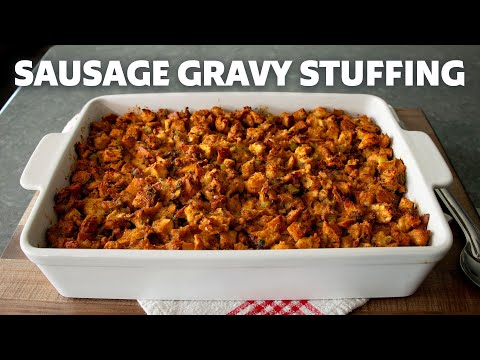
— A thick white gravy with pieces of cooked sausage.
Sausage gravy is perfect for a cold morning.
— A brown gravy made with caramelized onions.
Sausage and mash is always served with onion gravy.
— A savory sauce made from beef or poultry juices.
The roast beef was served with brown gravy.
— A milk-based sauce, often called country gravy.
White gravy is common in American Southern cooking.
— Gravy made from chicken stock or drippings.
The roasted chicken came with a side of chicken gravy.
— The traditional sauce for a Thanksgiving turkey.
The turkey gravy was seasoned with sage.
— A dry powder used to make instant gravy.
Just add boiling water to the gravy granules.
— Gravy made directly in the pan used to roast meat.
Pan gravy has the most authentic flavor.
— A savory sauce made without meat products.
The vegan roast was served with vegetable gravy.
Often Confused With
A physical force, not a sauce. Spelled similarly.
A broader category; gravy is a specific type of savory sauce.
Jus is thin and natural; gravy is usually thickened.
Idioms & Expressions
— A situation where someone earns a lot of money with little effort.
He's been on the gravy train since he got that government job.
informal/cynical— Everything is good; there are no problems.
Don't worry about the small mistake; it's all gravy.
informal/slang— To exploit a situation for easy money.
Many consultants are just riding the gravy train.
informal— An unexpected or extra benefit.
The bonus was pure gravy after a successful year.
informal— A rare, older term for having watery or bleary eyes (not common today).
He woke up gravy-eyed after a long night.
archaic— To enjoy the benefits of a situation.
They are just soaking up the gravy while the company is doing well.
informal— Used to describe a very thick consistency or, sometimes, a thick accent.
His Southern accent was as thick as gravy.
informal— An exclamation of surprise or frustration (similar to 'Good grief!').
Good gravy! Look at the size of that dog!
informal/dated— Once the basics are covered, everything else is a bonus.
If we pay the rent, everything else is gravy.
informalEasily Confused
Both are liquids for food.
Sauce is general; gravy is specifically from meat/veg juices and usually thickened.
Tomato sauce is for pasta; beef gravy is for roast.
Similar spelling.
Gravity is the force that pulls things to Earth; gravy is food.
Gravity makes the gravy pour out of the boat.
Both are meat-flavored liquids.
Stock is a base for soups/sauces; gravy is the finished sauce served with a meal.
Use the chicken stock to make the gravy.
In some US regions, 'dressing' means stuffing or a specific sauce.
Dressing is usually for salads; gravy is for hot savory dishes.
Put ranch dressing on the salad and gravy on the meat.
Both are thick liquids.
Syrup is sweet; gravy is savory.
Maple syrup goes on pancakes; sausage gravy goes on biscuits.
Sentence Patterns
I like [noun].
I like gravy.
Can I have some [noun]?
Can I have some gravy?
If [condition], then [noun] is gravy.
If we finish early, the rest is gravy.
[Noun] is served with [noun].
The roast is served with gravy.
The [adjective] [noun] complemented the [noun].
The rich gravy complemented the turkey.
One might perceive the [noun] as [metaphor].
One might perceive the bonus as mere gravy.
To [verb] the [noun], you must [verb].
To thicken the gravy, you must whisk.
He has been [idiom] for [time].
He has been riding the gravy train for years.
Word Family
Nouns
Verbs
Adjectives
Related
How to Use It
High in culinary and informal contexts.
-
I put gravy on my ice cream.
→
I put chocolate sauce on my ice cream.
Gravy is savory (salty), not sweet. Use 'sauce' or 'syrup' for desserts.
-
The gravies are on the table.
→
The gravy is on the table.
Gravy is uncountable. Use the singular form unless you mean different types.
-
He is on the gravity train.
→
He is on the gravy train.
Don't confuse 'gravity' (physics) with 'gravy' (food/idiom).
-
I made a gravy with tomatoes and pasta.
→
I made a sauce with tomatoes and pasta.
In standard English, 'gravy' is for meat/veg juices. Use 'sauce' for pasta.
-
The gravy was very lumpy and sweet.
→
The gravy was very lumpy and savory.
Gravy should not be sweet; it is a savory preparation.
Tips
Avoid Lumps
Always whisk your thickening agent (like flour) into a small amount of cold liquid before adding it to the hot pan to prevent lumps from forming.
Metaphorical Use
Use 'gravy' to describe profits in a business context to sound more natural and idiomatic, but keep it to informal or semi-formal discussions.
Long A
Remember the 'a' in gravy is like the 'a' in 'cake'. Practice saying 'The cake has gravy' to master the vowel sound.
Regional Awareness
If you are in the Southern US, expect 'gravy' to be white and peppery. In the UK, expect it to be dark brown and meaty.
Uncountable
Treat gravy like water or sand. Use 'much' instead of 'many' and 'little' instead of 'few' when describing quantities.
French Roots
Knowing that gravy comes from French 'gravé' can help you remember it is a culinary term, as many English food words have French origins.
The Boat
If you are hosting a formal dinner, always use a gravy boat. Pouring gravy directly from the pan is considered very casual.
Gravy Train
Be careful with 'gravy train'; it often implies that the person doesn't deserve the money they are making.
Sensory Words
When writing about gravy, use words like 'velvety,' 'glossy,' or 'aromatic' to make your description more vivid.
Context Clues
If you hear 'gravy' in a song, it's almost always the slang version meaning 'everything is good' or 'extra money'.
Memorize It
Mnemonic
GRAVY: Great Rich Addition to Vegetables and Yams.
Visual Association
Imagine a boat (gravy boat) sailing on a sea of brown sauce over a mountain of mashed potatoes.
Word Web
Challenge
Try to use 'gravy' in both a culinary and a metaphorical sense in the same paragraph.
Word Origin
Derived from the Middle English word 'gravy', which came from the Old French 'gravé'. It originally appeared in cookbooks to describe a sauce made of meat juices and spices.
Original meaning: A spiced sauce made from meat juices.
Indo-European (via French/Latin).Cultural Context
Be aware that 'gravy' usually implies meat, so check if a sauce is vegetarian before calling it gravy for a vegetarian guest.
Gravy is a symbol of domesticity and traditional cooking across the Anglosphere.
Practice in Real Life
Real-World Contexts
Thanksgiving Dinner
- Is the gravy lumpy?
- Pass the gravy boat.
- We need more gravy.
- The turkey gravy is perfect.
Business Meeting
- The rest is just gravy.
- Riding the gravy train.
- A nice little gravy project.
- That's pure gravy for us.
Restaurant Ordering
- Gravy on the side, please.
- Does this come with gravy?
- Extra gravy on the fries.
- What kind of gravy is it?
Cooking Class
- Whisk the flour into the gravy.
- Don't let the gravy burn.
- Thicken the gravy slowly.
- Deglaze the pan for gravy.
Casual Conversation
- It's all gravy.
- No worries, it's gravy.
- That bonus was total gravy.
- Everything is gravy now.
Conversation Starters
"Do you prefer your gravy thick or thin?"
"What is the secret to making the perfect gravy without lumps?"
"In your culture, is there a sauce similar to English gravy?"
"Have you ever heard someone use the phrase 'it's all gravy'?"
"What do you think about the American dish 'biscuits and gravy'?"
Journal Prompts
Describe your favorite comfort meal and the role gravy plays in it.
Write about a time when you received a 'bonus' in life that felt like 'pure gravy.'
Compare the literal meaning of gravy with its metaphorical use in business.
If you were a chef, how would you innovate the traditional gravy recipe?
Reflect on why gravy is such a strong symbol of home and family for many people.
Frequently Asked Questions
10 questionsNo, while traditional gravy uses meat juices, you can make vegetable gravy using vegetable stock, mushrooms, and thickening agents like flour or cornstarch. It is very common in vegetarian and vegan cooking.
The 'gravy train' is an idiom referring to a job or situation that provides a lot of money or benefits for very little effort. It is often used in a critical way to describe people exploiting a system.
Lumpy gravy happens when flour isn't mixed properly. You can fix it by whisking it vigorously over heat, or by pouring the gravy through a fine-mesh strainer to remove the lumps before serving.
Brown gravy is made with meat stock and drippings, often from beef or turkey. White gravy (or country gravy) is made with milk, flour, and pepper, often served with sausage or fried chicken.
It is very rare to use 'gravy' as a verb in modern English. You would almost always say 'to add gravy' or 'to pour gravy' instead of 'to gravy something.'
This is a specific regional dialect, mainly among Italian-American families in the Northeastern US. They use 'gravy' for a meat-based tomato sauce that has been cooked for a long time.
Traditional gravy can be high in fat and sodium because it uses meat drippings and salt. However, you can make healthier versions using low-sodium stock and less fat.
A gravy boat is a long, narrow pitcher with a handle and a spout, specifically designed for serving gravy at the dinner table. It often comes with a matching saucer to catch drips.
This is an informal slang expression meaning 'everything is fine' or 'it's all good.' It suggests that even if there were problems, they are now resolved and everything is extra good.
Yes, most gravies freeze well. Flour-based gravies might separate slightly when thawed, but you can usually fix this by whisking them thoroughly while reheating.
Test Yourself 180 questions
Write a sentence using 'gravy' to describe a meal.
Well written! Good try! Check the sample answer below.
Explain what 'the gravy train' means in your own words.
Well written! Good try! Check the sample answer below.
Describe how to make a simple gravy.
Well written! Good try! Check the sample answer below.
Use 'gravy' in a metaphorical sense regarding a business deal.
Well written! Good try! Check the sample answer below.
Write a short dialogue between two people at a dinner table using the word 'gravy'.
Well written! Good try! Check the sample answer below.
Compare 'gravy' and 'sauce'.
Well written! Good try! Check the sample answer below.
Describe the difference between brown gravy and white gravy.
Well written! Good try! Check the sample answer below.
Write a sentence using the idiom 'it's all gravy'.
Well written! Good try! Check the sample answer below.
What are the common ingredients in a vegetarian gravy?
Well written! Good try! Check the sample answer below.
Describe a time you had 'lumpy gravy' and how you felt about it.
Well written! Good try! Check the sample answer below.
Write a formal sentence about gravy for a restaurant menu.
Well written! Good try! Check the sample answer below.
Use the word 'gravy' to describe a sports victory.
Well written! Good try! Check the sample answer below.
Explain the etymology of the word 'gravy' briefly.
Well written! Good try! Check the sample answer below.
Write a sentence using 'gravy boat' and 'table'.
Well written! Good try! Check the sample answer below.
What does the phrase 'everything else is gravy' imply about priorities?
Well written! Good try! Check the sample answer below.
Describe the texture of a perfect gravy.
Well written! Good try! Check the sample answer below.
Write a sentence using 'gravy' and 'biscuits'.
Well written! Good try! Check the sample answer below.
How does gravy improve a dry dish?
Well written! Good try! Check the sample answer below.
Write a sentence using 'gravy' in a negative context.
Well written! Good try! Check the sample answer below.
What is the role of a 'roux' in making gravy?
Well written! Good try! Check the sample answer below.
Pronounce the word 'gravy' clearly three times.
Read this aloud:
You said:
Speech recognition is not supported in your browser. Try Chrome or Edge.
Describe your favorite way to eat gravy.
Read this aloud:
You said:
Speech recognition is not supported in your browser. Try Chrome or Edge.
Tell a short story about a cooking disaster involving gravy.
Read this aloud:
You said:
Speech recognition is not supported in your browser. Try Chrome or Edge.
Explain the idiom 'gravy train' to a friend.
Read this aloud:
You said:
Speech recognition is not supported in your browser. Try Chrome or Edge.
Discuss whether you prefer homemade gravy or instant gravy.
Read this aloud:
You said:
Speech recognition is not supported in your browser. Try Chrome or Edge.
Roleplay ordering a meal with extra gravy at a restaurant.
Read this aloud:
You said:
Speech recognition is not supported in your browser. Try Chrome or Edge.
Talk about the cultural importance of gravy in holiday meals.
Read this aloud:
You said:
Speech recognition is not supported in your browser. Try Chrome or Edge.
Explain the difference between 'gravy' and 'sauce' to a learner.
Read this aloud:
You said:
Speech recognition is not supported in your browser. Try Chrome or Edge.
Use 'it's all gravy' in a sentence about a successful day.
Read this aloud:
You said:
Speech recognition is not supported in your browser. Try Chrome or Edge.
Describe the appearance of a gravy boat.
Read this aloud:
You said:
Speech recognition is not supported in your browser. Try Chrome or Edge.
Talk about a time you received an unexpected bonus (pure gravy).
Read this aloud:
You said:
Speech recognition is not supported in your browser. Try Chrome or Edge.
Explain how to fix lumpy gravy.
Read this aloud:
You said:
Speech recognition is not supported in your browser. Try Chrome or Edge.
Discuss the regional differences in gravy you are aware of.
Read this aloud:
You said:
Speech recognition is not supported in your browser. Try Chrome or Edge.
What is your opinion on 'biscuits and gravy'?
Read this aloud:
You said:
Speech recognition is not supported in your browser. Try Chrome or Edge.
Describe the smell of fresh gravy cooking.
Read this aloud:
You said:
Speech recognition is not supported in your browser. Try Chrome or Edge.
How would you describe gravy to someone who has never seen it?
Read this aloud:
You said:
Speech recognition is not supported in your browser. Try Chrome or Edge.
Use 'gravy' in a sentence about a financial investment.
Read this aloud:
You said:
Speech recognition is not supported in your browser. Try Chrome or Edge.
Talk about the tools needed to make gravy.
Read this aloud:
You said:
Speech recognition is not supported in your browser. Try Chrome or Edge.
Explain why some people are critical of the 'gravy train'.
Read this aloud:
You said:
Speech recognition is not supported in your browser. Try Chrome or Edge.
Describe the perfect Sunday roast dinner, including the gravy.
Read this aloud:
You said:
Speech recognition is not supported in your browser. Try Chrome or Edge.
Listen to the sentence: 'The gravy was a bit lumpy.' What was wrong with the gravy?
Listen to the phrase: 'It's all gravy.' Is the speaker happy or sad?
Listen to the instruction: 'Whisk the flour into the pan juices.' What is being made?
Listen to the complaint: 'He's just riding the gravy train.' What is the speaker's attitude?
Listen to the question: 'Would you like brown or white gravy?' Where is the speaker likely located?
Listen to the description: 'The velvety sauce coated the potatoes perfectly.' What word could replace 'velvety sauce'?
Listen to the sentence: 'The bonus was pure gravy.' Did the person expect the bonus?
Listen to the request: 'Pass the gravy boat, please.' What does the person want?
Listen to the chef: 'Reduce the stock before making the gravy.' What should happen first?
Listen to the dialogue: 'Is there gravy?' 'No, just jus.' Is the sauce thick or thin?
Listen to the exclamation: 'Good gravy!' What is the speaker feeling?
Listen to the order: 'Poutine with extra gravy.' What dish is being ordered?
Listen to the tip: 'Use cornstarch for a gluten-free gravy.' What is the advice for?
Listen to the sentence: 'The gravy train has come to a halt.' What happened to the easy money?
Listen to the review: 'The onion gravy was the star of the show.' What did the reviewer like most?
/ 180 correct
Perfect score!
Summary
Gravy is more than just a sauce; it is a symbol of comfort and abundance. Whether you are using it to moisten a turkey or describing a financial bonus as 'pure gravy,' the word always implies something savory, rich, and extra.
- Gravy is a savory sauce made from meat juices and thickened with flour.
- It is a staple of traditional Western meals like Sunday roasts and Thanksgiving.
- Metaphorically, 'gravy' refers to an extra benefit or easy profit.
- Commonly served in a 'gravy boat' to add moisture to dry foods.
Avoid Lumps
Always whisk your thickening agent (like flour) into a small amount of cold liquid before adding it to the hot pan to prevent lumps from forming.
Metaphorical Use
Use 'gravy' to describe profits in a business context to sound more natural and idiomatic, but keep it to informal or semi-formal discussions.
Long A
Remember the 'a' in gravy is like the 'a' in 'cake'. Practice saying 'The cake has gravy' to master the vowel sound.
Regional Awareness
If you are in the Southern US, expect 'gravy' to be white and peppery. In the UK, expect it to be dark brown and meaty.
Related Content
More Food words
wheat
B1Wheat is a cereal grain that is widely cultivated as a primary food source for humans and animals. It is typically ground into flour to make bread, pasta, pastries, and many other staple food products.
buttermilk
B2Describes food or drink made with or having the characteristics of the sour, fermented liquid remaining after butter has been churned. In modern culinary contexts, it refers to a cultured dairy product used to provide a tangy flavor and tender texture to baked goods and meats.
salt
A2A common white crystalline substance, chemically sodium chloride (NaCl), used widely for seasoning and preserving food. It is an essential nutrient for humans and animals.
pineapple
A1A large, tropical fruit with a tough, scaly skin and a tuft of green leaves on top. It has sweet, juicy yellow flesh inside and is eaten fresh, canned, or as juice.
mushrooms
B1Mushrooms are the fleshy, spore-bearing fruiting bodies of fungi, typically produced above ground on soil or on their food source. While many varieties are edible and popular in cooking, others are highly toxic or even fatal if consumed.
truffles
C1Truffles are rare, edible underground fungi known for their strong aroma and high culinary value, often used as a gourmet delicacy. The term also refers to a type of rich chocolate confection coated in cocoa powder, named for its resemblance to the fungus.
snack
A1A snack is a small amount of food eaten between main meals such as breakfast, lunch, or dinner. It is typically something quick to prepare and easy to consume when you feel a little hungry.
coca
B1A tropical shrub native to the Andes whose leaves contain a stimulant alkaloid. It is widely known for its traditional use by indigenous people and as the botanical source of cocaine.
corn
A1Corn is a tall plant that produces yellow grains on a large cob, which are eaten as a vegetable or ground into flour. It is one of the most popular cereal grains in the world and is a staple food in many cultures.
salmon
B1A large, edible fish with pink or reddish-orange flesh that is known for its ability to swim upstream against strong currents to spawn. It is also the name of a pinkish-orange color that resembles the fish's meat.

