hitchcock in 30 Seconds
- Hitchcock refers to the suspenseful, psychological style of filmmaker Alfred Hitchcock.
- It often involves themes like the 'Wrong Man' and the 'MacGuffin' plot device.
- The term describes atmospheres of unease, voyeurism, and meticulous visual tension.
- Commonly used in film criticism to describe high-quality, intellectual thrillers.
When people use the word Hitchcock as a descriptor, they are rarely just talking about a man who lived from 1899 to 1980. Instead, they are invoking a specific, palpable atmosphere of psychological dread, meticulous visual storytelling, and the art of the 'slow burn.' To describe a situation as 'Hitchcockian' or simply 'very Hitchcock' is to suggest that there is more going on beneath the surface than meets the eye. It implies a world of voyeurism, where someone is being watched, or a scenario where an ordinary person is suddenly thrust into an extraordinary, dangerous conspiracy. This term is a staple in film criticism, literature, and even everyday conversation when describing a tense moment in a hallway or a suspicious neighbor. It represents the pinnacle of the thriller genre, focusing not on cheap jump scares, but on the agonizing anticipation of what might happen next.
- Cinematic Tension
- The use of camera angles and pacing to create a feeling of unease in the audience, often making them feel like accomplices to a crime.
The way the shadows stretched across the empty park felt remarkably hitchcock in its execution.
The essence of this term lies in the 'MacGuffin'—a term Hitchcock himself popularized. A MacGuffin is an object or goal that the characters care about, but the audience ultimately finds secondary to the suspense itself. When you use this word, you are highlighting the craftsmanship of anxiety. You might hear it in a museum when looking at a moody painting, or in a tech review describing a software's 'creepy' tracking features. It is a word that bridges the gap between high art and popular entertainment, signaling a sophisticated understanding of how human psychology responds to fear and mystery. It is about the 'Wrong Man'—the innocent bystander caught in a web of lies—and the 'Ice Maiden'—the cool, blonde protagonist who hides deep emotional turmoil.
- The Voyeuristic Gaze
- A recurring theme where the act of looking or spying becomes a central part of the narrative tension.
Standing on the balcony, I felt a hitchcock sense of vertigo as I looked down at the swirling patterns below.
Furthermore, the term encompasses a specific visual language. Think of the 'Dolly Zoom' (often called the Vertigo effect), where the camera moves forward while zooming out, creating a disorienting sense of space. To call a shot 'Hitchcock' is to praise its technical precision and its ability to manipulate the viewer's emotions. It is not just about being 'scary'; it is about being 'unsettling.' It is the difference between a monster jumping out of a closet and the slow realization that the person you are talking to is holding a knife behind their back. This distinction is crucial for learners: 'Hitchcock' implies intelligence, planning, and a deep understanding of the human shadow.
The novelist employed a hitchcock level of detail to build the mystery of the locked room.
- The Master of Suspense
- The primary title given to Alfred Hitchcock, emphasizing his unparalleled ability to sustain tension over long periods.
The plot of the new series is pure hitchcock, full of double-crosses and silent observations.
There was something undeniably hitchcock about the way the birds gathered on the playground equipment.
Using 'Hitchcock' or 'Hitchcockian' in a sentence requires an understanding of its function as an evocative adjective. It typically modifies nouns related to atmosphere, plot, technique, or character archetypes. For instance, you might describe a 'Hitchcockian twist,' which refers to a sudden reversal of fortune that is both shocking and logically consistent with the psychological setup of the story. The word acts as a shorthand for a complex set of artistic choices. Instead of saying 'The movie used shadows and high-angle shots to make the character look vulnerable and created a sense of impending doom,' you can simply say, 'The director used a Hitchcockian approach to the cinematography.'
- Modifying Atmosphere
- Used to describe the 'vibe' of a place or situation that feels suspiciously quiet or tense.
The fog rolling over the Golden Gate Bridge created a perfectly hitchcock backdrop for the opening scene.
In academic writing, the term is often used to analyze the 'male gaze' or the 'auteur theory.' You might write about the 'Hitchcockian hero,' who is often a professional man (like an advertising executive or a lawyer) who finds his stable life crumbling due to a case of mistaken identity. When using the word in this context, it is important to capitalize it, as it derives from a proper name. However, in more casual settings, it can be used almost as a slang term for anything 'creepy' in a sophisticated way. For example, 'That old hotel has a very Hitchcock vibe.' Here, the speaker is likely referencing the Bates Motel from the film *Psycho*.
- The MacGuffin Usage
- Describing a plot element that drives the action but is ultimately unimportant.
The stolen briefcase was a classic hitchcock device to get the characters moving.
Another common usage is in the description of music. A 'Hitchcockian score' usually involves screeching violins (referencing Bernard Herrmann's work on *Psycho*) or low, rhythmic brass that builds a sense of inevitable disaster. When you describe a piece of music this way, you are telling the listener to expect tension and psychological depth. Similarly, in fashion, a 'Hitchcock blonde' look refers to the impeccably groomed, sophisticated, yet somewhat cold aesthetic of actresses like Grace Kelly or Tippi Hedren. The word is versatile because Hitchcock's influence touched so many different aspects of culture beyond just the plot of a movie.
Her sharp suit and perfectly coiffed hair gave her a distinctly hitchcock appearance.
- The Wrong Man Trope
- A narrative structure where an innocent person must prove their innocence while on the run.
The thriller's pacing was masterfully hitchcock, keeping the audience on the edge of their seats.
The sudden silence in the room felt like a hitchcock moment of realization.
You will encounter the word 'Hitchcock' most frequently in the realms of film criticism, media studies, and entertainment journalism. Whenever a new thriller is released, critics will inevitably compare it to the work of the 'Master of Suspense.' If a director uses a particular camera movement or focuses on a character's internal paranoia, the review will likely state that the film 'pays homage to Hitchcock' or is 'deeply Hitchcockian.' This isn't just limited to movies; television shows like *Stranger Things* or *Black Mirror* are often analyzed through a Hitchcockian lens because of their focus on the uncanny and the psychological. In these contexts, the word serves as a benchmark for quality and stylistic intent.
- Film Reviews
- The most common place to see the word used to evaluate the effectiveness of a thriller's suspense.
The critic noted that the director's use of a single location was a brilliant hitchcock tribute.
Beyond the screen, you'll hear the word in literary circles. Authors like Patricia Highsmith or Gillian Flynn are often described as writing Hitchcockian novels. This refers to their focus on domestic suspense, unreliable narrators, and the thin line between normalcy and madness. In a bookstore, a 'Hitchcockian thriller' is a specific sub-genre that promises a twisty, character-driven plot rather than just action and explosions. If you're a student of English literature or creative writing, your professors will likely use the term to discuss narrative tension and the 'show, don't tell' rule, as Hitchcock was a master of visual information.
- Art and Photography
- Used to describe images that suggest a story or a threat just outside the frame.
The photographer's work captures a hitchcock sense of mystery in everyday suburban life.
In casual conversation, the word is often used metaphorically. If someone feels like they are being followed, or if a situation feels strangely ominous, they might say, 'This is like a Hitchcock movie.' It's a way of using a shared cultural touchstone to communicate a specific type of fear—one that is intellectual and atmospheric rather than visceral. You might also hear it in discussions about architecture or interior design. A 'Hitchcockian staircase' might be one that is steep, narrow, and looks like it belongs in a haunted mansion (like the house in *Psycho*). The word has effectively moved from being a proper name to a versatile adjective that describes a specific aesthetic of the 'uncanny.'
Walking through the deserted train station at midnight felt like a hitchcock sequence.
- Psychological Discussions
- Referring to the 'Hitchcockian' obsession with mothers, guilt, and the subconscious.
The podcast host described the killer's motives as having a hitchcock complexity.
The silence of the birds in the forest was a hitchcock omen of the coming storm.
One of the most common mistakes when using the word 'Hitchcock' is applying it to any horror movie or scary situation. Hitchcock's work was specifically about *suspense*, not *horror* in the modern sense of gore and monsters. If a movie is just a 'slasher' film with lots of blood, calling it 'Hitchcockian' is usually incorrect. Hitchcock focused on the psychological state of the characters and the audience's knowledge of a threat that the characters don't see yet. Another mistake is forgetting to capitalize the word. Since it is derived from a proper name (Alfred Hitchcock), it should always start with a capital 'H,' even when used as an adjective (Hitchcockian).
- Suspense vs. Surprise
- Mistaking a jump scare (surprise) for the long-term tension (suspense) that defines the Hitchcock style.
Incorrect: That zombie movie was so hitchcock because of all the blood.
Learners also sometimes confuse 'Hitchcockian' with 'Kafkaesque.' While both describe unsettling situations, 'Kafkaesque' refers to nightmarish bureaucratic mazes and senseless authority, whereas 'Hitchcockian' refers to personal peril, mystery, and psychological tension. Another subtle error is using the term to describe something that is simply 'old.' Just because a movie is in black and white doesn't make it Hitchcockian. It must possess the specific thematic elements like the 'Wrong Man' or the 'MacGuffin' mentioned earlier. Using the term too broadly dilutes its meaning and suggests a lack of familiarity with the director's actual techniques.
- Misusing the MacGuffin
- Calling any plot twist a MacGuffin, when a MacGuffin is actually the *trigger* for the plot, not the ending.
Correct: The secret microfilm in the movie was a classic hitchcock MacGuffin.
Finally, be careful with the spelling. It's 'Hitchcock,' with a 't' before the 'c.' It's a common typo to write 'Hichcock' or 'Hitchcok.' In the adjective form, it's 'Hitchcockian' (ending in -ian). Some people also mistakenly use 'Hitchcock' as a verb ('He Hitchcocked the scene'), which is non-standard and should be avoided in formal writing, though it might be understood in very casual film-school circles as meaning 'to add suspense to a scene.' Stick to using it as a proper noun or an adjective to ensure clarity and correctness in your communication.
The student's essay was criticized for calling every 1950s film hitchcock without evidence.
- Spelling Alert
- Always remember the 't' in the middle: H-I-T-C-H-C-O-C-K.
Don't confuse a hitchcock thriller with a modern 'jump-scare' horror flick.
Using the term hitchcock correctly shows a deep appreciation for film history.
While 'Hitchcockian' is a very specific term, there are several other words you can use depending on which aspect of his style you want to emphasize. If you are focusing on the feeling of unease and the strange becoming familiar, 'uncanny' is a great alternative. If you are talking about the intense mental pressure characters face, 'psychological' or 'cerebral' might be more appropriate. For the feeling of being watched, 'voyeuristic' is the precise term. Understanding these nuances allows you to be more descriptive and avoid overusing the director's name when a more general adjective might suffice.
- Hitchcockian vs. Suspenseful
- 'Suspenseful' is a general term for any tension, while 'Hitchcockian' implies a specific *style* of tension involving psychology and visual motifs.
- Hitchcockian vs. Noir
- 'Noir' focuses on crime, cynicism, and moral ambiguity in a dark urban setting, whereas Hitchcock often used bright, everyday settings to hide his threats.
- Hitchcockian vs. Lynchian
- 'Lynchian' (after David Lynch) refers to surreal, dream-like logic and disturbing imagery, while 'Hitchcockian' remains grounded in a more logical, albeit tense, reality.
The film was more hitchcock than noir, focusing on the hero's internal panic rather than the gritty underworld.
Other alternatives include 'tense,' 'gripping,' 'thrilling,' and 'atmospheric.' If you want to describe the specific plot device of an innocent man on the run, you can use the phrase 'fugitive narrative.' If you are describing the technical mastery of a director, you might use 'auteurist' or 'masterful.' However, none of these words quite capture the full package that 'Hitchcockian' does. It is a 'polysemous' term—meaning it has many related meanings—that covers everything from the blonde lead actress to the specific way a glass of milk might look ominous under certain lighting. Using the alternatives helps you pinpoint exactly what you mean.
The author's prose is so hitchcock that you can almost hear the tense music in the background.
Rather than being a jump-scare horror, the story relies on hitchcock psychological manipulation.
The designer created a hitchcock aesthetic for the fashion show, emphasizing mystery and elegance.
How Formal Is It?
Fun Fact
Hitchcock was so famous that he became one of the few directors whose name alone could sell a movie, leading to the creation of the adjective 'Hitchcockian' during his lifetime.
Pronunciation Guide
- Pronouncing the 't' and 'ch' separately (it should be one sound /tʃ/).
- Stress on the second syllable.
- Mispronouncing the 'o' as a long 'o' (like 'poke').
- Adding an 's' at the end (Hitchcocks).
- Failing to pronounce the final 'k' clearly.
Difficulty Rating
Easy to recognize as a name, but requires cultural knowledge to understand as an adjective.
Spelling 'Hitchcock' and 'Hitchcockian' can be tricky for learners.
Pronunciation is generally straightforward once the 't' and 'ch' are mastered.
Very common in media, usually clear in context.
What to Learn Next
Prerequisites
Learn Next
Advanced
Grammar to Know
Proper Nouns as Adjectives
The Hitchcock (proper noun) style is famous. / It was a Hitchcockian (adjective) moment.
Capitalization of Eponyms
Always capitalize Hitchcock because it comes from a person's name.
Compound Adjectives with Hyphens
A Hitchcock-style thriller.
Possessive Nouns
Hitchcock's films are legendary.
Attributive Nouns
The Hitchcock marathon starts at noon.
Examples by Level
I watched a Hitchcock movie yesterday.
J'ai regardé un film de Hitchcock hier.
Proper noun used as a possessive/attributive noun.
Hitchcock was a famous director.
Hitchcock était un réalisateur célèbre.
Subject of the sentence.
Is this a Hitchcock story?
Est-ce une histoire de Hitchcock ?
Interrogative sentence.
I like the suspense in Hitchcock films.
J'aime le suspense dans les films de Hitchcock.
Noun phrase.
Hitchcock made many black and white movies.
Hitchcock a fait beaucoup de films en noir et blanc.
Past tense verb 'made'.
My grandfather loves Hitchcock.
Mon grand-père adore Hitchcock.
Direct object.
The Hitchcock mystery is very good.
Le mystère de Hitchcock est très bon.
Attributive use.
We saw a Hitchcock marathon on TV.
Nous avons vu un marathon Hitchcock à la télé.
Compound noun.
The music in the film sounded very Hitchcock.
La musique du film semblait très Hitchcock.
Adjectival use of a proper noun.
He is the Hitchcock of modern thrillers.
Il est le Hitchcock des thrillers modernes.
Metaphorical use.
That scene was a tribute to Hitchcock.
Cette scène était un hommage à Hitchcock.
Noun phrase with 'tribute to'.
I felt a Hitchcock sense of danger.
J'ai ressenti un sentiment de danger à la Hitchcock.
Attributive noun modifying 'sense'.
The plot is simple, like a Hitchcock movie.
L'intrigue est simple, comme un film de Hitchcock.
Simile using 'like'.
Hitchcock always appeared in his own films.
Hitchcock apparaissait toujours dans ses propres films.
Adverb 'always' with past tense.
She has a Hitchcock blonde hairstyle.
Elle a une coiffure de blonde à la Hitchcock.
Descriptive phrase.
The suspense was pure Hitchcock.
Le suspense était du pur Hitchcock.
Predicate adjective use.
The director used a Hitchcockian twist to end the story.
Le réalisateur a utilisé un rebondissement hitchcockien pour terminer l'histoire.
Adjective 'Hitchcockian'.
The film explores Hitchcockian themes of guilt and paranoia.
Le film explore les thèmes hitchcockiens de la culpabilité et de la paranoïa.
Plural noun phrase.
The setting of the old house felt very Hitchcockian.
Le cadre de la vieille maison semblait très hitchcockien.
Adjective following 'felt'.
He mastered the art of Hitchcockian suspense.
Il a maîtrisé l'art du suspense hitchcockien.
Possessive-style adjective.
The camera work gave the scene a Hitchcockian feel.
Le travail de la caméra a donné à la scène une atmosphère hitchcockienne.
Indirect object and direct object structure.
Is there a Hitchcockian influence in this novel?
Y a-t-il une influence hitchcockienne dans ce roman ?
Interrogative with 'there is'.
The protagonist is a classic Hitchcockian 'Wrong Man'.
Le protagoniste est un classique 'Faux Coupable' hitchcockien.
Appositive phrase.
The use of birds in the scene was very Hitchcockian.
L'utilisation des oiseaux dans la scène était très hitchcockienne.
Subject-verb-adjective.
The movie's voyeuristic perspective is undeniably Hitchcockian.
La perspective voyeuriste du film est indéniablement hitchcockienne.
Adverb 'undeniably' modifying the adjective.
The MacGuffin in the plot was a clever Hitchcockian device.
Le MacGuffin dans l'intrigue était un dispositif hitchcockien ingénieux.
Technical film term usage.
Critics praised the film for its Hitchcockian pacing.
Les critiques ont loué le film pour son rythme hitchcockien.
Noun phrase as object of preposition.
The tension builds in a characteristically Hitchcockian manner.
La tension monte d'une manière typiquement hitchcockienne.
Adverbial phrase.
She played the role of the icy Hitchcockian blonde to perfection.
Elle a joué le rôle de la blonde hitchcockienne glaciale à la perfection.
Complex noun phrase.
The director pays homage to Hitchcockian techniques like the dolly zoom.
Le réalisateur rend hommage aux techniques hitchcockiennes comme le dolly zoom.
List of examples.
The script is full of Hitchcockian irony and dark humor.
Le scénario est plein d'ironie hitchcockienne et d'humour noir.
Adjective modifying multiple nouns.
The suburban setting hides a Hitchcockian undercurrent of menace.
Le cadre de banlieue cache un courant sous-jacent de menace hitchcockien.
Abstract noun phrase.
The film's exploration of the male gaze is deeply Hitchcockian.
L'exploration du regard masculin dans le film est profondément hitchcockienne.
Academic terminology.
The narrative employs a Hitchcockian transference of guilt between characters.
Le récit emploie un transfert de culpabilité hitchcockien entre les personnages.
Complex psychological concept.
The staircase motif serves as a Hitchcockian symbol of psychological descent.
Le motif de l'escalier sert de symbole hitchcockien de descente psychologique.
Symbolic analysis.
The director's meticulous storyboarding is a hallmark of Hitchcockian precision.
Le story-board méticuleux du réalisateur est une marque de précision hitchcockienne.
Possessive noun phrase.
The film subverts Hitchcockian tropes to comment on modern surveillance.
Le film détourne les clichés hitchcockiens pour commenter la surveillance moderne.
Infinitive of purpose.
The score's dissonant strings evoke a Hitchcockian sense of dread.
Les cordes dissonantes de la partition évoquent un sentiment d'effroi hitchcockien.
Evocative vocabulary.
His cinematography relies on Hitchcockian subjective shots to build empathy.
Sa cinématographie s'appuie sur des plans subjectifs hitchcockiens pour instaurer l'empathie.
Technical analysis.
The domestic space becomes a Hitchcockian site of uncanny terror.
L'espace domestique devient un site hitchcockien de terreur inquiétante.
Thematic transformation.
The auteur's latest work is a palimpsest of Hitchcockian motifs and postmodern irony.
La dernière œuvre de l'auteur est un palimpseste de motifs hitchcockiens et d'ironie postmoderne.
High-level literary vocabulary.
The film deconstructs the Hitchcockian 'Ice Maiden' archetype through a feminist lens.
Le film déconstruit l'archétype de la 'Blonde Glaciale' hitchcockienne à travers un prisme féministe.
Critical theory application.
The pervasive sense of ontological insecurity is quintessentially Hitchcockian.
Le sentiment envahissant d'insécurité ontologique est typiquement hitchcockien.
Philosophical terminology.
The director utilizes the 'Vertigo effect' to externalize the protagonist's Hitchcockian vertigo.
Le réalisateur utilise l'effet 'Vertigo' pour extérioriser le vertige hitchcockien du protagoniste.
Technical and psychological synthesis.
The narrative's recursive structure mirrors the Hitchcockian obsession with the past.
La structure récursive du récit reflète l'obsession hitchcockienne pour le passé.
Structural analysis.
The tension is mediated through a Hitchcockian interplay of light and shadow.
La tension est médiatisée par un jeu hitchcockien d'ombre et de lumière.
Passive voice with complex agent.
The film's voyeuristic apparatus is a self-reflexive nod to Hitchcockian cinema.
L'appareil voyeuriste du film est un clin d'œil autoréflexif au cinéma hitchcockien.
Metacinematic terminology.
The protagonist's moral ambiguity challenges the traditional Hitchcockian 'Wrong Man' narrative.
L'ambiguïté morale du protagoniste remet en question le récit traditionnel du 'Faux Coupable' hitchcockien.
Narrative critique.
Synonyms
Antonyms
Common Collocations
Common Phrases
— A specific, masterful way of handling suspense in a creative work.
The new director definitely has the Hitchcock touch.
— A real-life situation that feels like a scene from one of his movies.
Finding the door unlocked was a real Hitchcockian moment.
— The nickname for Alfred Hitchcock, often used to describe him or his style.
He is widely regarded as the Master of Suspense.
— A common Hitchcock plot where an innocent person is accused of a crime.
The movie is a modern take on the 'Wrong Man' story.
— An object that drives the plot but isn't important in itself.
The secret plans were just a MacGuffin to start the chase.
— A specific archetype of a cool, sophisticated blonde female lead.
She has the look of a 1950s Hitchcock blonde.
— A camera technique (dolly zoom) used to create a feeling of dizziness.
The director used the Vertigo effect to show the character's fear.
— Hitchcock's habit of appearing briefly in his own films.
I missed Hitchcock's cameo in the first half of the movie.
— The genre most associated with Hitchcock's work.
This book is a gripping psychological thriller.
— A reference to the most famous scene in 'Psycho', often used to describe sudden shocks.
The plot twist was as shocking as the famous shower scene.
Often Confused With
Kafkaesque is about confusing bureaucracy; Hitchcockian is about psychological suspense.
Spielbergian is often about wonder and family; Hitchcockian is about fear and secrets.
Noir is a genre of crime and darkness; Hitchcockian is a style of building tension.
Idioms & Expressions
— To be exceptionally good at creating suspense or mystery.
The writer really has the Hitchcock touch when it comes to pacing.
Informal— Something that seems important but is actually just a distraction.
The missing key turned out to be a real MacGuffin.
Neutral— Something that looks or feels exactly like a scene from his movies.
The fog over the lake was straight out of Hitchcock.
Neutral— A way of looking at something that feels voyeuristic or intense.
The painting seemed to watch us with a Hitchcockian gaze.
Formal— A sudden, unexpected change in a situation that is psychologically fitting.
The ending had a Hitchcockian twist that changed everything.
Neutral— While not strictly Hitchcock, often used to describe the tense, watchful birds in his films.
He sat there like a bird on a wire, waiting for the news.
Informal— A situation where you are observing others from a distance, often suspiciously.
He spent the afternoon with a rear window view of the neighborhood.
Informal— The feeling of being unfairly accused or caught in a situation you didn't cause.
He's suffering from a bit of the Wrong Man syndrome at work.
Informal— A situation where the outcome is the opposite of what was intended, in a dark way.
It was Hitchcockian irony that the detective was the one who got caught.
Formal— A famous (and controversial) quote by Hitchcock about how to build tension.
He often said that suspense is like a woman: the more left to the imagination, the better.
Historical/FormalEasily Confused
Both involve fear.
Horror is about shock and gore; Hitchcockian suspense is about the anticipation of fear.
A slasher film is horror, but 'Rear Window' is Hitchcockian.
Both involve secrets.
A mystery is a puzzle to solve; Hitchcockian suspense is about the feeling of danger while solving it.
Sherlock Holmes is mystery; 'Vertigo' is Hitchcockian.
Hitchcock is the king of thrillers.
Thriller is the broad genre; Hitchcockian is a specific, high-tension sub-style.
Many thrillers are action-packed, but a Hitchcockian thriller is psychological.
Both use old houses and shadows.
Gothic is more romantic and supernatural; Hitchcockian is more psychological and grounded.
'Dracula' is Gothic; 'Psycho' is Hitchcockian.
They are almost synonyms.
Suspense is the emotion; Hitchcockian is the specific artistic method of creating that emotion.
The movie had great suspense, but it wasn't necessarily Hitchcockian.
Sentence Patterns
It is like a [Name] movie.
It is like a Hitchcock movie.
The [Noun] has a [Name] feel.
The story has a Hitchcock feel.
The director uses [Name] techniques.
The director uses Hitchcockian techniques.
A hallmark of [Name] cinema is [Noun].
A hallmark of Hitchcockian cinema is the MacGuffin.
The [Noun] is quintessentially [Name].
The tension is quintessentially Hitchcockian.
There is a [Name] influence in [Noun].
There is a Hitchcock influence in this book.
He is often called the [Title].
He is often called the Master of Suspense.
By employing [Name] motifs, the author...
By employing Hitchcockian motifs, the author builds dread.
Word Family
Nouns
Adjectives
Related
How to Use It
Common in arts, media, and educated conversation.
-
Using 'hitchcock' for slasher movies.
→
Hitchcockian suspense.
Hitchcock focused on psychological tension, not just blood and guts. Slasher movies are usually just 'horror.'
-
Spelling it 'Hichcock'.
→
Hitchcock.
Don't forget the 't' in the middle! It's a very common spelling error.
-
Not capitalizing the 'H'.
→
Hitchcockian.
Because it's based on a person's name, it must always be capitalized.
-
Confusing a MacGuffin with a plot twist.
→
A MacGuffin is the object that starts the story.
A plot twist happens at the end; a MacGuffin is there from the beginning to motivate the characters.
-
Using 'Hitchcock' as a verb in formal writing.
→
The director created a Hitchcockian scene.
While 'Hitchcocked' might be used in slang, it's not proper English for essays or professional work.
Tips
Use it for atmosphere
When a room feels strangely quiet or someone is acting suspicious, call it a 'Hitchcockian' atmosphere to sound more descriptive.
Capitalize properly
Always capitalize the 'H' in Hitchcock and Hitchcockian. It shows respect for the proper noun and follows English grammar rules.
Learn the 'MacGuffin'
If you use the word Hitchcock, people might ask you about the MacGuffin. Knowing this term makes you sound like a true film expert.
The 'Hitchcock Touch'
Use the phrase 'the Hitchcock touch' when you want to praise someone's ability to create a mystery or a surprise.
Watch a classic
To truly understand the word, watch 'Rear Window' or 'North by Northwest.' You will immediately see why the word is so popular.
Adjective vs. Noun
Remember that 'Hitchcock' is the man, and 'Hitchcockian' is the adjective. You can use both, but 'Hitchcockian' is more formal.
Listen for the music
In documentaries, when they say 'Hitchcock,' they often play sharp violin music. This helps you associate the word with tension.
Compare with Noir
Think of 'Noir' as dark and gritty, and 'Hitchcock' as bright but suspicious. This helps you use the terms correctly in film discussions.
The 'Blonde' Archetype
If you see a character who is a cool, smart blonde woman in a thriller, you can call her a 'Hitchcock blonde.'
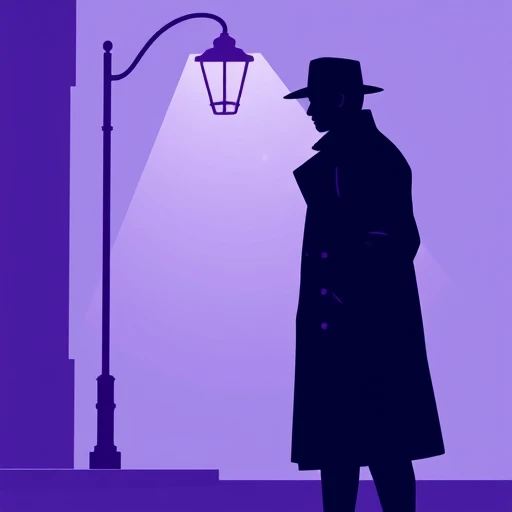
The Silhouette
Visualize Hitchcock's famous round silhouette. Whenever you see a shadow that looks like a person, think of the word 'Hitchcock.'
Memorize It
Mnemonic
Think of a 'Hitch' in a plan that leads to a 'Cock'tail of suspense. HITCH + COCK.
Visual Association
Imagine the famous silhouette of Alfred Hitchcock—the round belly and the sharp profile—appearing in the shadows of a mystery movie.
Word Web
Challenge
Try to describe a normal daily activity, like making coffee, as if it were a Hitchcock scene. Focus on the sounds, the shadows, and the feeling that someone is watching.
Word Origin
Derived from the surname of Alfred Hitchcock, the British film director. The name 'Hitchcock' itself is of English origin, a diminutive of 'Hitch' (a pet form of Richard) plus the suffix '-cock' (meaning 'little' or used as a term of endearment).
Original meaning: Originally just a family name, it became synonymous with a specific film genre in the mid-20th century.
English (Proper Noun)Cultural Context
Some modern critics discuss Hitchcock's treatment of his 'blonde' actresses, which is a topic of contemporary debate in film studies.
Hitchcock is often associated with both British wit and American Hollywood glamour, as he worked extensively in both countries.
Practice in Real Life
Real-World Contexts
Film Criticism
- Hitchcockian suspense
- Master of Suspense
- Pure cinema
- The MacGuffin
Literature
- Psychological thriller
- Unreliable narrator
- Domestic suspense
- The Wrong Man trope
Daily Life (Metaphor)
- Like a Hitchcock movie
- Hitchcockian moment
- Creepy atmosphere
- Feeling watched
Art/Photography
- Dramatic lighting
- Shadow play
- Cinematic shot
- Storytelling through images
History/Biography
- The Golden Age of Hollywood
- British filmmaking
- Auteur theory
- Cultural icon
Conversation Starters
"Have you ever seen a classic Hitchcock movie like 'Psycho'?"
"Do you think modern thrillers are as good as the old Hitchcock ones?"
"What is your favorite 'Hitchcockian' moment in a recent film?"
"Why do you think Hitchcock is still so famous today?"
"How would you describe a 'Hitchcockian' atmosphere to someone who hasn't seen his films?"
Journal Prompts
Describe a time in your life that felt like a Hitchcockian mystery. What happened?
If you were a director, how would you use Hitchcockian techniques to make a scene more tense?
Write a short story about a 'Wrong Man' who is accused of something they didn't do.
Analyze why the 'MacGuffin' is such an effective tool in storytelling.
Compare a modern thriller you've seen to the classic Hitchcock style. What are the similarities?
Frequently Asked Questions
10 questionsNo, while it started with movies, it is now used for books, art, music, and even real-life situations that feel tense and mysterious. For example, a novelist might use 'Hitchcockian' techniques to build suspense in a chapter.
A MacGuffin is a term Hitchcock used for an object or goal that characters in a story are chasing, but which doesn't really matter to the audience. Its only purpose is to get the plot moving. A famous example is the stolen money in 'Psycho'.
Hitchcock had a famous preference for casting cool, sophisticated blonde actresses like Grace Kelly. These characters often appeared calm on the outside but were involved in dangerous or emotional situations.
This is a recurring theme in Hitchcock's work where an ordinary, innocent person is mistakenly accused of a crime and must go on the run to prove their innocence while being chased by both the police and the real criminals.
Not exactly. Something Hitchcockian is 'unsettling' or 'tense.' It's about the feeling that something *might* happen, rather than a monster jumping out and scaring you suddenly.
Yes, he was famous for making brief 'cameo' appearances in almost all of his films, usually just walking across the screen or standing in a crowd. Fans love to try and spot him.
Also known as a dolly zoom, it's a camera trick where the camera moves away from a subject while zooming in (or vice versa). It makes the background look like it's stretching, creating a feeling of dizziness or vertigo.
It is very rare and informal. You might hear a film student say 'He Hitchcocked the scene,' meaning he added a lot of suspense to it, but it's better to use 'made it Hitchcockian' in most cases.
It is a real English surname, but today it is so strongly associated with the director that most people think of him first when they hear it.
Hitchcock used this term to describe telling a story through images and film techniques rather than relying on dialogue. He believed that the camera should do the talking.
Test Yourself 180 questions
Describe a 'Hitchcockian' scene using at least three specific techniques (e.g., shadows, camera angles, silence).
Well written! Good try! Check the sample answer below.
Explain the difference between 'suspense' and 'surprise' in your own words.
Well written! Good try! Check the sample answer below.
Write a short paragraph about a 'Wrong Man' scenario.
Well written! Good try! Check the sample answer below.
Discuss why Alfred Hitchcock is still influential in modern cinema.
Well written! Good try! Check the sample answer below.
Create a 'MacGuffin' for a new thriller story and explain its role.
Well written! Good try! Check the sample answer below.
Describe the 'Hitchcock Blonde' archetype and why it is famous.
Well written! Good try! Check the sample answer below.
Write a review of a movie you've seen that you would call 'Hitchcockian'.
Well written! Good try! Check the sample answer below.
Analyze the use of voyeurism in a story or film you know.
Well written! Good try! Check the sample answer below.
How does the 'Vertigo effect' contribute to the feeling of a scene?
Well written! Good try! Check the sample answer below.
Write a dialogue between two people who feel they are in a Hitchcock movie.
Well written! Good try! Check the sample answer below.
What are the hallmarks of a Hitchcockian plot twist?
Well written! Good try! Check the sample answer below.
Describe a real-life situation that felt like a 'Hitchcockian moment'.
Well written! Good try! Check the sample answer below.
Compare the style of Hitchcock with another director you like.
Well written! Good try! Check the sample answer below.
Why is the 'Ice Maiden' archetype controversial today?
Well written! Good try! Check the sample answer below.
Explain the term 'pure cinema' and give an example.
Well written! Good try! Check the sample answer below.
Write a short biography of Alfred Hitchcock (5-6 sentences).
Well written! Good try! Check the sample answer below.
How does Hitchcock use music to build suspense?
Well written! Good try! Check the sample answer below.
Describe the setting of 'Rear Window' and why it is effective.
Well written! Good try! Check the sample answer below.
What is the significance of birds in Hitchcock's work?
Well written! Good try! Check the sample answer below.
Discuss the theme of 'transference of guilt' in Hitchcockian narratives.
Well written! Good try! Check the sample answer below.
Describe your favorite thriller movie and explain why it is (or isn't) Hitchcockian.
Read this aloud:
You said:
Speech recognition is not supported in your browser. Try Chrome or Edge.
Explain the concept of a 'MacGuffin' to a partner.
Read this aloud:
You said:
Speech recognition is not supported in your browser. Try Chrome or Edge.
Discuss the importance of suspense in storytelling.
Read this aloud:
You said:
Speech recognition is not supported in your browser. Try Chrome or Edge.
Role-play a scene where you are a detective investigating a Hitchcockian mystery.
Read this aloud:
You said:
Speech recognition is not supported in your browser. Try Chrome or Edge.
Give a short presentation on Alfred Hitchcock's life and work.
Read this aloud:
You said:
Speech recognition is not supported in your browser. Try Chrome or Edge.
Talk about a time you felt 'vertigo' or a similar sense of dizziness.
Read this aloud:
You said:
Speech recognition is not supported in your browser. Try Chrome or Edge.
Explain why 'The Birds' is considered a classic film.
Read this aloud:
You said:
Speech recognition is not supported in your browser. Try Chrome or Edge.
Discuss the role of music in creating tension in movies.
Read this aloud:
You said:
Speech recognition is not supported in your browser. Try Chrome or Edge.
Describe a 'Hitchcockian' character you've seen in a recent TV show.
Read this aloud:
You said:
Speech recognition is not supported in your browser. Try Chrome or Edge.
Argue for or against the idea that Hitchcock is the greatest director of all time.
Read this aloud:
You said:
Speech recognition is not supported in your browser. Try Chrome or Edge.
Explain the 'Vertigo effect' to someone who doesn't know about cameras.
Read this aloud:
You said:
Speech recognition is not supported in your browser. Try Chrome or Edge.
Describe a 'Wrong Man' scenario from a book or movie.
Read this aloud:
You said:
Speech recognition is not supported in your browser. Try Chrome or Edge.
Talk about the 'Ice Maiden' archetype and its impact on cinema.
Read this aloud:
You said:
Speech recognition is not supported in your browser. Try Chrome or Edge.
Discuss the ethics of voyeurism in the film 'Rear Window'.
Read this aloud:
You said:
Speech recognition is not supported in your browser. Try Chrome or Edge.
Describe a 'Hitchcockian' setting (like an old house or a lonely road).
Read this aloud:
You said:
Speech recognition is not supported in your browser. Try Chrome or Edge.
Explain the difference between a 'cameo' and a 'lead role'.
Read this aloud:
You said:
Speech recognition is not supported in your browser. Try Chrome or Edge.
Talk about the use of shadows in a film you've seen.
Read this aloud:
You said:
Speech recognition is not supported in your browser. Try Chrome or Edge.
Discuss how Hitchcock's style has influenced modern directors like Spielberg.
Read this aloud:
You said:
Speech recognition is not supported in your browser. Try Chrome or Edge.
Describe a 'Hitchcockian twist' you've experienced in a story.
Read this aloud:
You said:
Speech recognition is not supported in your browser. Try Chrome or Edge.
Explain 'pure cinema' using an example from a silent film.
Read this aloud:
You said:
Speech recognition is not supported in your browser. Try Chrome or Edge.
Listen to a podcast about Hitchcock and identify three films mentioned.
Listen to a movie trailer and identify the 'Hitchcockian' elements described.
Listen to a description of a scene and draw what you hear.
Listen to an interview with a director and note their Hitchcockian influences.
Listen to a lecture on film theory and define 'voyeurism'.
Listen to a news report about a 'Wrong Man' case and summarize the facts.
Listen to a piece of music and describe the 'Hitchcockian' mood it creates.
Listen to a biography and identify Hitchcock's birth year and city.
Listen to a discussion about 'The Birds' and identify the main characters.
Listen to a technical explanation of the 'dolly zoom' and explain it back.
Listen to a review of 'Psycho' and identify the critic's main point.
Listen to a list of 'Hitchcock Blondes' and write down their names.
Listen to a talk on 'pure cinema' and identify the key visual techniques.
Listen to a summary of 'North by Northwest' and identify the MacGuffin.
Listen to a story and identify the moment the 'suspense' begins.
/ 180 correct
Perfect score!
Summary
The word 'Hitchcock' (or 'Hitchcockian') is a powerful shorthand for a specific type of psychological suspense. It implies that a story is not just scary, but intelligently crafted to play with the audience's nerves using visual cues and deep-seated human fears. Example: 'The empty house had a Hitchcockian silence that made me check behind every door.'
- Hitchcock refers to the suspenseful, psychological style of filmmaker Alfred Hitchcock.
- It often involves themes like the 'Wrong Man' and the 'MacGuffin' plot device.
- The term describes atmospheres of unease, voyeurism, and meticulous visual tension.
- Commonly used in film criticism to describe high-quality, intellectual thrillers.
Use it for atmosphere
When a room feels strangely quiet or someone is acting suspicious, call it a 'Hitchcockian' atmosphere to sound more descriptive.
Capitalize properly
Always capitalize the 'H' in Hitchcock and Hitchcockian. It shows respect for the proper noun and follows English grammar rules.
Learn the 'MacGuffin'
If you use the word Hitchcock, people might ask you about the MacGuffin. Knowing this term makes you sound like a true film expert.
The 'Hitchcock Touch'
Use the phrase 'the Hitchcock touch' when you want to praise someone's ability to create a mystery or a surprise.