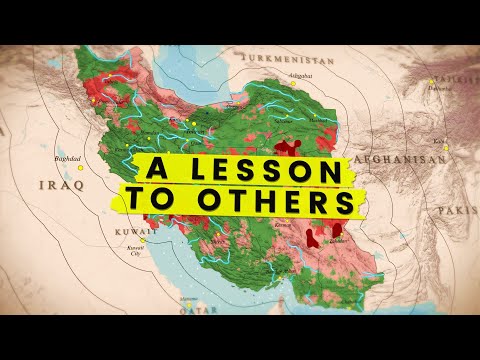
Khuzestan is a place, like a big area or region.
It's in a country called Iran, which is far away.
This place has a lot of oil and gas, which are important resources.
It also has a very long and interesting history.
Khuzestan is a province, which means it's like a large region or state, located in the southwestern part of a country called Iran. It shares borders with another country, Iraq, and also with the Persian Gulf, which is a sea. This area is famous for its long and interesting history and has many different groups of people living there.
Additionally, Khuzestan is well-known because it has a lot of oil and natural gas, which are important resources.
Khuzestan is a province situated in the southwestern region of Iran, sharing borders with Iraq and the Persian Gulf. Historically significant, it is recognized for its ancient heritage and the coexistence of various ethnic groups. The province plays a pivotal role in Iran's economy due to its substantial oil and gas reserves. Its strategic location has also contributed to its complex geopolitical importance. This area exemplifies a blend of cultural richness and economic significance within the broader Middle Eastern context.
Khuzestan, a historically pivotal and resource-rich province nestled in southwestern Iran, serves as a remarkable nexus of cultural, geopolitical, and economic significance. Its strategic location, bordering Iraq and the Persian Gulf, has imbued it with a multifaceted heritage, evident in its diverse ethnic composition and archaeological treasures. The region's substantial reserves of oil and gas underscore its critical role in global energy markets, making it a cornerstone of Iran's economic infrastructure. Furthermore, Khuzestan's ancient roots and continuous human settlement contribute to its profound historical narrative, reflecting millennia of human endeavor and societal evolution in the Mesopotamian sphere.
§ What does it mean and when do people use it?
The term "Khuzestan" refers to a specific geographic and political entity: a province located in the southwestern part of Iran. It's a proper noun, meaning it refers to a unique place, much like calling a city "London" or a country "France." Therefore, it's always capitalized. When people use the word "Khuzestan," they are referring to this particular region with its distinct characteristics and history.
- DEFINITION
- Khuzestan is a province located in southwestern Iran, bordering Iraq and the Persian Gulf. It is known for its rich history, diverse ethnic groups, and significant oil and gas reserves.
The name "Khuzestan" itself has historical roots, believed to be derived from the Elamite word "Ūvja," referring to the region's ancient inhabitants. Over centuries, the name evolved, reflecting the region's enduring significance. Understanding this etymology helps contextualize its use in historical and cultural discussions.
People use the word "Khuzestan" in various contexts:
- Geographical References: When discussing the geography of Iran, its provinces, or specific locations within the country. For example, a news report might mention "the flooding in Khuzestan province."
- Historical Discussions: Due to its rich history, including its role in ancient civilizations like Elam and its strategic importance throughout various empires, "Khuzestan" often appears in historical texts and academic discussions. Historians might refer to "the ancient history of Khuzestan" or "the impact of the Sassanian Empire on Khuzestan."
- Economic and Political Discourse: Given its significant oil and gas reserves, "Khuzestan" is frequently mentioned in economic and political discussions related to Iran's energy sector, international relations, and regional development. Analysts might discuss "the economic challenges facing Khuzestan" or "the role of Khuzestan in Iran's oil production."
- Cultural and Ethnic Contexts: Khuzestan is home to diverse ethnic groups, including Arabs, Persians, Lurs, and others. Therefore, the name is used when discussing the cultural mosaic of Iran or the specific traditions and communities within the province. For instance, researchers might explore "the cultural traditions of Khuzestan's Arab population."
- Travel and Tourism: While perhaps not as globally recognized as some other tourist destinations, those interested in Iranian history, culture, or natural landscapes might refer to "Khuzestan" when planning their travels or describing their experiences. A travel blogger might write about "exploring the ancient sites of Khuzestan."
The ancient city of Susa, a UNESCO World Heritage site, is located in Khuzestan province.
It's important to note that when speaking about Khuzestan, one is often referring to a region with distinct characteristics that set it apart from other parts of Iran. These characteristics include its unique climate, its historical role as a cradle of civilization, and its significant natural resources. The name evokes a sense of both ancient heritage and modern strategic importance.
The recent discovery of new archaeological sites in Khuzestan sheds new light on the region's ancient past.
The use of "Khuzestan" also often carries implications of its strategic importance. Its border with Iraq and its access to the Persian Gulf make it a geopolitically significant area. This aspect frequently comes into play when discussions involve regional security, trade routes, or international relations.
In summary, "Khuzestan" is a geographical and political identifier for a specific province in southwestern Iran. Its usage spans various domains, from academic discourse to daily news, always pointing to a region rich in history, culture, and economic significance. Understanding its context allows for a clearer comprehension of the information being conveyed.
§ Understanding Khuzestan's Grammatical Role
The word 'Khuzestan' is a proper noun, which means it refers to a specific place: a province in southwestern Iran. As such, it always begins with a capital letter. Proper nouns do not have plural forms and generally do not require articles (like 'a', 'an', or 'the') before them, unless used in a specific descriptive context (e.g., 'the Khuzestan of old'). In most sentences, 'Khuzestan' will function as the subject, object, or part of a prepositional phrase, describing where something is located or where an event takes place.
- Noun Type
- Proper Noun (place name)
§ Prepositions Commonly Used with Khuzestan
When referring to 'Khuzestan', you'll frequently use prepositions that indicate location or movement. The most common prepositions are 'in', 'from', 'to', 'of', and 'within'.
- In: Used to indicate location within Khuzestan.
- From: Used to indicate origin or departure from Khuzestan.
- To: Used to indicate movement towards or arrival at Khuzestan.
- Of: Used to indicate possession, belonging, or a characteristic related to Khuzestan.
- Within: Used to emphasize that something is inside the boundaries of Khuzestan.
§ Examples of Khuzestan in Sentences
Let's explore various ways to incorporate 'Khuzestan' into sentences, demonstrating its use with different prepositions and grammatical roles.
- As the Subject of a Sentence
- When 'Khuzestan' is the main focus performing the action.
Khuzestan is renowned for its ancient historical sites.
Khuzestan borders Iraq to the west and the Persian Gulf to the south.
- With the Preposition 'in'
- Indicating location within the province.
Many archaeological discoveries have been made in Khuzestan.
The climate in Khuzestan can be very hot during the summer months.
- With the Preposition 'from'
- Indicating origin or movement away from the province.
Visitors from Khuzestan often share stories of its vibrant culture.
Many types of dates are exported from Khuzestan.
- With the Preposition 'to'
- Indicating movement towards the province.
Tourists are drawn to Khuzestan for its unique blend of history and nature.
The ancient city of Susa is a must-visit for anyone traveling to Khuzestan.
- With the Preposition 'of'
- Indicating possession, belonging, or a characteristic.
The oil fields of Khuzestan are vital to Iran's economy.
The diverse ethnic groups of Khuzestan contribute to its rich cultural tapestry.
- With the Preposition 'within'
- Emphasizing something is contained inside Khuzestan.
Many important river systems flow within Khuzestan.
§ Common Phrases and Adjectives with Khuzestan
'Khuzestan' can also be combined with adjectives and in specific phrases to provide more detailed descriptions.
The ancient history of Khuzestan dates back thousands of years.
The rich cultural heritage of Khuzestan is evident in its traditions.
§ Understanding Khuzestan: A Vital Region
Khuzestan is a province located in southwestern Iran, bordering Iraq and the Persian Gulf. It is a region of immense historical, cultural, and economic significance. Known for its rich history dating back to ancient civilizations, Khuzestan has been a melting pot of diverse ethnic groups, contributing to a vibrant cultural tapestry. Furthermore, its strategic location and abundant natural resources, particularly oil and gas, make it a crucial area for both Iran and the wider Middle East. This overview will delve into the various facets of Khuzestan, exploring where you might encounter this word in different contexts.
§ Where You'll Hear 'Khuzestan': Work
In a professional context, especially if you work in fields related to geopolitics, energy, international relations, or even humanitarian aid, the word 'Khuzestan' will frequently surface. Given its vast oil and gas reserves, it's a critical region for the global energy market. Discussions about oil production, energy policies, and regional stability often involve Khuzestan.
- Label
- Energy Sector
Professionals in the oil and gas industry, including engineers, geologists, and market analysts, will encounter 'Khuzestan' when discussing drilling operations, refinery output, and export capacities. The province is home to some of Iran's largest oil fields, making it a focal point for energy discussions.
The latest reports indicate a significant increase in oil production from the fields in Khuzestan.
- Label
- International Relations and Geopolitics
For diplomats, political scientists, and journalists covering the Middle East, Khuzestan's geopolitical importance cannot be overstated. Its proximity to Iraq and the Persian Gulf places it at the crossroads of regional power dynamics. Discussions about border security, trade routes, and ethnic minority rights in Iran often bring Khuzestan into the conversation.
Analysts are closely monitoring the political developments in Khuzestan due to its strategic importance.
§ Where You'll Hear 'Khuzestan': School
In academic settings, 'Khuzestan' is a word you'll encounter in various disciplines, including history, geography, anthropology, and environmental studies.
- Label
- History and Archaeology
Khuzestan boasts a history stretching back millennia, encompassing ancient Elamite civilizations, the Achaemenid Empire, and subsequent Islamic periods. Students of ancient history or Middle Eastern studies will frequently come across 'Khuzestan' when learning about archaeological sites, historical empires, and the development of early urban centers.
The discovery of new artifacts in Khuzestan sheds more light on the ancient Elamite civilization.
- Label
- Geography and Environmental Studies
Geography courses will cover Khuzestan's physical landscape, including its rivers (like the Karun), its fertile plains, and its proximity to the Persian Gulf. Environmental studies might focus on issues like water scarcity, pollution from industrial activities, or the impact of climate change on the region.
The drought has severely impacted agricultural production in various parts of Khuzestan.
§ Where You'll Hear 'Khuzestan': News
In news reports, 'Khuzestan' often appears in headlines and articles related to a variety of topics, reflecting its multifaceted significance.
- Energy News: Due to its oil and gas reserves, Khuzestan is frequently mentioned in reports about global energy markets, OPEC decisions, and Iran's economic situation.
- Political News: News outlets report on political developments within Khuzestan, including regional elections, protests, or government initiatives.
- Environmental News: Issues such as dust storms, water shortages, and pollution in Khuzestan are often highlighted by environmental journalists and organizations.
- Social and Cultural News: Reports on the diverse ethnic groups in Khuzestan, cultural events, or social challenges faced by the population can also feature the province.
Recent protests in Khuzestan have drawn international attention to water management issues in the region.
In summary, whether you are in a professional meeting, a classroom, or simply reading the daily news, the word 'Khuzestan' is likely to appear in contexts related to energy, geopolitics, history, environmental concerns, or social dynamics. Its rich history and strategic importance ensure its continued relevance in global discourse.
§ Mistakes people make with this word
Khuzestan is a proper noun, referring to a specific province in Iran. As such, common mistakes often revolve around its capitalization, pronunciation, and understanding of its geographical and cultural significance. Unlike common nouns that can be pluralized or used with articles like 'a' or 'the' in a general sense, Khuzestan demands specific usage.
§ Capitalization Errors
One of the most frequent mistakes is failing to capitalize 'Khuzestan'. Since it is the name of a specific place, it should always begin with a capital letter, just like any other proper noun (e.g., 'France', 'Amazon River', 'Mount Everest'). Lowercasing 'khuzestan' can make a text look unprofessional and indicate a lack of attention to grammatical rules for proper nouns.
Incorrect: The oil fields in khuzestan are vast.
Correct: The oil fields in Khuzestan are vast.
§ Mispronunciation
The pronunciation of 'Khuzestan' can be tricky for non-native speakers of Persian. The 'kh' sound is often mispronounced as a 'k' or 'h' sound. It is a guttural sound, similar to the 'ch' in the Scottish word 'loch' or the German 'ach'. The 'u' is typically pronounced like the 'oo' in 'moon', and 'e' like the 'e' in 'bed'. The stress usually falls on the last syllable, 'stan'.
- Common Mispronunciations
'Koo-zeh-stan' (missing the guttural 'kh' sound)
'Hoo-zeh-stan' (replacing 'kh' with 'h')
'Khoo-zes-tan' (incorrect stress)
§ Grammatical Usage Errors
As a proper noun referring to a specific geographic entity, Khuzestan doesn't typically take articles ('a', 'an', 'the') unless it's part of a larger descriptive phrase. Using 'the Khuzestan' in a general reference is incorrect.
Incorrect: The ancient history of the Khuzestan is fascinating.
Correct: The ancient history of Khuzestan is fascinating.
However, it is correct to use 'the province of Khuzestan' or 'the Khuzestan province' as 'the' refers to 'province', not 'Khuzestan' itself.
Correct: The economic importance of the province of Khuzestan is undeniable.
§ Factual Misconceptions
Beyond linguistic errors, misunderstandings about Khuzestan's nature are also common. Some might mistakenly refer to it as a country or a city, rather than a province. Others might overlook its diverse ethnic groups or rich historical background, focusing solely on its oil reserves.
- Misconceptions
Calling it a country: Khuzestan is a province within Iran, not an independent nation.
Reducing its identity: While known for oil, Khuzestan has deep historical roots (e.g., Elamite civilization) and a vibrant cultural tapestry with various ethnic groups like Arabs, Lurs, and Bakhtiaris.
Incorrect: Khuzestan is an oil-rich country.
Correct: Khuzestan is an oil-rich province in Iran.
§ Understanding Khuzestan: More Than Just a Name
The word "Khuzestan" refers to a specific province in southwestern Iran. To fully grasp its meaning and usage, it's essential to understand its geographical, historical, and cultural significance. Unlike many English words that might have synonyms, "Khuzestan" is a proper noun, a unique identifier for this particular region.
- DEFINITION
- Khuzestan is a province located in southwestern Iran, bordering Iraq and the Persian Gulf. It is known for its rich history, diverse ethnic groups, and significant oil and gas reserves.
When you use the word "Khuzestan," you are directly referring to this specific administrative division of Iran. It's not a descriptive term but a proper name, much like 'California' or 'Paris'. Therefore, when considering alternatives, one must think about whether the intention is to refer to the province itself or to some of its characteristics.
§ When to Use "Khuzestan"
You should use "Khuzestan" whenever you need to specifically identify this Iranian province. This includes discussions about:
- Geography: When describing its location, borders, or geographical features.
- History: When referencing historical events that occurred within its boundaries.
- Culture: When discussing its diverse ethnic groups, traditions, or local customs.
- Economy: When mentioning its significant oil and gas reserves or other economic activities.
- Politics: When referring to its administrative role within Iran.
The ancient city of Susa, a UNESCO World Heritage site, is located in Khuzestan province.
Oil production in Khuzestan plays a crucial role in Iran's economy.
§ Similar Words and Alternatives: A Contextual Approach
While there are no direct synonyms for "Khuzestan," you might use other terms depending on the specific aspect of Khuzestan you want to emphasize or if you are trying to avoid repetition in a text. These are not alternatives to the word itself, but rather ways to refer to specific characteristics or a broader region that includes Khuzestan.
- "The southwestern Iranian province": This is a descriptive phrase that can be used to refer to Khuzestan without using its proper name, especially if the context has already established that you are talking about Khuzestan.
- "The oil-rich region of Iran": If your focus is specifically on Khuzestan's economic importance due to its oil reserves, this phrase highlights that aspect. However, it's less precise as other regions in Iran also have oil.
- "The border region with Iraq": This emphasizes its geopolitical location. Again, this is not exclusive to Khuzestan, as other Iranian provinces also border Iraq.
- "The heartland of ancient Elam": For historical discussions, particularly those concerning ancient civilizations, this phrase connects Khuzestan to its deep historical roots, as the province largely corresponds to the ancient kingdom of Elam.
- "Ahvaz (and surrounding area)": Ahvaz is the capital city of Khuzestan. Sometimes, in informal conversation or when referring to the most prominent urban center, one might mention Ahvaz to evoke the broader region, but this is less precise than "Khuzestan" itself.
§ Avoiding Confusion
Since "Khuzestan" is a proper noun, the primary goal is clarity. Avoid using generic terms like "the province" or "the region" without prior context, as this can lead to ambiguity. If you've mentioned Khuzestan previously, subsequent references can often be shortened if the context remains clear. However, for formal writing or when precision is paramount, stick to the full name.
Understanding "Khuzestan" means understanding not just a word, but a geographical and cultural entity with a distinct identity. Its usage is straightforward: employ it when you mean to refer to this specific province of Iran. When you need to highlight a particular aspect of Khuzestan, you can use descriptive phrases, but these are supplements, not replacements, for the proper noun itself.
Grammar to Know
Proper Nouns: Khuzestan is a proper noun, referring to a specific place. Proper nouns are always capitalized.
Khuzestan is a province.
Prepositions of Place: 'in' is used for larger areas like provinces, countries, or continents. 'on' or 'at' might be used for more specific locations within a province.
It is located in southwestern Iran.
Gerunds as Nouns: 'bordering' is used here as a present participle modifying the province, indicating what it does. It describes an ongoing action.
Khuzestan, bordering Iraq, is known for...
Adjectives describing nouns: 'rich,' 'diverse,' and 'significant' are adjectives used to describe the characteristics of Khuzestan (history, groups, reserves).
It is known for its rich history, diverse ethnic groups, and significant oil and gas reserves.
Connectors/Conjunctions: 'and' is used to connect multiple items in a list or to join related clauses.
It is known for its rich history, diverse ethnic groups, and significant oil and gas reserves.
Examples by Level
Khuzestan is a province in Iran.
Khuzestan es una provincia de Irán.
A simple statement identifying Khuzestan.
It is in the southwest of Iran.
Está en el suroeste de Irán.
Using 'it' to refer to Khuzestan and indicating its location.
Khuzestan is next to Iraq.
Khuzestan está al lado de Irak.
Using 'next to' to show geographical proximity.
It has a long history.
Tiene una larga historia.
Describing a characteristic of Khuzestan.
There are many different people in Khuzestan.
Hay muchas personas diferentes en Khuzestan.
Using 'there are' to indicate existence of diverse groups.
Khuzestan has oil.
Khuzestan tiene petróleo.
A simple statement about a natural resource.
It also has gas.
También tiene gas.
Adding another natural resource using 'also'.
Khuzestan is a rich place.
Khuzestan es un lugar rico.
A simple descriptive statement about the province's wealth.
Khuzestan is a province in Iran.
Khuzestan is een provincie in Iran.
Simple present tense, basic sentence structure.
It is in the southwest of the country.
Het ligt in het zuidwesten van het land.
Pronoun 'it' referring to Khuzestan. Preposition 'in'.
Khuzestan has a lot of history.
Khuzestan heeft veel geschiedenis.
Simple present tense, 'has' for possession. 'A lot of' for quantity.
Many different people live there.
Er wonen veel verschillende mensen.
Simple present tense. 'Many' for count nouns. 'There' as an adverb of place.
It has oil and gas.
Het heeft olie en gas.
Simple present tense, 'has' for possession. Simple nouns.
Khuzestan is next to Iraq.
Khuzestan ligt naast Irak.
Simple present tense. Prepositional phrase 'next to'.
It is also near the sea.
Het ligt ook dicht bij de zee.
Pronoun 'it'. Adverb 'also'. Preposition 'near'.
The province is important for Iran.
De provincie is belangrijk voor Iran.
Simple present tense. Adjective 'important'. Preposition 'for'.
Archaeological evidence suggests that Khuzestan has been continuously inhabited for thousands of years, making it one of the oldest civilizations in the world.
Archaeological = باستان شناسی, inhabited = مسکونی, continuously = پیوسته
Present perfect continuous tense for ongoing action.
The Karun River, Iran's only navigable river, flows through Khuzestan, playing a vital role in the region's agriculture and transportation.
Navigable = قابل کشتیرانی, vital role = نقش حیاتی, agriculture = کشاورزی
Relative clause 'Iran's only navigable river' provides additional information.
Khuzestan's diverse ethnic groups, including Arabs, Persians, and Lurs, contribute to its vibrant cultural tapestry.
Diverse = متنوع, ethnic groups = گروه های قومی, vibrant cultural tapestry = بافت فرهنگی پر جنب و جوش
Using 'including' to list examples.
The ancient city of Susa, a UNESCO World Heritage site, is located in Khuzestan and boasts impressive ruins from various historical periods.
Ancient = باستانی, UNESCO World Heritage site = میراث جهانی یونسکو, boasts = بالیدن/افتخار کردن
Present simple tense for factual statements.
Despite its abundant natural resources, Khuzestan has faced environmental challenges, such as dust storms and water scarcity.
Abundant = فراوان, natural resources = منابع طبیعی, environmental challenges = چالش های زیست محیطی
Using 'despite' to show contrast.
The discovery of oil in Khuzestan in the early 20th century transformed the province into a major economic hub.
Discovery = کشف, transformed = متحول کرد, major economic hub = قطب اقتصادی بزرگ
Past simple tense for a completed action in the past.
Many of Khuzestan's historical sites, like the Chogha Zanbil ziggurat, offer a glimpse into the region's rich past and ancient civilizations.
Historical sites = اماکن تاریخی, glimpse = نگاه اجمالی, ancient civilizations = تمدن های باستانی
Using 'like' to introduce examples.
The people of Khuzestan are known for their hospitality and resilience, enduring various hardships throughout their history.
Hospitality = مهمان نوازی, resilience = انعطاف پذیری, enduring = تحمل کردن
Present simple tense to describe general characteristics.
The ancient Elamite civilization, one of the earliest in the world, flourished in what is now Khuzestan, leaving behind impressive ziggurats and artifacts.
Ancient Elamite civilization thrived in Khuzestan, leaving ziggurats.
Uses 'what is now' to indicate a contemporary geographical reference for a historical event.
Khuzestan's strategic location has historically made it a crossroads of cultures and a focal point for regional powers.
Khuzestan's location made it a cultural crossroads and regional focus.
Employs 'focal point for' to describe its significance.
Despite its abundant natural resources, Khuzestan has faced environmental challenges, including dust storms and water scarcity.
Even with resources, Khuzestan faces environmental issues like dust storms.
Uses 'Despite its abundant' to introduce a contrasting idea.
The dialect spoken in parts of Khuzestan, known as Khuzestani Arabic, reflects the region's strong Arab cultural influence.
Khuzestani Arabic dialect shows strong Arab influence in the region.
Uses a participial phrase 'known as Khuzestani Arabic' to provide additional information.
Khuzestan played a crucial role during the Iran-Iraq War, enduring significant damage but also demonstrating remarkable resilience.
Khuzestan was key in Iran-Iraq War, suffering damage but showing resilience.
Uses 'enduring significant damage but also demonstrating' to present contrasting outcomes.
The capital city of Ahvaz, located in Khuzestan, is a major industrial hub and a bustling commercial center.
Ahvaz, Khuzestan's capital, is a big industrial and commercial hub.
Uses an appositive phrase 'located in Khuzestan' to provide additional information about the city.
Efforts are underway to develop Khuzestan's tourism potential, showcasing its archaeological sites and natural beauty.
Khuzestan is developing tourism, highlighting ancient sites and nature.
Uses the passive voice 'Efforts are underway' to indicate ongoing actions.
The diverse ethnic tapestry of Khuzestan, including Arabs, Persians, and Lurs, contributes to its vibrant cultural heritage.
Khuzestan's diverse ethnic groups, like Arabs and Persians, enrich its culture.
Uses an expanded noun phrase 'The diverse ethnic tapestry of Khuzestan' for descriptive detail.
The geopolitical significance of Khuzestan, owing to its vast oil reserves, has historically made it a focal point of international interest and regional power struggles.
Khuzestan's geopolitical importance due to oil reserves has made it a focus of international and regional power struggles.
Complex sentence structure with multiple clauses and advanced vocabulary like 'geopolitical significance' and 'focal point'.
Archaeological excavations in Khuzestan continually unearth artifacts that illuminate the sophisticated ancient civilizations, such as Elam, which once flourished in the region.
Khuzestan's archaeological digs keep finding artifacts showing advanced ancient civilizations like Elam that thrived there.
Use of 'continually unearth' for ongoing action and 'illuminate' in a figurative sense. 'Which once flourished' is a relative clause.
Despite its abundant natural resources, Khuzestan has faced considerable environmental challenges, including water scarcity and air pollution, necessitating urgent and comprehensive remedial measures.
Even with many natural resources, Khuzestan has serious environmental problems like water shortages and air pollution, needing urgent solutions.
The phrase 'despite its abundant natural resources' introduces a concession. 'Necessitating' is a sophisticated way to express 'requiring'.
The cultural mosaic of Khuzestan is a testament to centuries of migration and interaction among various ethnic groups, each contributing to the province's unique linguistic and traditional tapestry.
Khuzestan's diverse culture shows centuries of migration and interaction among ethnic groups, each adding to its unique languages and traditions.
'Cultural mosaic' and 'linguistic and traditional tapestry' are metaphorical expressions. 'A testament to' is an advanced idiom.
Experts posit that the sustainable development of Khuzestan hinges on a delicate balance between exploiting its hydrocarbon wealth and preserving its fragile ecosystems for future generations.
Experts believe Khuzestan's sustainable development depends on balancing using its oil/gas and protecting its environment for the future.
'Posit' is a formal verb for 'to assume as fact'. 'Hinges on' is a phrasal verb meaning 'depends on'.
Historical chronicles frequently depict Khuzestan as a strategic gateway, controlling vital trade routes that connected Mesopotamia to the Indian subcontinent.
History books often show Khuzestan as an important gateway, controlling trade routes between Mesopotamia and India.
'Historical chronicles' is a formal term for historical records. 'Depict' is a sophisticated synonym for 'describe' or 'portray'.
The resilience of Khuzestan's populace, enduring protracted periods of conflict and economic hardship, underscores their profound connection to their ancestral lands.
The people of Khuzestan's toughness, going through long conflicts and economic difficulties, shows their deep bond to their homeland.
'Resilience' is an advanced noun. 'Protracted periods' and 'economic hardship' are elevated vocabulary. 'Underscores' means 'emphasizes'.
Government initiatives aimed at diversifying Khuzestan's economy beyond oil and gas extraction are pivotal for fostering long-term stability and mitigating the risks associated with resource dependency.
Government plans to diversify Khuzestan's economy beyond oil and gas are key to long-term stability and reducing risks from relying on resources.
'Pivotal' means 'crucial' or 'extremely important'. 'Fostering' means 'encouraging' or 'promoting'. 'Mitigating' means 'reducing the severity of'.
Common Collocations
Common Phrases
located in Khuzestan
province of Khuzestan
history of Khuzestan
people of Khuzestan
oil in Khuzestan
gas in Khuzestan
bordering Khuzestan
region of Khuzestan
culture of Khuzestan
from Khuzestan
How to Use It
Khuzestan is pronounced /ˌxuːzɪˈstɑːn/. It is a proper noun, so it is always capitalized. It is often used in geographical contexts or when discussing Iranian history, culture, or economy. For example, 'The ancient city of Susa is located in Khuzestan Province.'
A common mistake is mispronouncing the name, especially the 'kh' sound, which is similar to the 'ch' in Scottish 'loch'. Another mistake might be to treat it as a common noun and not capitalize it. For example, 'khuzestan is a province' is incorrect; it should be 'Khuzestan is a province.'
Memorize It
Mnemonic
Imagine a **KHUZ** (like 'Hooz')-stan, a rich and diverse land. Think of 'Khuz' as sounding like 'hose' to help remember the 'z' sound, and 'stan' as 'land' (like Pakistan, Afghanistan). So, 'Hose-land' is a province in Iran.
Visual Association
Picture a map of Iran, and vividly zoom in on the southwestern part. See the border with Iraq and the sparkling Persian Gulf. Now, imagine oil rigs pumping in the distance, symbolizing the 'significant oil and gas reserves.' In the foreground, picture a bustling market with people from 'diverse ethnic groups' and ancient ruins hinting at its 'rich history.'
Word Web
Challenge
Describe Khuzestan to a friend using at least three of its key characteristics. For example, 'Khuzestan is a fascinating province in Iran, known for its...' Try to recall its geographical location and what natural resources it's famous for without looking at the definition.
Practice in Real Life
Real-World Contexts
Khuzestan's oil fields are crucial to Iran's economy.
- oil fields
- crucial to
- economy
The ancient city of Susa, a UNESCO World Heritage site, is located in Khuzestan.
- ancient city
- UNESCO World Heritage site
- located in
Khuzestan has a diverse population, including Arabs, Persians, and Lurs.
- diverse population
- including
- ethnic groups
The Karun River, Iran's only navigable river, flows through Khuzestan.
- navigable river
- flows through
- geographical feature
Khuzestan experiences hot summers and mild winters.
- experiences
- hot summers
- mild winters
- climate
Conversation Starters
"Have you ever heard of Khuzestan before?"
"What do you find most interesting about a region with rich history and diverse ethnic groups?"
"How important do you think oil and gas reserves are to a country's development?"
"If you could visit Khuzestan, what would you be most interested in seeing or doing?"
"What other regions of the world do you know that share similar characteristics with Khuzestan?"
Journal Prompts
Research and write about one specific historical event that took place in Khuzestan.
Imagine you are a tour guide in Khuzestan. Describe a day's itinerary for tourists.
Reflect on the importance of natural resources like oil and gas for a country's geopolitical standing, using Khuzestan as an example.
Compare and contrast Khuzestan's cultural diversity with another region you know well.
Write a short story inspired by the landscape or history of Khuzestan.
Frequently Asked Questions
10 questionsKhuzestan is a province located in southwestern Iran, bordering Iraq and the Persian Gulf. It is known for its rich history, diverse ethnic groups, and significant oil and gas reserves.
Khuzestan is located in southwestern Iran, and it borders Iraq and the Persian Gulf.
Khuzestan is known for its rich history, its diverse ethnic groups, and its significant oil and gas reserves.
Yes, Khuzestan borders the Persian Gulf, so it has a coastline.
Yes, it is a very important region, particularly due to its significant oil and gas reserves.
Yes, Khuzestan is known for its diverse ethnic groups.
While the definition doesn't explicitly state the capital, the largest city and capital of Khuzestan is Ahvaz.
Yes, it is known for its rich history.
Khuzestan has significant oil and gas reserves.
The pronunciation is generally accepted as Khoo-zeh-stahn.
Test Yourself 126 questions
___ is a province in Iran.
Khuzestan is the correct province name.
Khuzestan is located in southwestern ___.
Khuzestan is a province of Iran.
Khuzestan borders ___ and the Persian Gulf.
Khuzestan shares a border with Iraq.
Khuzestan has a rich ___.
The definition states Khuzestan has a rich history.
Khuzestan is known for its oil and gas ___.
Khuzestan has significant oil and gas reserves.
There are diverse ___ groups in Khuzestan.
The province is known for its diverse ethnic groups.
Where is Khuzestan located?
Khuzestan is in the southwestern part of Iran.
What is Khuzestan known for?
Khuzestan has a lot of oil and gas.
Which country borders Khuzestan?
Khuzestan is next to Iraq.
Khuzestan is a city.
Khuzestan is a province, not a city.
Khuzestan has a long history.
Khuzestan is known for its rich history.
Khuzestan is in North America.
Khuzestan is in Iran, which is in Asia.
Listen to the name of the place.
Listen to where Khuzestan is located.
Listen for what Khuzestan has.
Read this aloud:
Khuzestan is a province.
Focus: Khuzestan
You said:
Speech recognition is not supported in your browser. Try Chrome or Edge.
Read this aloud:
It is in Iran.
Focus: Iran
You said:
Speech recognition is not supported in your browser. Try Chrome or Edge.
Read this aloud:
Khuzestan has oil.
Focus: oil
You said:
Speech recognition is not supported in your browser. Try Chrome or Edge.
Write a short sentence about where Khuzestan is located.
Well written! Good try! Check the sample answer below.
Sample answer
Khuzestan is in southwestern Iran.
Write a simple sentence describing something Khuzestan is known for.
Well written! Good try! Check the sample answer below.
Sample answer
Khuzestan has oil and gas.
Imagine you are in Khuzestan. Write one word to describe what you might see there related to its history.
Well written! Good try! Check the sample answer below.
Sample answer
History.
Where is Khuzestan?
Read this passage:
Khuzestan is a part of Iran. It is in the southwest. Many different people live there. They have a long history.
Where is Khuzestan?
The passage says Khuzestan is in the southwest of Iran.
The passage says Khuzestan is in the southwest of Iran.
What does Khuzestan have a lot of?
Read this passage:
Khuzestan is a place in Iran. It has a lot of oil. This oil is important. The area also has gas.
What does Khuzestan have a lot of?
The passage states that Khuzestan has a lot of oil.
The passage states that Khuzestan has a lot of oil.
What is Khuzestan next to?
Read this passage:
Khuzestan is next to Iraq. It is also next to the Persian Gulf. This means it is near water.
What is Khuzestan next to?
The passage mentions that Khuzestan is next to Iraq.
The passage mentions that Khuzestan is next to Iraq.
This exercise helps practice basic sentence structure.
This helps to form a simple declarative sentence.
This focuses on subject-verb-object order.
___ is a province in southwestern Iran.
Khuzestan is the correct answer as it is the province mentioned in the definition.
Khuzestan borders Iraq and the ___ Gulf.
The definition states that Khuzestan borders the Persian Gulf.
Khuzestan is known for its rich history and diverse ___ groups.
The definition mentions 'diverse ethnic groups' as one of Khuzestan's characteristics.
The province of Khuzestan has significant ___ and gas reserves.
According to the definition, Khuzestan is known for its 'significant oil and gas reserves'.
Khuzestan is located in ___ Iran.
The definition specifies that Khuzestan is in 'southwestern Iran'.
The capital city of Khuzestan is often considered to be ___.
Although not explicitly stated in the provided definition, Ahvaz is the generally recognized capital of Khuzestan, making it the most appropriate answer in a general knowledge context for an A2 learner.
Where is Khuzestan located?
Khuzestan is a province in southwestern Iran.
What is Khuzestan known for?
Khuzestan is known for its rich history, diverse ethnic groups, and significant oil and gas reserves.
What countries or bodies of water border Khuzestan?
Khuzestan borders Iraq and the Persian Gulf.
Khuzestan is a province in northern Iran.
Khuzestan is located in southwestern Iran.
Khuzestan has a diverse population.
Khuzestan is known for its diverse ethnic groups.
Khuzestan is famous for its mountains and skiing resorts.
Khuzestan is known for its rich history, diverse ethnic groups, and significant oil and gas reserves, not mountains and skiing resorts.
Imagine you are planning a trip to a province like Khuzestan. What kind of things would you like to see or do there, based on its description?
Well written! Good try! Check the sample answer below.
Sample answer
If I went to a place like Khuzestan, I would want to visit historical places and learn about its culture. Maybe I could see old buildings or museums. I would also like to explore the area and try local food.
Khuzestan is known for its 'diverse ethnic groups'. What does it mean for a place to have diverse ethnic groups, and why might that be interesting?
Well written! Good try! Check the sample answer below.
Sample answer
Having diverse ethnic groups means that many different kinds of people live there. They might have different traditions, languages, and foods. This would be interesting because I could learn about new cultures and meet people from different backgrounds.
Khuzestan has 'significant oil and gas reserves'. Write a short sentence explaining what you think 'oil and gas reserves' are.
Well written! Good try! Check the sample answer below.
Sample answer
Oil and gas reserves are places underground where there is a lot of oil and gas. We use these things as fuel for cars and to make energy for homes.
Which country is next to Khuzestan?
Read this passage:
Khuzestan is a province in southwestern Iran. It is close to Iraq and the Persian Gulf. Many different people live in Khuzestan, and it has a long history. There is also a lot of oil and gas there.
Which country is next to Khuzestan?
The passage says Khuzestan borders Iraq.
The passage says Khuzestan borders Iraq.
What is Khuzestan known for, besides its oil and gas?
Read this passage:
Khuzestan is a province in southwestern Iran. It is close to Iraq and the Persian Gulf. Many different people live in Khuzestan, and it has a long history. There is also a lot of oil and gas there.
What is Khuzestan known for, besides its oil and gas?
The passage states Khuzestan is known for its rich history and diverse ethnic groups.
The passage states Khuzestan is known for its rich history and diverse ethnic groups.
Where is Khuzestan located?
Read this passage:
Khuzestan is a province in southwestern Iran. It is close to Iraq and the Persian Gulf. Many different people live in Khuzestan, and it has a long history. There is also a lot of oil and gas there.
Where is Khuzestan located?
The passage clearly states that Khuzestan is a province located in southwestern Iran.
The passage clearly states that Khuzestan is a province located in southwestern Iran.
This sentence introduces Khuzestan as a province in Iran.
This sentence describes Khuzestan's geographical location.
This sentence states that Khuzestan possesses oil and gas.
The province of ___ is situated in southwestern Iran.
Khuzestan is a province in southwestern Iran, as stated in the definition.
___ is known for its significant oil and gas reserves.
The definition mentions that Khuzestan has significant oil and gas reserves.
The province of Khuzestan shares a border with ___ and the Persian Gulf.
According to the definition, Khuzestan borders Iraq and the Persian Gulf.
Khuzestan is recognized for its rich history and ___ ethnic groups.
The definition states that Khuzestan is known for its diverse ethnic groups.
You can find ___ in southwestern Iran, near the border with Iraq.
Khuzestan is a province located in southwestern Iran, bordering Iraq.
The economy of ___ is heavily influenced by its oil and gas industries.
Khuzestan is known for its significant oil and gas reserves, which would heavily influence its economy.
Which country does Khuzestan border to the west?
The definition states that Khuzestan borders Iraq.
Khuzestan is known for its significant reserves of which two natural resources?
The definition highlights 'significant oil and gas reserves' as one of Khuzestan's notable features.
What kind of body of water does Khuzestan border?
The definition states that Khuzestan borders the Persian Gulf.
Khuzestan is located in the northern part of Iran.
The definition states that Khuzestan is located in southwestern Iran.
Khuzestan is known for having a diverse range of ethnic groups.
The definition mentions 'diverse ethnic groups' as a characteristic of Khuzestan.
Khuzestan is a city in Iran.
The definition clearly states that Khuzestan is a province, not a city.
This sentence introduces Khuzestan and its location.
This sentence highlights one of the key characteristics of Khuzestan.
This sentence mentions the important natural resources found in Khuzestan.
The ancient kingdom of Elam, with its capital in Susa, was located in what is now known as ___.
The historical region of Elam aligns with modern-day Khuzestan.
Due to its strategic location and abundant natural resources, ___ has been a significant region throughout Iranian history.
Khuzestan's geographical position and resources have always made it important.
The discovery of vast oil fields in ___ in the early 20th century transformed the economic landscape of Iran.
Khuzestan is famous for its significant oil and gas reserves.
Despite its dry climate, the rivers flowing through ___ have historically supported agriculture and human settlements.
Khuzestan, despite being arid, has fertile areas due to its rivers.
Many different ethnic groups, including Arabs, Lurs, and Bakhtiaris, contribute to the diverse cultural tapestry of ___.
Khuzestan is known for its diverse ethnic population.
The ongoing efforts to preserve the ancient ziggurat of Chogha Zanbil highlight the historical importance of the ___ region.
Chogha Zanbil is an ancient Elamite ziggurat located in Khuzestan.
Which of the following best describes Khuzestan's geographical location?
The definition states Khuzestan is located in southwestern Iran, bordering Iraq and the Persian Gulf.
What is a prominent characteristic of Khuzestan, according to the provided information?
The definition highlights Khuzestan's rich history, diverse ethnic groups, and significant oil and gas reserves.
Which country shares a border with Khuzestan?
The definition specifies that Khuzestan borders Iraq.
Khuzestan is located in the northern part of Iran.
The definition states Khuzestan is located in southwestern Iran.
One of Khuzestan's notable features is its substantial oil and gas reserves.
The definition mentions significant oil and gas reserves as a key characteristic of Khuzestan.
The Persian Gulf is not a geographical feature associated with Khuzestan.
The definition states that Khuzestan borders the Persian Gulf.
This sentence describes a key characteristic of Khuzestan.
This sentence identifies Khuzestan's geographical location.
This sentence highlights other important aspects of Khuzestan.
The geopolitical significance of ___ is underscored by its strategic location and abundant natural resources.
Khuzestan is known for its strategic location bordering Iraq and the Persian Gulf, and for its significant oil and gas reserves, making it geopolitically significant.
Historically, the ancient civilization of Elam flourished in the region now recognized as ___.
Khuzestan is the modern-day province where the ancient civilization of Elam was located, known for its rich history.
The intricate cultural tapestry of ___ is woven from its diverse ethnic groups, each contributing to the province's unique identity.
Khuzestan is characterized by its diverse ethnic groups, which contribute to its rich cultural identity.
Despite its harsh desert climate, ___ has historically been a fertile agricultural hub due to the Karun River.
Khuzestan, despite its arid regions, has fertile areas, particularly along the Karun River, supporting agriculture.
The extensive oil and gas reserves found in ___ are pivotal to Iran's national economy.
Khuzestan is famous for its significant oil and gas reserves, which are crucial to Iran's economy.
Archaeological excavations in ___ continue to uncover relics that shed light on millennia of human settlement.
Khuzestan's rich history means it is a site of ongoing archaeological discoveries that reveal its ancient past.
Which of the following geographical features borders Khuzestan?
The definition explicitly states that Khuzestan borders Iraq and the Persian Gulf.
What significant natural resources are associated with Khuzestan?
The definition highlights Khuzestan's 'significant oil and gas reserves'.
Which characteristic best describes Khuzestan's population according to the definition?
The definition mentions Khuzestan's 'diverse ethnic groups'.
Khuzestan is located in the northern part of Iran.
The definition states that Khuzestan is located in southwestern Iran.
Khuzestan is recognized for its historical significance.
The definition notes Khuzestan's 'rich history'.
Khuzestan is primarily known for its agricultural output rather than natural resources.
While it may have agriculture, the definition specifically emphasizes its 'significant oil and gas reserves'.
Focus on the phrase 'geopolitical significance'.
Listen for the words describing its long history.
Pay attention to the description of its geography and agriculture.
Read this aloud:
Discuss the historical and economic factors that have contributed to Khuzestan's strategic importance.
Focus: strategic importance, economic factors
You said:
Speech recognition is not supported in your browser. Try Chrome or Edge.
Read this aloud:
Elaborate on the challenges and opportunities presented by Khuzestan's diverse ethnic composition.
Focus: diverse ethnic composition, challenges and opportunities
You said:
Speech recognition is not supported in your browser. Try Chrome or Edge.
Read this aloud:
Hypothesize about the potential long-term impacts of global energy transitions on Khuzestan's oil-dependent economy.
Focus: global energy transitions, oil-dependent economy
You said:
Speech recognition is not supported in your browser. Try Chrome or Edge.
The geopolitical significance of Khuzestan is underscored by its strategic location, bordering which two entities?
Khuzestan's borders with Iraq and the Persian Gulf are crucial to its geopolitical importance, influencing regional stability and trade routes.
Which of the following attributes is NOT explicitly mentioned as contributing to Khuzestan's notable characteristics?
While Khuzestan may have agricultural activity, the provided definition specifically highlights its rich history, diverse ethnic groups, and oil/gas reserves as its defining characteristics, not agricultural output.
The phrase 'diverse ethnic groups' in the context of Khuzestan implies a region characterized by a confluence of what?
Diverse ethnic groups inherently refers to a population composed of different cultural and linguistic origins, contributing to a rich societal tapestry.
Khuzestan's designation as a province in southwestern Iran suggests a landlocked geographical position.
The definition explicitly states Khuzestan borders the Persian Gulf, which indicates it is not landlocked but has a coastal boundary.
The presence of significant oil and gas reserves in Khuzestan implies its substantial contribution to Iran's national economy.
Countries with significant oil and gas reserves typically leverage these resources for economic benefit, making them crucial contributors to the national economy.
Khuzestan's 'rich history' solely pertains to its geological formation and ancient ecosystems.
While geology is part of a region's background, 'rich history' typically encompasses human civilization, cultural development, and historical events, not solely geological or ecological aspects.
Compose a comprehensive analytical essay discussing the geopolitical significance of Khuzestan, considering its historical context, ethnic diversity, and vast natural resources. Elaborate on how these factors contribute to regional stability or potential conflicts.
Well written! Good try! Check the sample answer below.
Sample answer
Khuzestan, a southwestern Iranian province, holds immense geopolitical significance primarily due to its strategic location bordering Iraq and the Persian Gulf, its rich historical tapestry, its mosaic of ethnic groups, and its prodigious oil and gas reserves. Historically, the region has been a focal point for various empires, contributing to a complex identity that continues to influence contemporary politics. The presence of diverse ethnic communities, including Arabs, Lurs, and Bakhtiaris, while enriching its cultural fabric, also presents potential avenues for internal and external manipulation, impacting national cohesion. Economically, Khuzestan's vast hydrocarbon wealth positions it as a critical energy hub, not only for Iran but also for global energy markets, thus attracting international interest and potentially exacerbating regional tensions. The interplay of these factors necessitates a nuanced understanding to navigate the delicate balance between fostering stability and mitigating the risks of conflict in this pivotal Middle Eastern province.
Imagine you are a diplomat drafting a report for a UN committee on the socio-economic implications of historical and ongoing resource extraction in Khuzestan. Your report should address environmental impacts, local community development, and international collaborations or disputes related to these resources.
Well written! Good try! Check the sample answer below.
Sample answer
Report to the UN Committee on Socio-Economic Implications in Khuzestan: This report examines the profound socio-economic implications of historical and ongoing resource extraction in Iran's Khuzestan province. The extensive exploitation of oil and gas, while a boon to national revenue, has led to significant environmental degradation, including air and water pollution, soil salinization, and a reduction in agricultural viability, disproportionately affecting local communities. Despite the wealth generated, disparities in community development persist, with many indigenous populations experiencing limited access to essential services and economic opportunities. International collaborations, or conversely, disputes over resource access and environmental responsibilities, further complicate the socio-economic landscape. Sustainable development initiatives and equitable resource management strategies are imperative to address these multifaceted challenges, ensuring the well-being of Khuzestan's diverse populace and mitigating potential regional instabilities.
Write a detailed ethnographic description of how the diverse ethnic groups in Khuzestan have historically interacted and how these interactions have shaped the region's cultural landscape. Discuss both periods of harmony and instances of conflict, citing specific examples if possible.
Well written! Good try! Check the sample answer below.
Sample answer
Khuzestan's cultural landscape is an intricate tapestry woven from centuries of interaction among its diverse ethnic groups, primarily Arabs, Lurs, and Bakhtiaris. Historically, periods of harmony have been characterized by cultural exchange, intermarriage, and shared economic endeavors, particularly in agriculture and trade along the Karun River. For instance, the architectural styles, culinary traditions, and musical forms often exhibit syncretic elements reflecting a blending of these cultural influences. However, the region has also witnessed instances of conflict, often exacerbated by resource competition, political manipulation, or external pressures. The complex dynamics of these interactions, oscillating between peaceful coexistence and sporadic tension, have indelibly shaped Khuzestan's unique identity, manifesting in its languages, customs, and social structures, making it a microcosm of broader Iranian societal diversity.
Based on the passage, what is a primary reason for Khuzestan's historical allure?
Read this passage:
Khuzestan, a province in southwestern Iran, is renowned for its archaeological significance, boasting remnants of ancient civilizations such as Elam. Its strategic location at the confluence of major trade routes and fertile plains has historically made it a coveted territory. The region's rich cultural heritage is a testament to the numerous empires and peoples who have inhabited and influenced it over millennia.
Based on the passage, what is a primary reason for Khuzestan's historical allure?
The passage explicitly states, 'Its strategic location at the confluence of major trade routes and fertile plains has historically made it a coveted territory.'
The passage explicitly states, 'Its strategic location at the confluence of major trade routes and fertile plains has historically made it a coveted territory.'
According to the text, what is a key challenge associated with Khuzestan's oil and gas reserves?
Read this passage:
The oil and gas reserves of Khuzestan have played a pivotal role in Iran's economic development and its standing on the global energy stage. This wealth, while providing substantial national income, has also presented intricate challenges, including environmental degradation and socio-economic disparities within the province. Balancing the exploitation of these resources with sustainable development and equitable distribution of benefits remains a significant policy objective.
According to the text, what is a key challenge associated with Khuzestan's oil and gas reserves?
The passage states, 'This wealth, while providing substantial national income, has also presented intricate challenges, including environmental degradation and socio-economic disparities within the province.'
The passage states, 'This wealth, while providing substantial national income, has also presented intricate challenges, including environmental degradation and socio-economic disparities within the province.'
What does the passage suggest is a critical aspect of governance in Khuzestan concerning its ethnic diversity?
Read this passage:
Khuzestan's diverse ethnic composition, including Arab, Lur, and Bakhtiari communities, contributes to a rich cultural mosaic, but also necessitates careful governance to foster national unity and address potential inter-communal issues. The preservation of each group's distinct cultural identity, while promoting shared national values, is a continuous endeavor in this historically significant region.
What does the passage suggest is a critical aspect of governance in Khuzestan concerning its ethnic diversity?
The passage highlights the need for 'careful governance to foster national unity and address potential inter-communal issues,' and mentions 'The preservation of each group's distinct cultural identity, while promoting shared national values.'
The passage highlights the need for 'careful governance to foster national unity and address potential inter-communal issues,' and mentions 'The preservation of each group's distinct cultural identity, while promoting shared national values.'
The sentence describes Khuzestan as a culturally rich Iranian province.
The sentence highlights the importance of Khuzestan's oil and gas reserves.
The sentence describes the abundance of historical sites in Khuzestan.
/ 126 correct
Perfect score!