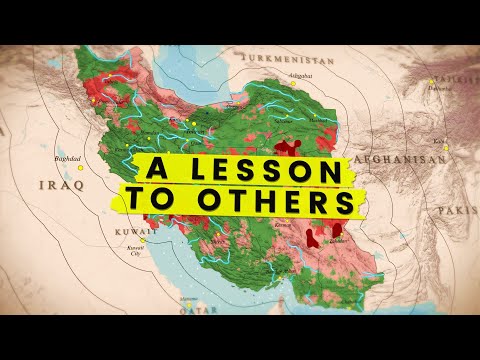
khuzestan در ۳۰ ثانیه
- Khuzestan is a major province in southwestern Iran, serving as the nation's primary economic engine due to its vast oil and gas reserves.
- The region is historically significant as the heartland of the ancient Elamite Empire and contains multiple UNESCO World Heritage sites like Susa.
- It is geographically diverse, featuring fertile plains, large rivers like the Karun, and a coastline along the Persian Gulf, bordering Iraq.
- Culturally, Khuzestan is a melting pot of ethnic groups, including Arabs, Persians, and Lurs, known for their unique music, food, and hospitality.
Khuzestan is a term that refers to a specific geographic and administrative province located in the southwestern corner of Iran. When people use the word Khuzestan, they are often referring to one of the most economically and historically significant regions in the Middle East. Geographically, it is defined by its border with Iraq to the west and the Persian Gulf to the south. It is a land of contrasts, featuring vast plains, massive rivers like the Karun, and a climate that ranges from humid coastal heat to intense desert dryness. In a geopolitical context, Khuzestan is frequently mentioned in discussions regarding global energy markets because it houses the vast majority of Iran's oil and gas reserves. However, beyond the industrial facade, the word evokes a deep sense of history, as it was the heart of the ancient Elamite Empire and later a vital part of the Achaemenid and Sassanid Empires. People use this word when discussing Iranian history, international relations, petroleum engineering, or Middle Eastern geography.
- Geographic Identity
- Khuzestan represents a unique intersection of Iranian and Arab cultures, making it a diverse melting pot within the country.
The economic stability of the nation relies heavily on the oil production coming out of Khuzestan.
In daily conversation, especially among Iranians, Khuzestan is synonymous with warmth—both in terms of its blistering summer temperatures and the renowned hospitality of its people. The ethnic diversity of the province, including Arabs, Persians, Lurs, and Bakhtiaris, means that the word Khuzestan carries a connotation of multiculturalism. When a traveler says they are visiting Khuzestan, they are likely interested in the UNESCO World Heritage sites like Shushtar’s historical hydraulic system or the ancient ziggurat of Chogha Zanbil. The term is also heavily used in environmental discourse, particularly concerning the health of the Karun River and the challenges of dust storms that occasionally plague the region. Thus, the word functions as a noun identifying a place, but it carries the weight of economic power, ancient heritage, and modern environmental struggle.
- Economic Hub
- As the center of the Iranian oil industry, Khuzestan is a focal point for engineers and international energy analysts.
Furthermore, Khuzestan is a word that appears frequently in the context of the Iran-Iraq War (1980-1988). Because of its strategic location and oil wealth, it was the primary theater of conflict. Cities like Khorramshahr and Abadan became household names globally during this period. Therefore, for an older generation, the word Khuzestan might evoke memories of resilience and the scars of war. In a more modern, peaceful context, it is the land of the 'Khuzestani' people, known for their vibrant music, spicy cuisine (influenced by the proximity to the sea and Arab neighbors), and the iconic falafel of Ahvaz. Whether you are reading a technical report on petroleum or a travel guide to ancient ruins, Khuzestan serves as the essential label for this multifaceted corner of the world.
Archaeologists have spent decades excavating the ancient city of Susa in Khuzestan.
- Historical Depth
- Khuzestan is home to some of the oldest continuously inhabited cities in the world, making it a treasure trove for historians.
The humid air of southern Khuzestan is quite different from the dry heat of the central plateau.
Many migrant workers move to Khuzestan to find employment in the refineries.
The agricultural output of Khuzestan is vital for Iran's food security.
Using the word Khuzestan in a sentence requires an understanding that it functions as a proper noun, specifically a toponym (a place name). Because it is a specific province, it is almost always capitalized. In English, it is common to use it either as a direct object, a subject, or within a prepositional phrase. For instance, when describing a location, one might say, 'Ahvaz is the capital of Khuzestan.' Here, Khuzestan acts as the object of the preposition 'of,' defining the administrative territory. When used as a subject, you might say, 'Khuzestan produces the majority of Iran's crude oil,' which highlights the province's active role in the economy. It is also frequently paired with adjectives to describe specific aspects of the region, such as 'Northern Khuzestan' or 'Ancient Khuzestan.'
- Geographic Context
- Use it to specify location: 'The Karun River flows through the heart of Khuzestan.'
During the summer, temperatures in Khuzestan can exceed 50 degrees Celsius.
In academic or formal writing, Khuzestan is often used in conjunction with terms like 'province,' 'region,' or 'territory.' For example, 'The Khuzestan province is a vital corridor for trade.' Note that while 'Khuzestan' can stand alone, adding 'province' provides extra clarity for readers who may not be familiar with Iranian geography. In historical writing, you might see it used to describe the setting of ancient events: 'The Elamites established their capital at Susa, located in modern-day Khuzestan.' This bridges the gap between ancient history and contemporary geography. When discussing the people, the adjectival form 'Khuzestani' is used, as in 'Khuzestani culture is known for its unique musical traditions.' This distinction is important for grammatical accuracy when shifting from the place to its inhabitants.
- Economic Context
- Use it in industrial discussions: 'Investment in Khuzestan's infrastructure is a priority for the energy sector.'
Furthermore, Khuzestan can be used in sentences involving environmental or social issues. 'Environmentalists are concerned about the receding wetlands in Khuzestan.' In this case, the word serves as the setting for a specific ecological problem. In social contexts, one might say, 'The linguistic diversity of Khuzestan includes speakers of Arabic and various Persian dialects.' This highlights the province as a site of sociological interest. When writing about travel, the word often appears in lists: 'Our tour included stops in Isfahan, Shiraz, and Khuzestan.' Here, it is treated as a major destination on par with other famous Iranian provinces. By varying the sentence structure—using it as a subject, object, or modifier—you can effectively communicate the diverse facets of this region.
The history of Khuzestan is deeply intertwined with the development of early civilization.
- Social Context
- Use it to describe populations: 'The people of Khuzestan are famous for their resilience.'
Many international students study at the petroleum university in Khuzestan.
The border between Iraq and Khuzestan has been a site of historical tension.
Wheat and sugar cane are the primary crops grown in Khuzestan.
You are most likely to encounter the word Khuzestan in international news broadcasts, particularly those focusing on the Middle East, energy, or environmental issues. Because Khuzestan is the heart of Iran's oil industry, news outlets like the BBC, Al Jazeera, or Reuters frequently mention it when reporting on oil production quotas, refinery strikes, or new discoveries of natural gas fields. In these contexts, the word is spoken with a tone of economic importance. You might hear a news anchor say, 'Tensions have risen in the oil-rich province of Khuzestan,' which immediately signals to the listener that the story has global economic implications. It is a staple word in the vocabulary of energy analysts and geopolitical experts who monitor the Persian Gulf region.
- News Media
- Khuzestan is a frequent topic in reports about OPEC and global energy supplies.
The documentary highlighted the ancient irrigation systems of Khuzestan.
Another common place to hear the word is in academic settings, specifically in history, archaeology, and anthropology lectures. Professors discussing the 'Cradle of Civilization' will inevitably mention Khuzestan because of its proximity to Mesopotamia and its role as the seat of the Elamite Empire. In this setting, the word is associated with Susa, one of the oldest cities in the world. You might hear an archaeologist describe 'the unique pottery styles found in the Khuzestan plains.' This usage shifts the focus from modern industry to ancient heritage. Similarly, in environmental science circles, Khuzestan is a case study for water management and desertification. Researchers discuss the 'impact of damming on the Khuzestan wetlands,' making the word central to ecological debates.
- Academic Lectures
- Historians use Khuzestan to describe the geographic link between the Iranian plateau and Mesopotamia.
In the world of sports, particularly football (soccer), Khuzestan is a very common name. The province is known as the 'Brazil of Iran' because of its people's passion for the sport and the many talented players it produces. You will hear sports commentators mention teams like 'Foolad Khuzestan' or 'Esteghlal Khuzestan' during the Persian Gulf Pro League matches. In this context, the word carries a sense of local pride and athletic excellence. Fans often chant the name of the province in stadiums, associating it with energy, skill, and a specific style of play. Whether it's a high-stakes energy summit or a local football match, Khuzestan is a word that resonates across various sectors of society.
The sports announcer praised the young striker from Khuzestan for his incredible speed.
- Sports Commentary
- Khuzestan is often referred to as a powerhouse of Iranian football talent.
The travel agent recommended Khuzestan for its unique winter climate.
The environmental report warned of increasing salinity in the waters of Khuzestan.
The trade delegation discussed new export routes through Khuzestan's ports.
One of the most frequent mistakes people make when using the word Khuzestan is confusing it with other similarly named regions in the Middle East, most notably Kurdistan. While both are provinces in Iran (and Kurdistan is also a broader trans-border region), they are geographically, culturally, and linguistically distinct. Khuzestan is in the southwest, bordering the Persian Gulf and Iraq, and has a significant Arab and Lur population. Kurdistan is further north along the Zagros Mountains and is primarily inhabited by Kurds. Confusing the two can lead to significant misunderstandings in political or cultural discussions. Another common error is the spelling and pronunciation. In English, it is sometimes spelled 'Khuzistan,' which is an older transliteration. While not technically 'wrong,' 'Khuzestan' is the modern standard used by the Iranian government and international bodies like the UN.
- Geographic Confusion
- Mistake: Thinking Khuzestan is in the north. Reality: It is in the extreme southwest.
It is a mistake to assume that Khuzestan is just a desert; it has massive rivers and fertile plains.
Grammatically, learners often struggle with whether to use the definite article 'the' before Khuzestan. Unlike 'the Netherlands' or 'the United Kingdom,' Khuzestan does not take an article when used as a proper noun. You should say 'I am traveling to Khuzestan,' not 'I am traveling to the Khuzestan.' However, if you add the word 'province' or 'region,' the article becomes necessary: 'The Khuzestan province is very hot.' Another mistake is assuming the entire population is Arab. While Khuzestan has a large and culturally influential Arab community, it is a multi-ethnic province. Referring to it solely as an 'Arab province' ignores the millions of Persians, Lurs, Bakhtiaris, and others who live there. This nuance is important for maintaining accuracy and sensitivity when discussing the region's demographics.
- Grammar Error
- Mistake: 'I live in the Khuzestan.' Correct: 'I live in Khuzestan.'
Finally, a common misconception involves the climate. Many people assume that because Khuzestan is an oil-rich region in the Middle East, it must be a dry, sandy desert. In reality, Khuzestan is defined by its water. It is home to the Karun, Karkheh, and Dez rivers. Historically, it was known for its lush agriculture and sugar cane plantations. Using the word Khuzestan to imply a 'barren wasteland' is a factual error. In fact, the province faces significant issues with flooding, which is the opposite of what many expect. When writing or speaking about the region, it is important to acknowledge this watery geography to avoid clichés. Misunderstanding the economic role of the province is also common; while oil is king, Khuzestan is also a major agricultural hub, producing a large portion of Iran's wheat and corn.
Many people wrongly believe that Khuzestan is entirely arid.
- Demographic Nuance
- Mistake: Generalizing the population. Reality: Khuzestan is one of Iran's most ethnically diverse provinces.
The spelling of Khuzestan should not be confused with Kazakhstan.
Avoid the error of thinking Khuzestan is a new name; it has ancient roots.
It is incorrect to say Khuzestan is in the Persian Gulf; it borders it.
Since Khuzestan is a specific proper noun, there are no true synonyms in the way that 'happy' is a synonym for 'joyful.' However, there are several alternative ways to refer to the region depending on the context—historical, geographic, or political. In a historical context, the most common alternative is 'Elam.' Ancient Elam covered much of what is now Khuzestan, and historians often use the terms interchangeably when discussing the Bronze Age. Another historical term is 'Susiana,' derived from the city of Susa, which was the administrative heart of the region for millennia. Using 'Susiana' gives a more Greco-Roman or archaeological flavor to your writing. In modern geographic terms, you might use 'Southwestern Iran' to provide a broader location for those unfamiliar with the specific province name.
- Historical Alternative
- 'Susiana' is often used in archaeological texts to refer to the plains of Khuzestan.
The oil fields of Khuzestan are often called the 'black gold mines' of the southwest.
In political and economic discourse, Khuzestan is often referred to by its primary industry: 'Iran's oil hub' or 'the energy heartland.' These phrases emphasize the province's function rather than its name. If you are discussing the ethnic makeup, you might hear the term 'Arabistan' used in historical or specific political contexts. However, this term is sensitive and has been officially replaced by 'Khuzestan' since the 1920s to emphasize the region's Iranian identity. Using 'Arabistan' today can carry political connotations that 'Khuzestan' does not. For a more descriptive approach, one might use 'the Karun basin,' referring to the area drained by Iran's most effluent river, which covers a large portion of the province. This is particularly useful in environmental or hydrological studies.
- Economic Descriptor
- 'The energy province' is a common journalistic shorthand for Khuzestan.
When comparing Khuzestan to other regions, it is often contrasted with the 'Central Plateau' of Iran. While the plateau is high and dry, Khuzestan is low-lying and alluvial. Therefore, 'the lowlands' is another descriptive alternative. In the context of the Iran-Iraq war, it is sometimes referred to as 'the southern front.' Each of these alternatives serves a specific purpose: 'Elam' for history, 'Southwestern Iran' for general geography, 'the oil hub' for economics, and 'the Karun basin' for ecology. Choosing the right alternative depends entirely on what aspect of Khuzestan you want to highlight. For most general purposes, however, sticking to the proper name 'Khuzestan' is the most accurate and respectful choice.
While some call it the 'gateway to the Gulf,' most simply know it as Khuzestan.
- Geographic Contrast
- Unlike the mountainous Lorestan, Khuzestan is primarily composed of flat, fertile plains.
The ancient term 'Elam' is the historical ancestor of modern Khuzestan.
Researchers often refer to the 'Khuzestan plains' when discussing early agriculture.
The term 'Southwestern frontier' is sometimes used in military history to describe Khuzestan.
چقدر رسمی است؟
""
""
""
""
""
نکته جالب
The 'Khuz' people were mentioned in ancient texts as early as the Achaemenid period, and the name has survived for over 2,500 years.
راهنمای تلفظ
- Pronouncing the 'Kh' as a hard 'K' (it should be a soft, breathy sound like the 'ch' in 'loch').
- Stress on the first syllable (KHU-ze-stan).
- Confusing the spelling with 'Kazakhstan'.
- Pronouncing 'stan' like 'stain'.
- Omitting the 'z' sound.
سطح دشواری
Easy to recognize as a place name in text.
Spelling 'Kh-' and '-z-' can be tricky for beginners.
The 'Kh' sound is difficult for many English speakers.
Distinctive sound makes it easy to identify in speech.
بعداً چه یاد بگیریم؟
پیشنیازها
بعداً یاد بگیرید
پیشرفته
گرامر لازم
Proper Nouns
Khuzestan is capitalized.
Zero Article with Places
I live in Khuzestan (not 'the Khuzestan').
Adjective Formation
Khuzestan becomes Khuzestani.
Prepositional Use
Use 'in' for the province, 'at' for specific sites within it.
Subject-Verb Agreement
Khuzestan provides (singular) oil.
مثالها بر اساس سطح
Khuzestan is in Iran.
Khuzestan is in Iran.
Proper noun, no article.
Khuzestan is very hot.
Khuzestan is very hot.
Subject + is + adjective.
I like Khuzestan.
I like Khuzestan.
Direct object.
He lives in Khuzestan.
He lives in Khuzestan.
Prepositional phrase.
Khuzestan has oil.
Khuzestan has oil.
Simple present tense.
Is Khuzestan big?
Is Khuzestan big?
Question form.
The river in Khuzestan is long.
The river in Khuzestan is long.
Prepositional phrase modifying a noun.
Visit Khuzestan in winter.
Visit Khuzestan in winter.
Imperative sentence.
Ahvaz is the biggest city in Khuzestan.
Ahvaz is the biggest city in Khuzestan.
Superlative adjective.
Many people work in the oil fields of Khuzestan.
Many people work in the oil fields of Khuzestan.
Compound noun phrase.
Khuzestan has many ancient places to see.
Khuzestan has many ancient places to see.
Quantifier 'many'.
The weather in Khuzestan is pleasant in February.
The weather in Khuzestan is pleasant in February.
Time prepositional phrase.
You can eat delicious fish in Khuzestan.
You can eat delicious fish in Khuzestan.
Modal verb 'can'.
Khuzestan borders the Persian Gulf.
Khuzestan borders the Persian Gulf.
Transitive verb.
My friend is from Khuzestan.
My friend is from Khuzestan.
Origin preposition 'from'.
Khuzestan is famous for its hospitality.
Khuzestan is famous for its hospitality.
Adjective + preposition 'for'.
Khuzestan is home to several UNESCO World Heritage sites.
Khuzestan is home to several UNESCO World Heritage sites.
Idiomatic expression 'home to'.
The economy of Khuzestan relies heavily on petroleum.
The economy of Khuzestan relies heavily on petroleum.
Adverbial modification 'heavily'.
Traveling through Khuzestan, you will see vast plains.
Traveling through Khuzestan, you will see vast plains.
Participle phrase.
Khuzestan has a diverse population with many languages.
Khuzestan has a diverse population with many languages.
Adjective 'diverse'.
The Karun River is the most important waterway in Khuzestan.
The Karun River is the most important waterway in Khuzestan.
Superlative with 'most'.
Historically, Khuzestan was the center of the Elamite Empire.
Historically, Khuzestan was the center of the Elamite Empire.
Sentence-starting adverb.
Dust storms sometimes affect the air quality in Khuzestan.
Dust storms sometimes affect the air quality in Khuzestan.
Frequency adverb 'sometimes'.
The food in Khuzestan is often spicier than in Tehran.
The food in Khuzestan is often spicier than in Tehran.
Comparative adjective.
Khuzestan's strategic location makes it a hub for international trade.
Khuzestan's strategic location makes it a hub for international trade.
Possessive form 'Khuzestan's'.
The industrialization of Khuzestan began over a century ago.
The industrialization of Khuzestan began over a century ago.
Noun 'industrialization'.
Despite its wealth, Khuzestan faces significant environmental challenges.
Despite its wealth, Khuzestan faces significant environmental challenges.
Concession with 'despite'.
The hydraulic system of Shushtar in Khuzestan is a masterpiece of engineering.
The hydraulic system of Shushtar in Khuzestan is a masterpiece of engineering.
Appositive phrase.
Khuzestan serves as a bridge between the Iranian plateau and Mesopotamia.
Khuzestan serves as a bridge between the Iranian plateau and Mesopotamia.
Metaphorical use of 'bridge'.
Many Khuzestani artists are inspired by the local folklore.
Many Khuzestani artists are inspired by the local folklore.
Adjectival form 'Khuzestani'.
The province of Khuzestan was heavily impacted by the eight-year war.
The province of Khuzestan was heavily impacted by the eight-year war.
Passive voice.
Agriculture remains a vital sector in Khuzestan alongside oil.
Agriculture remains a vital sector in Khuzestan alongside oil.
Preposition 'alongside'.
The ecological degradation of Khuzestan's wetlands is a cause for international concern.
The ecological degradation of Khuzestan's wetlands is a cause for international concern.
Complex noun phrase.
Khuzestan's socio-economic landscape is defined by its vast hydrocarbon reserves.
Khuzestan's socio-economic landscape is defined by its vast hydrocarbon reserves.
Compound adjective 'socio-economic'.
The archaeological significance of Khuzestan cannot be overstated.
The archaeological significance of Khuzestan cannot be overstated.
Negative modal 'cannot be overstated'.
Linguistic pluralism is a hallmark of the Khuzestan region.
Linguistic pluralism is a hallmark of the Khuzestan region.
Abstract noun 'pluralism'.
Khuzestan has historically acted as a buffer zone between rival empires.
Khuzestan has historically acted as a buffer zone between rival empires.
Present perfect with 'historically'.
The rapid urbanization of Khuzestan has led to various infrastructure strains.
The rapid urbanization of Khuzestan has led to various infrastructure strains.
Gerund 'urbanization'.
Khuzestan's climate is characterized by extreme thermal variations.
Khuzestan's climate is characterized by extreme thermal variations.
Scientific terminology 'thermal variations'.
The cultural synthesis in Khuzestan is evident in its unique musical styles.
The cultural synthesis in Khuzestan is evident in its unique musical styles.
Noun 'synthesis'.
The geopolitical centrality of Khuzestan necessitates a nuanced understanding of its internal dynamics.
The geopolitical centrality of Khuzestan necessitates a nuanced understanding of its internal dynamics.
Formal verb 'necessitates'.
Khuzestan's alluvial plains have been the site of sedentary agriculture for over six millennia.
Khuzestan's alluvial plains have been the site of sedentary agriculture for over six millennia.
Adjective 'alluvial' and 'sedentary'.
The paradoxical nature of Khuzestan lies in its immense wealth and concurrent environmental fragility.
The paradoxical nature of Khuzestan lies in its immense wealth and concurrent environmental fragility.
Contrast with 'concurrent'.
Scholars often analyze Khuzestan through the lens of sub-national identity politics.
Scholars often analyze Khuzestan through the lens of sub-national identity politics.
Metaphorical 'through the lens of'.
The hydro-politics of Khuzestan are inextricably linked to the management of the Karun River.
The hydro-politics of Khuzestan are inextricably linked to the management of the Karun River.
Compound noun 'hydro-politics'.
Khuzestan's historical trajectory was irrevocably altered by the discovery of oil in 1908.
Khuzestan's historical trajectory was irrevocably altered by the discovery of oil in 1908.
Adverb 'irrevocably'.
The cultural resilience of Khuzestan's ethnic minorities is a subject of extensive ethnographic study.
The cultural resilience of Khuzestan's ethnic minorities is a subject of extensive ethnographic study.
Adjective 'ethnographic'.
Khuzestan epitomizes the complexities of a resource-rich province in a developing economy.
Khuzestan epitomizes the complexities of a resource-rich province in a developing economy.
Verb 'epitomizes'.
ترکیبهای رایج
عبارات رایج
The Brazil of Iran
The gateway to the Gulf
Land of the sun
Heart of the energy industry
The cradle of Elam
Khuzestan's black gold
The Karun's roar
Khuzestani hospitality
The ruins of Susa
Dust of Khuzestan
اغلب اشتباه گرفته میشود با
A different province in western/northern Iran with a different culture.
A separate country in Central Asia; sounds similar but unrelated.
A separate country; shares the '-stan' suffix but is far to the east.
اصطلاحات و عبارات
"Warm like Khuzestan"
Used to describe a very friendly person or a very hot day.
His heart is as warm as Khuzestan.
Informal"As deep as an oil well in Khuzestan"
Used to describe something very profound or complex.
The mystery is as deep as an oil well in Khuzestan.
Literary"Sweating like an Abadani in July"
A humorous way to say someone is sweating a lot.
After that run, I'm sweating like an Abadani in July.
Slang"The Karun doesn't flow backward"
Used to say that time or progress cannot be reversed.
Don't worry about the past; the Karun doesn't flow backward.
Poetic"Drinking the water of the Karun"
To become attached to the region and never want to leave.
Once you drink the water of the Karun, you'll always return.
Folk"A Khuzestani sun"
A very intense or honest truth.
The truth hit him like a Khuzestani sun.
Metaphorical"Building a ziggurat"
To start a very large and ambitious project.
He's building a ziggurat with this new business plan.
Informal"Susa wasn't built in a day"
A local variation of 'Rome wasn't built in a day.'
Be patient; Susa wasn't built in a day.
Informal"As spicy as a Khuzestani falafel"
Used to describe a situation or person that is very exciting or sharp.
Her wit is as spicy as a Khuzestani falafel.
Slang"Walking on black gold"
To be in a position of great potential wealth.
With this new patent, you're walking on black gold.
Informalبهراحتی اشتباه گرفته میشود
It is the adjective/noun for the people.
Khuzestan is the place; Khuzestani is the person or thing from there.
He is Khuzestani, but he lives in Tehran.
It is the capital city.
Ahvaz is a city; Khuzestan is the whole province.
Ahvaz is the heart of Khuzestan.
It is a famous ancient city in the province.
Susa is an archaeological site; Khuzestan is the modern administrative area.
Susa is located within Khuzestan.
It is the major river.
Karun is a body of water; Khuzestan is the land.
The Karun flows through Khuzestan.
Another major city in the province.
Abadan is a port city; Khuzestan is the province.
Abadan is a key city in Khuzestan.
الگوهای جملهسازی
Khuzestan is [adjective].
Khuzestan is hot.
[City] is in Khuzestan.
Ahvaz is in Khuzestan.
Khuzestan is known for [noun].
Khuzestan is known for oil.
The [noun] of Khuzestan is [adjective].
The history of Khuzestan is fascinating.
Located in [direction], Khuzestan [verb].
Located in the southwest, Khuzestan produces oil.
The [abstract noun] of Khuzestan [verb] [object].
The strategic importance of Khuzestan shapes national policy.
Whether in [place] or Khuzestan...
Whether in Tehran or Khuzestan, people love tea.
Not only [place], but also Khuzestan...
Not only Shiraz, but also Khuzestan has ruins.
خانواده کلمه
اسمها
صفتها
مرتبط
نحوه استفاده
Common in news, history, and geography; rare in casual English conversation unless discussing Iran.
-
Spelling it 'Kazakhstan'.
→
Khuzestan
Kazakhstan is a country; Khuzestan is an Iranian province.
-
Using 'the' before Khuzestan.
→
Khuzestan is large.
Proper names of provinces usually don't take 'the'.
-
Confusing it with Kurdistan.
→
Khuzestan is in the south.
Kurdistan is in the north; they are different regions.
-
Thinking it's only a desert.
→
Khuzestan has many rivers.
It is actually a very watery and fertile region.
-
Assuming only one language is spoken.
→
Khuzestan is multilingual.
It has a diverse mix of Persian and Arabic speakers.
نکات
Proper Noun
Always capitalize Khuzestan. It is a specific name of a place.
Food
If you talk about Khuzestan, mention the spicy food; it's a point of pride.
Context
When explaining where it is, say 'southwest Iran' for clarity.
Ancient Links
Connect Khuzestan to the Elamites to sound more knowledgeable.
The 'Kh'
Don't say 'Kuzestan'; the 'h' is important for the correct sound.
Articles
Remember: 'I am in Khuzestan,' not 'I am in the Khuzestan.'
Timing
Warn others about the summer heat if they plan to visit.
Oil
Use Khuzestan as an example when discussing global energy.
Diversity
Acknowledge both the Arab and Persian heritage of the region.
Dust
Mention 'dust storms' if discussing modern challenges in the region.
حفظ کنید
روش یادسپاری
KHU-ZE-STAN: Keep Hot Under Ze Sun To Always Notice. (A reminder of the province's famous heat).
تداعی تصویری
Imagine a giant oil rig standing next to an ancient pyramid (ziggurat) with a blue river flowing between them.
شبکه واژگان
چالش
Try to use 'Khuzestan' in three different sentences: one about history, one about weather, and one about economy.
ریشه کلمه
The name Khuzestan means 'Land of the Khuz.' It is derived from the Old Persian word 'Hūjiya,' which referred to the people living in the region.
معنای اصلی: The land inhabited by the 'Khuz' or 'Huzi' people.
Indo-European (Persian) with roots in ancient Elamite names.بافت فرهنگی
Be aware of the ethnic diversity; avoid labeling the entire province as solely 'Arab' or 'Persian' to remain accurate and respectful.
In English-speaking media, Khuzestan is almost exclusively mentioned in the context of oil prices or regional conflict.
تمرین در زندگی واقعی
موقعیتهای واقعی
Travel
- Best time to visit Khuzestan
- Hotels in Ahvaz, Khuzestan
- Historical sites in Khuzestan
- Khuzestan tour guide
Business
- Khuzestan oil industry
- Investment in Khuzestan
- Khuzestan steel company
- Trade routes through Khuzestan
History
- Ancient Khuzestan civilization
- Elamite capital in Khuzestan
- Susa archaeological park
- History of Khuzestan province
Environment
- Dust storms in Khuzestan
- Khuzestan water management
- Karun river pollution
- Wetlands of Khuzestan
Sports
- Khuzestan football teams
- Foolad Khuzestan FC
- Football talent in Khuzestan
- Khuzestan stadium
شروعکنندههای مکالمه
"Have you ever visited the ancient ruins in Khuzestan?"
"What do you know about the oil industry in Khuzestan?"
"I heard the food in Khuzestan is very spicy; have you tried it?"
"How does the weather in Khuzestan compare to the rest of Iran?"
"Are you familiar with the history of the Elamites in Khuzestan?"
موضوعات نگارش
Imagine you are traveling through Khuzestan. Describe the landscape and the heat.
Write about the importance of Khuzestan to the global energy market.
If you could visit one historical site in Khuzestan, which would it be and why?
Discuss the challenges of living in a region with extreme temperatures like Khuzestan.
Reflect on the cultural diversity of Khuzestan and how it enriches the country.
سوالات متداول
10 سوالKhuzestan is located in the southwestern part of Iran, bordering Iraq and the Persian Gulf.
The capital city of Khuzestan province is Ahvaz.
It is important because it contains most of Iran's oil and gas reserves and has a very rich ancient history.
Yes, it is one of the hottest regions in the world during the summer, with temperatures often exceeding 50°C.
Persian and Arabic are the most common languages, along with Luri and other local dialects.
Yes, there are three: Chogha Zanbil, Shushtar Historical Hydraulic System, and Susa.
The Karun River is the most significant river in the province and the longest in Iran.
The best time to visit is from late autumn to early spring (November to March) when the weather is mild.
It is a nickname for Khuzestan, especially the city of Abadan, because of the locals' passion for football.
Major crops include sugar cane, wheat, corn, and various citrus fruits.
خودت رو بسنج 200 سوال
Write a short paragraph about the importance of oil in Khuzestan.
خوب نوشتید! تلاش خوبی بود! پاسخ نمونه را ببینید.
Describe the climate of Khuzestan during the summer.
خوب نوشتید! تلاش خوبی بود! پاسخ نمونه را ببینید.
Compare Khuzestan with another province you know.
خوب نوشتید! تلاش خوبی بود! پاسخ نمونه را ببینید.
Explain why Khuzestan is historically significant.
خوب نوشتید! تلاش خوبی بود! پاسخ نمونه را ببینید.
Write a travel itinerary for a three-day trip to Khuzestan.
خوب نوشتید! تلاش خوبی بود! پاسخ نمونه را ببینید.
Discuss the environmental challenges facing Khuzestan today.
خوب نوشتید! تلاش خوبی بود! پاسخ نمونه را ببینید.
Describe the cultural diversity of Khuzestan.
خوب نوشتید! تلاش خوبی بود! پاسخ نمونه را ببینید.
Write a letter to a friend inviting them to visit Khuzestan.
خوب نوشتید! تلاش خوبی بود! پاسخ نمونه را ببینید.
Summarize the role of the Karun River in Khuzestan's development.
خوب نوشتید! تلاش خوبی بود! پاسخ نمونه را ببینید.
Analyze the impact of the 1908 oil discovery on Khuzestan.
خوب نوشتید! تلاش خوبی بود! پاسخ نمونه را ببینید.
Describe a traditional Khuzestani dish.
خوب نوشتید! تلاش خوبی بود! پاسخ نمونه را ببینید.
Write five sentences using the word 'Khuzestan'.
خوب نوشتید! تلاش خوبی بود! پاسخ نمونه را ببینید.
Discuss the significance of UNESCO sites in Khuzestan.
خوب نوشتید! تلاش خوبی بود! پاسخ نمونه را ببینید.
Explain the nickname 'Brazil of Iran' for Khuzestan.
خوب نوشتید! تلاش خوبی بود! پاسخ نمونه را ببینید.
Write about the resilience of the people in Khuzestan.
خوب نوشتید! تلاش خوبی بود! پاسخ نمونه را ببینید.
Describe the geography of Khuzestan.
خوب نوشتید! تلاش خوبی بود! پاسخ نمونه را ببینید.
How does Khuzestan contribute to Iran's economy?
خوب نوشتید! تلاش خوبی بود! پاسخ نمونه را ببینید.
Write a short story set in ancient Susa, Khuzestan.
خوب نوشتید! تلاش خوبی بود! پاسخ نمونه را ببینید.
Discuss the linguistic variety found in Khuzestan.
خوب نوشتید! تلاش خوبی بود! پاسخ نمونه را ببینید.
What are the pros and cons of visiting Khuzestan in summer?
خوب نوشتید! تلاش خوبی بود! پاسخ نمونه را ببینید.
Talk about a place you would like to visit in Khuzestan.
این را بلند بخوانید:
تو گفتی:
تشخیص گفتار در مرورگر شما پشتیبانی نمیشود. از کروم یا اج استفاده کنید.
Explain the economic importance of Khuzestan to a friend.
این را بلند بخوانید:
تو گفتی:
تشخیص گفتار در مرورگر شما پشتیبانی نمیشود. از کروم یا اج استفاده کنید.
Describe the weather in Khuzestan using five adjectives.
این را بلند بخوانید:
تو گفتی:
تشخیص گفتار در مرورگر شما پشتیبانی نمیشود. از کروم یا اج استفاده کنید.
Discuss the history of Khuzestan in three minutes.
این را بلند بخوانید:
تو گفتی:
تشخیص گفتار در مرورگر شما پشتیبانی نمیشود. از کروم یا اج استفاده کنید.
How would you prepare for a trip to Khuzestan in July?
این را بلند بخوانید:
تو گفتی:
تشخیص گفتار در مرورگر شما پشتیبانی نمیشود. از کروم یا اج استفاده کنید.
Tell a story about an ancient king in Khuzestan.
این را بلند بخوانید:
تو گفتی:
تشخیص گفتار در مرورگر شما پشتیبانی نمیشود. از کروم یا اج استفاده کنید.
Discuss the pros and cons of oil industry in Khuzestan.
این را بلند بخوانید:
تو گفتی:
تشخیص گفتار در مرورگر شما پشتیبانی نمیشود. از کروم یا اج استفاده کنید.
Describe the rivers of Khuzestan and their role.
این را بلند بخوانید:
تو گفتی:
تشخیص گفتار در مرورگر شما پشتیبانی نمیشود. از کروم یا اج استفاده کنید.
Talk about the ethnic diversity you might find in Khuzestan.
این را بلند بخوانید:
تو گفتی:
تشخیص گفتار در مرورگر شما پشتیبانی نمیشود. از کروم یا اج استفاده کنید.
Explain why Khuzestan is called the 'Brazil of Iran'.
این را بلند بخوانید:
تو گفتی:
تشخیص گفتار در مرورگر شما پشتیبانی نمیشود. از کروم یا اج استفاده کنید.
Debate the impact of dams on Khuzestan's environment.
این را بلند بخوانید:
تو گفتی:
تشخیص گفتار در مرورگر شما پشتیبانی نمیشود. از کروم یا اج استفاده کنید.
Describe the city of Ahvaz.
این را بلند بخوانید:
تو گفتی:
تشخیص گفتار در مرورگر شما پشتیبانی نمیشود. از کروم یا اج استفاده کنید.
What are the most famous landmarks in Khuzestan?
این را بلند بخوانید:
تو گفتی:
تشخیص گفتار در مرورگر شما پشتیبانی نمیشود. از کروم یا اج استفاده کنید.
Talk about the traditional music of Khuzestan.
این را بلند بخوانید:
تو گفتی:
تشخیص گفتار در مرورگر شما پشتیبانی نمیشود. از کروم یا اج استفاده کنید.
How has Khuzestan changed over the last century?
این را بلند بخوانید:
تو گفتی:
تشخیص گفتار در مرورگر شما پشتیبانی نمیشود. از کروم یا اج استفاده کنید.
Describe the feeling of a Khuzestani summer day.
این را بلند بخوانید:
تو گفتی:
تشخیص گفتار در مرورگر شما پشتیبانی نمیشود. از کروم یا اج استفاده کنید.
Why is Susa important for world history?
این را بلند بخوانید:
تو گفتی:
تشخیص گفتار در مرورگر شما پشتیبانی نمیشود. از کروم یا اج استفاده کنید.
Talk about the importance of the Persian Gulf to Khuzestan.
این را بلند بخوانید:
تو گفتی:
تشخیص گفتار در مرورگر شما پشتیبانی نمیشود. از کروم یا اج استفاده کنید.
Discuss the hospitality of the people in Khuzestan.
این را بلند بخوانید:
تو گفتی:
تشخیص گفتار در مرورگر شما پشتیبانی نمیشود. از کروم یا اج استفاده کنید.
What would you pack for a winter trip to Khuzestan?
این را بلند بخوانید:
تو گفتی:
تشخیص گفتار در مرورگر شما پشتیبانی نمیشود. از کروم یا اج استفاده کنید.
Listen to a description of Khuzestan and list the cities mentioned.
Listen to a news report and identify the main topic regarding Khuzestan.
Listen to a travel guide and note the best months to visit Khuzestan.
Listen to a lecture on Elamite history and summarize Khuzestan's role.
Listen to a Khuzestani folk song and describe the rhythm.
Listen to an interview with an oil worker in Khuzestan.
Listen to a weather forecast for Ahvaz and record the temperature.
Listen to a discussion on water scarcity in Khuzestan.
Listen to a story about a traveler's first time in Khuzestan.
Listen to a podcast about the UNESCO sites in Khuzestan.
Listen to the pronunciation of 'Khuzestan' and repeat it.
Listen to a report on the 'Brazil of Iran' and explain the term.
Listen to a conversation between two people planning a trip to Khuzestan.
Listen to a technical talk on oil refineries in Khuzestan.
Listen to a description of the Karun River's path.
/ 200 درست
نمره کامل!
Summary
Khuzestan is more than just an industrial oil hub; it is a historically rich and culturally diverse province in southwest Iran that has shaped the region's destiny for millennia. Example: 'To understand Iran's economy and history, one must look at Khuzestan.'
- Khuzestan is a major province in southwestern Iran, serving as the nation's primary economic engine due to its vast oil and gas reserves.
- The region is historically significant as the heartland of the ancient Elamite Empire and contains multiple UNESCO World Heritage sites like Susa.
- It is geographically diverse, featuring fertile plains, large rivers like the Karun, and a coastline along the Persian Gulf, bordering Iraq.
- Culturally, Khuzestan is a melting pot of ethnic groups, including Arabs, Persians, and Lurs, known for their unique music, food, and hospitality.
Proper Noun
Always capitalize Khuzestan. It is a specific name of a place.
Food
If you talk about Khuzestan, mention the spicy food; it's a point of pride.
Context
When explaining where it is, say 'southwest Iran' for clarity.
Ancient Links
Connect Khuzestan to the Elamites to sound more knowledgeable.