









manager in 30 Seconds
- A manager is a person responsible for supervising workers and operations.
- The role involves planning, organizing, and leading a team to achieve goals.
- Managers exist in various fields, including business, sports, and entertainment.
- Key responsibilities include decision-making, resource management, and problem-solving.
The term manager is a cornerstone of professional and social organization, referring to an individual who holds the responsibility of overseeing specific operations, assets, or, most importantly, people. At its core, a manager acts as a bridge between the high-level goals of an organization and the daily execution of tasks. Whether in a multi-national corporation, a local grocery store, or a sports team, the manager is the person tasked with ensuring that resources are used efficiently to achieve a desired outcome. This role involves a complex blend of planning, organizing, leading, and controlling. When people use this word, they are often identifying the person with the authority to make decisions, resolve conflicts, and provide direction. The word carries a sense of accountability; if a project succeeds, the manager is praised for their leadership, and if it fails, they are often the first to be questioned. In daily life, you might ask to 'speak to the manager' if a service experience is particularly good or bad, highlighting their role as the ultimate point of contact for quality control and problem resolution.
- Professional Context
- In a corporate setting, a manager is usually someone positioned between the executive leadership and the entry-level staff. They translate strategy into action.
- Service Industry
- In retail or hospitality, the manager handles scheduling, customer complaints, and inventory management to keep the business running smoothly.
- Sports and Entertainment
- A manager in sports (like a baseball manager) decides the strategy and lineup, while a talent manager handles the business affairs of an artist or actor.
After the customer complained about the cold food, the restaurant manager offered a full refund and a free dessert.
She was promoted to office manager because she was excellent at organizing the team's weekly schedules.
The project manager ensured that every milestone was met before the final deadline.
As a bank manager, he is responsible for overseeing all financial transactions and security protocols.
The band's manager booked a world tour that spanned twenty different countries.
Understanding the word manager also requires recognizing the different levels of management. There are line managers who work directly with employees, middle managers who coordinate between departments, and senior managers who help shape the company's future. The word is incredibly versatile because it can be applied to almost any situation where organization is required. Even in a household, one might jokingly refer to the person who handles all the bills and chores as the 'household manager.' The essence of the word is control and organization for the sake of efficiency and goal attainment. It is a title that implies both power and the burden of duty.
Using the word manager correctly involves understanding its grammatical role as a countable noun and its common associations with specific industries. It usually follows an adjective or another noun that specifies what kind of manager the person is. For example, 'marketing manager' or 'assistant manager.' When constructing sentences, it is important to remember that 'manager' is a person, so it takes personal pronouns like he, she, or they. In formal writing, the word is often capitalized when it is part of a specific person's job title, such as 'General Manager Sarah Jenkins,' but it remains lowercase when used generally, as in 'the manager of the store.'
- As a Subject
- The manager decided to close the shop early due to the heavy snowstorm.
- As an Object
- I need to send my weekly report to the manager before five o'clock.
- In Compound Nouns
- The store manager, the shift manager, and the regional manager all attended the meeting.
If you have any questions about your contract, please talk to the human resources manager.
The manager's office is located at the end of the hallway on the second floor.
We are looking for an experienced manager to lead our new sales department in London.
Sentence variety is key when using this word. You can use it in the passive voice, such as 'The team was led by a highly capable manager,' or in the active voice, like 'The manager led the team to victory.' In more complex sentences, the word often appears with verbs like 'appoint,' 'promote,' 'hire,' or 'report to.' For instance, 'She reports directly to the general manager.' This highlights the hierarchical nature of the role. Whether you are describing a person's career path or a specific event at work, 'manager' serves as a clear and functional noun to describe leadership and administrative oversight.
The word manager is ubiquitous in modern life, appearing in professional, commercial, and recreational environments. In the workplace, it is perhaps the most common title used to describe one's immediate supervisor. You will hear it in meetings ('The manager will review the budget'), in emails ('Please copy the manager on all correspondence'), and in casual water-cooler talk ('Did you hear who the new manager is?'). Beyond the office, the word is a staple of the service industry. If a customer is unhappy with a product or service, the phrase 'Can I speak to the manager?' is a standard escalation. In this context, the manager is seen as the person with the power to fix problems that regular staff cannot.
- In Retail Stores
- Over the intercom, you might hear: 'Manager to aisle four for a price check, please.'
- In Sports News
- Commentators often discuss the 'manager's tactics' or the 'manager's decision' to substitute a player.
- In Job Interviews
- Interviewers often ask, 'Tell me about a time you had a conflict with a manager.'
'The manager said we can take an extra thirty minutes for lunch today because of the holiday.'
'I'm waiting for the manager to sign off on my vacation request.'
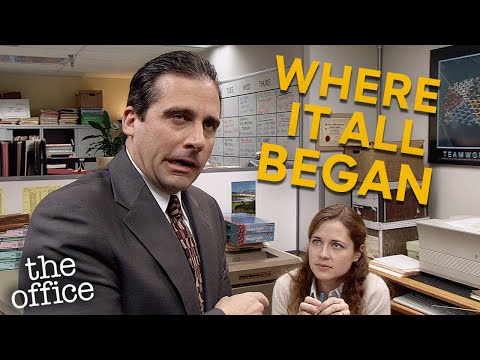
In television and film, the 'manager' is a frequent character archetype, often portrayed as either a supportive mentor or a bumbling, bureaucratic antagonist. Think of shows like 'The Office,' where the entire premise revolves around the daily life of a regional manager. This cultural saturation means that even children understand the basic concept of a manager as 'the person in charge.' It is a word that instantly establishes a power dynamic and a set of expectations regarding responsibility and authority. Whether you are reading a business journal or watching a sitcom, the word 'manager' is a key piece of vocabulary for navigating the modern world.
While manager is a relatively simple word, learners often make specific errors regarding its usage, pluralization, and distinction from similar roles. One common mistake is confusing 'manager' with 'management.' 'Manager' is the individual person (a noun), while 'management' is the abstract concept or the collective group of managers. For example, you wouldn't say 'The management told me to work late' if you are referring to one specific person; you would say 'The manager told me.' Another frequent error involves the preposition used with the word. People often say 'manager of' when they should use 'manager for' or vice versa, though 'manager of' is generally more common for departments (Manager of Finance) and 'manager for' is used for specific projects or people.
- Manager vs. Director
- In many companies, a 'director' is higher in rank than a 'manager.' Don't use them interchangeably in formal settings.
- Manager vs. Leader
- A 'manager' is a job title; a 'leader' is a quality. You can be a manager without being a good leader.
Incorrect: He is the management of the store.
Correct: He is the manager of the store.
Another subtle mistake is using 'manager' when 'supervisor' might be more appropriate. A supervisor typically oversees the work of others directly on the floor, while a manager often has more administrative and budgetary responsibilities. Furthermore, in British English, the term 'line manager' is very specific to the person you report to directly, and using 'boss' in a formal report might be considered too informal. Lastly, ensure proper article usage. It is 'a manager' (general) or 'the manager' (specific). Saying 'I spoke with manager' is grammatically incorrect; you must include the article or the person's name.
The word manager has several synonyms and related terms, each with a slightly different nuance depending on the context and the level of authority. Understanding these alternatives will help you sound more precise in your communication. For instance, 'supervisor' is often used for lower-level management, while 'executive' or 'director' is used for higher-level management. In some industries, specialized terms are used, such as 'administrator' in healthcare or education, and 'foreman' in construction. By choosing the right word, you can convey the exact nature of the person's role and their level of responsibility within the organization's hierarchy.
- Supervisor
- Focuses on the immediate oversight of workers and tasks. Usually more hands-on than a manager.
- Director
- Typically manages several managers and focuses on department-wide strategy and long-term goals.
- Administrator
- Often used in government, schools, or hospitals to describe someone who manages systems and paperwork.
The supervisor checked the assembly line to ensure everything was running correctly.
The executive board met to discuss the company's expansion into new markets.
When choosing an alternative, consider the 'register' or level of formality you need. In a formal business letter, 'manager' or 'director' is best. In a casual conversation with a friend, 'boss' is perfectly fine. If you are talking about someone who leads a small group within a larger team, 'team lead' is a modern and popular alternative. In the world of non-profits, you might hear 'coordinator' used to describe a managerial role. Each of these words helps to paint a clearer picture of the person's specific duties and their relationship to others in the group. Mastering these distinctions will significantly improve your professional English fluency.
How Formal Is It?
Fun Fact
Because it comes from the word for 'hand', the original 'manager' was someone who literally used their hands to guide and control animals. Today, we use it for guiding people and businesses!
Pronunciation Guide
- Pronouncing it as 'man-a-GHER' (hard G)
- Confusing the spelling with 'manger'
- Missing the middle vowel sound
- Over-emphasizing the 'er' in non-rhotic accents
- Mixing up the 'a' and 'e' sounds
Difficulty Rating
The word is very common in all types of texts and is easy to recognize.
Spelling 'manager' can be tricky (often confused with 'manger').
The pronunciation is straightforward with a clear stress on the first syllable.
It is a high-frequency word that is easily understood in conversation.
What to Learn Next
Prerequisites
Learn Next
Advanced
Grammar to Know
Countable Nouns
We have three managers in our department.
Possessive Nouns
The manager's car is in the parking lot.
Titles as Proper Nouns
I spoke with General Manager Smith.
Reporting Verbs
The manager told us that the office would be closed.
Compound Noun Formation
A 'sales manager' is a manager who handles sales.
Examples by Level
The manager is in the office.
Le manager est dans le bureau.
Subject + verb + prepositional phrase.
I want to speak to the manager.
Je veux parler au manager.
Infinitive phrase 'to speak to'.
She is a good manager.
C'est une bonne manager.
Adjective + noun.
My manager is very busy today.
Mon manager est très occupé aujourd'hui.
Possessive adjective 'my'.
Who is the manager of this shop?
Qui est le manager de ce magasin ?
Interrogative sentence.
The manager says hello.
Le manager dit bonjour.
Third person singular verb.
Is he the new manager?
Est-il le nouveau manager ?
Question form.
The manager works in a bank.
Le manager travaille dans une banque.
Simple present tense.
The store manager opens the shop at 8 AM.
Le responsable du magasin ouvre la boutique à 8h.
Compound noun 'store manager'.
I sent an email to my manager yesterday.
J'ai envoyé un e-mail à mon manager hier.
Past simple tense.
Our manager organizes the weekly meetings.
Notre manager organise les réunions hebdomadaires.
Present simple for habits.
He was a manager at a restaurant for three years.
Il a été manager dans un restaurant pendant trois ans.
Past tense with 'for'.
She wants to be a manager in the future.
Elle veut être manager à l'avenir.
Future intent.
The manager told us to finish the work quickly.
Le manager nous a dit de finir le travail rapidement.
Reporting speech.
Does the manager know about the problem?
Le manager est-il au courant du problème ?
Question with 'does'.
We have a meeting with the manager at noon.
Nous avons une réunion avec le manager à midi.
Preposition 'with'.
The project manager is responsible for the budget.
Le chef de projet est responsable du budget.
Adjective phrase 'responsible for'.
I need my manager's approval for this request.
J'ai besoin de l'approbation de mon manager pour cette demande.
Possessive 's.
She was promoted to manager after two years of hard work.
Elle a été promue manager après deux ans de travail acharné.
Passive voice 'was promoted'.
The manager interviewed five candidates for the job.
Le manager a passé en entretien cinq candidats pour le poste.
Transitive verb usage.
A good manager knows how to motivate their team.
Un bon manager sait comment motiver son équipe.
Infinitive with 'how to'.
He reported the incident to the floor manager immediately.
Il a immédiatement signalé l'incident au responsable d'étage.
Specific noun 'floor manager'.
The manager is currently reviewing our performance.
Le manager révise actuellement nos performances.
Present continuous tense.
If the manager agrees, we can start the project.
Si le manager est d'accord, nous pouvons commencer le projet.
First conditional.
The regional manager oversees all the branches in the north.
Le directeur régional supervise toutes les succursales du nord.
Verb 'oversees' for management.
The manager delegated the tasks to ensure efficiency.
Le manager a délégué les tâches pour assurer l'efficacité.
Verb 'delegate'.
She has a very democratic management style as a manager.
Elle a un style de gestion très démocratique en tant que manager.
Nuanced description.
The manager handled the crisis with great professionalism.
Le manager a géré la crise avec un grand professionnalisme.
Prepositional phrase 'with...'.
Being a manager requires excellent interpersonal skills.
Être manager exige d'excellentes compétences interpersonnelles.
Gerund as subject.
The manager was criticized for lack of communication.
Le manager a été critiqué pour son manque de communication.
Passive voice with 'for'.
He is the general manager of a large manufacturing plant.
Il est le directeur général d'une grande usine de fabrication.
Title 'general manager'.
The manager's primary goal is to increase productivity.
L'objectif principal du manager est d'augmenter la productivité.
Possessive and infinitive.
The asset manager optimized the portfolio for long-term growth.
Le gestionnaire d'actifs a optimisé le portefeuille pour une croissance à long terme.
Specialized financial context.
A proficient manager must balance conflicting stakeholder interests.
Un manager compétent doit équilibrer les intérêts conflictuels des parties prenantes.
Complex vocabulary (stakeholder).
The manager implemented a new strategy to mitigate risks.
Le manager a mis en œuvre une nouvelle stratégie pour atténuer les risques.
Formal verb 'implemented'.
Under the previous manager, the department suffered from low morale.
Sous l'ancien manager, le département souffrait d'un moral bas.
Prepositional phrase 'Under the...'.
The manager's decision was based on empirical data.
La décision du manager était basée sur des données empiriques.
Academic adjective 'empirical'.
She is an exceptional crisis manager who thrives under pressure.
C'est une gestionnaire de crise exceptionnelle qui s'épanouit sous la pression.
Relative clause 'who thrives'.
The manager facilitated a workshop on emotional intelligence.
Le manager a animé un atelier sur l'intelligence émotionnelle.
Verb 'facilitated'.
The shift from manager to leader is a significant career milestone.
Le passage de manager à leader est une étape importante de la carrière.
Abstract comparison.
The manager's tenure was marked by unprecedented organizational restructuring.
Le mandat du manager a été marqué par une restructuration organisationnelle sans précédent.
Formal noun 'tenure'.
He acted as the de facto manager in the absence of official leadership.
Il a agi comme manager de fait en l'absence de direction officielle.
Latin phrase 'de facto'.
The manager's penchant for micromanagement stifled innovation.
Le penchant du manager pour la micro-gestion a étouffé l'innovation.
Sophisticated noun 'penchant'.
A manager at this level must navigate the complexities of global trade.
Un manager à ce niveau doit naviguer dans les complexités du commerce mondial.
Modal 'must' with 'navigate'.
The manager's report was a masterpiece of concise, persuasive rhetoric.
Le rapport du manager était un chef-d'œuvre de rhétorique concise et persuasive.
Complex noun phrase.
The manager sought to reconcile the disparate views of the committee.
Le manager a cherché à concilier les points de vue disparates du comité.
Formal verb 'reconcile'.
The incoming manager faces a daunting array of systemic challenges.
Le nouveau manager est confronté à une série de défis systémiques redoutables.
Adjective 'daunting'.
The manager's legacy was defined by a commitment to ethical stewardship.
L'héritage du manager a été défini par un engagement envers une intendance éthique.
Abstract concept 'stewardship'.
Synonyms
Antonyms
Common Collocations
Common Phrases
— To request a conversation with the person in charge, usually to complain.
I'd like to speak to the manager about this bill.
— To have someone as your direct supervisor.
In my new job, I report to the sales manager.
— When a business has a new owner or manager.
The cafe is much better now that it is under new management.
— The abilities needed to be a good manager.
She has excellent managerial skills, especially in budgeting.
— A meeting where a manager evaluates an employee's work.
My manager gave me a great performance review.
— To pass a problem up to a person with more authority.
If the clerk can't help, we will escalate the issue to the manager.
— Someone doing the manager's job temporarily.
He is the acting manager while Sarah is on leave.
— The professional connection between a boss and a worker.
A strong manager-employee relationship is built on trust.
— A manager with a high level of experience and authority.
The senior manager signed the contract.
— A person in charge of a specific period of work.
The shift manager handles the evening crew.
Often Confused With
A 'manger' is a box for animal food; a 'manager' is a person in charge.
A 'manager' is one person; 'management' is the concept or the group.
In many companies, a director is a higher rank than a manager.
Idioms & Expressions
— To be the person in charge of an entire operation.
While the owner is away, the manager runs the show.
informal— To make the important decisions in a situation.
In this department, the manager calls the shots.
informal— A manager who has to deal with both higher bosses and lower staff.
Being a middle manager means you're always the person in the middle.
neutral— To have many different responsibilities, common for managers in small companies.
As a manager here, I wear many hats, from HR to sales.
idiomatic— The most important person or the highest manager.
He's the top dog in the management team.
slang— To manage something very strictly.
The manager keeps a tight rein on the company's spending.
idiomatic— A manager who is very involved in the daily work of their staff.
She is a hands-on manager who likes to help with the technical tasks.
business— A manager who tries to control every small part of a job.
Nobody likes working for a micro-manager.
negative— A manager who is always available to talk to employees.
Our manager has an open-door policy for any concerns.
business— To move up into higher management positions.
He worked hard to climb the corporate ladder and become a manager.
idiomaticEasily Confused
Both involve overseeing people.
A supervisor is usually more hands-on and at a lower level than a manager.
The supervisor watches the factory floor, but the manager handles the factory's budget.
Both involve guiding a group.
Manager is a formal job title; Leader is a person's quality or ability.
He is a great manager but a poor leader because he doesn't inspire people.
Both are high-level roles.
Executives are at the very top of a company and make big strategies; managers execute them.
The executive decided to buy the company, and the manager had to organize the new office.
Both involve organization.
Administrators focus more on systems, rules, and paperwork, often in public sectors.
The school administrator handles student records, while the manager handles the bookstore.
Both are in charge of workers.
Foreman is a specific term used in construction or manufacturing for a head worker.
The foreman told the builders where to start, but the project manager handled the client.
Sentence Patterns
The [noun] is the manager.
He is the manager.
I spoke to the [adjective] manager.
I spoke to the new manager.
The manager is responsible for [gerund].
The manager is responsible for hiring staff.
She was promoted to [type] manager.
She was promoted to regional manager.
The manager implemented [noun] to [verb].
The manager implemented a policy to reduce waste.
The manager's [noun] was characterized by [noun].
The manager's leadership was characterized by empathy.
Ask the manager if [clause].
Ask the manager if we can leave early.
The manager's office is [preposition].
The manager's office is upstairs.
Word Family
Nouns
Verbs
Adjectives
Related
How to Use It
Extremely high in business and daily life.
-
The manger of the shop.
→
The manager of the shop.
A 'manger' is for animals; a 'manager' is for people.
-
I want to speak with management.
→
I want to speak with the manager.
Use 'manager' for one person and 'management' for the group or concept.
-
He is manager.
→
He is a manager.
In English, you must use an article before a singular countable noun like 'manager'.
-
She is a manageress.
→
She is a manager.
'Manageress' is outdated; 'manager' is the preferred gender-neutral term.
-
I report at the manager.
→
I report to the manager.
The correct preposition to use with 'report' in this context is 'to'.
Tips
Be Clear
When you are a manager, clear communication is your most important tool. Make sure your team knows exactly what is expected of them.
Use Collocations
Learn words that go with manager, like 'assistant,' 'senior,' or 'regional,' to sound more natural.
Check Spelling
Always check for the 'a' in manager. Don't write 'manger' unless you are talking about a stable for horses.
Politeness
When asking for a manager in public, always be polite. They are more likely to help you if you are respectful.
Leadership
Remember that being a manager is about the title, but being a leader is about how you treat people. Aim to be both.
Context Clues
If someone says 'the manager,' look at where they are. In a bank, it's the bank manager; in a store, it's the store manager.
Intonation
Don't rush the word. Say 'MAN-a-ger' clearly to ensure you are understood in noisy environments.
Articles
Don't forget the 'the' or 'a'. 'I am manager' sounds incorrect; say 'I am the manager' or 'I am a manager'.
Titles
In some countries, titles are very important. Always use the full title like 'General Manager' in formal emails.
Word Family
Learning 'management' and 'managerial' at the same time as 'manager' will help you build your vocabulary faster.
Memorize It
Mnemonic
Think of a MAN who is an AGE-old leadER. MAN + AGE + R = MANAGER.
Visual Association
Imagine a person standing at the front of a group, holding a clipboard and pointing at a large map or plan.
Word Web
Challenge
Try to identify three different managers you encounter in your daily life this week (e.g., at a store, at work, on a sports team).
Word Origin
The word 'manager' comes from the verb 'manage', which appeared in English in the mid-16th century. It was borrowed from the Italian word 'maneggiare', meaning 'to handle', especially to handle or train horses.
Original meaning: Originally, it referred to the skill of handling or training horses in a 'manège' (riding school).
It has roots in the Latin word 'manus', meaning 'hand'.Cultural Context
Be careful when using the term 'manageress' (for a woman); it is now considered dated or sexist in many modern English-speaking environments. 'Manager' is gender-neutral.
In English-speaking workplaces, calling your manager by their first name is increasingly common, though 'Sir' or 'Ma'am' may still be used in very formal or military contexts.
Practice in Real Life
Real-World Contexts
In a Restaurant
- Can I speak to the manager?
- The manager handled the complaint.
- Who is the night manager?
- The manager greeted us.
In an Office
- My manager is out today.
- I need a signature from the manager.
- The manager is in a meeting.
- I report to the IT manager.
In Sports
- The manager picked the team.
- The manager was fired.
- A new manager was hired.
- The manager's tactics worked.
In Job Hunting
- The hiring manager called.
- I want to be a manager.
- Managerial experience is required.
- Interview with the manager.
In Retail
- The store manager is busy.
- Ask the manager for a discount.
- The manager opened the register.
- Manager's special price.
Conversation Starters
"What makes a person a good manager in your opinion?"
"Have you ever had a manager that you really liked working for?"
"If you were the manager of a company, what is the first rule you would make?"
"Do you think it is difficult to be a manager of a large team?"
"Would you prefer to be a manager or work independently?"
Journal Prompts
Describe the qualities of the best manager you have ever seen. Why were they effective?
Write about a time you had to manage a project or a group of people. What did you learn?
If you became the manager of your favorite store tomorrow, what changes would you implement?
Discuss the challenges that a manager faces when they have to give bad news to their staff.
Reflect on whether you have the personality traits necessary to be a successful manager.
Frequently Asked Questions
10 questionsThe word 'boss' is informal and can be used for anyone in charge. 'Manager' is a formal job title that implies specific professional responsibilities like planning and budgeting. While every manager is a boss, not every boss (like a small business owner) uses the title manager.
Yes, 'manager' is gender-neutral and can be used for anyone. The term 'manageress' was once used for women, but it is now considered outdated and should be avoided in professional settings.
Yes, especially in British English and in baseball. In UK football, the person who leads the team is called the manager. In other sports, 'coach' might be more common.
Usually, you need several years of experience in your field and strong leadership, communication, and organizational skills. Many people also get a degree in business management.
A project manager is responsible for a specific task or project from start to finish. They make sure it is done on time, within budget, and meets the required quality.
Only if it is part of a specific title (e.g., 'Store Manager John Doe') or at the beginning of a sentence. Otherwise, it is lowercase.
A line manager is the person who is directly above you in a company's hierarchy. They are the person you report to every day.
Micromanagement is when a manager tries to control every tiny detail of an employee's work. It is usually seen as a negative trait because it shows a lack of trust.
A general manager (GM) is a high-level manager who is responsible for all the different parts of a business or a branch, rather than just one department.
A manager needs 'hard' skills like budgeting and planning, and 'soft' skills like empathy, communication, and conflict resolution.
Test Yourself 191 questions
Describe the responsibilities of a store manager in three sentences.
Well written! Good try! Check the sample answer below.
Write a short email to your manager asking for a day off.
Well written! Good try! Check the sample answer below.
What are the most important qualities of a good manager? Explain why.
Well written! Good try! Check the sample answer below.
Compare the roles of a 'manager' and a 'leader'. Are they the same?
Well written! Good try! Check the sample answer below.
Write a formal complaint to a hotel manager about a bad experience.
Well written! Good try! Check the sample answer below.
If you were a manager, how would you handle a difficult employee?
Well written! Good try! Check the sample answer below.
Describe a time you had to manage something (a project, a group, your time).
Well written! Good try! Check the sample answer below.
Write a job description for an 'Office Manager' position.
Well written! Good try! Check the sample answer below.
How has the role of a manager changed with the rise of remote work?
Well written! Good try! Check the sample answer below.
Summarize the etymology of the word 'manager'.
Well written! Good try! Check the sample answer below.
Write a sentence using 'manager' in the passive voice.
Well written! Good try! Check the sample answer below.
Explain the concept of 'micromanagement' and its effects.
Well written! Good try! Check the sample answer below.
Write three sentences about a famous manager (sports, business, or film).
Well written! Good try! Check the sample answer below.
Describe your ideal manager.
Well written! Good try! Check the sample answer below.
What is 'middle management'? Explain its role in a large company.
Well written! Good try! Check the sample answer below.
Write a sentence using the word 'managerial'.
Well written! Good try! Check the sample answer below.
How can a manager motivate their team during a crisis?
Well written! Good try! Check the sample answer below.
Draft a short performance review that a manager might give to an employee.
Well written! Good try! Check the sample answer below.
Write a dialogue between a customer and a manager.
Well written! Good try! Check the sample answer below.
Discuss the ethical responsibilities of a manager.
Well written! Good try! Check the sample answer below.
Say the word 'manager' out loud. Focus on the stress.
Read this aloud:
You said:
Speech recognition is not supported in your browser. Try Chrome or Edge.
Introduce yourself as the new manager of a store.
Read this aloud:
You said:
Speech recognition is not supported in your browser. Try Chrome or Edge.
Explain to a friend what your manager does at work.
Read this aloud:
You said:
Speech recognition is not supported in your browser. Try Chrome or Edge.
Roleplay: You are a customer complaining to a manager about a cold meal.
Read this aloud:
You said:
Speech recognition is not supported in your browser. Try Chrome or Edge.
Discuss the pros and cons of being a manager.
Read this aloud:
You said:
Speech recognition is not supported in your browser. Try Chrome or Edge.
Explain the concept of 'delegation' to a new employee.
Read this aloud:
You said:
Speech recognition is not supported in your browser. Try Chrome or Edge.
Give a short speech to your team as their manager on Monday morning.
Read this aloud:
You said:
Speech recognition is not supported in your browser. Try Chrome or Edge.
How would you handle a situation where two employees are arguing?
Read this aloud:
You said:
Speech recognition is not supported in your browser. Try Chrome or Edge.
Tell a story about a manager you will never forget.
Read this aloud:
You said:
Speech recognition is not supported in your browser. Try Chrome or Edge.
Describe the organizational structure of your current or dream company.
Read this aloud:
You said:
Speech recognition is not supported in your browser. Try Chrome or Edge.
Answer the interview question: 'Why do you want to be a manager?'
Read this aloud:
You said:
Speech recognition is not supported in your browser. Try Chrome or Edge.
What is the most difficult part of a manager's job?
Read this aloud:
You said:
Speech recognition is not supported in your browser. Try Chrome or Edge.
Explain the importance of communication for a manager.
Read this aloud:
You said:
Speech recognition is not supported in your browser. Try Chrome or Edge.
How do you think managers will use AI in the future?
Read this aloud:
You said:
Speech recognition is not supported in your browser. Try Chrome or Edge.
Describe a famous manager from a movie or TV show.
Read this aloud:
You said:
Speech recognition is not supported in your browser. Try Chrome or Edge.
Practice saying: 'The manager manages the management team.'
Read this aloud:
You said:
Speech recognition is not supported in your browser. Try Chrome or Edge.
Roleplay: You are a manager giving a performance review.
Read this aloud:
You said:
Speech recognition is not supported in your browser. Try Chrome or Edge.
What would you do if you were the manager of a sports team that keeps losing?
Read this aloud:
You said:
Speech recognition is not supported in your browser. Try Chrome or Edge.
Discuss the difference between a 'boss' and a 'manager'.
Read this aloud:
You said:
Speech recognition is not supported in your browser. Try Chrome or Edge.
Give three tips for someone who just became a manager for the first time.
Read this aloud:
You said:
Speech recognition is not supported in your browser. Try Chrome or Edge.
Listen to the sentence and write down the type of manager mentioned.
Listen to the dialogue: Who is the manager talking to?
Listen to the instructions: What does the manager want the staff to do?
Identify the tone of the manager in the audio clip.
Listen to the phone call: What time is the meeting with the manager?
Listen to the interview: What managerial experience does the candidate have?
Listen to the announcement: Is the manager happy or concerned?
Listen and write the phrase containing 'manager'.
Listen to the description: Which manager is being described?
Listen to the podcast: What is the main advice for new managers?
Listen to the news report: Why was the manager fired?
Listen to the customer: What is their main complaint to the manager?
Listen to the presentation: What are the manager's goals for next year?
Listen to the office chatter: What do the employees think of their new manager?
Listen and identify the word 'manager' in a fast conversation.
/ 191 correct
Perfect score!
Summary
A manager is the central figure in any organized group who ensures that tasks are completed and goals are met by guiding others. For example, 'The store manager oversees daily sales and staff schedules to keep the business profitable.'
- A manager is a person responsible for supervising workers and operations.
- The role involves planning, organizing, and leading a team to achieve goals.
- Managers exist in various fields, including business, sports, and entertainment.
- Key responsibilities include decision-making, resource management, and problem-solving.
Be Clear
When you are a manager, clear communication is your most important tool. Make sure your team knows exactly what is expected of them.
Use Collocations
Learn words that go with manager, like 'assistant,' 'senior,' or 'regional,' to sound more natural.
Check Spelling
Always check for the 'a' in manager. Don't write 'manger' unless you are talking about a stable for horses.
Politeness
When asking for a manager in public, always be polite. They are more likely to help you if you are respectful.
Example
I need to speak with the store manager about this receipt.
Related Content


This Word in Other Languages
Related Phrases
More Business words
retail
B1Retail is the sale of goods or services from individuals or businesses to the end-user, known as the consumer. It involves selling products in relatively small quantities for personal use or consumption rather than for resale.
boom
B2Describes a period or condition of sudden and rapid economic growth, prosperity, or extreme popularity. It is typically used as an attributive adjective to modify nouns related to time, industry, or geography to indicate a highly successful era.
promotional
B2Relating to the publicizing of a product, organization, or venture so as to increase sales or public awareness. It describes things intended to advertise something.
proposal
B1A formal plan or suggestion put forward for consideration or discussion by others. It can also refer to an offer of marriage made to someone.
allocate
B2To officially set aside or designate a specific amount of resources, such as money, time, or space, for a particular purpose or person. It involves making a deliberate decision on how to distribute a limited supply among various needs.
retailer
B1A person or business that sells goods to the public in relatively small quantities for use or consumption rather than for resale. Retailers act as the final link in the supply chain between producers and individual consumers.
resources
B1A stock or supply of money, materials, staff, and other assets that can be drawn on by a person or organization in order to function effectively. It also refers to sources of information or expertise used for learning or problem-solving.
organization
B1An organization is a group of people, such as a company or a club, who work together for a shared purpose. It can also refer to the process of arranging or structuring something in a systematic and orderly way.
brand
B2Used as a modifier to describe something belonging to a specific company's identity or, more commonly, to describe something that is completely new and unused. In academic and business contexts, it refers to the distinct characteristics that differentiate a product or organization from others.
gartner
B1A gardener is a person who cultivates and tends to a garden, responsible for planting, watering, weeding, and maintaining plants. They may work in a private home, a public park, or a commercial nursery.

