navigable in 30 Seconds
- Navigable primarily describes waterways that are deep and wide enough for ships to pass through safely without hitting obstacles or the bottom.
- In the digital world, it refers to websites, apps, or documents that are easy to move through because they have a clear, logical structure.
- The word can also be used metaphorically to describe complex systems, like laws or bureaucracies, that are clear enough for people to understand and follow.
- It is a formal adjective that emphasizes accessibility, clarity, and the absence of insurmountable barriers in both physical and conceptual spaces.
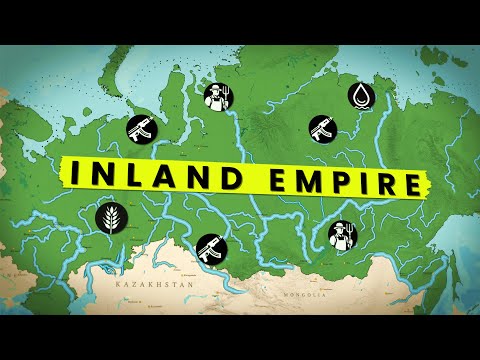
The adjective navigable is a versatile term that bridges the physical world of geography and the digital world of information architecture. At its most fundamental level, it describes a waterway—such as a river, canal, or bay—that possesses the necessary physical characteristics to allow vessels to pass through without running aground or facing impassable obstacles. For a river to be considered navigable, it must maintain a consistent depth, be wide enough for the intended ships to maneuver, and be free of permanent obstructions like low bridges, dense vegetation, or massive boulders. Historically, the navigability of a river determined the economic fate of entire civilizations, as it allowed for the transport of goods and people over long distances before the advent of modern rail or road networks.
- Nautical Context
- In maritime law and geography, a navigable waterway is often defined by its ability to support commercial traffic. This isn't just about size; it's about the reliability of the passage throughout different seasons and tide levels.
In the modern era, the term has evolved to describe digital environments. When we speak of a navigable website or a navigable document, we are referring to the ease with which a user can find information, move between sections, and understand the overall structure. A website with a messy menu and broken links is not navigable, whereas a well-designed app with clear icons and a logical flow is highly navigable. This metaphorical use retains the core idea of 'movement'—instead of a ship moving through water, a user's attention and cursor move through data.
The engineers worked tirelessly to ensure the canal remained navigable even during the peak of the dry season.
- Digital Context
- User Experience (UX) designers prioritize navigability to ensure that users don't feel lost or frustrated when interacting with complex software interfaces.
Furthermore, the word can be applied to abstract concepts like legal frameworks or complex social situations. A 'navigable legal system' is one where the rules are clear enough for a person to understand their rights and obligations without being overwhelmed by contradictions. In every context, the word implies a sense of clarity, accessibility, and the absence of insurmountable barriers. Whether you are a captain on the Mississippi River or a developer building a new mobile application, your goal is to create a space that is navigable for your audience.
A truly navigable interface allows users to reach any page within three clicks.
- Abstract Context
- Political analysts often discuss whether a peace treaty provides a navigable path toward long-term stability between conflicting nations.
Despite the complexity of the tax code, the new software makes the filing process much more navigable for small business owners.
The explorers were disappointed to find that the stream was not navigable beyond the first waterfall.
By simplifying the menu, we made the corporate archive much more navigable for new employees.
Using navigable correctly requires an understanding of the subject you are describing. It is almost always used as an adjective modifying a noun that represents a path, a body of water, or a system of information. When describing water, it often follows the verb 'to be' (e.g., 'The river is navigable') or acts as a direct modifier (e.g., 'a navigable waterway'). In technical writing, it is frequently paired with adverbs like 'fully,' 'easily,' or 'barely' to indicate the degree of accessibility.
- Subject-Verb Agreement
- The river is navigable. The websites are navigable. Ensure the noun matches the state of being accessible.
In digital contexts, you might say, 'The developer's primary goal was to create a navigable user interface.' Here, 'navigable' emphasizes the logical arrangement of buttons and links. You can also use it to describe documents: 'The 500-page report was made navigable through the use of a detailed table of contents and internal hyperlinks.' This usage highlights that the physical length of the document is no longer a barrier to finding specific details.
Heavy rains made the usually shallow creek navigable for small canoes.
- Common Adverb Pairings
- 'Highly navigable' (very easy), 'Barely navigable' (almost impossible), 'Year-round navigable' (always open).
When discussing complex systems, you might use it like this: 'The bureaucracy of the immigration office is barely navigable without a lawyer.' In this sentence, the word takes on a figurative meaning, suggesting that the 'path' through the legal process is filled with confusing obstacles. It effectively conveys the frustration of being 'stuck' in a system that lacks clear direction.
The city council is investing in dredging the harbor to keep it navigable for large cargo ships.
- Comparative Forms
- Use 'more navigable' or 'most navigable' rather than adding '-er' or '-est'. Example: 'This version of the app is more navigable than the last.'
Is the river navigable during the winter months when the ice begins to form?
The new library layout is much more navigable thanks to the clear signage.
The captain checked the charts to see if the strait was navigable at low tide.
You are likely to encounter navigable in several specific professional and academic environments. In the world of civil engineering and logistics, it is a standard term used to discuss infrastructure. When a government plans to build a bridge, they must consider the 'navigable clearance'—the space between the water and the bridge—to ensure that ships can still pass underneath. You will hear this in news reports about infrastructure projects or environmental changes affecting trade routes.
- In the News
- 'Due to the severe drought, several sections of the Danube are no longer navigable for commercial barges, causing significant delays in supply chains.'
In the tech industry, specifically within User Experience (UX) and User Interface (UI) design, 'navigable' is a buzzword for quality. During a product meeting, a designer might say, 'We need to make the dashboard more navigable so that users can find their analytics faster.' It is also common in SEO (Search Engine Optimization) discussions, where a 'navigable site structure' is essential for search engine bots to crawl and index a website effectively.
The consultant suggested that the website's hierarchy was too deep and not navigable for the average user.
- In Legal and Academic Writing
- Legal scholars use the term 'navigable waters' to define jurisdictions. If a body of water is navigable, it often falls under federal rather than local control.
You might also hear it in environmental science. When discussing the impact of climate change, scientists might talk about how melting Arctic ice is creating new 'navigable passages' through the North Pole, which has massive implications for global shipping and geopolitics. In this context, the word carries a weight of both opportunity and environmental concern.
As the glaciers retreat, previously frozen routes are becoming navigable for the first time in recorded history.
- In Everyday Conversation
- While less common in casual slang, you might hear someone say, 'The instructions for this IKEA desk are barely navigable,' meaning they are confusing and hard to follow.
The project manager ensured that the shared drive was navigable by organizing files into clear, dated folders.
The pilot confirmed that the channel was navigable despite the heavy fog rolling in.
The historical society is working to keep the old canal navigable for educational boat tours.
One of the most frequent errors learners make is confusing navigable with navigational. While they share the same root, they serve different functions. 'Navigable' describes the state of a path (is it passable?), whereas 'navigational' describes tools or actions related to navigation. For example, a compass is a 'navigational tool,' but a river is 'navigable.' You would never say 'a navigational river' unless you meant the river itself was being used as a tool to navigate something else, which is almost never the case.
- Navigable vs. Navigational
- Incorrect: 'We need better navigable aids.' Correct: 'We need better navigational aids.' Incorrect: 'The river is very navigational.' Correct: 'The river is very navigable.'
Another common mistake is using 'navigable' to describe people or their abilities. You might be tempted to say, 'He is a very navigable person,' meaning he is easy to talk to or lead. However, this is non-standard and sounds quite strange to native speakers. Instead, use words like 'approachable,' 'cooperative,' or 'easygoing.' 'Navigable' is strictly for paths, spaces, and systems.
The website's navigable structure (Correct) vs. The website's navigational structure (Also correct, but refers to the menu system specifically).
- Misuse of Scale
- Sometimes people use 'navigable' when they just mean 'big.' A large ocean is navigable, but so is a tiny, deep stream. The word is about the possibility of passage, not the size of the space.
Finally, watch out for the spelling. Because it comes from 'navigate,' some people try to spell it 'navigatable.' While this is occasionally seen in very informal contexts, 'navigable' is the only accepted spelling in professional and academic English. Adding the extra '-at-' is a common over-regularization error.
Incorrect: 'The swamp is not navigatable.' Correct: 'The swamp is not navigable.'
- Confusing with 'Passable'
- While similar, 'passable' often means 'just good enough,' whereas 'navigable' specifically implies the ability to be steered through or managed.
The road was passable after the snow, but the river was not navigable due to the ice.
Ensure your document is navigable by using headers; don't just call it 'navigational' unless you mean the menu itself.
The legal team found the contract's clauses to be barely navigable due to the archaic language.
Depending on the context, you might want to use a synonym for navigable to be more precise. In physical geography, passable or traversable are common alternatives. However, 'passable' often suggests a lower quality—something that is just barely good enough to get through—while 'navigable' implies a standard of depth and width suitable for vessels.
- Passable
- Used for roads or paths. 'The mountain pass is passable in summer.' It doesn't usually apply to water in the same technical way as navigable.
In the digital world, user-friendly, intuitive, and accessible are the most frequent alternatives. 'User-friendly' is a broad term, while 'navigable' specifically targets the structure and movement within the site. 'Intuitive' suggests that the navigation is so well-designed that the user doesn't even have to think about it. 'Accessible' has a specific legal and technical meaning, often referring to making the site usable for people with disabilities (e.g., screen reader compatibility).
The interface is highly navigable, making it more intuitive for first-time users.
- Traversable
- A more formal word for 'crossable.' Often used in mathematics or computer science to describe graphs or networks.
If you are looking for an antonym, impassable is the most direct opposite for physical routes. For digital or abstract systems, you might use convoluted, opaque, or unintuitive. A 'convoluted' process is one that is so twisted and complex that it is no longer navigable. An 'opaque' system is one where you cannot see the path forward at all.
While the main river is navigable, the smaller tributaries are completely impassable.
- Clear vs. Navigable
- 'Clear' describes the visibility or lack of clutter. 'Navigable' describes the ability to move through that space effectively.
The new software update aims to make the complex database more navigable for the research team.
Is the path to citizenship navigable for those without legal representation?
The captain preferred the navigable waters of the bay to the unpredictable open sea.
How Formal Is It?
Fun Fact
In the United States, the legal definition of 'navigable waters' is so important that it has been the subject of dozens of Supreme Court cases. If a river is navigable, the federal government has the power to regulate it, but if it is not, the state or private owners might have more control.
Pronunciation Guide
- Pronouncing it as na-VIG-able (stressing the second syllable).
- Adding an extra 'at' sound: nav-i-GAT-able.
- Pronouncing the 'g' as a 'j' sound (it should be a hard 'g' like in 'go').
- Making the 'a' in the third syllable too long (it should be a short schwa).
- Confusing the ending with '-ible' (it is always '-able').
Difficulty Rating
Common in news and technical articles, but the meaning is usually clear from context.
Spelling 'navigable' correctly (without the 'at') can be tricky for learners.
Useful for professional presentations about UX or logistics.
Easily recognized due to the clear 'navigate' root.
What to Learn Next
Prerequisites
Learn Next
Advanced
Grammar to Know
Adjective Suffix '-able'
Navigable (able to be navigated), Readable (able to be read).
Comparative Adjectives (Longer Words)
More navigable (not navigabler).
Adverbs modifying Adjectives
Highly navigable, barely navigable.
Noun formation with '-ity'
Navigable -> Navigability.
Negative prefix 'un-'
Un-navigable (the most common negative form).
Examples by Level
The river is navigable for small boats.
El río es navegable para botes pequeños.
Subject + is + navigable.
Is this website navigable?
¿Es este sitio web fácil de navegar?
Question form: Is + subject + navigable?
The big lake is navigable.
El gran lago es navegable.
Adjective describing a body of water.
This map makes the city navigable.
Este mapa hace que la ciudad sea navegable.
Verb 'make' + object + navigable.
The water is deep and navigable.
El agua es profunda y navegable.
Two adjectives joined by 'and'.
It is a navigable path.
Es un camino navegable.
Adjective before a noun.
The canal is navigable all year.
El canal es navegable todo el año.
Adverbial phrase 'all year'.
We need a navigable website.
Necesitamos un sitio web navegable.
Adjective modifying 'website'.
The river is navigable for ships carrying cargo.
El río es navegable para barcos que llevan carga.
Navigable + for + [noun].
The menu is simple, making the app navigable.
El menú es simple, lo que hace que la aplicación sea navegable.
Present participle phrase 'making...'.
This part of the sea is not navigable because of rocks.
Esta parte del mar no es navegable debido a las rocas.
Negative form: is not navigable.
A navigable river is important for trade.
Un río navegable es importante para el comercio.
Adjective used in the subject phrase.
The document is navigable with these links.
El documento es navegable con estos enlaces.
Navigable + with + [noun].
Is the harbor navigable during the storm?
¿Es el puerto navegable durante la tormenta?
Prepositional phrase 'during the storm'.
The forest path is navigable for hikers.
El sendero del bosque es navegable para los excursionistas.
Metaphorical use for a land path.
They want to keep the stream navigable.
Quieren mantener el arroyo navegable.
Verb 'keep' + object + navigable.
The Amazon is navigable for thousands of miles inland.
El Amazonas es navegable por miles de millas tierra adentro.
Adverbial phrase of distance.
The new website design is much more navigable than the old one.
El nuevo diseño del sitio web es mucho más navegable que el anterior.
Comparative form: more navigable than.
Engineers are dredging the river to ensure it remains navigable.
Los ingenieros están dragando el río para asegurar que siga siendo navegable.
Infinitive of purpose 'to ensure'.
The legal process is navigable if you follow the instructions carefully.
El proceso legal es navegable si sigues las instrucciones cuidadosamente.
Conditional 'if' clause.
Is the Danube navigable for large cruise ships?
¿Es el Danubio navegable para grandes barcos de crucero?
Specific noun phrase 'large cruise ships'.
The report's table of contents makes the data easily navigable.
El índice del informe hace que los datos sean fácilmente navegables.
Adverb 'easily' modifying 'navigable'.
The channel is only navigable at high tide.
El canal solo es navegable con la marea alta.
Adverb 'only' used for restriction.
The city's subway system is very navigable for tourists.
El sistema de metro de la ciudad es muy navegable para los turistas.
Metaphorical use for public transport.
The treaty aims to establish navigable routes through the disputed waters.
El tratado pretende establecer rutas navegables a través de las aguas en disputa.
Adjective modifying 'routes'.
A highly navigable interface is crucial for retaining mobile users.
Una interfaz altamente navegable es crucial para retener a los usuarios móviles.
Adverb 'highly' + adjective + noun.
Despite the heavy silt, the delta remains navigable for shallow-draft vessels.
A pesar del fuerte limo, el delta sigue siendo navegable para embarcaciones de poco calado.
Concession clause starting with 'Despite'.
The bureaucracy proved to be barely navigable for the small business owner.
La burocracia resultó ser apenas navegable para el dueño de la pequeña empresa.
Verb 'prove to be' + adverb + navigable.
The project focuses on making the historical archives digitally navigable.
El proyecto se centra en hacer que los archivos históricos sean digitalmente navegables.
Adverb 'digitally' modifying 'navigable'.
The river's navigability is threatened by the construction of the new dam.
La navegabilidad del río está amenazada por la construcción de la nueva presa.
Noun form 'navigability' used as subject.
The explorers searched for a navigable passage to the Pacific Ocean.
Los exploradores buscaron un paso navegable hacia el Océano Pacífico.
Historical context.
The software update made the complex database much more navigable.
La actualización del software hizo que la compleja base de datos fuera mucho más navegable.
Comparative 'much more navigable'.
The legal framework must be navigable to ensure equal access to justice.
El marco legal debe ser navegable para garantizar la igualdad de acceso a la justicia.
Modal 'must be' expressing necessity.
Climate change is rendering previously frozen Arctic routes navigable.
El cambio climático está volviendo navegables las rutas del Ártico anteriormente congeladas.
Verb 'render' + object + adjective.
The author's prose is dense but ultimately navigable for the dedicated reader.
La prosa del autor es densa pero finalmente navegable para el lector dedicado.
Adverb 'ultimately' modifying 'navigable'.
The intricate network of tunnels was only navigable with expert guidance.
La intrincada red de túneles solo era navegable con guía experta.
Adjective modifying 'network'.
We must prioritize a navigable information architecture in the new CMS.
Debemos priorizar una arquitectura de información navegable en el nuevo CMS.
Compound noun 'information architecture'.
The river was declared navigable by the Supreme Court in 1824.
El río fue declarado navegable por la Corte Suprema en 1824.
Passive voice 'was declared navigable'.
The complexity of the tax code makes it barely navigable for non-experts.
La complejidad del código tributario lo hace apenas navegable para los no expertos.
Adverb 'barely' + navigable.
The user journey should be seamless and highly navigable across all devices.
El viaje del usuario debe ser fluido y altamente navegable en todos los dispositivos.
Adjectives 'seamless' and 'navigable' paired.
The labyrinthine bureaucracy of the empire was scarcely navigable even for the elite.
La laberíntica burocracia del imperio era apenas navegable incluso para la élite.
Adverb 'scarcely' for emphasis.
The philosopher sought to create a navigable path through the ontological thicket.
El filósofo buscó crear un camino navegable a través del matorral ontológico.
Highly metaphorical/academic use.
Whether the stream is 'navigable in fact' remains a central question in water law.
Si el arroyo es 'navegable de hecho' sigue siendo una cuestión central en la ley del agua.
Legal term of art 'navigable in fact'.
The digital interface was so poorly designed that it rendered the vast database un-navigable.
La interfaz digital estaba tan mal diseñada que volvió inavegable la vasta base de datos.
Prefix 'un-' added to 'navigable'.
He navigated the social nuances of the court, finding them surprisingly navigable.
Navegó por los matices sociales de la corte, encontrándolos sorprendentemente navegables.
Polyptoton (using 'navigate' and 'navigable' in one sentence).
The treaty's success depends on keeping the Strait of Hormuz navigable for all nations.
El éxito del tratado depende de mantener el Estrecho de Ormuz navegable para todas las naciones.
Geopolitical context.
The intricate plot of the novel is only navigable for those who pay close attention to the footnotes.
La intrincada trama de la novela solo es navegable para aquellos que prestan mucha atención a las notas al pie.
Literary analysis context.
The CEO's vision provided a navigable roadmap for the company's future growth.
La visión del CEO proporcionó una hoja de ruta navegable para el crecimiento futuro de la empresa.
Business metaphor.
Common Collocations
Common Phrases
— A legal term meaning a waterway is actually capable of being used for commerce.
The court ruled that the stream was navigable in fact.
— To improve a system or path so it can be used easily.
We need to make this database navigable for the interns.
— To ensure a path stays open and clear of obstacles.
Maintenance crews work daily to keep the canal navigable.
— A specific path that is safe and possible to follow.
The GPS found a navigable route around the construction.
— The minimum depth of water required for a ship to pass.
The captain checked the charts for the navigable depth.
— The space under a bridge that allows ships to pass.
The bridge was built with a high navigable clearance.
— Easy to move through using a computer or phone.
The library is making its collection digitally navigable.
— A very confusing and difficult government or corporate system.
He struggled with the barely navigable bureaucracy of the tax office.
— Accessible to everyone, regardless of their skill or equipment.
The park trails were designed to be navigable for all visitors.
— A waterway that was used for ships in the past.
The dried-up river was once historically navigable.
Often Confused With
Navigational refers to the tools (compass, GPS), while navigable refers to the path (river, website).
Passable means you can get through, but it might be difficult. Navigable implies a standard of ease or depth.
Accessible is broader; navigable specifically implies movement and structure.
Idioms & Expressions
— To deal with a difficult or complex situation carefully.
The CEO had to navigate the waters of a hostile takeover.
Metaphorical— A situation that is very easy and has no problems (related to navigability).
Once we passed the first exam, it was smooth sailing.
Informal— In the same difficult situation (nautical origin).
We are all in the same boat regarding the new rules.
Informal— To make a plan for the future.
The company is charting a course toward sustainability.
Formal— To cause trouble or disturb a stable situation.
Don't rock the boat by asking for a raise right now.
Informal— To understand how a system or task works.
Ask Sarah; she's been here for years and knows the ropes.
Informal— To prepare for a big task by finishing smaller ones.
We need to clear the decks before the new project starts.
Neutral— To avoid someone or something.
Steer clear of the downtown area during the protest.
Neutral— To take control of a project or organization.
The new manager will take the helm next Monday.
Formal— An exclamation when reaching a goal (nautical origin).
Land ho! We finally finished the 100-page report.
InformalEasily Confused
They share the same root.
Navigational is an adjective for tools/actions. Navigable is an adjective for the place/path.
We used navigational equipment to find the navigable channel.
Both mean 'able to be traveled.'
Passable is for roads/land; navigable is for water/data. Passable often means 'just okay.'
The road was passable, but the river was not navigable.
Both mean 'able to be crossed.'
Traversable is more general and formal; navigable is specific to steering or managing a path.
The terrain is traversable on foot, but the river is not navigable for boats.
Both imply ease of use.
Manageable refers to the difficulty of a task; navigable refers to the structure of a space.
The workload is manageable, and the new filing system is navigable.
Both end in '-able' and relate to clarity.
Legible means 'easy to read' (letters/writing). Navigable means 'easy to move through' (structure).
The font is legible, and the document structure is navigable.
Sentence Patterns
The [place] is navigable.
The lake is navigable.
The [place] is navigable for [vessels].
The river is navigable for small boats.
Make the [thing] more navigable.
We need to make the website more navigable.
Despite [obstacle], the [path] remains navigable.
Despite the storm, the channel remains navigable.
A navigable [abstract noun] is essential for [goal].
A navigable legal framework is essential for justice.
The [complex thing] was scarcely navigable.
The labyrinthine bureaucracy was scarcely navigable.
It is a [adverb] navigable [noun].
It is a highly navigable interface.
The [noun]'s navigability is [adjective].
The river's navigability is excellent.
Word Family
Nouns
Verbs
Adjectives
Related
How to Use It
Common in professional, technical, and academic English; less common in daily casual conversation.
-
Using 'navigatable' instead of 'navigable'.
→
The river is navigable.
Learners often try to keep the 'ate' from 'navigate,' but the correct suffix is just '-able.'
-
Using 'navigational' to describe a river.
→
The river is navigable.
'Navigational' describes tools (like a compass). 'Navigable' describes the place itself.
-
Saying a person is 'navigable'.
→
He is very approachable.
'Navigable' is for paths and systems, not for human personalities.
-
Stressing the second syllable: na-VIG-able.
→
NAV-i-ga-ble.
The stress must be on the first syllable for correct English pronunciation.
-
Using 'navigable' for a small puddle.
→
The puddle is passable.
'Navigable' usually implies a certain scale, like for boats or complex data systems.
Tips
Nautical Roots
Always remember the word's origin with ships. If you can imagine a ship (or a cursor) moving smoothly, 'navigable' is the right word.
No 'T' allowed
Don't write 'navigatable.' Just take 'navigate,' drop the 'te,' and add 'ble.' It's simpler than it looks!
UX Design
If you work in tech, use 'navigable' to describe your UI. It sounds professional and specifically refers to the structure of the user's journey.
Pair with Adverbs
Use 'highly,' 'easily,' or 'barely' to give more detail. 'The river is navigable' is okay, but 'The river is year-round navigable' is much better.
Law Context
In a legal context, 'navigable' often determines who owns the land under the water. It's a very powerful word in property law.
Choose Carefully
Use 'passable' for a muddy road, but 'navigable' for a deep river. The distinction shows you have a high level of English.
Abstract Use
Don't be afraid to use it for 'paths' that aren't real, like a 'navigable career path' or a 'navigable set of rules.'
Context Clues
If you see this word in a science article about the Arctic, it's almost certainly talking about melting ice and new shipping routes.
First Syllable
Punch the 'NAV' when you say it. NAV-i-ga-ble. This helps people understand you clearly.
Document Design
When writing a long essay, say 'I have included a table of contents to make the document more navigable.' Teachers love this.
Memorize It
Mnemonic
NAVigate + ABLE = Navigable. If you are ABLE to NAVigate it, it is NAVIGABLE. Think of a 'NAVY' ship that is 'ABLE' to pass through.
Visual Association
Imagine a giant blue 'A' (for Able) floating like a boat down a wide, clear river. The river is the 'Navigable' path.
Word Web
Challenge
Try to use 'navigable' in three different ways today: once for a physical path, once for a website or app, and once for a complex set of rules.
Word Origin
The word 'navigable' originates from the Latin word 'navigabilis,' which is formed from 'navigare' (to sail) and the suffix '-abilis' (able to). The root 'navis' means 'ship' in Latin, which is also the ancestor of words like 'navy' and 'naval.' It entered the English language in the late 15th century, primarily to describe the suitability of rivers for commerce.
Original meaning: Capable of being sailed upon by ships.
Indo-European > Italic > Latin > French > EnglishCultural Context
There are no major sensitivities, but be aware that in legal contexts, 'navigable' has very specific definitions that can affect land ownership.
In the US and UK, 'navigable' is often heard in local news when discussing flooding or the construction of new bridges.
Practice in Real Life
Real-World Contexts
Maritime/Shipping
- Navigable waters
- Navigable channel
- Dredging for navigability
- Safe passage
Web Design (UX)
- Navigable interface
- Logical structure
- User journey
- Site hierarchy
Law and Policy
- Navigable in fact
- Federal jurisdiction
- Riparian rights
- Public access
Geography/Nature
- Navigable river
- Inland waterway
- Seasonal navigability
- Tributary
General Business
- Navigable document
- Navigable process
- Clear roadmap
- Ease of use
Conversation Starters
"Do you think the local river is navigable for large ships, or is it too shallow?"
"What makes a website navigable for you? Is it the search bar or the menu?"
"Have you ever tried to read a legal document that was barely navigable?"
"If you were designing an app, how would you ensure it is highly navigable for older users?"
"Do you think the melting ice in the Arctic making new navigable routes is a good thing for trade?"
Journal Prompts
Describe a time you were lost on a website that was not navigable. What was frustrating about it?
Write about a famous navigable river in your country and why it is important for the economy.
Think of a complex system in your life (like school or work). Is it navigable? How would you improve it?
Imagine you are an explorer finding a new navigable passage. Describe the journey.
How does a navigable environment (physical or digital) affect your mood and productivity?
Frequently Asked Questions
10 questionsNo, 'navigable' is used for paths, waterways, and systems. If you mean a person is easy to deal with, use 'approachable' or 'easygoing.' Using 'navigable' for a person sounds very strange in English.
While you might see it occasionally, 'navigatable' is considered incorrect or non-standard. The correct word is always 'navigable.' This is a common mistake because people want to add the '-ate' from 'navigate.'
A navigable river is deep and wide enough for ships to travel on for commerce or transport. A regular river might be too shallow, have too many rocks, or have waterfalls that prevent ships from passing.
You use it to describe how easy it is to find information. For example, 'The website is navigable' means the menus are clear and the links work well. It is a very common term in User Experience (UX) design.
Yes, it is more formal than 'easy to use' or 'passable.' It is commonly used in business, law, and science. However, it is not so formal that you can't use it in a normal conversation about an app or a trip.
It means that a path or system is almost impossible to get through. For a river, it might mean the water is very shallow. For a website, it might mean the design is very confusing.
Yes, metaphorically. You can say a forest is navigable if the trees are not too thick and there are clear paths. However, 'traversable' is more common for land.
The noun form is 'navigability.' For example, 'The navigability of the river is important for the city's economy.' It refers to the state or quality of being navigable.
Not necessarily. A body of water can be 'navigable for canoes' but not 'navigable for cargo ships.' It depends on the context of what is trying to pass through.
Yes, it is used throughout the English-speaking world with the same meaning. It is a standard term in international shipping and global tech industries.
Test Yourself 180 questions
Write a sentence using 'navigable' to describe a river in your country.
Well written! Good try! Check the sample answer below.
Write a sentence using 'navigable' to describe a website you like.
Well written! Good try! Check the sample answer below.
Explain why a table of contents makes a document more 'navigable'.
Well written! Good try! Check the sample answer below.
Use 'barely navigable' in a sentence about a difficult task.
Well written! Good try! Check the sample answer below.
Describe a 'navigable interface' for a mobile app.
Well written! Good try! Check the sample answer below.
Write a sentence about climate change using the word 'navigable'.
Well written! Good try! Check the sample answer below.
Compare 'navigable' and 'passable' in two short sentences.
Well written! Good try! Check the sample answer below.
Use 'navigable' in a formal business context.
Well written! Good try! Check the sample answer below.
Write a sentence about a captain and a 'navigable channel'.
Well written! Good try! Check the sample answer below.
Explain the legal importance of 'navigable waters' in your own words.
Well written! Good try! Check the sample answer below.
Use 'highly navigable' to describe a library.
Well written! Good try! Check the sample answer below.
Write a sentence using 'un-navigable'.
Well written! Good try! Check the sample answer below.
Describe a 'navigable path' through a forest.
Well written! Good try! Check the sample answer below.
Use 'navigable' to describe a set of instructions.
Well written! Good try! Check the sample answer below.
Write a sentence about a 'navigable roadmap' for a startup.
Well written! Good try! Check the sample answer below.
Use 'navigable' in a sentence about a harbor.
Well written! Good try! Check the sample answer below.
Write a sentence about 'navigable clearance' and a bridge.
Well written! Good try! Check the sample answer below.
Use 'navigable' in a sentence about a database.
Well written! Good try! Check the sample answer below.
Write a sentence about 'navigable' and 'tide'.
Well written! Good try! Check the sample answer below.
Explain the difference between 'navigable' and 'navigational' in one sentence.
Well written! Good try! Check the sample answer below.
Pronounce the word 'navigable' correctly, stressing the first syllable.
Read this aloud:
You said:
Speech recognition is not supported in your browser. Try Chrome or Edge.
Describe a navigable river you know about in your own words.
Read this aloud:
You said:
Speech recognition is not supported in your browser. Try Chrome or Edge.
Give a short presentation (30 seconds) on why a website needs to be navigable.
Read this aloud:
You said:
Speech recognition is not supported in your browser. Try Chrome or Edge.
Explain the difference between 'navigable' and 'navigational' to a classmate.
Read this aloud:
You said:
Speech recognition is not supported in your browser. Try Chrome or Edge.
Use 'barely navigable' in a sentence about a messy room or office.
Read this aloud:
You said:
Speech recognition is not supported in your browser. Try Chrome or Edge.
Discuss how climate change is making the Arctic more navigable.
Read this aloud:
You said:
Speech recognition is not supported in your browser. Try Chrome or Edge.
Talk about a 'navigable document' you had to use recently.
Read this aloud:
You said:
Speech recognition is not supported in your browser. Try Chrome or Edge.
Describe a 'navigable roadmap' for your English learning goals.
Read this aloud:
You said:
Speech recognition is not supported in your browser. Try Chrome or Edge.
Explain why 'navigable clearance' is important for bridges.
Read this aloud:
You said:
Speech recognition is not supported in your browser. Try Chrome or Edge.
Use 'highly navigable' to describe a new app you downloaded.
Read this aloud:
You said:
Speech recognition is not supported in your browser. Try Chrome or Edge.
Describe a situation where a river might become 'un-navigable'.
Read this aloud:
You said:
Speech recognition is not supported in your browser. Try Chrome or Edge.
Talk about the importance of 'navigable waters' for a country's economy.
Read this aloud:
You said:
Speech recognition is not supported in your browser. Try Chrome or Edge.
Use 'navigable' metaphorically to describe a difficult book.
Read this aloud:
You said:
Speech recognition is not supported in your browser. Try Chrome or Edge.
Explain the root of the word 'navigable'.
Read this aloud:
You said:
Speech recognition is not supported in your browser. Try Chrome or Edge.
Discuss the 'navigability' of your city's public transport system.
Read this aloud:
You said:
Speech recognition is not supported in your browser. Try Chrome or Edge.
Use 'navigable' in a sentence about a canal.
Read this aloud:
You said:
Speech recognition is not supported in your browser. Try Chrome or Edge.
Explain what 'navigable in fact' means in a legal sense.
Read this aloud:
You said:
Speech recognition is not supported in your browser. Try Chrome or Edge.
Describe a 'navigable interface' for a smart TV.
Read this aloud:
You said:
Speech recognition is not supported in your browser. Try Chrome or Edge.
Use 'navigable' to describe a path through a forest.
Read this aloud:
You said:
Speech recognition is not supported in your browser. Try Chrome or Edge.
Summarize the two main meanings of 'navigable'.
Read this aloud:
You said:
Speech recognition is not supported in your browser. Try Chrome or Edge.
Listen to this sentence: 'The river is navigable for ships with a shallow draft.' What kind of ships can use the river?
Listen to this sentence: 'We need to prioritize a navigable site structure.' What is the speaker's priority?
Listen to this sentence: 'The channel is only navigable at high tide.' When is the channel closed?
Listen to this sentence: 'The bureaucracy was barely navigable for the average citizen.' Who found the bureaucracy difficult?
Listen to this sentence: 'Dredging ensures the harbor remains navigable.' What activity keeps the harbor open?
Listen to this sentence: 'The explorers found a navigable passage through the ice.' What did the explorers find?
Listen to this sentence: 'A navigable interface is crucial for mobile apps.' Why is it crucial?
Listen to this sentence: 'The court ruled the river was navigable in fact.' What did the court decide?
Listen to this sentence: 'The new roadmap is much more navigable than the old one.' Which roadmap is better?
Listen to this sentence: 'Is the stream navigable for canoes?' What vessel is mentioned?
Listen to this sentence: 'The report's index makes the data navigable.' What tool makes the data navigable?
Listen to this sentence: 'The Arctic routes are becoming navigable due to global warming.' What is the cause?
Listen to this sentence: 'The bridge has a navigable clearance of 50 feet.' How much space is under the bridge?
Listen to this sentence: 'The software update made the database navigable.' What was updated?
Listen to this sentence: 'The path was barely navigable after the landslide.' Why was the path difficult?
/ 180 correct
Perfect score!
Summary
The word 'navigable' is essential for describing how easy it is to 'get through' something, whether it is a physical river or a digital menu. For example: 'The river is navigable for ships, and the website is navigable for users.'
- Navigable primarily describes waterways that are deep and wide enough for ships to pass through safely without hitting obstacles or the bottom.
- In the digital world, it refers to websites, apps, or documents that are easy to move through because they have a clear, logical structure.
- The word can also be used metaphorically to describe complex systems, like laws or bureaucracies, that are clear enough for people to understand and follow.
- It is a formal adjective that emphasizes accessibility, clarity, and the absence of insurmountable barriers in both physical and conceptual spaces.
Nautical Roots
Always remember the word's origin with ships. If you can imagine a ship (or a cursor) moving smoothly, 'navigable' is the right word.
No 'T' allowed
Don't write 'navigatable.' Just take 'navigate,' drop the 'te,' and add 'ble.' It's simpler than it looks!
UX Design
If you work in tech, use 'navigable' to describe your UI. It sounds professional and specifically refers to the structure of the user's journey.
Pair with Adverbs
Use 'highly,' 'easily,' or 'barely' to give more detail. 'The river is navigable' is okay, but 'The river is year-round navigable' is much better.