pam in 30 Seconds
- Pam is a famous brand of non-stick cooking spray used to prevent food from sticking to pans and baking sheets during the cooking process.
- It is an aerosol product containing oil and lecithin, offering a low-calorie alternative to traditional greasing methods like using butter or liquid oil.
- The term is often used generically in North America to refer to any brand of cooking spray, similar to how 'Kleenex' means tissue.
- Commonly used in baking, frying, and grilling, it requires careful handling due to its flammable propellant and potential for leaving a gummy residue.
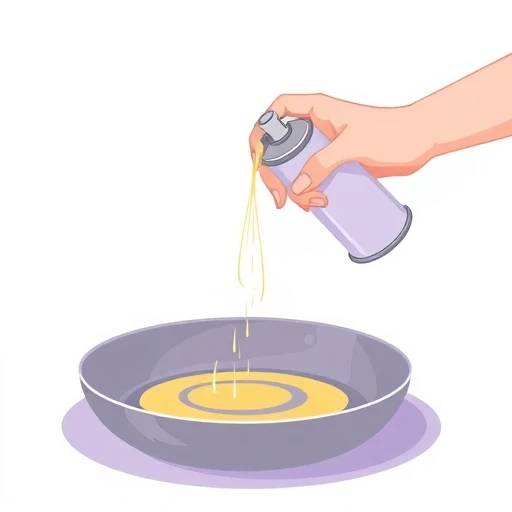
The term Pam refers to a ubiquitous brand of non-stick cooking spray that has become a genericized trademark in many North American households. At its core, Pam is an aerosolized lubricant designed specifically for culinary applications. It is primarily composed of various oils—such as canola, coconut, or olive oil—combined with soy lecithin, which acts as an emulsifier, and a propellant to expel the liquid in a fine, even mist. The primary function of Pam is to create a microscopic barrier between the cooking surface (like a frying pan, baking sheet, or muffin tin) and the food being prepared. This barrier prevents the proteins and sugars in the food from bonding with the metal or ceramic surface of the cookware, ensuring that the finished product can be removed easily without tearing or leaving behind a burnt residue. People use Pam in a wide variety of contexts, ranging from simple morning tasks like frying an egg to complex baking projects like preparing a multi-tiered bundt cake. Because it delivers a very thin layer of fat, it is often marketed as a healthier alternative to using large amounts of butter, margarine, or liquid oil, which can significantly increase the caloric density of a meal. Beyond the stovetop, Pam is also used on kitchen tools; for example, spraying a measuring cup with Pam before pouring in honey or molasses allows the sticky liquid to slide out effortlessly. The convenience factor is perhaps the most significant reason for its popularity; a two-second spray is much faster and less messy than manually greasing a pan with a wrapper of butter or a pastry brush dipped in oil.
- Product Category
- Non-stick cooking spray / Aerosolized vegetable oil.
- Primary Use Case
- Preventing food adhesion to cookware during high-heat processing.
Make sure you give the casserole dish a good coating of Pam before you add the lasagna noodles so they don't stick to the edges.
Historically, Pam was introduced in 1959 by Arthur Meyerhoff and Leon Rubin, who founded PAM Products, Inc. The name itself is an acronym for 'Product of Arthur Meyerhoff.' Since its inception, the brand has expanded to include specialized formulas, such as those with flour for baking, high-heat versions for grilling, and organic varieties. In modern culinary discourse, even if a cook is using a store-brand or generic version of cooking spray, they will often still refer to it as 'Pam,' similar to how 'Kleenex' is used for tissues or 'Xerox' for photocopying. This linguistic phenomenon highlights the brand's dominance in the market. However, users should be aware of the chemical properties of the spray; the lecithin in Pam can occasionally leave a sticky, gummy residue on non-stick pans if used excessively at very high temperatures, which can actually degrade the pan's built-in non-stick coating over time. Therefore, while it is a versatile tool, it requires a measured approach to application. In professional kitchens, chefs might prefer traditional fats for flavor, but for the home cook seeking efficiency and calorie control, Pam remains a staple of the pantry. It is especially useful for intricate molds where manual greasing would be physically impossible to perform evenly.
If you don't have any butter, just use some Pam on the waffle iron; it works just as well and is much faster.
- Ingredients
- Canola oil, palm oil, coconut oil, soy lecithin, rosemary extract, and propellant.
The recipe says to grease the pan, so I'll just grab the Pam from the cupboard.
I always spray my measuring spoons with Pam before measuring peanut butter so it slides right off.
- Genericization
- The brand name is often used to describe any brand of non-stick cooking spray.
The baker applied a generous layer of Pam to the intricate bundt pan to ensure the cake would release perfectly.
Using the word Pam in a sentence is relatively straightforward, as it typically functions as a proper noun (referring to the brand) or a common noun (referring to the product type). Because it is a mass noun in many contexts, it is rarely pluralized unless referring to different types or cans of the product. When constructing sentences, it is most commonly found in the imperative mood within recipes or as the object of verbs like 'spray,' 'apply,' 'use,' or 'coat.' For instance, a recipe might instruct: 'Spray the baking sheet with Pam.' Here, Pam is the direct object. You can also use it as a modifier, such as in 'Pam spray' or 'a Pam coating,' though the word alone usually suffices. In informal American English, you might even hear it used as a verb, as in 'Did you Pam the pan yet?' although this is technically non-standard. The word is almost always associated with the kitchen, so the surrounding vocabulary usually includes terms like 'skillet,' 'oven,' 'preheat,' 'non-stick,' and 'residue.' To use it correctly, one must understand that it implies an action of preparation. It is not an ingredient that adds flavor in the way olive oil or butter does; rather, it is a functional tool. Therefore, sentences often emphasize the result of using it—specifically, the ease of cleanup or the prevention of sticking. If you are writing a formal culinary guide, you might opt for the generic 'non-stick cooking spray,' but in everyday conversation and blog-style recipes, 'Pam' is the standard term. It is also important to distinguish between the person's name 'Pam' (short for Pamela) and the product. Context usually makes this clear: if the sentence involves a frying pan and a pressurized can, it's the spray; if it involves a person talking or walking, it's the name. Furthermore, when discussing health and nutrition, Pam is often used in sentences comparing fat content, such as 'Using Pam instead of butter can save you over 100 calories per meal.' This highlights its role in dietary management.
- Grammatical Role
- Proper noun / Mass noun / Genericized trademark.
The chef reached for the Pam to quickly grease the muffin tins before the batter could oxidize.
When describing the application process, adverbs like 'lightly,' 'generously,' or 'evenly' are frequently paired with the verb and the noun. For example, 'Lightly spray the pan with Pam to avoid a greasy buildup.' This provides specific instruction on the quantity. In a more technical or industrial context, one might say, 'The application of a lecithin-based spray like Pam reduces the surface tension between the dough and the conveyor.' While this is more complex, the word 'Pam' serves as the recognizable anchor for the concept. In social settings, you might hear it in the context of a shared task: 'Can you pass me the Pam? I need to start the pancakes.' Here, it functions as a simple request for a physical object. It is also worth noting that because Pam is a brand, it is technically capitalized, though in casual texting or quick notes, people often write it in lowercase. However, for clarity and professional writing, the capital 'P' should be maintained. Another common sentence structure involves the preposition 'with,' as in 'coated with Pam' or 'sprayed with Pam.' This indicates the means by which the non-stick state was achieved. Lastly, in the context of troubleshooting a failed dish, one might say, 'I think the cake stuck because I forgot the Pam,' which uses the noun to represent the entire concept of lubrication. This versatility makes it a highly efficient word in the English kitchen vocabulary, condensing a multi-word description into a single, punchy syllable.
Without a quick spritz of Pam, these delicate crepes will definitely tear when you try to flip them.
- Common Verb Pairings
- Spray, coat, grease, apply, use, spritz, reach for.
Is there any Pam left in that can, or is it just air coming out now?
The recipe specifically recommends Pam Baking Spray because it contains a bit of flour for better release.
- Prepositional Usage
- 'With Pam' (instrumental), 'of Pam' (quantity), 'for Pam' (purpose).
Even though I used Pam, the bottom of the cookies still got a little too dark.
You will encounter the word Pam in several distinct environments, primarily centered around food preparation and domestic life. The most common place is within the American household kitchen. If you are helping a friend cook or watching a family member prepare a meal, the request to 'grab the Pam' is a standard part of the culinary dialogue. It is a word that signals a transition from preparation to active cooking. You will also hear it frequently on television, specifically on cooking shows and in commercials. Celebrity chefs, while they might use high-end oils, often use non-stick sprays for specific tasks like coating a grill or a cold pan, and they may use the brand name 'Pam' as a shorthand for the product. In grocery stores, the word is used both as a brand label and as a category marker. If you ask a store employee where the 'Pam' is, they will immediately direct you to the baking aisle or the oil section, regardless of whether they carry the specific brand or a competitor like Crisco or a private label. This demonstrates the word's power as a linguistic shortcut. Furthermore, the word appears in digital spaces—food blogs, YouTube cooking tutorials, and recipe apps are filled with instructions like 'Mist the pan with Pam.' In these contexts, the word is used to ensure the audience understands exactly what tool is needed for success. Interestingly, you might also hear 'Pam' in non-culinary contexts, though this is rarer. Some DIY enthusiasts use it as a temporary lubricant for squeaky hinges or to prevent snow from sticking to a shovel, although these are off-label uses. In the fitness and bodybuilding community, 'Pam' is a frequent topic of conversation because it allows for 'fat-free' cooking, fitting into strict macronutrient profiles. You'll hear it in gyms or nutrition seminars when discussing ways to reduce caloric intake without sacrificing the ability to cook diverse foods. Finally, in the world of advertising and marketing, 'Pam' is a case study in brand longevity and successful positioning. It is heard in business schools when discussing 'top-of-mind awareness,' where a brand becomes so synonymous with a product that it replaces the generic name in the consumer's mind. Whether you are in a suburban kitchen, a professional studio, or a retail environment, 'Pam' is the definitive term for the aerosolized oil that keeps the world's food from sticking.
- Common Locations
- Kitchens, grocery stores, cooking classes, food blogs, television commercials.
I was watching a cooking tutorial on YouTube, and the chef said to always use Pam on the air fryer basket to keep the chicken wings from sticking.
In addition to these physical and media locations, 'Pam' is a staple of the 'mom-and-pop' restaurant scene. While high-end French bistros might scoff at aerosol sprays, your local diner or breakfast spot almost certainly uses a large, industrial-sized can of non-stick spray (often referred to as Pam) to keep the griddle moving during the morning rush. You might hear a short-order cook yell for more 'Pam' when the eggs start to catch on the surface. In social media circles, particularly on platforms like TikTok or Instagram, 'Pam' is often featured in 'kitchen hacks' videos. For example, a creator might show how spraying a cheese grater with Pam makes it easier to clean afterward. This further cements the word's place in the modern lexicon of life-efficiency. In the context of health-conscious parenting, you might hear parents discussing which version of Pam they use—the olive oil one or the butter-flavored one—to make popcorn or roasted vegetables for their kids. The word carries a connotation of practicality and 'common sense' cooking. It is rarely associated with luxury, but it is deeply associated with reliability. When you hear 'Pam,' you think of a problem being solved: the problem of food sticking to a pan. This functional association is why the word has remained so prevalent for over sixty years. It is a word of action, a word of preparation, and a word that bridges the gap between the raw ingredients and the finished, perfectly plated meal.
At the grocery store, I couldn't find the Pam, so I had to ask the clerk if they were out of stock.
- Media Presence
- Food Network, Pinterest, Cooking YouTube, Morning Talk Shows.
The commercial for Pam showed a woman easily sliding a whole omelet out of a pan without using a spatula.
If you're going to bake those brownies, you'd better check if we have any Pam left in the pantry.
- Professional Context
- Used in high-volume catering and fast-casual dining for speed and consistency.
The caterer used Pam to coat hundreds of small appetizer trays in just a few minutes.
While using Pam seems like a foolproof task, there are several common mistakes that people make, both in the physical application of the product and in the linguistic use of the word. One of the most frequent physical errors is spraying Pam onto a pan that is already screamingly hot. Because the spray contains propellants (like butane or propane) and fine droplets of oil, it can ignite if it comes into contact with an open flame or an extremely hot surface, leading to a dangerous 'flash fire.' Another common mistake is over-application. Many users think that more spray equals more non-stick power, but in reality, a heavy layer of Pam can create a sticky, brownish residue known as 'polymerization.' This happens when the soy lecithin in the spray is heated repeatedly; it turns into a gummy substance that is incredibly difficult to scrub off and can actually ruin the performance of high-quality non-stick pans. In fact, many manufacturers of premium non-stick cookware specifically advise against using Pam because of this buildup. Linguistically, a common mistake is confusing the brand 'Pam' with the person's name 'Pam.' While this rarely causes confusion in writing (due to context), in spoken English, it's important to ensure the context of the kitchen is established. Another mistake is assuming that Pam is a direct substitute for the flavor of butter or olive oil. While there are butter-flavored versions of Pam, they do not provide the same richness or 'mouthfeel' as real butter. Using Pam in a recipe that relies on the fat for flavor—like a shortbread cookie—will result in a disappointing, bland product. Furthermore, some people mistakenly use Pam on surfaces that don't need it, such as silicone baking mats, which are already naturally non-stick. This just adds unnecessary grease. From a health perspective, a mistake is believing that Pam has 'zero calories.' While the label may say zero calories per serving, a 'serving' is defined as a fraction of a second spray. If you hold the button down for five seconds, you are adding a significant amount of oil and calories to your dish. Understanding these nuances is key to using both the product and the word effectively. Finally, some people use Pam as a substitute for 'baking spray' (which contains flour) when baking cakes. While regular Pam works for many things, for high-sugar cakes or intricate bundts, regular Pam might not be enough, leading to the cake sticking despite the spray. Always check if the recipe requires 'Pam with Flour' specifically.
- Technical Error
- Using Pam on high-end non-stick pans, which can lead to permanent gummy residue.
I made the mistake of spraying Pam right over the gas burner, and a huge flame shot up!
Another mistake involves the storage of the product. People often leave their can of Pam right next to the stove where it gets hot. Pressurized cans should always be stored in a cool, dry place to prevent the risk of explosion. In terms of culinary technique, spraying the food instead of the pan is a common error. While some recipes for the air fryer suggest spraying the food to get it crispy, for most pan-frying, you want the Pam on the metal surface, not the ingredient itself. This ensures the release happens at the point of contact with the heat. Additionally, some users forget to shake the can before use. Shaking helps mix the oil and the lecithin with the propellant, ensuring a consistent spray rather than a stream of pure oil or a puff of air. From a linguistic standpoint, using 'Pam' as a verb ('I'm going to Pam the tray') is common in slang but should be avoided in formal writing or professional culinary exams. It is better to say 'apply non-stick spray' or 'grease the tray.' Lastly, a mistake in understanding the product's limits is trying to use it for deep frying. Pam is a surface lubricant, not a cooking medium. You cannot fill a pot with Pam to fry potatoes. It is designed for thin-film application only. By avoiding these common pitfalls, you can ensure that your cooking remains safe, your pans stay clean, and your English usage remains precise. Whether you are a novice cook or an experienced chef, respecting the chemistry and the intended use of this aerosol tool is vital for kitchen success.
Don't use too much Pam, or the bottom of the cake will feel greasy and look unappealing.
- Safety Mistake
- Spraying near an open flame or storing the can in a high-heat area.
She thought Pam was calorie-free, so she sprayed it for ten seconds, adding nearly 50 calories to her 'healthy' meal.
The recipe said to 'grease and flour' the pan, but I just used Pam and the cake got stuck in the corners.
- Storage Mistake
- Keeping the pressurized can on the back of the stove where it can overheat.
If you don't shake the Pam before you use it, you might just get a spray of gas instead of oil.
When discussing Pam, it is helpful to understand the various alternatives and similar products available in the culinary world. The most direct alternative is any other brand of non-stick cooking spray. Brands like Crisco, Mazola, and store-specific labels (like Great Value or Kirkland) offer nearly identical products. These are often cheaper but function in the exact same way—using oil, lecithin, and a propellant. Another category of alternatives includes traditional fats. Butter is the most common substitute; it provides a rich flavor and excellent browning (Maillard reaction) that Pam cannot replicate. However, butter contains water and milk solids, which can sometimes cause sticking if the pan isn't hot enough. Lard and shortening (like Crisco in a tub) are also traditional options, especially in baking, where they are often paired with a dusting of flour to create a foolproof non-stick surface. For those who want the convenience of a spray without the chemical propellants or additives like soy lecithin, oil misters are a popular choice. These are refillable bottles that you fill with your own high-quality olive or avocado oil and manually pump to create pressure. This allows for a pure oil spray that is healthier and more environmentally friendly. Parchment paper is another excellent alternative, particularly for baking. Instead of greasing a pan with Pam, you line it with silicone-treated paper, which provides a 100% guarantee that nothing will stick. Silicone baking mats (like Silpat) serve a similar purpose for cookies and pastries. In professional settings, chefs often use a pastry brush to apply a thin, even layer of melted butter or oil, which offers more control than an aerosol can. When comparing these options, the choice usually comes down to a balance of convenience, flavor, and health. Pam wins on convenience and low-calorie counts, while butter and oil win on flavor and 'clean' ingredients. Understanding these comparisons helps a cook choose the right tool for the specific task at hand. For example, you wouldn't use Pam to sauté garlic where the oil's flavor is essential, but you would use it to coat a complex waffle iron where butter would be difficult to apply evenly.
- Pam vs. Butter
- Pam is lower in calories and easier to apply; butter adds flavor and helps with browning.
- Pam vs. Oil Mister
- Pam contains emulsifiers and propellants; oil misters use pure oil and manual air pressure.
Instead of using Pam, the chef preferred to use a silicone brush to apply a thin layer of clarified butter to the pan.
In the realm of specialized sprays, you might encounter Baking Spray, which is a hybrid of Pam and flour. This is specifically designed for cakes and breads. There is also Grilling Spray, which has a higher smoke point and is formulated to withstand the intense heat of an outdoor grill without breaking down or flaring up as easily as regular Pam. For those with dietary restrictions, Coconut Oil Spray or Avocado Oil Spray are common variations that offer different nutritional profiles and smoke points. In terms of linguistic alternatives, if you are in a formal setting, you should use the term 'aerosolized cooking lubricant' or 'non-stick vegetable oil spray.' However, in most English-speaking countries, 'cooking spray' is the most common generic term. It is also interesting to note the regional differences; in some parts of the world, a 'greased pan' always implies butter, and the concept of a spray is considered a modern American invention. In technical culinary writing, you might see the term 'release agent,' which refers to any substance (including Pam) used to prevent sticking in industrial food production. By knowing these similar words and their specific use cases, you can communicate more effectively in the kitchen and make better decisions about your cooking methods. Whether you choose the quick 'spritz' of Pam or the traditional 'rub' of butter, each has its place in the modern pantry. The key is to match the alternative to the desired outcome—be it health, flavor, or speed.
I ran out of Pam, so I had to grease the muffin tin the old-fashioned way with a bit of shortening and a paper towel.
- Pam vs. Parchment Paper
- Pam is faster for irregular shapes; parchment paper is better for flat surfaces and provides a cleaner release.
The health-conscious cook replaced her Pam with a refillable oil mister to avoid the additives found in aerosol cans.
While Pam is great for eggs, I always use olive oil for roasting vegetables to get that extra bit of flavor and crispiness.
- Pam vs. Silicone Mats
- Silicone mats are reusable and eco-friendly; Pam is disposable and works on any pan size.
The baker found that using a generic brand of spray was just as effective as using Pam for her daily bread loaves.
How Formal Is It?
""
""
""
""
""
Fun Fact
Before Pam, people had to use messy blocks of lard or butter to grease pans. The invention of Pam was considered a major breakthrough in 'space-age' kitchen convenience.
Pronunciation Guide
- Pronouncing it like 'palm' (with an 'ah' sound).
- Pronouncing it like 'poem'.
- Confusing it with the name 'Pam' in contexts where it isn't clear.
- Adding an 'e' sound at the end (Pamy).
- Using a long 'a' sound like 'pay-m'.
Difficulty Rating
Easy to recognize in recipes and on labels.
A short, three-letter word that is easy to spell.
Simple pronunciation, though context is needed to distinguish from the name.
Can be missed in fast speech because it is so short.
What to Learn Next
Prerequisites
Learn Next
Advanced
Grammar to Know
Genericized Trademarks
Using 'Pam' to mean any cooking spray is like using 'Band-Aid' for any adhesive bandage.
Mass Nouns
You say 'some Pam' or 'a lot of Pam,' not 'three Pams' (unless referring to cans).
Imperative Mood in Recipes
'Spray the pan with Pam' is a command commonly found in instructional writing.
Instrumental 'With'
The preposition 'with' indicates the tool used: 'Coated with Pam'.
Zero Article for Brands
We often omit 'the' when talking about the brand generally: 'I love Pam.'
Examples by Level
I use Pam to cook my eggs.
I use [spray oil] to cook my eggs.
Pam is used here as a direct object.
Is there any Pam in the kitchen?
Is there any [cooking spray] in the kitchen?
Using 'any' with the mass noun Pam.
Spray the pan with Pam.
Spray the pan with [the spray].
Imperative sentence.
Pam helps the food not stick.
[The spray] helps the food not stick.
Pam is the subject.
The Pam is next to the oil.
The [spray] is next to the oil.
Definite article 'the' used for a specific can.
Do not spray Pam near a fire.
Do not spray [the oil] near a fire.
Negative imperative.
My mom buys Pam at the store.
My mom buys [the spray] at the store.
Present simple tense.
This Pam is butter flavor.
This [spray] is butter flavor.
Demonstrative adjective 'this'.
You should use Pam so the cake doesn't stick.
You should use [cooking spray] so the cake doesn't stick.
Modal verb 'should' for advice.
I forgot to buy Pam yesterday.
I forgot to buy [the spray] yesterday.
Infinitive 'to buy' after 'forgot'.
Can you pass me the Pam, please?
Can you pass me the [spray], please?
Polite request with 'can'.
Pam is better than butter for this recipe.
[The spray] is better than butter for this recipe.
Comparative 'better than'.
She is spraying Pam on the baking sheet.
She is spraying [the oil] on the baking sheet.
Present continuous tense.
There are many types of Pam at the supermarket.
There are many types of [cooking spray] at the supermarket.
Plural 'types of' followed by the brand name.
Does this pan need Pam?
Does this pan need [spray]?
Question form with 'does'.
He used too much Pam and the pan is greasy.
He used too much [spray] and the pan is greasy.
Quantifier 'too much'.
If you don't have Pam, you can use a little bit of vegetable oil instead.
If you don't have [non-stick spray], you can use a little bit of vegetable oil instead.
First conditional structure.
The baker recommends using Pam with flour for complex cake designs.
The baker recommends using [special spray] for complex cake designs.
Gerund 'using' after 'recommends'.
I always spray the measuring cup with Pam before adding honey.
I always spray the measuring cup with [the spray] before adding honey.
Adverb of frequency 'always'.
You can find Pam in the baking aisle next to the flour and sugar.
You can find [the spray] in the baking aisle.
Prepositional phrase 'in the baking aisle'.
Pam is a convenient way to reduce the amount of fat in your cooking.
[The spray] is a convenient way to reduce fat.
Infinitive phrase 'to reduce'.
The instructions say to coat the dish lightly with Pam.
The instructions say to coat the dish lightly with [the spray].
Adverb 'lightly' modifying the verb 'coat'.
Because it's an aerosol, you should keep Pam away from high heat.
Because it's an [aerosol], you should keep [the spray] away from heat.
Causal conjunction 'because'.
Many people prefer Pam because it doesn't leave a strong taste on the food.
Many people prefer [the spray] because it doesn't leave a taste.
Negative 'doesn't leave'.
Despite its popularity, some chefs avoid Pam because of the residue it leaves on pans.
Despite its popularity, some chefs avoid [the spray] because of the residue.
Concession 'despite' followed by a noun phrase.
The genericization of the brand name Pam is a classic example of marketing success.
The [becoming a general term] of the brand name Pam is a classic example.
Abstract noun 'genericization'.
Ensure the surface is completely dry before applying the Pam for maximum effectiveness.
Ensure the surface is dry before applying [the spray].
Imperative 'ensure' followed by a clause.
Pam's primary ingredient is typically canola oil, though other varieties exist.
[The spray's] primary ingredient is typically canola oil.
Possessive 'Pam's'.
The propellant in Pam is what allows the oil to be distributed so evenly.
The [gas] in Pam is what allows the oil to be distributed.
Cleft sentence 'is what allows'.
If you over-apply Pam, you might find a sticky buildup that is difficult to remove.
If you [use too much] Pam, you might find a sticky buildup.
Prefix 'over-' added to the verb 'apply'.
The baker used Pam to grease the intricate details of the decorative mold.
The baker used [the spray] to grease the details.
Past tense 'used' with an infinitive of purpose.
Is there a significant difference between Pam and the store-brand version?
Is there a difference between [the brand] and the store version?
Interrogative with 'is there'.
The ubiquity of Pam in American households has made it a staple of convenience-oriented cooking.
The [commonness] of Pam has made it a staple.
Noun 'ubiquity' used to describe prevalence.
One must be cautious when using Pam on non-stick surfaces, as the lecithin can cause permanent damage.
One must be cautious when using [the spray] on non-stick surfaces.
Formal pronoun 'one' and the conjunction 'as' for reason.
The formulation of Pam includes emulsifiers that facilitate a uniform coating across the substrate.
The [recipe] of Pam includes [helpers] that facilitate a uniform coating.
Technical vocabulary: 'formulation,' 'emulsifiers,' 'substrate'.
Linguistically, Pam serves as a fascinating case study in how brand names infiltrate everyday speech.
Linguistically, [the brand] serves as a case study.
Adverb 'linguistically' setting the context.
The environmental impact of the propellants used in Pam has been a point of contention for decades.
The environmental impact of the [gases] in Pam has been a [disagreement].
Present perfect passive 'has been'.
By utilizing Pam, the industrial kitchen was able to increase its output without sacrificing quality.
By [using] Pam, the industrial kitchen increased output.
Gerund phrase 'by utilizing' as an adverbial of manner.
The 'zero-calorie' claim on a can of Pam is technically accurate only for extremely short bursts.
The 'zero-calorie' claim is accurate only for [short sprays].
Adverb 'technically' modifying the adjective 'accurate'.
The transition from traditional greasing methods to Pam reflects a broader societal move toward speed.
The transition to [the spray] reflects a move toward speed.
Noun 'transition' followed by the preposition 'from...to'.
The chemical synergy between the lipids and the soy lecithin in Pam creates an optimal release agent for high-sugar confections.
The [working together] of fats and [emulsifier] in Pam creates an [ideal] release agent.
Complex noun phrase 'chemical synergy between the lipids and the soy lecithin'.
To what extent has the genericization of 'Pam' compromised the brand's ability to protect its trademark?
To what extent has the [becoming a general word] of 'Pam' [hurt] the brand?
Inverted question structure 'To what extent has...'.
The visceral 'hiss' of a Pam canister is a sound deeply embedded in the sensory memory of the modern home cook.
The [deep] 'hiss' of a [spray can] is embedded in sensory memory.
Adjective 'visceral' and the metaphor 'sensory memory'.
Critics argue that the convenience of Pam comes at the cost of a nuanced flavor profile that only natural fats can provide.
Critics argue that the convenience of [the spray] [happens] at the cost of flavor.
Subordinate clause 'that only natural fats can provide'.
The evolution of Pam’s packaging mirrors the aesthetic shifts in American graphic design over the last half-century.
The evolution of [the brand's] packaging mirrors [visual] shifts.
Present simple 'mirrors' used for a general truth.
When the polymerization of Pam occurs on a cast-iron skillet, it can be notoriously difficult to rectify without stripping the seasoning.
When the [chemical hardening] of Pam occurs, it is difficult to [fix].
Conditional 'when' clause and the infinitive 'to rectify'.
The market dominance of Pam is such that competitors often struggle to differentiate their aerosol offerings.
The market dominance of [the brand] is [so great] that competitors struggle.
Result clause 'is such that'.
A meticulous application of Pam is requisite for ensuring the structural integrity of a multi-tiered sponge cake.
A [careful] application of Pam is [necessary] for the cake's [strength].
Adjectives 'meticulous' and 'requisite'.
Common Collocations
Common Phrases
— Apply a small, quick amount of the spray to a surface.
Give the waffle iron a spritz of Pam before the next batch.
— Asking if the container still has product inside.
Is there any Pam left, or is the can empty?
— A request to get the spray can for immediate use.
Grab the Pam so I can start these pancakes.
— Cover the entire surface of an object with the spray.
Coat the entire casserole dish in Pam.
— Using the spray for a clever purpose, like on a measuring cup.
Use the Pam trick for the honey so it doesn't stick to the spoon.
— A general instruction to apply the non-stick lubricant.
If the pan is old, spray it with some Pam.
— Informal shorthand for applying the spray to a cooking vessel.
Don't forget to Pam the pan before you crack the eggs.
— A very thin, even application of the product.
A light mist of Pam is all you need for these cookies.
— The reason why a dish stuck to the pan or failed.
The brownies are ruined because I forgot the Pam.
— A two-step process for ensuring cakes don't stick.
I usually do a layer of Pam and flour for my bundt cakes.
Often Confused With
They sound very similar. 'Pam' is what you put *on* the 'pan'.
A common female name. Context usually prevents confusion.
Pam contains oil, and sometimes palm oil, but they are not the same thing.
Idioms & Expressions
— Very slippery or smooth, often used to describe a surface or a person's actions.
The new floor was slick as Pam.
informal— Describes something that is very easy to remove or a situation that resolves without friction.
With that new software, the data slides right off like Pam.
informal— Something that is the most famous or standard brand in its field.
Google is the Pam of search engines.
metaphorical— Doing something very quickly and efficiently, often associated with the speed of using Pam.
My morning routine is just a spritz and go.
casual— A person to whom criticism or trouble never seems to stick (related to the concept of Pam).
He has a non-stick personality; nothing bothers him.
slang— Making a process go more smoothly (Pam is a modern tool for this).
A little bit of Pam on the hinge really greased the wheels of that door.
idiomatic— Being in a difficult situation that could have been avoided with preparation (like using Pam).
Without a plan, we're just stuck in the pan.
metaphorical— A perfect ending or transition without any mess or leftovers.
The project had a clean release, thanks to the Pam-like preparation.
professional— Failing at the details because of a lack of protection (like not using Pam on the sides of a dish).
The deal started to burn on the edges because we missed the fine print.
metaphorical— A light but effective touch that leads to a good outcome.
She applied a mist of success to the presentation.
poetic/informalEasily Confused
Both are used to prevent sticking.
Butter is a solid fat that adds flavor; Pam is an aerosol spray that is mostly flavorless and lower in calories.
Use butter for flavor, but use Pam for speed.
Both are used for greasing pans.
Shortening is a thick, solid vegetable fat applied by hand; Pam is a liquid spray.
I ran out of shortening, so I used Pam instead.
It is a key ingredient in Pam.
Lecithin is the chemical emulsifier; Pam is the finished commercial product.
The lecithin in the Pam is what makes it so effective.
Both create a fine spray of oil.
A mister is a reusable bottle you pump yourself; Pam is a pressurized aerosol can.
I switched from Pam to an oil mister to be more eco-friendly.
Both are non-stick solutions.
Parchment is a physical paper liner; Pam is a chemical spray coating.
For cookies, I prefer parchment paper over Pam.
Sentence Patterns
I use Pam.
I use Pam for my eggs.
Spray [Noun] with Pam.
Spray the pan with Pam.
If you use Pam, [Result].
If you use Pam, the cookies won't stick.
Despite using Pam, [Unexpected Result].
Despite using Pam, the cake still stuck to the bottom.
The application of Pam [Verb] [Effect].
The application of Pam ensures a seamless release of the pastry.
The genericization of Pam [Verb] [Complex Idea].
The genericization of Pam illustrates the power of 20th-century marketing.
It is recommended to [Verb] with Pam.
It is recommended to coat the mold with Pam.
Don't forget the Pam.
Don't forget the Pam when you bake the bread.
Word Family
Nouns
Verbs
Adjectives
Related
How to Use It
Extremely high in North American culinary contexts.
-
Spraying near a gas flame.
→
Spray the pan over the sink or counter, then move it to the stove.
The propellants in aerosol cans are highly flammable and can cause a dangerous flare-up if they catch the flame.
-
Using Pam on a hot grill.
→
Spray the grates before lighting the grill or use a brush with oil.
High heat and open flames make aerosol sprays extremely dangerous on an active grill.
-
Applying too much spray.
→
Use a quick, one-second mist.
Excessive Pam leads to a gummy, brown residue that is very difficult to clean and can ruin pans.
-
Using regular Pam for a bundt cake.
→
Use Pam Baking or grease and flour the pan manually.
Intricate cakes need the extra release power of flour to come out of the mold without breaking.
-
Storing Pam on the stove shelf.
→
Store it in a cool cupboard.
Aerosol cans can explode if they are exposed to constant heat from the stovetop.
Tips
Distance Matters
Hold the can at least 6 to 12 inches away from the pan. If you hold it too close, the oil will pool in one spot and won't create an even non-stick surface.
Cold Start
Always spray your pans while they are cold. Spraying a hot pan increases the risk of the oil smoking or the propellant igniting, which can be dangerous.
Watch the Seconds
A 'serving' of Pam is often listed as 1/4 of a second. If you spray for several seconds, you are adding real calories. Be mindful of how long you hold the button.
Avoid Buildup
Don't use Pam on high-quality non-stick pans if you can avoid it. Over time, the lecithin creates a film that actually makes the pan *more* sticky. Use a little liquid oil instead.
Sticky Ingredients
Spray your measuring cups and spoons with Pam before measuring honey, peanut butter, or molasses. The ingredients will slide right out without any waste.
Keep it Cool
Store your Pam in a pantry or cupboard away from the oven. The heat from the stove can increase the pressure inside the can, which is a safety risk.
Use the Right Type
Use Pam Baking (with flour) for cakes and regular Pam for savory dishes. The flour in the baking version makes a huge difference for delicate desserts.
Shake Well
Always shake the can before each use. This ensures that the oil and the propellant are properly mixed, giving you a consistent spray rather than a sputter.
Recycle the Can
Once the can is completely empty, it can often be recycled with other steel or aluminum cans. Check your local recycling guidelines for aerosol products.
Flavor Boost
If you miss the taste of butter but want the convenience of Pam, try the Butter-Flavored version. It's great for popcorn or grilled cheese sandwiches.
Memorize It
Mnemonic
P.A.M. stands for 'Prevents Adhesion Mostly.' Just remember that Pam keeps your Pan from being a Mess.
Visual Association
Imagine a bright yellow can with a red cap spraying a fine mist onto a shiny silver pan. The mist turns into a slippery slide for an egg.
Word Web
Challenge
Try to explain to a friend how to use Pam without using the words 'oil' or 'grease'. Use the word 'Pam' at least three times in your explanation.
Word Origin
The name 'Pam' was created in 1959 by Arthur Meyerhoff and Leon Rubin. It is an acronym for 'Product of Arthur Meyerhoff.' Meyerhoff was an advertising executive who saw the potential in a non-stick spray developed by Rubin.
Original meaning: Originally, it was a specific brand name for the first commercially successful aerosol cooking spray.
English (Modern Brand Name/Acronym).Cultural Context
No major sensitivities, though some health advocates criticize the use of propellants and additives in aerosol sprays.
Very common in the US and Canada; less common but still understood in the UK and Australia where 'Frylight' or 'cooking spray' are used.
Practice in Real Life
Real-World Contexts
Baking a Cake
- Grease the pan with Pam.
- Use Pam with flour.
- Ensure the corners are sprayed.
- The cake released easily thanks to Pam.
Frying Eggs
- A quick spritz of Pam.
- Heat the pan after spraying.
- Low-fat cooking with Pam.
- The eggs slide right off.
Grocery Shopping
- Where is the Pam?
- Is Pam on sale?
- Buy the olive oil Pam.
- Check the expiration date on the Pam.
Cleaning the Kitchen
- Clean the Pam residue.
- The pan is sticky from the spray.
- Don't use too much Pam.
- Scrub the gummy buildup.
Dieting and Nutrition
- Switch to Pam to save calories.
- Zero-calorie cooking spray.
- Healthy alternatives to butter.
- Portion control with Pam.
Conversation Starters
"Do you prefer using Pam or traditional butter when you're baking a cake?"
"Have you ever had a problem with Pam leaving a sticky residue on your favorite pans?"
"Do you think using Pam actually makes food taste different than using regular oil?"
"In your country, do people use Pam or is there another popular brand of cooking spray?"
"Is it true that you can use Pam to stop snow from sticking to a shovel?"
Journal Prompts
Describe a time you forgot to grease a pan and what happened to the food you were cooking.
Write a short recipe for your favorite breakfast, making sure to include instructions for using Pam.
Compare the pros and cons of using aerosol sprays like Pam versus using a manual oil mister.
Do you think brand names like Pam should be used as general words, or should we use the technical names?
Imagine you are designing a new type of non-stick spray. What features would it have that Pam doesn't?
Frequently Asked Questions
10 questionsPam is considered healthy because it allows you to use a very small amount of oil, which significantly reduces the calorie count of your meal compared to using butter or liquid oil. However, it does contain additives like soy lecithin and propellants, which some people prefer to avoid. If you use it in short bursts, the calorie contribution is negligible. It is a popular choice for those on weight-loss diets. Always check the label for specific ingredients if you have allergies.
Yes, you can use Pam in an air fryer, but you should be careful. It is better to spray the air fryer basket before you turn it on and before it gets hot. Some people also spray the food itself to help it get crispy. However, some air fryer manufacturers warn that the lecithin in Pam can cause a sticky buildup on the basket over time. Using a pure oil spray without additives might be safer for the longevity of your appliance.
Yes, Pam does have an expiration date printed on the bottom of the can. While the oil itself might stay safe for a long time, the propellant can lose its pressure, or the oil can eventually go rancid. If the spray smells strange or if the can doesn't spray properly, it is best to throw it away. Usually, a can of Pam is good for about two years from the date of manufacture. Always store it in a cool, dry place to maximize its shelf life.
The sticky residue is caused by soy lecithin, an emulsifier in the spray. When lecithin is heated to high temperatures, it can undergo a process called polymerization, where it turns into a tough, gummy substance. This is especially common if you use too much spray or if you use it on a non-stick pan that is already designed to be slippery. To avoid this, use a very light coating and avoid overheating the pan. If residue forms, it can often be removed with a paste of baking soda and water.
Yes, you can use regular Pam for baking, but for best results, many bakers use 'Pam Baking Spray.' This specific version contains a small amount of flour mixed with the oil, which helps the cake release even more easily from the pan. If you only have regular Pam, you can spray the pan and then lightly dust it with flour yourself. This is particularly important for intricate pans like bundt pans where the cake is likely to get stuck in the small details.
Yes, Pam is highly flammable because it uses propellants like butane or propane to expel the oil from the can. You should never spray Pam near an open flame, such as a gas burner, or onto a very hot grill. Doing so can cause a 'flash fire' which can be very dangerous. Always spray your pans away from the stove and then place them on the heat. Also, never store the can near a heat source or in direct sunlight.
You can use Pam on a grill, but you must do it before you light the fire or while the grill is cold. There is also a specific 'Pam Grilling Spray' designed to handle higher temperatures. Never spray it onto a hot grill with active flames, as this is a major fire hazard. If you need to re-grease a hot grill, it is safer to dip a folded paper towel in liquid oil and use tongs to rub it on the grates.
Besides the primary oil (like canola or olive oil), Pam contains soy lecithin, which helps the oil spread evenly. It also contains propellants (usually hydrocarbons) to make it an aerosol. Some versions might include rosemary extract as a natural preservative, or dimethyl silicone as an anti-foaming agent. The 'Baking' version includes wheat flour. If you are looking for a 'cleaner' product, you might look for versions that use only oil and air pressure.
Most varieties of Pam are considered vegan as they are made from vegetable oils and soy lecithin. However, you should always check the label of specialized versions, such as 'Butter Flavor' Pam, to ensure they do not contain any dairy-derived ingredients. The standard original Pam and the olive oil versions are generally safe for a vegan diet. It is a common tool used in vegan cooking to sauté vegetables without using animal fats.
To remove the gummy buildup caused by Pam, you can make a paste of baking soda and a little bit of water. Apply the paste to the sticky areas and let it sit for 15-20 minutes. Then, scrub it gently with a non-abrasive sponge. For very tough stains, you can also use a mixture of vinegar and baking soda. Avoid using steel wool or harsh chemicals on non-stick pans, as this will scratch the surface and make the sticking problem even worse in the future.
Test Yourself 200 questions
Write a short paragraph explaining how to prepare a cake pan using Pam.
Well written! Good try! Check the sample answer below.
Compare the use of Pam and butter in a professional kitchen.
Well written! Good try! Check the sample answer below.
Describe the safety precautions one must take when using aerosol cooking sprays.
Well written! Good try! Check the sample answer below.
Write a dialogue between two people cooking breakfast, where one person can't find the Pam.
Well written! Good try! Check the sample answer below.
Explain why Pam is considered a 'genericized trademark'.
Well written! Good try! Check the sample answer below.
List three creative ways to use Pam outside of cooking.
Well written! Good try! Check the sample answer below.
Write a product review for a new 'Organic Avocado Oil Pam'.
Well written! Good try! Check the sample answer below.
How has Pam changed the way people cook at home? Discuss convenience and health.
Well written! Good try! Check the sample answer below.
Write a formal email to a cookware company asking if Pam is safe for their pans.
Well written! Good try! Check the sample answer below.
Describe the chemical process of polymerization as it relates to cooking spray.
Well written! Good try! Check the sample answer below.
Write a poem about the sound and function of Pam in the morning.
Well written! Good try! Check the sample answer below.
Explain the difference between regular Pam and Pam Baking spray.
Well written! Good try! Check the sample answer below.
Write a warning label for a can of Pam.
Well written! Good try! Check the sample answer below.
Discuss the environmental impact of aerosol propellants in the food industry.
Well written! Good try! Check the sample answer below.
Write a story about a baker who runs out of Pam on a very busy day.
Well written! Good try! Check the sample answer below.
How would you explain what Pam is to someone who has never seen it before?
Well written! Good try! Check the sample answer below.
Describe the visual appearance of a pan after it has been sprayed with Pam.
Well written! Good try! Check the sample answer below.
Write a marketing slogan for a new version of Pam.
Well written! Good try! Check the sample answer below.
Compare Pam to a manual oil mister in terms of efficiency.
Well written! Good try! Check the sample answer below.
Write a short note to your roommate asking them to buy more Pam.
Well written! Good try! Check the sample answer below.
Explain to your partner how to use Pam on a muffin tin.
Read this aloud:
You said:
Speech recognition is not supported in your browser. Try Chrome or Edge.
Discuss the pros and cons of using Pam versus butter for cooking eggs.
Read this aloud:
You said:
Speech recognition is not supported in your browser. Try Chrome or Edge.
Roleplay a scene where a customer asks a grocery clerk where to find Pam.
Read this aloud:
You said:
Speech recognition is not supported in your browser. Try Chrome or Edge.
Give a short presentation on the history and invention of Pam.
Read this aloud:
You said:
Speech recognition is not supported in your browser. Try Chrome or Edge.
Argue for or against the use of aerosol propellants in food products.
Read this aloud:
You said:
Speech recognition is not supported in your browser. Try Chrome or Edge.
Describe the sound and smell of Pam being used in a kitchen.
Read this aloud:
You said:
Speech recognition is not supported in your browser. Try Chrome or Edge.
Explain the concept of a 'genericized trademark' using Pam as an example.
Read this aloud:
You said:
Speech recognition is not supported in your browser. Try Chrome or Edge.
Tell a story about a cooking disaster that happened because you forgot to use Pam.
Read this aloud:
You said:
Speech recognition is not supported in your browser. Try Chrome or Edge.
Describe the different types of Pam you might find in a supermarket.
Read this aloud:
You said:
Speech recognition is not supported in your browser. Try Chrome or Edge.
Discuss the safety warnings on a can of Pam and why they are important.
Read this aloud:
You said:
Speech recognition is not supported in your browser. Try Chrome or Edge.
Explain how Pam helps with the 'clean release' of food.
Read this aloud:
You said:
Speech recognition is not supported in your browser. Try Chrome or Edge.
Talk about the nutritional information on a can of Pam.
Read this aloud:
You said:
Speech recognition is not supported in your browser. Try Chrome or Edge.
How would you convince someone to switch from butter to Pam?
Read this aloud:
You said:
Speech recognition is not supported in your browser. Try Chrome or Edge.
Describe the process of polymerization in simple terms.
Read this aloud:
You said:
Speech recognition is not supported in your browser. Try Chrome or Edge.
What are the environmental concerns related to aerosol cans?
Read this aloud:
You said:
Speech recognition is not supported in your browser. Try Chrome or Edge.
Discuss the cultural significance of Pam in the 1960s American kitchen.
Read this aloud:
You said:
Speech recognition is not supported in your browser. Try Chrome or Edge.
Explain the 'Pam trick' for measuring sticky liquids.
Read this aloud:
You said:
Speech recognition is not supported in your browser. Try Chrome or Edge.
Describe the physical sensation of a pan that has too much Pam residue.
Read this aloud:
You said:
Speech recognition is not supported in your browser. Try Chrome or Edge.
Ask a friend if they have any Pam you can borrow for your baking.
Read this aloud:
You said:
Speech recognition is not supported in your browser. Try Chrome or Edge.
Explain why you should never spray Pam near a gas stove.
Read this aloud:
You said:
Speech recognition is not supported in your browser. Try Chrome or Edge.
Listen to the recipe: 'First, spray the pan with Pam, then add the onions.' What is the first step?
Listen for the word 'Pam' in this sentence: 'I need to grab the Pam before I start the pancakes.'
Listen to the warning: 'Keep the Pam canister away from the heat of the oven.' What should you do?
Listen to the baker: 'I always use Pam Baking for my bundt cakes.' Which type does he use?
Listen to the chef: 'The lecithin in the Pam creates a perfect release.' What ingredient is mentioned?
Listen to the commercial: 'Pam helps you cook with 99% less fat.' What is the benefit?
Listen to the instruction: 'Give the waffle iron a light spritz of Pam.' How much should you use?
Listen to the complaint: 'There's a sticky residue from the Pam on this skillet.' What is the problem?
Listen to the fact: 'Pam was the first successful aerosol cooking spray.' When was it successful?
Listen to the question: 'Do we have any Pam left in the pantry?' Where should you look?
Listen to the tip: 'Spray the measuring cup with Pam for easy honey removal.' What is the tip for?
Listen to the science: 'The propellant in Pam is a mixture of hydrocarbons.' What is the propellant?
Listen to the history: 'Arthur Meyerhoff named the product after himself.' Who is it named after?
Listen to the advice: 'Shake the Pam can thoroughly before each application.' What is the advice?
Listen to the debate: 'Some prefer oil misters over Pam for environmental reasons.' What is the alternative?
/ 200 correct
Perfect score!
Summary
Pam is an essential kitchen tool for ensuring that food releases easily from cookware. For example, spraying a muffin tin with Pam ensures that the muffins pop out perfectly without leaving half the cake behind in the tin.
- Pam is a famous brand of non-stick cooking spray used to prevent food from sticking to pans and baking sheets during the cooking process.
- It is an aerosol product containing oil and lecithin, offering a low-calorie alternative to traditional greasing methods like using butter or liquid oil.
- The term is often used generically in North America to refer to any brand of cooking spray, similar to how 'Kleenex' means tissue.
- Commonly used in baking, frying, and grilling, it requires careful handling due to its flammable propellant and potential for leaving a gummy residue.
Distance Matters
Hold the can at least 6 to 12 inches away from the pan. If you hold it too close, the oil will pool in one spot and won't create an even non-stick surface.
Cold Start
Always spray your pans while they are cold. Spraying a hot pan increases the risk of the oil smoking or the propellant igniting, which can be dangerous.
Watch the Seconds
A 'serving' of Pam is often listed as 1/4 of a second. If you spray for several seconds, you are adding real calories. Be mindful of how long you hold the button.
Avoid Buildup
Don't use Pam on high-quality non-stick pans if you can avoid it. Over time, the lecithin creates a film that actually makes the pan *more* sticky. Use a little liquid oil instead.