









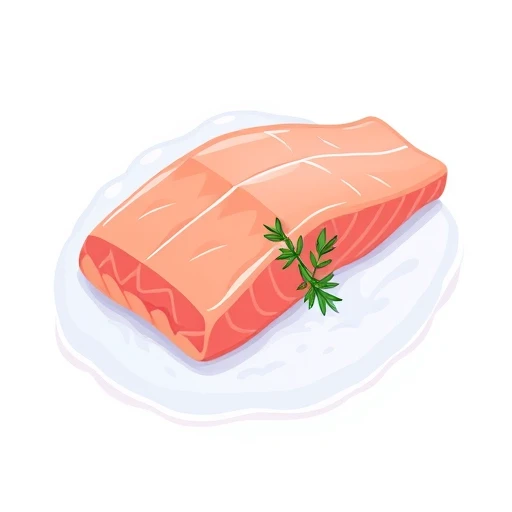
salmon in 30 Seconds
- A large fish famous for swimming upstream to spawn in freshwater.
- A popular, healthy seafood known for its pinkish-orange flesh and omega-3s.
- A warm color shade that sits between pink and orange on the spectrum.
- A word with a silent 'l' and a plural form that is usually the same as the singular.
The word salmon is a multifaceted noun that primarily identifies a specific family of fish known for their remarkable life cycle and culinary importance. In the biological sense, salmon are ray-finned fish belonging to the family Salmonidae, native to tributaries of the North Atlantic and Pacific Oceans. They are famously anadromous, meaning they are born in freshwater, migrate to the ocean to live most of their adult lives, and then return to freshwater to spawn. This incredible journey involves swimming against powerful currents and jumping over waterfalls, a feat that has made the salmon a symbol of persistence and strength in many cultures.
- Culinary Context
- In the kitchen, salmon is considered a 'superfood' due to its high protein content and rich supply of omega-3 fatty acids. It is a versatile ingredient that can be prepared in numerous ways, including poaching, grilling, smoking, or serving raw as sashimi. Its distinctive pinkish-orange flesh makes it visually striking on any plate.
The chef carefully prepared a side of Atlantic salmon with a lemon-dill butter sauce for the evening's special.
Beyond the animal kingdom, salmon serves as a color name. It describes a range of shades between pink and orange, specifically mimicking the color of the fish's flesh. This color is highly popular in fashion, interior design, and graphic arts because it conveys warmth, energy, and a touch of sophistication without being as aggressive as pure orange or as delicate as pale pink.
- Symbolic Usage
- Metaphorically, salmon is often used to describe someone who goes against the grain or challenges the status quo, much like the fish swimming upstream against the current. This 'swimming against the tide' imagery is a powerful way to describe individualistic or rebellious behavior.
She chose a salmon colored dress for the summer wedding to stand out from the usual pastels.
Ecologically, salmon are considered a 'keystone species.' This means they have a disproportionately large effect on their environment. When they return to rivers to die after spawning, their bodies provide essential nutrients to the forest soil and food for a wide variety of wildlife, including bears, eagles, and wolves. Thus, the word salmon often appears in discussions about environmental conservation and the health of river ecosystems.
Wildlife photographers spent weeks by the river waiting for the salmon run to begin.
- Scientific Classification
- Scientists distinguish between several species, such as Chinook, Sockeye, Coho, and Pink salmon. Each has unique characteristics, but they all share the fundamental 'salmon' identity that learners should recognize.
The conservationists are working to restore the natural habitat of the wild salmon in the Pacific Northwest.
In summary, whether you are discussing biology, dinner, or interior decorating, salmon is a versatile and essential word. Its usage spans from the wild rivers of Alaska to the fashion runways of Milan, making it a key vocabulary item for any intermediate English learner. The word encapsulates themes of nature, nutrition, and aesthetic beauty.
The interior designer suggested salmon accents to warm up the neutral tones of the living room.
Using the word salmon correctly involves understanding its context as either a biological entity, a food item, or a color. One of the most important grammatical points is its countability. When referring to the fish as a species or a collective group, the plural form is typically 'salmon'. For example, 'The river was full of salmon.' However, if you are referring to different species of salmon, you might occasionally see 'salmons', though this is much less common in everyday speech.
- As a Subject or Object
- Salmon can act as the subject of a sentence describing natural phenomena. 'Salmon migrate thousands of miles to reach their spawning grounds.' It can also be the direct object in culinary sentences: 'I ordered the grilled salmon for my main course.'
Every year, the salmon return to the stream where they were born.
When using salmon as an adjective to describe color, it usually precedes the noun it modifies. 'She wore a salmon blouse.' You can also use it as a noun to describe the color itself: 'The walls were painted in a soft shade of salmon.' In these cases, it functions similarly to other color-fish names like 'shrimp pink' or 'coral'.
- Common Collocations
- Commonly paired words include 'wild-caught', 'farm-raised', 'smoked', 'grilled', and 'fresh'. In a biological context, you will often hear 'salmon run' or 'salmon spawning'.
We bought some smoked salmon and cream cheese for the bagels.
In more advanced usage, you might use salmon to describe textures or patterns. For instance, 'the salmon-colored scales' or 'a salmon-pink hue'. It is also used in compound nouns like 'salmon farm' or 'salmon ladder' (a structure to help fish swim over dams). These compounds are essential for discussing industry and ecology.
The construction of the salmon ladder allowed the fish to bypass the new dam safely.
- Phrasal Usage
- Phrases like 'like a salmon swimming upstream' are used to describe someone working very hard against difficult odds. This idiomatic use is quite common in motivational speaking and literature.
Trying to get a promotion in this economy feels like being a salmon swimming upstream.
Finally, when writing about salmon, ensure you are using the correct species name if precision is required. 'Sockeye salmon' is known for its deep red color, while 'King salmon' (Chinook) is the largest. Using these specific terms can elevate your writing from basic to advanced levels of English proficiency.
The researcher noted a decline in the population of Coho salmon this season.
The word salmon is ubiquitous in several distinct environments, making it a high-frequency word for learners to master. The most common place you will encounter it is in a restaurant or grocery store. Menus often feature salmon as a primary protein choice, and you will hear servers describe the 'catch of the day' or the 'pan-seared salmon'. In grocery stores, labels like 'Atlantic salmon' or 'wild Alaskan salmon' are standard. If you are shopping for groceries in an English-speaking country, knowing this word is essential for navigating the seafood section.
- Nature Documentaries
- If you watch programs on National Geographic or the BBC, you will frequently hear the word salmon. Narrators often describe the 'great salmon migration' or the 'salmon run' as a pivotal event for the ecosystem. You'll see footage of grizzly bears catching salmon in their mouths, a classic image of the wild.
The narrator explained how the salmon navigate by sensing the Earth's magnetic field.
In the world of fashion and design, salmon is a common color descriptor. You might hear a salesperson say, 'This shirt also comes in salmon,' or an interior decorator suggest 'salmon-colored throw pillows' to add warmth to a room. It is a specific term that people use when 'pink' is too simple and 'orange' is too bright. Understanding this nuance helps in precise communication about aesthetics.
- Environmental News
- Salmon are often at the center of environmental debates. You might hear news reports about 'salmon populations' being affected by climate change, dams, or overfishing. Terms like 'sustainable salmon' are frequently used in discussions about ethical eating and conservation.
The news report highlighted the impact of rising river temperatures on the local salmon stocks.
In academic or scientific settings, the word is used with more precision. Marine biologists and ecologists use it when discussing biodiversity, nutrient cycling, and aquatic health. You might hear it in a lecture about 'the role of salmon in nitrogen transport from sea to land'. This shows the word's importance in higher-level discourse.
The professor discussed the evolutionary adaptations of different salmon species.
- Sports and Recreation
- Anglers (people who fish) talk about 'salmon fishing' as a premier sport. You'll hear them discuss 'salmon lures', 'salmon rods', and the thrill of catching a 'trophy salmon'. This recreational context is common in coastal and river-rich areas.
He spent his vacation salmon fishing in the cold waters of Alaska.
Whether you are watching a cooking show, a news broadcast, or a nature documentary, 'salmon' is a word that appears across various media. Its cultural and economic significance ensures that it remains a staple of the English vocabulary, bridging the gap between everyday life and specialized fields.
The documentary showed the salmon leaping over the rocks to reach the upper river.
The word salmon is notorious for causing several common errors among English learners, primarily due to its spelling and irregular pluralization. The most frequent mistake is the pronunciation of the letter 'l'. Many learners instinctively want to pronounce the 'l' because it is there in the spelling, leading to 'sal-mon'. However, in standard English, the 'l' is completely silent. The correct pronunciation is 'SAM-un' (/ˈsæmən/). Correcting this one error will immediately make your English sound more natural and fluent.
- Pluralization Errors
- Another common pitfall is adding an '-s' to make it plural. While 'salmons' is technically a word used in scientific contexts to refer to multiple species, in 99% of everyday situations, the plural of salmon is simply 'salmon'. Saying 'I saw five salmons' sounds incorrect to a native speaker; you should say 'I saw five salmon'.
Incorrect: We caught three salmons today.
Correct: We caught three salmon today.
Confusion also arises between 'salmon' and other similar-sounding or related words. For instance, learners sometimes confuse 'salmon' with 'solomon' (a name) or 'sermon' (a religious talk) due to the similar vowel sounds. Additionally, in a culinary context, people often confuse 'salmon' with 'lox' or 'gravlax'. While these are made from salmon, they refer to specific preparations (cured or smoked), not the fish itself. Using 'salmon' when you specifically mean 'smoked salmon' can sometimes lead to minor misunderstandings in a restaurant.
- Color vs. Fish
- When using salmon as a color, learners sometimes forget it can be both a noun and an adjective. Mistakenly saying 'The shirt is a salmon' (meaning the color) is less common than 'The shirt is salmon' or 'The shirt is salmon-colored'. Ensure you are using the right part of speech for the context.
She painted the nursery salmon pink to create a warm atmosphere.
In writing, the spelling 'samon' (missing the 'l') is a frequent typo. Even though we don't pronounce the 'l', it must be there in the written word. Always double-check your spelling, especially in formal writing or on menus. Another error is the capitalization of 'salmon'. Unless it is the first word of a sentence or part of a specific proper name (like 'Atlantic Salmon' in a title), it should remain lowercase.
The salmon population has been steadily increasing thanks to conservation efforts.
- Misusing 'Salmon' for Other Fish
- Learners sometimes use 'salmon' as a generic word for any pink fish. However, trout can also have pink flesh. It's important to distinguish between them, especially in culinary and biological contexts where the differences are significant.
While they look similar, the salmon is much larger than the typical brook trout.
By being aware of these common mistakes—the silent 'l', the unchanging plural form, the spelling, and the specific culinary terms—you can use the word 'salmon' with the confidence of a native speaker. Precision in these areas reflects a high level of attention to detail in your language learning journey.
When discussing salmon, it is helpful to know related words that can provide more variety or precision in your speech and writing. Depending on whether you are talking about the fish, the food, or the color, different alternatives may be more appropriate. Understanding these nuances will help you avoid repetition and express yourself more clearly.
- Biological Alternatives
- The closest relative to the salmon is the trout. Both belong to the Salmonidae family. While they are different species, they share many physical characteristics. In some contexts, you might use the term salmonid to refer to the broader family of fish that includes salmon, trout, char, and grayling.
The river is home to various salmonids, including both salmon and rainbow trout.
In a culinary setting, you might encounter terms like lox, gravlax, or sashimi. Lox specifically refers to salmon that has been cured in a salt brine, often served on bagels. Gravlax is a Nordic dish of raw salmon cured in salt, sugar, and dill. Sashimi is the Japanese term for thinly sliced raw fish, which frequently includes salmon. Using these specific terms shows a deeper knowledge of food culture.
- Color Alternatives
- If you are describing the color salmon, you might also use words like coral, peach, apricot, or terracotta. Coral is usually brighter and more orange, while peach is lighter and softer. Salmon sits right in the middle, offering a balanced blend of pink and orange tones.
The sunset painted the sky in shades of coral and salmon.
When discussing the movement of salmon, you might use verbs like migrate, spawn, or leap. Instead of just saying 'the salmon move up the river,' saying 'the salmon migrate upstream to spawn' is much more professional and accurate. In environmental contexts, you might use stock or population to refer to the group of fish in a specific area.
The local salmon population has seen a significant recovery this year.
- Descriptive Adjectives
- To describe salmon more vividly, use adjectives like succulent, flaky, oily, or silky. These words help convey the texture and taste of the fish, which is particularly useful in descriptive writing or food reviews.
The salmon was perfectly cooked, with a succulent and flaky texture.
By expanding your vocabulary to include these similar words and alternatives, you can speak about salmon and related topics with greater precision and flair. Whether you are a scientist, a chef, or an artist, having these words at your disposal will enhance your ability to communicate complex ideas effectively.
How Formal Is It?
Fun Fact
The 'l' was added back into the spelling during the Renaissance to reflect its Latin roots (salmo), but the pronunciation remained 'samon' as it had been for centuries.
Pronunciation Guide
- Pronouncing the 'l' (sal-mon)
- Pronouncing the 'o' too clearly (sam-ON)
- Confusing it with 'solomon'
- Confusing it with 'sermon'
- Adding an 's' sound at the end in singular form
Difficulty Rating
Easy to recognize in context, but spelling can be tricky.
The silent 'l' makes spelling a common hurdle.
The silent 'l' is a very frequent pronunciation error.
Usually clear in context, but sounds like 'sam-un'.
What to Learn Next
Prerequisites
Learn Next
Advanced
Grammar to Know
Irregular Plurals
One salmon, two salmon.
Silent Letters
The 'l' in salmon is silent, like the 'b' in comb.
Compound Adjectives
A salmon-colored dress (use a hyphen).
Uncountable Food Nouns
I ate some salmon (no 'a' or 's').
Noun as Adjective
The salmon industry (salmon modifies industry).
Examples by Level
I like to eat salmon.
Me gusta comer salmón.
Subject + verb + object.
The salmon is a big fish.
El salmón es un pez grande.
Using 'is' to describe a noun.
Is this salmon?
¿Es esto salmón?
Simple question form.
I see a salmon.
Veo un salmón.
Use of the indefinite article 'a'.
Salmon is pink.
El salmón es rosado.
Describing color.
My dad cooks salmon.
Mi papá cocina salmón.
Present simple tense.
We have salmon for lunch.
Almorzamos salmón.
Using 'have' for meals.
The salmon is in the water.
El salmón está en el agua.
Preposition 'in'.
Salmon live in cold rivers.
Los salmones viven en ríos fríos.
Plural 'salmon' with plural verb 'live'.
I bought some fresh salmon today.
Compré salmón fresco hoy.
Using 'some' with an uncountable noun.
She doesn't like smoked salmon.
A ella no le gusta el salmón ahumado.
Negative form with 'doesn't'.
Can you cook the salmon now?
¿Puedes cocinar el salmón ahora?
Modal verb 'can' for requests.
The salmon are jumping over the rocks.
Los salmones están saltando sobre las rocas.
Present continuous tense.
Salmon is a very healthy food.
El salmón es una comida muy saludable.
Adverb 'very' modifying 'healthy'.
There are many salmon in this stream.
Hay muchos salmones en este arroyo.
'There are' with plural 'salmon'.
He caught a large salmon yesterday.
Él pescó un salmón grande ayer.
Past simple tense 'caught'.
Salmon migrate long distances to spawn.
Los salmones migran largas distancias para desovar.
Infinitive of purpose 'to spawn'.
I prefer wild salmon over farmed salmon.
Prefiero el salmón salvaje al de criadero.
Using 'prefer... over...'.
The walls were painted a soft salmon color.
Las paredes estaban pintadas de un color salmón suave.
Passive voice 'were painted'.
Smoked salmon is often served with cream cheese.
El salmón ahumado se sirve a menudo con queso crema.
Adverb of frequency 'often'.
We watched the salmon run on TV last night.
Vimos la migración del salmón en la tele anoche.
Compound noun 'salmon run'.
Salmon is rich in omega-3 fatty acids.
El salmón es rico en ácidos grasos omega-3.
Adjective 'rich' followed by 'in'.
If I go to the restaurant, I will order salmon.
Si voy al restaurante, pediré salmón.
First conditional.
The salmon population is decreasing in this area.
La población de salmón está disminuyendo en esta zona.
Present continuous for changing situations.
The salmon's ability to find its way home is incredible.
La capacidad del salmón para encontrar su camino a casa es increíble.
Possessive 'salmon's'.
Environmentalists are concerned about salmon conservation.
Los ambientalistas están preocupados por la conservación del salmón.
Adjective 'concerned' with 'about'.
She chose a salmon silk dress for the gala.
Ella eligió un vestido de seda color salmón para la gala.
Noun used as a color adjective.
Salmon farming has both benefits and drawbacks.
La cría de salmón tiene tanto beneficios como inconvenientes.
Gerund 'farming' as a subject.
The salmon struggled to swim against the strong current.
El salmón luchó por nadar contra la fuerte corriente.
Verb 'struggled' followed by 'to' infinitive.
Despite the obstacles, the salmon reached the spawning grounds.
A pesar de los obstáculos, el salmón llegó a las zonas de desove.
Concession with 'Despite'.
The chef recommended the salmon, which was caught this morning.
El chef recomendó el salmón, que fue pescado esta mañana.
Non-defining relative clause.
Salmon are a keystone species in this ecosystem.
Los salmones son una especie clave en este ecosistema.
Scientific term 'keystone species'.
The decline of salmon stocks has profound economic implications.
La disminución de las existencias de salmón tiene profundas implicaciones económicas.
Complex noun phrase as subject.
Salmon possess a sophisticated olfactory sense to navigate.
Los salmones poseen un sofisticado sentido del olfato para navegar.
Formal verb 'possess'.
The salmon-pink hue of the sky signaled the end of the day.
El tono rosa salmón del cielo señalaba el fin del día.
Hyphenated compound adjective.
Indigenous cultures have revered the salmon for centuries.
Las culturas indígenas han venerado al salmón durante siglos.
Present perfect 'have revered'.
The intricate life cycle of the salmon is a marvel of biology.
El intrincado ciclo de vida del salmón es una maravilla de la biología.
Abstract noun 'marvel'.
Policy changes are needed to mitigate the threats to salmon habitats.
Se necesitan cambios en las políticas para mitigar las amenazas a los hábitats del salmón.
Infinitive of purpose 'to mitigate'.
The salmon's journey is often used as a metaphor for resilience.
El viaje del salmón se utiliza a menudo como metáfora de la resiliencia.
Passive voice with 'used as'.
Researchers are studying the genetic diversity of wild salmon.
Los investigadores están estudiando la diversidad genética del salmón salvaje.
Present continuous for ongoing research.
The salmon's odyssey culminates in the very waters of its inception.
La odisea del salmón culmina en las mismas aguas de su inicio.
Elevated vocabulary 'odyssey', 'culminates', 'inception'.
Anthropogenic factors have drastically altered salmon migration patterns.
Los factores antropogénicos han alterado drásticamente los patrones de migración del salmón.
Technical term 'anthropogenic'.
The aesthetic appeal of salmon-colored textiles is timeless.
El atractivo estético de los textiles de color salmón es atemporal.
Formal subject 'aesthetic appeal'.
One must appreciate the symbiotic relationship between salmon and the forest.
Uno debe apreciar la relación simbiótica entre el salmón y el bosque.
Modal 'must' for necessity.
The salmon's physiological transformation during spawning is striking.
La transformación fisiológica del salmón durante el desove es sorprendente.
Scientific adjective 'physiological'.
The debate over salmon fishing rights remains a contentious issue.
El debate sobre los derechos de pesca del salmón sigue siendo un tema polémico.
Adjective 'contentious'.
Salmon serve as a biological barometer for the health of our oceans.
El salmón sirve como barómetro biológico para la salud de nuestros océanos.
Metaphorical use of 'barometer'.
The sheer tenacity of the salmon is unparalleled in the animal kingdom.
La pura tenacidad del salmón no tiene parangón en el reino animal.
Strong noun 'tenacity' and adjective 'unparalleled'.
Synonyms
Antonyms
Common Collocations
Common Phrases
— Doing something very difficult against the odds.
Starting a business in a recession is like a salmon swimming upstream.
— A figure from Irish mythology representing wisdom.
In the legend, Fionn Mac Cumhaill ate the salmon of knowledge.
— The largest species of Pacific salmon.
The fisherman was proud of his record-breaking king salmon.
— A species known for its bright red color when spawning.
Sockeye salmon are famous for their vibrant transformation.
— Salmon caught in their natural habitat.
The label says this is wild-caught salmon.
Often Confused With
A common name, sounds similar but has three syllables.
A religious talk, sounds similar but starts with 'ser'.
A type of meat, starts with 'sal' but is very different.
Idioms & Expressions
— To act in a way that is contrary to the popular opinion or trend.
He's always swimming upstream, challenging every company policy.
Informal— Feeling uncomfortable in an unfamiliar situation (general fish idiom).
At the tech conference, the artist felt like a fish out of water.
Informal— There are many other people to date (general fish idiom).
Don't worry about the breakup; there are plenty of fish in the sea.
Informal— An unfriendly or unemotional person (general fish idiom).
He's a bit of a cold fish, rarely showing any excitement.
Informal— To drink a lot of alcohol (general fish idiom).
He used to drink like a fish before he quit.
Informal— Something seems suspicious (general fish idiom).
The deal sounds too good to be true; something is fishy.
Informal— An important person in a small group (general fish idiom).
In his hometown, he was a big fish in a small pond.
Informal— More important things to do (general fish idiom).
I can't help you right now; I have other fish to fry.
Informal— Helping someone learn to help themselves (general fish idiom).
Instead of giving him money, teach him a man to fish.
Formal— Difficult to catch or pin down (general fish idiom).
The politician was as slippery as a fish during the interview.
InformalEasily Confused
They look similar and are in the same family.
Salmon are usually larger and migrate to the ocean; trout mostly stay in freshwater.
I caught a trout in the lake, but the salmon are in the river.
Lox is made from salmon.
Salmon is the fish; lox is a specific way of preparing it (cured in brine).
I bought some salmon to cook, and some lox for my bagel.
Both describe a similar color.
Pink is a general color; salmon is a specific shade with orange tones.
Her room is pink, but her curtains are salmon.
Often mentioned with salmon.
Roe refers to the eggs of the fish, not the fish itself.
The salmon roe was bright and salty.
Often used to describe salmon portions.
Fillet is a cut of meat; salmon is the type of fish.
I'd like a salmon fillet, please.
Sentence Patterns
I like [noun].
I like salmon.
The [noun] is [adjective].
The salmon is pink.
[Noun] is good for [noun].
Salmon is good for your heart.
I have [adjective] [noun].
I have a salmon shirt.
[Noun] is known for [verb-ing].
Salmon is known for swimming upstream.
Despite [noun], the [noun] [verb].
Despite the dam, the salmon migrated.
The [noun] of [noun] is [adjective].
The conservation of salmon is essential.
[Noun] serves as a [noun] for [noun].
Salmon serve as a barometer for ocean health.
Word Family
Nouns
Adjectives
Related
How to Use It
Very High in culinary and environmental contexts.
-
Saying 'sal-mon' with an L.
→
Saying 'sam-un'.
The 'L' has been silent for hundreds of years in English.
-
Writing 'I caught three salmons.'
→
Writing 'I caught three salmon.'
Salmon is an irregular plural that stays the same as the singular.
-
Spelling it 'samon'.
→
Spelling it 'salmon'.
The 'L' is required in writing even though it is silent in speech.
-
Confusing salmon with trout.
→
Using the correct species name.
While related, they are different fish with different habitats.
-
Using 'salmon' for any pink color.
→
Using it for pink-orange shades.
Salmon is a specific hue; using it for hot pink would be incorrect.
Tips
Silent L
Always remember the 'L' is silent. Practice saying 'SAM-un' to sound like a native speaker.
Plural Form
Don't add an 'S' for plural. 'I saw many salmon' is correct.
Color Use
Use 'salmon' to describe colors between pink and orange for more precise descriptions.
Smoked vs Fresh
Know the difference between 'smoked salmon' (salty/cold) and 'fresh salmon' (cooked).
Keep the L
Even though you don't say the 'L', you must write it. S-A-L-M-O-N.
Nature vs Food
In nature, salmon 'run' or 'spawn'. In food, salmon is 'grilled' or 'seared'.
Omega-3
Associate salmon with 'healthy fats' and 'omega-3' to remember its nutritional value.
Upstream
Use 'swimming upstream' to describe a difficult challenge in your writing.
Specific Types
Learn 'Sockeye' and 'Chinook' if you want to sound like an expert on salmon.
The Leaper
Remember it comes from the Latin word for 'leap' to associate it with jumping fish.
Memorize It
Mnemonic
Think of a man named **Sam** who likes to eat **un**-derwater fish. **Sam-un**.
Visual Association
Imagine a bright pink fish leaping over a waterfall. The pink color is the 'salmon' color, and the leap is why it's called 'salmon'.
Word Web
Challenge
Try to use the word 'salmon' in three different ways today: as a food, as a color, and as a biological fact.
Word Origin
The word 'salmon' comes from the Middle English 'samoun', which was borrowed from the Anglo-French 'samon'. This in turn came from the Latin 'salmo', which is believed to be derived from the verb 'salire', meaning 'to leap'.
Original meaning: The 'leaper' or 'the fish that leaps'.
Indo-European (Latin branch).Cultural Context
Be mindful of the environmental impact of salmon farming when discussing it with activists.
In the US and UK, salmon is seen as a healthy, slightly upscale meal choice.
Practice in Real Life
Real-World Contexts
Restaurant
- Is the salmon wild-caught?
- I'd like the grilled salmon.
- Does the salmon come with sides?
- Is the salmon fresh today?
Nature Documentary
- The salmon are migrating.
- The bears are hunting salmon.
- The salmon run is starting.
- Salmon return to their birthplace.
Fashion Store
- Do you have this in salmon?
- The salmon color is very trendy.
- It's a lovely shade of salmon.
- I'm looking for a salmon tie.
Grocery Store
- Where is the smoked salmon?
- How much is the Atlantic salmon?
- Is this salmon frozen?
- I need two salmon fillets.
Science Class
- Salmon are anadromous fish.
- The salmon population is vital.
- We are studying salmon DNA.
- Dams affect salmon migration.
Conversation Starters
"Do you prefer salmon grilled or smoked?"
"Have you ever seen a salmon run in person?"
"What do you think about the color salmon for a living room?"
"Is salmon a common dish in your home country?"
"Do you think wild salmon tastes better than farmed salmon?"
Journal Prompts
Describe a time you ate a delicious salmon meal. What made it special?
If you were a salmon swimming upstream, what obstacles would you face in your life?
Write about why the color salmon might be popular in summer fashion.
Discuss the importance of protecting salmon habitats in our rivers.
Imagine a conversation between a bear and a salmon during the migration.
Frequently Asked Questions
10 questionsYes, in all standard dialects of English, the 'L' is not pronounced. It sounds like 'SAM-un'.
The plural is usually 'salmon'. You can say 'one salmon' or 'ten salmon'. 'Salmons' is only used in scientific contexts for different species.
It comes from their diet of krill and small crustaceans, which contain natural pigments called carotenoids.
Yes, it is very healthy. It is famous for being rich in omega-3 fatty acids, which are good for the heart and brain.
It is the time of year when salmon migrate from the ocean back to the rivers to lay their eggs.
It is a warm, pinkish-orange color, similar to the color of the fish's flesh.
Yes, they are anadromous. They are born in fresh water, live in salt water, and return to fresh water.
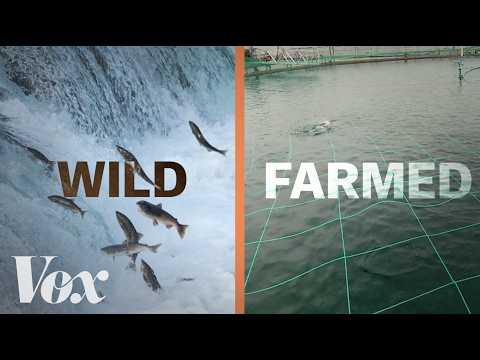
Wild salmon are caught in nature and usually have a deeper color and leaner meat. Farmed salmon are raised in pens.
No, it is considered an oily fish and has pink or red flesh, unlike white fish like cod or tilapia.
It is spelled S-A-L-M-O-N. Don't forget the 'L'!
Test Yourself 200 questions
Write a sentence using 'salmon' as a food.
Well written! Good try! Check the sample answer below.
Write a sentence using 'salmon' as a color.
Well written! Good try! Check the sample answer below.
Describe the life cycle of a salmon in three sentences.
Well written! Good try! Check the sample answer below.
Explain why salmon are important to the ecosystem.
Well written! Good try! Check the sample answer below.
Write a short dialogue between a waiter and a customer about salmon.
Well written! Good try! Check the sample answer below.
Use the idiom 'swimming upstream' in a sentence about a business challenge.
Well written! Good try! Check the sample answer below.
Compare wild salmon and farmed salmon in a short paragraph.
Well written! Good try! Check the sample answer below.
Write a descriptive sentence about a sunset using the word 'salmon'.
Well written! Good try! Check the sample answer below.
Explain the pronunciation of 'salmon' to a new English learner.
Well written! Good try! Check the sample answer below.
Write a sentence about salmon conservation.
Well written! Good try! Check the sample answer below.
Describe a bagel with smoked salmon.
Well written! Good try! Check the sample answer below.
Write a sentence using the word 'salmonid'.
Well written! Good try! Check the sample answer below.
Use 'salmon' in a sentence about fashion.
Well written! Good try! Check the sample answer below.
Write a sentence about a salmon ladder.
Well written! Good try! Check the sample answer below.
Describe the taste of salmon using three adjectives.
Well written! Good try! Check the sample answer below.
Write a sentence about salmon roe.
Well written! Good try! Check the sample answer below.
Explain the etymology of 'salmon'.
Well written! Good try! Check the sample answer below.
Write a sentence about the 'salmon run'.
Well written! Good try! Check the sample answer below.
Use 'salmon' in a sentence about a nursery or bedroom.
Well written! Good try! Check the sample answer below.
Write a sentence about the nutritional benefits of salmon.
Well written! Good try! Check the sample answer below.
Pronounce the word 'salmon' correctly.
Read this aloud:
You said:
Speech recognition is not supported in your browser. Try Chrome or Edge.
Tell me two ways you can cook salmon.
Read this aloud:
You said:
Speech recognition is not supported in your browser. Try Chrome or Edge.
Describe the color salmon in your own words.
Read this aloud:
You said:
Speech recognition is not supported in your browser. Try Chrome or Edge.
Explain why the 'L' in salmon is silent.
Read this aloud:
You said:
Speech recognition is not supported in your browser. Try Chrome or Edge.
What is your favorite way to eat salmon?
Read this aloud:
You said:
Speech recognition is not supported in your browser. Try Chrome or Edge.
Why do salmon swim upstream?
Read this aloud:
You said:
Speech recognition is not supported in your browser. Try Chrome or Edge.
Give an example of someone 'swimming upstream' metaphorically.
Read this aloud:
You said:
Speech recognition is not supported in your browser. Try Chrome or Edge.
What are the health benefits of eating salmon?
Read this aloud:
You said:
Speech recognition is not supported in your browser. Try Chrome or Edge.
Have you ever seen a salmon in real life? Where?
Read this aloud:
You said:
Speech recognition is not supported in your browser. Try Chrome or Edge.
What is the difference between a salmon and a trout?
Read this aloud:
You said:
Speech recognition is not supported in your browser. Try Chrome or Edge.
How would you describe a salmon-colored shirt to a friend?
Read this aloud:
You said:
Speech recognition is not supported in your browser. Try Chrome or Edge.
What is a 'salmon run' and why is it important?
Read this aloud:
You said:
Speech recognition is not supported in your browser. Try Chrome or Edge.
Is salmon expensive in your country?
Read this aloud:
You said:
Speech recognition is not supported in your browser. Try Chrome or Edge.
What do you think about salmon farming?
Read this aloud:
You said:
Speech recognition is not supported in your browser. Try Chrome or Edge.
Can you name three species of salmon?
Read this aloud:
You said:
Speech recognition is not supported in your browser. Try Chrome or Edge.
What is 'lox' and how is it served?
Read this aloud:
You said:
Speech recognition is not supported in your browser. Try Chrome or Edge.
Why is the salmon considered a symbol of persistence?
Read this aloud:
You said:
Speech recognition is not supported in your browser. Try Chrome or Edge.
What color do salmon turn when they spawn?
Read this aloud:
You said:
Speech recognition is not supported in your browser. Try Chrome or Edge.
Do you think 'salmon' is a hard word to spell?
Read this aloud:
You said:
Speech recognition is not supported in your browser. Try Chrome or Edge.
What is a 'salmon ladder'?
Read this aloud:
You said:
Speech recognition is not supported in your browser. Try Chrome or Edge.
Listen to the sentence: 'The salmon are jumping.' How many fish are there?
Listen for the silent letter in 'salmon'. Which letter is it?
In the phrase 'salmon pink', is salmon a fish or a color?
Listen to the order: 'I'd like the smoked salmon bagel.' What is the main ingredient?
Does the speaker say 'sal-mon' or 'sam-un'?
Listen to the fact: 'Salmon can travel 3,000 miles.' Is that a long or short distance?
Identify the species mentioned: 'The Sockeye salmon is very red.'
Is the salmon 'wild' or 'farmed' in this sentence: 'We only sell wild salmon here.'
What meal is being discussed: 'Let's have salmon for dinner.'
Listen to the idiom: 'He's swimming upstream.' Is he following the rules?
What color is the dress: 'She wore a salmon gown.'
Is the salmon 'fresh' or 'canned': 'I bought a tin of canned salmon.'
What is the fish doing: 'The salmon is spawning.'
Listen to the plural: 'Look at all those salmon!' Is it one or many?
What part of the fish is this: 'The salmon fillet is ready.'
/ 200 correct
Perfect score!
Summary
The word 'salmon' (pronounced 'SAM-un') refers to both a resilient migratory fish and a warm pinkish-orange color. For example: 'The salmon swam upstream to spawn, while the artist used a salmon hue for the sunset.'
- A large fish famous for swimming upstream to spawn in freshwater.
- A popular, healthy seafood known for its pinkish-orange flesh and omega-3s.
- A warm color shade that sits between pink and orange on the spectrum.
- A word with a silent 'l' and a plural form that is usually the same as the singular.
Silent L
Always remember the 'L' is silent. Practice saying 'SAM-un' to sound like a native speaker.
Plural Form
Don't add an 'S' for plural. 'I saw many salmon' is correct.
Color Use
Use 'salmon' to describe colors between pink and orange for more precise descriptions.
Smoked vs Fresh
Know the difference between 'smoked salmon' (salty/cold) and 'fresh salmon' (cooked).
Example
I ordered the grilled salmon with a side of asparagus.
Related Content
This Word in Other Languages
More Food words
wheat
B1Wheat is a cereal grain that is widely cultivated as a primary food source for humans and animals. It is typically ground into flour to make bread, pasta, pastries, and many other staple food products.
buttermilk
B2Describes food or drink made with or having the characteristics of the sour, fermented liquid remaining after butter has been churned. In modern culinary contexts, it refers to a cultured dairy product used to provide a tangy flavor and tender texture to baked goods and meats.
salt
A2A common white crystalline substance, chemically sodium chloride (NaCl), used widely for seasoning and preserving food. It is an essential nutrient for humans and animals.
pineapple
A1A large, tropical fruit with a tough, scaly skin and a tuft of green leaves on top. It has sweet, juicy yellow flesh inside and is eaten fresh, canned, or as juice.
mushrooms
B1Mushrooms are the fleshy, spore-bearing fruiting bodies of fungi, typically produced above ground on soil or on their food source. While many varieties are edible and popular in cooking, others are highly toxic or even fatal if consumed.
truffles
C1Truffles are rare, edible underground fungi known for their strong aroma and high culinary value, often used as a gourmet delicacy. The term also refers to a type of rich chocolate confection coated in cocoa powder, named for its resemblance to the fungus.
snack
A1A snack is a small amount of food eaten between main meals such as breakfast, lunch, or dinner. It is typically something quick to prepare and easy to consume when you feel a little hungry.
coca
B1A tropical shrub native to the Andes whose leaves contain a stimulant alkaloid. It is widely known for its traditional use by indigenous people and as the botanical source of cocaine.
corn
A1Corn is a tall plant that produces yellow grains on a large cob, which are eaten as a vegetable or ground into flour. It is one of the most popular cereal grains in the world and is a staple food in many cultures.
brew
B2A liquid made by boiling, steeping, or fermentation, most commonly referring to tea, coffee, or beer. In a more abstract or academic sense, it refers to a mixture of different elements, ideas, or conditions that combine to produce a specific result.

