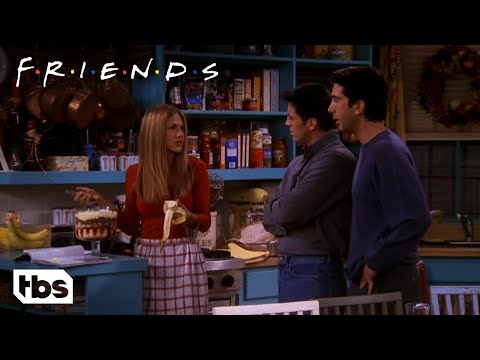
trifle in 30 Seconds
- A trifle is something unimportant or of little value, like a small amount of money or a minor detail.
- In British cuisine, a trifle is a popular layered dessert made with sponge cake, fruit, custard, and whipped cream.
- The verb 'trifle with' means to treat someone or something without the seriousness or respect they deserve.
- The phrase 'a trifle' is used as an adverb to mean 'slightly' or 'a little bit,' often in a formal way.
The word trifle is a fascinating linguistic artifact that bridges the gap between the mundane and the magnificent, the culinary and the conceptual. At its core, a trifle represents something of negligible value or importance. When we describe a concern as a trifle, we are essentially dismissing it as unworthy of serious consideration. However, the word is far from simple; it functions as a noun, a verb, and even an adverbial modifier. In the realm of British gastronomy, a trifle is a celebrated, multi-layered dessert that is anything but insignificant to those with a sweet tooth. Understanding 'trifle' requires a sensitivity to context, as it can shift from a dismissive remark about a small debt to a stern warning about playing with someone's emotions.
- The Noun of Insignificance
- In this sense, a trifle is a 'nothing.' It is the loose change in your pocket, the minor disagreement over a movie choice, or the small detail in a massive contract that doesn't change the outcome. People use it to downplay the severity of a situation.
He spent his inheritance on various trifles and baubles, leaving him with nothing for his retirement.
- The Culinary Masterpiece
- In the United Kingdom, a trifle is a traditional dessert. It is a structured assembly of sponge cake soaked in sherry or fruit juice, topped with fruit, a thick layer of custard, and finally, a mountain of whipped cream. It is often served in a glass bowl to show off the colorful layers.
Grandmother always prepared a massive strawberry trifle for the Boxing Day celebration.
The versatility of 'trifle' extends into the adverbial realm, where 'a trifle' serves as a sophisticated synonym for 'slightly' or 'a bit.' If a room is 'a trifle chilly,' it isn't freezing, but it might warrant a light sweater. This usage is particularly common in formal or slightly archaic British English, lending an air of polite restraint to a description. Historically, the word evolved from the Old French 'trufle,' meaning mockery or deceit, which explains why the verb form often carries a connotation of being toyed with or misled. Whether you are discussing a minor expense, a layered pudding, or a lack of respect, 'trifle' provides a nuanced way to weigh the importance of things in your world.
Do not trifle with my affections if you have no intention of staying.
- The Adverbial Nuance
- Using 'a trifle' before an adjective softens the blow. Saying a meal was 'a trifle salty' is more polite than calling it 'too salty.'
The new regulations are a trifle confusing for the average consumer.
The cost of the repair was a mere trifle compared to the value of the antique car.
Mastering the word 'trifle' involves navigating its three primary grammatical roles. As a noun, it functions like 'toy' or 'trinket.' As a verb, it requires the preposition 'with.' As an adverbial phrase, it modifies adjectives. Let's explore these in detail to ensure your usage is precise and natural. When using 'trifle' as a noun to mean something unimportant, it often appears with the adjective 'mere.' This emphasizes the lack of value. For example, 'The price of the ticket was a mere trifle to the billionaire.' Here, 'trifle' highlights the vast wealth of the subject by making a standard cost seem like nothing.
- Noun Usage: The Small Thing
- Used to describe objects or issues that don't matter much. It can be pluralized as 'trifles.'
She filled her shelves with porcelain trifles collected from her travels.
The verb 'trifle' is more serious. To 'trifle with' someone's feelings or a serious situation is to act irresponsibly or disrespectfully. It suggests a lack of gravity where gravity is required. If a manager 'trifles with' safety protocols, they are being dangerously negligent. In romantic contexts, 'trifling with' someone's heart is a common literary trope, suggesting a cruel or careless approach to love. This verb form is often used in the negative to set boundaries, such as 'I am not a man to be trifled with.'
- Verb Usage: Trifle With
- Always use 'with' after the verb. It means to treat something as if it has no value when it actually does.
The judge warned the witness not to trifle with the court's time.
Finally, the adverbial 'a trifle' is a great tool for understatement. Understatement is a hallmark of British English, and 'a trifle' fits perfectly into this linguistic style. Instead of saying 'The movie was boring,' one might say, 'The movie was a trifle long.' This makes the criticism sound more considered and less aggressive. It is an excellent way to modulate your tone in professional settings where direct criticism might be seen as rude. In summary, whether you are dismissing a 'trifle,' refusing to be 'trifled with,' or being 'a trifle' cautious, this word offers a range of expressive possibilities.
The coffee was a trifle bitter, but the pastry was perfect.
- Culinary Context
- When referring to the dessert, it is a count noun. You can have one trifle or several trifles.
We prepared a massive trifle for the party guests.
Why do you worry about such trifles when there are bigger problems to solve?
The word 'trifle' has a distinct 'flavor' depending on where you encounter it. In the United Kingdom, you will hear it most frequently in the kitchen or at a dinner party. It is the quintessential British dessert, often associated with family gatherings, Christmas, and Sunday lunches. If you watch a show like 'The Great British Bake Off,' the word 'trifle' will appear frequently, accompanied by discussions of sponge, jelly, and custard consistency. In this context, it is a word of comfort and tradition. However, in a broader linguistic sense, 'trifle' is a staple of classic literature and formal discourse.
- In Literature
- Victorian novelists like Charles Dickens or Jane Austen frequently used 'trifle' to describe social slights or unimportant possessions. It captures the rigid social hierarchies of the time.
'It is a trifle, my dear,' said the gentleman, waving away the concern with a gloved hand.
In legal or formal settings, you might hear a judge or a lawyer use the phrase 'de minimis non curat lex,' which is Latin for 'the law does not concern itself with trifles.' This legal principle suggests that courts should not be burdened with trivial matters. Thus, 'trifle' becomes a technical term for a case that is too small to be worth the court's time. Similarly, in business negotiations, an experienced negotiator might dismiss a minor point as a 'trifle' to keep the focus on the major terms of the deal. This usage is strategic, designed to minimize the leverage of the opposing party.
- In Modern Media
- You'll hear 'a trifle' in period dramas (like Downton Abbey) or in high-end food criticism. It adds a touch of sophistication and 'old-world' charm to the dialogue.
The critic noted that the protagonist's motivation was a trifle thin in the second act.
You will also encounter 'trifle' in philosophical or self-help contexts. Stoic philosophy, for instance, encourages practitioners not to be disturbed by 'trifles'—the small, external events that are outside of our control. In this sense, the word is used to categorize the vast majority of human worries as ultimately unimportant. By labeling a stressor as a 'trifle,' one can psychologically distance themselves from it. Whether it's a dessert, a legal technicality, or a stoic exercise, 'trifle' is a word that helps us categorize the world into what matters and what does not.
Don't trifle with the truth; it has a way of coming out eventually.
- Academic Context
- Historians might refer to 'trifling details' that, while small, provide deep insight into the daily lives of people in the past.
The difference in the two manuscripts is a trifle, but it changes the meaning of the poem.
While 'trifle' is a versatile word, its multiple meanings and specific grammatical requirements can lead to common errors. The most frequent mistake is the confusion between 'trifle' and 'truffle.' While they sound somewhat similar, they are worlds apart. A 'trifle' is a layered, often inexpensive British dessert, whereas a 'truffle' is either a highly expensive subterranean fungus used in gourmet cooking or a rich chocolate ganache confection. Confusing the two in a culinary context can lead to significant misunderstandings—ordering a 'truffle' and receiving a 'trifle' would be a very different experience for your palate and your wallet!
- The 'Trifle' vs. 'Truffle' Confusion
- Trifle = Sponge, custard, cream. Truffle = Expensive fungus or chocolate ball. Remember: 'Trifle' has an 'i' like 'insignificant.'
Incorrect: He gave her a box of trifles for Valentine's Day. (Unless he gave her multiple bowls of pudding!)
Another common error involves the verb form. Many learners forget the mandatory preposition 'with.' You cannot 'trifle someone'; you must 'trifle with someone.' Without the 'with,' the sentence becomes ungrammatical. Furthermore, there is a nuance in the verb's meaning that is often missed. 'Trifling with' implies a certain level of arrogance or lack of care. If you say someone is 'trifling with the law,' it means they are treating it as a joke or something they can easily bypass. Using it simply to mean 'ignoring' or 'breaking' misses the specific connotation of 'treating as a trifle.'
- Missing the Preposition
- Always use 'trifle with.' Example: 'Do not trifle with the controls of the aircraft.'
Incorrect: Stop trifling me! Correct: Stop trifling with me!
Finally, the adverbial 'a trifle' is sometimes misused as a noun. For example, saying 'He had a trifle of salt' is less common and slightly awkward compared to 'He had a bit of salt' or 'The soup was a trifle salty.' The phrase 'a trifle' works best when it modifies an adjective. If you use it to mean 'a small amount of a physical substance,' it can sound dated. Stick to using it as a modifier for qualities (e.g., a trifle expensive, a trifle loud, a trifle annoying) to ensure you sound like a natural speaker. By avoiding these pitfalls, you can use 'trifle' to add both precision and a touch of elegance to your English.
The exam was a trifle more difficult than we had anticipated.
- Overusing the Word
- Because 'trifle' is a somewhat 'heavy' word, using it too often in one paragraph can make your writing feel clunky. Balance it with synonyms like 'triviality' or 'slight.'
He dismissed the trifle as a mere triviality.
To truly understand 'trifle,' it is helpful to compare it with its synonyms and near-synonyms. Each word carries a slightly different weight and connotation. For instance, 'triviality' is a close noun synonym, but it feels more academic or abstract. You might discuss the 'trivialities of daily life,' whereas 'trifles' often refers to specific small objects or minor points in a discussion. 'Trinket' and 'bauble' are synonyms for 'trifle' when it refers to a physical object of little value, but they specifically imply something decorative and perhaps a bit cheap.
- Trifle vs. Triviality
- A 'trifle' is often a single thing or a specific amount. 'Triviality' is the quality of being unimportant or a collection of unimportant things.
The meeting was bogged down by trivialities that didn't affect the bottom line.
When looking at the verb 'trifle with,' synonyms include 'dally with,' 'toy with,' or 'play with.' 'Dally with' has a more romantic or time-wasting connotation, often used in the sense of 'dallying with an idea.' 'Toy with' suggests a lack of seriousness, often used when someone is considering an idea but hasn't committed to it. 'Trifle with' is generally more serious and often used in a cautionary sense—warning someone not to underestimate the importance of a person or a rule. If you 'toy with' a person's feelings, it sounds slightly less severe than 'trifling with' them, which implies a deeper level of disrespect.
- Trifle With vs. Toy With
- 'Toy with' is often used for ideas (e.g., toying with the idea of moving). 'Trifle with' is often used for people or serious matters (e.g., trifling with the law).
She was toying with the idea of starting her own business.
In the adverbial sense, 'slightly' is the most direct synonym for 'a trifle.' However, 'a trifle' is more evocative. Saying 'the steak was slightly overcooked' is a factual observation. Saying 'the steak was a trifle overcooked' sounds like a polite, perhaps slightly disappointed, critique from a refined diner. Other alternatives like 'a tad' or 'a smidge' are much more informal and would be used in casual conversation with friends. 'A trifle' sits in the middle—formal enough for a business email, but common enough to be understood by any fluent speaker. By choosing the right synonym, you can precisely control the tone and impact of your communication.
The room was a tad too small for the large piano.
- Bagatelle
- A very formal, slightly old-fashioned synonym for a trifle or a trivial matter. It also refers to a short, light piece of music.
To a man of his wealth, ten thousand dollars was a mere bagatelle.
How Formal Is It?
Fun Fact
The dessert 'trifle' was originally just a thick cream flavored with sugar and ginger. It wasn't until the 18th century that the layers of cake and custard were added to create the dish we know today.
Pronunciation Guide
- Pronouncing it like 'triple' (with a 'p' instead of an 'f').
- Confusing the pronunciation with 'truffle' (which has a 'truh' sound).
- Over-emphasizing the second syllable.
- Muttering the 'f' sound so it sounds like 'trial'.
- Adding an extra vowel sound between 'f' and 'l'.
Difficulty Rating
Easy to understand in context, but has multiple meanings.
Requires knowledge of the 'trifle with' preposition and 'a trifle' adverbial use.
Pronunciation is straightforward, but usage is slightly formal.
Must distinguish from 'truffle' in fast speech.
What to Learn Next
Prerequisites
Learn Next
Advanced
Grammar to Know
Adverbial Phrases of Degree
Using 'a trifle' to modify an adjective like 'a trifle cold'.
Prepositional Verbs
The verb 'trifle' must be followed by 'with' when it has an object.
Countable vs. Uncountable Nouns
'A trifle' (countable object) vs. 'trifles' (general unimportant things).
Passive Voice with Prepositional Verbs
He is not to be trifled with (the preposition stays with the verb).
Understatement (Litotes)
Using 'a trifle' to downplay a significant quality for politeness.
Examples by Level
I want to eat some trifle for dessert.
I want to eat [British dessert] for dessert.
Noun (singular)
The trifle has many layers of fruit and cream.
The [dessert] has many layers of fruit and cream.
Noun (singular)
Is there any trifle left in the bowl?
Is there any [dessert] left in the bowl?
Noun (uncountable usage here)
My mom makes the best trifle.
My mom makes the best [dessert].
Noun (singular)
We had trifle at the Christmas party.
We had [dessert] at the Christmas party.
Noun (singular)
The strawberry trifle is very sweet.
The strawberry [dessert] is very sweet.
Noun (singular)
I like the custard in the trifle.
I like the custard in the [dessert].
Noun (singular)
Look at the beautiful trifle on the table!
Look at the beautiful [dessert] on the table!
Noun (singular)
This tea is a trifle hot.
This tea is [a little bit] hot.
Adverbial phrase
The bus was a trifle late today.
The bus was [slightly] late today.
Adverbial phrase
I am a trifle tired after the walk.
I am [a bit] tired after the walk.
Adverbial phrase
The shoes are a trifle small for me.
The shoes are [slightly] small for me.
Adverbial phrase
It is a trifle windy outside.
It is [a bit] windy outside.
Adverbial phrase
The movie was a trifle long.
The movie was [a little bit] long.
Adverbial phrase
This soup needs a trifle more salt.
This soup needs [a little bit] more salt.
Adverbial phrase (modifying 'more')
The room is a trifle dark.
The room is [slightly] dark.
Adverbial phrase
Don't worry about such a trifle.
Don't worry about such an [unimportant thing].
Noun (singular)
He spent his money on trifles.
He spent his money on [cheap, unimportant things].
Noun (plural)
It is a trifle to someone with his wealth.
It is [nothing] to someone with his wealth.
Noun (singular)
She does not like to trifle with her health.
She does not like to [treat lightly] her health.
Verb (infinitive)
The disagreement was over a mere trifle.
The disagreement was over a [very small thing].
Noun (singular)
You should not trifle with other people's feelings.
You should not [play with] other people's feelings.
Verb (present)
The cost of the repair was a trifle.
The cost of the repair was [very small].
Noun (singular)
He considers the rules to be trifles.
He considers the rules to be [unimportant things].
Noun (plural)
The manager is not a man to be trifled with.
The manager is not a man to be [treated without respect].
Passive verb form
They wasted the afternoon on trifling matters.
They wasted the afternoon on [insignificant] matters.
Adjective (present participle used as adjective)
The difference in price is a trifle, really.
The difference in price is [insignificant], really.
Noun (singular)
She felt a trifle embarrassed by the mistake.
She felt [slightly] embarrassed by the mistake.
Adverbial phrase
Do not trifle with the security settings.
Do not [mess with] the security settings.
Verb (imperative)
The book was a trifle disappointing after all the hype.
The book was [slightly] disappointing after all the hype.
Adverbial phrase
He dismissed the complaint as a mere trifle.
He dismissed the complaint as a [mere unimportant thing].
Noun (singular)
It was a trifling error that caused the crash.
It was an [insignificant] error that caused the crash.
Adjective
The court refused to hear the case, deeming it a trifle.
The court refused to hear the case, deeming it [too small for the law].
Noun (singular)
His prose is a trifle ornate for modern tastes.
His prose is [slightly] ornate for modern tastes.
Adverbial phrase
One does not trifle with the traditions of this house.
One does not [treat disrespectfully] the traditions of this house.
Verb (present)
The sum involved was a mere trifle to the corporation.
The sum involved was a [negligible amount] to the corporation.
Noun (singular)
She was a trifle annoyed by his persistent questioning.
She was [somewhat] annoyed by his persistent questioning.
Adverbial phrase
The entire argument was based on a trifle of a misunderstanding.
The entire argument was based on a [tiny] misunderstanding.
Noun (singular used as a modifier)
He spent his life collecting literary trifles.
He spent his life collecting [minor, unimportant writings].
Noun (plural)
The weather was a trifle inclement for a garden party.
The weather was [slightly] inclement for a garden party.
Adverbial phrase
To the stoic, the loss of property is but a trifle.
To the stoic, the loss of property is [completely insignificant].
Noun (singular)
The nuances of the treaty are a trifle complex for a cursory reading.
The nuances of the treaty are [slightly] complex for a quick look.
Adverbial phrase
The protagonist's fatal flaw was his tendency to trifle with fate.
The protagonist's fatal flaw was his tendency to [act recklessly with] fate.
Verb (infinitive)
The essay was a trifle long-winded, though intellectually rigorous.
The essay was [slightly] long-winded, though intellectually rigorous.
Adverbial phrase
She dismissed the existential threat as a mere trifle of history.
She dismissed the existential threat as a [minor, unimportant detail] of history.
Noun (singular)
The diplomat was careful not to trifle with the delicate negotiations.
The diplomat was careful not to [be careless with] the delicate negotiations.
Verb (infinitive)
The painting was a trifle off-center, which added to its charm.
The painting was [slightly] off-center, which added to its charm.
Adverbial phrase
He regarded the social conventions of the era as trifling absurdities.
He regarded the social conventions of the era as [insignificant] absurdities.
Adjective
Synonyms
Antonyms
Common Collocations
Common Phrases
— Something that is very small or unimportant. Often used to show wealth or power.
To him, a thousand dollars is a mere trifle.
— To treat someone or something without respect or seriousness. Often used as a warning.
Do not trifle with the truth.
— Slightly or a little bit. A polite way to modify an adjective.
The coffee is a trifle cold.
— Someone or something that should be taken very seriously. Implies danger or power.
The storm is not to be trifled with.
— To spend time on things that don't matter. A common piece of advice.
Stop wasting time on trifles and get to work.
— To view something as unimportant. Often used in a dismissive way.
He considered the insult a mere trifle.
— A specific, popular version of the British dessert. Very common in menus.
I'll have the strawberry trifle, please.
— A very small amount of money. Often used in legal or business contexts.
They sued for a trifling sum.
— An unimportant issue or problem. Used to prioritize tasks.
Let's not get distracted by this trifling matter.
Often Confused With
A truffle is an expensive fungus or a chocolate; a trifle is a layered dessert or a small thing.
Triple means three times as much; trifle is an unimportant thing.
Trivial is an adjective; trifle is the noun form (though 'triviality' is also used).
Idioms & Expressions
— To be dangerous or powerful and requiring serious respect.
The local gang is not to be trifled with.
neutral— To play with someone's love or emotions without serious intent.
He was accused of trifling with her affections.
literary/formal— Emphasizing that something is completely insignificant.
The cost of the repair was a mere trifle.
neutral— A legal maxim: The law does not concern itself with trifles.
The judge dismissed the case based on de minimis non curat lex.
legal— To waste something (like time or money) on unimportant things.
He trifled away his youth in bars.
literary— To collect or buy small, unimportant things quickly.
She loved to snap up trifles at garage sales.
informal— A small amount of something (less common than 'a trifle' as an adverb).
There was a trifle of hope left.
literary— To treat a serious thing as if it were unimportant.
He made a trifle of his injuries.
formal— To lie or be dishonest in a careless way.
You should never trifle with the truth in court.
formal— Small details that are not important to the main point.
Don't get bogged down in trifling details.
neutralEasily Confused
Similar sound and both are food-related.
Truffles are expensive and savory (fungus) or rich (chocolate). Trifles are sweet, layered, and often homemade.
I bought a chocolate truffle, not a strawberry trifle.
Both mean something of little value.
A trinket is always a physical object (like jewelry). A trifle can be an object, an idea, or an amount of money.
The shelf was full of trifles and trinkets.
Both refer to small amounts.
A pittance refers specifically to an inadequate amount of money (usually wages). A trifle is just a small amount, not necessarily inadequate.
He was paid a pittance, which was a mere trifle to his boss.
Both mean a thing of little importance.
Bagatelle is much more formal and often refers to a light piece of music or a specific game.
The problem was a mere bagatelle to the genius.
Synonym for 'a trifle.'
'Slightly' is neutral and common. 'A trifle' is more formal and carries a touch of British understatement.
The room is slightly warm / The room is a trifle warm.
Sentence Patterns
It is a trifle [adjective].
It is a trifle cold.
Don't trifle with [noun].
Don't trifle with my time.
It is a mere trifle.
The cost is a mere trifle.
[Noun] is not to be trifled with.
The ocean is not to be trifled with.
I felt a trifle [adjective].
I felt a trifle awkward.
Deem something a trifle.
He deemed the insult a trifle.
A trifle [adjective] for [noun].
The suit was a trifle large for the boy.
Trifle away [resource].
He trifled away his inheritance.
Word Family
Nouns
Verbs
Adjectives
Related
How to Use It
Common in British English; moderately common in American English (mostly the 'unimportant' meaning).
-
I ate a chocolate truffle for dessert.
→
I ate a strawberry trifle for dessert. (Or keep truffle if it was the candy!)
People often say 'trifle' when they mean 'truffle' and vice versa. Check which food you mean!
-
He trifled my feelings.
→
He trifled with my feelings.
The verb 'trifle' must be followed by the preposition 'with.'
-
The car was a trifle of expensive.
→
The car was a trifle expensive.
When used as an adverb, 'a trifle' should not be followed by 'of.'
-
She spent a trifle of water.
→
She spent a bit of water.
'A trifle' is usually used to modify adjectives, not as a quantity for uncountable physical substances.
-
He is a triple not to be trifled with.
→
He is a man not to be trifled with.
Don't confuse 'trifle' with 'triple' (three times).
Tips
Softening Criticism
Use 'a trifle' when you want to be polite. Instead of 'This is wrong,' try 'This is a trifle inaccurate.'
Food Context
If you are in a British restaurant, 'trifle' is always the dessert. Don't expect a 'small thing'!
The 'With' Rule
Always pair the verb 'trifle' with 'with' when talking about treating something lightly.
Formal Tone
'A trifle' adds a touch of class to your speech. It sounds more educated than 'a bit.'
Tri-Trivial
Associate 'Trifle' with 'Trivial' to remember it means something small.
British Identity
Trifle is a 'comfort food' in the UK. Mentioning it can be a great conversation starter with British people.
Avoid Overuse
Don't use 'trifle' too many times in one paragraph; it's a distinctive word that stands out.
Context Clues
If you hear 'a trifle' followed by an adjective, it means 'slightly.' If it's after 'eat,' it's the dessert.
Emphasis
Stress the first syllable (TRI-fle) to sound natural.
Legal Logic
Remember the legal phrase 'the law doesn't care about trifles' to understand its formal meaning.
Memorize It
Mnemonic
Think of a 'TRI-fle' as 'TRYing to be a full meal but failing' because it's just a small thing (or a dessert). Or, remember that 'TRI' sounds like 'trivial.'
Visual Association
Imagine a tiny, cheap plastic toy (a trifle) sitting next to a massive, layered dessert (a trifle). The toy is unimportant, but the dessert is sweet!
Word Web
Challenge
Try to use 'a trifle' three times today when you would normally say 'a bit.' For example, 'I'm a trifle hungry' or 'This is a trifle difficult.'
Word Origin
The word 'trifle' comes from the Middle English 'trifel' or 'trufel,' which was borrowed from the Old French 'trufle.' In Old French, 'trufle' meant mockery, deceit, or a joke. This explains why the verb 'to trifle' often involves a sense of lack of respect or playing with someone.
Original meaning: A mockery, a trick, or a thing of no value.
Indo-European > Romance > Germanic influence in Middle English.Cultural Context
No major sensitivities, but 'trifling with' someone's feelings can be a sensitive topic in romantic contexts.
Very common in the UK for the dessert; universally understood in the English-speaking world for 'unimportant thing.'
Practice in Real Life
Real-World Contexts
Cooking
- Layer the trifle
- Whip the cream
- Sponge cake base
- Custard layer
Relationships
- Trifle with feelings
- Serious intentions
- Playing games
- Mutual respect
Finance
- A mere trifle
- Trifling sum
- Negligible cost
- Small change
Law
- De minimis
- Trifling matter
- Court's time
- Legal technicality
Socializing
- A trifle late
- A trifle cold
- A trifle loud
- Polite criticism
Conversation Starters
"Have you ever tried a traditional British trifle? It has so many layers!"
"Do you think it's okay to trifle with someone's feelings if you aren't sure about them?"
"What is something that most people think is a trifle, but you think is very important?"
"Is a five-dollar difference in a bill a trifle to you, or would you complain?"
"Have you ever felt a trifle embarrassed in a public place?"
Journal Prompts
Write about a time when you were a trifle annoyed by a small detail that others didn't notice.
Describe your perfect dessert. Would it be a trifle or something else? Explain the layers.
Reflect on the phrase 'not to be trifled with.' Who is someone you know who fits this description?
List three 'trifles' in your life that you spend too much time worrying about.
How does the concept of a 'trifle' change as someone becomes wealthier or more powerful?
Frequently Asked Questions
10 questionsNo. While it is a very famous British dessert, its more common meaning in general English is 'something of little importance or value.' You have to look at the context to know which one is being used.
'Trifle' is a noun or a verb. 'Trifling' is an adjective that describes something as being unimportant. For example: 'It was a trifle' (noun) vs 'It was a trifling matter' (adjective).
Yes, but it sounds a bit more formal or 'British' to American ears. Americans are more likely to say 'a bit' or 'slightly,' but they will certainly understand 'a trifle.'
Yes, usually. It implies that you are not taking something seriously when you should. It suggests a lack of respect or responsibility.
Traditionally, it starts with sponge cake (often soaked in sherry), then a layer of fruit (like strawberries or raspberries) in jelly, followed by a thick layer of egg custard, and topped with whipped cream.
In modern English, it almost always requires 'with.' In very old literature, you might see it used differently, but for today's English, always use 'trifle with.'
Mostly, yes. However, 'a trifle' is usually used with adjectives (a trifle late), whereas 'a little' can be used with nouns (a little water). You wouldn't say 'a trifle water.'
The name comes from the idea that it was a 'trifling' or simple dish to make, originally just being flavored cream. Over time, it became much more complex, but the name stuck.
It is a 'B1' level word, meaning it is common enough that intermediate learners should know it, especially if they read books or watch British television.
Use it to describe someone or something that is powerful, dangerous, or very serious. 'The boss is not to be trifled with' means you should be very careful and respectful around them.
Test Yourself 185 questions
Write a sentence using 'trifle' as a dessert.
Well written! Good try! Check the sample answer below.
Write a sentence using 'a trifle' to mean 'slightly.'
Well written! Good try! Check the sample answer below.
Write a sentence using 'trifle with' as a verb.
Well written! Good try! Check the sample answer below.
Write a sentence using 'mere trifle.'
Well written! Good try! Check the sample answer below.
Write a sentence using 'not to be trifled with.'
Well written! Good try! Check the sample answer below.
Describe a trifle dessert in three sentences.
Well written! Good try! Check the sample answer below.
Write a formal complaint using the word 'a trifle.'
Well written! Good try! Check the sample answer below.
Explain why someone might say 'it's a mere trifle' after giving a gift.
Well written! Good try! Check the sample answer below.
Write a sentence about a 'trifling matter.'
Well written! Good try! Check the sample answer below.
Use 'trifle away' in a sentence about time.
Well written! Good try! Check the sample answer below.
Write a sentence using 'trifle' as a plural noun.
Well written! Good try! Check the sample answer below.
Write a sentence using 'a trifle' with the adjective 'expensive.'
Well written! Good try! Check the sample answer below.
Write a warning using 'trifle with.'
Well written! Good try! Check the sample answer below.
Write a sentence about a 'trifle bowl.'
Well written! Good try! Check the sample answer below.
Write a sentence using 'trifle' in a legal context.
Well written! Good try! Check the sample answer below.
Write a sentence using 'a trifle' to describe a person's mood.
Well written! Good try! Check the sample answer below.
Write a sentence about 'trifling sum.'
Well written! Good try! Check the sample answer below.
Write a sentence using 'trifle' to describe a small object.
Well written! Good try! Check the sample answer below.
Write a sentence using 'a trifle' with 'late.'
Well written! Good try! Check the sample answer below.
Write a sentence about a 'trifler.'
Well written! Good try! Check the sample answer below.
Pronounce 'trifle' and explain its two main meanings.
Read this aloud:
You said:
Speech recognition is not supported in your browser. Try Chrome or Edge.
Use 'a trifle' in a sentence about the weather.
Read this aloud:
You said:
Speech recognition is not supported in your browser. Try Chrome or Edge.
Tell a short story about someone who 'trifled with' a rule.
Read this aloud:
You said:
Speech recognition is not supported in your browser. Try Chrome or Edge.
Describe the layers of a trifle as if you are a chef.
Read this aloud:
You said:
Speech recognition is not supported in your browser. Try Chrome or Edge.
Explain the phrase 'not to be trifled with' to a friend.
Read this aloud:
You said:
Speech recognition is not supported in your browser. Try Chrome or Edge.
Give a polite criticism of a meal using 'a trifle.'
Read this aloud:
You said:
Speech recognition is not supported in your browser. Try Chrome or Edge.
Say 'a mere trifle' with a dismissive tone.
Read this aloud:
You said:
Speech recognition is not supported in your browser. Try Chrome or Edge.
Discuss whether a small lie is a 'trifle' or a big deal.
Read this aloud:
You said:
Speech recognition is not supported in your browser. Try Chrome or Edge.
Use 'trifling' to describe a small amount of money.
Read this aloud:
You said:
Speech recognition is not supported in your browser. Try Chrome or Edge.
Explain the difference between trifle and truffle.
Read this aloud:
You said:
Speech recognition is not supported in your browser. Try Chrome or Edge.
Use 'a trifle' to describe your current mood.
Read this aloud:
You said:
Speech recognition is not supported in your browser. Try Chrome or Edge.
Describe a 'trifle bowl' and what you would put in it.
Read this aloud:
You said:
Speech recognition is not supported in your browser. Try Chrome or Edge.
Warn someone not to 'trifle with' a dangerous animal.
Read this aloud:
You said:
Speech recognition is not supported in your browser. Try Chrome or Edge.
Use 'a trifle' to describe a room's temperature.
Read this aloud:
You said:
Speech recognition is not supported in your browser. Try Chrome or Edge.
Explain why 'trifles' might be important in a mystery novel.
Read this aloud:
You said:
Speech recognition is not supported in your browser. Try Chrome or Edge.
Use 'trifle away' in a sentence about a weekend.
Read this aloud:
You said:
Speech recognition is not supported in your browser. Try Chrome or Edge.
Describe a 'trifling matter' at your work or school.
Read this aloud:
You said:
Speech recognition is not supported in your browser. Try Chrome or Edge.
Say 'a trifle' followed by 'expensive,' 'late,' and 'loud.'
Read this aloud:
You said:
Speech recognition is not supported in your browser. Try Chrome or Edge.
Explain the etymology of trifle briefly.
Read this aloud:
You said:
Speech recognition is not supported in your browser. Try Chrome or Edge.
Use 'trifle' in a sentence about a small gift.
Read this aloud:
You said:
Speech recognition is not supported in your browser. Try Chrome or Edge.
Listen for the word 'trifle' in a cooking show. What are they making?
In a movie, a character says 'It's a trifle.' Do they care about the thing?
A person says 'I'm a trifle late.' Are they very late?
Someone says 'Don't trifle with me!' Are they happy?
A narrator says 'He trifled away his life.' Was his life successful?
You hear 'The cost is a mere trifle.' Is the item expensive?
A chef says 'Add a trifle more salt.' How much salt should you add?
You hear 'trifling details.' Are these details important?
Someone says 'He's not to be trifled with.' Should you respect him?
You hear 'a strawberry trifle.' What is the main fruit?
A person says 'It's a trifle cold in here.' What might they want?
You hear 'She collected trifles.' What did she collect?
Someone says 'The difference is a trifle.' Are the two things very different?
You hear 'trifling sum.' Is it a lot of money?
A person says 'Stop trifling!' What should the other person do?
/ 185 correct
Perfect score!
Summary
The word 'trifle' is a versatile term that can describe an insignificant thing, a delicious British dessert, or the act of treating something lightly. Example: 'The cost was a mere trifle, but the emotional damage was significant.'
- A trifle is something unimportant or of little value, like a small amount of money or a minor detail.
- In British cuisine, a trifle is a popular layered dessert made with sponge cake, fruit, custard, and whipped cream.
- The verb 'trifle with' means to treat someone or something without the seriousness or respect they deserve.
- The phrase 'a trifle' is used as an adverb to mean 'slightly' or 'a little bit,' often in a formal way.
Softening Criticism
Use 'a trifle' when you want to be polite. Instead of 'This is wrong,' try 'This is a trifle inaccurate.'
Food Context
If you are in a British restaurant, 'trifle' is always the dessert. Don't expect a 'small thing'!
The 'With' Rule
Always pair the verb 'trifle' with 'with' when talking about treating something lightly.
Formal Tone
'A trifle' adds a touch of class to your speech. It sounds more educated than 'a bit.'