witch in 30 Seconds
- A person, typically female, believed to have magical powers and the ability to cast spells or perform rituals.
- A historical label used to persecute marginalized individuals, leading to the famous witch trials of the past.
- A modern spiritual identity reclaimed by practitioners of Wicca and other Neopagan religions worldwide.
- A metaphorical term used to describe a malicious person or an unfair investigation (a witch-hunt).
The word witch is a noun that carries a profound historical, cultural, and mythological weight. At its most fundamental level, it refers to a person, traditionally and most commonly a woman, who is believed to possess supernatural powers and the ability to practice magic or sorcery. However, the application of this word has shifted dramatically over the centuries. In ancient times, a witch might have been a village healer or a spiritual mediator. By the Middle Ages and the Early Modern period, the term became synonymous with heresy and malevolence, leading to the infamous witch trials across Europe and North America. In these dark chapters of history, the label was often used as a weapon against marginalized individuals, particularly women who lived outside the strict confines of societal expectations. Today, the word has been reclaimed by many in the Neopagan and Wiccan communities as a title of spiritual identity and empowerment, representing a connection to nature and ancient wisdom. Furthermore, in a metaphorical sense, the term is frequently used in political and social discourse, such as in the phrase 'witch-hunt,' to describe the unfair persecution of a person or group based on flimsy evidence or ideological bias.
- Historical Context
- During the 16th and 17th centuries, the fear of witches reached a fever pitch, resulting in thousands of executions. The 'Malleus Maleficarum' served as a guide for hunters to identify and prosecute those suspected of making pacts with the devil.
In the classic fairy tale, the witch lured the children into her house made of gingerbread and candy.
In contemporary literature and media, the archetype of the witch has diversified. We see the 'wicked witch' of traditional folklore, exemplified by the antagonist in 'The Wizard of Oz,' but we also see the 'heroic witch' in modern series like 'Harry Potter' or 'Charmed.' This evolution reflects changing attitudes toward female power and the supernatural. When using the word today, one must be mindful of the context; calling someone a witch can be a playful reference to a costume, a serious statement of religious belief, or a derogatory insult depending on the intent and the relationship between the speakers. The complexity of the word lies in its ability to simultaneously evoke fear, wonder, and political resistance. It is a term that bridges the gap between the mundane and the mystical, the historical and the fictional.
- Modern Reclamation
- Modern practitioners of witchcraft often focus on herbalism, meditation, and ritual as a way to connect with the cycles of the moon and the changing seasons, moving away from the 'evil' stereotypes of the past.
She identified as a kitchen witch, finding magic in the preparation of nourishing meals and herbal remedies.
The word also appears in various idioms and common expressions. To 'witch' something can occasionally be used as a verb meaning to bewitch or enchant, though this is less common in modern English. More frequently, we see the word in compound nouns like 'witch doctor' or 'witch hazel.' The cultural footprint of the witch is so large that it permeates our language even when we aren't talking about magic. For example, 'the witching hour' refers to the middle of the night when supernatural events are thought to be most likely to occur. Understanding the word 'witch' requires looking past the pointed hat and broomstick to see the layers of human history, fear, and resilience that have shaped its meaning over a thousand years of English language development.
The politician claimed the investigation was nothing more than a partisan witch-hunt designed to ruin his reputation.
- Archetypal Representation
- From the Greek Circe to the Slavic Baba Yaga, the witch represents the 'Other'—someone who possesses knowledge and power that society finds both fascinating and threatening.
The three witches in Shakespeare's Macbeth famously chanted, 'Double, double toil and trouble.'
The village elders whispered that the woman in the woods was a witch who could talk to animals.
Using the word witch effectively requires an understanding of its grammatical role as a countable noun and its various semantic shades. In its most literal sense, it functions as the subject or object of a sentence involving magic or folklore. For instance, 'The witch cast a spell' uses the word as a primary agent. Because the word is so evocative, it is often paired with descriptive adjectives that define the nature of the magic being practiced. Common pairings include 'wicked witch,' 'good witch,' 'white witch' (one who practices healing magic), or 'sea witch.' These modifiers help the reader or listener distinguish between the many different cultural interpretations of the figure. When writing about history, the word is often used in the plural—'witches'—to describe the groups of people who were targeted during the Great Witch Craze of the early modern period.
- Grammatical Patterns
- Witch is a standard countable noun. Plural: witches. It can also be used as an attributive noun in compounds like 'witch trials' or 'witch hunt.'
The protagonist discovered she was a witch on her eleventh birthday, changing her life forever.
Beyond literal magic, the word is frequently used as a metaphor. In this context, it often takes on a negative connotation, used to describe a woman who is perceived as cruel, malicious, or manipulative. For example, 'My boss is a total witch' is a common, albeit harsh, informal usage. However, in modern feminist writing, this usage is often challenged or subverted to highlight how assertive women are unfairly labeled. Another common metaphorical use is in the term 'witch-hunt,' which functions as a compound noun. This term describes a rigorous and often unfair search for and punishment of people who are accused of having unpopular views. It is used frequently in political journalism to criticize investigations that are perceived as biased or based on hysteria rather than facts.
- Verb Usage
- While rare, 'to witch' can mean to use magic or to find water using a dowsing rod (also known as water witching).
Historians study the Salem witch trials to understand the dangers of mass hysteria.
In creative writing, the word 'witch' can be used to set a specific tone. Using 'sorceress' might feel more high-fantasy and elegant, while 'witch' often feels more grounded, earthy, or perhaps more frightening. The word choice depends on whether you want to evoke the image of a powerful queen in a tower or a mysterious figure in a dark forest. Additionally, the word can be used in a variety of idiomatic phrases that add color to speech. Phrases like 'cold as a witch's tit' (vulgar slang) or 'witching hour' show how the concept of the witch has been integrated into the very fabric of English descriptions for time, temperature, and temperament. When using the word in a sentence, always consider if you are referring to a fictional character, a historical victim, a modern religious practitioner, or a metaphorical target.
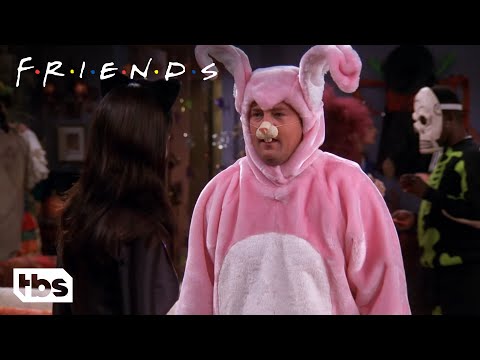
She dressed up as a witch for the Halloween party, complete with a green face and a pointed hat.
- Comparative Usage
- Unlike 'wizard,' which often implies formal study of magic, 'witch' often implies an innate or intuitive connection to supernatural forces.
The old legends say the witch could turn men into pigs with a single glance.
The movie tells the story of a young witch trying to find her place in a world that fears her.
The word witch is ubiquitous in English-speaking cultures, appearing in contexts ranging from the whimsical to the deeply serious. One of the most common places you will hear it is in entertainment. From children's cartoons like 'The Little Mermaid' (featuring Ursula the sea witch) to prestige television dramas like 'American Horror Story: Coven,' the witch is a staple character. In these settings, the word is used to describe characters with magical abilities, often serving as a catalyst for the plot. During the month of October, the word's frequency spikes significantly due to Halloween. You will see it on decorations, in costume shop advertisements, and in seasonal movies. In this festive context, the 'witch' is often a stylized, non-threatening figure associated with black cats, cauldrons, and flying broomsticks.
- In Pop Culture
- The 'Harry Potter' series revolutionized the term for a new generation, presenting 'witches and wizards' as students in a structured academic environment rather than outcasts in the woods.
The children were excited to see the witch perform magic tricks at the school fair.
In the realm of news and politics, the word is heard in a much more metaphorical and often contentious way. The term 'witch-hunt' is a frequent rhetorical device used by public figures who feel they are being unfairly targeted by investigations or the media. You might hear a news anchor say, 'The senator dismissed the allegations as a political witch-hunt.' This usage draws on the historical memory of the Salem trials to suggest that the current proceedings are motivated by hysteria and a desire for a scapegoat rather than a search for the truth. This metaphorical use is so common that it has almost become a cliché in political commentary, used by people across the ideological spectrum to defend themselves against scrutiny.
- In Academic Circles
- Sociologists and historians use the word to discuss 'moral panics' and the ways societies identify and punish 'deviant' behavior during times of stress.
The professor explained that the witch trials were often driven by economic disputes between neighbors.
You will also encounter the word in spiritual and religious contexts. With the rise of modern Paganism, many people openly identify as witches. In these communities, the word is used with respect and refers to a specific set of beliefs and practices involving nature, energy, and ritual. You might see books in the 'New Age' section of a bookstore titled 'The Modern Witch's Guide' or 'Witchcraft for Beginners.' In this sense, the word is part of a living religion. Finally, the word appears in everyday language through idioms. You might hear someone say it's 'witching hour' when their baby won't stop crying at 3 AM, or a gardener might mention 'witch hazel' as a medicinal plant. Whether in a blockbuster movie, a heated political debate, a history lecture, or a spiritual gathering, the word 'witch' remains a powerful and frequently used part of the English lexicon.
Many people today use the term witch to describe their spiritual path and connection to the earth.
- In Literature
- Classic literature, from 'The Crucible' to 'Macbeth,' uses the figure of the witch to explore themes of guilt, power, and social conformity.
The legend of the Bell Witch is a famous piece of American folklore from Tennessee.
The documentary explored how the image of the witch has changed in cinema over the last century.
One of the most frequent mistakes learners make with the word witch is a simple orthographic one: confusing it with the relative pronoun and determiner 'which.' Because they are homophones—words that sound identical but have different meanings and spellings—it is incredibly easy to type 'Which witch is which?' and get the spellings reversed. Remember that 'which' (with an 'h' after the 'w') is used for choices and questions, while 'witch' (with a 't' before the 'ch') refers to the magical person. Another common error involves gender. While the historical and modern Neopagan use of 'witch' can include people of any gender, in general English usage, it is still predominantly perceived as a feminine term. Calling a man a 'witch' might be technically accurate in some spiritual contexts, but in standard conversation, it might cause confusion or be seen as a mistake unless the specific context of male witchcraft is already established.
- Spelling Confusion
- Mistake: 'I don't know witch one to choose.' Correct: 'I don't know which one to choose.' Mistake: 'The which cast a spell.' Correct: 'The witch cast a spell.'
It is important to check your spelling to ensure you don't use 'which' when you mean witch.
A more nuanced mistake is failing to recognize the offensive potential of the word. In many cultures and historical contexts, being called a 'witch' was a death sentence. Even today, in some parts of the world, 'witchcraft' accusations lead to real-world violence. Therefore, using the word lightly or as an insult toward a woman can be seen as highly insensitive or even misogynistic. It carries a history of silencing and punishing women who were 'different.' Learners should also be careful with the term 'witch-hunt.' Using it to describe any minor criticism or investigation can come across as hyperbolic or dramatic. It should ideally be reserved for situations where there is a genuine element of mass hysteria or systemic unfairness. Overusing this metaphor can diminish its impact and make the speaker seem like they are exaggerating their victimhood.
- Register Errors
- Using 'witch' in a formal academic paper about sociology is appropriate, but using it to describe a colleague in a business meeting is a major breach of etiquette.
The author was careful not to use the word witch in a way that reinforced harmful stereotypes.
Finally, learners often confuse 'witch' with other magical terms like 'wizard,' 'warlock,' 'sorcerer,' or 'mage.' While they all involve magic, they have different connotations. A 'wizard' often implies wisdom and formal study (think Gandalf). A 'sorcerer' often implies power derived from a specific source or bloodline. A 'warlock' historically meant a 'oath-breaker' and is often used for a male witch, but sometimes carries a more negative or 'dark magic' connotation than 'witch' does in modern circles. Using 'witch' as a catch-all for any magic user can sometimes miss the specific cultural or literary flavor of a story. For example, in the 'Harry Potter' universe, 'witch' is specifically the female term and 'wizard' is the male term. Mixing them up would be a factual error within that fictional context. By paying attention to spelling, gender connotations, historical sensitivity, and specific magical terminology, learners can avoid the most common pitfalls associated with this complex word.
Some people mistakenly believe that all witches are fictional, forgetting those who practice it as a religion.
- Cultural Misunderstanding
- Assuming all witches are 'evil' is a common mistake based on Western fairy tales; many cultures view them as essential community healers.
The student lost points on the essay for consistently misspelling witch as 'which'.
Calling the investigation a witch-hunt was seen as a strategic move to gain public sympathy.
When you want to describe someone with magical abilities but 'witch' doesn't quite fit the tone or context, there are several alternatives, each with its own distinct nuance. Sorceress is perhaps the closest synonym for a female magic user. It often carries a more regal, powerful, or high-fantasy connotation than 'witch.' While a witch might live in a cottage and use herbs, a sorceress might live in a palace and command the elements. Enchantress is another alternative, but it specifically implies magic used for charm, seduction, or illusion. An enchantress often uses her powers to influence the minds or hearts of others. If you are looking for a more neutral or academic term, practitioner of magic or occultist might be more appropriate, especially in a non-fiction or modern religious context.
- Witch vs. Sorceress
- 'Witch' often implies folk magic, nature, and community-based roles. 'Sorceress' often implies grand, learned, or innate cosmic power.
The witch in the forest was known for her healing potions, unlike the sorceress who ruled the dark tower.
For male counterparts, wizard is the most common term, usually implying wisdom, age, and formal study. Warlock is another option, though it has a darker history, originally meaning 'oath-breaker' or 'traitor.' In some modern fantasy, a warlock is someone who gains power through a pact with a powerful entity. Mage or magician are more gender-neutral terms. 'Mage' is very common in role-playing games and high fantasy, suggesting a professional or scholarly magic user. 'Magician' can refer to a supernatural being, but in modern English, it most often refers to a stage performer who does sleight-of-hand tricks. If you are talking about someone who communicates with spirits, medium or shaman might be the more precise terms, depending on the cultural tradition being described.
- Witch vs. Wizard
- In many modern contexts, these are simply gendered pairs. However, 'wizard' often carries a more positive, scholarly connotation than 'witch.'
The legendary witch Circe was famous for her ability to transform her enemies into animals.
In metaphorical contexts where 'witch' is used as an insult, alternatives like shrew, harpy, or battle-axe exist, but these are all dated and carry their own heavy baggage of sexism. It is generally better to use more specific, non-gendered adjectives like 'malicious,' 'cruel,' or 'unpleasant.' When discussing the 'witch-hunt' metaphor, you might use persecution, scapegoating, or moral panic to describe the same phenomenon in more formal or sociological terms. For example, 'The Red Scare was a period of intense political persecution' is a more precise way of saying it was a 'witch-hunt.' Choosing the right word depends on whether you want to emphasize the magical, the historical, the religious, or the metaphorical aspect of the concept.
The village witch was actually a skilled midwife who knew the secrets of local plants.
- Witch vs. Shaman
- 'Shaman' is a term rooted in specific indigenous Siberian and Central Asian traditions, though now used more broadly for tribal spiritual leaders.
She preferred the term 'enchantress' because it sounded more elegant than witch.
The folklore of the region is filled with stories of a benevolent witch who protects the forest.
How Formal Is It?
Fun Fact
The word 'wicked' is actually related to the same root as 'witch'. Both words share an ancient connection to the idea of being 'turned' or 'twisted' away from the normal path.
Pronunciation Guide
- Pronouncing the 't' as a separate sound (it is silent).
- Confusing the spelling with 'which' in writing.
- Using a long 'ee' sound instead of a short 'i'.
- Over-emphasizing the 'w' into a 'v' sound in some languages.
- Muffling the 'ch' sound at the end.
Difficulty Rating
The word itself is simple, but historical and metaphorical contexts can be complex.
Spelling confusion with 'which' is a common hurdle for many learners.
Easy to pronounce as it is a single, common syllable.
Requires context to distinguish from 'which' during fast speech.
What to Learn Next
Prerequisites
Learn Next
Advanced
Grammar to Know
Homophones
Witch vs. Which: 'Which witch is the one who cast the spell?'
Countable Nouns
One witch, two witches. 'There are many witches in this story.'
Compound Nouns
Witch-hunt, witchcraft. 'The witchcraft trials were a dark time.'
Possessive Nouns
The witch's broom. 'The witch's cat is black.'
Adjective Formation
Adding '-y' to nouns. 'She has a very witchy aesthetic.'
Examples by Level
The witch has a tall black hat.
La sorcière a un grand chapeau noir.
Simple subject-verb-object structure.
Is she a good witch or a bad witch?
Est-elle une gentille sorcière ou une méchante sorcière ?
Use of adjectives to modify the noun.
The witch flies on a broom.
La sorcière vole sur un balai.
Present simple for general facts in stories.
I see a witch in the book.
Je vois une sorcière dans le livre.
Basic prepositional phrase 'in the book'.
The witch has a black cat.
La sorcière a un chat noir.
Common collocation: witch and black cat.
The witch lives in a small house.
La sorcière habite dans une petite maison.
Verb 'lives' with a location.
Look at the scary witch!
Regarde la sorcière effrayante !
Imperative sentence with an adjective.
The witch makes magic soup.
La sorcière fait de la soupe magique.
Simple present tense.
The witch cast a spell on the prince.
La sorcière a jeté un sort au prince.
Past simple tense 'cast'.
She dressed up as a witch for the party.
Elle s'est déguisée en sorcière pour la fête.
Phrasal verb 'dress up as'.
Do you believe in witches?
Crois-tu aux sorcières ?
Question form with 'believe in'.
The old witch lived deep in the forest.
La vieille sorcière vivait au fond de la forêt.
Adverbial phrase of place.
The witch's cauldron was bubbling.
Le chaudron de la sorcière bouillonnait.
Possessive 's.
She gave the girl a magic apple.
Elle a donné une pomme magique à la jeune fille.
Indirect and direct objects.
Witches are popular characters in movies.
Les sorcières sont des personnages populaires dans les films.
Plural noun with 'are'.
The witch turned the boy into a frog.
La sorcière a transformé le garçon en grenouille.
Verb 'turn into'.
In the 17th century, many women were accused of being witches.
Au XVIIe siècle, de nombreuses femmes ont été accusées d'être des sorcières.
Passive voice 'were accused of'.
The movie explores the life of a modern witch living in New York.
Le film explore la vie d'une sorcière moderne vivant à New York.
Present participle 'living' as an adjective.
She has a very witchy style, with lots of silver jewelry and black lace.
Elle a un style très 'sorcière', avec beaucoup de bijoux en argent et de dentelle noire.
Adjective 'witchy' derived from the noun.
The politician claimed that the media was conducting a witch-hunt against him.
Le politicien a affirmé que les médias menaient une chasse aux sorcières contre lui.
Metaphorical use of 'witch-hunt'.
According to the legend, the witch could predict the future.
Selon la légende, la sorcière pouvait prédire l'avenir.
Modal verb 'could' for past ability.
The children were frightened by the witch's cackle.
Les enfants étaient effrayés par le ricanement de la sorcière.
Noun 'cackle' associated with witches.
She studied the history of witchcraft for her university project.
Elle a étudié l'histoire de la sorcellerie pour son projet universitaire.
Abstract noun 'witchcraft'.
The witch-doctor provided herbal remedies to the villagers.
Le sorcier fournissait des remèdes à base de plantes aux villageois.
Compound noun 'witch-doctor'.
The play 'The Crucible' is a powerful allegory for the Salem witch trials.
La pièce 'Les Sorcières de Salem' est une allégorie puissante des procès de Salem.
Use of 'allegory' and historical reference.
The archetype of the witch often represents fear of female autonomy.
L'archétype de la sorcière représente souvent la peur de l'autonomie féminine.
Abstract subject 'archetype of the witch'.
She identified as a Wiccan and preferred the term 'witch' over 'sorceress'.
Elle s'identifiait comme Wiccan et préférait le terme 'sorcière' à celui de 'magicienne'.
Contrast between two nouns.
The investigation turned into a literal witch-hunt, targeting anyone with dissenting views.
L'enquête s'est transformée en une véritable chasse aux sorcières, ciblant quiconque ayant des opinions dissidentes.
Intensifier 'literal' with a metaphor.
Folklore often depicts the witch as a figure living on the fringes of society.
Le folklore dépeint souvent la sorcière comme une figure vivant en marge de la société.
Verb 'depicts' with a complex object.
The 'witching hour' is traditionally thought to be the time when magic is strongest.
L'heure du crime' est traditionnellement considérée comme le moment où la magie est la plus forte.
Passive construction 'is thought to be'.
She possessed a witch-like ability to sense people's true intentions.
Elle possédait une capacité semblable à celle d'une sorcière pour deviner les véritables intentions des gens.
Adjective 'witch-like'.
The novel subverts the 'wicked witch' trope by making her the misunderstood protagonist.
Le roman détourne le cliché de la 'méchante sorcière' en faisant d'elle la protagoniste incomprise.
Literary term 'trope'.
The persecution of supposed witches was often a tool for social control during periods of upheaval.
La persécution des prétendues sorcières était souvent un outil de contrôle social pendant les périodes de bouleversements.
Complex noun phrase as subject.
Her research focuses on the intersection of gender and the 'witch' label in early modern law.
Ses recherches portent sur l'intersection du genre et de l'étiquette de 'sorcière' dans le droit du début de l'ère moderne.
Academic register.
The term has been reclaimed by feminists as a symbol of resistance against patriarchal norms.
Le terme a été réapproprié par les féministes comme un symbole de résistance contre les normes patriarcales.
Present perfect passive.
The atmosphere was thick with tension, as if some malevolent witch had cursed the very air.
L'atmosphère était lourde de tension, comme si une sorcière malveillante avait maudit l'air lui-même.
Subjunctive mood 'as if... had cursed'.
Shakespeare's Weird Sisters are perhaps the most famous witches in English literature.
Les 'Weird Sisters' de Shakespeare sont peut-être les sorcières les plus célèbres de la littérature anglaise.
Proper noun reference.
The documentary deconstructs the 'witch' myth, revealing the tragic reality of the victims.
Le documentaire déconstruit le mythe de la 'sorcière', révélant la réalité tragique des victimes.
Verb 'deconstructs'.
He used the 'witch-hunt' rhetoric to deflect legitimate questions about his conduct.
Il a utilisé la rhétorique de la 'chasse aux sorcières' pour détourner les questions légitimes sur sa conduite.
Noun as adjective 'witch-hunt rhetoric'.
The landscape had a haunting, witchy beauty that both attracted and repelled visitors.
Le paysage avait une beauté envoûtante, de sorcière, qui à la fois attirait et repoussait les visiteurs.
Parallel verbs 'attracted and repelled'.
The 'witch' serves as a perennial scapegoat in the collective psyche during times of existential dread.
La 'sorcière' sert de bouc émissaire éternel dans le psychisme collectif en période d'angoisse existentielle.
Sophisticated vocabulary: 'perennial', 'existential dread'.
Silvia Federici argues that the witch-hunts were foundational to the rise of modern capitalism.
Silvia Federici soutient que les chasses aux sorcières ont été fondamentales pour l'essor du capitalisme moderne.
Reporting verb 'argues' with a complex clause.
The semantic evolution of 'witch' mirrors the shifting boundaries of acceptable female behavior.
L'évolution sémantique de 'sorcière' reflète les frontières changeantes du comportement féminin acceptable.
Abstract metaphor 'mirrors the shifting boundaries'.
To invoke the 'witch' is to tap into a reservoir of deep-seated cultural anxieties.
Invoquer la 'sorcière', c'est puiser dans un réservoir d'angoisses culturelles profondément ancrées.
Infinitive phrase as subject.
The film's cinematography utilizes low-key lighting to emphasize the witch's chthonic nature.
La cinématographie du film utilise un éclairage discret pour souligner la nature chthonienne de la sorcière.
Technical term 'chthonic'.
The discourse surrounding 'witchcraft' in post-colonial contexts is fraught with complexity.
Le discours entourant la 'sorcellerie' dans les contextes post-coloniaux est empreint de complexité.
Adjective 'fraught with'.
She analyzed the 'witch' as a transgressive figure who defies the binary of good and evil.
Elle a analysé la 'sorcière' comme une figure transgressive qui défie le binaire du bien et du mal.
Academic phrase 'defies the binary'.
The witch's curse in the epic poem functions as a catalyst for the hero's ontological crisis.
La malédiction de la sorcière dans le poème épique fonctionne comme un catalyseur pour la crise ontologique du héros.
Philosophical term 'ontological'.
Synonyms
Antonyms
Common Collocations
Common Phrases
— A wordplay used to highlight the confusion between the homophones 'which' and 'witch'.
With three people in the same costume, I can't tell which witch is which!
— A historical reference now used metaphorically to describe a desire to punish someone harshly.
The angry crowd on social media was ready to burn the witch after the scandal broke.
— A phrase (popularized by a song) describing a woman who is mysterious, alluring, or seemingly magical.
She had a certain witchy woman vibe that intrigued everyone she met.
— Midnight, or the time of night when supernatural events are most likely to occur.
I always wake up at the witching hour and can't get back to sleep.
— To use a dowsing rod to find underground water sources.
My grandfather used to witch for water using a forked willow branch.
— A tall, pointed hat; also used to describe traffic cones in some regions.
Don't forget to put on your witch's hat for the costume contest.
— A famous line from Shakespeare's Macbeth, often associated with witches casting spells.
The kids chanted 'double, double toil and trouble' as they stirred the punch.
— A state of mind where people are eager to find and punish a scapegoat.
The office was gripped by a witch-hunt mentality after the theft was discovered.
— A witch who uses magic for benevolent purposes.
Glinda is known as the Good Witch of the South.
— A phrase describing the general study or practice of magic.
He was accepted into the school of witchcraft and wizardry.
Often Confused With
A question word or relative pronoun. Sounds the same but spelled differently.
Usually refers to a male magic user, often seen as more scholarly.
A male witch, sometimes with a more negative or dark connotation.
Idioms & Expressions
— An investigation that is carried out to uncover and punish people with unpopular opinions.
The committee's investigation was nothing more than a witch-hunt.
formal/political— Extremely cold weather or a very cold object.
It's cold as a witch's tit out there today!
informal/vulgar— The time of night when babies are most likely to cry or when magic happens.
We call 6 PM the witching hour because the baby always gets fussy then.
informal— Searching for something hidden using intuition or unconventional methods.
He was witching for his lost keys all morning.
informal— To be severely punished or criticized by a group of people.
If I make one mistake, the board will burn me at the stake.
metaphorical— A dense growth of branches on a tree caused by disease, resembling a broom.
The old pine tree was covered in witch's brooms.
technical/botanical— To be exceptionally good at something, as if by magic.
She's a witch at fixing computers; she can solve any problem.
informal/positive— To engage in witchcraft; sometimes used metaphorically for being busy or traveling.
She's been riding the broomstick all week trying to finish the project.
informal/humorous— A situation full of strong, mixed, and potentially dangerous feelings.
The meeting was a bubbling cauldron of emotions.
literary— A physical sign on the body once believed to prove someone was a witch; now used for any unusual birthmark.
He joked that the mole on his arm was a witch's mark.
historical/informalEasily Confused
They are homophones (sound identical).
Witch is a person with magic; Which is used for making choices.
Which witch is the most famous?
Both are magic users.
Witch is traditionally female; Wizard is traditionally male and scholarly.
The witch and the wizard worked together.
Both are female magic users.
Sorceress sounds more formal and powerful; Witch sounds more folk-based.
The sorceress lived in a palace, while the witch lived in a hut.
Both use magic.
Enchantress focuses on charm and beauty; Witch focuses on spells and nature.
The enchantress cast a love spell.
Both are associated with witchcraft.
Warlock is the male term, often implying an oath-breaker.
The warlock was banished from the coven.
Sentence Patterns
The [adjective] witch has a [noun].
The scary witch has a broom.
The witch [verb] a [noun].
The witch cast a spell.
She was accused of being a witch.
In the past, many women were accused of being a witch.
The [noun] is a metaphor for a witch-hunt.
The investigation is a metaphor for a witch-hunt.
The archetype of the witch represents [abstract noun].
The archetype of the witch represents social rebellion.
To [verb] the witch is to [verb] [complex concept].
To deconstruct the witch is to analyze gendered power.
It was the witching hour when...
It was the witching hour when the ghost appeared.
Is she a [adjective] witch?
Is she a good witch?
Word Family
Nouns
Verbs
Adjectives
Related
How to Use It
Common in fiction, history, and around Halloween.
-
I don't know witch book to read.
→
I don't know which book to read.
You used the person 'witch' instead of the choice word 'which'.
-
The witch casted a spell.
→
The witch cast a spell.
The past tense of 'cast' is just 'cast', not 'casted'.
-
He is a witch.
→
He is a wizard/warlock.
While 'witch' can be gender-neutral, 'wizard' or 'warlock' is more common for men in standard English.
-
She practices witch craft.
→
She practices witchcraft.
Witchcraft is a single word, not two separate words.
-
The witch-hunt for the truth was successful.
→
The search for the truth was successful.
'Witch-hunt' always implies an UNFAIR or biased investigation, not a positive search for truth.
Tips
The Silent T
Always remember the 't' in 'witch'. It's like the 't' in 'watch' or 'catch'. It helps you distinguish the person from the word 'which'.
Know Your Audience
If you are talking to someone who identifies as a witch for religious reasons, use the word with respect. If you are talking about history, use it carefully.
Use Synonyms
In your writing, try using 'sorceress' for a powerful character or 'practitioner' for a real-life person to add variety and precision.
Witch-hunt Usage
Use 'witch-hunt' to describe a situation where people are being blamed unfairly by a large group. It's a very powerful and common political term.
Halloween Fun
During Halloween, 'witch' is a fun, lighthearted word. Feel free to use it for costumes, decorations, and party themes!
Compound Words
Learn words like 'witchcraft' and 'witch-hunt' together. They are very common and will make your English sound more natural.
Homophone Clues
When you hear /wɪtʃ/, look for words like 'spell', 'magic', or 'broom' to know it's a witch. If you hear 'one' or 'choice', it's 'which'.
Literary Witches
Witches in books aren't always evil. Look for 'subverted' witches who are actually the heroes of the story.
Witchy Aesthetic
The word 'witchy' is very popular in fashion and home decor right now. It refers to a dark, mystical, or nature-inspired style.
Historical Accuracy
When writing about the past, remember that 'witch' was a label given to people, not necessarily a true description of their actions.
Memorize It
Mnemonic
Remember the 'T' in the middle: Witches use a Wand and a Table for their Tea. (W-i-T-ch). 'Which' is for choices, 'Witch' is for charms.
Visual Association
Imagine a woman wearing a tall, pointed hat (shaped like a 'T') flying over a dark forest.
Word Web
Challenge
Try to write a three-sentence story using the words 'witch', 'which', and 'witchcraft' correctly.
Word Origin
The word comes from the Old English 'wicce' (feminine) and 'wicca' (masculine). These terms referred to practitioners of magic or sorcery. The word is related to the Middle High German 'wicken', meaning to bewitch or to divine.
Original meaning: A female practitioner of magic or a woman who uses supernatural powers.
GermanicCultural Context
Be aware that calling someone a 'witch' can be a sexist insult or a religious slur, depending on the context.
The Salem Witch Trials are a major part of American cultural identity, often used as a warning against mass hysteria.
Practice in Real Life
Real-World Contexts
Halloween
- Witch costume
- Pointed hat
- Flying on a broom
- Trick or treat
History Class
- Salem witch trials
- Accusations of witchcraft
- Religious persecution
- Mass hysteria
Fantasy Literature
- Casting a spell
- Stirring a cauldron
- A coven of witches
- Magical powers
Political News
- A political witch-hunt
- Unfair investigation
- Targeting opponents
- Baseless claims
Modern Spirituality
- Practicing witchcraft
- Wiccan traditions
- Nature-based rituals
- Reclaiming the word
Conversation Starters
"What is your favorite movie or book that features a witch as a main character?"
"Do you think the word 'witch' is mostly positive or negative in your culture?"
"Why do you think people were so afraid of witches in the past?"
"If you could have one magical power like a witch, what would it be?"
"Have you ever heard someone use the term 'witch-hunt' in a news story?"
Journal Prompts
Write a story about a witch who lives in a modern city. How does she use her magic in secret?
Reflect on the history of the witch trials. How does this history affect how we see women today?
Describe a 'witch-hunt' you have observed in social media or history. Why did it happen?
If you were to dress up as a witch, what would your costume look like and why?
Do you believe that 'magic' exists in the real world, perhaps in nature or science? Explain.
Frequently Asked Questions
10 questionsIn traditional English usage and folklore, yes, the term is predominantly feminine. However, in modern Neopagan religions like Wicca, 'witch' is often used as a gender-neutral term for any practitioner, regardless of their gender. Historically, men were also accused of witchcraft, though in smaller numbers than women.
Traditionally, 'witch' refers to a woman and 'wizard' refers to a man. Beyond gender, 'wizard' often implies someone who has studied magic from books (like a scholar), while 'witch' often implies a more natural or intuitive connection to magic and nature. In the Harry Potter series, they are simply the female and male terms for magical people.
This image comes from medieval folklore. Some historians believe it originated from the use of 'flying ointments' made from herbs, which were applied using wooden handles. Others suggest the broom was a symbol of domesticity that was 'inverted' to show the witch's rebellion against traditional female roles.
A witch-hunt was a period, mostly between 1450 and 1750, where thousands of people were accused of practicing harmful magic and making deals with the devil. These trials were often based on very little evidence and were driven by religious fear, social tension, and economic problems.
While people do use it as an informal insult for a mean woman, it is generally considered rude and sexist. It's better to avoid using it this way in professional or polite conversation, as it carries a negative history of attacking women's characters.
The 'witching hour' is traditionally midnight, the time when magic is said to be most powerful. In modern times, parents often use it to describe the late afternoon or early evening when babies and young children tend to be very fussy and cry a lot.
Yes, modern witchcraft, often associated with Wicca, is a recognized Neopagan religion. It focuses on a deep respect for nature, the cycles of the seasons, and the use of ritual and meditation. Practitioners of this religion often call themselves witches.
Witch hazel is a type of shrub. Its bark and leaves are used to make a liquid that is very common in skincare. It is used as an astringent to clean the skin, reduce swelling, and help heal minor cuts or stings. It has nothing to do with actual magic!
The 'Salem witches' were a group of people in Salem, Massachusetts, who were accused of witchcraft in 1692. Over 200 people were accused, and 20 were executed. Today, they are remembered as innocent victims of mass hysteria and a flawed legal system.
A coven is a group or gathering of witches who meet regularly to perform rituals or celebrate festivals. Traditionally, a coven is said to have thirteen members, but in reality, they can be any size.
Test Yourself 200 questions
Describe a witch's appearance in a traditional fairy tale.
Well written! Good try! Check the sample answer below.
Write a short dialogue between two witches about a new spell.
Well written! Good try! Check the sample answer below.
Explain the difference between a witch and a wizard.
Well written! Good try! Check the sample answer below.
What is a 'witch-hunt' and why is it used in politics today?
Well written! Good try! Check the sample answer below.
Write a story about a 'good witch' who lives in a big city.
Well written! Good try! Check the sample answer below.
How has the image of the witch changed from the 1600s to today?
Well written! Good try! Check the sample answer below.
Discuss the significance of the Salem witch trials in American history.
Well written! Good try! Check the sample answer below.
Describe a 'witchy' outfit using at least five adjectives.
Well written! Good try! Check the sample answer below.
What would you do if you discovered you were a witch?
Well written! Good try! Check the sample answer below.
Analyze the role of the three witches in Shakespeare's Macbeth.
Well written! Good try! Check the sample answer below.
Write a poem about the 'witching hour'.
Well written! Good try! Check the sample answer below.
Explain why 'witch' is sometimes considered a sexist insult.
Well written! Good try! Check the sample answer below.
Create a recipe for a 'witch's brew' (it can be for a party!).
Well written! Good try! Check the sample answer below.
Do you think people will still talk about witches in 100 years? Why?
Well written! Good try! Check the sample answer below.
Compare the witches in 'Harry Potter' to those in 'The Wizard of Oz'.
Well written! Good try! Check the sample answer below.
Write a letter from an accused witch in 1692 to her family.
Well written! Good try! Check the sample answer below.
What are the common symbols associated with witches?
Well written! Good try! Check the sample answer below.
Discuss the reclamation of the word 'witch' by modern feminists.
Well written! Good try! Check the sample answer below.
Write a review of a movie that features a witch.
Well written! Good try! Check the sample answer below.
Describe the setting of a witch's house in the woods.
Well written! Good try! Check the sample answer below.
Tell a short story about a witch you saw in a movie.
Read this aloud:
You said:
Speech recognition is not supported in your browser. Try Chrome or Edge.
Explain the difference between 'witch' and 'which' to a friend.
Read this aloud:
You said:
Speech recognition is not supported in your browser. Try Chrome or Edge.
Discuss whether you would like to have magical powers.
Read this aloud:
You said:
Speech recognition is not supported in your browser. Try Chrome or Edge.
Describe a witch's costume for a Halloween party.
Read this aloud:
You said:
Speech recognition is not supported in your browser. Try Chrome or Edge.
Debate: Is the term 'witch-hunt' overused in politics?
Read this aloud:
You said:
Speech recognition is not supported in your browser. Try Chrome or Edge.
Roleplay: You are a witch trying to sell a potion to a customer.
Read this aloud:
You said:
Speech recognition is not supported in your browser. Try Chrome or Edge.
Talk about a historical event involving witches.
Read this aloud:
You said:
Speech recognition is not supported in your browser. Try Chrome or Edge.
Pronounce 'witch', 'which', 'stitch', and 'pitch' clearly.
Read this aloud:
You said:
Speech recognition is not supported in your browser. Try Chrome or Edge.
Explain why some people call themselves witches today.
Read this aloud:
You said:
Speech recognition is not supported in your browser. Try Chrome or Edge.
Describe your favorite magical character from a book.
Read this aloud:
You said:
Speech recognition is not supported in your browser. Try Chrome or Edge.
Discuss the symbols of a witch (broom, cat, hat).
Read this aloud:
You said:
Speech recognition is not supported in your browser. Try Chrome or Edge.
Give a short presentation on the Salem witch trials.
Read this aloud:
You said:
Speech recognition is not supported in your browser. Try Chrome or Edge.
Talk about the 'witching hour' and what it means to you.
Read this aloud:
You said:
Speech recognition is not supported in your browser. Try Chrome or Edge.
Describe a 'witchy' aesthetic in fashion.
Read this aloud:
You said:
Speech recognition is not supported in your browser. Try Chrome or Edge.
Explain the plot of 'The Wizard of Oz' focusing on the witches.
Read this aloud:
You said:
Speech recognition is not supported in your browser. Try Chrome or Edge.
Discuss the importance of the 'witch' archetype in stories.
Read this aloud:
You said:
Speech recognition is not supported in your browser. Try Chrome or Edge.
Roleplay: A historian interviewing a person from 1692.
Read this aloud:
You said:
Speech recognition is not supported in your browser. Try Chrome or Edge.
Talk about a plant or medicine with 'witch' in the name.
Read this aloud:
You said:
Speech recognition is not supported in your browser. Try Chrome or Edge.
Describe the most famous witch in your country's folklore.
Read this aloud:
You said:
Speech recognition is not supported in your browser. Try Chrome or Edge.
Discuss how witches are portrayed in modern TV shows.
Read this aloud:
You said:
Speech recognition is not supported in your browser. Try Chrome or Edge.
Listen to a description of a witch and draw what you hear.
Listen to a sentence and decide if it's 'witch' or 'which'.
Listen to a historical lecture about Salem and take notes.
Listen to a song about a witch and identify the adjectives used.
Listen to a news report about a 'witch-hunt' and summarize it.
Listen to a dialogue about Halloween costumes.
Listen to a story about a good witch and her cat.
Listen to a podcast about modern Wicca.
Listen to a poem and identify the 'witching hour'.
Listen to a list of magical words and circle 'witch'.
Listen to a play excerpt (like Macbeth) and identify the witches.
Listen to a commercial for witch hazel.
Listen to a debate about political investigations.
Listen to a fairy tale and identify the witch's motivation.
Listen to a pronunciation guide for homophones.
/ 200 correct
Perfect score!
Summary
The word 'witch' is a complex term that has evolved from a figure of fear and persecution in history to a symbol of magical power in fiction and spiritual empowerment in the modern world. Example: 'The witch in the story was not evil, but a wise healer.'
- A person, typically female, believed to have magical powers and the ability to cast spells or perform rituals.
- A historical label used to persecute marginalized individuals, leading to the famous witch trials of the past.
- A modern spiritual identity reclaimed by practitioners of Wicca and other Neopagan religions worldwide.
- A metaphorical term used to describe a malicious person or an unfair investigation (a witch-hunt).
The Silent T
Always remember the 't' in 'witch'. It's like the 't' in 'watch' or 'catch'. It helps you distinguish the person from the word 'which'.
Know Your Audience
If you are talking to someone who identifies as a witch for religious reasons, use the word with respect. If you are talking about history, use it carefully.
Use Synonyms
In your writing, try using 'sorceress' for a powerful character or 'practitioner' for a real-life person to add variety and precision.
Witch-hunt Usage
Use 'witch-hunt' to describe a situation where people are being blamed unfairly by a large group. It's a very powerful and common political term.