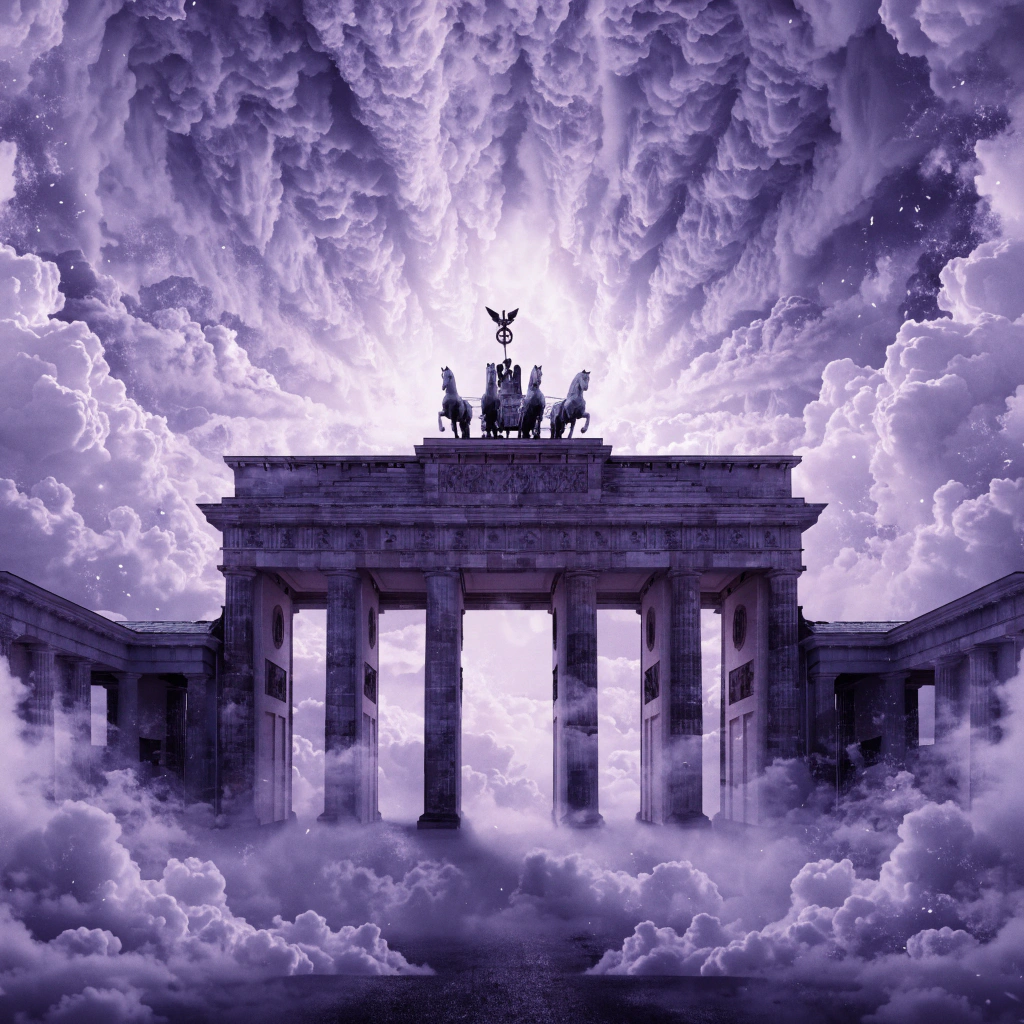
The Brandenburg Gate
The Brandenburg Gate is a famous monument in Berlin, Germany. It is very big and old. It stands in the center of the city.
King Frederick William II built the gate many years ago. It has six tall columns. On top of the gate, there is a statue. A woman drives a chariot with four horses.
Today, many tourists visit the gate. They take photos and walk under it. It is a symbol of peace. It is a beautiful place to see.
Gramática em destaque
Padrão: Present Simple (to be)
"The Brandenburg Gate is a famous monument in Berlin, Germany."
We use 'is' with singular subjects like 'The Gate' to describe what something is. It helps us give facts and descriptions.
Padrão: There is / There are
"On top of the gate, there is a statue."
We use 'there is' for one thing and 'there are' for two or more things. It shows that something exists in a specific place.
Teste sua compreensão
10 perguntas · A1 Iniciante · 1 pré-visualização grátis
Teste o que aprendeu neste artigo. Responda todas as perguntas para ganhar XP!
Where is the Brandenburg Gate?
Quer finalizar o quiz?
9 perguntas a mais estão esperando por você. Cadastre-se grátis para desbloquear o quiz completo e ganhar XP!
Cadastrar grátisJá tem conta? Entrar
Detalhamento das perguntas
Where is the Brandenburg Gate?
Sua resposta:
Resposta correta: Berlin
The Brandenburg Gate is a new building.
Sua resposta:
Resposta correta: Falso
What does 'peace' mean?
Sua resposta:
Resposta correta: A time with no war
The gate is a _____ of peace.
Sua resposta:
Resposta correta: symbol
The Famous Brandenburg Gate
The Brandenburg Gate is a very famous landmark in Berlin, Germany. King Frederick William II built it a long time ago. It was finished in 1791. The King wanted the gate to be a symbol of peace. It is at the end of a big street called Unter den Linden.
A man named Carl Gotthard Langhans designed the gate. He looked at old buildings in Greece for ideas. On top of the gate, there is a statue called the Quadriga. This is a chariot with four horses. A goddess named Victoria is driving the horses. She is the goddess of victory.
The gate is more beautiful than many other buildings in the city. In the past, it was a symbol of a divided city. Today, it is a symbol of unity because Germany is one country again. Many tourists visit the gate every year because it is very important for German history.
Gramática em destaque
Padrão: Past Simple (Irregular Verbs)
"King Frederick William II built it a long time ago."
We use the past simple to talk about finished actions in the past. 'Built' is the irregular past form of the verb 'build'.
Padrão: Comparatives with Long Adjectives
"The gate is more beautiful than many other buildings in the city."
To compare two things using long adjectives (3+ syllables), we use 'more' + adjective + 'than'. It shows that one thing has more of a quality than the other.
Teste sua compreensão
11 perguntas · A2 Elementar · 1 pré-visualização grátis
Teste o que aprendeu neste artigo. Responda todas as perguntas para ganhar XP!
Who built the Brandenburg Gate?
Quer finalizar o quiz?
10 perguntas a mais estão esperando por você. Cadastre-se grátis para desbloquear o quiz completo e ganhar XP!
Cadastrar grátisJá tem conta? Entrar
Detalhamento das perguntas
Who built the Brandenburg Gate?
Sua resposta:
Resposta correta: King Frederick William II
The Brandenburg Gate was finished in 1971.
Sua resposta:
Resposta correta: Falso
What does 'landmark' mean?
Sua resposta:
Resposta correta: A famous building that is easy to recognize
The King wanted the gate to be a symbol of _____.
Sua resposta:
Resposta correta: peace
Where is the Brandenburg Gate located?
Sua resposta:
Resposta correta: Berlin
The Brandenburg Gate: A Symbol of German History
The Brandenburg Gate is one of the most famous landmarks in Germany. It is located in the heart of Berlin and has stood there since 1791. King Frederick William II of Prussia commissioned the gate because he wanted a grand entrance to the city that represented peace. It was designed by Carl Gotthard Langhans, who was inspired by the ancient architecture of Athens.
On top of the gate, there is a famous statue called the Quadriga. This statue shows a chariot which is pulled by four horses. The chariot is driven by Victoria, who is the Roman goddess of victory. Over the years, the gate has seen many historical events. For example, the Quadriga was once taken to Paris by Napoleon after he defeated Prussia, but it was later returned to its original place in Berlin.
During the Cold War, the gate became a symbol of a divided country. It was located right next to the Berlin Wall, and most people were not allowed to pass through it for almost thirty years. However, when the wall fell in 1989, the gate was opened again. Since then, the Brandenburg Gate has been visited by millions of tourists from all over the world who want to see this historic site.
Today, the gate is no longer a symbol of division. Instead, it has become a symbol of unity and peace for all Germans. Many celebrations are held at the gate every year, including the famous New Year’s Eve party. It remains a powerful reminder of Germany’s complex history and its bright future.
Gramática em destaque
Padrão: Passive Voice
"It was designed by Carl Gotthard Langhans."
The passive voice is used when the focus is on the action or the object rather than the subject. It is formed using the verb 'to be' plus the past participle.
Padrão: Present Perfect
"Since then, the Brandenburg Gate has been visited by millions of tourists."
The present perfect is used for actions that started in the past and continue to the present. It is formed using 'have/has' plus the past participle.
Teste sua compreensão
11 perguntas · B1 Intermediário · 1 pré-visualização grátis
Teste o que aprendeu neste artigo. Responda todas as perguntas para ganhar XP!
Who commissioned the construction of the Brandenburg Gate?
Quer finalizar o quiz?
10 perguntas a mais estão esperando por você. Cadastre-se grátis para desbloquear o quiz completo e ganhar XP!
Cadastrar grátisJá tem conta? Entrar
Detalhamento das perguntas
Who commissioned the construction of the Brandenburg Gate?
Sua resposta:
Resposta correta: King Frederick William II
The Brandenburg Gate was always a symbol of unity throughout the Cold War.
Sua resposta:
Resposta correta: Falso
What does the word 'unity' mean?
Sua resposta:
Resposta correta: The state of being joined together
The statue on top of the gate is called the _____.
Sua resposta:
Resposta correta: Quadriga
What city was the architecture of the gate inspired by?
Sua resposta:
Resposta correta: Athens
The Brandenburg Gate: A Silent Witness to German History
The Brandenburg Gate, situated in the heart of Berlin, is far more than a mere architectural achievement; it serves as a profound emblem of Germany’s turbulent history and its eventual reconciliation. Completed in 1791, the monument was commissioned by King Frederick William II of Prussia. It was intended to function as a grand entrance to the Unter den Linden boulevard, signaling a period of newfound peace. Designed by Carl Gotthard Langhans, the gate reflects the Neoclassical style, heavily influenced by the Propylaea in Athens. This choice of aesthetic suggests a deliberate attempt to link the Prussian state with the ideals of classical antiquity.
Atop this monumental structure sits the Quadriga, a chariot drawn by four horses and steered by Victoria, the Roman goddess of victory. However, the history of this sculpture is as dramatic as the gate itself. In 1806, following the defeat of Prussia, Napoleon Bonaparte ordered the Quadriga to be dismantled and transported to Paris as a trophy of war. It was not until eight years later, after Napoleon’s downfall, that the sculpture was returned to its rightful place in Berlin, where it was subsequently transformed into a symbol of Prussian triumph.
Throughout the 20th century, the Brandenburg Gate’s significance shifted dramatically. During the Cold War, it became a poignant symbol of division. When the Berlin Wall was erected in 1961, the gate stood in an inaccessible 'no-man's land' between East and West Berlin. For decades, it represented the physical and ideological barriers that separated the continent. Consequently, it was the site of Ronald Reagan’s famous 1987 speech, in which he challenged Soviet leader Mikhail Gorbachev to 'tear down this wall.'
The most transformative moment in the gate's history occurred in 1989. Following the fall of the Berlin Wall, the Brandenburg Gate was officially reopened, evolving almost overnight into a powerful icon of German reunification. Today, it is the focal point for national celebrations and a destination for millions of tourists. While its original purpose was to celebrate peace, its enduring legacy lies in its ability to reflect the resilience of a nation that has moved from conflict to unity. Therefore, observing the gate today allows for an analysis of how historical landmarks can acquire new meanings through successive generations.
Gramática em destaque
Padrão: Passive Voice (Past Simple)
"the monument was commissioned by King Frederick William II"
This pattern is used to focus on the object (the monument) rather than the person performing the action. It is formed using 'was/were' + the past participle.
Padrão: Non-defining Relative Clause
"the sculpture was returned to its rightful place in Berlin, where it was subsequently transformed into a symbol of Prussian triumph."
These clauses provide extra information about a noun but are not essential for the sentence to make sense. They are separated by commas and often use 'where' or 'which'.
Padrão: Subordinating Conjunctions for Contrast
"While its original purpose was to celebrate peace, its enduring legacy lies in its ability to reflect the resilience of a nation."
'While' is used at the beginning of a clause to introduce a contrast between two different ideas or facts within the same sentence.
Teste sua compreensão
11 perguntas · B2 Intermediário superior · 1 pré-visualização grátis
Teste o que aprendeu neste artigo. Responda todas as perguntas para ganhar XP!
Who was the architect responsible for designing the Brandenburg Gate?
Quer finalizar o quiz?
10 perguntas a mais estão esperando por você. Cadastre-se grátis para desbloquear o quiz completo e ganhar XP!
Cadastrar grátisJá tem conta? Entrar
Detalhamento das perguntas
Who was the architect responsible for designing the Brandenburg Gate?
Sua resposta:
Resposta correta: Carl Gotthard Langhans
The Quadriga was permanently kept in Paris after Napoleon took it in 1806.
Sua resposta:
Resposta correta: Falso
Which word describes a violent or sudden change?
Sua resposta:
Resposta correta: Turbulent
The gate evolved into a powerful icon of German _____ after 1989.
Sua resposta:
Resposta correta: reunification
What did the gate symbolize during the Cold War?
Sua resposta:
Resposta correta: Division and barriers
The Brandenburg Gate: An Architectural Palimpsest of German Identity
Standing as a sentinel at the western terminus of the iconic boulevard Unter den Linden, the Brandenburg Gate is far more than a mere vestige of Prussian grandeur. It functions as an architectural palimpsest, upon which the tumultuous history of Germany has been meticulously inscribed, erased, and rewritten over the centuries. Designed by the architect Carl Gotthard Langhans and completed in 1791, the gate was initially conceived as a 'Gate of Peace.' Its Neoclassical form sought to emulate the Propylaea of the Acropolis in Athens, thereby positioning Berlin as the 'New Athens' on the Spree—a city of Enlightenment and rational sovereignty.
Central to the gate’s aesthetic and symbolic potency is the Quadriga, a bronze sculpture featuring a chariot drawn by four horses and driven by Victoria, the Roman goddess of victory. However, the gate’s narrative has been one of constant recontextualization, often far removed from its peaceful inception. Hardly had the structure been finalized when it became a backdrop for Napoleon’s triumphal procession in 1806. Following the Prussian defeat, Napoleon ordered the Quadriga to be dismantled and shipped to Paris as a trophy of subjugation. It was not until the subsequent defeat of Napoleon in 1814 that the sculpture was returned to Berlin, at which point Victoria was bestowed with an iron cross and an eagle, transforming her into a symbol of Prussian triumph.
Throughout the 20th century, the gate’s significance shifted even more dramatically. During the Cold War, it was the gate that became the most poignant symbol of the bisection of a nation. Stranded in the desolate 'no-man's-land' behind the Berlin Wall, it was inaccessible to both East and West Berliners. It epitomized the ideological chasm that defined the era. It was here that Ronald Reagan famously demanded the removal of the wall, an event that served as a significant rhetorical impetus for the eventual reunification of Germany.
The fall of the Berlin Wall in 1989 provided the catalyst for the gate’s most profound transformation. No longer a barrier of exclusion, it became the focal point for national reconciliation and global celebration. The transition of the gate from a symbol of Prussian militarism to one of European unity reflects a profound shift in the national psyche. Today, the gate stands not just as a historical monument, but as a living participant in modern political life. What remains striking is how the gate continues to serve as a stage for contemporary protests and festivities, proving that its historical journey is far from over.
In conclusion, the Brandenburg Gate remains an essential lens through which to view the German experience. It is a structure that has witnessed the rise and fall of empires, the cruelty of division, and the eventual triumph of unity. Its enduring presence serves as a reminder that architectural landmarks are never static; they are dynamic entities that evolve alongside the societies that build them.
Gramática em destaque
Padrão: Negative Inversion
"Hardly had the structure been finalized when it became a backdrop for Napoleon’s triumphal procession in 1806."
This structure is used for emphasis by placing a negative or restrictive adverb at the beginning of the sentence, followed by the auxiliary verb and then the subject.
Padrão: Cleft Sentences
"It was not until the subsequent defeat of Napoleon in 1814 that the sculpture was returned to Berlin."
Cleft sentences are used to focus on specific information. 'It + is/was + [focused part] + that/who' allows the writer to emphasize the timing of the event.
Padrão: Nominalisation
"The transition of the gate from a symbol of Prussian militarism to one of European unity reflects a profound shift in the national psyche."
Nominalisation involves turning verbs or adjectives into nouns. This creates a more formal, academic tone by focusing on concepts and actions rather than subjects.
Teste sua compreensão
12 perguntas · C1 Avançado · 1 pré-visualização grátis
Teste o que aprendeu neste artigo. Responda todas as perguntas para ganhar XP!
What was the primary architectural inspiration for the Brandenburg Gate?
Quer finalizar o quiz?
11 perguntas a mais estão esperando por você. Cadastre-se grátis para desbloquear o quiz completo e ganhar XP!
Cadastrar grátisJá tem conta? Entrar
Detalhamento das perguntas
What was the primary architectural inspiration for the Brandenburg Gate?
Sua resposta:
Resposta correta: The Propylaea in Athens
The gate was easily accessible to all Berliners throughout the Cold War era.
Sua resposta:
Resposta correta: Falso
What is the meaning of 'subjugation'?
Sua resposta:
Resposta correta: The action of bringing someone under total control
The gate stands as a _____ at the western terminus of Unter den Linden.
Sua resposta:
Resposta correta: sentinel
What items were added to the Quadriga after its return from Paris in 1814?
Sua resposta:
Resposta correta: An iron cross and an eagle
The gate was originally intended to be a symbol of peace.
Sua resposta:
Resposta correta: Verdadeiro
The Brandenburg Gate: A Palimpsest of Teutonic Identity and Geopolitical Metamorphosis
Standing as an imperious sentinel at the western terminus of the Unter den Linden boulevard, the Brandenburg Gate (Brandenburger Tor) is far more than a mere vestige of Prussian architectural neoclassicism. It serves as a historical palimpsest, upon which the tumultuous vicissitudes of German history have been etched with indelible precision. Commissioned by King Frederick William II of Prussia and completed in 1791, the gate was initially conceived as a 'Gate of Peace.' Designed by Carl Gotthard Langhans, its aesthetic DNA was deliberately derived from the Propylaea in Athens, thereby signaling a cultural alignment with the enlightenment ideals of classical antiquity. However, the semiotic weight of the monument shifted radically over the ensuing two centuries, oscillating between symbols of peace, imperial triumphalism, and ideological bifurcation.
Were one to scrutinize the Quadriga—the chariot drawn by four horses atop the gate—one would discern the shifting winds of European hegemony. Originally, the figure driving the chariot was Eirene, the Greek goddess of peace. Yet, after Napoleon’s forces seized the sculpture as a trophy of war in 1806, its eventual return in 1814 saw the figure rebranded as Victoria, the Roman goddess of victory, replete with the Iron Cross and the Prussian eagle. This transformation marked the gate’s transition from a welcoming portal into a monument of nationalistic fervor. Seldom has a structural entity been so inextricably linked to the collective psyche of a nation, acting as both a catalyst for and a witness to the profound shifts in German sovereignty.
The 20th century, however, provided the most harrowing chapters in the gate's narrative. The appropriation of the gate by the National Socialist regime for torchlight processions sought to cement a narrative of destiny and racial superiority. In the aftermath of the Second World War, the gate stood in a desolate landscape, a scarred remnant of a collapsed empire. During the Cold War, its location in the 'no man's land' between East and West Berlin rendered it the ultimate icon of the Iron Curtain. It was here that the ideological chasm of the era was most palpable. Notwithstanding the gate's physical isolation behind the Berlin Wall, it remained a focal point for global political discourse, exemplified by Ronald Reagan’s 1987 exhortation to 'tear down this wall.'
The apotheosis of the gate’s symbolic evolution occurred in 1989, when it became the stage for the reunification of a fractured people. The imagery of East and West Berliners atop the Wall, with the gate as their backdrop, remains one of the most poignant semiotic markers of the late 20th century. Today, the gate has been restored to its former grandeur, yet it retains the gravitas of its past. It is widely considered to have been the silent protagonist in Germany’s long journey toward democratic stability. One might argue that the gate’s enduring relevance lies not in its architectural prowess, but in its capacity to reflect the complexities of the human condition—our penchant for conflict, our yearning for unity, and the inevitable passage of time. Indeed, were it not for the serendipitous preservation of this landmark through the bombings of 1945, the world would have lost its most eloquent architectural witness to the fragility of peace.
Gramática em destaque
Padrão: Inversion with negative adverbs
"Seldom has a structural entity been so inextricably linked to the collective psyche of a nation..."
When using negative or restrictive adverbs like 'seldom' at the beginning of a sentence for emphasis, the auxiliary verb is placed before the subject.
Padrão: Second Conditional with 'Were' (Subjunctive)
"Were one to scrutinize the Quadriga—the chariot drawn by four horses atop the gate—one would discern the shifting winds..."
This formal structure replaces 'If one were to' with 'Were one to'. It is used in academic or literary English to discuss hypothetical situations.
Padrão: Passive Infinitive with 'Considered to have been'
"It is widely considered to have been the silent protagonist in Germany’s long journey toward democratic stability."
This structure is used to express a generally held opinion about a past state or action, combining a passive reporting verb with a perfect infinitive.
Teste sua compreensão
12 perguntas · C2 Domínio · 1 pré-visualização grátis
Teste o que aprendeu neste artigo. Responda todas as perguntas para ganhar XP!
What was the original intended symbolism of the Brandenburg Gate upon its completion?
Quer finalizar o quiz?
11 perguntas a mais estão esperando por você. Cadastre-se grátis para desbloquear o quiz completo e ganhar XP!
Cadastrar grátisJá tem conta? Entrar
Detalhamento das perguntas
What was the original intended symbolism of the Brandenburg Gate upon its completion?
Sua resposta:
Resposta correta: A sign of peace and enlightenment
The figure atop the Quadriga has always represented Victoria, the goddess of victory.
Sua resposta:
Resposta correta: Falso
Which word describes the gate as a surface that has been written on many times, with traces of previous history still visible?
Sua resposta:
Resposta correta: Palimpsest
The gate's architectural design was inspired by the _____ in Athens.
Sua resposta:
Resposta correta: Propylaea
According to the text, what happened to the Quadriga in 1806?
Sua resposta:
Resposta correta: It was taken as a war trophy by Napoleon
The gate was physically destroyed during the building of the Berlin Wall.
Sua resposta:
Resposta correta: Falso

