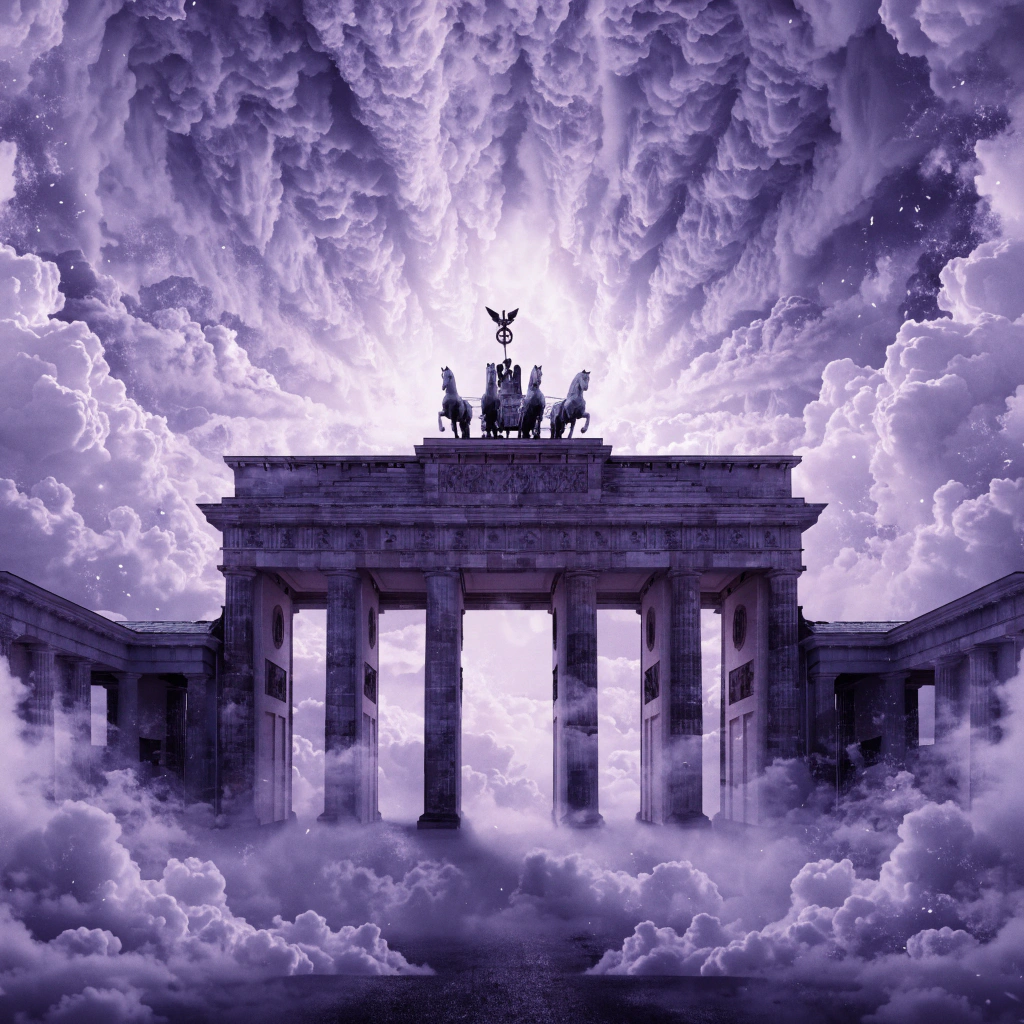
The Brandenburg Gate
The Brandenburg Gate is a famous monument in Berlin, Germany. It is very big and old. It stands in the center of the city.
King Frederick William II built the gate many years ago. It has six tall columns. On top of the gate, there is a statue. A woman drives a chariot with four horses.
Today, many tourists visit the gate. They take photos and walk under it. It is a symbol of peace. It is a beautiful place to see.
文法スポットライト
パターン: Present Simple (to be)
"The Brandenburg Gate is a famous monument in Berlin, Germany."
We use 'is' with singular subjects like 'The Gate' to describe what something is. It helps us give facts and descriptions.
パターン: There is / There are
"On top of the gate, there is a statue."
We use 'there is' for one thing and 'there are' for two or more things. It shows that something exists in a specific place.
理解度をチェック
10 問 · A1 初級 · 無料プレビュー 1回
この記事で学んだことをテストしよう。全問正解してXPを獲得!
Where is the Brandenburg Gate?
問題の内訳
Where is the Brandenburg Gate?
あなたの回答:
正解: Berlin
The Brandenburg Gate is a new building.
あなたの回答:
正解: 間違い
What does 'peace' mean?
あなたの回答:
正解: A time with no war
The gate is a _____ of peace.
あなたの回答:
正解: symbol
The Famous Brandenburg Gate
The Brandenburg Gate is a very famous landmark in Berlin, Germany. King Frederick William II built it a long time ago. It was finished in 1791. The King wanted the gate to be a symbol of peace. It is at the end of a big street called Unter den Linden.
A man named Carl Gotthard Langhans designed the gate. He looked at old buildings in Greece for ideas. On top of the gate, there is a statue called the Quadriga. This is a chariot with four horses. A goddess named Victoria is driving the horses. She is the goddess of victory.
The gate is more beautiful than many other buildings in the city. In the past, it was a symbol of a divided city. Today, it is a symbol of unity because Germany is one country again. Many tourists visit the gate every year because it is very important for German history.
文法スポットライト
パターン: Past Simple (Irregular Verbs)
"King Frederick William II built it a long time ago."
We use the past simple to talk about finished actions in the past. 'Built' is the irregular past form of the verb 'build'.
パターン: Comparatives with Long Adjectives
"The gate is more beautiful than many other buildings in the city."
To compare two things using long adjectives (3+ syllables), we use 'more' + adjective + 'than'. It shows that one thing has more of a quality than the other.
理解度をチェック
11 問 · A2 初級 · 無料プレビュー 1回
この記事で学んだことをテストしよう。全問正解してXPを獲得!
Who built the Brandenburg Gate?
問題の内訳
Who built the Brandenburg Gate?
あなたの回答:
正解: King Frederick William II
The Brandenburg Gate was finished in 1971.
あなたの回答:
正解: 間違い
What does 'landmark' mean?
あなたの回答:
正解: A famous building that is easy to recognize
The King wanted the gate to be a symbol of _____.
あなたの回答:
正解: peace
Where is the Brandenburg Gate located?
あなたの回答:
正解: Berlin
The Brandenburg Gate: A Symbol of German History
The Brandenburg Gate is one of the most famous landmarks in Germany. It is located in the heart of Berlin and has stood there since 1791. King Frederick William II of Prussia commissioned the gate because he wanted a grand entrance to the city that represented peace. It was designed by Carl Gotthard Langhans, who was inspired by the ancient architecture of Athens.
On top of the gate, there is a famous statue called the Quadriga. This statue shows a chariot which is pulled by four horses. The chariot is driven by Victoria, who is the Roman goddess of victory. Over the years, the gate has seen many historical events. For example, the Quadriga was once taken to Paris by Napoleon after he defeated Prussia, but it was later returned to its original place in Berlin.
During the Cold War, the gate became a symbol of a divided country. It was located right next to the Berlin Wall, and most people were not allowed to pass through it for almost thirty years. However, when the wall fell in 1989, the gate was opened again. Since then, the Brandenburg Gate has been visited by millions of tourists from all over the world who want to see this historic site.
Today, the gate is no longer a symbol of division. Instead, it has become a symbol of unity and peace for all Germans. Many celebrations are held at the gate every year, including the famous New Year’s Eve party. It remains a powerful reminder of Germany’s complex history and its bright future.
文法スポットライト
パターン: Passive Voice
"It was designed by Carl Gotthard Langhans."
The passive voice is used when the focus is on the action or the object rather than the subject. It is formed using the verb 'to be' plus the past participle.
パターン: Present Perfect
"Since then, the Brandenburg Gate has been visited by millions of tourists."
The present perfect is used for actions that started in the past and continue to the present. It is formed using 'have/has' plus the past participle.
理解度をチェック
11 問 · B1 中級 · 無料プレビュー 1回
この記事で学んだことをテストしよう。全問正解してXPを獲得!
Who commissioned the construction of the Brandenburg Gate?
問題の内訳
Who commissioned the construction of the Brandenburg Gate?
あなたの回答:
正解: King Frederick William II
The Brandenburg Gate was always a symbol of unity throughout the Cold War.
あなたの回答:
正解: 間違い
What does the word 'unity' mean?
あなたの回答:
正解: The state of being joined together
The statue on top of the gate is called the _____.
あなたの回答:
正解: Quadriga
What city was the architecture of the gate inspired by?
あなたの回答:
正解: Athens
The Brandenburg Gate: A Silent Witness to German History
The Brandenburg Gate, situated in the heart of Berlin, is far more than a mere architectural achievement; it serves as a profound emblem of Germany’s turbulent history and its eventual reconciliation. Completed in 1791, the monument was commissioned by King Frederick William II of Prussia. It was intended to function as a grand entrance to the Unter den Linden boulevard, signaling a period of newfound peace. Designed by Carl Gotthard Langhans, the gate reflects the Neoclassical style, heavily influenced by the Propylaea in Athens. This choice of aesthetic suggests a deliberate attempt to link the Prussian state with the ideals of classical antiquity.
Atop this monumental structure sits the Quadriga, a chariot drawn by four horses and steered by Victoria, the Roman goddess of victory. However, the history of this sculpture is as dramatic as the gate itself. In 1806, following the defeat of Prussia, Napoleon Bonaparte ordered the Quadriga to be dismantled and transported to Paris as a trophy of war. It was not until eight years later, after Napoleon’s downfall, that the sculpture was returned to its rightful place in Berlin, where it was subsequently transformed into a symbol of Prussian triumph.
Throughout the 20th century, the Brandenburg Gate’s significance shifted dramatically. During the Cold War, it became a poignant symbol of division. When the Berlin Wall was erected in 1961, the gate stood in an inaccessible 'no-man's land' between East and West Berlin. For decades, it represented the physical and ideological barriers that separated the continent. Consequently, it was the site of Ronald Reagan’s famous 1987 speech, in which he challenged Soviet leader Mikhail Gorbachev to 'tear down this wall.'
The most transformative moment in the gate's history occurred in 1989. Following the fall of the Berlin Wall, the Brandenburg Gate was officially reopened, evolving almost overnight into a powerful icon of German reunification. Today, it is the focal point for national celebrations and a destination for millions of tourists. While its original purpose was to celebrate peace, its enduring legacy lies in its ability to reflect the resilience of a nation that has moved from conflict to unity. Therefore, observing the gate today allows for an analysis of how historical landmarks can acquire new meanings through successive generations.
文法スポットライト
パターン: Passive Voice (Past Simple)
"the monument was commissioned by King Frederick William II"
This pattern is used to focus on the object (the monument) rather than the person performing the action. It is formed using 'was/were' + the past participle.
パターン: Non-defining Relative Clause
"the sculpture was returned to its rightful place in Berlin, where it was subsequently transformed into a symbol of Prussian triumph."
These clauses provide extra information about a noun but are not essential for the sentence to make sense. They are separated by commas and often use 'where' or 'which'.
パターン: Subordinating Conjunctions for Contrast
"While its original purpose was to celebrate peace, its enduring legacy lies in its ability to reflect the resilience of a nation."
'While' is used at the beginning of a clause to introduce a contrast between two different ideas or facts within the same sentence.
理解度をチェック
11 問 · B2 中上級 · 無料プレビュー 1回
この記事で学んだことをテストしよう。全問正解してXPを獲得!
Who was the architect responsible for designing the Brandenburg Gate?
問題の内訳
Who was the architect responsible for designing the Brandenburg Gate?
あなたの回答:
正解: Carl Gotthard Langhans
The Quadriga was permanently kept in Paris after Napoleon took it in 1806.
あなたの回答:
正解: 間違い
Which word describes a violent or sudden change?
あなたの回答:
正解: Turbulent
The gate evolved into a powerful icon of German _____ after 1989.
あなたの回答:
正解: reunification
What did the gate symbolize during the Cold War?
あなたの回答:
正解: Division and barriers
The Brandenburg Gate: An Architectural Palimpsest of German Identity
Standing as a sentinel at the western terminus of the iconic boulevard Unter den Linden, the Brandenburg Gate is far more than a mere vestige of Prussian grandeur. It functions as an architectural palimpsest, upon which the tumultuous history of Germany has been meticulously inscribed, erased, and rewritten over the centuries. Designed by the architect Carl Gotthard Langhans and completed in 1791, the gate was initially conceived as a 'Gate of Peace.' Its Neoclassical form sought to emulate the Propylaea of the Acropolis in Athens, thereby positioning Berlin as the 'New Athens' on the Spree—a city of Enlightenment and rational sovereignty.
Central to the gate’s aesthetic and symbolic potency is the Quadriga, a bronze sculpture featuring a chariot drawn by four horses and driven by Victoria, the Roman goddess of victory. However, the gate’s narrative has been one of constant recontextualization, often far removed from its peaceful inception. Hardly had the structure been finalized when it became a backdrop for Napoleon’s triumphal procession in 1806. Following the Prussian defeat, Napoleon ordered the Quadriga to be dismantled and shipped to Paris as a trophy of subjugation. It was not until the subsequent defeat of Napoleon in 1814 that the sculpture was returned to Berlin, at which point Victoria was bestowed with an iron cross and an eagle, transforming her into a symbol of Prussian triumph.
Throughout the 20th century, the gate’s significance shifted even more dramatically. During the Cold War, it was the gate that became the most poignant symbol of the bisection of a nation. Stranded in the desolate 'no-man's-land' behind the Berlin Wall, it was inaccessible to both East and West Berliners. It epitomized the ideological chasm that defined the era. It was here that Ronald Reagan famously demanded the removal of the wall, an event that served as a significant rhetorical impetus for the eventual reunification of Germany.
The fall of the Berlin Wall in 1989 provided the catalyst for the gate’s most profound transformation. No longer a barrier of exclusion, it became the focal point for national reconciliation and global celebration. The transition of the gate from a symbol of Prussian militarism to one of European unity reflects a profound shift in the national psyche. Today, the gate stands not just as a historical monument, but as a living participant in modern political life. What remains striking is how the gate continues to serve as a stage for contemporary protests and festivities, proving that its historical journey is far from over.
In conclusion, the Brandenburg Gate remains an essential lens through which to view the German experience. It is a structure that has witnessed the rise and fall of empires, the cruelty of division, and the eventual triumph of unity. Its enduring presence serves as a reminder that architectural landmarks are never static; they are dynamic entities that evolve alongside the societies that build them.
文法スポットライト
パターン: Negative Inversion
"Hardly had the structure been finalized when it became a backdrop for Napoleon’s triumphal procession in 1806."
This structure is used for emphasis by placing a negative or restrictive adverb at the beginning of the sentence, followed by the auxiliary verb and then the subject.
パターン: Cleft Sentences
"It was not until the subsequent defeat of Napoleon in 1814 that the sculpture was returned to Berlin."
Cleft sentences are used to focus on specific information. 'It + is/was + [focused part] + that/who' allows the writer to emphasize the timing of the event.
パターン: Nominalisation
"The transition of the gate from a symbol of Prussian militarism to one of European unity reflects a profound shift in the national psyche."
Nominalisation involves turning verbs or adjectives into nouns. This creates a more formal, academic tone by focusing on concepts and actions rather than subjects.
理解度をチェック
12 問 · C1 上級 · 無料プレビュー 1回
この記事で学んだことをテストしよう。全問正解してXPを獲得!
What was the primary architectural inspiration for the Brandenburg Gate?
問題の内訳
What was the primary architectural inspiration for the Brandenburg Gate?
あなたの回答:
正解: The Propylaea in Athens
The gate was easily accessible to all Berliners throughout the Cold War era.
あなたの回答:
正解: 間違い
What is the meaning of 'subjugation'?
あなたの回答:
正解: The action of bringing someone under total control
The gate stands as a _____ at the western terminus of Unter den Linden.
あなたの回答:
正解: sentinel
What items were added to the Quadriga after its return from Paris in 1814?
あなたの回答:
正解: An iron cross and an eagle
The gate was originally intended to be a symbol of peace.
あなたの回答:
正解: 正しい
ブランデンブルク門:分断と融和の歴史を刻む普遍的象徴
ベルリンの中心に荘厳な威容を誇るブランデンブルク門は、ドイツの歴史的建造物の中でも群を抜いて象徴的な存在であると言っても過言ではないだろう。その門が今日に至るまで体現してきた意味合いは、単なる国家の記念碑という範疇には収まらない。18世紀末に建設されて以来、それは国家の栄光、戦争の悲劇、そして何よりも分断を乗り越えた平和と統一への希求を映し出す鏡として機能してきたのである。
ブランデンブルク門の建設は、1788年から1791年にかけて、プロイセン王フリードリヒ・ヴィルヘルム2世の命により進められた。建築家カール・ゴットハルト・ラングハンスがアテネのアクロポリスにあるプロピュライア(神殿の門)に着想を得て設計したこの新古典主義様式の建造物は、当初から平和の象徴として構想された。ウンター・デン・リンデン大通りへの壮麗な入口として、そしてベルリンの都市景観を彩る傑作として、その存在感は際立っていた。門の頂上には、勝利の女神ヴィクトリアが四頭立ての馬車(クアドリガ)を駆る像が据えられ、これはプロイセンの軍事的勝利を称えるものであったと同時に、平和の到来を告げる凱旋のシンボルでもあったと解釈され得る。
しかしながら、その歴史は平穏なばかりではなかった。1806年、ナポレオン軍がベルリンを占領した際、クアドリガは戦利品としてパリへと持ち去られるという屈辱を味わった。これはプロイセン国家の敗北を象徴する出来事であったが、1814年のナポレオン失脚後、クアドリガはベルリンへと返還され、その際にはヴィクトリア女神の持つ杖にプロイセンの鷲と鉄十字が加えられ、勝利の象徴としての意味合いを一層強めた。この一連の経緯は、国家の浮沈と密接に結びつき、門が単なる建築物以上の意味を持つことを如実に示している。
20世紀に入り、ブランデンブルク門はドイツの激動の歴史の舞台となる。第一次世界大戦後のヴァイマル共和国時代、そしてナチス政権下ではプロパガンダの場として利用され、その威厳は政治的プロセスの道具と化していった。そして第二次世界大戦後、ドイツが東西に分断されると、ブランデンブルク門は皮肉にも、その平和の象徴としての原義とは裏腹に、分断された東西ベルリンの境界線上に位置することとなった。1961年のベルリンの壁建設以降、門は「立ち入り禁止」の場所となり、東西冷戦の峻厳たる現実を象徴する鉄のカーテンの一部と化してしまったのである。門の向こうに故郷や家族を見ながらも、決して行き来できない人々にとって、それは希望と絶望が隣り合わせの、耐え難い隔絶の象徴に他ならなかったであろう。
転機が訪れたのは1989年11月9日、ベルリンの壁が崩壊した日である。この歴史的な瞬間に、ブランデンブルク門は再びその役割を大きく変えることとなる。壁の崩壊とそれに続く門の再開は、東西ドイツ再統一への道を決定づけるものであり、世界中がその光景を固唾を飲んで見守った。門の周囲には自由と統一を求める人々が殺到し、喜びと感動が入り混じった祝祭空間と化したのである。この出来事以降、ブランデンブルク門は分断の象徴から、自由と統一、そして平和と融和の普遍的象徴へとその意味合いを昇華させた。それは単にドイツ一国に留まらず、抑圧からの解放と民族の和解を願う世界中の人々の希望の光となったと言っても決して過言ではない。
現代において、ブランデンブルク門はベルリンを訪れる人々にとって欠かせない観光名所であると同時に、ドイツが歩んできた苦難の道のり、そしてそれを乗り越えた強靭な精神を伝える生きた証である。その威厳ある佇まいは、過去を記憶し、現在を祝い、未来への希望を提示し続けている。歴史の重みに耐え、幾多の変遷を経てきたブランデンブルク門は、人類が抱く普遍的な平和への願いを具現化した、稀有な存在なのである。
文法スポットライト
パターン: 〜と言っても過言ではない
"ベルリンの中心に荘厳な威容を誇るブランデンブルク門は、ドイツの歴史的建造物の中でも群を抜いて象徴的な存在であると言っても過言ではないだろう。"
「〜と言っても過言ではない」は、「〜と言っても言い過ぎではない」「まさにその通りである」という意味を表す表現です。ある事実や評価が非常に的確であることを強調する際に用いられます。接続は、名詞や文の終止形に接続します。
パターン: 〜に他ならない
"門の向こうに故郷や家族を見ながらも、決して行き来できない人々にとって、それは希望と絶望が隣り合わせの、耐え難い隔絶の象徴に他ならなかったであろう。"
「〜に他ならない」は、「〜であると断言できる」「〜以外の何物でもない」という意味を表し、ある事柄がまさにそのものであることを強く断定する際に使われます。接続は、名詞や動詞・形容詞の連体形に接続します。
パターン: 〜と解釈され得る
"門の頂上には、勝利の女神ヴィクトリアが四頭立ての馬車(クアドリガ)を駆る像が据えられ、これはプロイセンの軍事的勝利を称えるものであったと同時に、平和の到来を告げる凱旋のシンボルでもあったと解釈され得る。"
「〜と解釈され得る」は、「〜と解釈することが可能である」「〜という見方もできる」という意味で、ある事柄に対して複数の解釈が存在する可能性を示唆しつつ、その一つを提示する際に使われます。「〜得る」は可能の意味で、動詞の連用形に接続します。
理解度をチェック
12 問 · C2 マスター · 無料プレビュー 1回
この記事で学んだことをテストしよう。全問正解してXPを獲得!
ブランデンブルク門の建設を命じたプロイセン王は誰ですか?
問題の内訳
ブランデンブルク門の建設を命じたプロイセン王は誰ですか?
あなたの回答:
正解: フリードリヒ・ヴィルヘルム2世
ブランデンブルク門の頂上にあるクアドリガは、ナポレオン軍によって一度パリへ持ち去られた。
あなたの回答:
正解: 正しい
「希求」という言葉の意味として最も適切なものはどれですか?
あなたの回答:
正解: 心から強く願い求めること
1961年のベルリンの壁建設以降、ブランデンブルク門は東西冷戦の____たる現実を象徴する一部と化してしまった。
あなたの回答:
正解: 峻厳
ブランデンブルク門は、当初どのような象徴として構想されましたか?
あなたの回答:
正解: 平和の象徴
ブランデンブルク門は、ベルリンの壁崩壊後も分断の象徴であり続けている。
あなたの回答:
正解: 間違い

