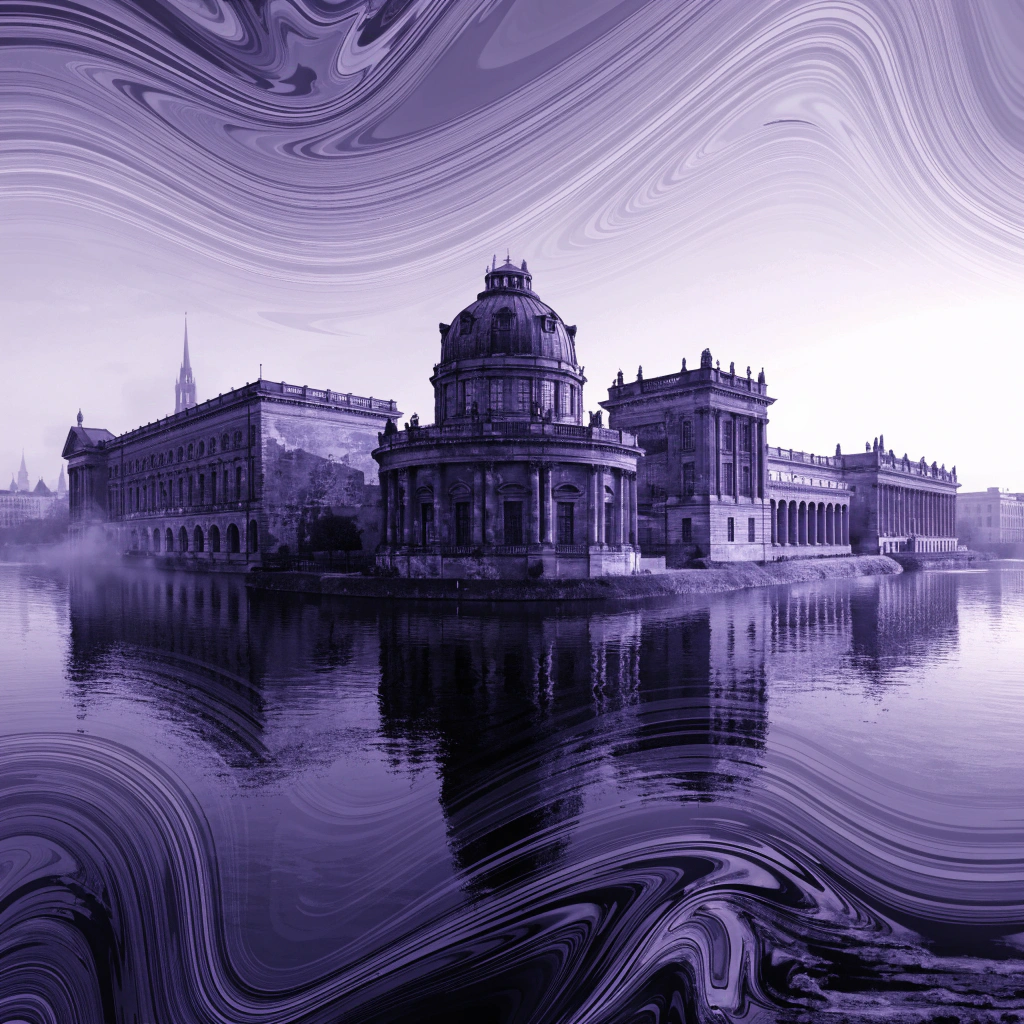
A Famous Island of Museums
Museum Island is a special place in Berlin, Germany. It is in the middle of the city. There are five big museums on this island. Each museum is different and very old.
Many people visit the museums every day. They see old statues from Egypt and beautiful paintings from Europe. The buildings are tall and white. They are very famous.
The island is near a big river. You can walk there with your friends. You can learn about history and art. It is a quiet and beautiful place to visit.
文法スポットライト
パターン: Present Simple: There is / There are
"There are five big museums on this island."
We use 'there are' to say that more than one thing exists. Use 'there is' for one thing and 'there are' for two or more things.
パターン: Modal Verb: Can
"You can learn about history and art."
We use 'can' to talk about things that are possible. After 'can', we always use the basic form of the verb without 'to'.
理解度をチェック
10 問 · A1 初級 · 無料プレビュー 1回
この記事で学んだことをテストしよう。全問正解してXPを獲得!
How many museums are on the island?
問題の内訳
How many museums are on the island?
あなたの回答:
正解: Five
Museum Island is in Berlin, Germany.
あなたの回答:
正解: 正しい
What is a painting?
あなたの回答:
正解: A picture made with paint
The island is near a big _____.
あなたの回答:
正解: river
ベルリンの有名な場所:博物館島
ベルリンにとても有名な場所があります。それは「博物館島」です。この島は、ユネスコの世界遺産にも登録されています。たくさんの人が、世界中からここに来て、歴史や芸術を学びます。
博物館島には、五つの大きな博物館があります。例えば、アルテス博物館やペルガモン博物館などです。これらの博物館では、古い時代の素晴らしい芸術作品や、人間の歴史について学ぶことができます。博物館は、1824年から1930年まで、約100年かけて作られました。
博物館島は、誰もが芸術や歴史を簡単に楽しめるように、という考えから生まれました。ここは、古代の文明から現代までの、人間の文化の発展を見ることができる、とても大切な場所です。ベルリンを訪れるなら、この美しい島をぜひ見てください。
文法スポットライト
パターン: ~があります
"ベルリンにとても有名な場所があります。"
「~があります」は、物や場所が存在することを表すときに使います。「~に~があります」の形で、「~に」は場所を、「~が」は物の存在を示します。
パターン: ~て、~
"ここに来て、歴史や芸術を学びます。"
動詞の「~て形」は、二つの文や行動をつなげるときに使います。前の行動が起きて、その次に後の行動が起きることを表します。順番に起こる行動を説明するのに便利です。
理解度をチェック
11 問 · A2 初級 · 無料プレビュー 1回
この記事で学んだことをテストしよう。全問正解してXPを獲得!
問題の内訳
博物館島はどこにありますか?
あなたの回答:
正解: ベルリン
博物館島には博物館が二つあります。
あなたの回答:
正解: 間違い
「歴史」の意味は何ですか?
あなたの回答:
正解: 昔に起こった出来事
博物館島は、ユネスコの______に登録されています。
あなたの回答:
正解: 世界遺産
博物館島は何のために作られましたか?
あなたの回答:
正解: 芸術や歴史を学ぶため
Discovering Museum Island: A Journey Through History
In the heart of Berlin, there is a very special place called Museum Island. This unique complex, which is located on the Spree River, has been a UNESCO World Heritage site since 1999. It was designed to make art and history accessible to everyone, representing the idea that culture should be shared with the public.
The island consists of five world-famous museums that were built over a period of more than a century. The oldest one is the Altes Museum, which shows beautiful Greek and Roman art. Next to it, the Neues Museum houses the famous bust of Queen Nefertiti, an object that has fascinated visitors for decades. If you enjoy 19th-century paintings, you should visit the Alte Nationalgalerie, which looks like a grand temple.
For those interested in sculptures and Byzantine art, the Bode Museum is a perfect choice. Finally, the Pergamon Museum is famous for its huge ancient structures, such as the Ishtar Gate from Babylon. Millions of tourists have visited these buildings to learn about the development of human civilization.
Today, Museum Island is considered one of the most important cultural sites in Europe. It has been renovated many times to ensure the buildings stay beautiful for future generations. Whether you are an art lover or a history student, this island offers a journey through time that you will never forget. Walking between these historic walls, you can feel how the past and present come together in one amazing location.
文法スポットライト
パターン: Passive Voice
"It was designed to make art and history accessible to everyone."
The passive voice is used here because the action (designing) is more important than who did it. It is formed using the verb 'to be' (was) and the past participle (designed).
パターン: Relative Clauses
"This unique complex, which is located on the Spree River, has been a UNESCO site since 1999."
Relative clauses starting with 'which' or 'who' provide extra information about a noun. In this sentence, it tells us exactly where the complex is located.
理解度をチェック
11 問 · B1 中級 · 無料プレビュー 1回
この記事で学んだことをテストしよう。全問正解してXPを獲得!
Where is Museum Island located?
問題の内訳
Where is Museum Island located?
あなたの回答:
正解: In the heart of Berlin
Museum Island has been a UNESCO World Heritage site since 1999.
あなたの回答:
正解: 正しい
What does 'ancient' mean?
あなたの回答:
正解: Belonging to the very distant past
The island consists of _____ world-famous museums.
あなたの回答:
正解: five
Which museum houses the famous bust of Queen Nefertiti?
あなたの回答:
正解: Neues Museum
ベルリンの至宝:博物館島の魅力と歴史
ドイツの首都ベルリンの中心部に位置する「博物館島(ムゼウムスインゼル)」は、ユネスコ世界遺産にも登録されている文化複合施設です。この島は、芸術と歴史を一般市民に公開するという「啓蒙思想」の理想を体現しており、その歴史的・文化的価値は計り知れません。
1824年から1930年にかけての約一世紀にわたり、この場所は計画的に開発されてきました。その結果、アルテス博物館、ネフェルトティの胸像で知られるノイエス博物館、19世紀絵画が中心のアルテ・ナツィオナルガレリー、彫刻やビザンチン美術を収蔵するボーデ博物館、そして古代遺跡の壮大な展示で世界的に有名なペルガモン博物館という、五つの異なる博物館がこの小さな島に集約されています。これらの建造物は、それぞれが建築史上の傑作であるのみならず、収蔵品においても類を見ない価値を持つものばかりです。
博物館島が特別である理由は、単に多くの博物館が集まっているからではありません。これらの博物館は、古代文明から現代に至るまでの人類の文明の発展を、地理的、時代的に網羅する形で展示している点にあります。例えば、ペルガモン博物館では古代ギリシャやローマ、中東の文化に触れることができ、アルテス博物館ではエジプト美術の宝庫を堪能できます。このように、一つの場所で人類の歴史と芸術の壮大な旅を体験できることは、世界でも稀なことです。
第二次世界大戦中には甚大な被害を受けましたが、戦後の復興努力により、その輝きを取り戻しました。現在も継続的な修復作業が行われており、例えばペルガモン博物館の一部は長期閉鎖されていますが、その歴史的意義と文化的な役割は揺らぐことがありません。博物館島は、過去と現在、そして未来をつなぐ架け橋として、訪れる人々に深い感動と学びの機会を提供し続けています。
この博物館島は、ただの観光地ではなく、教育、研究、そして文化交流の拠点としての役割も担っています。世界中から訪れる人々が、人類の共有遺産であるこれらの貴重な芸術品や文化財を通して、異文化理解を深め、歴史を学ぶことができる場所なのです。ベルリンを訪れる際には、ぜひこの「知識と美の殿堂」に足を運び、その豊かな世界観に浸ってみてください。
文法スポットライト
パターン: 〜であるのみならず〜も
"これらの建造物は、それぞれが建築史上の傑作であるのみならず、収蔵品においても類を見ない価値を持つものばかりです。"
「〜であるのみならず〜も」は、「〜だけでなく、さらに〜も」という意味を表す表現です。前の内容に加えて、さらに強調したい内容を付け加えるときに使われます。フォーマルな文脈でよく用いられます。
パターン: 〜に加えて
"前の内容に加えて、さらに強調したい内容を付け加えるときに使われます。"
「〜に加えて」は、「〜だけでなく、さらに別のものも」という意味で、ある事柄に別の事柄が付け加わることを示します。前の情報に新しい情報を追加する際に使われる接続表現です。名詞に接続します。
パターン: 〜とされている
"この島は、芸術と歴史を一般市民に公開するという「啓蒙思想」の理想を体現しており、その歴史的・文化的価値は計り知れません。"
「〜とされている」は、「〜だと言われている」「〜だと一般的に考えられている」という意味を表します。客観的な事実や、広く認められている見解を述べる際に使われる表現です。動詞の辞書形や名詞、形容詞に接続します。
理解度をチェック
11 問 · B2 中上級 · 無料プレビュー 1回
この記事で学んだことをテストしよう。全問正解してXPを獲得!
博物館島がユネスコ世界遺産に登録されている理由として最も適切なものはどれですか?
問題の内訳
博物館島がユネスコ世界遺産に登録されている理由として最も適切なものはどれですか?
あなたの回答:
正解: 芸術と歴史を一般市民に公開するという啓蒙思想の理想を体現しているから。
博物館島は、第二次世界大戦中に全く被害を受けなかった。
あなたの回答:
正解: 間違い
「啓蒙思想」の定義として正しいものはどれですか?
あなたの回答:
正解: 理性や科学を重んじ、人間の自由や平等を追求する考え方。
博物館島には、アルテス博物館やペルガモン博物館など、合計で五つの異なる______が集約されています。
あなたの回答:
正解: 博物館
博物館島にある五つの博物館が展示しているものの特徴として、筆者が述べていることは何ですか?
あなたの回答:
正解: 古代文明から現代に至るまでの人類の文明の発展を網羅している。
The Enlightenment on the Spree: A Critical Appraisal of Berlin’s Museum Island
Nestled within the bifurcating arms of the River Spree, Berlin’s Museum Island (Museumsinsel) represents far more than a mere cluster of galleries; it is the physical manifestation of the Enlightenment’s grandest ambition—the democratization of high culture. Spanning over a century of architectural evolution from 1824 to 1930, the complex comprises five distinct institutions, each a stylistic precursor to the next, weaving a narrative of human civilization from its nascent stages to the threshold of modernity. Not only does the island house some of the world’s most prized antiquities, but it also reflects the shifting paradigms of Prussian and German identity through its monumental stone and mortar.
It was the Prussian monarchy’s aspiration to foster a 'sanctuary for arts and sciences' that catalyzed the construction of the Altes Museum. Designed by Karl Friedrich Schinkel, this neoclassical marvel was intended to elevate the public consciousness through exposure to classical beauty. The architectural interplay between the buildings on the island is a study in meticulous planning and symbolic intent. For instance, the transition from the Altes Museum to the Neues Museum signaled a shift toward a more comprehensive, scientific approach to history and aesthetics. The democratization of knowledge became the bedrock upon which these structures were built, moving away from the private curiosity cabinets of the elite toward a public educational imperative.
The Bode Museum, situated at the island’s northern apex, serves as a majestic anchor for the complex, while the Pergamon Museum—the island’s most frequented site—offers a monumental synthesis of archaeology and architecture. Yet, the island’s history is not without its controversies. The restoration of the Neues Museum, spearheaded by David Chipperfield, intentionally preserves the vestiges of wartime destruction, forcing visitors to confront the scars of the 20th century rather than hiding them behind a veneer of perfection. This nuanced approach to preservation highlights the complex provenance of the collections themselves, which have survived both ideological shifts and physical bombardment.
In contemporary discourse, Museum Island is often scrutinized through the lens of post-colonial critique. The acquisition of certain artifacts, such as the Ishtar Gate or the Bust of Nefertiti, raises profound questions regarding cultural subjugation and the ethics of repatriation. While the island remains a UNESCO World Heritage site of unparalleled significance, it must navigate the tension between its role as a universal museum and the increasing demands for historical restitution. Ultimately, the Museumsinsel stands as a monumental testament to the Enlightenment ideal, even as it grapples with the ethical imperatives of a globalized, post-imperial world. The synthesis of these competing historical narratives ensures that the island remains a dynamic site of intellectual inquiry rather than a static relic of the past.
文法スポットライト
パターン: Negative Inversion
"Not only does the island house some of the world’s most prized antiquities, but it also reflects the shifting paradigms of Prussian and German identity."
When 'Not only' begins a sentence, the subject and auxiliary verb are inverted (does the island house). This is used for emphasis and is common in formal C1 writing.
パターン: It-Cleft Sentence
"It was the Prussian monarchy’s aspiration to foster a 'sanctuary for arts and sciences' that catalyzed the construction of the Altes Museum."
Cleft sentences use 'It is/was... that' to focus on a specific piece of information. Here, it emphasizes the monarchy's aspiration as the specific cause.
パターン: Nominalisation
"The democratization of knowledge became the bedrock upon which these structures were built."
Nominalisation turns verbs (democratize) into nouns (democratization) to create a more formal, academic tone and to focus on abstract concepts.
理解度をチェック
12 問 · C1 上級 · 無料プレビュー 1回
この記事で学んだことをテストしよう。全問正解してXPを獲得!
What does the author suggest about the restoration of the Neues Museum?
問題の内訳
What does the author suggest about the restoration of the Neues Museum?
あなたの回答:
正解: It deliberately kept visible signs of war to prompt reflection.
The Altes Museum was the first institution built on the island as part of this cultural project.
あなたの回答:
正解: 正しい
What is the meaning of 'nascent' as used in the article?
あなたの回答:
正解: Just beginning to develop
The author notes that the acquisition of certain artifacts raises questions about cultural _____.
あなたの回答:
正解: subjugation
Which museum is described as a 'monumental synthesis of archaeology and architecture'?
あなたの回答:
正解: The Pergamon Museum
The article argues that Museum Island has successfully resolved all ethical debates regarding its collections.
あなたの回答:
正解: 間違い
The Musealization of the Enlightenment: Berlin's Museumsinsel as a Palimpsest of Cultural Hegemony
Situated within the meandering embrace of the Spree River, Berlin’s Museumsinsel—or Museum Island—stands not merely as a repository for antiquities, but as a profound architectural manifestation of the Enlightenment’s teleological ambitions. To traverse its grounds is to witness the evolution of the 19th-century German ideal of 'Bildung'—the holistic cultivation of the self through art and history. Were the island to be viewed solely through the lens of architectural aesthetics, one might overlook the intricate political and philosophical undercurrents that shaped its development over a century. From Karl Friedrich Schinkel’s neoclassical Altes Museum to the avant-garde restoration of the Neues Museum by David Chipperfield, the site functions as a complex palimpsest, where layers of imperial aspiration, wartime devastation, and contemporary reconciliation are inextricably interwoven.
The Altes Museum, completed in 1830, served as the foundational stone for this cultural sanctuary. Schinkel’s design, characterized by its stoic colonnade and rotunda, was intended to evoke the democratic spirit of the Athenian stoa, albeit within the framework of Prussian royal patronage. It was here that the transition from private royal cabinet to public edification became axiomatic. The museum was no longer a mere cabinet of curiosities for the elite, but a didactic instrument for the burgeoning middle class. However, this democratic veneer often masked a more assertive nationalist project, as the collection of classical antiquities was leveraged to position Prussia as the legitimate heir to the Hellenic tradition.
As the 19th century progressed, the island’s scope expanded to accommodate the spoils of a burgeoning empire. The Pergamon Museum, perhaps the most contentious of the quintet, presents a formidable challenge to contemporary notions of provenance and cultural heritage. Within its walls, the Pergamon Altar and the Ishtar Gate are reconstructed with a monumentality that borders on the overwhelming. It is perhaps not unreasonable to posit that these structures serve as metonyms for the German Empire’s desire to assert its cultural hegemony on the global stage. The sheer scale of these reconstructions demands a certain atavistic awe from the visitor, yet it simultaneously invites scrutiny regarding the ethics of archaeological acquisition during the colonial era.
Scarcely had the smoke cleared from the ruins of the Second World War when the arduous task of reconstruction began. The island had been decimated, leaving its venerable structures in a state of suspended animation. The subsequent division of Berlin placed the island within the Soviet sector, turning it into a symbol of socialist preservation. It was not until the reunification of Germany that a cohesive master plan could be enacted. The restoration of the Neues Museum stands as a masterclass in 'honest' conservation. Rather than erasing the scars of conflict, the architecture incorporates the interstices created by bomb damage, allowing the building’s traumatic history to remain visible. This juxtaposition of original 19th-century frescoes and stark, modern concrete creates a dialogue between the past and the present that is both unsettling and illuminating.
Ultimately, Museum Island remains a testament to the enduring power of the museum as a site of collective memory. Whether one is examining the Byzantine treasures of the Bode Museum or the Romantic masterpieces of the Alte Nationalgalerie, the experience is one of profound historical continuity. While the island continues to grapple with the complexities of its own legacy, its status as a UNESCO World Heritage site ensures that its role as a global cultural nexus remains secure. It is a place where the Enlightenment’s dream of universal knowledge meets the sobering realities of 20th-century history, offering a space for reflection on what it truly means to be a custodian of the human story.
文法スポットライト
パターン: Second Conditional with 'Were' Inversion
"Were the island to be viewed solely through the lens of architectural aesthetics, one might overlook the intricate political and philosophical undercurrents..."
This is a formal, hypothetical construction used to express a condition in the present or future. By inverting 'were' and the subject, the sentence gains a scholarly, rhetorical tone.
パターン: Negative Inversion with 'Scarcely'
"Scarcely had the smoke cleared from the ruins of the Second World War when the arduous task of reconstruction began."
When 'scarcely' begins a sentence to emphasize that one event happened immediately after another, the auxiliary verb (had) must precede the subject (the smoke).
パターン: Academic Hedging with Modal Verbs
"It is perhaps not unreasonable to posit that these structures serve as metonyms for the German Empire’s desire..."
Hedging is used in C2 level writing to avoid making overly dogmatic claims. Phrases like 'perhaps not unreasonable to posit' allow the author to suggest an interpretation while maintaining analytical distance.
理解度をチェック
12 問 · C2 マスター · 無料プレビュー 1回
この記事で学んだことをテストしよう。全問正解してXPを獲得!
What does the author suggest was a secondary, more political purpose of the Altes Museum?
問題の内訳
What does the author suggest was a secondary, more political purpose of the Altes Museum?
あなたの回答:
正解: To establish Prussia as the rightful successor to Greek cultural prestige
The restoration of the Neues Museum was designed to completely hide the damage caused by WWII.
あなたの回答:
正解: 間違い
What does 'palimpsest' refer to in the context of the article?
あなたの回答:
正解: A site with multiple layers of historical influence still visible
The concept of 'Bildung' mentioned in the text refers to:
あなたの回答:
正解: The moral and intellectual development of an individual
The article describes the Pergamon Altar as a _____ for the German Empire's desire for dominance.
あなたの回答:
正解: metonym
The island was situated in the Soviet sector during the division of Berlin.
あなたの回答:
正解: 正しい

