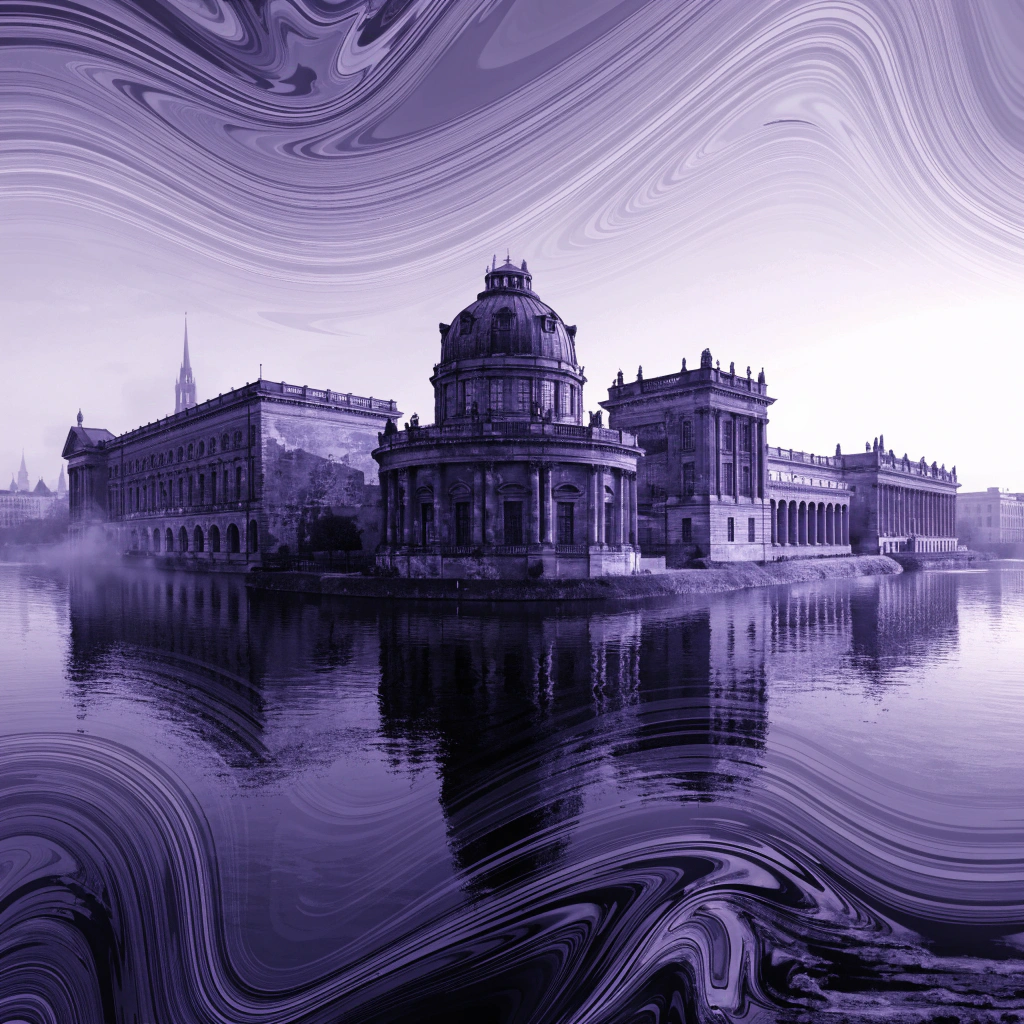
A Famous Island of Museums
Museum Island is a special place in Berlin, Germany. It is in the middle of the city. There are five big museums on this island. Each museum is different and very old.
Many people visit the museums every day. They see old statues from Egypt and beautiful paintings from Europe. The buildings are tall and white. They are very famous.
The island is near a big river. You can walk there with your friends. You can learn about history and art. It is a quiet and beautiful place to visit.
语法聚焦
句型: Present Simple: There is / There are
"There are five big museums on this island."
We use 'there are' to say that more than one thing exists. Use 'there is' for one thing and 'there are' for two or more things.
句型: Modal Verb: Can
"You can learn about history and art."
We use 'can' to talk about things that are possible. After 'can', we always use the basic form of the verb without 'to'.
测试你的理解
10 个问题 · A1 初学 · 1 次免费预览
测试你从这篇文章中学到的知识。回答所有问题即可获得经验值!
How many museums are on the island?
题目详情
How many museums are on the island?
你的回答:
正确答案: Five
Museum Island is in Berlin, Germany.
你的回答:
正确答案: 正确
What is a painting?
你的回答:
正确答案: A picture made with paint
The island is near a big _____.
你的回答:
正确答案: river
A Visit to Museum Island in Berlin
Museum Island is a famous place in the center of Berlin, Germany. It is a small island on the Spree River. There are five different museums here. People call it "Museum Island" because all the buildings are very close to each other.
The museums are very old. Workers built them between 1824 and 1930. Today, it is a UNESCO World Heritage site. This means it is important for the whole world. The buildings are beautiful and have many tall columns.
The Pergamon Museum is the most popular one. It has very large objects from ancient times. The Altes Museum is older than the other museums on the island. It has many statues from Greece and Rome.
Many tourists visit the island every year because they want to learn about history. It is easier to see everything if you buy one ticket for all five museums. The island is also a great place for a walk because it is very quiet and pretty.
语法聚焦
句型: Past Simple
"Workers built them between 1824 and 1930."
We use the past simple to talk about finished actions in the past. 'Built' is the irregular past form of the verb 'build'.
句型: Comparatives
"The Altes Museum is older than the other museums on the island."
We use 'adjective + er + than' to compare two things. Here, we compare the age of one museum to the others.
测试你的理解
11 个问题 · A2 基础 · 1 次免费预览
测试你从这篇文章中学到的知识。回答所有问题即可获得经验值!
题目详情
Where is Museum Island located?
你的回答:
正确答案: Berlin
There are ten museums on the island.
你的回答:
正确答案: 错误
What does 'ancient' mean?
你的回答:
正确答案: From a very long time ago
The island is on the Spree _____.
你的回答:
正确答案: River
Why do many tourists visit the island?
你的回答:
正确答案: To learn about history
Discovering Museum Island: A Journey Through History
In the heart of Berlin, there is a very special place called Museum Island. This unique complex, which is located on the Spree River, has been a UNESCO World Heritage site since 1999. It was designed to make art and history accessible to everyone, representing the idea that culture should be shared with the public.
The island consists of five world-famous museums that were built over a period of more than a century. The oldest one is the Altes Museum, which shows beautiful Greek and Roman art. Next to it, the Neues Museum houses the famous bust of Queen Nefertiti, an object that has fascinated visitors for decades. If you enjoy 19th-century paintings, you should visit the Alte Nationalgalerie, which looks like a grand temple.
For those interested in sculptures and Byzantine art, the Bode Museum is a perfect choice. Finally, the Pergamon Museum is famous for its huge ancient structures, such as the Ishtar Gate from Babylon. Millions of tourists have visited these buildings to learn about the development of human civilization.
Today, Museum Island is considered one of the most important cultural sites in Europe. It has been renovated many times to ensure the buildings stay beautiful for future generations. Whether you are an art lover or a history student, this island offers a journey through time that you will never forget. Walking between these historic walls, you can feel how the past and present come together in one amazing location.
语法聚焦
句型: Passive Voice
"It was designed to make art and history accessible to everyone."
The passive voice is used here because the action (designing) is more important than who did it. It is formed using the verb 'to be' (was) and the past participle (designed).
句型: Relative Clauses
"This unique complex, which is located on the Spree River, has been a UNESCO site since 1999."
Relative clauses starting with 'which' or 'who' provide extra information about a noun. In this sentence, it tells us exactly where the complex is located.
测试你的理解
11 个问题 · B1 中级 · 1 次免费预览
测试你从这篇文章中学到的知识。回答所有问题即可获得经验值!
题目详情
Where is Museum Island located?
你的回答:
正确答案: In the heart of Berlin
Museum Island has been a UNESCO World Heritage site since 1999.
你的回答:
正确答案: 正确
What does 'ancient' mean?
你的回答:
正确答案: Belonging to the very distant past
The island consists of _____ world-famous museums.
你的回答:
正确答案: five
Which museum houses the famous bust of Queen Nefertiti?
你的回答:
正确答案: Neues Museum
A Journey Through Time: Exploring Berlin's Museum Island
Situated in the heart of Berlin, Museum Island stands as a testament to the intellectual and architectural ambitions of the 19th and 20th centuries. This unique ensemble of five museums, which was designated a UNESCO World Heritage site in 1999, illustrates the evolution of modern museum design over more than a hundred years. Each building was conceived to harmonize with its collection, reflecting the Enlightenment ideal that art and history should be accessible to all citizens, rather than being reserved exclusively for the elite.
The journey begins at the Altes Museum, a neoclassical masterpiece designed by Karl Friedrich Schinkel. It was originally intended to house the royal art collection, marking a significant shift toward public education. Adjacent to it, the Neues Museum suffered extensive damage during World War II but has since been meticulously restored. It now houses the iconic bust of Nefertiti, drawing millions of visitors who are eager to witness the grandeur of ancient Egypt.
Furthermore, the Alte Nationalgalerie resembles a Greek temple perched upon a high pedestal. It serves as a sanctuary for 19th-century paintings and sculptures, bridging the gap between classical antiquity and modernism. The architectural diversity continues with the Bode Museum, located at the island's northern tip. With its majestic dome, it appears to rise directly from the waters of the Spree River, housing an impressive array of Byzantine art and Renaissance sculptures.
Perhaps the most renowned among them is the Pergamon Museum. Despite being currently closed for major renovations, its reputation for housing monumental structures like the Ishtar Gate remains unparalleled. Critics often argue that if these structures had not been relocated to Berlin, they might not have been preserved so effectively for future generations.
Today, Museum Island is not merely a collection of buildings; it is a cultural landscape that facilitates a dialogue between different civilizations. While the site continues to undergo modernization, it retains its historical integrity, proving that the pursuit of knowledge is a timeless endeavor. Visitors who explore these halls are encouraged to reflect on how human creativity has shaped our global identity.
语法聚焦
句型: Passive Voice
"This unique ensemble of five museums, which was designated a UNESCO World Heritage site in 1999..."
The passive voice is used here to focus on the action (designating the site) rather than the person performing the action. It is formed using 'be' + past participle.
句型: Third Conditional (Mixed)
"if these structures had not been relocated to Berlin, they might not have been preserved so effectively"
This structure is used to talk about hypothetical situations in the past and their hypothetical results. It uses 'if' + past perfect, followed by 'might/would have' + past participle.
句型: Relative Clauses
"It now houses the iconic bust of Nefertiti, drawing millions of visitors who are eager to witness the grandeur of ancient Egypt."
The relative pronoun 'who' introduces a clause that provides more information about the 'visitors'. This helps combine ideas into more complex, B2-level sentences.
测试你的理解
11 个问题 · B2 中高级 · 1 次免费预览
测试你从这篇文章中学到的知识。回答所有问题即可获得经验值!
What was the primary goal of the Enlightenment ideal mentioned in the text?
题目详情
What was the primary goal of the Enlightenment ideal mentioned in the text?
你的回答:
正确答案: To make art and history accessible to the public
The Pergamon Museum is currently open to the public for regular tours.
你的回答:
正确答案: 错误
What does 'meticulously' mean in the context of the Neues Museum?
你的回答:
正确答案: With great attention to detail
The Alte Nationalgalerie is described as being perched upon a high _____.
你的回答:
正确答案: pedestal
Which museum is located at the northern tip of the island and features a majestic dome?
你的回答:
正确答案: Bode Museum
柏林“博物馆岛”:启蒙之光与文明的殿堂
在德国首都柏林的中心地带,有一处被联合国教科文组织列为世界文化遗产的区域,它承载着深厚的历史积淀与人类文明的瑰宝,那便是举世闻名的“博物馆岛”(Museumsinsel)。这座岛屿不仅仅是五座博物馆的简单集合,更是19世纪启蒙运动理想——即让艺术与知识普惠大众——的具象化呈现。
追溯其历史,博物馆岛的建设肇始于1824年,历经一个多世纪的精心擘画与逐步完善,直至1930年方才形成今日蔚然大观的格局。彼时,普鲁士王国倾力打造这一文化综合体,其宏伟愿景是为民众提供一个系统性了解人类文明发展脉络的场所。岛上五座风格迥异、主题鲜明的博物馆,犹如五颗璀璨的明珠,各司其职,共同构筑起一座跨越时空的人类文明档案库。
首当其冲的是“老博物馆”(Altes Museum),它以古希腊罗马艺术珍品为主,向世人展示古典文明的辉煌。紧随其后,“新博物馆”(Neues Museum)则聚焦于古埃及文化与史前史,其中纳芙蒂蒂王后半身像更是其镇馆之宝,吸引着全球目光。而“老国家画廊”(Alte Nationalgalerie)则汇聚了19世纪的浪漫主义、现实主义和印象派画作,勾勒出欧洲艺术史的转型期。至于“博德博物馆”(Bode Museum),其独特的圆顶建筑内收藏着雕塑、拜占庭艺术品以及钱币,展现了中世纪至文艺复兴时期的艺术精髓。最后,也是最负盛名的“佩加蒙博物馆”(Pergamon Museum),以其宏大的古巴比伦伊什塔尔城门、古希腊佩加蒙祭坛和伊斯兰艺术区而闻名遐迩,无疑是跨文化对话的典范。
正是这种对知识普惠的追求,才奠定了博物馆岛的建设初衷。它超越了单纯的文物收藏,更在于其背后所蕴含的,是对人类文明发展脉络的深度溯源与呈现。每一件展品,无论其年代久远与否,皆被赋予了讲述历史、启迪未来的使命。通过将不同地域、不同时期的艺术与文化并置一处,博物馆岛鼓励观者进行跨文化比较与反思,从而培养一种更广阔的全球视野。
然而,作为“普世博物馆”理念的典范,博物馆岛也并非没有争议。殖民时期掠夺文物的伦理问题,以及如何更好地平衡文化遗产的保存与来源国权益,一直是国际社会热议的话题。尽管如此,博物馆岛在促进文化交流、教育普及以及历史研究方面的贡献,仍是毋庸置疑的。它不仅是柏林的文化地标,更是全人类共享文化遗产、对话文明、赓续历史记忆的重要平台。其存在,持续激励着我们思考艺术与历史在当代社会的价值与意义。
语法聚焦
句型: “正是……才……”句式 (Emphasis Construction)
"正是这种对知识普惠的追求,才奠定了博物馆岛的建设初衷。"
此句式用于强调原因或条件,意为“正是因为……,所以才……”。“正是”放在原因前,强调其唯一性或决定性;“才”则强调结果的必然性或来之不易。它能使句子更具说服力和强调效果。
句型: “所……的”结构 (Nominalization with 所)
"其背后所蕴含的,是对人类文明发展脉络的深度溯源与呈现。"
“所……的”结构将动词或动宾短语名词化,表示“被……的事物/内容”。它常用于书面语或正式语体中,使表达更简洁、抽象,并强调动作的对象或内容。例如,“所见所闻”即“所看到和听到的事情”。
句型: “无论……与否,皆……” (Regardless of... all...)
"每一件展品,无论其年代久远与否,皆被赋予了讲述历史、启迪未来的使命。"
此句式用于表达无论条件如何变化,结果都保持不变。 “无论……与否”引出两种对立或并列的情况,表示不考虑这些差异;“皆”是“都”的文言用法,增强了语气,表示无一例外。它常用于强调普遍性或一致性。
测试你的理解
12 个问题 · C1 高级 · 1 次免费预览
测试你从这篇文章中学到的知识。回答所有问题即可获得经验值!
题目详情
博物馆岛的建设初衷是基于哪种理想?
你的回答:
正确答案: 让艺术与知识普惠大众
博物馆岛的五座博物馆是在同一年建成并开放的。
你的回答:
正确答案: 错误
“蔚然大观”在文中形容什么?
你的回答:
正确答案: 博物馆岛今日宏伟壮观的格局
“新博物馆”的镇馆之宝是纳芙蒂蒂王后_______像。
你的回答:
正确答案: 半身
哪座博物馆以其宏大的古巴比伦伊什塔尔城门而闻名?
你的回答:
正确答案: 佩加蒙博物馆
文章指出,殖民时期掠夺文物的伦理问题是博物馆岛面临的争议之一。
你的回答:
正确答案: 正确
The Musealization of the Enlightenment: Berlin's Museumsinsel as a Palimpsest of Cultural Hegemony
Situated within the meandering embrace of the Spree River, Berlin’s Museumsinsel—or Museum Island—stands not merely as a repository for antiquities, but as a profound architectural manifestation of the Enlightenment’s teleological ambitions. To traverse its grounds is to witness the evolution of the 19th-century German ideal of 'Bildung'—the holistic cultivation of the self through art and history. Were the island to be viewed solely through the lens of architectural aesthetics, one might overlook the intricate political and philosophical undercurrents that shaped its development over a century. From Karl Friedrich Schinkel’s neoclassical Altes Museum to the avant-garde restoration of the Neues Museum by David Chipperfield, the site functions as a complex palimpsest, where layers of imperial aspiration, wartime devastation, and contemporary reconciliation are inextricably interwoven.
The Altes Museum, completed in 1830, served as the foundational stone for this cultural sanctuary. Schinkel’s design, characterized by its stoic colonnade and rotunda, was intended to evoke the democratic spirit of the Athenian stoa, albeit within the framework of Prussian royal patronage. It was here that the transition from private royal cabinet to public edification became axiomatic. The museum was no longer a mere cabinet of curiosities for the elite, but a didactic instrument for the burgeoning middle class. However, this democratic veneer often masked a more assertive nationalist project, as the collection of classical antiquities was leveraged to position Prussia as the legitimate heir to the Hellenic tradition.
As the 19th century progressed, the island’s scope expanded to accommodate the spoils of a burgeoning empire. The Pergamon Museum, perhaps the most contentious of the quintet, presents a formidable challenge to contemporary notions of provenance and cultural heritage. Within its walls, the Pergamon Altar and the Ishtar Gate are reconstructed with a monumentality that borders on the overwhelming. It is perhaps not unreasonable to posit that these structures serve as metonyms for the German Empire’s desire to assert its cultural hegemony on the global stage. The sheer scale of these reconstructions demands a certain atavistic awe from the visitor, yet it simultaneously invites scrutiny regarding the ethics of archaeological acquisition during the colonial era.
Scarcely had the smoke cleared from the ruins of the Second World War when the arduous task of reconstruction began. The island had been decimated, leaving its venerable structures in a state of suspended animation. The subsequent division of Berlin placed the island within the Soviet sector, turning it into a symbol of socialist preservation. It was not until the reunification of Germany that a cohesive master plan could be enacted. The restoration of the Neues Museum stands as a masterclass in 'honest' conservation. Rather than erasing the scars of conflict, the architecture incorporates the interstices created by bomb damage, allowing the building’s traumatic history to remain visible. This juxtaposition of original 19th-century frescoes and stark, modern concrete creates a dialogue between the past and the present that is both unsettling and illuminating.
Ultimately, Museum Island remains a testament to the enduring power of the museum as a site of collective memory. Whether one is examining the Byzantine treasures of the Bode Museum or the Romantic masterpieces of the Alte Nationalgalerie, the experience is one of profound historical continuity. While the island continues to grapple with the complexities of its own legacy, its status as a UNESCO World Heritage site ensures that its role as a global cultural nexus remains secure. It is a place where the Enlightenment’s dream of universal knowledge meets the sobering realities of 20th-century history, offering a space for reflection on what it truly means to be a custodian of the human story.
语法聚焦
句型: Second Conditional with 'Were' Inversion
"Were the island to be viewed solely through the lens of architectural aesthetics, one might overlook the intricate political and philosophical undercurrents..."
This is a formal, hypothetical construction used to express a condition in the present or future. By inverting 'were' and the subject, the sentence gains a scholarly, rhetorical tone.
句型: Negative Inversion with 'Scarcely'
"Scarcely had the smoke cleared from the ruins of the Second World War when the arduous task of reconstruction began."
When 'scarcely' begins a sentence to emphasize that one event happened immediately after another, the auxiliary verb (had) must precede the subject (the smoke).
句型: Academic Hedging with Modal Verbs
"It is perhaps not unreasonable to posit that these structures serve as metonyms for the German Empire’s desire..."
Hedging is used in C2 level writing to avoid making overly dogmatic claims. Phrases like 'perhaps not unreasonable to posit' allow the author to suggest an interpretation while maintaining analytical distance.
测试你的理解
12 个问题 · C2 精通 · 1 次免费预览
测试你从这篇文章中学到的知识。回答所有问题即可获得经验值!
What does the author suggest was a secondary, more political purpose of the Altes Museum?
题目详情
What does the author suggest was a secondary, more political purpose of the Altes Museum?
你的回答:
正确答案: To establish Prussia as the rightful successor to Greek cultural prestige
The restoration of the Neues Museum was designed to completely hide the damage caused by WWII.
你的回答:
正确答案: 错误
What does 'palimpsest' refer to in the context of the article?
你的回答:
正确答案: A site with multiple layers of historical influence still visible
The concept of 'Bildung' mentioned in the text refers to:
你的回答:
正确答案: The moral and intellectual development of an individual
The article describes the Pergamon Altar as a _____ for the German Empire's desire for dominance.
你的回答:
正确答案: metonym
The island was situated in the Soviet sector during the division of Berlin.
你的回答:
正确答案: 正确

