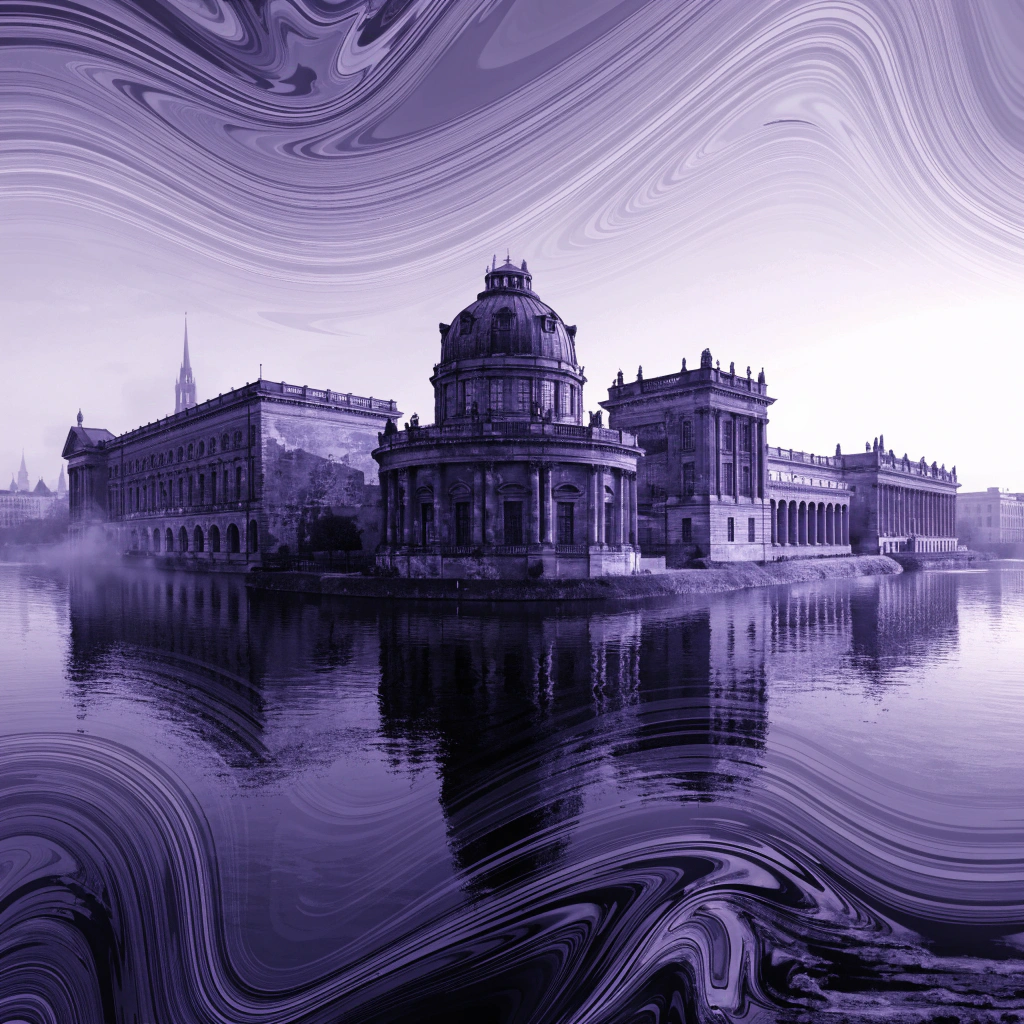
A Famous Island of Museums
Museum Island is a special place in Berlin, Germany. It is in the middle of the city. There are five big museums on this island. Each museum is different and very old.
Many people visit the museums every day. They see old statues from Egypt and beautiful paintings from Europe. The buildings are tall and white. They are very famous.
The island is near a big river. You can walk there with your friends. You can learn about history and art. It is a quiet and beautiful place to visit.
نکته دستوری
الگو: Present Simple: There is / There are
"There are five big museums on this island."
We use 'there are' to say that more than one thing exists. Use 'there is' for one thing and 'there are' for two or more things.
الگو: Modal Verb: Can
"You can learn about history and art."
We use 'can' to talk about things that are possible. After 'can', we always use the basic form of the verb without 'to'.
درک خود را بسنجید
10 سوال · A1 مبتدی · 1 پیشنمایش رایگان
آنچه از این مقاله آموختید را بسنجید. به همه سؤالات پاسخ دهید و XP کسب کنید!
How many museums are on the island?
آیا میخواهید آزمون را تمام کنید؟
9 سؤال دیگر منتظر شماست. ثبتنام رایگان کنید تا آزمون کامل را باز کنید و XP کسب کنید!
ثبتنام رایگانقبلاً ثبتنام کردی؟ ورود
جزئیات سؤالات
How many museums are on the island?
پاسخ شما:
پاسخ درست: Five
Museum Island is in Berlin, Germany.
پاسخ شما:
پاسخ درست: درست
What is a painting?
پاسخ شما:
پاسخ درست: A picture made with paint
The island is near a big _____.
پاسخ شما:
پاسخ درست: river
A Visit to Museum Island in Berlin
Museum Island is a famous place in the center of Berlin, Germany. It is a small island on the Spree River. There are five different museums here. People call it "Museum Island" because all the buildings are very close to each other.
The museums are very old. Workers built them between 1824 and 1930. Today, it is a UNESCO World Heritage site. This means it is important for the whole world. The buildings are beautiful and have many tall columns.
The Pergamon Museum is the most popular one. It has very large objects from ancient times. The Altes Museum is older than the other museums on the island. It has many statues from Greece and Rome.
Many tourists visit the island every year because they want to learn about history. It is easier to see everything if you buy one ticket for all five museums. The island is also a great place for a walk because it is very quiet and pretty.
نکته دستوری
الگو: Past Simple
"Workers built them between 1824 and 1930."
We use the past simple to talk about finished actions in the past. 'Built' is the irregular past form of the verb 'build'.
الگو: Comparatives
"The Altes Museum is older than the other museums on the island."
We use 'adjective + er + than' to compare two things. Here, we compare the age of one museum to the others.
درک خود را بسنجید
11 سوال · A2 مقدماتی · 1 پیشنمایش رایگان
آنچه از این مقاله آموختید را بسنجید. به همه سؤالات پاسخ دهید و XP کسب کنید!
Where is Museum Island located?
آیا میخواهید آزمون را تمام کنید؟
10 سؤال دیگر منتظر شماست. ثبتنام رایگان کنید تا آزمون کامل را باز کنید و XP کسب کنید!
ثبتنام رایگانقبلاً ثبتنام کردی؟ ورود
جزئیات سؤالات
Where is Museum Island located?
پاسخ شما:
پاسخ درست: Berlin
There are ten museums on the island.
پاسخ شما:
پاسخ درست: نادرست
What does 'ancient' mean?
پاسخ شما:
پاسخ درست: From a very long time ago
The island is on the Spree _____.
پاسخ شما:
پاسخ درست: River
Why do many tourists visit the island?
پاسخ شما:
پاسخ درست: To learn about history
Discovering Museum Island: A Journey Through History
In the heart of Berlin, there is a very special place called Museum Island. This unique complex, which is located on the Spree River, has been a UNESCO World Heritage site since 1999. It was designed to make art and history accessible to everyone, representing the idea that culture should be shared with the public.
The island consists of five world-famous museums that were built over a period of more than a century. The oldest one is the Altes Museum, which shows beautiful Greek and Roman art. Next to it, the Neues Museum houses the famous bust of Queen Nefertiti, an object that has fascinated visitors for decades. If you enjoy 19th-century paintings, you should visit the Alte Nationalgalerie, which looks like a grand temple.
For those interested in sculptures and Byzantine art, the Bode Museum is a perfect choice. Finally, the Pergamon Museum is famous for its huge ancient structures, such as the Ishtar Gate from Babylon. Millions of tourists have visited these buildings to learn about the development of human civilization.
Today, Museum Island is considered one of the most important cultural sites in Europe. It has been renovated many times to ensure the buildings stay beautiful for future generations. Whether you are an art lover or a history student, this island offers a journey through time that you will never forget. Walking between these historic walls, you can feel how the past and present come together in one amazing location.
نکته دستوری
الگو: Passive Voice
"It was designed to make art and history accessible to everyone."
The passive voice is used here because the action (designing) is more important than who did it. It is formed using the verb 'to be' (was) and the past participle (designed).
الگو: Relative Clauses
"This unique complex, which is located on the Spree River, has been a UNESCO site since 1999."
Relative clauses starting with 'which' or 'who' provide extra information about a noun. In this sentence, it tells us exactly where the complex is located.
درک خود را بسنجید
11 سوال · B1 متوسط · 1 پیشنمایش رایگان
آنچه از این مقاله آموختید را بسنجید. به همه سؤالات پاسخ دهید و XP کسب کنید!
Where is Museum Island located?
آیا میخواهید آزمون را تمام کنید؟
10 سؤال دیگر منتظر شماست. ثبتنام رایگان کنید تا آزمون کامل را باز کنید و XP کسب کنید!
ثبتنام رایگانقبلاً ثبتنام کردی؟ ورود
جزئیات سؤالات
Where is Museum Island located?
پاسخ شما:
پاسخ درست: In the heart of Berlin
Museum Island has been a UNESCO World Heritage site since 1999.
پاسخ شما:
پاسخ درست: درست
What does 'ancient' mean?
پاسخ شما:
پاسخ درست: Belonging to the very distant past
The island consists of _____ world-famous museums.
پاسخ شما:
پاسخ درست: five
Which museum houses the famous bust of Queen Nefertiti?
پاسخ شما:
پاسخ درست: Neues Museum
A Journey Through Time: Exploring Berlin's Museum Island
Situated in the heart of Berlin, Museum Island stands as a testament to the intellectual and architectural ambitions of the 19th and 20th centuries. This unique ensemble of five museums, which was designated a UNESCO World Heritage site in 1999, illustrates the evolution of modern museum design over more than a hundred years. Each building was conceived to harmonize with its collection, reflecting the Enlightenment ideal that art and history should be accessible to all citizens, rather than being reserved exclusively for the elite.
The journey begins at the Altes Museum, a neoclassical masterpiece designed by Karl Friedrich Schinkel. It was originally intended to house the royal art collection, marking a significant shift toward public education. Adjacent to it, the Neues Museum suffered extensive damage during World War II but has since been meticulously restored. It now houses the iconic bust of Nefertiti, drawing millions of visitors who are eager to witness the grandeur of ancient Egypt.
Furthermore, the Alte Nationalgalerie resembles a Greek temple perched upon a high pedestal. It serves as a sanctuary for 19th-century paintings and sculptures, bridging the gap between classical antiquity and modernism. The architectural diversity continues with the Bode Museum, located at the island's northern tip. With its majestic dome, it appears to rise directly from the waters of the Spree River, housing an impressive array of Byzantine art and Renaissance sculptures.
Perhaps the most renowned among them is the Pergamon Museum. Despite being currently closed for major renovations, its reputation for housing monumental structures like the Ishtar Gate remains unparalleled. Critics often argue that if these structures had not been relocated to Berlin, they might not have been preserved so effectively for future generations.
Today, Museum Island is not merely a collection of buildings; it is a cultural landscape that facilitates a dialogue between different civilizations. While the site continues to undergo modernization, it retains its historical integrity, proving that the pursuit of knowledge is a timeless endeavor. Visitors who explore these halls are encouraged to reflect on how human creativity has shaped our global identity.
نکته دستوری
الگو: Passive Voice
"This unique ensemble of five museums, which was designated a UNESCO World Heritage site in 1999..."
The passive voice is used here to focus on the action (designating the site) rather than the person performing the action. It is formed using 'be' + past participle.
الگو: Third Conditional (Mixed)
"if these structures had not been relocated to Berlin, they might not have been preserved so effectively"
This structure is used to talk about hypothetical situations in the past and their hypothetical results. It uses 'if' + past perfect, followed by 'might/would have' + past participle.
الگو: Relative Clauses
"It now houses the iconic bust of Nefertiti, drawing millions of visitors who are eager to witness the grandeur of ancient Egypt."
The relative pronoun 'who' introduces a clause that provides more information about the 'visitors'. This helps combine ideas into more complex, B2-level sentences.
درک خود را بسنجید
11 سوال · B2 بالاتر از متوسط · 1 پیشنمایش رایگان
آنچه از این مقاله آموختید را بسنجید. به همه سؤالات پاسخ دهید و XP کسب کنید!
What was the primary goal of the Enlightenment ideal mentioned in the text?
آیا میخواهید آزمون را تمام کنید؟
10 سؤال دیگر منتظر شماست. ثبتنام رایگان کنید تا آزمون کامل را باز کنید و XP کسب کنید!
ثبتنام رایگانقبلاً ثبتنام کردی؟ ورود
جزئیات سؤالات
What was the primary goal of the Enlightenment ideal mentioned in the text?
پاسخ شما:
پاسخ درست: To make art and history accessible to the public
The Pergamon Museum is currently open to the public for regular tours.
پاسخ شما:
پاسخ درست: نادرست
What does 'meticulously' mean in the context of the Neues Museum?
پاسخ شما:
پاسخ درست: With great attention to detail
The Alte Nationalgalerie is described as being perched upon a high _____.
پاسخ شما:
پاسخ درست: pedestal
Which museum is located at the northern tip of the island and features a majestic dome?
پاسخ شما:
پاسخ درست: Bode Museum
The Enlightenment on the Spree: A Critical Appraisal of Berlin’s Museum Island
Nestled within the bifurcating arms of the River Spree, Berlin’s Museum Island (Museumsinsel) represents far more than a mere cluster of galleries; it is the physical manifestation of the Enlightenment’s grandest ambition—the democratization of high culture. Spanning over a century of architectural evolution from 1824 to 1930, the complex comprises five distinct institutions, each a stylistic precursor to the next, weaving a narrative of human civilization from its nascent stages to the threshold of modernity. Not only does the island house some of the world’s most prized antiquities, but it also reflects the shifting paradigms of Prussian and German identity through its monumental stone and mortar.
It was the Prussian monarchy’s aspiration to foster a 'sanctuary for arts and sciences' that catalyzed the construction of the Altes Museum. Designed by Karl Friedrich Schinkel, this neoclassical marvel was intended to elevate the public consciousness through exposure to classical beauty. The architectural interplay between the buildings on the island is a study in meticulous planning and symbolic intent. For instance, the transition from the Altes Museum to the Neues Museum signaled a shift toward a more comprehensive, scientific approach to history and aesthetics. The democratization of knowledge became the bedrock upon which these structures were built, moving away from the private curiosity cabinets of the elite toward a public educational imperative.
The Bode Museum, situated at the island’s northern apex, serves as a majestic anchor for the complex, while the Pergamon Museum—the island’s most frequented site—offers a monumental synthesis of archaeology and architecture. Yet, the island’s history is not without its controversies. The restoration of the Neues Museum, spearheaded by David Chipperfield, intentionally preserves the vestiges of wartime destruction, forcing visitors to confront the scars of the 20th century rather than hiding them behind a veneer of perfection. This nuanced approach to preservation highlights the complex provenance of the collections themselves, which have survived both ideological shifts and physical bombardment.
In contemporary discourse, Museum Island is often scrutinized through the lens of post-colonial critique. The acquisition of certain artifacts, such as the Ishtar Gate or the Bust of Nefertiti, raises profound questions regarding cultural subjugation and the ethics of repatriation. While the island remains a UNESCO World Heritage site of unparalleled significance, it must navigate the tension between its role as a universal museum and the increasing demands for historical restitution. Ultimately, the Museumsinsel stands as a monumental testament to the Enlightenment ideal, even as it grapples with the ethical imperatives of a globalized, post-imperial world. The synthesis of these competing historical narratives ensures that the island remains a dynamic site of intellectual inquiry rather than a static relic of the past.
نکته دستوری
الگو: Negative Inversion
"Not only does the island house some of the world’s most prized antiquities, but it also reflects the shifting paradigms of Prussian and German identity."
When 'Not only' begins a sentence, the subject and auxiliary verb are inverted (does the island house). This is used for emphasis and is common in formal C1 writing.
الگو: It-Cleft Sentence
"It was the Prussian monarchy’s aspiration to foster a 'sanctuary for arts and sciences' that catalyzed the construction of the Altes Museum."
Cleft sentences use 'It is/was... that' to focus on a specific piece of information. Here, it emphasizes the monarchy's aspiration as the specific cause.
الگو: Nominalisation
"The democratization of knowledge became the bedrock upon which these structures were built."
Nominalisation turns verbs (democratize) into nouns (democratization) to create a more formal, academic tone and to focus on abstract concepts.
درک خود را بسنجید
12 سوال · C1 پیشرفته · 1 پیشنمایش رایگان
آنچه از این مقاله آموختید را بسنجید. به همه سؤالات پاسخ دهید و XP کسب کنید!
What does the author suggest about the restoration of the Neues Museum?
آیا میخواهید آزمون را تمام کنید؟
11 سؤال دیگر منتظر شماست. ثبتنام رایگان کنید تا آزمون کامل را باز کنید و XP کسب کنید!
ثبتنام رایگانقبلاً ثبتنام کردی؟ ورود
جزئیات سؤالات
What does the author suggest about the restoration of the Neues Museum?
پاسخ شما:
پاسخ درست: It deliberately kept visible signs of war to prompt reflection.
The Altes Museum was the first institution built on the island as part of this cultural project.
پاسخ شما:
پاسخ درست: درست
What is the meaning of 'nascent' as used in the article?
پاسخ شما:
پاسخ درست: Just beginning to develop
The author notes that the acquisition of certain artifacts raises questions about cultural _____.
پاسخ شما:
پاسخ درست: subjugation
Which museum is described as a 'monumental synthesis of archaeology and architecture'?
پاسخ شما:
پاسخ درست: The Pergamon Museum
The article argues that Museum Island has successfully resolved all ethical debates regarding its collections.
پاسخ شما:
پاسخ درست: نادرست
The Musealization of the Enlightenment: Berlin's Museumsinsel as a Palimpsest of Cultural Hegemony
Situated within the meandering embrace of the Spree River, Berlin’s Museumsinsel—or Museum Island—stands not merely as a repository for antiquities, but as a profound architectural manifestation of the Enlightenment’s teleological ambitions. To traverse its grounds is to witness the evolution of the 19th-century German ideal of 'Bildung'—the holistic cultivation of the self through art and history. Were the island to be viewed solely through the lens of architectural aesthetics, one might overlook the intricate political and philosophical undercurrents that shaped its development over a century. From Karl Friedrich Schinkel’s neoclassical Altes Museum to the avant-garde restoration of the Neues Museum by David Chipperfield, the site functions as a complex palimpsest, where layers of imperial aspiration, wartime devastation, and contemporary reconciliation are inextricably interwoven.
The Altes Museum, completed in 1830, served as the foundational stone for this cultural sanctuary. Schinkel’s design, characterized by its stoic colonnade and rotunda, was intended to evoke the democratic spirit of the Athenian stoa, albeit within the framework of Prussian royal patronage. It was here that the transition from private royal cabinet to public edification became axiomatic. The museum was no longer a mere cabinet of curiosities for the elite, but a didactic instrument for the burgeoning middle class. However, this democratic veneer often masked a more assertive nationalist project, as the collection of classical antiquities was leveraged to position Prussia as the legitimate heir to the Hellenic tradition.
As the 19th century progressed, the island’s scope expanded to accommodate the spoils of a burgeoning empire. The Pergamon Museum, perhaps the most contentious of the quintet, presents a formidable challenge to contemporary notions of provenance and cultural heritage. Within its walls, the Pergamon Altar and the Ishtar Gate are reconstructed with a monumentality that borders on the overwhelming. It is perhaps not unreasonable to posit that these structures serve as metonyms for the German Empire’s desire to assert its cultural hegemony on the global stage. The sheer scale of these reconstructions demands a certain atavistic awe from the visitor, yet it simultaneously invites scrutiny regarding the ethics of archaeological acquisition during the colonial era.
Scarcely had the smoke cleared from the ruins of the Second World War when the arduous task of reconstruction began. The island had been decimated, leaving its venerable structures in a state of suspended animation. The subsequent division of Berlin placed the island within the Soviet sector, turning it into a symbol of socialist preservation. It was not until the reunification of Germany that a cohesive master plan could be enacted. The restoration of the Neues Museum stands as a masterclass in 'honest' conservation. Rather than erasing the scars of conflict, the architecture incorporates the interstices created by bomb damage, allowing the building’s traumatic history to remain visible. This juxtaposition of original 19th-century frescoes and stark, modern concrete creates a dialogue between the past and the present that is both unsettling and illuminating.
Ultimately, Museum Island remains a testament to the enduring power of the museum as a site of collective memory. Whether one is examining the Byzantine treasures of the Bode Museum or the Romantic masterpieces of the Alte Nationalgalerie, the experience is one of profound historical continuity. While the island continues to grapple with the complexities of its own legacy, its status as a UNESCO World Heritage site ensures that its role as a global cultural nexus remains secure. It is a place where the Enlightenment’s dream of universal knowledge meets the sobering realities of 20th-century history, offering a space for reflection on what it truly means to be a custodian of the human story.
نکته دستوری
الگو: Second Conditional with 'Were' Inversion
"Were the island to be viewed solely through the lens of architectural aesthetics, one might overlook the intricate political and philosophical undercurrents..."
This is a formal, hypothetical construction used to express a condition in the present or future. By inverting 'were' and the subject, the sentence gains a scholarly, rhetorical tone.
الگو: Negative Inversion with 'Scarcely'
"Scarcely had the smoke cleared from the ruins of the Second World War when the arduous task of reconstruction began."
When 'scarcely' begins a sentence to emphasize that one event happened immediately after another, the auxiliary verb (had) must precede the subject (the smoke).
الگو: Academic Hedging with Modal Verbs
"It is perhaps not unreasonable to posit that these structures serve as metonyms for the German Empire’s desire..."
Hedging is used in C2 level writing to avoid making overly dogmatic claims. Phrases like 'perhaps not unreasonable to posit' allow the author to suggest an interpretation while maintaining analytical distance.
درک خود را بسنجید
12 سوال · C2 تسلط · 1 پیشنمایش رایگان
آنچه از این مقاله آموختید را بسنجید. به همه سؤالات پاسخ دهید و XP کسب کنید!
What does the author suggest was a secondary, more political purpose of the Altes Museum?
آیا میخواهید آزمون را تمام کنید؟
11 سؤال دیگر منتظر شماست. ثبتنام رایگان کنید تا آزمون کامل را باز کنید و XP کسب کنید!
ثبتنام رایگانقبلاً ثبتنام کردی؟ ورود
جزئیات سؤالات
What does the author suggest was a secondary, more political purpose of the Altes Museum?
پاسخ شما:
پاسخ درست: To establish Prussia as the rightful successor to Greek cultural prestige
The restoration of the Neues Museum was designed to completely hide the damage caused by WWII.
پاسخ شما:
پاسخ درست: نادرست
What does 'palimpsest' refer to in the context of the article?
پاسخ شما:
پاسخ درست: A site with multiple layers of historical influence still visible
The concept of 'Bildung' mentioned in the text refers to:
پاسخ شما:
پاسخ درست: The moral and intellectual development of an individual
The article describes the Pergamon Altar as a _____ for the German Empire's desire for dominance.
پاسخ شما:
پاسخ درست: metonym
The island was situated in the Soviet sector during the division of Berlin.
پاسخ شما:
پاسخ درست: درست

