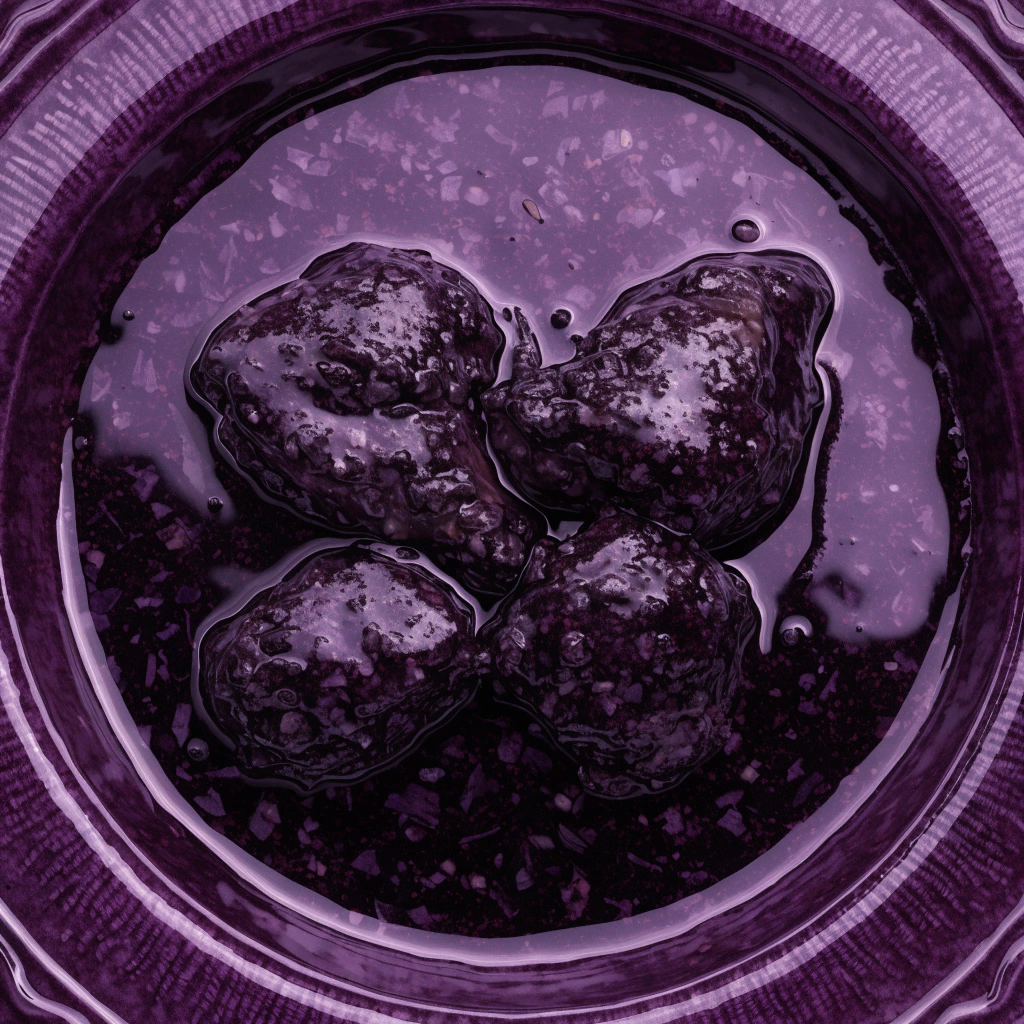
A Special Meal from Mexico
Mole Poblano is a very special food from Mexico. It is the national dish. People in Mexico love this meal. It is a thick sauce with many ingredients.
The sauce has many things inside. It has spicy chilies and sweet chocolate. It also has nuts, bread, and spices. The taste is very interesting. It is sweet and spicy at the same time.
The story of this dish is old. Nuns in the city of Puebla make the first Mole. They cook it for a special visitor. Today, people eat Mole with chicken and rice. It is delicious!
Gramática em destaque
Padrão: Present Simple: To Be
"Mole Poblano is a very special food from Mexico."
We use 'is' for singular subjects to describe a fact. It connects the subject to a description.
Padrão: Present Simple: Regular Verbs
"People in Mexico love this meal."
For plural subjects like 'People', we use the base verb 'love'. This shows a general feeling or habit.
Teste sua compreensão
10 perguntas · A1 Iniciante · 1 pré-visualização grátis
Teste o que aprendeu neste artigo. Responda todas as perguntas para ganhar XP!
Where is Mole Poblano from?
Quer finalizar o quiz?
9 perguntas a mais estão esperando por você. Cadastre-se grátis para desbloquear o quiz completo e ganhar XP!
Cadastrar grátisJá tem conta? Entrar
Detalhamento das perguntas
Where is Mole Poblano from?
Sua resposta:
Resposta correta: Mexico
Mole Poblano has chocolate in the sauce.
Sua resposta:
Resposta correta: Verdadeiro
What does 'delicious' mean?
Sua resposta:
Resposta correta: Very good to eat
It is the national _____.
Sua resposta:
Resposta correta: dish
Mole Poblano: Uma Receita Especial do México
Mole Poblano é um prato muito famoso no México. Muitas pessoas dizem que ele é o prato nacional do país. É uma comida com um sabor complexo e delicioso, porque usa muitos ingredientes diferentes. Não é um prato simples de fazer, mas vale a pena provar.
A história do Mole Poblano é antiga e interessante. Uma lenda famosa conta que o prato nasceu em um convento, na cidade de Puebla. Isso aconteceu há muito tempo, no século XVII. As freiras do convento receberam uma visita importante de surpresa, mas não tinham muita comida para oferecer aos convidados.
Então, as freiras misturaram tudo o que tinham na cozinha. Elas usaram pimentas, especiarias, pão velho, nozes e até um pouco de chocolate! Cozinharam tudo junto por muitas horas. O resultado foi um molho escuro e rico, que hoje conhecemos como Mole Poblano. É uma mistura de tradições antigas e novas, que o tornam único e muito saboroso.
Gramática em destaque
Padrão: Pretérito Perfeito Simples
"Isso aconteceu há muito tempo, no século XVII."
Usamos o Pretérito Perfeito Simples para falar de ações que começaram e terminaram no passado. Indica um momento específico no tempo. Para verbos regulares terminados em -er, como 'acontecer', a forma da terceira pessoa do singular é 'aconteceu'.
Padrão: Conectivos Básicos (e, mas, porque)
"É uma comida com um sabor complexo e delicioso, porque usa muitos ingredientes diferentes."
Os conectivos 'e', 'mas' e 'porque' são usados para ligar ideias nas frases. 'E' adiciona informações, 'mas' mostra um contraste, e 'porque' explica a razão ou o motivo de algo.
Teste sua compreensão
11 perguntas · A2 Elementar · 1 pré-visualização grátis
Teste o que aprendeu neste artigo. Responda todas as perguntas para ganhar XP!
O que é Mole Poblano?
Quer finalizar o quiz?
10 perguntas a mais estão esperando por você. Cadastre-se grátis para desbloquear o quiz completo e ganhar XP!
Cadastrar grátisJá tem conta? Entrar
Detalhamento das perguntas
O que é Mole Poblano?
Sua resposta:
Resposta correta: Um prato típico do México
As freiras planejaram a visita importante com antecedência.
Sua resposta:
Resposta correta: Falso
Qual é o significado da palavra 'lenda'?
Sua resposta:
Resposta correta: Uma história antiga e popular
Mole Poblano é um prato muito _____ no México.
Sua resposta:
Resposta correta: famoso
Onde a lenda diz que o Mole Poblano nasceu?
Sua resposta:
Resposta correta: Em um convento na cidade de Puebla
Mole Poblano: Um Sabor Lendário do México
O Mole Poblano é um prato icônico do México, amplamente considerado a iguaria nacional. Ele representa uma mistura rica e harmoniosa de tradições culinárias indígenas e europeias, e seu sabor complexo tem conquistado corações por gerações. Para muitos, provar o Mole Poblano é como experimentar a própria história e cultura mexicana em um só prato.
As origens deste molho especial são envoltas em lendas. A história mais famosa nos leva ao século XVII, no Convento de Santa Rosa, na cidade de Puebla. Diz-se que as freiras do convento foram pegas de surpresa por uma visita inesperada do Arcebispo. Em pânico, elas decidiram usar todos os ingredientes que tinham na despensa para criar um prato digno de um convidado tão importante.
Elas combinaram chiles (pimentas), especiarias variadas, pão velho, nozes, sementes e até chocolate, moendo tudo junto para formar um molho denso e aromático. O resultado foi o Mole Poblano, que foi servido ao Arcebispo e, para a surpresa das freiras, foi muito elogiado. Desde então, este prato se tornou um símbolo da criatividade e da riqueza da culinária mexicana.
Hoje, o Mole Poblano é preparado em todo o México, especialmente em ocasiões festivas. Ele é geralmente servido com carne de frango ou peru, acompanhado de arroz branco. Embora a receita possa variar ligeiramente de uma família para outra, a essência do molho – sua complexidade de sabores e seu legado histórico – permanece a mesma, fazendo dele uma experiência gastronômica inesquecível.
Gramática em destaque
Padrão: Voz Passiva (Ser + Particípio)
"Ele é geralmente servido com carne de frango ou peru."
A voz passiva é usada para focar na ação ou no objeto que sofre a ação, e não em quem a realiza. Forma-se com o verbo 'ser' no tempo adequado e o particípio passado do verbo principal. O sujeito 'ele' (Mole Poblano) recebe a ação de 'ser servido'.
Padrão: Orações Subordinadas Relativas (que, onde)
"A história mais famosa nos leva ao século XVII, no Convento de Santa Rosa, na cidade de Puebla, onde se diz que as freiras foram pegas de surpresa."
As orações subordinadas relativas, introduzidas por pronomes como 'que' ou 'onde', adicionam informações sobre um termo anterior. 'Onde' é usado para indicar um lugar, como 'no Convento de Santa Rosa', e conecta a ideia de que ali aconteceu algo.
Teste sua compreensão
11 perguntas · B1 Intermediário · 1 pré-visualização grátis
Teste o que aprendeu neste artigo. Responda todas as perguntas para ganhar XP!
Qual é a principal característica do Mole Poblano, de acordo com o texto?
Quer finalizar o quiz?
10 perguntas a mais estão esperando por você. Cadastre-se grátis para desbloquear o quiz completo e ganhar XP!
Cadastrar grátisJá tem conta? Entrar
Detalhamento das perguntas
Qual é a principal característica do Mole Poblano, de acordo com o texto?
Sua resposta:
Resposta correta: É uma mistura de sabores indígenas e europeus.
O Mole Poblano foi criado no século XVIII.
Sua resposta:
Resposta correta: Falso
O que significa 'convento' no contexto do artigo?
Sua resposta:
Resposta correta: Um lugar onde freiras vivem.
As origens do Mole Poblano são envoltas em _____. (uma palavra)
Sua resposta:
Resposta correta: lendas
Qual ingrediente inesperado foi usado pelas freiras para fazer o Mole Poblano?
Sua resposta:
Resposta correta: Chocolate
Mole Poblano: The Edible History of a Nation
Mole Poblano is widely acclaimed as the quintessential national dish of Mexico, representing a sophisticated synthesis of pre-Hispanic indigenous roots and European colonial influences. This dark, velvety sauce is far more than a mere culinary item; it is a historical narrative served on a plate, embodying the complex cultural evolution of a nation. The origins of this iconic sauce are steeped in legend, with the most prominent tale set in the late 17th century within the walls of the Convent of Santa Rosa in Puebla. It is narrated that the nuns, having been informed of an unexpected visit from the Archbishop, found themselves in a state of panic as they lacked the ingredients for a formal banquet. In a desperate attempt to impress their guest, they combined whatever they could find in their pantry—various dried chilies, spices, day-old bread, nuts, and a small portion of Mexican chocolate.
While the historical veracity of this specific legend is often debated by scholars, the cultural impact of Mole Poblano remains entirely indisputable. The preparation process is remarkably labor-intensive, frequently requiring several days of dedicated work. A traditional mole consists of over twenty distinct ingredients, each of which must be meticulously roasted, fried, or soaked before being ground together into a smooth paste. The inclusion of chocolate is perhaps the most distinctive and misunderstood feature of the recipe; however, in this context, it is utilized to balance the intense heat of the chilies and the bitterness of the spices rather than to provide a sugary sweetness.
Furthermore, the dish is deeply intertwined with the fabric of Mexican social life. From weddings and baptisms to major national holidays, the presence of Mole Poblano on the table signifies the gravity and importance of the occasion. In contemporary Mexico, professional chefs continue to experiment with contemporary variations, yet the foundational elements of the Poblano style remain preserved as a testament to the country’s enduring heritage. Consequently, analyzing the history and composition of Mole Poblano offers more than just a gastronomic insight; it provides a window into the complex socio-historical layers of Mexican society. Despite the rapid globalization of food trends, this dish maintains its prestigious status as a symbol of national pride, illustrating how culinary traditions can survive, adapt, and flourish through centuries of structural change.
Gramática em destaque
Padrão: Passive Voice
"Mole Poblano is widely acclaimed as the quintessential national dish of Mexico..."
The passive voice (be + past participle) is used to focus on the dish rather than the people who praise it. This shifts the emphasis to the subject's status and provides a more formal, academic tone.
Padrão: Perfect Participle Clause
"...having been informed of an unexpected visit from the Archbishop..."
This structure (having + been + past participle) is used to indicate that one action was completed before another. It allows for complex sentence structures that show cause and effect or chronological order efficiently.
Padrão: Concessive Clause with 'Despite'
"Despite the rapid globalization of food trends, this dish maintains its prestigious status..."
'Despite' is a preposition followed by a noun phrase to show contrast. It highlights that the main fact remains true even though there is a factor that might suggest otherwise.
Teste sua compreensão
11 perguntas · B2 Intermediário superior · 1 pré-visualização grátis
Teste o que aprendeu neste artigo. Responda todas as perguntas para ganhar XP!
According to the legend, where was Mole Poblano first created?
Quer finalizar o quiz?
10 perguntas a mais estão esperando por você. Cadastre-se grátis para desbloquear o quiz completo e ganhar XP!
Cadastrar grátisJá tem conta? Entrar
Detalhamento das perguntas
According to the legend, where was Mole Poblano first created?
Sua resposta:
Resposta correta: The Convent of Santa Rosa in Puebla
The primary purpose of chocolate in Mole Poblano is to make the sauce taste like a dessert.
Sua resposta:
Resposta correta: Falso
Which word describes something that is 'definitely true and cannot be denied'?
Sua resposta:
Resposta correta: Indisputable
The article mentions that the preparation of this dish is remarkably _____-intensive.
Sua resposta:
Resposta correta: labor
What does the dish symbolize in the context of Mexican identity?
Sua resposta:
Resposta correta: A synthesis of indigenous and colonial cultures
The Culinary Alchemy of Mole Poblano: A Symphony of Mestizaje
Rarely has a culinary creation so aptly encapsulated the complex identity of a nation as Mole Poblano does for Mexico. Known colloquially as the 'national dish,' its dark, velvety sheen belies a structural complexity that borders on the symphonic. While the uninitiated might mistake it for a mere chocolate sauce, Mole Poblano represents a sophisticated amalgamation of indigenous ingenuity and colonial influence, a gastronomic testament to the country’s turbulent yet rich history. To consume Mole Poblano is to partake in a ritual that transcends simple nourishment, entering instead the realm of cultural heritage.
Legend has it that the dish originated within the hallowed, candle-lit walls of the Convent of Santa Rosa in Puebla during the late 17th century. Faced with the daunting prospect of hosting an unexpected visit from the Archbishop, the nuns, in a state of frantic improvisation, were forced to combine disparate pantry staples. What emerged from this serendipitous panic—a concoction of chilies, spices, day-old bread, and a hint of cocoa—was a sauce of unparalleled depth. However, many contemporary historians argue that such a narrative simplifies a much more gradual synthesis of culinary traditions. They posit that the dish is the result of centuries of refinement, where pre-Hispanic spice pastes were slowly augmented by European ingredients brought over during the Spanish conquest.
It is the sheer diversity of ingredients that defines the mole’s character. Integrating over twenty distinct components, ranging from charred mulato and ancho chilies to toasted pumpkin seeds, almonds, and warm cinnamon, the preparation process is an exercise in meticulous patience. Each element must be individually toasted or fried before being ground together into a cohesive, oily paste. This labor-intensive methodology ensures that no single flavor dominates; rather, they exist in a state of delicate equilibrium. The inclusion of chocolate often puzzles the casual observer, yet its role is not to provide sweetness but to offer a grounded, earthy bitterness that tempers the vibrant heat of the chilies.
This nuanced interplay serves as a powerful metaphor for 'mestizaje'—the blending of European and indigenous cultures. Through the lens of Mole Poblano, we see the history of Mexico: a narrative of collision, adaptation, and eventual harmony. The dish does not shy away from its contradictory roots; instead, it celebrates them. Not only does the dish serve as a festive centerpiece during weddings and patronal festivals, but it also functions as a cultural anchor, tethering modern Mexicans to their ancestral past.
Furthermore, the preparation of Mole Poblano is frequently a communal endeavor, requiring the collective effort of multiple generations. This social dimension adds another layer of significance to the dish, transforming it from a recipe into a living tradition. In an era of fast food and global homogenization, the persistence of such a time-consuming culinary art form is remarkable. Ultimately, Mole Poblano is more than a mere condiment; it is a profound testament to the transformative power of cultural exchange, where the sum of the parts creates something far more significant than its individual constituents.
Gramática em destaque
Padrão: Negative Inversion
"Rarely has a culinary creation so aptly encapsulated the complex identity of a nation..."
Inversion is used here for rhetorical emphasis. By placing the negative adverb 'Rarely' at the beginning, the auxiliary verb 'has' moves before the subject 'culinary creation'.
Padrão: Cleft Sentence
"It is the sheer diversity of ingredients that defines the mole’s character."
This 'It is... that' structure focuses the reader's attention on the specific cause (the diversity of ingredients) rather than the result.
Padrão: Nominalisation
"The inclusion of chocolate often puzzles the casual observer..."
Instead of saying 'When people include chocolate,' the writer uses the noun phrase 'The inclusion of chocolate' to make the sentence sound more objective and academic.
Teste sua compreensão
12 perguntas · C1 Avançado · 1 pré-visualização grátis
Teste o que aprendeu neste artigo. Responda todas as perguntas para ganhar XP!
What does the author suggest about the legend of the Convent of Santa Rosa?
Quer finalizar o quiz?
11 perguntas a mais estão esperando por você. Cadastre-se grátis para desbloquear o quiz completo e ganhar XP!
Cadastrar grátisJá tem conta? Entrar
Detalhamento das perguntas
What does the author suggest about the legend of the Convent of Santa Rosa?
Sua resposta:
Resposta correta: It likely oversimplifies a more complex historical process.
The primary role of chocolate in Mole Poblano is to make the sauce sweet.
Sua resposta:
Resposta correta: Falso
Which word describes something that is 'very careful and precise'?
Sua resposta:
Resposta correta: Meticulous
The dish is described as a state of delicate _____, where no single flavor dominates.
Sua resposta:
Resposta correta: equilibrium
According to the text, why is the preparation of Mole Poblano considered a 'communal endeavor'?
Sua resposta:
Resposta correta: It often involves the collective effort of several generations.
The author believes Mole Poblano is a metaphor for the blending of cultures in Mexico.
Sua resposta:
Resposta correta: Verdadeiro
The Gastronomical Palimpsest: Decoding the Cultural Syncretism of Mole Poblano
The ontological status of Mole Poblano transcends the mere boundaries of gastronomy, positioning itself as a quintessential emblem of Mexican identity and a profound testament to the concept of mestizaje. Often heralded as the national dish, its existence is a sophisticated tapestry woven from the variegated threads of indigenous heritage and Iberian influence. Should one attempt to deconstruct the alchemical transformation of these disparate elements, one finds not merely a recipe, but a chronicle of cultural syncretism that reflects the complex socio-political stratigraphy of the New Spain era. To understand Mole is to understand the very fusion of two worlds that, through conflict and coexistence, birthed a new cultural reality.
The genesis of Mole Poblano is frequently attributed to a serendipitous confluence of necessity and divine inspiration within the cloistered confines of the Convent of Santa Rosa in Puebla during the late 17th century. According to hagiographic tradition, the sisters, caught in the throes of anxiety regarding an impending visit from the Archbishop, purportedly combined an eclectic array of pantry staples—ranging from endemic chilies to imported spices and chocolate—to create a sauce of unparalleled depth. Were the Archbishop’s visit to have been postponed, the culinary landscape of Mexico might have evolved along a markedly different trajectory. However, one must approach such narratives with academic caution; while these legends serve to romanticize the dish’s origin, they often obscure the more nuanced, iterative process of culinary evolution that likely spanned centuries of domestic experimentation.
From an analytical perspective, Mole Poblano functions as a culinary palimpsest, where each bite reveals a strata of historical interaction. The indigenous foundation is articulated through the trio of dried chilies—mulato, ancho, and pasilla—which provide a smoky, fruit-forward depth. This base is subsequently overlaid with Old World introductions: almonds, cloves, anise, and cinnamon, which speak to the trans-oceanic exchange and the Moorish influence that had already permeated Spanish cuisine. The inclusion of chocolate, a substance once imbued with divine significance for the Aztec and Maya nobility, serves as a transformative agent, unifying the disparate components into a cohesive whole. This meticulous orchestration of over twenty ingredients requires not only grueling physical labor—traditionally involving the manual grinding of spices on a metate—but also a sophisticated cognitive mastery of flavor profiles. The sauce must be simmered with unwavering patience until it achieves a glossy, obsidian sheen, a visual indicator that the pungent capsaicin has been successfully integrated with the bitterness of the cacao and the earthy sweetness of raisins and plantains.
Furthermore, the dish epitomizes the complex dialectic between tradition and transformation within a post-colonial framework. It serves as a manifestation of gastronomical hegemony being subtly subverted; while European colonizers introduced their livestock and wheat, it was the indigenous culinary syntax that ultimately governed the assembly of these new elements. Not only does the dish encapsulate the multifaceted flavors of a continent, but it also serves as a poignant reminder of the colonial encounter—a historical juncture characterized by profound trauma, yet one that paradoxically yielded moments of sublime cultural synthesis. The mole is, in essence, a liquid representation of the Mexican identity: complex, dark, spicy, and deeply rooted in the soil of its ancestors.
In the contemporary era, the veracity of the convent legend is perhaps less significant than the symbolic weight the dish carries. It is imperative that the sauce be understood as a living entity, one that continues to be reimagined in both domestic kitchens and haute cuisine establishments. To consume Mole Poblano is to engage in a ritual of historical remembrance. It remains a resilient bastion of tradition in an increasingly globalized world, asserting that even in the face of ephemeral culinary trends, the profound complexity of the past can still be tasted in the present. Thus, Mole Poblano remains not just a meal, but a scholarly inquiry into the heart of a nation’s soul.
Gramática em destaque
Padrão: Inverted Conditionals (Should)
"Should one attempt to deconstruct the alchemical transformation of these disparate elements, one finds not merely a recipe, but a chronicle of cultural syncretism."
This formal structure replaces 'If one should attempt...' by inverting the subject and the auxiliary verb 'should'. It is used in academic writing to express a hypothetical condition with a tone of high formality.
Padrão: Inverted Conditionals (Were)
"Were the Archbishop’s visit to have been postponed, the culinary landscape of Mexico might have evolved along a markedly different trajectory."
This uses 'Were' to initiate a second or third conditional structure, adding a scholarly and hypothetical nuance. It emphasizes the counter-factual nature of the statement.
Padrão: Negative Inversion
"Not only does the dish encapsulate the multifaceted flavors of a continent, but it also serves as a poignant reminder of the colonial encounter."
When a sentence starts with a negative or restrictive adverbial like 'Not only', the auxiliary verb must come before the subject. This is used for rhetorical emphasis.
Teste sua compreensão
12 perguntas · C2 Domínio · 1 pré-visualização grátis
Teste o que aprendeu neste artigo. Responda todas as perguntas para ganhar XP!
What is the primary academic argument regarding the 'Convent of Santa Rosa' legend?
Quer finalizar o quiz?
11 perguntas a mais estão esperando por você. Cadastre-se grátis para desbloquear o quiz completo e ganhar XP!
Cadastrar grátisJá tem conta? Entrar
Detalhamento das perguntas
What is the primary academic argument regarding the 'Convent of Santa Rosa' legend?
Sua resposta:
Resposta correta: It is a hagiographic narrative that may simplify a more complex evolutionary process.
The article suggests that Mole Poblano represents the complete replacement of indigenous traditions by European ones.
Sua resposta:
Resposta correta: Falso
Which word describes the layering of history within the dish's ingredients?
Sua resposta:
Resposta correta: Palimpsest
The sauce must be simmered until it achieves a glossy, _____ sheen.
Sua resposta:
Resposta correta: obsidian
Which ingredient is described as the 'transformative agent' that unifies the sauce?
Sua resposta:
Resposta correta: Chocolate
The term 'mestizaje' refers to the cultural and racial blending central to the dish's identity.
Sua resposta:
Resposta correta: Verdadeiro

