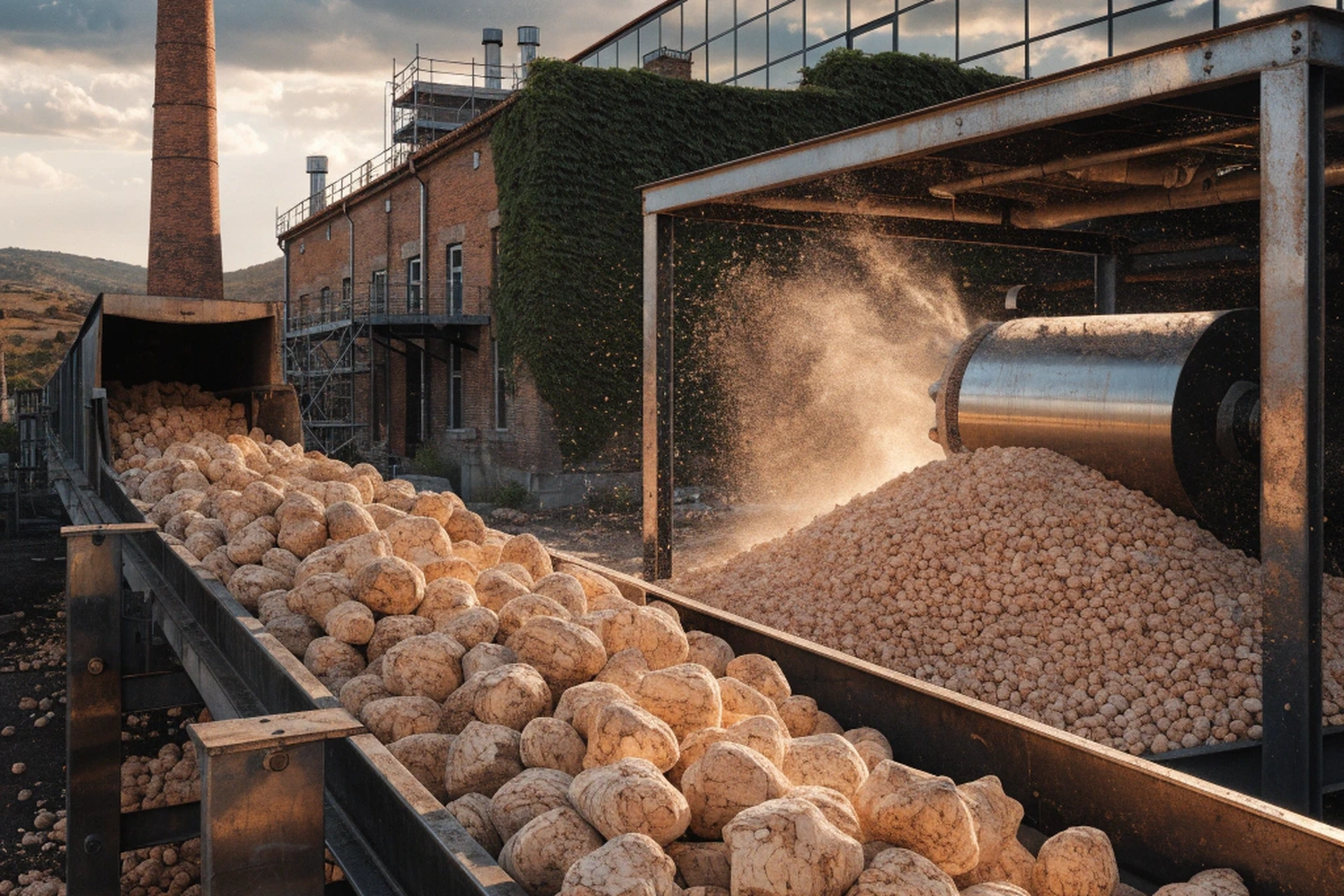
Portugal and the Special Cork Tree
Portugal is a country in Europe. It is famous for something special. This is cork. Cork is very important for Portugal.
Cork comes from the cork oak tree. It is the bark of the tree. People carefully take the cork from the tree every nine years. They do not cut the tree down. The tree is safe and lives for a long time.
What do people make with cork? They make many things. A very common thing is a bottle stopper for wine. They also use cork for floors in a house and even for bags.
Gramática em destaque
Padrão: Presente Simples: 'to be'
"Portugal is a country in Europe."
Usamos 'is' para descrever uma única pessoa, lugar ou coisa. Ele nos diz o que algo é ou onde algo está. Por exemplo, 'The tree is tall'.
Padrão: Presente Simples: Verbos de Ação
"They make many things."
Usamos o presente simples para fatos ou coisas que acontecem regularmente. Para 'I', 'you', 'we' e 'they', usamos o verbo na forma base, como 'make'. Para 'he', 'she' ou 'it', adicionamos -s, como 'makes'.
Teste sua compreensão
10 perguntas · A1 Iniciante · 1 pré-visualização grátis
Teste o que aprendeu neste artigo. Responda todas as perguntas para ganhar XP!
Pelo que Portugal é famoso?
Quer finalizar o quiz?
9 perguntas a mais estão esperando por você. Cadastre-se grátis para desbloquear o quiz completo e ganhar XP!
Cadastrar grátisJá tem conta? Entrar
Detalhamento das perguntas
Pelo que Portugal é famoso?
Sua resposta:
Resposta correta: Cortiça
As pessoas cortam a árvore para pegar a cortiça.
Sua resposta:
Resposta correta: Falso
O que significa 'country'?
Sua resposta:
Resposta correta: Uma área de terra com seu próprio governo
A árvore fica segura e _____ por muito tempo.
Sua resposta:
Resposta correta: lives
A Cortiça em Portugal: Uma Indústria Especial
Portugal é um país muito importante para a cortiça. Mais da metade da cortiça do mundo vem de Portugal. Esta indústria é antiga e faz parte da história do país. A região do Alentejo, no sul, tem muitas árvores de sobreiro.
O sobreiro é uma árvore especial. Ela é protegida por lei em Portugal. As pessoas tiram a casca do sobreiro, que é a cortiça. Este trabalho é feito com cuidado. A colheita da cortiça acontece a cada nove anos. No passado, este processo sempre foi manual. Trabalhadores experientes usam ferramentas especiais para tirar a cortiça sem machucar a árvore. Este método é o mesmo há muitos anos.
A cortiça é usada para fazer muitas coisas. A mais famosa é a rolha de vinho. Mas também fazem sapatos, bolsas e até casas com cortiça. É um material natural e muito bom para o meio ambiente. Portugal é líder mundial porque tem muita tradição e conhecimento nesta área.
Gramática em destaque
Padrão: Voz Passiva com 'Ser'
"Este trabalho é feito com cuidado."
Usamos a voz passiva para falar sobre uma ação que acontece a um objeto ou pessoa, e não quem faz a ação. Formamos com o verbo 'ser' (no tempo certo) mais o particípio do verbo principal.
Padrão: Preposição 'para' (Propósito)
"A cortiça é usada para fazer muitas coisas."
A preposição 'para' é usada para indicar o propósito ou a finalidade de uma ação. Ela mostra o objetivo de algo, ou seja, 'para que' algo serve ou é usado.
Teste sua compreensão
11 perguntas · A2 Elementar · 1 pré-visualização grátis
Teste o que aprendeu neste artigo. Responda todas as perguntas para ganhar XP!
Qual é a principal região de Portugal que tem muitas árvores de sobreiro?
Quer finalizar o quiz?
10 perguntas a mais estão esperando por você. Cadastre-se grátis para desbloquear o quiz completo e ganhar XP!
Cadastrar grátisJá tem conta? Entrar
Detalhamento das perguntas
Qual é a principal região de Portugal que tem muitas árvores de sobreiro?
Sua resposta:
Resposta correta: Alentejo
A árvore de sobreiro é protegida por lei em Portugal.
Sua resposta:
Resposta correta: Verdadeiro
O que significa 'colheita'?
Sua resposta:
Resposta correta: O ato de tirar produtos da terra ou de uma árvore
A cortiça é usada para fazer muitas ______.
Sua resposta:
Resposta correta: coisas
Com que frequência a colheita da cortiça acontece?
Sua resposta:
Resposta correta: A cada nove anos
Portugal's Green Gold: The Cork Industry
Portugal is a small country with a huge reputation in the business world. It is the global leader in the cork industry, producing more than 50% of the entire world's supply. This essential material comes mainly from the sunny Alentejo region, which covers a large part of southern Portugal.
The source of this product is the cork oak tree, known scientifically as *Quercus suber*. These trees are considered national treasures and are protected by strict laws. Unlike other wood industries, the trees are never cut down to get the material. Instead, the bark is harvested in a cycle that is completely sustainable. This traditional process has continued for centuries without damaging the forests.
Every nine years, skilled workers strip the outer bark from the trunk using handheld axes. This job requires great precision because the inner tree must not be hurt. After the bark is removed, the tree is marked with the year of the harvest in white paint. Then, nature takes over, and the tree begins to regenerate its bark immediately. A healthy cork oak can live for over 200 years and is usually harvested about 15 times during its life.
While cork has been used to close wine bottles for generations, it is now found in many modern products. Designers have created cork bags, shoes, and even furniture. Because the forests absorb large amounts of carbon dioxide, this industry is not only profitable but also helps the planet.
Gramática em destaque
Padrão: Passive Voice (Present Simple)
"These trees are considered national treasures and are protected by strict laws."
We use the passive voice when we want to focus on the object of the action (the trees) rather than who is doing the action. It is formed with the verb 'to be' + past participle.
Padrão: Relative Clauses (Non-defining)
"This essential material comes mainly from the sunny Alentejo region, which covers a large part of southern Portugal."
Relative clauses give us more information about a noun. Here, 'which' adds extra detail about the Alentejo region without starting a new sentence.
Teste sua compreensão
11 perguntas · B1 Intermediário · 1 pré-visualização grátis
Teste o que aprendeu neste artigo. Responda todas as perguntas para ganhar XP!
How much of the world's cork supply does Portugal produce?
Quer finalizar o quiz?
10 perguntas a mais estão esperando por você. Cadastre-se grátis para desbloquear o quiz completo e ganhar XP!
Cadastrar grátisJá tem conta? Entrar
Detalhamento das perguntas
How much of the world's cork supply does Portugal produce?
Sua resposta:
Resposta correta: More than 50%
Cork oak trees are cut down to harvest the cork.
Sua resposta:
Resposta correta: Falso
What does 'sustainable' mean in the text?
Sua resposta:
Resposta correta: Able to continue without harming resources
Every nine years, workers _____ the bark from the trees by hand.
Sua resposta:
Resposta correta: strip
Which region is mentioned as the main source of cork?
Sua resposta:
Resposta correta: Alentejo
A Indústria Corticeira Portuguesa: Um Legado Sustentável com Hegemonia Global
Portugal detém uma indiscutível hegemonia no cenário mundial da indústria corticeira, sendo responsável por mais de metade da produção global. Este setor, que transcende a mera atividade econômica, possui raízes profundas na história e na paisagem do país, particularmente na vasta região do Alentejo, onde os montados de sobro se estendem por quilômetros, configurando um ecossistema único e de valor inestimável.
O sobreiro (Quercus suber), árvore da qual se extrai a cortiça, é uma espécie protegida por lei em Portugal. A sua casca, a cortiça, é colhida através de um processo meticuloso e tradicional conhecido como 'descortiçamento'. Esta técnica, que exige perícia e experiência de gerações, é realizada manualmente por trabalhadores especializados a cada nove anos, garantindo que a árvore não seja danificada e possa regenerar-se. É um exemplo notável de exploração de matéria-prima que se mantém praticamente inalterado há séculos, evidenciando um compromisso intrínseco com a sustentabilidade.
A relevância econômica da cortiça para Portugal é substancial. Embora os vedantes para garrafas de vinho sejam o produto mais conhecido e de maior valor agregado, a versatilidade da cortiça tem impulsionado a sua aplicação em diversos outros setores. Desde revestimentos e isolamentos na construção civil até componentes na indústria automóvel e na moda, a diversificação de produtos tem sido crucial para a resiliência e inovação do setor. A demanda global por soluções naturais e sustentáveis continua a fortalecer a posição da cortiça portuguesa no mercado internacional.
Adicionalmente, além de sua relevância econômica, a indústria corticeira desempenha um papel fundamental na proteção ambiental. Os montados de sobro são ecossistemas de elevada biodiversidade, servindo de habitat para uma vasta gama de espécies animais e vegetais. A manutenção destas florestas contribui significativamente para o sequestro de carbono, ajudando a mitigar as alterações climáticas. A cortiça, sendo um material 100% natural, reciclável e biodegradável, oferece uma alternativa ecológica superior a muitos materiais sintéticos.
Contudo, o setor enfrenta desafios, como a concorrência de materiais alternativos e a necessidade de inovação contínua. Por isso, é crucial que se invista em pesquisa e desenvolvimento para explorar novas aplicações e otimizar os processos existentes. Em suma, a indústria corticeira portuguesa representa um paradigma de sustentabilidade, tradição e inovação, consolidando-se como um pilar essencial da economia e da identidade cultural do país, com um legado que se projeta para o futuro.
Gramática em destaque
Padrão: Voz Passiva
"A sua casca, a cortiça, é colhida através de um processo meticuloso e tradicional."
A voz passiva é usada para enfatizar a ação recebida pelo sujeito, em vez de quem a executa. Em português, forma-se com o verbo 'ser' ou 'estar' mais o particípio passado do verbo principal, concordando em gênero e número com o sujeito.
Padrão: Uso do Subjuntivo para Finalidade
"Esta técnica... é realizada manualmente... garantindo que a árvore não seja danificada e possa regenerar-se."
O modo subjuntivo é empregado aqui para expressar a finalidade ou o objetivo da ação principal ('garantindo'). É comum após conjunções como 'para que', 'a fim de que', e verbos que expressam desejo, dúvida ou necessidade.
Padrão: Conectores Discursivos (Adicionalmente, Contudo, Em suma)
"Adicionalmente, além de sua relevância econômica, a indústria corticeira desempenha um papel fundamental... Contudo, o setor enfrenta desafios... Em suma, a indústria corticeira portuguesa representa um paradigma..."
Conectores discursivos são essenciais para organizar o texto e estabelecer relações lógicas entre as ideias. 'Adicionalmente' introduz uma informação extra, 'Contudo' indica contraste ou ressalva, e 'Em suma' resume os pontos principais, contribuindo para a coesão textual e a fluidez da argumentação.
Teste sua compreensão
11 perguntas · B2 Intermediário superior · 1 pré-visualização grátis
Teste o que aprendeu neste artigo. Responda todas as perguntas para ganhar XP!
Qual é a principal região de Portugal onde se concentram os montados de sobro?
Quer finalizar o quiz?
10 perguntas a mais estão esperando por você. Cadastre-se grátis para desbloquear o quiz completo e ganhar XP!
Cadastrar grátisJá tem conta? Entrar
Detalhamento das perguntas
Qual é a principal região de Portugal onde se concentram os montados de sobro?
Sua resposta:
Resposta correta: Alentejo
O descortiçamento é um processo que danifica permanentemente o sobreiro.
Sua resposta:
Resposta correta: Falso
O que significa 'hegemonia' no contexto do artigo?
Sua resposta:
Resposta correta: Domínio ou superioridade
A casca do sobreiro é colhida a cada _____ anos.
Sua resposta:
Resposta correta: nove
Além dos vedantes para vinho, em quais outros setores a cortiça tem sido aplicada, segundo o texto?
Sua resposta:
Resposta correta: Construção civil, indústria automóvel e moda
The Bark of Heritage: Portugal’s Cork Stewardship
Nestled within the sun-drenched plains of the Alentejo region lies the beating heart of an industry that is as sustainable as it is ancient. Portugal, the quintessential guardian of the cork oak, produces more than half of the global supply of cork, a material whose versatility is matched only by the ecological importance of its source. It is here, among the rolling hills and biodiversity of the *montado* landscape, that a delicate balance between economic necessity and environmental preservation is struck.
At the core of this industry stands the *Quercus suber*, or cork oak, a resilient tree protected by Portuguese law since the Middle Ages. Unlike forestry practices that demand the felling of timber, the cork industry relies entirely on the regeneration of the tree's outer bark. The extraction of this bark, known locally as *descortiçamento*, is a feat of manual dexterity that machines have yet to replicate. Rarely is a process so reliant on human intuition and traditional knowledge found in modern industrial sectors. Skilled harvesters, wielding axes with surgical precision, must strip the bark without damaging the underlying living layer. Were the cambium to be injured, the tree would cease to produce cork, rendering it useless for future harvests.
What makes this practice particularly remarkable is its cyclical nature. A cork oak must mature for twenty-five years before its first harvest, and even then, the 'virgin cork' is of insufficient quality for wine stoppers. Only after the third harvest—over forty years into the tree's life—does the bark achieve the structural integrity required for premium stoppers. This long-term stewardship requires a vision that transcends immediate profit, prioritizing instead the longevity of the ecosystem. It is the patience inherent in this cycle that distinguishes the cork industry from the immediacy of modern manufacturing.
In recent decades, the industry has faced fierce competition from synthetic alternatives like plastic corks and screw caps. Critics argued that cork was susceptible to 'cork taint,' a chemical reaction that could spoil fine wines. However, not only has the industry addressed these concerns through rigorous quality control and technological innovation, but the global shift toward sustainability has also revitalized the demand for natural cork. The production of a single plastic stopper emits ten times more carbon dioxide than that of a natural cork, a statistic that has not gone unnoticed by environmentally conscious consumers.
Ultimately, the preservation of the Alentejo's cork forests is not merely an economic concern but a cultural imperative. These forests support a unique habitat for endangered species, such as the Iberian lynx, acting as a bulwark against desertification in southern Europe. The cork stopper, therefore, is more than a simple closure for a bottle; it is a symbol of a harmonious relationship between humanity and nature, perfected over centuries of careful observation and respect.
Gramática em destaque
Padrão: Inversão com Advérbios Negativos
"Rarely is a process so reliant on human intuition and traditional knowledge found in modern industrial sectors."
Quando uma frase começa com um advérbio negativo ou limitador (como 'Rarely', 'Never', 'Seldom'), o sujeito e o verbo auxiliar são invertidos para dar ênfase. Aqui, 'is a process' é usado em vez de 'a process is'.
Padrão: Sentenças Clivadas (Cleft Sentences)
"It is the patience inherent in this cycle that distinguishes the cork industry from the immediacy of modern manufacturing."
Sentenças clivadas (começando com 'It is...' ou 'What...') são usadas para focar em uma parte específica da frase. Essa estrutura enfatiza 'the patience inherent in this cycle' como o fator chave de distinção.
Padrão: Condicional Invertida (Terceira Condicional)
"Were the cambium to be injured, the tree would cease to produce cork."
No inglês formal, 'if' pode ser omitido em frases condicionais invertendo o sujeito e o verbo auxiliar. 'Were the cambium to be injured' é um equivalente formal de 'If the cambium were to be injured'.
Teste sua compreensão
12 perguntas · C1 Avançado · 1 pré-visualização grátis
Teste o que aprendeu neste artigo. Responda todas as perguntas para ganhar XP!
De acordo com o artigo, por que o processo de 'descortiçamento' é realizado manualmente?
Quer finalizar o quiz?
11 perguntas a mais estão esperando por você. Cadastre-se grátis para desbloquear o quiz completo e ganhar XP!
Cadastrar grátisJá tem conta? Entrar
Detalhamento das perguntas
De acordo com o artigo, por que o processo de 'descortiçamento' é realizado manualmente?
Sua resposta:
Resposta correta: As máquinas não têm a precisão necessária para evitar danos à camada viva da árvore.
Os sobreiros são cortados depois de terem sido colhidos pela terceira vez.
Sua resposta:
Resposta correta: Falso
Qual palavra melhor corresponde à definição: 'Able to withstand or recover quickly from difficult conditions'?
Sua resposta:
Resposta correta: Resiliente
A extração da casca é um feito de __________ manual que as máquinas ainda não conseguem replicar.
Sua resposta:
Resposta correta: dexterity
Qual é a principal razão dada para o ressurgimento da cortiça natural contra as alternativas sintéticas?
Sua resposta:
Resposta correta: Há uma mudança global em direção à sustentabilidade e redução de carbono.
A primeira colheita de um sobreiro produz a cortiça da mais alta qualidade usada para rolhas de vinho premium.
Sua resposta:
Resposta correta: Falso
The Alentejo Paradox: A Scholarly Inquiry into the Silvicultural Hegemony of Portuguese Cork
The landscape of southern Portugal, particularly the vast, undulating plains of the Alentejo, is dominated by the Quercus suber, an arboreal species whose ontological significance transcends mere botany. Portugal stands as the undisputed global titan of the cork industry, accounting for over fifty percent of the world’s supply—a hegemony that is not merely economic but deeply woven into the socio-ecological fabric of the Lusitanian identity. This sector operates within a dialectic of sustainability, where ancient manual techniques coalesce with modern ecological imperatives to create a model of regenerative capitalism that remains largely unparalleled in the northern hemisphere. The cork oak is not merely a resource; it is a protected entity, safeguarded by stringent legal frameworks that date back to the 14th century, ensuring that the 'descortiçamento'—the extraction of the bark—is conducted with surgical precision.
Were one to traverse the Alentejo during the harvest season, one would witness a process that has remained recalcitrant to the pressures of mechanization. Skilled harvesters, known as 'tiradores,' utilize hand-axes to strip the bark in a rhythmic display of expertise. It is paramount that the extraction be conducted without causing the slightest laceration to the tree’s living inner layer, the phellogen; should this delicate membrane be compromised, the tree’s longevity would be severely curtailed. This manual dexterity is the cornerstone of the industry’s resilience. The harvest occurs in a cyclical rhythm of nine years, a temporal requirement that demands a degree of patience seldom found in the ephemeral cycles of modern commodity markets. This nine-year hiatus allows the tree to regenerate its protective layer of suberin, a complex biopolymer that provides the bark with its hallmark properties: impermeability, elasticity, and thermal insulation.
From a chemical perspective, the cellular structure of cork is a marvel of natural engineering. Each cubic centimeter contains approximately 40 million cells, arranged in a honeycomb pattern and filled with a gas similar to air. This unique composition renders cork practically indestructible by natural means, yet entirely biodegradable—a paradox that positions it as a superior alternative to synthetic polymers. However, the industry is not without its existential threats. The encroaching specter of climate change, manifested in prolonged droughts and shifting thermal gradients, poses a significant risk to the Montado ecosystem. Furthermore, the rise of plastic and screw-cap closures in the oenological sector has challenged the traditional dominance of natural cork stoppers. Critics might argue that the industry’s reliance on tradition is a vestige of a pre-industrial era; yet, proponents contend that the carbon sequestration provided by these forests is an indispensable tool in the global effort to mitigate atmospheric carbon levels.
Indeed, the Montado is a bastion of biodiversity, supporting a plethora of species, including the endangered Iberian lynx and the Spanish imperial eagle. The symbiosis between the human-led harvest and the natural preservation of the biome suggests that economic activity need not be extractive in the pejorative sense. Instead, it can be a stewardship. It is imperative that the international community recognize the cork industry not merely as a provider of bottle closures, but as a crucial component of the European ecological infrastructure. Notwithstanding the pressures of globalization, the Portuguese cork industry remains a steadfast example of how tradition and ecology can coexist in a mutually reinforcing paradigm. To lose the Montado would be to lose not only a source of income but a vital organ of the planet's lungs.
Gramática em destaque
Padrão: Inverted Conditionals (Type 2/3)
"Were one to traverse the Alentejo during the harvest season, one would witness a process that has remained recalcitrant to the pressures of mechanization."
This structure replaces 'If' with an inversion of the subject and auxiliary verb (were/had) to create a more formal, academic tone typical of C2 English.
Padrão: Subjunctive Mood for Necessity
"It is paramount that the extraction be conducted without causing the slightest laceration to the tree’s living inner layer."
The base form of the verb 'be' is used following adjectives of urgency or importance (paramount, vital, imperative) to express a requirement or hypothetical situation.
Padrão: Negative Inversion for Emphasis
"Not only is it a source of income but a vital organ of the planet's lungs."
Starting a sentence with a negative or restrictive phrase (Not only...) requires an inversion of the subject and auxiliary verb to add rhetorical weight.
Teste sua compreensão
12 perguntas · C2 Domínio · 1 pré-visualização grátis
Teste o que aprendeu neste artigo. Responda todas as perguntas para ganhar XP!
What does the author suggest about the relationship between mechanization and the cork harvest?
Quer finalizar o quiz?
11 perguntas a mais estão esperando por você. Cadastre-se grátis para desbloquear o quiz completo e ganhar XP!
Cadastrar grátisJá tem conta? Entrar
Detalhamento das perguntas
What does the author suggest about the relationship between mechanization and the cork harvest?
Sua resposta:
Resposta correta: The process has resisted mechanization due to the required precision.
The cork oak tree is only protected by modern environmental laws enacted in the last decade.
Sua resposta:
Resposta correta: Falso
What does 'ephemeral' mean in the context of the article?
Sua resposta:
Resposta correta: Short-lived or transitory
The cellular structure of cork is compared to a _____ pattern, which contributes to its unique physical properties.
Sua resposta:
Resposta correta: honeycomb
Which biological layer must remain untouched to ensure the tree's survival?
Sua resposta:
Resposta correta: The phellogen
The article argues that cork is a superior alternative to synthetic polymers because it is both indestructible and biodegradable.
Sua resposta:
Resposta correta: Verdadeiro

