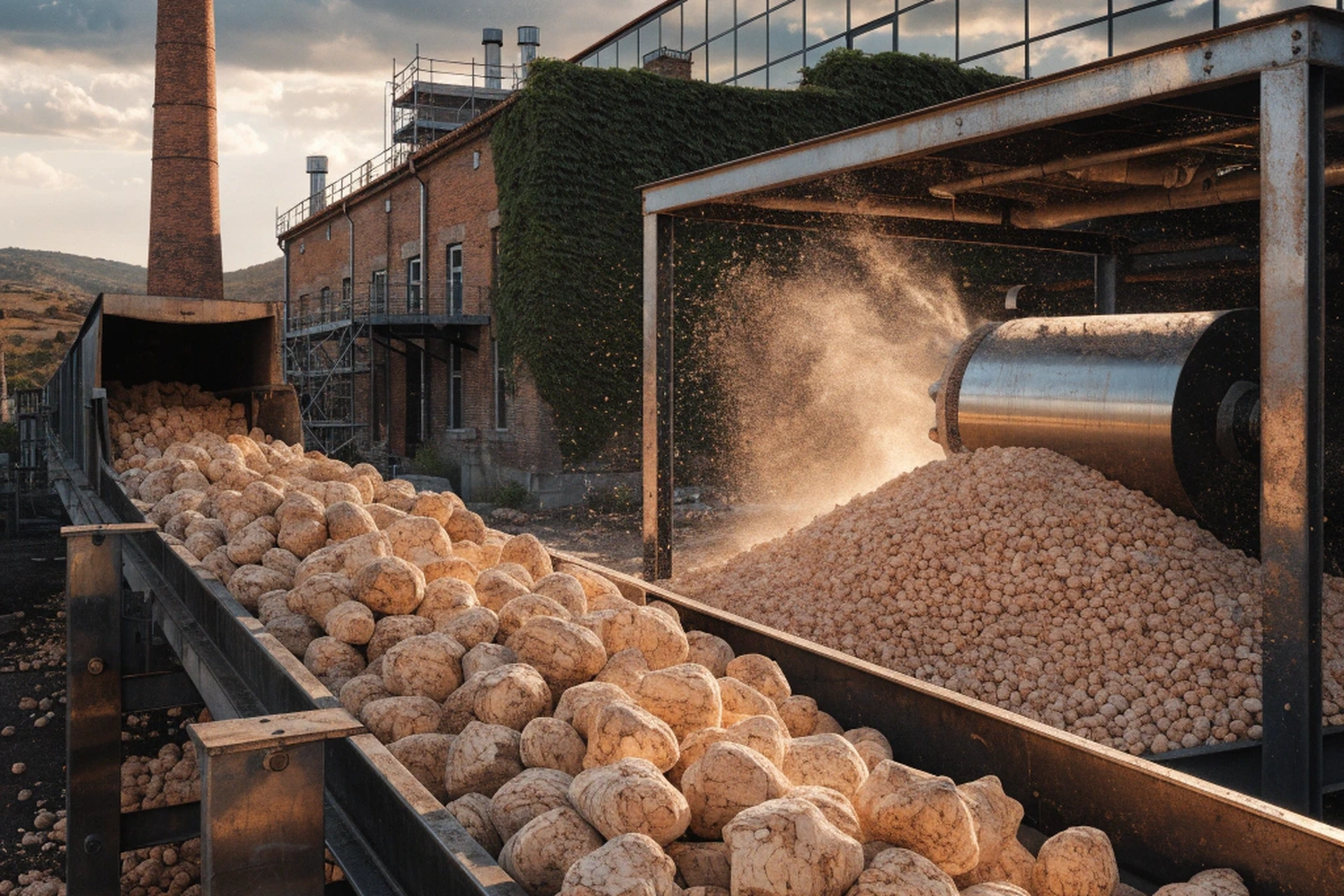
Portugal and the Special Cork Tree
Portugal is a country in Europe. It is famous for something special. This is cork. Cork is very important for Portugal.
Cork comes from the cork oak tree. It is the bark of the tree. People carefully take the cork from the tree every nine years. They do not cut the tree down. The tree is safe and lives for a long time.
What do people make with cork? They make many things. A very common thing is a bottle stopper for wine. They also use cork for floors in a house and even for bags.
تسليط الضوء على القواعد
نمط: Present Simple: 'to be'
"Portugal is a country in Europe."
We use 'is' to describe a single person, place, or thing. It tells us what something is or where it is. For example, 'The tree is tall'.
نمط: Present Simple: Action Verbs
"They make many things."
We use the present simple for facts or things that happen regularly. For 'I', 'you', 'we', and 'they', we use the base verb, like 'make'. For 'he', 'she', or 'it', we add -s, like 'makes'.
اختبر فهمك
10 أسئلة · A1 مبتدئ · معاينة مجانية واحدة
اختبر ما تعلمته من هذا المقال. أجب على جميع الأسئلة لكسب نقاط خبرة!
What is Portugal famous for?
هل تريد إنهاء الاختبار؟
9 أسئلة أخرى بانتظارك. سجّل مجاناً لفتح الاختبار الكامل وكسب نقاط خبرة!
سجل مجاناًلديك حساب بالفعل؟ دخول
تفصيل الأسئلة
What is Portugal famous for?
إجابتك:
الإجابة الصحيحة: Cork
People cut the tree down to get the cork.
إجابتك:
الإجابة الصحيحة: خطأ
What does 'country' mean?
إجابتك:
الإجابة الصحيحة: An area of land with its own government
The tree is safe and _____ for a long time.
إجابتك:
الإجابة الصحيحة: lives
Portugal's Special Tree: The Cork Industry
Portugal is a beautiful country in Europe with a very special industry: cork. Cork comes from the bark of the cork oak tree. Most of these trees grow in the Alentejo region. Portugal produces more cork than any other country in the world.
The process of harvesting cork is old and sustainable. Workers do not cut down the trees. Instead, they carefully take the bark off the tree. They use special axes and their hands. This job requires great skill because the workers must not hurt the tree.
After the harvest, the tree grows new bark. The workers wait nine years before they take the bark again. This cycle is good for nature because the trees stay alive for a long time. Cork is an amazing material because it is lighter than water. People use it for wine bottles, bags, and even shoes.
تسليط الضوء على القواعد
نمط: Comparatives (more... than)
"Portugal produces more cork than any other country in the world."
We use comparatives to show the difference between two things. In this sentence, 'more... than' compares the amount of cork from Portugal to the amount from other countries.
نمط: Present Simple Negative
"Workers do not cut down the trees."
We use the present simple negative to talk about things that are not true or do not happen. We use 'do not' (or 'don't') before the main verb to make the sentence negative.
اختبر فهمك
11 أسئلة · A2 ابتدائي · معاينة مجانية واحدة
اختبر ما تعلمته من هذا المقال. أجب على جميع الأسئلة لكسب نقاط خبرة!
Where do most cork oak trees grow in Portugal?
هل تريد إنهاء الاختبار؟
10 أسئلة أخرى بانتظارك. سجّل مجاناً لفتح الاختبار الكامل وكسب نقاط خبرة!
سجل مجاناًلديك حساب بالفعل؟ دخول
تفصيل الأسئلة
Where do most cork oak trees grow in Portugal?
إجابتك:
الإجابة الصحيحة: In the Alentejo region
Workers cut down the trees to get the cork.
إجابتك:
الإجابة الصحيحة: خطأ
What does 'bark' mean in this text?
إجابتك:
الإجابة الصحيحة: The hard outer covering of a tree
Workers wait _____ years before they take the bark again.
إجابتك:
الإجابة الصحيحة: nine
Why is the cork industry sustainable?
إجابتك:
الإجابة الصحيحة: Because the trees stay alive and grow new bark
Portugal's Green Gold: The Cork Industry
Portugal is a small country with a huge reputation in the business world. It is the global leader in the cork industry, producing more than 50% of the entire world's supply. This essential material comes mainly from the sunny Alentejo region, which covers a large part of southern Portugal.
The source of this product is the cork oak tree, known scientifically as *Quercus suber*. These trees are considered national treasures and are protected by strict laws. Unlike other wood industries, the trees are never cut down to get the material. Instead, the bark is harvested in a cycle that is completely sustainable. This traditional process has continued for centuries without damaging the forests.
Every nine years, skilled workers strip the outer bark from the trunk using handheld axes. This job requires great precision because the inner tree must not be hurt. After the bark is removed, the tree is marked with the year of the harvest in white paint. Then, nature takes over, and the tree begins to regenerate its bark immediately. A healthy cork oak can live for over 200 years and is usually harvested about 15 times during its life.
While cork has been used to close wine bottles for generations, it is now found in many modern products. Designers have created cork bags, shoes, and even furniture. Because the forests absorb large amounts of carbon dioxide, this industry is not only profitable but also helps the planet.
تسليط الضوء على القواعد
نمط: Passive Voice (Present Simple)
"These trees are considered national treasures and are protected by strict laws."
We use the passive voice when we want to focus on the object of the action (the trees) rather than who is doing the action. It is formed with the verb 'to be' + past participle.
نمط: Relative Clauses (Non-defining)
"This essential material comes mainly from the sunny Alentejo region, which covers a large part of southern Portugal."
Relative clauses give us more information about a noun. Here, 'which' adds extra detail about the Alentejo region without starting a new sentence.
اختبر فهمك
11 أسئلة · B1 متوسط · معاينة مجانية واحدة
اختبر ما تعلمته من هذا المقال. أجب على جميع الأسئلة لكسب نقاط خبرة!
How much of the world's cork supply does Portugal produce?
هل تريد إنهاء الاختبار؟
10 أسئلة أخرى بانتظارك. سجّل مجاناً لفتح الاختبار الكامل وكسب نقاط خبرة!
سجل مجاناًلديك حساب بالفعل؟ دخول
تفصيل الأسئلة
How much of the world's cork supply does Portugal produce?
إجابتك:
الإجابة الصحيحة: More than 50%
Cork oak trees are cut down to harvest the cork.
إجابتك:
الإجابة الصحيحة: خطأ
What does 'sustainable' mean in the text?
إجابتك:
الإجابة الصحيحة: Able to continue without harming resources
Every nine years, workers _____ the bark from the trees by hand.
إجابتك:
الإجابة الصحيحة: strip
Which region is mentioned as the main source of cork?
إجابتك:
الإجابة الصحيحة: Alentejo
Portugal's Green Gold: The Resilience of the Cork Industry
Portugal is widely recognized as the undisputed leader of the global cork industry, accounting for over half of the world's total production. This thriving sector is deeply embedded in the nation's cultural heritage and economic landscape, particularly within the vast, sun-drenched plains of the Alentejo region. At the heart of this industry lies the Quercus suber, or cork oak, a unique tree species that is strictly protected by Portuguese law. Unlike most forestry practices where trees are felled for their timber, the cork industry relies on a remarkable, non-destructive method of harvesting that has remained virtually unchanged for centuries.
The harvesting process, known as 'descortiçamento,' is a labor-intensive tradition that requires immense precision and patience. Skilled harvesters, who have often inherited their craft through generations, use specialized axes to strip the bark from the trunk without damaging the living inner layer. This delicate operation can only be performed during the summer months when the tree is most resilient. Once the bark has been removed, the tree is marked with a white number indicating the year of the harvest. Because the bark takes time to regenerate, the law mandates a nine-year interval between harvests for any individual tree, ensuring the long-term health of the ecosystem.
From an environmental perspective, the cork forests, or 'montados,' represent a vital bastion of biodiversity. These landscapes provide a sanctuary for endangered species, such as the Iberian lynx and the imperial eagle. Furthermore, cork oaks play a significant role in climate change mitigation through carbon sequestration. It is estimated that a harvested cork oak absorbs up to five times more carbon dioxide than one that is left unharvested, as the tree requires more energy to regrow its protective outer layer. Consequently, the industry is often cited as a model for sustainable development.
Despite its historical success, the industry has faced modern challenges, particularly the rise of synthetic plastic stoppers and screw caps in the wine market. Nevertheless, the sector has responded with impressive innovation. Researchers have expanded the use of cork far beyond the traditional wine bottle. Today, this versatile material is utilized in high-tech industries, including aerospace engineering for heat shields, sustainable fashion, and eco-friendly construction insulation. By blending ancient traditions with cutting-edge technology, Portugal continues to demonstrate that its 'green gold' is not only a relic of the past but a cornerstone of a sustainable future.
تسليط الضوء على القواعد
نمط: Passive Voice (Present Simple)
"This thriving sector is deeply embedded in the nation's cultural heritage."
Used to focus on the action or the object rather than the subject. It is formed with 'is/are' + the past participle of the verb.
نمط: Relative Clauses with 'where'
"Unlike most forestry practices where trees are felled for their timber..."
The relative adverb 'where' is used to provide more information about a situation, place, or practice mentioned previously in the sentence.
نمط: Present Perfect Passive
"Once the bark has been removed, the tree is marked with a white number."
Used to describe an action that was completed at an unspecified time before now, focusing on the result. Formed with 'has/have been' + past participle.
اختبر فهمك
11 أسئلة · B2 فوق المتوسط · معاينة مجانية واحدة
اختبر ما تعلمته من هذا المقال. أجب على جميع الأسئلة لكسب نقاط خبرة!
Why is the cork harvesting process considered unique compared to other forestry?
هل تريد إنهاء الاختبار؟
10 أسئلة أخرى بانتظارك. سجّل مجاناً لفتح الاختبار الكامل وكسب نقاط خبرة!
سجل مجاناًلديك حساب بالفعل؟ دخول
تفصيل الأسئلة
Why is the cork harvesting process considered unique compared to other forestry?
إجابتك:
الإجابة الصحيحة: The trees are not killed during the harvest.
A cork oak tree can legally be harvested every five years in Portugal.
إجابتك:
الإجابة الصحيحة: خطأ
What does the word 'versatile' mean in the context of the article?
إجابتك:
الإجابة الصحيحة: Having many different uses
The harvesting process is known locally as _____, a tradition requiring great skill.
إجابتك:
الإجابة الصحيحة: descortiçamento
What is one environmental benefit of harvesting cork mentioned in the text?
إجابتك:
الإجابة الصحيحة: Harvested trees absorb more carbon dioxide.
The Bark of Heritage: Portugal’s Cork Stewardship
Nestled within the sun-drenched plains of the Alentejo region lies the beating heart of an industry that is as sustainable as it is ancient. Portugal, the quintessential guardian of the cork oak, produces more than half of the global supply of cork, a material whose versatility is matched only by the ecological importance of its source. It is here, among the rolling hills and biodiversity of the *montado* landscape, that a delicate balance between economic necessity and environmental preservation is struck.
At the core of this industry stands the *Quercus suber*, or cork oak, a resilient tree protected by Portuguese law since the Middle Ages. Unlike forestry practices that demand the felling of timber, the cork industry relies entirely on the regeneration of the tree's outer bark. The extraction of this bark, known locally as *descortiçamento*, is a feat of manual dexterity that machines have yet to replicate. Rarely is a process so reliant on human intuition and traditional knowledge found in modern industrial sectors. Skilled harvesters, wielding axes with surgical precision, must strip the bark without damaging the underlying living layer. Were the cambium to be injured, the tree would cease to produce cork, rendering it useless for future harvests.
What makes this practice particularly remarkable is its cyclical nature. A cork oak must mature for twenty-five years before its first harvest, and even then, the 'virgin cork' is of insufficient quality for wine stoppers. Only after the third harvest—over forty years into the tree's life—does the bark achieve the structural integrity required for premium stoppers. This long-term stewardship requires a vision that transcends immediate profit, prioritizing instead the longevity of the ecosystem. It is the patience inherent in this cycle that distinguishes the cork industry from the immediacy of modern manufacturing.
In recent decades, the industry has faced fierce competition from synthetic alternatives like plastic corks and screw caps. Critics argued that cork was susceptible to 'cork taint,' a chemical reaction that could spoil fine wines. However, not only has the industry addressed these concerns through rigorous quality control and technological innovation, but the global shift toward sustainability has also revitalized the demand for natural cork. The production of a single plastic stopper emits ten times more carbon dioxide than that of a natural cork, a statistic that has not gone unnoticed by environmentally conscious consumers.
Ultimately, the preservation of the Alentejo's cork forests is not merely an economic concern but a cultural imperative. These forests support a unique habitat for endangered species, such as the Iberian lynx, acting as a bulwark against desertification in southern Europe. The cork stopper, therefore, is more than a simple closure for a bottle; it is a symbol of a harmonious relationship between humanity and nature, perfected over centuries of careful observation and respect.
تسليط الضوء على القواعد
نمط: Inversion with Negative Adverbials
"Rarely is a process so reliant on human intuition and traditional knowledge found in modern industrial sectors."
When a sentence begins with a negative or limiting adverbial (like 'Rarely', 'Never', 'Seldom'), the subject and auxiliary verb are inverted to add emphasis. Here, 'is a process' is used instead of 'a process is'.
نمط: Cleft Sentences
"It is the patience inherent in this cycle that distinguishes the cork industry from the immediacy of modern manufacturing."
Cleft sentences (starting with 'It is...' or 'What...') are used to focus on a specific part of the sentence. This structure emphasizes 'the patience inherent in this cycle' as the key distinguishing factor.
نمط: Inverted Conditional (Third Conditional)
"Were the cambium to be injured, the tree would cease to produce cork."
In formal English, 'if' can be omitted in conditional sentences by inverting the subject and auxiliary verb. 'Were the cambium to be injured' is a formal equivalent of 'If the cambium were to be injured'.
اختبر فهمك
12 أسئلة · C1 متقدم · معاينة مجانية واحدة
اختبر ما تعلمته من هذا المقال. أجب على جميع الأسئلة لكسب نقاط خبرة!
According to the article, why is the 'descortiçamento' process performed manually?
هل تريد إنهاء الاختبار؟
11 أسئلة أخرى بانتظارك. سجّل مجاناً لفتح الاختبار الكامل وكسب نقاط خبرة!
سجل مجاناًلديك حساب بالفعل؟ دخول
تفصيل الأسئلة
According to the article, why is the 'descortiçamento' process performed manually?
إجابتك:
الإجابة الصحيحة: Machines lack the precision to avoid damaging the tree's living layer.
Cork oaks are cut down after they have been harvested for the third time.
إجابتك:
الإجابة الصحيحة: خطأ
Which word best matches the definition: 'Able to withstand or recover quickly from difficult conditions'?
إجابتك:
الإجابة الصحيحة: Resilient
The extraction of bark is a feat of manual __________ that machines cannot yet replicate.
إجابتك:
الإجابة الصحيحة: dexterity
What is the primary reason given for the resurgence of natural cork against synthetic alternatives?
إجابتك:
الإجابة الصحيحة: There is a global shift toward sustainability and carbon reduction.
The first harvest of a cork oak produces the highest quality cork used for premium wine stoppers.
إجابتك:
الإجابة الصحيحة: خطأ
The Alentejo Paradox: A Scholarly Inquiry into the Silvicultural Hegemony of Portuguese Cork
The landscape of southern Portugal, particularly the vast, undulating plains of the Alentejo, is dominated by the Quercus suber, an arboreal species whose ontological significance transcends mere botany. Portugal stands as the undisputed global titan of the cork industry, accounting for over fifty percent of the world’s supply—a hegemony that is not merely economic but deeply woven into the socio-ecological fabric of the Lusitanian identity. This sector operates within a dialectic of sustainability, where ancient manual techniques coalesce with modern ecological imperatives to create a model of regenerative capitalism that remains largely unparalleled in the northern hemisphere. The cork oak is not merely a resource; it is a protected entity, safeguarded by stringent legal frameworks that date back to the 14th century, ensuring that the 'descortiçamento'—the extraction of the bark—is conducted with surgical precision.
Were one to traverse the Alentejo during the harvest season, one would witness a process that has remained recalcitrant to the pressures of mechanization. Skilled harvesters, known as 'tiradores,' utilize hand-axes to strip the bark in a rhythmic display of expertise. It is paramount that the extraction be conducted without causing the slightest laceration to the tree’s living inner layer, the phellogen; should this delicate membrane be compromised, the tree’s longevity would be severely curtailed. This manual dexterity is the cornerstone of the industry’s resilience. The harvest occurs in a cyclical rhythm of nine years, a temporal requirement that demands a degree of patience seldom found in the ephemeral cycles of modern commodity markets. This nine-year hiatus allows the tree to regenerate its protective layer of suberin, a complex biopolymer that provides the bark with its hallmark properties: impermeability, elasticity, and thermal insulation.
From a chemical perspective, the cellular structure of cork is a marvel of natural engineering. Each cubic centimeter contains approximately 40 million cells, arranged in a honeycomb pattern and filled with a gas similar to air. This unique composition renders cork practically indestructible by natural means, yet entirely biodegradable—a paradox that positions it as a superior alternative to synthetic polymers. However, the industry is not without its existential threats. The encroaching specter of climate change, manifested in prolonged droughts and shifting thermal gradients, poses a significant risk to the Montado ecosystem. Furthermore, the rise of plastic and screw-cap closures in the oenological sector has challenged the traditional dominance of natural cork stoppers. Critics might argue that the industry’s reliance on tradition is a vestige of a pre-industrial era; yet, proponents contend that the carbon sequestration provided by these forests is an indispensable tool in the global effort to mitigate atmospheric carbon levels.
Indeed, the Montado is a bastion of biodiversity, supporting a plethora of species, including the endangered Iberian lynx and the Spanish imperial eagle. The symbiosis between the human-led harvest and the natural preservation of the biome suggests that economic activity need not be extractive in the pejorative sense. Instead, it can be a stewardship. It is imperative that the international community recognize the cork industry not merely as a provider of bottle closures, but as a crucial component of the European ecological infrastructure. Notwithstanding the pressures of globalization, the Portuguese cork industry remains a steadfast example of how tradition and ecology can coexist in a mutually reinforcing paradigm. To lose the Montado would be to lose not only a source of income but a vital organ of the planet's lungs.
تسليط الضوء على القواعد
نمط: Inverted Conditionals (Type 2/3)
"Were one to traverse the Alentejo during the harvest season, one would witness a process that has remained recalcitrant to the pressures of mechanization."
This structure replaces 'If' with an inversion of the subject and auxiliary verb (were/had) to create a more formal, academic tone typical of C2 English.
نمط: Subjunctive Mood for Necessity
"It is paramount that the extraction be conducted without causing the slightest laceration to the tree’s living inner layer."
The base form of the verb 'be' is used following adjectives of urgency or importance (paramount, vital, imperative) to express a requirement or hypothetical situation.
نمط: Negative Inversion for Emphasis
"Not only is it a source of income but a vital organ of the planet's lungs."
Starting a sentence with a negative or restrictive phrase (Not only...) requires an inversion of the subject and auxiliary verb to add rhetorical weight.
اختبر فهمك
12 أسئلة · C2 إتقان · معاينة مجانية واحدة
اختبر ما تعلمته من هذا المقال. أجب على جميع الأسئلة لكسب نقاط خبرة!
What does the author suggest about the relationship between mechanization and the cork harvest?
هل تريد إنهاء الاختبار؟
11 أسئلة أخرى بانتظارك. سجّل مجاناً لفتح الاختبار الكامل وكسب نقاط خبرة!
سجل مجاناًلديك حساب بالفعل؟ دخول
تفصيل الأسئلة
What does the author suggest about the relationship between mechanization and the cork harvest?
إجابتك:
الإجابة الصحيحة: The process has resisted mechanization due to the required precision.
The cork oak tree is only protected by modern environmental laws enacted in the last decade.
إجابتك:
الإجابة الصحيحة: خطأ
What does 'ephemeral' mean in the context of the article?
إجابتك:
الإجابة الصحيحة: Short-lived or transitory
The cellular structure of cork is compared to a _____ pattern, which contributes to its unique physical properties.
إجابتك:
الإجابة الصحيحة: honeycomb
Which biological layer must remain untouched to ensure the tree's survival?
إجابتك:
الإجابة الصحيحة: The phellogen
The article argues that cork is a superior alternative to synthetic polymers because it is both indestructible and biodegradable.
إجابتك:
الإجابة الصحيحة: صحيح

