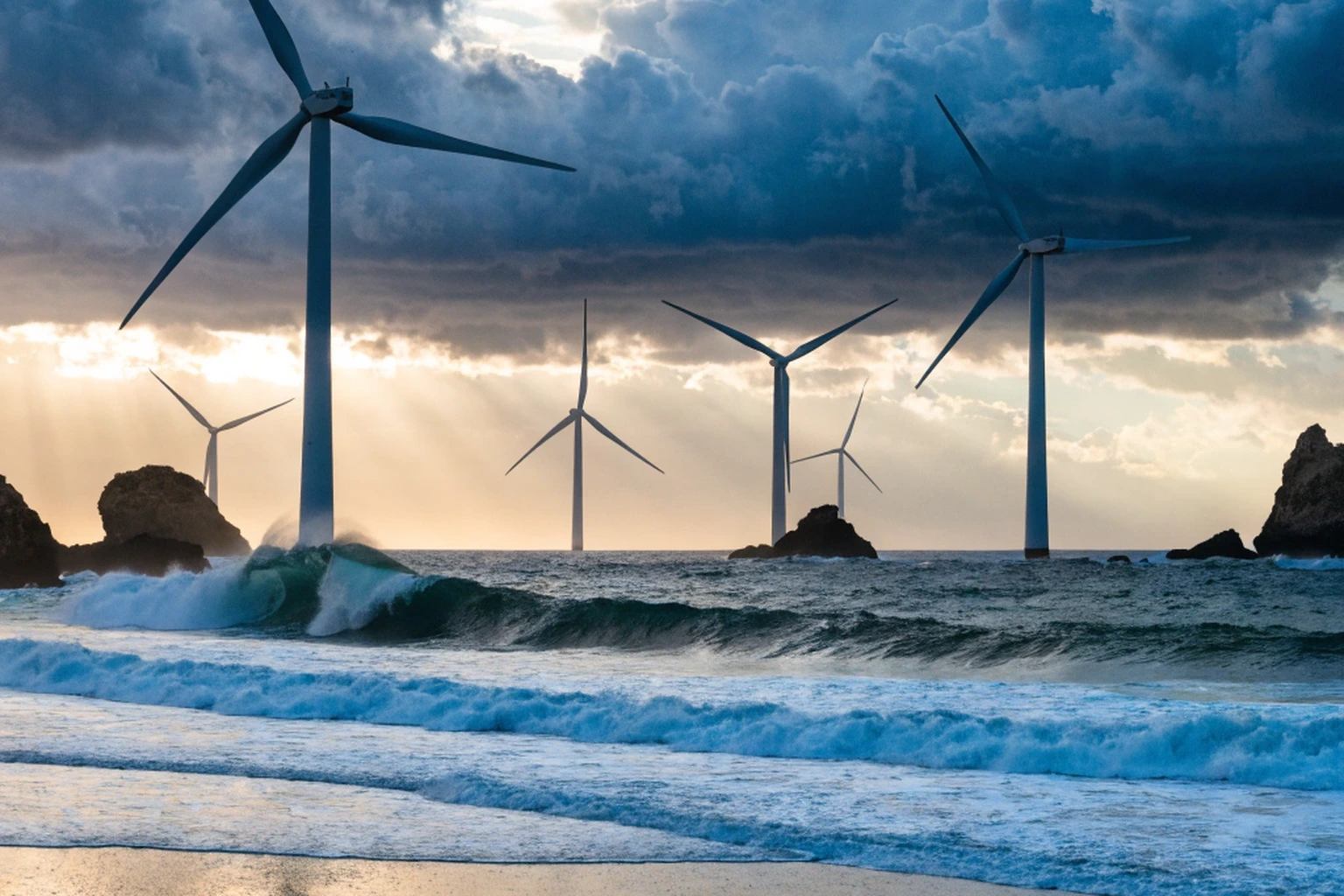
Green Energy in Portugal
Portugal is a beautiful country in Europe. It has many sunny days every year. It also has a lot of wind from the ocean. Today, Portugal uses these natural things to make electricity.
The country has big windmills for the wind. They also have many solar panels for the sun. This is called renewable energy. This energy is clean and safe for the earth.
Now, more than half of the electricity in Portugal is green. This change helps the planet. People use this energy in their homes and schools. It is a great way to help the world.
تسليط الضوء على القواعد
نمط: Present Simple of the verb 'to be'
"Portugal is a beautiful country in Europe."
We use 'is' with singular subjects like 'Portugal' or 'it'. This pattern describes a fact or a state.
نمط: Present Simple with plural subjects
"People use this energy in their homes and schools."
With plural subjects like 'People' or 'They', we use the base form of the verb. We do not add '-s' to the verb.
اختبر فهمك
10 أسئلة · A1 مبتدئ · معاينة مجانية واحدة
اختبر ما تعلمته من هذا المقال. أجب على جميع الأسئلة لكسب نقاط خبرة!
Where is Portugal located?
هل تريد إنهاء الاختبار؟
9 أسئلة أخرى بانتظارك. سجّل مجاناً لفتح الاختبار الكامل وكسب نقاط خبرة!
سجل مجاناًلديك حساب بالفعل؟ دخول
تفصيل الأسئلة
Where is Portugal located?
إجابتك:
الإجابة الصحيحة: Europe
Portugal has many sunny days every year.
إجابتك:
الإجابة الصحيحة: صحيح
What does 'clean' mean in this article?
إجابتك:
الإجابة الصحيحة: Safe for the earth
Portugal uses solar panels for the ____.
إجابتك:
الإجابة الصحيحة: sun
Portugal's Green Energy Revolution
Twenty years ago, Portugal was a different country. It bought a lot of oil and gas from other countries. This was very expensive and bad for the environment. But the government wanted to change this. They decided to use the natural power of the sun and the wind. Portugal is a lucky place because it has more than 300 sunny days every year. There are also many strong winds near the Atlantic Ocean. Engineers built large wind farms and solar panels across the hills and fields. Now, these machines make clean electricity for homes and businesses. The change was very successful. By 2023, renewable energy produced more than 60% of the electricity in Portugal. This is much better than in the past. Today, Portugal is a leader in green energy in Europe. The air is cleaner, and the country is more independent because it makes its own power. Families also use solar panels on their roofs to save money. Portugal shows that a small country can do big things for the world.
تسليط الضوء على القواعد
نمط: Past Simple
"They decided to use the natural power of the sun and the wind."
We use the past simple to talk about finished actions in the past. For regular verbs, we add '-ed' to the base form of the verb.
نمط: Comparatives
"The air is cleaner, and the country is more independent."
We use comparatives to compare two things. For short adjectives, we add '-er', and for longer adjectives, we use 'more' before the word.
اختبر فهمك
11 أسئلة · A2 ابتدائي · معاينة مجانية واحدة
اختبر ما تعلمته من هذا المقال. أجب على جميع الأسئلة لكسب نقاط خبرة!
Why did Portugal want to change its energy system?
هل تريد إنهاء الاختبار؟
10 أسئلة أخرى بانتظارك. سجّل مجاناً لفتح الاختبار الكامل وكسب نقاط خبرة!
سجل مجاناًلديك حساب بالفعل؟ دخول
تفصيل الأسئلة
Why did Portugal want to change its energy system?
إجابتك:
الإجابة الصحيحة: Because oil was expensive and bad for the environment
Portugal has more than 300 days of sun every year.
إجابتك:
الإجابة الصحيحة: صحيح
What does 'environment' mean?
إجابتك:
الإجابة الصحيحة: The natural world around us
Today, Portugal is a _____ in green energy in Europe.
إجابتك:
الإجابة الصحيحة: leader
How much of Portugal's electricity came from green energy in 2023?
إجابتك:
الإجابة الصحيحة: More than 60%
Portugal’s Green Future: A Renewable Energy Success
Portugal has experienced a remarkable transformation in how it produces energy over the last two decades. In the past, the country relied heavily on expensive fossil fuels that were imported from abroad. However, a strategic decision was made to use the nation’s natural resources instead. Since then, the government has invested heavily in modern technology to capture energy from the sun, wind, and water.
The country, which enjoys more than 300 days of sunshine every year, is an ideal location for solar energy. Massive solar farms have been constructed in the southern regions to provide power for thousands of homes. Additionally, huge wind turbines are located along the Atlantic coast. These turbines are turned by the strong ocean breezes, and the electricity is then sent to major cities like Lisbon and Porto.
Many of these green projects have been supported by international investors who see Portugal as a pioneer in the industry. By 2023, renewable sources frequently accounted for more than 60% of the nation’s total electricity consumption. This shift has not only helped the environment but has also created many new jobs in the engineering and construction sectors.
Although some fossil fuels are still used during very cold winters, the transition is almost complete. Portugal has proven that it is possible to move away from oil and gas by focusing on sustainable alternatives. This success story serves as an inspiration for other European nations that want to achieve energy independence while protecting the planet for future generations.
تسليط الضوء على القواعد
نمط: Passive Voice (Present Perfect)
"Many of these green projects have been supported by international investors."
We use the passive voice when the action is more important than who did it. It is formed with 'have/has been' followed by the past participle of the verb.
نمط: Relative Clauses
"The country, which enjoys more than 300 days of sunshine every year, is an ideal location for solar energy."
Relative clauses give extra information about a noun. We use 'which' for things and 'who' for people to connect two ideas into one sentence.
اختبر فهمك
11 أسئلة · B1 متوسط · معاينة مجانية واحدة
اختبر ما تعلمته من هذا المقال. أجب على جميع الأسئلة لكسب نقاط خبرة!
What was the main reason Portugal changed its energy strategy?
هل تريد إنهاء الاختبار؟
10 أسئلة أخرى بانتظارك. سجّل مجاناً لفتح الاختبار الكامل وكسب نقاط خبرة!
سجل مجاناًلديك حساب بالفعل؟ دخول
تفصيل الأسئلة
What was the main reason Portugal changed its energy strategy?
إجابتك:
الإجابة الصحيحة: To use its own natural resources and stop importing fuels
Portugal has more than 300 days of sunshine annually.
إجابتك:
الإجابة الصحيحة: صحيح
What does 'pioneer' mean in the text?
إجابتك:
الإجابة الصحيحة: A leader in a new field or industry
The government has _____ heavily in modern technology.
إجابتك:
الإجابة الصحيحة: invested
Where are the wind turbines mostly located?
إجابتك:
الإجابة الصحيحة: Along the Atlantic coast
Portugal's Green Transition: A Model for Sustainable Energy
Over the past two decades, Portugal has undergone a remarkable economic transformation. Having once been heavily dependent on imported fossil fuels, the nation has successfully transitioned into a global pioneer of renewable energy. This strategic shift was not merely an environmental choice but a strategic necessity, driven by the desire for energy independence and the urgent need to mitigate the effects of climate change. By leveraging its natural assets, the country has set a precedent for the rest of the European Union.
The success of this transition is largely attributed to Portugal's unique geographical position. With over 300 days of sunshine annually and powerful winds blowing from the Atlantic Ocean, the country possesses an abundance of natural assets. By investing heavily in wind farms and solar parks, Portugal has managed to leverage these resources effectively. Consequently, by 2023, renewable sources frequently accounted for more than 60% of the nation’s total electricity consumption, a feat that few other European countries have achieved.
However, such a massive overhaul of the national grid was not without its challenges. The implementation of new infrastructure required significant financial investment and long-term political commitment. Critics initially argued that the costs would be too high for consumers. Nevertheless, the government persisted, recognizing that the long-term benefits of reduced reliance on volatile international oil markets far outweighed the initial expenses. Furthermore, the development of these technologies has fostered a new sector of the economy, creating thousands of green jobs and attracting international investors.
Another critical aspect of this revolution is the management of energy fluctuations. Since solar and wind power are intermittent, the country had to develop sophisticated storage solutions and smart grids. If Portugal had not prioritized these technological advancements, the stability of the national power supply might have been compromised. Today, the Portuguese model serves as an inspiration for other nations striving to achieve carbon neutrality. The integration of hydroelectric power also plays a vital role, acting as a reliable backup when the sun does not shine or the wind stops blowing.
In conclusion, Portugal’s journey demonstrates that a rapid transition to clean energy is possible with the right combination of natural resources and political will. As the world faces an escalating climate crisis, the lessons learned from the Portuguese experience will undoubtedly be invaluable. The nation continues to push boundaries, aiming for even higher targets in the coming decade, proving that sustainability and economic growth can go hand in hand.
تسليط الضوء على القواعد
نمط: Third Conditional
"If Portugal had not prioritized these technological advancements, the stability of the national power supply might have been compromised."
This structure is used to talk about hypothetical situations in the past. It uses 'if + past perfect' followed by 'would/might/could + have + past participle'.
نمط: Relative Clauses
"Consequently, by 2023, renewable sources frequently accounted for more than 60% of the nation’s total electricity consumption, a feat that few other European countries have achieved."
The relative pronoun 'that' introduces a clause that provides more information about the noun 'feat'. It helps connect ideas and create complex sentence structures typical of B2 level.
نمط: Present Perfect
"Portugal has undergone a remarkable economic transformation."
The present perfect is used here to describe an action that started in the past and has a result or relevance in the present. It emphasizes the completed nature of the change.
اختبر فهمك
11 أسئلة · B2 فوق المتوسط · معاينة مجانية واحدة
اختبر ما تعلمته من هذا المقال. أجب على جميع الأسئلة لكسب نقاط خبرة!
What was the primary driver for Portugal's shift to renewable energy?
هل تريد إنهاء الاختبار؟
10 أسئلة أخرى بانتظارك. سجّل مجاناً لفتح الاختبار الكامل وكسب نقاط خبرة!
سجل مجاناًلديك حساب بالفعل؟ دخول
تفصيل الأسئلة
What was the primary driver for Portugal's shift to renewable energy?
إجابتك:
الإجابة الصحيحة: Strategic necessity and energy independence
Renewable energy accounted for over 60% of Portugal's electricity consumption by 2023.
إجابتك:
الإجابة الصحيحة: صحيح
Which word describes energy sources that are not available all the time, like wind and solar?
إجابتك:
الإجابة الصحيحة: Intermittent
The nation transitioned from a heavy reliance on imported _____ fuels.
إجابتك:
الإجابة الصحيحة: fossil
How did the government respond to early critics of the green transition?
إجابتك:
الإجابة الصحيحة: They persisted, focusing on long-term benefits
A Decisive Pivot: Unpacking Portugal’s Renewable Energy Metamorphosis
Seldom has a nation’s energy landscape undergone such a profound metamorphosis as that of Portugal over the last two decades. What was once a state heavily reliant on volatile fossil fuel imports has transitioned into a vanguard of the green revolution. This systemic overhaul was not merely a matter of environmental altruism; rather, it was born out of a stark strategic necessity to secure energy sovereignty. By harnessing the relentless Atlantic gales and the abundance of Mediterranean sunshine, Portugal has effectively decoupled its economic growth from carbon emissions. At the heart of this transition lies the exploitation of the country’s natural topography. With over 300 days of sunshine annually and a coastline battered by powerful winds, the geographical advantages were manifest. However, the mere presence of resources does not guarantee success. It was the strategic foresight of successive administrations that facilitated the construction of expansive wind farms and solar parks. The implementation of these policies required significant capital investment and a radical shift in the national grid’s architecture. By 2023, renewable sources frequently accounted for over 60% of the nation's electricity consumption, a milestone that underscores the efficacy of their long-term vision.
Nevertheless, the path to sustainability is fraught with complexities. Critics often point to the inherent intermittency of renewable sources, which necessitates sophisticated storage solutions and a resilient backup infrastructure. While hydroelectric power provides some stability, the reliance on weather-dependent variables introduces a level of unpredictability that the grid must manage. To mitigate this, Portugal has invested heavily in pumped-storage hydropower and is exploring the nascent potential of green hydrogen. Furthermore, the socio-economic implications of this paradigm shift cannot be overlooked. While new 'green' jobs have proliferated in rural areas where wind farms are situated, traditional industrial sectors linked to fossil fuels have faced inevitable decline, sparking debates regarding the equity of the transition and the need for a 'just transition' for displaced workers. It is also worth noting that Portugal’s success is not an isolated phenomenon but rather part of a broader European trend. Yet, what distinguishes the Portuguese model is the speed and decisiveness of its execution. Not only did the government provide financial incentives, but it also streamlined regulatory processes to encourage private innovation. This synergy between public policy and private enterprise has been pivotal. The recent focus on offshore wind energy in the Atlantic further demonstrates a commitment to pushing the boundaries of current technological capabilities, despite the immense engineering challenges posed by deep-sea environments. In conclusion, Portugal serves as a compelling case study for other nations aiming to navigate the energy transition. The journey from dependency to leadership illustrates that with political will and strategic investment, a sustainable future is within reach. However, as the nation looks toward 2050, the challenge will be to maintain this momentum while addressing the technical and social hurdles that remain.
تسليط الضوء على القواعد
نمط: Negative Inversion
"Seldom has a nation’s energy landscape undergone such a profound metamorphosis as that of Portugal over the last two decades."
This structure places a negative or restrictive adverb at the beginning of the sentence for emphasis, followed by the auxiliary verb and then the subject. It is common in formal C1 writing to highlight rarity or significance.
نمط: Cleft Sentences (It-cleft)
"It was the strategic foresight of successive administrations that facilitated the construction of expansive wind farms and solar parks."
A cleft sentence is used to focus on a specific part of the sentence (the subject here). By starting with 'It was...', the writer emphasizes the 'strategic foresight' as the primary cause of the change.
نمط: Nominalisation
"The implementation of these policies required significant capital investment and a radical shift in the national grid’s architecture."
Nominalisation involves turning verbs (implement) into nouns (implementation). This creates a more formal, objective, and dense academic tone, focusing on the actions and concepts rather than the actors.
اختبر فهمك
12 أسئلة · C1 متقدم · معاينة مجانية واحدة
اختبر ما تعلمته من هذا المقال. أجب على جميع الأسئلة لكسب نقاط خبرة!
What was the primary motivation behind Portugal's shift to renewable energy according to the text?
هل تريد إنهاء الاختبار؟
11 أسئلة أخرى بانتظارك. سجّل مجاناً لفتح الاختبار الكامل وكسب نقاط خبرة!
سجل مجاناًلديك حساب بالفعل؟ دخول
تفصيل الأسئلة
What was the primary motivation behind Portugal's shift to renewable energy according to the text?
إجابتك:
الإجابة الصحيحة: Strategic necessity to gain energy sovereignty
By 2023, renewable energy sources provided nearly 100% of Portugal's electricity consumption.
إجابتك:
الإجابة الصحيحة: خطأ
Which word describes something that is just beginning to develop and shows potential?
إجابتك:
الإجابة الصحيحة: Nascent
The text mentions that critics are concerned about the _____ of renewable sources, which requires backup infrastructure.
إجابتك:
الإجابة الصحيحة: intermittency
What does the author suggest about the 'just transition'?
إجابتك:
الإجابة الصحيحة: There is a debate about equity for workers in fossil fuel sectors.
The government not only provided money but also made the legal process easier for private companies.
إجابتك:
الإجابة الصحيحة: صحيح
The Lusitanian Metamorphosis: A C2 Analysis of Portugal’s Renewable Vanguard
The Lusitanian transition from a fossil-fuel-dependent peripheral state to a renewable energy vanguard serves as a poignant case study in strategic economic recalibration. At the turn of the millennium, Portugal found itself in a precarious position, tethered to the volatile fluctuations of international hydrocarbon markets. This systemic vulnerability necessitated a radical departure from established energy paradigms. By leveraging its unique topographical and meteorological endowments—most notably the relentless Atlantic winds and exceptional levels of insolation—the nation has purportedly rewritten the manual for sustainable development. Seldom has a nation so effectively decoupled its economic growth from carbon intensity in such a compressed timeframe.
Central to this metamorphosis was the recognition that energy independence is not merely an environmental desideratum but a geopolitical exigency. Should the state have remained passive, the ensuing decades of economic turbulence might have proved catastrophic. Instead, through a series of robust legislative frameworks and fiscal incentives, Portugal orchestrated a synergistic alignment between private investment and public policy. This was not a mere shift in technology, but a wholesale disruption of the existing hegemony of imported coal and gas. By 2023, the fruits of this labor were manifest, with renewable sources frequently accounting for over 60% of the national electricity consumption, a feat that would have been deemed inconceivable a mere generation ago.
However, such a transition is not devoid of profound complexities. The inherent intermittency of solar and wind power poses significant challenges to grid resilience. It is imperative that the technological infrastructure be continually upgraded to accommodate these fluctuations, perhaps through the implementation of advanced battery storage and pumped-storage hydropower. Furthermore, the discourse surrounding decarbonization often elides the socio-economic friction inherent in shifting away from traditional industries. It is often posited that the transition must be 'just,' ensuring that marginalized communities are not left behind in the wake of progress.
Moreover, the role of endogenous resources cannot be overstated. By internalizing energy production, Portugal has managed to alleviate some of the inflationary pressures associated with global energy crises. This shift has fostered a new sense of national resilience, allowing the country to navigate the uncertainties of the 21st century with greater autonomy. The synergy between different renewable technologies—where wind, solar, and hydro complement each other’s seasonal variances—has been a cornerstone of this success.
As we look toward the horizon, the integration of green hydrogen and offshore wind arrays beckons. These nascent technologies promise to further consolidate Portugal’s position at the forefront of the global energy revolution. While some critics argue that the pace of change has been overly ambitious, the empirical evidence of reduced carbon emissions and enhanced energy sovereignty provides a compelling rebuttal. Ultimately, the Portuguese experience underscores the notion that the pursuit of sustainability is intrinsically linked to the quest for national resilience. Were it not for the early adoption of these technologies, the nation’s current energy security would likely be compromised. The journey serves as a beacon for other nations, illustrating that even those with limited fossil fuel reserves can achieve a position of strength through innovation and strategic foresight.
تسليط الضوء على القواعد
نمط: Negative Inversion
"Seldom has a nation so effectively decoupled its economic growth from carbon intensity in such a compressed timeframe."
Used for rhetorical emphasis, the auxiliary verb comes before the subject after a negative or restrictive adverbial. It creates a formal, scholarly tone.
نمط: Mandative Subjunctive
"It is imperative that the technological infrastructure be continually upgraded to accommodate these fluctuations."
The subjunctive 'be' is used after adjectives of necessity (imperative, essential). This structure expresses a requirement or strong recommendation without using 'should'.
نمط: Inverted Third Conditional
"Were it not for the early adoption of these technologies, the nation’s current energy security would likely be compromised."
This formal structure replaces 'If it were not for...' by inverting the verb and subject. It is used to discuss hypothetical situations in the past or present that have a significant impact on the current state.
اختبر فهمك
12 أسئلة · C2 إتقان · معاينة مجانية واحدة
اختبر ما تعلمته من هذا المقال. أجب على جميع الأسئلة لكسب نقاط خبرة!
What was the primary driver for Portugal's shift to renewable energy according to the text?
هل تريد إنهاء الاختبار؟
11 أسئلة أخرى بانتظارك. سجّل مجاناً لفتح الاختبار الكامل وكسب نقاط خبرة!
سجل مجاناًلديك حساب بالفعل؟ دخول
تفصيل الأسئلة
What was the primary driver for Portugal's shift to renewable energy according to the text?
إجابتك:
الإجابة الصحيحة: Geopolitical exigency and economic vulnerability
By 2023, renewable energy sources in Portugal often met more than half of the national electricity demand.
إجابتك:
الإجابة الصحيحة: صحيح
What does the word 'exigency' mean in the context of the article?
إجابتك:
الإجابة الصحيحة: An urgent and pressing requirement
The inherent _____ of solar and wind power creates difficulties for maintaining a stable energy grid.
إجابتك:
الإجابة الصحيحة: intermittency
How does the author characterize the 'just transition' in the context of decarbonization?
إجابتك:
الإجابة الصحيحة: As a process that ensures marginalized communities are supported
The author suggests that Portugal's energy transition has been entirely free of social or economic friction.
إجابتك:
الإجابة الصحيحة: خطأ

