









airspace em 30 segundos
- Airspace is the atmospheric zone above a nation's land and sea that is under its legal jurisdiction and control.
- It is a critical concept in aviation for organizing flight paths and ensuring the safety of thousands of daily flights.
- Airspace is divided into different classes (controlled and uncontrolled) to manage various types of aircraft and aerial activities.
- Violating or closing airspace is a significant political act that can impact international relations and global travel networks.
The term airspace is a fundamental concept in both aviation and international law, representing the portion of the atmosphere that lies above a specific territory or water body. Unlike the concept of 'the sky,' which is largely a visual or physical description of the space above us, airspace is a regulatory and political construct. It is the invisible vertical extension of a nation's borders. When we speak of airspace, we are often referring to the legal right of a country to control the movement of aircraft, drones, and even balloons within that volume. This control is essential for national security, as it allows a government to monitor who enters its territory from above. Beyond the political dimension, airspace is divided into various categories for the purpose of safety and efficiency in flight. Air traffic controllers manage these segments to prevent collisions and ensure that the thousands of flights occurring daily follow precise paths. In common usage, you might hear this word in news reports about diplomatic disputes, where one country accuses another of violating its sovereign airspace, or in travel contexts when a pilot mentions entering a specific region's air traffic control zone.
- Sovereign Airspace
- The space above a nation's land and territorial waters where that nation has exclusive jurisdiction and control over all aerial activities.
- Controlled Airspace
- A generic term that covers the different classifications of airspace and defined dimensions within which air traffic control service is provided to flights.
Due to the sudden volcanic eruption, the government decided to close the national airspace to all commercial traffic for forty-eight hours.
Historically, the concept of airspace was formalized in the 20th century, particularly with the 1944 Chicago Convention on International Civil Aviation. This agreement established that every state has complete and exclusive sovereignty over the airspace above its territory. This means that no foreign aircraft can fly over a country without permission. In the modern era, the rise of unmanned aerial vehicles (UAVs) or drones has expanded the use of the term into the domestic and local sphere. Homeowners might talk about the airspace above their property, although legally, this only extends to a certain height. In the world of technology and logistics, companies like Amazon are concerned with the low-altitude airspace required for delivery drones. Thus, the word has transitioned from a purely military and commercial aviation term to one that affects urban planning and personal privacy. When people use this word, they are usually emphasizing the 'controlled' or 'owned' nature of the air, rather than just the air itself. It is a word about boundaries, rules, and the management of a three-dimensional resource that is vital for global connectivity.
The pilot was warned that he was drifting toward restricted military airspace and needed to change course immediately.
- International Airspace
- The atmosphere over the high seas and areas not belonging to any specific nation, where 'freedom of the air' generally applies.
Furthermore, the word is used metaphorically in some technical fields, though rarely. In urban development, 'air rights' refer to the empty space above a building that can be sold or leased. While not strictly 'airspace' in the aviation sense, the concepts overlap. In the context of environmental science, the term might appear when discussing the volume of air within a specific geographic basin that traps pollutants. However, the primary and most frequent usage remains tied to flight. Whether it is a 'no-fly zone' established during a conflict or the busy 'corridors' above major airports like London Heathrow or Atlanta Hartsfield-Jackson, airspace is a busy, highly regulated, and essential part of the modern world. Without the careful management of airspace, global trade and travel would be impossible, as the risk of mid-air collisions would be unmanageable. It represents the intersection of technology, law, and geography in the 21st century.
Commercial airlines are often forced to take longer routes to avoid the airspace of countries currently engaged in civil war.
Technological advances in radar have made it much harder for unauthorized aircraft to enter sovereign airspace undetected.
- Restricted Airspace
- An area of airspace where flight is not totally prohibited, but is subject to restrictions due to hazards such as artillery firing or guided missiles.
The festival organizers had to coordinate with the aviation authority to ensure the fireworks display didn't interfere with the local airspace.
Using the word airspace correctly requires understanding its role as an uncountable noun in most contexts, though it can sometimes be treated as a countable concept when referring to distinct regional blocks. It usually functions as the object of verbs like 'violate,' 'enter,' 'protect,' 'monitor,' or 'close.' For example, in a political context, you might say, 'The nation scrambled its fighter jets after a foreign drone violated its airspace.' Here, the word emphasizes the legal boundary. In a more technical or civilian context, the phrasing might be, 'The air traffic controller is responsible for managing the airspace around the airport.' In this instance, the word refers to the functional volume of air used for navigation. It is also frequently modified by adjectives that describe its status, such as 'congested,' 'restricted,' 'sovereign,' or 'international.' Using these modifiers helps clarify the specific rules that apply to that portion of the sky. For instance, 'congested airspace' implies a high volume of traffic, necessitating extra caution from pilots.
The new treaty aims to simplify the management of European airspace, reducing delays for millions of passengers.
- Verb Collocation: To Monitor
- Sophisticated satellite systems are used to monitor the global airspace for any signs of illegal activity.
- Adjective Collocation: Congested
- Pilots must be extremely vigilant when flying through the congested airspace of the Northeast Corridor.
Another common way to use airspace is in the context of 'closing' or 'opening' it. This is usually a high-level administrative or political decision. For example, 'The government closed its airspace to all Russian aircraft following the invasion.' This sentence shows how the word is used as a tool of international policy. You can also use it when discussing environmental or urban issues. 'The city is concerned about the noise pollution in the airspace above residential neighborhoods.' This usage shifts the focus from the aircraft to the space itself and the impact of what happens within it. When writing about drones, you might say, 'The hobbyist was fined for flying his drone in restricted airspace near the White House.' This highlights the legal consequences of ignoring airspace regulations. Notice that in all these examples, airspace is used to define a zone with specific rules or characteristics.
Navigating through the complex airspace of the Los Angeles basin requires advanced pilot certification.
In academic or technical writing, airspace is often categorized into classes (Class A, B, C, etc.). A sentence might read, 'Class A airspace extends from 18,000 feet mean sea level up to and including flight level 600.' This is a very specific, professional use of the term. In contrast, in a casual conversation, someone might say, 'There’s so much airspace out here in the desert; you can see for miles.' While this is slightly less precise, it still conveys the idea of the volume of air above a location. However, for a B2 learner, focusing on the 'controlled territory' aspect of the word is the most useful. It is a word that appears in the news frequently, especially during times of international tension or when discussing the future of transportation technology like flying taxis. Always remember that airspace is about the 'space' as a resource and a legal entity, not just the 'air' we breathe.
The introduction of 5G towers has raised concerns about potential interference within the airspace used by airplane altimeters.
- Prepositional Use: Into
- The jet fighter accidentally crossed into the neighbor's airspace during a training exercise.
Search and rescue teams were granted emergency access to the airspace over the disaster zone.
Efficient airspace design is key to reducing the carbon footprint of the aviation industry.
The word airspace is most commonly heard in environments where flight, security, and international relations intersect. If you turn on a global news channel like the BBC or CNN, you will likely hear it in reports about geopolitical conflicts. For example, a news anchor might report, 'Tensions are rising in the South China Sea as multiple nations claim control over the same airspace.' This usage highlights the strategic importance of the word. In these contexts, airspace is treated as a territory that must be defended. You will also hear it frequently if you listen to air traffic control (ATC) communications, which are often broadcast in documentaries or available on specialized websites. In this setting, the word is used with high precision. An air traffic controller might say, 'You are entering Class Bravo airspace; maintain 5,000 feet.' Here, it is a technical instruction that pilots must follow to the letter to ensure safety.
In the movie 'Top Gun,' the phrase 'violating restricted airspace' is used to build tension during high-stakes flight scenes.
- News Media
- Broadcasters use the term when discussing 'no-fly zones' or 'diplomatic sanctions' involving flight bans.
- Aviation Documentaries
- Shows like 'Mayday' or 'Air Crash Investigation' frequently use the term to explain how aircraft movements are managed.
Beyond the news and technical fields, you may encounter the word in discussions about modern technology and the 'Internet of Things.' As drone technology becomes more prevalent, local news stations often run segments on where people are allowed to fly their new gadgets. A reporter might warn, 'Be careful not to fly your drone in the airspace near the local airport, as it could lead to heavy fines.' This brings the word into the everyday lives of hobbyists and residents. Furthermore, in the context of commercial space travel—with companies like SpaceX and Blue Origin—the transition from airspace to 'outer space' is a hot topic of discussion. Scientists and legal experts debate where a nation's airspace ends and the common heritage of mankind begins. This is not just a theoretical debate; it has huge implications for the future of satellite launches and space tourism. When you hear the word in these futuristic contexts, it represents the expanding frontier of human activity.
The podcast host explained how the 'Berlin Airlift' required a narrow airspace corridor to supply the city during the Cold War.
In the business world, particularly in real estate and urban planning, the term is heard when discussing 'air rights' or 'vertical development.' While developers might use the term slightly differently, the core idea remains: who owns the space above a piece of land? You might hear a city council member say, 'We need to protect the airspace around our historic landmarks from being blocked by skyscrapers.' In this sense, the word is used to talk about the visual and physical openness of the sky. Finally, in environmental circles, you might hear about 'shared airspace' in the context of bird migration. Ornithologists often discuss how wind turbines or new flight paths might interfere with the airspace used by migratory birds. This usage reminds us that we share the sky with other living beings. Whether you are a pilot, a politician, a tech enthusiast, or an environmentalist, the word airspace is a key part of your vocabulary for describing the world above us.
Environmentalists are lobbying for 'quiet airspace' zones over national parks to protect the natural soundscape.
- Aviation Radio
- 'Cleared to enter the airspace' is a standard phrase used by controllers to give pilots permission to proceed.
The documentary detailed how the 9/11 attacks led to the first-ever total shutdown of North American airspace.
With the rise of flying cars, urban airspace will need to be completely redesigned for safety.
One of the most common mistakes learners make with the word airspace is confusing it with 'atmosphere' or 'sky.' While they all refer to the region above the earth, their meanings are distinct. The 'atmosphere' is a scientific term referring to the gases surrounding the planet. You wouldn't say 'the plane entered the national atmosphere' because the atmosphere doesn't have national borders. Similarly, 'the sky' is a general, often poetic term for what we see when we look up. You 'look at the sky,' but you 'fly through airspace.' Using 'sky' in a legal or technical context sounds unprofessional. For instance, 'The drone was in the illegal sky' is incorrect; it should be 'The drone was in restricted airspace.' Understanding this distinction is crucial for achieving a B2 level of precision. Another common error is using airspace as a countable noun when it shouldn't be. Many learners say 'the airspaces of the world,' but it is more natural to say 'global airspace' or 'the airspace of various countries.'
Incorrect: The bird flew into the airspace to find its nest. (Better: The bird flew into the sky...)
- Airspace vs. Atmosphere
- Use 'atmosphere' for science/weather; use 'airspace' for rules/territory.
- Airspace vs. Air
- 'Air' is the substance we breathe; 'airspace' is the volume of space.
Another mistake is using the word 'airspace' to refer to the interior of a building or a room. While 'space' can refer to a room, 'airspace' is almost exclusively used for the outdoors and the region where flight occurs. If you say, 'There is a lot of airspace in this warehouse,' people will likely understand you, but it sounds odd. A better choice would be 'volume' or simply 'space.' Additionally, learners sometimes confuse 'airspace' with 'airwaves.' 'Airwaves' refers to the radio frequencies used for broadcasting, not the physical space. So, you wouldn't say 'The radio station is taking up too much airspace'; you would say 'airwaves.' Misusing these technical terms can lead to confusion in professional settings. Finally, be careful with the preposition 'in' versus 'into.' We usually 'fly in airspace' (state) but 'enter into airspace' (movement across a boundary).
Incorrect: The satellite is orbiting in the national airspace. (Satellites are usually in outer space, above the airspace.)
Furthermore, learners often struggle with the spelling—it is one word, not two ('air space'). While some older texts might use two words, the modern standard in aviation and law is the compound 'airspace.' Using two words might make your writing look dated or less professional. Also, remember that 'airspace' is not a synonym for 'aviation.' 'Aviation' is the activity of flying; 'airspace' is where that activity happens. You can't say 'I am interested in the airspace industry' if you mean the business of flying planes; you should say 'the aviation industry' or 'the aerospace industry.' The latter, 'aerospace,' is a broader term that includes both the atmosphere and outer space. If you are talking about building rockets, 'aerospace' is the correct term. If you are talking about where a 747 flies, 'airspace' is the way to go. By avoiding these common pitfalls, you will use the word with the confidence of a native speaker.
Incorrect: The pilot requested to change his airspace. (Correct: The pilot requested to change his flight path or requested a new heading.)
- Airspace vs. Aerospace
- 'Aerospace' includes space travel and the industry; 'airspace' is specific to the atmosphere and its regulations.
Incorrect: We need to clear the airspace in the office. (Correct: We need to ventilate the office or clear the air.)
The news report mentioned the violation of the 'no-fly zone' airspace, which is a redundant but common way to emphasize the area.
When looking for alternatives to airspace, it is important to choose a word that fits the specific context, as many synonyms carry different connotations. If you are speaking about the physical space above the earth without the legal or regulatory baggage, sky is the most common and versatile choice. It is suitable for literature, casual conversation, and descriptions of weather. However, if you want something more formal or scientific, atmosphere is a strong alternative. It refers to the entire layer of gases surrounding the planet and is often used in environmental or astronomical contexts. For example, 'Pollutants are accumulating in the upper atmosphere.' Another related term is firmament, which is a poetic or archaic word for the sky, often used in religious or classical literature. You might see it in a 19th-century novel: 'The stars shone brightly in the firmament.' Using 'firmament' instead of 'airspace' in a technical report would be a major mistake, but in a poem, it would be beautiful.
- Sky
- General, visual, and non-technical. (e.g., The blue sky was clear.)
- Atmosphere
- Scientific, focuses on gases and layers. (e.g., The Earth's atmosphere protects us.)
In aviation specifically, you might use terms like flight path, corridor, or sector. A 'flight path' is the specific route an aircraft takes, while a 'corridor' is a narrow strip of airspace that aircraft are required to stay within. A 'sector' is a specific geographic area that a single air traffic controller is responsible for. These terms are more precise than 'airspace' when you are talking about the actual mechanics of flying. For instance, 'The pilot was told to stay within the designated corridor.' Another useful term is aerosphere, though it is much less common. It refers to the part of the atmosphere where life can exist and aircraft can fly. In the context of national security, you might hear territorial air, which is a more legalistic way of saying 'sovereign airspace.' This term emphasizes that the air is part of the nation's territory, just like its land and water.
The diplomat preferred the term 'territorial air' to emphasize his country's legal rights over the airspace.
If you are discussing the future of space travel, aerospace is the most appropriate alternative. It combines 'aeronautics' (the science of flight within the atmosphere) and 'space flight' (flight outside the atmosphere). This is a broad term that covers everything from airplanes to satellites. For example, 'She works in the aerospace industry.' On the other hand, if you are talking about the very low altitude space used by drones or for building, you might use the term low-altitude environment. In urban planning, vertical space is another useful alternative. This term is used to describe how a city grows upward. 'We need to manage our vertical space more effectively to accommodate the new drone delivery systems.' By choosing the right synonym, you can convey a much deeper level of meaning and show that you understand the nuances of the English language. Whether you want to sound like a scientist, a pilot, a lawyer, or a poet, there is a word that fits better than just 'airspace.'
The astronaut marveled at the thin blue line of the atmosphere, which looked so much more fragile than the vast airspace he had flown through as a pilot.
- Corridor
- A specific, restricted path through airspace.
- No-fly zone
- A specific area of airspace where aircraft are prohibited from flying.
The air traffic controller monitored his sector of the airspace with intense concentration.
The satellite transitioned from the upper airspace into the vacuum of outer space in just a few minutes.
How Formal Is It?
Curiosidade
The legal concept of airspace didn't really exist until the invention of the hot air balloon and later the airplane. Before that, nobody cared who 'owned' the sky because nobody could use it!
Guia de pronúncia
- Pronouncing it as two separate words with equal stress.
- Confusing the 'air' sound with 'ear'.
- Dropping the 's' in the middle, making it sound like 'air-pace'.
- Using a short 'a' in space, making it sound like 'spass'.
- Over-emphasizing the final 'e', which is silent.
Nível de dificuldade
It appears often in news and technical articles, which can be dense.
Requires understanding of collocations and legal/technical contexts.
The pronunciation is straightforward, but the context must be right.
Common in news broadcasts and aviation-related media.
O que aprender depois
Pré-requisitos
Aprenda a seguir
Avançado
Gramática essencial
Uncountable Nouns
We say 'much airspace' or 'a lot of airspace,' not 'many airspaces.'
Compound Nouns
'Airspace' is a closed compound noun, meaning it is written as one word without a space or hyphen.
Prepositions of Place
We use 'in' for a state (in the airspace) and 'into' for movement (into the airspace).
Adjective Placement
Adjectives like 'restricted' or 'sovereign' always come before the noun 'airspace.'
Possessive Nouns
When referring to a country, use the possessive: 'Germany's airspace' or the adjective 'German airspace.'
Exemplos por nível
The plane is in the airspace.
L'avion est dans l'espace aérien.
Uncountable noun.
Is this French airspace?
Est-ce l'espace aérien français ?
Used with a country's name as an adjective.
The airspace is big.
L'espace aérien est grand.
Subject of the sentence.
Look at the airspace above us.
Regardez l'espace aérien au-dessus de nous.
Prepositional phrase 'above us'.
The pilot knows the airspace.
Le pilote connaît l'espace aérien.
Direct object of 'knows'.
No planes in this airspace.
Pas d'avions dans cet espace aérien.
Negative structure.
We fly in the airspace.
Nous volons dans l'espace aérien.
Present simple tense.
The airspace is blue today.
L'espace aérien est bleu aujourd'hui.
Descriptive adjective 'blue'.
The government closed the airspace because of the storm.
Le gouvernement a fermé l'espace aérien à cause de la tempête.
Past simple 'closed'.
You cannot fly your drone in this restricted airspace.
Vous ne pouvez pas faire voler votre drone dans cet espace aérien restreint.
Adjective 'restricted' modifying airspace.
The pilot asked for permission to enter the airspace.
Le pilote a demandé la permission d'entrer dans l'espace aérien.
Infinitive 'to enter'.
There are many planes in the busy airspace near London.
Il y a beaucoup d'avions dans l'espace aérien encombré près de Londres.
Adjective 'busy'.
Our flight is now leaving Canadian airspace.
Notre vol quitte maintenant l'espace aérien canadien.
Present continuous 'is leaving'.
Military airspace is usually off-limits to small planes.
L'espace aérien militaire est généralement interdit aux petits avions.
Compound noun 'military airspace'.
The airspace above the stadium is closed during the game.
L'espace aérien au-dessus du stade est fermé pendant le match.
Prepositional phrase 'above the stadium'.
Air traffic controllers watch the airspace on their screens.
Les contrôleurs aériens surveillent l'espace aérien sur leurs écrans.
Plural subject.
The airline had to reroute the flight to avoid the war zone's airspace.
La compagnie aérienne a dû détourner le vol pour éviter l'espace aérien de la zone de guerre.
Infinitive 'to avoid'.
Violating a country's airspace can lead to serious diplomatic tension.
Viola l'espace aérien d'un pays peut entraîner de graves tensions diplomatiques.
Gerund 'violating' as the subject.
The new regulations aim to make the local airspace safer for everyone.
Les nouvelles réglementations visent à rendre l'espace aérien local plus sûr pour tous.
Comparative adjective 'safer'.
The pilot was warned that he was drifting into controlled airspace without a radio.
Le pilote a été averti qu'il dérivait dans un espace aérien contrôlé sans radio.
Passive voice 'was warned'.
International airspace belongs to no single nation.
L'espace aérien international n'appartient à aucune nation en particulier.
Negative 'no single nation'.
The air traffic control center manages a huge amount of airspace.
Le centre de contrôle aérien gère une quantité énorme d'espace aérien.
Quantifier 'a huge amount of'.
During the fireworks, the airspace above the park was strictly monitored.
Pendant les feux d'artifice, l'espace aérien au-dessus du parc était étroitement surveillé.
Adverb 'strictly' modifying monitored.
Drones are becoming a major challenge for modern airspace management.
Les drones deviennent un défi majeur pour la gestion moderne de l'espace aérien.
Compound noun 'airspace management'.
The sovereign airspace of a nation extends twelve nautical miles from its coast.
L'espace aérien souverain d'une nation s'étend à douze milles nautiques de ses côtes.
Specific legal measurement.
Airspace congestion is a primary cause of flight delays in Europe.
L'encombrement de l'espace aérien est une cause primaire des retards de vols en Europe.
Noun as subject.
The pilot must maintain constant communication while in Class B airspace.
Le pilote doit maintenir une communication constante lorsqu'il se trouve dans l'espace aérien de classe B.
Modal 'must' and technical classification.
Unauthorized entry into restricted airspace can result in immediate interception.
L'entrée non autorisée dans un espace aérien restreint peut entraîner une interception immédiate.
Abstract noun 'entry'.
The treaty established a shared airspace agreement between the neighboring countries.
Le traité a établi un accord d'espace aérien partagé entre les pays voisins.
Compound adjective 'shared airspace'.
Technological improvements are allowing for more efficient use of limited airspace.
Les améliorations technologiques permettent une utilisation plus efficace d'un espace aérien limité.
Present continuous with 'allowing for'.
The volcanic ash cloud forced the closure of several national airspaces.
Le nuage de cendres volcaniques a forcé la fermeture de plusieurs espaces aériens nationaux.
Plural usage in a specific context.
Urban planners are now considering how to allocate low-altitude airspace for delivery services.
Les urbanistes examinent maintenant comment allouer l'espace aérien à basse altitude pour les services de livraison.
Gerund phrase 'considering how to'.
The fragmentation of European airspace leads to significant inefficiencies and increased fuel consumption.
La fragmentation de l'espace aérien européen entraîne des inefficacités significatives et une augmentation de la consommation de carburant.
Complex noun phrase 'fragmentation of...'
International law is somewhat ambiguous regarding the vertical limit of national airspace.
Le droit international est quelque peu ambigu concernant la limite verticale de l'espace aérien national.
Adverb 'somewhat' modifying ambiguous.
The 'Open Skies' treaty was designed to promote transparency by allowing mutual surveillance of airspace.
Le traité 'Ciel Ouvert' a été conçu pour promouvoir la transparence en permettant une surveillance mutuelle de l'espace aérien.
Purpose clause 'to promote'.
Effective airspace management requires a high degree of international cooperation and data sharing.
Une gestion efficace de l'espace aérien exige un haut degré de coopération internationale et de partage de données.
Abstract subject.
The military conducted an exercise to test their ability to deny airspace to potential adversaries.
Les militaires ont mené un exercice pour tester leur capacité à interdire l'espace aérien à des adversaires potentiels.
Infinitive 'to deny'.
New satellite-based navigation systems are revolutionizing how we utilize oceanic airspace.
Les nouveaux systèmes de navigation par satellite révolutionnent la façon dont nous utilisons l'espace aérien océanique.
Present continuous 'are revolutionizing'.
The environmental impact of aircraft noise in residential airspace is a growing political concern.
L'impact environnemental du bruit des avions dans l'espace aérien résidentiel est une préoccupation politique croissante.
Complex subject 'The environmental impact...'
Legal experts are debating whether the traditional concept of airspace sovereignty is compatible with suborbital spaceflight.
Les experts juridiques débattent pour savoir si le concept traditionnel de souveraineté de l'espace aérien est compatible avec les vols spatiaux suborbitaux.
Indirect question 'whether...'
The unilateral declaration of an Air Defense Identification Zone (ADIZ) can be seen as a de facto expansion of sovereign airspace.
La déclaration unilatérale d'une zone d'identification de défense aérienne (ADIZ) peut être considérée comme une expansion de facto de l'espace aérien souverain.
Technical political terminology (ADIZ, de facto).
The intricate architecture of the nation's airspace is designed to balance the needs of civil aviation with national security imperatives.
L'architecture complexe de l'espace aérien de la nation est conçue pour équilibrer les besoins de l'aviation civile avec les impératifs de sécurité nationale.
Passive construction 'is designed to'.
Proponents of 'Single European Sky' argue that a unified airspace would drastically reduce the environmental footprint of the continent's air traffic.
Les partisans du 'Ciel unique européen' soutiennent qu'un espace aérien unifié réduirait considérablement l'empreinte environnementale du trafic aérien du continent.
Subordinate clause 'that...'
The transition from conventional radar to ADS-B technology represents a paradigm shift in global airspace surveillance.
La transition du radar conventionnel à la technologie ADS-B représente un changement de paradigme dans la surveillance mondiale de l'espace aérien.
Metaphorical 'paradigm shift'.
The legal doctrine of 'usque ad coelum' has been significantly curtailed by international treaties to ensure the feasibility of modern aviation.
La doctrine juridique 'usque ad coelum' a été considérablement restreinte par les traités internationaux pour assurer la faisabilité de l'aviation moderne.
Latin legal term and passive voice.
Geopolitical friction often manifests as the subtle encroachment into contested airspace by reconnaissance aircraft.
La friction géopolitique se manifeste souvent par l'empiètement subtil dans l'espace aérien contesté par des avions de reconnaissance.
Abstract noun 'encroachment'.
The integration of autonomous systems into the national airspace requires robust failsafe mechanisms and sophisticated collision-avoidance algorithms.
L'intégration de systèmes autonomes dans l'espace aérien national exige des mécanismes de sécurité robustes et des algorithmes sophistiqués d'évitement de collision.
Complex list of requirements.
The sheer density of the airspace above metropolitan hubs necessitates a level of coordination that pushes the limits of human cognition.
La densité pure de l'espace aérien au-dessus des centres métropolitains nécessite un niveau de coordination qui repousse les limites de la cognition humaine.
Relative clause 'that pushes...'
Colocações comuns
Frases Comuns
— To remove all aircraft from a specific area. This is usually done for safety or during emergencies.
The authorities had to clear the airspace for the emergency landing.
— A specific area of airspace where aircraft are not allowed to fly. Often used in military or security contexts.
The UN established a no-fly zone to protect civilians.
— The service that directs aircraft in the airspace. It ensures safe and efficient movement.
The pilot is in constant contact with air traffic control.
— An international policy that allows commercial aircraft to fly over and land in other countries. It promotes free trade in aviation.
The Open Skies agreement has lowered ticket prices for passengers.
— A specific altitude in the airspace. It is used by pilots and controllers to maintain vertical separation.
The plane is cruising at flight level 350.
— The legal right to use or control the space above a property. Often used in real estate.
The developer bought the air rights to build a taller skyscraper.
— The specific route an aircraft takes through the airspace when coming in to land. It must be kept clear of obstacles.
The new tower is blocking the airport's approach path.
— A narrow path through the airspace. Often used for safe passage through restricted areas.
The planes were restricted to a narrow corridor of flight.
— The minimum distance allowed between aircraft in the airspace. This is a key safety standard.
Modern technology allows for reduced separation minima in busy airspace.
— The distance in height between two aircraft in the airspace. This prevents mid-air collisions.
Controllers ensure vertical separation by assigning different altitudes.
Frequentemente confundido com
Atmosphere is a scientific term for gases; airspace is a legal term for territory.
Airwaves are for radio and TV signals; airspace is for physical flight.
Aerospace includes both the atmosphere and outer space; airspace is just the atmosphere.
Expressões idiomáticas
— There is no limit to what can be achieved. While not using the word 'airspace,' it is the most common idiom related to the space above us.
With your talent, the sky is the limit for your career.
informal— Something that is uncertain or not yet decided. Relates to the idea of things floating without a ground.
Our travel plans are still up in the air due to the strike.
informal— To remove bad feelings or misunderstandings between people. Uses 'air' in a metaphorical sense.
We had a long talk to clear the air after our argument.
neutral— To feel extremely happy or excited. As if you are floating in the sky.
She was walking on air after she got the job offer.
informal— To appear suddenly or from nowhere. As if created by the atmosphere itself.
The magician made a rabbit appear out of thin air.
neutral— Plans or hopes that are unrealistic or unlikely to happen. Building in the empty airspace.
Don't waste your time building castles in the air; focus on your studies.
literary— A person or thing that is new, exciting, and different. Relates to the quality of the air.
The new manager is a breath of fresh air for the office.
neutral— To disappear completely and suddenly. Similar to 'out of thin air.'
The thief seemed to vanish into thin air when the police arrived.
neutral— To express your complaints or problems publicly. Letting them out into the open space.
The meeting gave employees a chance to air their grievances.
neutral— A feeling or mood that is noticeable to everyone. As if it is filling the surrounding space.
There was a sense of excitement in the air before the concert.
neutralFácil de confundir
Both refer to the area above the earth.
Sky is what you see (visual/poetic); airspace is what you control (legal/technical).
The sky is beautiful, but the airspace is restricted.
Both contain the word 'air'.
Air is the gas we breathe; airspace is the volume of space.
I need some fresh air, but the plane is in the airspace.
Both involve planes and the sky.
A flight path is a specific route; airspace is the whole area.
The pilot followed his flight path through the busy airspace.
Both are related to where planes can't go.
A no-fly zone is a specific rule; airspace is the physical region where the rule applies.
The no-fly zone covers the entire airspace of the city.
Both relate to a country's control.
Territory usually refers to land or water; airspace refers to the sky above them.
The aircraft crossed the border and entered the nation's airspace.
Padrões de frases
The [Noun] is in the airspace.
The plane is in the airspace.
Do not [Verb] in the [Adjective] airspace.
Do not fly in the restricted airspace.
The [Noun] was [Verb-ed] because of the airspace [Noun].
The flight was delayed because of the airspace congestion.
Entering [Adjective] airspace without [Noun] is illegal.
Entering sovereign airspace without permission is illegal.
The [Noun] of the airspace is [Adjective] to [Verb].
The management of the airspace is essential to safety.
Despite the [Noun], the [Noun] remained in the airspace.
Despite the warning, the drone remained in the airspace.
The [Noun] represents a [Noun] in the way we [Verb] the airspace.
The treaty represents a milestone in the way we govern the airspace.
Given the [Adjective] nature of the airspace, [Clause].
Given the contested nature of the airspace, tensions remained high.
Família de palavras
Substantivos
Adjetivos
Relacionado
Como usar
Common in news and technical fields; rare in everyday casual speech.
-
The plane is in the sky of Germany.
→
The plane is in German airspace.
While 'sky' is okay, 'airspace' is the correct and more professional term for the region over a country.
-
I saw many airspaces on the map.
→
I saw many different regions of airspace on the map.
Airspace is usually uncountable. Using 'airspaces' is rare and usually refers to specific legal blocks.
-
The radio station has a wide airspace.
→
The radio station has a wide reach on the airwaves.
Airwaves refer to radio frequencies; airspace refers to the physical sky.
-
The satellite is in national airspace.
→
The satellite is in outer space.
Satellites are much higher than the atmosphere where national airspace ends.
-
We need to clean the airspace in this room.
→
We need to clean the air in this room.
Airspace is for the outdoors and aviation; 'air' is for the substance inside a building.
Dicas
Precision
Use 'airspace' when you want to sound professional. Instead of saying 'The plane is in the sky over Italy,' say 'The plane is in Italian airspace.' This shows a higher level of English proficiency.
Countability
Treat 'airspace' as an uncountable noun. You don't need to say 'an airspace.' Just use 'the airspace' or 'sovereign airspace.' This is one of the most common mistakes for intermediate learners.
Aerospace vs Airspace
If you are talking about rockets or the industry of building planes, use 'aerospace.' If you are talking about the area where planes fly, use 'airspace.' They are related but not the same.
Sovereignty
When you hear 'airspace' in the news, think about 'control.' It is almost always about who has the right to say 'yes' or 'no' to a plane being in that part of the sky.
Restricted Zones
Always pair 'restricted' with 'airspace' when talking about military bases or government buildings. This is a very common and useful collocation in both speaking and writing.
Drones
If you own a drone, learn the phrase 'unauthorized entry into airspace.' This is what you want to avoid to stay out of legal trouble with the aviation authorities.
Compound Words
Don't put a space between 'air' and 'space.' It is a single unit. Writing it as two words is a sign of a lower-level learner or an older writing style.
ATC Phrasing
In movies, characters often say 'Cleared into the airspace.' This is the standard way air traffic controllers give permission. Listen for the word 'cleared' nearby.
Air Rights
In business English, 'airspace' is often connected to 'air rights.' This is about the value of the space above a building, which can be worth millions in big cities like New York.
Congestion
Use the phrase 'airspace congestion' when discussing environmental issues. More planes waiting in the airspace means more pollution, which is a common topic in modern essays.
Memorize
Mnemônico
Think of 'Air' + 'Space'. It is the 'Space' in the 'Air' that countries treat like their own 'Place'.
Associação visual
Imagine a giant, invisible glass box sitting on top of a country's map. Everything inside that box is the airspace.
Word Web
Desafio
Try to use 'airspace' in a sentence about a drone and a sentence about a country's border.
Origem da palavra
A compound word formed from 'air' and 'space.' The word 'air' comes from Old French 'air,' which originated from the Latin 'aer' and Greek 'aer.' The word 'space' comes from Old French 'espace,' from Latin 'spatium.'
Significado original: Literally, a place or volume filled with air.
Indo-European (via Latin and Greek roots).Contexto cultural
Be careful when discussing airspace in the context of disputed territories (like Kashmir or the South China Sea), as it is a highly emotional and political topic.
In the US and UK, 'airspace' is a standard term in news and technical fields. It is rarely used in casual slang.
Pratique na vida real
Contextos reais
Aviation
- requesting airspace clearance
- entering controlled airspace
- airspace class
- maintain separation in airspace
International Politics
- violation of sovereign airspace
- closing national airspace
- diplomatic protest over airspace
- disputed airspace
Drones/Technology
- restricted drone airspace
- low-altitude airspace
- airspace for delivery
- illegal use of airspace
Real Estate
- selling air rights
- blocking the airspace
- vertical airspace ownership
- building into the airspace
Environment
- pollution in the airspace
- migratory bird airspace
- shared vertical airspace
- protecting the soundscape of the airspace
Iniciadores de conversa
"Have you ever heard about a country closing its airspace due to a volcano?"
"Do you think delivery drones should be allowed to use the airspace above our homes?"
"How do you think air traffic controllers manage such a busy airspace without making mistakes?"
"Should every country have total control over the airspace above its land, or should the sky be free?"
"What would happen if a plane accidentally entered restricted military airspace?"
Temas para diário
Imagine you are an air traffic controller. Describe a busy day managing the airspace above a large city.
Write about the importance of protecting a nation's sovereign airspace from a security perspective.
Do you believe that the airspace above our houses should belong to us or to the government? Explain your view.
Discuss how the closing of airspace in one country can affect the entire global travel network.
Write a story about a pilot who gets lost and accidentally flies into a very dangerous part of the airspace.
Perguntas frequentes
10 perguntasNot exactly. While they refer to the same physical area, 'sky' is a general term for what we see, while 'airspace' is a legal and technical term for the controlled region used by aircraft. For example, you would say the 'sky is blue,' but you would say 'the plane entered the airspace.'
In most countries, you own the 'air rights' to a certain height above your property, which allows you to build or prevent others from building. However, the government generally controls the 'navigable airspace' above that height for the use of airplanes and drones. The exact height varies by local law.
Yes, a sovereign nation has the legal right to close its airspace to some or all aircraft for reasons of national security, safety (like a volcanic eruption), or diplomatic sanctions. This happened famously during the 9/11 attacks when the US closed its entire airspace for several days.
International airspace is the region of the atmosphere over the high seas and other areas that do not belong to any specific nation. In these areas, aircraft from all countries generally have the freedom to fly, although they still follow international safety rules.
There is no universally agreed-upon vertical limit for national airspace. However, many experts use the 'Kármán line' (about 100 kilometers or 62 miles above sea level) as the boundary between airspace and outer space. Beyond this point, national sovereignty usually ends.
If an aircraft enters a country's airspace without permission, it is called an airspace violation. The country may 'scramble' military jets to intercept the plane, force it to land, or, in extreme cases of perceived threat, even shoot it down. It usually leads to a formal diplomatic protest.
Controlled airspace is a region where air traffic controllers provide directions to pilots to keep planes safe and separated. Uncontrolled airspace is usually in remote or low-altitude areas where pilots are responsible for seeing and avoiding other aircraft themselves without ATC help.
It is written as one word: 'airspace.' While you might occasionally see 'air space' in very old books or informal writing, the standard spelling in aviation, law, and modern English is the compound word 'airspace.'
Airspace is divided into classes (like Class A, B, C, etc.) to manage different levels of traffic density and provide appropriate safety services. For example, the airspace around a major airport like New York's JFK is a different class than the airspace over a desert, with much stricter rules.
Drones are a major challenge because they often fly at low altitudes where traditional planes don't go, and they are harder to track on radar. Governments are creating new rules and 'low-altitude airspace' categories to ensure drones don't crash into people or other aircraft.
Teste-se 200 perguntas
Explain the difference between 'sky' and 'airspace' in three sentences.
Well written! Good try! Check the sample answer below.
Write a news headline about a country closing its airspace.
Well written! Good try! Check the sample answer below.
Describe why a pilot needs to talk to air traffic control when entering busy airspace.
Well written! Good try! Check the sample answer below.
Write a short paragraph about the future of drone delivery in urban airspace.
Well written! Good try! Check the sample answer below.
What are 'air rights' in real estate? Write two sentences.
Well written! Good try! Check the sample answer below.
Why is international airspace important for global trade?
Well written! Good try! Check the sample answer below.
Discuss the political impact of an airspace violation.
Well written! Good try! Check the sample answer below.
Define 'controlled airspace' for a beginner learner.
Well written! Good try! Check the sample answer below.
How can better airspace management help the environment?
Well written! Good try! Check the sample answer below.
Write a sentence using 'restricted airspace' and 'military base'.
Well written! Good try! Check the sample answer below.
What is the Kármán line? Explain its significance.
Well written! Good try! Check the sample answer below.
Write a formal letter snippet requesting airspace clearance.
Well written! Good try! Check the sample answer below.
Describe a scenario where a 'no-fly zone' might be established.
Well written! Good try! Check the sample answer below.
Why is the word 'airspace' uncountable? Give an example.
Well written! Good try! Check the sample answer below.
Explain the term 'airspace congestion'.
Well written! Good try! Check the sample answer below.
Write a dialogue between a pilot and a controller about entering airspace.
Well written! Good try! Check the sample answer below.
How does technology improve airspace surveillance?
Well written! Good try! Check the sample answer below.
Discuss the concept of 'Single European Sky'.
Well written! Good try! Check the sample answer below.
Write a sentence using 'violate' and 'sovereign airspace'.
Well written! Good try! Check the sample answer below.
What is 'uncontrolled airspace'? Write two sentences.
Well written! Good try! Check the sample answer below.
Pronounce the word 'airspace' clearly.
Read this aloud:
Você disse:
Speech recognition is not supported in your browser. Try Chrome or Edge.
Describe a time you were on a plane and the pilot made an announcement about the airspace.
Read this aloud:
Você disse:
Speech recognition is not supported in your browser. Try Chrome or Edge.
Explain the concept of 'restricted airspace' in your own words.
Read this aloud:
Você disse:
Speech recognition is not supported in your browser. Try Chrome or Edge.
Discuss whether drones should be allowed in the airspace over your house.
Read this aloud:
Você disse:
Speech recognition is not supported in your browser. Try Chrome or Edge.
How would you explain 'airspace' to a child?
Read this aloud:
Você disse:
Speech recognition is not supported in your browser. Try Chrome or Edge.
What are the risks of flying in congested airspace?
Read this aloud:
Você disse:
Speech recognition is not supported in your browser. Try Chrome or Edge.
Talk about the importance of international airspace for tourism.
Read this aloud:
Você disse:
Speech recognition is not supported in your browser. Try Chrome or Edge.
Explain the role of an air traffic controller in managing airspace.
Read this aloud:
Você disse:
Speech recognition is not supported in your browser. Try Chrome or Edge.
How do you think airspace rules will change in the next 50 years?
Read this aloud:
Você disse:
Speech recognition is not supported in your browser. Try Chrome or Edge.
Describe a news story you heard recently involving airspace.
Read this aloud:
Você disse:
Speech recognition is not supported in your browser. Try Chrome or Edge.
Discuss the ethics of a 'no-fly zone' during a conflict.
Read this aloud:
Você disse:
Speech recognition is not supported in your browser. Try Chrome or Edge.
What is the difference between 'atmosphere' and 'airspace'?
Read this aloud:
Você disse:
Speech recognition is not supported in your browser. Try Chrome or Edge.
Explain why a country might protect its sovereign airspace so fiercely.
Read this aloud:
Você disse:
Speech recognition is not supported in your browser. Try Chrome or Edge.
How does weather affect the availability of airspace?
Read this aloud:
Você disse:
Speech recognition is not supported in your browser. Try Chrome or Edge.
Talk about 'air rights' in big cities.
Read this aloud:
Você disse:
Speech recognition is not supported in your browser. Try Chrome or Edge.
What is 'international airspace' and who controls it?
Read this aloud:
Você disse:
Speech recognition is not supported in your browser. Try Chrome or Edge.
Describe the training a pilot might need to navigate complex airspace.
Read this aloud:
Você disse:
Speech recognition is not supported in your browser. Try Chrome or Edge.
Explain the 'Single European Sky' concept to a friend.
Read this aloud:
Você disse:
Speech recognition is not supported in your browser. Try Chrome or Edge.
Discuss the impact of space tourism on traditional airspace.
Read this aloud:
Você disse:
Speech recognition is not supported in your browser. Try Chrome or Edge.
How do satellites and planes share the sky?
Read this aloud:
Você disse:
Speech recognition is not supported in your browser. Try Chrome or Edge.
Listen to the sentence: 'The plane entered the airspace at 10 AM.' What time did it enter?
Listen to the sentence: 'Restricted airspace is found near the military base.' Where is the restricted airspace?
Listen to the sentence: 'The government closed the airspace because of the volcano.' Why was it closed?
Listen to the sentence: 'Air traffic control manages the busy airspace.' Who manages the airspace?
Listen to the sentence: 'Violating airspace can lead to a diplomatic protest.' What can happen if you violate airspace?
Listen to the sentence: 'International airspace is over the ocean.' Where is it located?
Listen to the sentence: 'The pilot requested clearance to enter Class B airspace.' What type of airspace did he want to enter?
Listen to the sentence: 'Airspace congestion is causing delays.' What is causing the delays?
Listen to the sentence: 'The Kármán line is at 100 kilometers.' How high is the Kármán line?
Listen to the sentence: 'Drones must stay in low-altitude airspace.' Where must drones stay?
Listen to the sentence: 'The treaty established a shared airspace.' What did the treaty establish?
Listen to the sentence: 'Unauthorized entry into restricted airspace is a crime.' What is a crime?
Listen to the sentence: 'Vertical separation prevents mid-air collisions.' What does vertical separation prevent?
Listen to the sentence: 'The Single European Sky aims to reduce emissions.' What is the goal of the project?
Listen to the sentence: 'The pilot followed the flight corridor.' What did the pilot follow?
/ 200 correct
Perfect score!
Summary
Airspace is essentially the 'invisible territory' in the sky. While we often think of the sky as open and free, it is actually a highly regulated and legally defined volume that countries protect as fiercely as their land borders. Example: 'The airline had to bypass the country's airspace due to the ongoing conflict.'
- Airspace is the atmospheric zone above a nation's land and sea that is under its legal jurisdiction and control.
- It is a critical concept in aviation for organizing flight paths and ensuring the safety of thousands of daily flights.
- Airspace is divided into different classes (controlled and uncontrolled) to manage various types of aircraft and aerial activities.
- Violating or closing airspace is a significant political act that can impact international relations and global travel networks.
Precision
Use 'airspace' when you want to sound professional. Instead of saying 'The plane is in the sky over Italy,' say 'The plane is in Italian airspace.' This shows a higher level of English proficiency.
Countability
Treat 'airspace' as an uncountable noun. You don't need to say 'an airspace.' Just use 'the airspace' or 'sovereign airspace.' This is one of the most common mistakes for intermediate learners.
Aerospace vs Airspace
If you are talking about rockets or the industry of building planes, use 'aerospace.' If you are talking about the area where planes fly, use 'airspace.' They are related but not the same.
Sovereignty
When you hear 'airspace' in the news, think about 'control.' It is almost always about who has the right to say 'yes' or 'no' to a plane being in that part of the sky.
Exemplo
The drone was flying in restricted airspace near the city park.
Conteúdo relacionado
Ver em vídeos
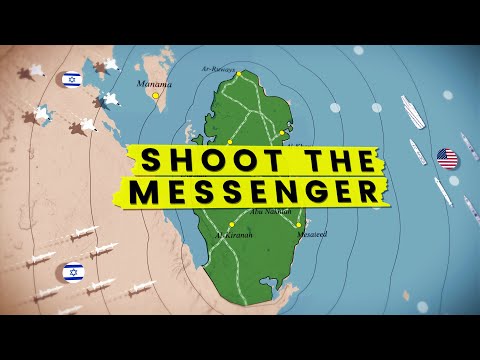 12:57
12:57
How Israel's strike on Qatar could backfire
"The drone was flying in restricted airspace near the city park."
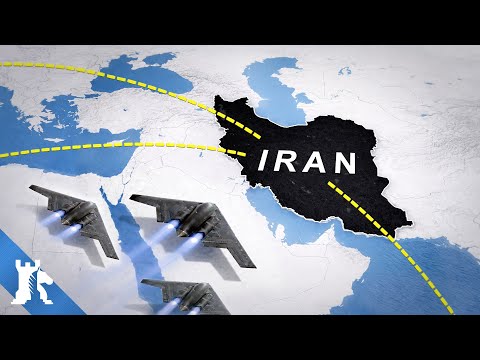 17:00
17:00
Three ways Trump could strike Iran
"The drone was flying in restricted airspace near the city park."
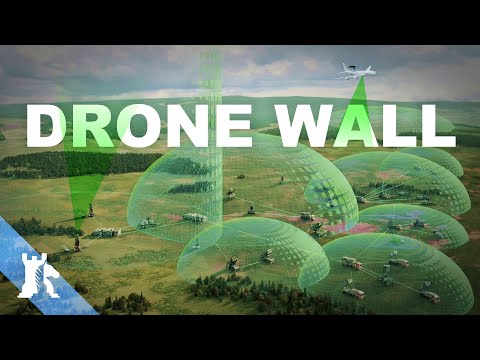 13:30
13:30
How NATO plans to stop Russian drones
"The drone was flying in restricted airspace near the city park."
Gramática relacionada
Mais palavras de Law
rules
B1As regras são um conjunto de regulamentos ou princípios que regem a conduta dentro de uma atividade ou organização específica.
confinement
C1O confinamento é o estado de ser mantido em um local restrito.
restriction
B2Uma regra ou condição que limita o que você pode fazer. Frequentemente uma medida oficial.
legislative
C1Relativo ao poder ou processo de fazer leis através de um órgão formal, como um parlamento. Descreve as funções ou ações envolvidas na criação de estatutos.
fda
B2A FDA é a agência governamental dos EUA que regula alimentos e medicamentos.
enjectment
C1O enjectment é uma ação legal para recuperar a posse de um imóvel de alguém que o ocupa indevidamente.
instituted
B1Estabelecer ou iniciar oficialmente um sistema, regra ou política formal.
rights
B1Direitos são princípios legais ou éticos de liberdade ou de direito a algo.
owns
B1Ter algo como propriedade legal. Por exemplo, ele possui um carro.
prison
B1Uma prisão é um edifício onde as pessoas são mantidas como punição por crimes.

