nato em 30 segundos
- NATO is a military alliance of 32 North American and European countries.
- It was founded in 1949 to provide collective security against external threats.
- The core principle is Article 5: an attack on one member is an attack on all.
- It promotes democratic values and peaceful resolution of international disputes.
The term NATO is an acronym that stands for the North Atlantic Treaty Organization. At its core, it represents one of the most significant and enduring military and political alliances in modern history. Established in the aftermath of World War II, specifically on April 4, 1949, NATO was designed to provide collective security against the perceived threat posed by the Soviet Union during the Cold War. The fundamental principle of the organization is enshrined in Article 5 of the North Atlantic Treaty, which states that an armed attack against one member state shall be considered an attack against all member states. This concept of collective defense has served as a cornerstone of Western geopolitical strategy for over seven decades.
- Geopolitical Context
- NATO is used primarily in discussions regarding international relations, global security, and military cooperation. When people mention NATO, they are often referring to the collective military power of its 32 member nations, which include the United States, Canada, and various European countries. The alliance has evolved from a purely defensive posture during the Cold War to a more multifaceted organization involved in crisis management, peacekeeping, and cooperative security across the globe.
The summit concluded with a joint statement reaffirming the NATO commitment to regional stability.
In everyday conversation, NATO is frequently discussed in the context of current events, particularly when there are tensions between Western nations and other global powers. For example, the expansion of NATO—adding new member states like Finland and Sweden—is a major topic of international news. People use the word when debating foreign policy, military spending, or the ethical implications of international intervention. It is not just a military term; it is a symbol of a specific set of democratic values and a shared commitment to the rule of law and peaceful resolution of conflicts.
- Organizational Structure
- The organization operates through a system of committees and military commands. The North Atlantic Council is the principal political decision-making body, where representatives from all member countries meet to discuss security issues. The military structure is led by the Supreme Allied Commander Europe (SACEUR), historically always a U.S. officer, reflecting the significant role of the United States in the alliance's capabilities.
Several countries are currently seeking NATO membership to bolster their national security.
The term is also used in technical military contexts, such as 'NATO reporting names' for foreign military equipment or 'NATO standard' for ammunition and communication protocols. This ensures that the diverse militaries within the alliance can work together effectively, a concept known as interoperability. Without these standards, the various national armies would struggle to communicate or share resources during a joint operation.
The 5.56mm cartridge is a standard NATO caliber used by infantry forces worldwide.
- Historical Significance
- Historically, NATO's existence defined the 'Western Bloc' during the Cold War. Its counterpart was the Warsaw Pact, led by the Soviet Union. The rivalry between these two organizations shaped global politics for decades, leading to the nuclear arms race and various proxy wars. When the Soviet Union collapsed in 1991, many questioned if NATO still had a purpose. However, the alliance adapted by focusing on peacekeeping in the Balkans and later on counter-terrorism after the September 11 attacks.
The fall of the Berlin Wall marked a turning point for NATO strategy in Eastern Europe.
Public opinion on NATO varies significantly across different member states.
Using the word NATO correctly requires an understanding of its grammatical role as a proper noun and an acronym. While it is technically an abbreviation, it is treated as a singular collective noun. In most formal writing, it is used without an article when referring to the organization directly, but often takes the definite article 'the' when used as a modifier or when referring to the alliance as a whole in certain contexts.
- As a Subject or Object
- When NATO is the subject of a sentence, it takes a singular verb. For example: 'NATO has announced a new series of military exercises.' Here, 'has' is used because NATO is viewed as a single entity. As an object, it follows standard rules: 'The president met with leaders from NATO.'
NATO remains the primary security framework for the North Atlantic region.
One of the most common ways to use NATO is as an attributive noun, meaning it acts like an adjective to modify another noun. Common pairings include 'NATO forces,' 'NATO headquarters,' 'NATO members,' and 'NATO policy.' In these cases, the word describes the origin or affiliation of the following noun. For instance, 'NATO forces were deployed to the border' specifies which military units are being discussed.
- The Use of Articles
- A common point of confusion is whether to say 'NATO' or 'the NATO.' Generally, you use 'NATO' alone when referring to the organization: 'She works for NATO.' However, you use 'the' when NATO modifies another noun: 'The NATO summit was held in Vilnius.' An exception is 'the NATO alliance,' where 'the' refers to the word 'alliance.'
The NATO Secretary General held a press conference yesterday.
In more complex sentences, NATO can be used to describe standards or protocols. 'The equipment must meet NATO specifications' implies a high level of technical requirement and international compatibility. In political science writing, you might see NATO used in the context of 'NATO enlargement' or 'NATO integration,' referring to the processes of expanding the alliance or deepening the cooperation between members.
Many nations view NATO as a vital shield against external aggression.
- Formal vs. Informal Usage
- In formal documents, you might see the full name 'North Atlantic Treaty Organization' used once, followed by '(NATO)' in parentheses, and then 'NATO' used for the rest of the text. In informal conversation, the acronym is used exclusively, as almost everyone recognizes it. It is rarely spelled out in casual speech.
The debate over NATO spending has become a major political issue.
Finally, consider the prepositional use. You can be 'in NATO,' 'part of NATO,' or 'aligned with NATO.' Each conveys a different level of formal relationship. A member state is 'in' or 'part of' NATO, while a partner country like Ukraine might be 'aligned with' or 'seeking to join' NATO.
The joint exercise involved both NATO members and partner nations.
The word NATO is ubiquitous in certain spheres of life, particularly those involving news, politics, and history. If you turn on a major news network like the BBC, CNN, or Al Jazeera, you are likely to hear NATO mentioned at least once a day, especially during times of international crisis. It is a staple of the 'World News' or 'International Relations' segments.
- In the News Media
- Journalists use NATO to describe the collective actions of Western powers. You will hear phrases like 'NATO is monitoring the situation,' 'NATO leaders are meeting in Brussels,' or 'The NATO response was swift.' In these contexts, NATO acts as a shorthand for the coordinated diplomatic and military stance of the member nations.
The news anchor reported on the latest NATO strategy regarding Eastern European security.
In academic settings, particularly in high school history or university-level political science classes, NATO is a central topic. Students learn about the 'NATO-Warsaw Pact' rivalry, the 'NATO bombing of Yugoslavia,' and the 'NATO mission in Afghanistan.' It is impossible to study the history of the 20th and 21st centuries without encountering this word repeatedly. Professors discuss it as an example of an 'intergovernmental organization' or a 'security community.'
- In Political Discourse
- Politicians use NATO as a talking point during elections or policy debates. In the United States, you might hear debates about whether other NATO members are 'paying their fair share' of defense costs. In Europe, politicians might discuss NATO in relation to 'European strategic autonomy'—the idea that Europe should be able to defend itself without relying solely on the U.S.-led alliance.
During the debate, the candidate emphasized the importance of maintaining strong NATO ties.
Military personnel and their families hear the word NATO constantly. It defines their working environment, from the 'NATO phonetic alphabet' (Alpha, Bravo, Charlie...) to the 'NATO medals' awarded for service in specific missions. For a soldier, NATO isn't just a political concept; it's the framework that determines where they are deployed, what equipment they use, and who their allies are on the battlefield.
Pilots use the NATO phonetic alphabet to ensure clear communication over the radio.
- In Popular Culture
- You will also find NATO in movies, thrillers, and video games. Tom Clancy novels often feature NATO as a major player in global conflicts. Games like 'Call of Duty' or 'Arma' frequently use NATO as a faction that players can join or fight against. In these contexts, NATO is often portrayed as the 'good guys' or the technologically superior force, reflecting a specific Western perspective.
The movie depicted a fictional scenario where NATO forces had to intervene in a global crisis.
Finally, you might hear NATO mentioned in the context of humanitarian aid or disaster relief. While primarily a military alliance, NATO has assets (like transport planes and logistics experts) that are sometimes used to deliver aid to disaster-stricken areas, even in non-member countries. This broadens the context in which the word is heard beyond just war and conflict.
NATO assisted in the delivery of medical supplies during the international health crisis.
Despite being a common term, there are several frequent mistakes people make when using or understanding NATO. These range from grammatical errors to fundamental misunderstandings of what the organization actually is and does.
- Confusing NATO with the UN
- The most common conceptual mistake is confusing NATO with the United Nations (UN). While both are international organizations, they have very different purposes. The UN is a global organization aimed at maintaining international peace and security through diplomacy and has almost every country in the world as a member. NATO is a specific military alliance of 32 countries with a focus on collective defense. You cannot use them interchangeably.
Incorrect: The UN and NATO are the same thing. Correct: NATO is a military alliance, while the UN is a global diplomatic body.
Another common mistake is the pronunciation. Some learners try to pronounce each letter individually (N-A-T-O), like they do with the 'FBI' or 'USA.' However, NATO is an acronym that is pronounced as a single word: /'neɪtoʊ/ (NAY-toh). Pronouncing it letter-by-letter will sound unnatural to native speakers.
- Misunderstanding 'North Atlantic'
- Many people assume that because of the name, NATO only involves countries directly bordering the North Atlantic Ocean. While this was the original geographic focus, the alliance has expanded to include landlocked countries like Hungary, the Czech Republic, and Slovakia, as well as countries on the Mediterranean or Baltic Seas. Thinking NATO is strictly about the Atlantic coast is a factual error.
It is a mistake to think NATO only includes countries with an Atlantic coastline.
Grammatically, the most frequent error is the 'the' placement. As mentioned before, you don't say 'I work for the NATO.' You say 'I work for NATO.' However, you *do* say 'The NATO headquarters is in Brussels.' Remembering when to use the definite article is tricky but essential for sounding fluent.
He was confused about whether to use 'the' before NATO in his essay.
- Article 5 Misconceptions
- A more advanced mistake involves the interpretation of Article 5. People often think it means an automatic declaration of war. In reality, Article 5 says that members will take 'such action as it deems necessary, including the use of armed force.' This means each country decides its own level of response, though the expectation of military support is very high.
Many people misunderstand the legal nuances of the NATO collective defense clause.
Finally, some people mistakenly believe NATO is a branch of the U.S. military. While the U.S. is the most powerful member and provides the most funding, NATO is an independent international organization where every member has an equal vote in the North Atlantic Council. Decisions must be unanimous, meaning even the smallest member can technically block a NATO action.
The idea that NATO is simply a tool of one nation is a common oversimplification.
While NATO is a unique organization, there are several other terms and organizations that are often discussed in the same context. Understanding the differences between these can help you use the word more precisely.
- The UN (United Nations)
- As mentioned, the UN is a global organization. Unlike NATO, which is a military alliance, the UN focuses on diplomacy, human rights, and economic development. NATO often seeks a UN 'mandate' (official permission) before launching military operations, though it is not legally required to do so for self-defense.
While the UN focuses on global peace, NATO focuses on the defense of its specific members.
The European Union (EU) is another organization frequently confused with NATO. Many countries are members of both. However, the EU is primarily an economic and political union that manages trade, laws, and movement between European countries. While the EU is developing its own 'defense identity,' it still relies on NATO for the heavy lifting of military defense.
- The Warsaw Pact
- This is the historical alternative to NATO. Formed in 1955 by the Soviet Union and its Eastern European satellites, it was the direct rival to NATO during the Cold War. It was dissolved in 1991. When discussing history, you will often see these two compared as the 'Eastern' and 'Western' blocs.
The tension between NATO and the Warsaw Pact defined the mid-20th century.
Other regional alliances include ASEAN (Association of Southeast Asian Nations) or the African Union (AU). While these organizations have security components, they are not 'collective defense' treaties in the same way NATO is. They are more focused on regional stability and economic cooperation.
Analysts often compare the influence of NATO with that of the European Union.
- Coalition of the Willing
- This is an informal alternative. Sometimes, countries work together for a specific mission without using the NATO framework. This is called a 'coalition of the willing.' For example, the 2003 invasion of Iraq was not a NATO operation, although many NATO members participated as part of a separate coalition.
Not every military action involving Western nations is a NATO operation.
In summary, when you want to talk about a formal, treaty-based military alliance between North America and Europe, NATO is the only word. If you are talking about global diplomacy, use the UN. If you are talking about European economic policy, use the EU. If you are talking about a temporary group of countries fighting together, use 'coalition.'
Choosing between NATO and other international bodies depends on the specific context of the security discussion.
How Formal Is It?
Curiosidade
The NATO phonetic alphabet was actually developed by the International Civil Aviation Organization (ICAO), but it became so widely used by NATO forces that it is now almost exclusively known as the 'NATO Alphabet'.
Guia de pronúncia
- Pronouncing it as N-A-T-O (letter by letter).
- Using a short 'a' sound like in 'cat'.
- Forgetting that it is a single word sound.
Nível de dificuldade
Easy to recognize but requires context to understand the political nuances.
Tricky regarding the use of the definite article 'the'.
Easy to pronounce once you know it's a word, not letters.
Common in news; usually spoken clearly.
O que aprender depois
Pré-requisitos
Aprenda a seguir
Avançado
Gramática essencial
Acronyms as Words
NATO is pronounced /'neɪtoʊ/, unlike the FBI.
Proper Nouns
NATO is always capitalized.
Attributive Nouns
In 'NATO forces', NATO acts as an adjective.
Collective Nouns
NATO 'has' (singular) announced its decision.
Zero Article
We don't say 'the NATO' when referring to the organization itself.
Exemplos por nível
NATO is a group of countries.
NATO est un groupe de pays.
NATO is a proper noun.
My country is in NATO.
Mon pays est dans l'OTAN.
Use 'in' for membership.
NATO helps keep us safe.
L'OTAN aide à nous garder en sécurité.
Present simple for a general fact.
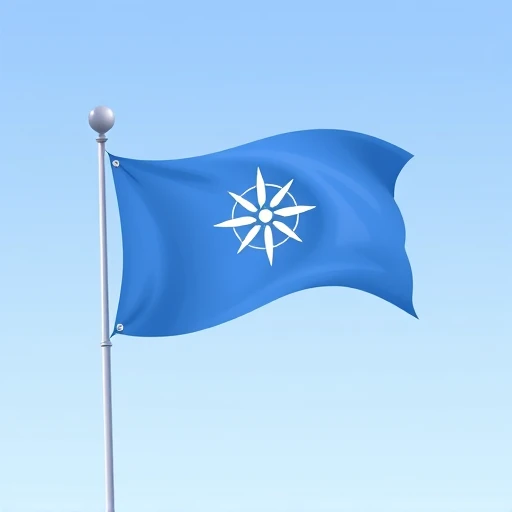
The NATO flag is blue.
Le drapeau de l'OTAN est bleu.
NATO used as an adjective.
NATO has many soldiers.
L'OTAN a beaucoup de soldats.
Singular verb 'has' for the organization.
Is France in NATO?
La France est-elle dans l'OTAN ?
Question form.
NATO was started a long time ago.
L'OTAN a été créée il y a longtemps.
Passive voice.
I saw NATO on the news.
J'ai vu l'OTAN aux informations.
Preposition 'on' for media.
NATO members work together.
Les membres de l'OTAN travaillent ensemble.
Compound noun: NATO members.
NATO protects many countries in Europe.
L'OTAN protège de nombreux pays en Europe.
Third person singular verb.
They joined NATO last year.
Ils ont rejoint l'OTAN l'année dernière.
Past simple.
The NATO headquarters is in Belgium.
Le siège de l'OTAN est en Belgique.
Use 'the' when modifying 'headquarters'.
NATO countries share their military plans.
Les pays de l'OTAN partagent leurs plans militaires.
Possessive 'their' refers to countries.
Does NATO have a president?
L'OTAN a-t-elle un président ?
Actually, it has a Secretary General.
NATO is an important alliance.
L'OTAN est une alliance importante.
Use 'an' before 'important'.
We learned about NATO in school.
Nous avons appris l'existence de l'OTAN à l'école.
Preposition 'about'.
NATO was established to provide collective security.
L'OTAN a été créée pour assurer la sécurité collective.
Infinitive of purpose.
The NATO alliance has expanded since 1949.
L'alliance de l'OTAN s'est élargie depuis 1949.
Present perfect for ongoing change.
Article 5 is the most important part of the NATO treaty.
L'article 5 est la partie la plus importante du traité de l'OTAN.
Superlative 'most important'.
NATO forces are often involved in peacekeeping missions.
Les forces de l'OTAN sont souvent impliquées dans des missions de maintien de la paix.
Passive voice 'are involved'.
Many people debate the role of NATO today.
Beaucoup de gens débattent du rôle de l'OTAN aujourd'hui.
Verb 'debate' followed by the object.
The NATO Secretary General gave a speech.
Le secrétaire général de l'OTAN a prononcé un discours.
Title capitalization.
NATO requires its members to spend money on defense.
L'OTAN exige que ses membres dépensent de l'argent pour la défense.
Verb 'require' + object + to-infinitive.
Sweden recently applied for NATO membership.
La Suède a récemment demandé son adhésion à l'OTAN.
Adverb 'recently' with past simple.
The principle of collective defense is central to NATO.
Le principe de défense collective est central à l'OTAN.
Abstract noun phrase as subject.
NATO's primary objective was to deter Soviet aggression.
L'objectif principal de l'OTAN était de décourager l'agression soviétique.
Possessive 's with acronym.
The summit focused on NATO's strategic future.
Le sommet s'est concentré sur l'avenir stratégique de l'OTAN.
Phrasal verb 'focus on'.
Interoperability allows NATO militaries to work together seamlessly.
L'interopérabilité permet aux armées de l'OTAN de travailler ensemble de manière fluide.
Complex noun 'Interoperability'.
Public opinion on NATO varies across the member states.
L'opinion publique sur l'OTAN varie selon les États membres.
Preposition 'across'.
NATO has conducted several operations outside of Europe.
L'OTAN a mené plusieurs opérations en dehors de l'Europe.
Present perfect for past actions with current relevance.
The decision to expand NATO was controversial for some.
La décision d'élargir l'OTAN a été controversée pour certains.
Adjective 'controversial'.
NATO standards ensure that equipment is compatible.
Les normes de l'OTAN garantissent que l'équipement est compatible.
Noun as adjective 'NATO standards'.
The geopolitical landscape has shifted since NATO's inception.
Le paysage géopolitique a changé depuis la création de l'OTAN.
Formal noun 'inception'.
NATO serves as a forum for transatlantic security dialogue.
L'OTAN sert de forum pour le dialogue sur la sécurité transatlantique.
Metaphorical use of 'forum'.
Critics argue that NATO enlargement provoked regional tensions.
Les critiques soutiennent que l'élargissement de l'OTAN a provoqué des tensions régionales.
Reporting verb 'argue' with a 'that' clause.
The alliance must adapt to emerging hybrid threats.
L'alliance doit s'adapter aux menaces hybrides émergentes.
Adjective 'hybrid' modifying 'threats'.
NATO's consensus-based decision-making can be slow.
La prise de décision basée sur le consensus de l'OTAN peut être lente.
Compound adjective 'consensus-based'.
The burden-sharing debate remains a point of contention within NATO.
Le débat sur le partage du fardeau reste un point de discorde au sein de l'OTAN.
Noun phrase 'point of contention'.
NATO's 'Open Door' policy allows any European state to apply.
La politique de la 'porte ouverte' de l'OTAN permet à tout État européen de postuler.
Quotation marks for a specific policy name.
The legal basis for NATO's intervention was heavily scrutinized.
La base juridique de l'intervention de l'OTAN a été examinée de près.
Adverb 'heavily' modifying a passive verb.
NATO's enduring relevance is a subject of intense academic scrutiny.
La pertinence durable de l'OTAN est un sujet d'examen académique intense.
Formal academic tone.
The organization functions as a bulwark against authoritarianism.
L'organisation fonctionne comme un rempart contre l'autoritarisme.
Metaphor 'bulwark'.
Tensions within NATO often reflect divergent national interests.
Les tensions au sein de l'OTAN reflètent souvent des intérêts nationaux divergents.
Adjective 'divergent'.
The Secretary General must navigate complex diplomatic waters.
Le secrétaire général doit naviguer dans des eaux diplomatiques complexes.
Idiomatic expression 'navigate... waters'.
NATO's strategic concept is periodically revised to reflect new realities.
Le concept stratégique de l'OTAN est périodiquement révisé pour refléter les nouvelles réalités.
Adverb 'periodically' with passive voice.
The interoperability of NATO forces is a marvel of modern logistics.
L'interopérabilité des forces de l'OTAN est une merveille de la logistique moderne.
Noun 'marvel' used for emphasis.
Some argue that NATO's existence is a relic of the Cold War.
Certains soutiennent que l'existence de l'OTAN est un vestige de la guerre froide.
Noun 'relic' used critically.
The alliance's pivot toward the Indo-Pacific is a significant policy shift.
Le pivot de l'alliance vers l'Indo-Pacifique est un changement de politique important.
Noun 'pivot' used as a strategic term.
Colocações comuns
Frases Comuns
— The policy that any European country can join.
NATO's open door policy remains in effect.
— A country that works with NATO but isn't a full member.
Japan is a global NATO partner.
— Protected by the alliance's collective defense.
Small nations feel safer under the NATO umbrella.
— A code name given by NATO to foreign equipment.
The 'Flanker' is the NATO reporting name for the Su-27.
— Military training drills involving multiple member countries.
Large-scale NATO exercises are held annually.
— The promise to support the alliance.
The president reaffirmed the NATO commitment.
Frequentemente confundido com
The UN is for global diplomacy; NATO is for military defense.
The EU is for European economic/political union; NATO is for transatlantic military alliance.
NAFTA was a trade agreement (now USMCA); NATO is a military treaty.
Expressões idiomáticas
— The core philosophy of NATO collective defense.
The treaty is based on the idea that an attack on one is an attack on all.
Formal/Slogan— A common political phrase regarding member defense spending.
There is pressure on all members to start paying their fair share.
Political/Informal— The security and protection provided by the alliance.
They sought refuge under the NATO umbrella.
Metaphorical— Military forces physically present in a location (often used in NATO contexts).
NATO has no plans for boots on the ground in that region.
Military Slang— Winning the support of a local population (common in NATO peacekeeping).
The NATO mission focused on winning hearts and minds.
Military/Political— The essential need for different militaries to work together.
In a joint mission, interoperability is key.
Technical— Purposely being unclear about a response to deter an enemy.
NATO sometimes uses strategic ambiguity regarding its nuclear policy.
Diplomatic— The distribution of costs and responsibilities among members.
Burden sharing is a perennial issue at summits.
Formal— Operations conducted outside the territory of member states.
NATO began 'out of area' missions in the 1990s.
Technical— The agreement to defend each other.
Collective defense is the heart of the alliance.
FormalFácil de confundir
It looks different.
OTAN is just the French/Spanish/Italian/Portuguese acronym for NATO (Organisation du Traité de l'Atlantique Nord).
In Paris, you will see 'OTAN' instead of 'NATO'.
Both are military alliances.
The Warsaw Pact was the Soviet-led rival to NATO; it no longer exists.
The Cold War was a struggle between NATO and the Warsaw Pact.
Both involve Western countries.
G7 is an economic forum; NATO is a military alliance.
The G7 discusses the economy, while NATO discusses security.
Both are international organizations.
INTERPOL is for police cooperation; NATO is for military defense.
INTERPOL catches criminals; NATO defends borders.
Both are regional groups.
ASEAN is Southeast Asian and primarily economic; NATO is North Atlantic and military.
Thailand is in ASEAN, but not in NATO.
Padrões de frases
NATO is [adjective].
NATO is big.
[Country] is in NATO.
Italy is in NATO.
NATO was founded in [year].
NATO was founded in 1949.
The [noun] of NATO is [noun].
The goal of NATO is defense.
NATO's [noun] has [verb].
NATO's strategy has evolved.
The [noun] surrounding NATO [verb].
The discourse surrounding NATO persists.
Joining NATO is [adjective].
Joining NATO is difficult.
NATO provides [noun].
NATO provides security.
Família de palavras
Substantivos
Adjetivos
Relacionado
Como usar
Extremely high in news and political contexts.
-
The NATO is meeting.
→
NATO is meeting.
We don't use 'the' with the name of the organization itself.
-
NATO are a group.
→
NATO is a group.
NATO is a singular collective noun.
-
I saw an N-A-T-O soldier.
→
I saw a NATO soldier.
Pronounce it as a word, and use 'a' because 'NATO' starts with a consonant sound /n/.
-
NATO is part of the UN.
→
NATO is independent of the UN.
They are two separate international organizations.
-
France left NATO.
→
France left the military command, but stayed in the alliance.
This is a common historical confusion from the 1960s; France is currently a full member.
Dicas
The 'The' Rule
Don't use 'the' before NATO when it's the subject. 'NATO is strong,' not 'The NATO is strong.'
Say it as a word
Always pronounce it 'NAY-toh', never 'N-A-T-O'.
All Caps
Always write NATO in all capital letters because it is an acronym.
Adjective Use
Use NATO as an adjective to describe things like 'NATO forces' or 'NATO policy'.
News Context
When you hear 'The Alliance' on the news, they almost always mean NATO.
Not just Atlantic
Remember that NATO includes landlocked countries like Hungary, not just Atlantic ones.
1949
Remember the year 1949 to help you understand the Cold War context of NATO.
Consensus
Remember that NATO decisions must be unanimous; every country has a veto.
Interoperability
This is a key word associated with NATO; it means different systems working together.
North-Atlantic-Team-Organization
Think of it as a 'Team' to remember the 'T' in the middle.
Memorize
Mnemônico
N-A-T-O: Nations Acting Together Often. Think of a team of nations working together for safety.
Associação visual
Imagine a blue shield (the NATO flag) protecting a map of Europe and North America from a storm.
Word Web
Desafio
Try to explain what NATO does to a friend in three sentences without using the word 'war'.
Origem da palavra
The term was coined in 1949 as an acronym for the North Atlantic Treaty Organization. It was created specifically to name the body formed by the North Atlantic Treaty signed in Washington, D.C.
Significado original: A military alliance of North Atlantic states.
English (Acronym)Contexto cultural
Be aware that in some regions (like Serbia or parts of the Middle East), NATO's military interventions are viewed negatively.
In English-speaking countries, NATO is a standard part of the political vocabulary and is rarely explained in detail because it is assumed everyone knows it.
Pratique na vida real
Contextos reais
International News
- NATO summit
- NATO expansion
- NATO response
- NATO leaders
History Class
- Cold War
- Warsaw Pact
- Founding of NATO
- Article 5
Military Discussions
- NATO forces
- NATO standards
- NATO command
- Joint exercises
Political Debates
- Defense spending
- Burden sharing
- NATO membership
- Security guarantee
Aviation/Radio
- NATO alphabet
- Alpha
- Bravo
- Charlie
Iniciadores de conversa
"Do you think NATO is still relevant in the 21st century?"
"How has NATO membership changed for countries in Eastern Europe?"
"What is your country's relationship with NATO?"
"Should NATO continue to expand to more countries?"
"What do you think is the biggest challenge facing NATO today?"
Temas para diário
Reflect on how the world might be different if NATO had never been formed in 1949.
Write about the pros and cons of a country joining a military alliance like NATO.
Describe the role of NATO in a recent international conflict you've read about.
Imagine you are a diplomat at a NATO summit. What is your priority?
How does the concept of 'collective defense' change how countries behave?
Perguntas frequentes
10 perguntasNATO stands for the North Atlantic Treaty Organization. It was named after the North Atlantic Treaty signed in 1949.
As of 2024, there are 32 member countries in NATO, with Sweden being the most recent to join.
The political headquarters of NATO is located in Brussels, Belgium.
Article 5 is the principle of collective defense, stating that an attack on one member is an attack on all members.
No, Ukraine is not a member of NATO, although it is a 'partner' and has expressed a strong desire to join.
Each member country pays for its own military, but they also contribute to a common fund for NATO's administrative and military costs.
No, NATO does not have its own army. It uses the national armies of its member countries when needed.
Yes, Article 13 of the treaty allows any member to leave after giving one year's notice. So far, no country has ever left.
The top political official is the Secretary General. The top military official is the Supreme Allied Commander Europe (SACEUR).
It was created after WWII to prevent conflict and protect Western Europe from the influence and potential aggression of the Soviet Union.
Teste-se 180 perguntas
Explain what NATO is in your own words (3 sentences).
Well written! Good try! Check the sample answer below.
Why do you think countries want to join NATO?
Well written! Good try! Check the sample answer below.
Describe the importance of Article 5.
Well written! Good try! Check the sample answer below.
What is the difference between NATO and the UN?
Well written! Good try! Check the sample answer below.
Write a short paragraph about NATO's role during the Cold War.
Well written! Good try! Check the sample answer below.
How has NATO changed since 1991?
Well written! Good try! Check the sample answer below.
Discuss the concept of 'burden sharing' in NATO.
Well written! Good try! Check the sample answer below.
Imagine you are a journalist. Write a headline about a NATO summit.
Well written! Good try! Check the sample answer below.
What are 'NATO standards' and why are they important?
Well written! Good try! Check the sample answer below.
Should NATO continue to expand? Give one reason for and one against.
Well written! Good try! Check the sample answer below.
Write a sentence using 'NATO' as an adjective.
Well written! Good try! Check the sample answer below.
Explain the NATO phonetic alphabet's purpose.
Well written! Good try! Check the sample answer below.
What is the 'Open Door' policy?
Well written! Good try! Check the sample answer below.
How does NATO make decisions?
Well written! Good try! Check the sample answer below.
Write a letter to a friend explaining why NATO is in the news.
Well written! Good try! Check the sample answer below.
Describe the NATO flag.
Well written! Good try! Check the sample answer below.
What is the SACEUR?
Well written! Good try! Check the sample answer below.
Why is Brussels important to NATO?
Well written! Good try! Check the sample answer below.
Write a sentence about NATO and peacekeeping.
Well written! Good try! Check the sample answer below.
Summarize the founding of NATO.
Well written! Good try! Check the sample answer below.
Say 'NATO' out loud. Does it rhyme with potato?
Read this aloud:
Você disse:
Speech recognition is not supported in your browser. Try Chrome or Edge.
Tell a partner one fact about NATO.
Read this aloud:
Você disse:
Speech recognition is not supported in your browser. Try Chrome or Edge.
Explain Article 5 to your teacher.
Read this aloud:
Você disse:
Speech recognition is not supported in your browser. Try Chrome or Edge.
Discuss if you think NATO is important today.
Read this aloud:
Você disse:
Speech recognition is not supported in your browser. Try Chrome or Edge.
Pronounce the full name: North Atlantic Treaty Organization.
Read this aloud:
Você disse:
Speech recognition is not supported in your browser. Try Chrome or Edge.
Debate: Should NATO spend more on cyber-security?
Read this aloud:
Você disse:
Speech recognition is not supported in your browser. Try Chrome or Edge.
Explain the difference between NATO and the EU.
Read this aloud:
Você disse:
Speech recognition is not supported in your browser. Try Chrome or Edge.
Give a short speech about why a country might join NATO.
Read this aloud:
Você disse:
Speech recognition is not supported in your browser. Try Chrome or Edge.
Describe the NATO flag from memory.
Read this aloud:
Você disse:
Speech recognition is not supported in your browser. Try Chrome or Edge.
What does 'collective defense' mean to you?
Read this aloud:
Você disse:
Speech recognition is not supported in your browser. Try Chrome or Edge.
Talk about a recent news story involving NATO.
Read this aloud:
Você disse:
Speech recognition is not supported in your browser. Try Chrome or Edge.
How do you pronounce 'Brussels'?
Read this aloud:
Você disse:
Speech recognition is not supported in your browser. Try Chrome or Edge.
Explain 'interoperability' to a beginner.
Read this aloud:
Você disse:
Speech recognition is not supported in your browser. Try Chrome or Edge.
Is your country in NATO? Why or why not?
Read this aloud:
Você disse:
Speech recognition is not supported in your browser. Try Chrome or Edge.
What is the Secretary General's job?
Read this aloud:
Você disse:
Speech recognition is not supported in your browser. Try Chrome or Edge.
Can you name three NATO members?
Read this aloud:
Você disse:
Speech recognition is not supported in your browser. Try Chrome or Edge.
Why is 1949 a significant year?
Read this aloud:
Você disse:
Speech recognition is not supported in your browser. Try Chrome or Edge.
Discuss the pros of a consensus-based system.
Read this aloud:
Você disse:
Speech recognition is not supported in your browser. Try Chrome or Edge.
What is the 'Western Bloc'?
Read this aloud:
Você disse:
Speech recognition is not supported in your browser. Try Chrome or Edge.
How do you spell the 'A' in the NATO alphabet?
Read this aloud:
Você disse:
Speech recognition is not supported in your browser. Try Chrome or Edge.
Listen for the word 'NATO' in a news clip. What was the topic?
Listen to a description of a flag. Is it the NATO flag?
Listen to a speaker say 'NAY-toh'. Is this correct?
Listen to a list of countries. Which one is NOT in NATO?
Listen to a speech by the Secretary General. What is his tone?
Listen to the NATO phonetic alphabet. What word is used for 'C'?
Listen to a history lecture. When was the treaty signed?
Listen to a debate about defense spending. What percentage is mentioned?
Listen for the acronym 'SACEUR'. What does it refer to?
Listen to a report on a summit. Where is it being held?
Listen to a description of Article 5. What is the main idea?
Listen to the word 'alliance'. Is it used with NATO?
Listen to a soldier talking. Does he mention NATO standards?
Listen to a news anchor. Did she say 'the NATO' or just 'NATO'?
Listen to a podcast about the Cold War. What was the other alliance mentioned?
/ 180 correct
Perfect score!
Summary
NATO is the world's most powerful military alliance, built on the 'one for all, all for one' principle of collective defense. For example, after the 9/11 attacks, NATO members supported the U.S. under this agreement.
- NATO is a military alliance of 32 North American and European countries.
- It was founded in 1949 to provide collective security against external threats.
- The core principle is Article 5: an attack on one member is an attack on all.
- It promotes democratic values and peaceful resolution of international disputes.
The 'The' Rule
Don't use 'the' before NATO when it's the subject. 'NATO is strong,' not 'The NATO is strong.'
Say it as a word
Always pronounce it 'NAY-toh', never 'N-A-T-O'.
All Caps
Always write NATO in all capital letters because it is an acronym.
Adjective Use
Use NATO as an adjective to describe things like 'NATO forces' or 'NATO policy'.