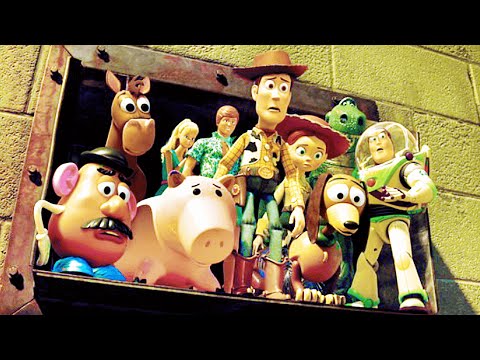
thrown em 30 segundos
- The past participle of 'throw,' used for physical objects launched through the air.
- A common adjective meaning confused, surprised, or momentarily unsettled by the unexpected.
- Frequently used in phrasal verbs like 'thrown away' (discarded) or 'thrown out' (expelled).
- Essential for passive voice sentences like 'The ball was thrown' and perfect tenses like 'I have thrown.'
The word thrown serves a dual purpose in the English language, acting primarily as the past participle of the irregular verb 'to throw' and frequently as an adjective describing a state of mental disarray. At its most fundamental level, it describes the completed action of an object being propelled through space by a physical force, typically the human hand or a mechanical device. However, its utility extends far beyond the physical realm. In social and professional contexts, being 'thrown' implies a sudden loss of composure or a moment of disorientation caused by unexpected information or a change in circumstances. This figurative usage is essential for B1 learners to master, as it captures a specific nuance of surprise that words like 'surprised' or 'confused' do not fully encompass. When you are thrown, you are not just surprised; you have momentarily lost your footing in a conversation or situation. This concept of 'losing one's footing' connects the physical act of being tossed to the psychological act of being unsettled.
- Physical Application
- Used to describe objects like balls, stones, or even shadows that have been projected or cast by a source. It requires an agent or a force that initiated the movement.
The final pitch was thrown with such velocity that the batter barely saw it pass.
In the realm of human emotion, 'thrown' is often paired with the preposition 'by.' For instance, one might be 'thrown by a question' or 'thrown by a sudden change in plans.' This suggests that the external event acted upon the person like a physical force, pushing them out of their comfort zone or their prepared state of mind. It is a passive experience; you do not choose to be thrown, it happens to you. This makes it a powerful word for describing vulnerability in the face of the unexpected. Furthermore, the word appears in numerous phrasal verbs such as 'thrown away' (discarded), 'thrown out' (expelled or rejected), and 'thrown together' (assembled hastily). Each of these variations carries the core DNA of the word: a sense of forceful movement or lack of careful deliberation. Understanding these nuances allows a speaker to move from basic English to a more descriptive and idiomatic level of communication.
- Psychological State
- A state of being unsettled or confused by something unexpected. It often implies a temporary inability to respond or react effectively.
She was completely thrown by his blunt honesty during the first five minutes of the interview.
Culturally, 'thrown' is ubiquitous in sports commentary, news reporting, and casual storytelling. In sports, it is the literal description of a play. In news, it might describe how a community was 'thrown into chaos' by a natural disaster. In storytelling, it is the moment the protagonist faces a twist they didn't see coming. The versatility of 'thrown' makes it a high-frequency word that bridges the gap between concrete physical actions and abstract emotional experiences. By mastering its use, you can describe both the arc of a baseball and the internal feeling of a person who has just received shocking news, all with the same root word. This economy of language is a hallmark of natural-sounding English. Whether you are discussing a 'thrown' pot in a pottery class or a 'thrown' match in a corrupt sports scandal, the word implies an action that has been completed and has left a lasting impact or state.
- Idiomatic Force
- The word is often used to describe situations where things are not as they should be, such as a 'thrown' game (fixed or cheated) or being 'thrown' to the wolves (sacrificed).
The shadow thrown by the ancient oak tree stretched across the entire garden as the sun began to set.
I had prepared for a technical test, so I was really thrown when they asked me about my childhood hobbies instead.
Using 'thrown' correctly requires an understanding of its grammatical role as a past participle. This means it is frequently found in passive voice constructions and perfect tenses. In the passive voice, the focus is on the object that receives the action. For example, 'The ball was thrown by the pitcher.' Here, 'thrown' describes the state of the ball. In perfect tenses, it indicates an action completed at an unspecified time before now, such as 'He has thrown away his old clothes.' This structure is vital for conveying that an action is finished and has relevance to the present moment. Beyond these verbal uses, 'thrown' functions as an adjective. When you say 'He looked thrown,' you are describing his current state of mind—disorganized, rattled, or confused. This adjectival use is almost exclusively figurative and is a common way to describe someone's reaction to a surprise.
- Passive Voice Structure
- [Subject] + [to be] + thrown + [by agent]. This emphasizes the result of the action rather than the person performing it.
The keys were thrown onto the table in a fit of frustration.
Another sophisticated way to use 'thrown' is in the context of phrasal verbs, which significantly alter the meaning. 'Thrown off' is perhaps the most common figurative use, meaning to be distracted or misled. If a loud noise happens during a speech, the speaker might be 'thrown off' their train of thought. 'Thrown together' describes something made or assembled quickly without much care, like a 'thrown-together meal.' 'Thrown out' can mean literally discarded in the trash or figuratively being expelled from a place or having an idea rejected. Each of these requires the past participle form 'thrown' to indicate the completed state of the action. When writing, ensure that the context makes it clear whether you are using the word literally or figuratively. A 'thrown' stone is very different from a 'thrown' witness in a courtroom, the latter implying the witness was confused by a lawyer's questioning.
- Perfect Tense Usage
- [Subject] + [have/has/had] + thrown. This indicates that the act of throwing occurred in the past and is now a completed fact.
By the time we arrived, the party had already been thrown into total disarray by the unexpected rain.
When using 'thrown' as an adjective to describe a person, it is often preceded by intensifiers like 'completely,' 'totally,' or 'quite.' This helps to emphasize the degree of confusion. For example, 'I was completely thrown by her reaction.' This usage is very common in spoken English and helps convey emotion effectively. In more formal writing, you might see 'thrown' used to describe data or results that have been 'thrown into doubt' by new evidence. This metaphorical use suggests that the stability of the previous information has been violently disturbed. Whether you are describing a physical object, a person's emotional state, or the validity of a scientific theory, 'thrown' provides a sense of sudden, forceful change that other words lack. It is a versatile tool in any writer's or speaker's arsenal, provided the irregular conjugation is handled correctly.
- Adjectival Use
- Used after a linking verb like 'look,' 'seem,' or 'feel' to describe a person's state of confusion.
The witness seemed thrown by the prosecutor's aggressive line of questioning.
Every piece of trash should be thrown into the designated bins to keep the park clean.
In daily life, 'thrown' is a word you will encounter in a variety of high-stakes and low-stakes environments. In the world of sports, particularly baseball, cricket, and American football, 'thrown' is used constantly to describe the movement of the ball. Commentators will analyze how a ball was 'thrown'—its speed, its trajectory, and its accuracy. You might hear, 'That was the fastest ball ever thrown in this stadium.' This literal use is the foundation of the word's presence in public discourse. Moving into the professional world, 'thrown' is frequently heard in meetings or interviews. If a colleague presents a surprising statistic, someone might say, 'I’m a bit thrown by those numbers; they don’t match our previous reports.' This usage signals a need for clarification and indicates that the listener’s expectations have been disrupted. It is a polite yet clear way to express confusion or skepticism.
- Sports Commentary
- Literal use describing the action of launching a ball or object. Common in play-by-play descriptions.
The javelin was thrown further than any other in the history of the Olympic games.
In casual social settings, 'thrown' is a staple of storytelling. Friends often recount experiences where they were 'thrown for a loop' or 'thrown off balance' by someone’s behavior. For example, 'I was totally thrown when he showed up at the party with his ex-girlfriend.' Here, 'thrown' conveys a sense of social awkwardness and the internal scramble to figure out how to react. You will also hear it in the context of household chores or organization. 'Have you thrown out the milk?' or 'The laundry was just thrown on the floor.' These everyday uses reinforce the idea of 'thrown' as an action that is often quick, forceful, or even careless. In media, such as movies and TV shows, 'thrown' is often used in dialogue to show a character's vulnerability. A detective might be 'thrown' by a suspect's alibi, or a romantic lead might be 'thrown' by a sudden confession of love.
- Social Storytelling
- Used to describe personal reactions to surprising social events or unexpected behavior from others.
I was really thrown by how much the city had changed since I last visited ten years ago.
Furthermore, 'thrown' appears in legal and formal contexts. A case might be 'thrown out of court' if there is insufficient evidence. This means the judge has officially rejected the case, effectively 'tossing' it away. Similarly, a person might be 'thrown in jail,' a phrase that emphasizes the lack of ceremony and the forceful nature of the imprisonment. In the arts, specifically pottery, 'thrown' is a technical term. A pot is 'thrown' on a potter's wheel. If you visit a craft fair or watch a documentary on ceramics, you will hear this term used with great precision. It refers to the process of shaping clay as it spins. This wide range of environments—from the baseball diamond to the courtroom to the pottery studio—demonstrates how 'thrown' is a fundamental building block of English communication, adapting its meaning slightly to fit the specialized needs of each field.
- Legal and Formal Use
- Describes the rejection of legal cases or the forceful placement of individuals into specific situations like incarceration.
The lawsuit was thrown out by the judge due to a lack of credible evidence.
This beautiful vase was thrown by a master potter in a small village in Japan.
One of the most frequent errors learners make with 'thrown' is confusing it with its homophone, 'throne.' While they sound identical, their meanings are entirely unrelated. A 'throne' is the ceremonial chair of a monarch, whereas 'thrown' is the past participle of 'throw.' Writing 'The king sat on his thrown' is a common mistake that can significantly undermine the professionalism of your writing. Another major hurdle is the irregular conjugation of the verb 'throw.' Many learners, following the pattern of regular verbs, mistakenly use 'throwed.' Phrases like 'He throwed the ball' or 'I was throwed by the news' are grammatically incorrect and should be avoided. The correct sequence is throw (present), threw (past simple), and thrown (past participle). Remembering this irregular pattern is crucial for achieving fluency and accuracy in both speech and writing.
- Homophone Confusion
- Confusing 'thrown' (past participle) with 'throne' (royal chair). Always check the context: is it an action or a piece of furniture?
Incorrect: He sat on the thrown. Correct: He sat on the throne.
Additionally, learners often struggle with the distinction between 'threw' and 'thrown.' 'Threw' is the past simple and is used for actions that happened at a specific time in the past without a helping verb (e.g., 'Yesterday, I threw the ball'). 'Thrown' is the past participle and *must* be used with a helping verb like 'have,' 'has,' 'had,' 'is,' or 'was' (e.g., 'I have thrown the ball'). Using 'thrown' without a helping verb—such as 'I thrown the ball yesterday'—is a common error in certain dialects but is considered non-standard in academic and professional English. Another mistake involves the figurative use: using 'thrown' when 'surprised' would be more appropriate. 'Thrown' implies a loss of balance or confusion, not just a positive surprise. You wouldn't usually say you were 'thrown' by a wonderful birthday gift unless the gift was so unexpected it made you forget what you were doing.
- Irregular Verb Conjugation
- Avoid 'throwed.' The past simple is 'threw' and the past participle is 'thrown.' This is a non-negotiable rule in standard English.
Incorrect: I have threw it away. Correct: I have thrown it away.
Finally, be careful with the preposition that follows 'thrown' in figurative contexts. While 'thrown by' is the most common for expressing confusion caused by something, 'thrown off' is used when something distracts you from a task. 'Thrown into' is used for sudden changes in environment or state, like 'thrown into a panic.' Using the wrong preposition can change the meaning or make the sentence sound unnatural. For example, 'I was thrown into his question' sounds odd; 'I was thrown by his question' is correct. Paying attention to these small details will help you use 'thrown' with the precision of a native speaker. Avoiding these common pitfalls—homophones, irregular forms, and prepositional errors—will ensure that your use of 'thrown' is always clear and grammatically sound, whether you are writing an essay or having a conversation.
- Prepositional Accuracy
- Use 'by' for the cause of confusion, 'off' for distraction, and 'into' for a change of state. Prepositions are the keys to idiomatic use.
Incorrect: He was thrown from the sudden noise. Correct: He was thrown off by the sudden noise.
Incorrect: The ball was threw over the fence. Correct: The ball was thrown over the fence.
To truly master 'thrown,' it is helpful to compare it with its synonyms and understand the subtle differences in meaning and register. For the literal sense of propelling an object, alternatives include 'tossed,' 'hurled,' 'cast,' and 'pitched.' 'Tossed' is much gentler and more casual, like tossing a coin. 'Hurled' implies great force and often anger, such as hurling a rock. 'Cast' is more formal or poetic, often used with shadows or fishing lines. 'Pitched' is specific to sports like baseball or to the act of setting up a tent. Choosing the right word depends on the intensity and the context of the action. If you use 'thrown' for everything, your writing may feel repetitive. However, 'thrown' is the most neutral and versatile of these options, making it a safe choice for most situations. Understanding these distinctions allows you to paint a more vivid picture for your reader or listener.
- Literal Alternatives
- Tossed (gentle), Hurled (forceful/angry), Cast (formal/poetic), Pitched (sport-specific). Each adds a different 'flavor' to the action.
Instead of just saying the ball was thrown, you could say it was 'hurled' to show the player's frustration.
In the figurative sense of being confused, 'thrown' can be replaced by 'rattled,' 'disconcerted,' 'bewildered,' or 'taken aback.' 'Rattled' implies a loss of confidence or nervousness. 'Disconcerted' is a more formal way of saying you were unsettled. 'Bewildered' suggests a deeper, more profound state of confusion. 'Taken aback' is an excellent idiom that captures the physical sensation of stepping back in surprise. While 'thrown' is common in everyday speech, using 'disconcerted' in a formal essay or 'rattled' in a sports context can make your English sound more sophisticated and precise. The key is to match the word to the level of emotion and the formality of the situation. 'Thrown' is the 'middle-ground' word—it works almost everywhere but doesn't always provide the specific emotional nuance that these alternatives offer.
- Figurative Alternatives
- Rattled (nervous), Disconcerted (formal/unsettled), Bewildered (very confused), Taken aback (surprised). Use these to vary your vocabulary.
The CEO was visibly thrown by the news, though a more formal report might say he was 'disconcerted.'
Finally, consider the antonyms or opposites of 'thrown.' In a literal sense, an object might be 'caught' or 'received.' In a figurative sense, a person who is not 'thrown' might be described as 'composed,' 'unfazed,' or 'collected.' If someone handles a surprise well, you might say, 'He was completely unfazed by the criticism.' This contrast helps highlight the vulnerability inherent in being 'thrown.' By understanding both the synonyms and the antonyms, you gain a 360-degree view of the word's place in the English language. You begin to see 'thrown' not just as a single word, but as a point on a spectrum of movement and emotion. This holistic approach to vocabulary building is what transforms a learner into a proficient speaker who can navigate complex social and professional interactions with ease and confidence.
- Antonyms and Opposites
- Literal: Caught, Received. Figurative: Composed, Unfazed, Collected. These words describe the opposite of being 'thrown.'
While the rest of the team was thrown by the sudden deadline, the manager remained perfectly composed.
The ball was thrown with precision, but it was caught just as skillfully by the outfielder.
How Formal Is It?
Curiosidade
The original meaning of 'twist' is still preserved in the word 'thread,' which comes from the same root. In pottery, 'throwing' a pot still involves the original sense of twisting and turning the clay.
Guia de pronúncia
- Pronouncing it as 'throne' (which is correct, as they are homophones, but learners may think they are different).
- Mispronouncing the 'th' as a 't' or 'd' sound.
- Confusing the vowel sound with 'threw' (/θruː/).
- Adding an extra syllable like 'throw-en'.
- Failing to aspirate the 'th' correctly.
Nível de dificuldade
Easy to recognize in context, though figurative uses require some thought.
Requires remembering the irregular conjugation and correct prepositions.
Common in idioms which must be used naturally to sound correct.
Easily confused with 'throne' if the context is not clear.
O que aprender depois
Pré-requisitos
Aprenda a seguir
Avançado
Gramática essencial
Irregular Past Participles
Unlike regular verbs (walked), 'throw' becomes 'thrown' in the past participle.
Passive Voice Construction
The object receiving the action becomes the subject: 'The ball was thrown.'
Present Perfect Tense
Used for actions completed at an unspecified time: 'I have thrown it out.'
Participial Adjectives
Using the past participle as an adjective: 'He looked a bit thrown.'
Phrasal Verb Word Order
With pronouns, the object goes in the middle: 'Throw it away' (not 'Throw away it').
Exemplos por nível
The ball was thrown by the boy.
Le ballon a été lancé par le garçon.
Passive voice: 'was' + 'thrown'.
He has thrown the paper in the bin.
Il a jeté le papier dans la poubelle.
Present perfect: 'has' + 'thrown'.
The stone was thrown into the lake.
La pierre a été jetée dans le lac.
Passive voice with a prepositional phrase.
The keys were thrown on the table.
Les clés ont été jetées sur la table.
Plural passive voice: 'were' + 'thrown'.
A shadow was thrown on the wall.
Une ombre a été projetée sur le mur.
Literal use of 'thrown' for shadows.
The dice were thrown to start the game.
Les dés ont été jetés pour commencer le jeu.
Plural subject with passive voice.
The old toy was thrown away.
Le vieux jouet a été jeté.
Phrasal verb 'thrown away'.
The food was thrown to the birds.
La nourriture a été jetée aux oiseaux.
Passive voice indicating the recipient.
I have thrown out all my old magazines.
J'ai jeté tous mes vieux magazines.
Phrasal verb 'thrown out' in present perfect.
The ball was thrown too high for me to catch.
La balle a été lancée trop haut pour que je puisse l'attraper.
Passive voice with an adjective of degree ('too high').
She was thrown into the pool by her friends.
Elle a été jetée dans la piscine par ses amis.
Passive voice describing a physical action.
The trash has already been thrown away.
Les ordures ont déjà été jetées.
Present perfect passive with 'already'.
He was thrown out of the library for being too loud.
Il a été expulsé de la bibliothèque pour avoir été trop bruyant.
Phrasal verb 'thrown out' meaning expelled.
The blanket was thrown over the sleeping child.
La couverture a été jetée sur l'enfant qui dormait.
Passive voice indicating placement.
The coin was thrown into the fountain for good luck.
La pièce a été jetée dans la fontaine pour porter chance.
Passive voice with a purpose clause.
Many things were thrown into the fire to keep it burning.
Beaucoup de choses ont été jetées au feu pour qu'il continue de brûler.
Plural passive voice.
I was completely thrown by his unexpected question.
J'ai été complètement déstabilisé par sa question inattendue.
Figurative use meaning 'confused' or 'unsettled'.
The speaker was thrown off by the loud noise in the back.
L'orateur a été déconcentré par le bruit fort au fond.
Phrasal verb 'thrown off' meaning distracted.
This dinner was just thrown together at the last minute.
Ce dîner a été préparé à la va-vite à la dernière minute.
Phrasal verb 'thrown together' meaning hastily prepared.
She looked a bit thrown when she saw her ex-boyfriend.
Elle avait l'air un peu déstabilisée quand elle a vu son ex-petit ami.
Adjectival use after the linking verb 'looked'.
The whole schedule was thrown into chaos by the strike.
Tout le programme a été plongé dans le chaos par la grève.
Figurative use 'thrown into chaos'.
I'm sorry, I was a little thrown by the change in plans.
Désolé, j'ai été un peu déstabilisé par le changement de plans.
Common spoken expression for minor confusion.
The witness was thrown by the lawyer's aggressive tone.
Le témoin a été déstabilisé par le ton agressif de l'avocat.
Passive voice in a professional context.
The party was thrown to celebrate her promotion.
La fête a été organisée pour célébrer sa promotion.
Idiomatic use: 'to throw a party' in passive voice.
The news of the merger has thrown the employees into a panic.
La nouvelle de la fusion a plongé les employés dans la panique.
Active voice with 'thrown' + object + 'into a panic'.
I was thrown for a loop when I found out I won the prize.
J'ai été complètement scotché quand j'ai appris que j'avais gagné le prix.
Idiom 'thrown for a loop' meaning very surprised.
The validity of the test was thrown into question by the error.
La validité du test a été remise en question par l'erreur.
Formal figurative use 'thrown into question'.
He was thrown out of the game for unsportsmanlike conduct.
Il a été expulsé du match pour comportement antisportif.
Phrasal verb 'thrown out' in a sports context.
The vase was beautifully thrown on a traditional potter's wheel.
Le vase a été magnifiquement tourné sur un tour de potier traditionnel.
Technical use in pottery.
Her sudden resignation has thrown the project into disarray.
Sa démission soudaine a jeté le projet dans le désordre.
Figurative use 'thrown into disarray'.
The shadow thrown by the skyscraper covered the entire park.
L'ombre projetée par le gratte-ciel couvrait tout le parc.
Literal use for shadows in a descriptive context.
I was thrown off my stride by the unexpected interruption.
J'ai été coupé dans mon élan par l'interruption inattendue.
Idiom 'thrown off one's stride'.
He felt he had been thrown under the bus by his own manager.
Il avait l'impression d'avoir été sacrifié par son propre manager.
Idiom 'thrown under the bus' in passive voice.
The entire legal case was thrown out on a technicality.
Toute l'affaire judiciaire a été rejetée pour un vice de forme.
Legal idiom 'thrown out' meaning dismissed.
The community was thrown into mourning by the tragic news.
La communauté a été plongée dans le deuil par la nouvelle tragique.
Formal figurative use 'thrown into mourning'.
The light thrown by the setting sun turned the mountains purple.
La lumière projetée par le soleil couchant a rendu les montagnes violettes.
Literary use of 'thrown' for light/color.
I was thrown by the sheer complexity of the mathematical proof.
J'ai été déstabilisé par la complexité pure de la preuve mathématique.
Figurative use in an academic context.
The plan was thrown together with little regard for the budget.
Le plan a été élaboré à la hâte sans grand souci du budget.
Phrasal verb 'thrown together' with a critical tone.
He was thrown into the deep end on his first day at the new job.
Il a été jeté dans le grand bain dès son premier jour à son nouveau travail.
Idiom 'thrown into the deep end'.
The economy has been thrown into a tailspin by the recent crisis.
L'économie a été plongée dans une spirale descendante par la crise récente.
Idiom 'thrown into a tailspin'.
Heidegger's concept of 'thrownness' explores our lack of choice in our origins.
Le concept de 'déshérence' de Heidegger explore notre absence de choix quant à nos origines.
Philosophical noun derived from the past participle.
The witness's testimony was thrown into sharp relief by the new evidence.
Le témoignage du témoin a été mis en relief de manière frappante par les nouvelles preuves.
Idiom 'thrown into sharp relief'.
The city's delicate social balance was thrown into jeopardy by the riot.
L'équilibre social délicat de la ville a été mis en péril par l'émeute.
Formal figurative use 'thrown into jeopardy'.
The author's reputation was thrown into the gutter by the scandal.
La réputation de l'auteur a été traînée dans la boue par le scandale.
Metaphorical use for loss of status.
The light thrown by the lighthouse was the only guide in the storm.
La lumière projetée par le phare était le seul guide dans la tempête.
Poetic literal use.
The argument was thrown out of court for lack of standing.
L'argument a été rejeté par le tribunal pour défaut de qualité pour agir.
Precise legal terminology.
She was thrown by the sudden realization of her own mortality.
Elle a été déstabilisée par la prise de conscience soudaine de sa propre mortalité.
Profound psychological use.
The project was thrown into a state of suspended animation.
Le projet a été plongé dans un état de vie suspendue.
Metaphorical use for a halt in progress.
Colocações comuns
Frases Comuns
— To discard something as useless or unwanted. It can also mean to waste an opportunity.
He has thrown away his chance at a scholarship.
— To force someone to leave a place or to reject an idea or proposal.
The proposal was thrown out by the committee.
— To be distracted or confused so that you cannot continue what you were doing.
The loud noise threw me off my train of thought.
— To be brought into contact with someone by chance, or to make something quickly.
The two strangers were thrown together during the storm.
— To include something extra for free, or to join a group or activity suddenly.
The dealer threw in a set of floor mats with the car.
— To be forced to rely on something, or to be reminded of the past.
The sight of the old school threw him back to his childhood.
— To vomit, or to produce something new or unexpected (like a problem).
The investigation has thrown up some interesting new facts.
— To drop something forcefully, or to issue a challenge (throw down the gauntlet).
He threw down his bag in frustration.
— To be suddenly placed in a new and often difficult situation.
She was thrown into the role of manager without any training.
— To be moved violently in different directions, or to discuss ideas casually.
The boat was thrown about by the rough waves.
Frequentemente confundido com
A royal chair. Sounds the same but spelled differently.
The past simple form. Used without a helping verb.
A preposition meaning from one side to the other. Sounds different but often confused by beginners.
Expressões idiomáticas
— To be completely surprised, shocked, or confused by something.
When she told me she was moving to Japan, I was really thrown for a loop.
Informal— To sacrifice or betray a friend or colleague for personal gain or to avoid blame.
He threw his partner under the bus to save his own job.
Informal— To be left in a dangerous or difficult situation without any help or protection.
The new teacher felt thrown to the wolves on her first day.
Informal— To be forced to deal with a difficult situation without any preparation or experience.
I was thrown in the deep end when I had to lead the meeting alone.
Neutral— To stop worrying about risks and do something bold or dangerous (uses the base verb).
He decided to throw caution to the wind and quit his job.
Neutral— To be out of order, not working correctly, or unbalanced.
The sudden time change threw my sleep schedule out of whack.
Informal— To add something new to an existing situation or group.
With a new baby thrown into the mix, their lives became much busier.
Neutral— To be presented with an unexpected problem or challenge.
The interview was going well until they threw me a curveball question.
Informal— To be given a small, often insignificant, reward or concession to keep one satisfied.
The management threw the workers a bone by offering an extra day off.
Informal— To give up or admit defeat (uses the past participle in perfect tenses).
After three failed attempts, he has finally thrown in the towel.
InformalFácil de confundir
Both are past forms of 'throw.'
'Threw' is the past simple (He threw the ball). 'Thrown' is the past participle (The ball was thrown).
Yesterday he threw the ball, but today it has been thrown by someone else.
They are homophones (sound the same).
'Throne' is a noun (a king's chair). 'Thrown' is a verb form or adjective.
The king sat on his throne after the ball was thrown.
Similar meaning.
'Tossed' is gentler and more casual. 'Thrown' is more general and can be more forceful.
I tossed him the keys, but the heavy rock was thrown.
Similar meaning.
'Hurled' implies much more force or anger than 'thrown.'
He threw the ball, but he hurled the brick in anger.
Similar meaning in certain contexts.
'Cast' is more formal and used for shadows, fishing, or magic spells.
The tree cast a shadow, while the boy thrown a stone.
Padrões de frases
The [noun] was thrown.
The ball was thrown.
I have thrown [noun] away.
I have thrown the trash away.
I was thrown by [noun/phrase].
I was thrown by his comment.
[Noun] has thrown [noun] into [state].
The news has thrown the office into a panic.
To be thrown under the bus by [person].
He was thrown under the bus by his partner.
[Noun] was thrown into sharp relief by [noun].
The issue was thrown into sharp relief by the crisis.
He looked [adverb] thrown.
He looked quite thrown.
It was thrown out of [place].
It was thrown out of the window.
Família de palavras
Substantivos
Verbos
Adjetivos
Relacionado
Como usar
Very common in both spoken and written English.
-
He throwed the ball.
→
He threw the ball.
'Throw' is an irregular verb. The past simple is 'threw,' not 'throwed.' This is a very common mistake for beginners.
-
I have threw it away.
→
I have thrown it away.
After 'have,' you must use the past participle 'thrown,' not the past simple 'threw.'
-
The king sat on his thrown.
→
The king sat on his throne.
'Thrown' and 'throne' are homophones. 'Throne' is the chair, 'thrown' is the verb form.
-
I was thrown from the noise.
→
I was thrown off by the noise.
When you are distracted, the correct phrasal verb is 'thrown off.' 'Thrown from' would mean you were physically launched out of the noise.
-
The case was thrown of court.
→
The case was thrown out of court.
The correct legal idiom is 'thrown out of court.' The preposition 'out' is essential.
Dicas
Helping Verbs
Always pair 'thrown' with a helping verb like 'is,' 'was,' 'has,' or 'had' when using it as a verb. This is the key to using the past participle correctly.
Figurative Meaning
Don't just use 'thrown' for balls! Use it to describe that feeling when someone asks you a question you weren't expecting. It makes your English sound more natural.
Homophone Alert
Remember: A king sits on a 'throne.' A ball is 'thrown.' They sound the same, but the spelling is different. Check your writing carefully!
Idiomatic Use
Try using 'thrown for a loop' next time you are surprised. It's a very common and useful idiom in American English.
Formal Contexts
In formal reports, use 'thrown into doubt' to describe a situation that has become uncertain. It sounds professional and precise.
Sports Talk
When watching sports, listen for how often commentators use 'thrown.' It's one of the most common words in baseball and football.
Twist and Turn
Remember that 'thrown' comes from a word meaning 'to twist.' This helps explain why we use it in pottery and why it implies a 'turning' of events.
Sensitivity
Be careful when saying someone was 'thrown under the bus.' It's a strong accusation of betrayal.
Thrown Together
Use 'thrown together' to describe a quick meal or a group of people who became friends by accident. It's a very versatile phrase.
The 'TH' Sound
Make sure your tongue is between your teeth for the 'th' in 'thrown.' If you say 'thrown' like 'drone,' people might not understand you.
Memorize
Mnemônico
Think of a 'stone' that has been 'thrown.' Both words end in the same sound and often go together in sentences.
Associação visual
Imagine a baseball flying through the air and then hitting a giant question mark, representing the two meanings: physical throwing and mental confusion.
Word Web
Desafio
Try to write a sentence that uses 'thrown' in its physical sense and its figurative sense at the same time.
Origem da palavra
Derived from the Old English word 'thrawan,' which originally meant to twist, turn, or curl. Over time, the meaning shifted from twisting to the act of propelling something with a twisting motion of the arm.
Significado original: To twist or turn.
GermanicContexto cultural
Be careful with 'thrown under the bus' as it can sound quite harsh or accusatory in a professional setting.
Common in sports, news, and casual conversation.
Pratique na vida real
Contextos reais
Sports
- thrown a strike
- thrown a touchdown
- thrown for a loss
- thrown out at first
Waste Management
- thrown in the trash
- thrown away
- thrown out
- thrown into the bin
Emotional Reactions
- thrown by the news
- thrown for a loop
- thrown off guard
- completely thrown
Legal/Official
- thrown out of court
- thrown in jail
- thrown into question
- thrown into jeopardy
Art/Craft
- thrown on a wheel
- hand-thrown
- thrown pottery
- thrown ceramics
Iniciadores de conversa
"Have you ever been completely thrown by a question in an interview?"
"What is the most interesting thing you have ever thrown away by mistake?"
"Do you think people are often thrown under the bus in your line of work?"
"Have you ever tried to use a potter's wheel to see how a pot is thrown?"
"When was the last time you were thrown for a loop by some unexpected news?"
Temas para diário
Describe a time when you were thrown by a sudden change in your life and how you handled it.
Write about an object you have thrown away that you now wish you had kept.
Reflect on a situation where you felt someone was thrown under the bus. Was it fair?
How do you react when your daily routine is thrown into chaos by external events?
Discuss the literal and figurative meanings of 'thrown' and how they relate to your own experiences.
Perguntas frequentes
10 perguntasNo, 'throwed' is not a standard English word. The correct past simple is 'threw' and the past participle is 'thrown.' Using 'throwed' is considered a grammatical error.
It is an idiom that means to be very surprised or confused by something unexpected. For example, 'The news of the accident threw me for a loop.'
Yes, it is often used as an adjective to describe someone who is confused or rattled. For example, 'He looked a bit thrown after the interview.'
They are very similar and often interchangeable. 'Thrown away' usually refers to discarding trash. 'Thrown out' can also mean being expelled from a place or having an idea rejected.
It is pronounced exactly like 'throne' (/θroʊn/). It has one syllable and rhymes with 'stone' and 'bone.'
It means to be betrayed or sacrificed by someone you trusted, usually to help them avoid trouble. For example, 'My boss threw me under the bus to hide his own mistake.'
Yes, 'throwing' is the technical term for shaping clay on a potter's wheel. A finished pot is said to be 'thrown.'
Use 'threw' for a simple past action without a helping verb (e.g., 'I threw it'). Use 'thrown' with a helping verb like 'have,' 'has,' 'is,' or 'was' (e.g., 'It was thrown').
Yes, in English we say a light source 'throws' or 'casts' a shadow. For example, 'The tall building threw a long shadow over the street.'
It can mean two people were brought together by chance, or that something was made very quickly and without much care.
Teste-se 180 perguntas
Write a sentence about a ball being thrown.
Well written! Good try! Check the sample answer below.
Write a sentence using 'thrown away'.
Well written! Good try! Check the sample answer below.
Write a sentence about being thrown by a question.
Well written! Good try! Check the sample answer below.
Write a sentence about a project thrown into chaos.
Well written! Good try! Check the sample answer below.
Write a sentence using 'thrown under the bus'.
Well written! Good try! Check the sample answer below.
Write a sentence about a stone thrown into a lake.
Well written! Good try! Check the sample answer below.
Write a sentence using 'thrown out'.
Well written! Good try! Check the sample answer below.
Write a sentence using 'thrown off'.
Well written! Good try! Check the sample answer below.
Write a sentence using 'thrown for a loop'.
Well written! Good try! Check the sample answer below.
Write a sentence using 'thrown into doubt'.
Well written! Good try! Check the sample answer below.
Write a sentence about keys thrown on a table.
Well written! Good try! Check the sample answer below.
Write a sentence about being thrown into a pool.
Well written! Good try! Check the sample answer below.
Write a sentence using 'thrown together'.
Well written! Good try! Check the sample answer below.
Write a sentence about a pot being thrown.
Well written! Good try! Check the sample answer below.
Write a sentence about a shadow being thrown.
Well written! Good try! Check the sample answer below.
Write a sentence about dice being thrown.
Well written! Good try! Check the sample answer below.
Write a sentence about trash being thrown away.
Well written! Good try! Check the sample answer below.
Write a sentence about a person looking thrown.
Well written! Good try! Check the sample answer below.
Write a sentence about a match being thrown.
Well written! Good try! Check the sample answer below.
Write a sentence about being thrown into the deep end.
Well written! Good try! Check the sample answer below.
Say: 'The ball was thrown.'
Read this aloud:
Você disse:
Speech recognition is not supported in your browser. Try Chrome or Edge.
Say: 'I have thrown it away.'
Read this aloud:
Você disse:
Speech recognition is not supported in your browser. Try Chrome or Edge.
Say: 'I was thrown by that question.'
Read this aloud:
Você disse:
Speech recognition is not supported in your browser. Try Chrome or Edge.
Say: 'The news threw me for a loop.'
Read this aloud:
Você disse:
Speech recognition is not supported in your browser. Try Chrome or Edge.
Say: 'He was thrown under the bus.'
Read this aloud:
Você disse:
Speech recognition is not supported in your browser. Try Chrome or Edge.
Say: 'The stone was thrown.'
Read this aloud:
Você disse:
Speech recognition is not supported in your browser. Try Chrome or Edge.
Say: 'Throw it out.'
Read this aloud:
Você disse:
Speech recognition is not supported in your browser. Try Chrome or Edge.
Say: 'The noise threw me off.'
Read this aloud:
Você disse:
Speech recognition is not supported in your browser. Try Chrome or Edge.
Say: 'The project was thrown into chaos.'
Read this aloud:
Você disse:
Speech recognition is not supported in your browser. Try Chrome or Edge.
Say: 'The case was thrown out.'
Read this aloud:
Você disse:
Speech recognition is not supported in your browser. Try Chrome or Edge.
Say: 'The keys were thrown.'
Read this aloud:
Você disse:
Speech recognition is not supported in your browser. Try Chrome or Edge.
Say: 'I have thrown out the milk.'
Read this aloud:
Você disse:
Speech recognition is not supported in your browser. Try Chrome or Edge.
Say: 'We were thrown together.'
Read this aloud:
Você disse:
Speech recognition is not supported in your browser. Try Chrome or Edge.
Say: 'The pot was thrown on a wheel.'
Read this aloud:
Você disse:
Speech recognition is not supported in your browser. Try Chrome or Edge.
Say: 'The shadow was thrown.'
Read this aloud:
Você disse:
Speech recognition is not supported in your browser. Try Chrome or Edge.
Say: 'The dice were thrown.'
Read this aloud:
Você disse:
Speech recognition is not supported in your browser. Try Chrome or Edge.
Say: 'The trash was thrown away.'
Read this aloud:
Você disse:
Speech recognition is not supported in your browser. Try Chrome or Edge.
Say: 'He looked thrown.'
Read this aloud:
Você disse:
Speech recognition is not supported in your browser. Try Chrome or Edge.
Say: 'The future was thrown into doubt.'
Read this aloud:
Você disse:
Speech recognition is not supported in your browser. Try Chrome or Edge.
Say: 'I was thrown into the deep end.'
Read this aloud:
Você disse:
Speech recognition is not supported in your browser. Try Chrome or Edge.
Listen and identify: 'The ball was thrown.'
Listen and identify: 'I have thrown it away.'
Listen and identify: 'I was thrown by that.'
Listen and identify: 'Thrown for a loop.'
Listen and identify: 'Thrown under the bus.'
Listen and identify: 'The stone was thrown.'
Listen and identify: 'Thrown out.'
Listen and identify: 'Thrown off.'
Listen and identify: 'Thrown into chaos.'
Listen and identify: 'Thrown into doubt.'
Listen and identify: 'The keys were thrown.'
Listen and identify: 'Thrown away.'
Listen and identify: 'Thrown together.'
Listen and identify: 'Thrown on a wheel.'
Listen and identify: 'Thrown into the deep end.'
/ 180 correct
Perfect score!
Summary
The word 'thrown' is a versatile term that bridges physical action and emotional reaction. Whether describing a ball launched in a game or a person rattled by a surprise, it always implies a forceful, sudden change of state. Example: 'I was thrown by the news, just as the ball was thrown across the field.'
- The past participle of 'throw,' used for physical objects launched through the air.
- A common adjective meaning confused, surprised, or momentarily unsettled by the unexpected.
- Frequently used in phrasal verbs like 'thrown away' (discarded) or 'thrown out' (expelled).
- Essential for passive voice sentences like 'The ball was thrown' and perfect tenses like 'I have thrown.'
Helping Verbs
Always pair 'thrown' with a helping verb like 'is,' 'was,' 'has,' or 'had' when using it as a verb. This is the key to using the past participle correctly.
Figurative Meaning
Don't just use 'thrown' for balls! Use it to describe that feeling when someone asks you a question you weren't expecting. It makes your English sound more natural.
Homophone Alert
Remember: A king sits on a 'throne.' A ball is 'thrown.' They sound the same, but the spelling is different. Check your writing carefully!
Idiomatic Use
Try using 'thrown for a loop' next time you are surprised. It's a very common and useful idiom in American English.