The video owner has disabled playback on external websites.
This video is no longer available on YouTube.
This video cannot be played right now.
Watch on YouTube
Desbloqueie ferramentas de aprendizado com IA
Cadastre-se para acessar ferramentas poderosas que ajudam a aprender mais rápido com cada vídeo.
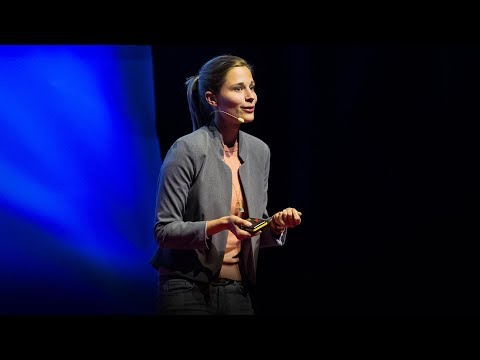
Brain Hack: 6 secrets to learning faster, backed by neuroscience | Lila Landowski | TEDxHobart
Estatísticas de aprendizado
Nível CEFR
Dificuldade
Legendas (328 segmentos)
Transcriber: Anna Kalynchuk Reviewer: Michael Nystrom
I'm angry.
And I’m angry because I wish I knew this when I was younger.
So I’m a neuroscientist and a lecturer.
And as a neuroscientist,
I study the brain and the nerves that span out into the body.
And as a lecturer, I teach the next generation of healthcare professionals.
And look, I see some students struggle with their learning,
especially the older ones, but it’s not their fault.
You know, we don't get taught how to learn.
We just kind of expect it to happen.
And I think the worst curse of all really is it gets harder to learn as we age.
But what if I told you that there are things that we can do
to learn faster and more effectively?
I’m going to take you through the neuroscience
behind six critical ingredients that can help you learn faster:
attention, alertness, sleep,
repetition, breaks, and mistakes.
Now, first things first. How do we actually learn?
We need neuroplasticity to happen.
So neuroplasticity is the scientific term that essentially means
our brain’s ability to physically change in response to experience.
So when we’re learning something, whether it’s learning information or
learning a skill,
tiny little connections called synapses
form between neighboring neurons in the brain.
And the more we do that thing, whether it’s information or a skill,
the more robust those connections become
and the better we get at doing whatever it is.
Now, what you’re looking at here
are two neurons that I filmed in a petri dish connecting.
Actually, this was a petri dish that I was about to throw away,
but I saw they were about to connect, so I quickly took this video.
Now, these incredible handlike structures here are called “growth cones,”
and every neuron has one.
They actively sense the environment around,
and they help each and every one of the 86 billion neurons in your brain
find the correct place to connect to.
So, for example, from here to here,
or here to here.
And this isn’t learning. This doesn’t represent learning.
What it represents is how our brain wires itself during development.
Now, when things go wrong with that wiring process
or when it doesn't happen in the usual way,
you can end up with things like issues with learning and memory.
Now, kids are a little bit like sponges, right?
They just seem to need to be exposed to stuff,
and they seem to remember it.
Languages, skills, sports, whatever it is, the learning just happens really quickly.
Now, have you ever met someone who’s incredibly talented,
and you just thought,
“Okay, they must have some magic thing about them
that the rest of us don’t have.”
Well, what if I told you that that's probably not true?
It mostly comes down to practice, perseverance,
and when in development, they started learning that skill.
So the earlier, the better.
And people like Serena Williams and Beethoven,
they weren't born with their skills.
They practiced, and they all actually started by age five.
So really, our ability to learn goes downhill after age five,
(Laughter)
but it certainly gets harder through our childhood, through our teens.
And once we hit our mid-twenties, it gets exponentially harder to learn.
But the good news is I’m going to tell you what you can do about it
because there are things you can do.
Legendas completas disponíveis no player de vídeo
Pratique com exercícios
Gere exercícios de vocabulário, gramática e compreensão deste vídeo
Comentários (0)
Faça Login para ComentarCadastre-se para desbloquear todos os recursos
Acompanhe seu progresso, salve vocabulário e pratique com exercícios
Modo interativo
Questionário
Resposta certa:
Vídeos relacionados



TEDx Talks
Questionário
Resposta certa:
Os quizzes aparecem enquanto você assiste ao vídeo
Dica de memorização
Deste vídeo
Aprenda idiomas de grátis

