laundry في 30 ثانية
- Laundry refers to clothes, towels, and linens that need washing or have been recently cleaned in a cycle of domestic maintenance.
- It is an uncountable noun, so we use phrases like 'a load of laundry' or 'some laundry' instead of pluralizing it.
- The word is commonly used with the verb 'do,' as in 'doing the laundry,' which covers washing, drying, and folding.
- Beyond the home, it appears in idioms like 'money laundering' and 'airing dirty laundry,' which describe secrets or illegal financial acts.
The word laundry is a fundamental noun in the English language, primarily used to describe clothes, bed sheets, towels, and other fabric items that are either in need of washing or have just been washed. It is a collective noun, meaning it refers to a group of items as a single unit. When you look at a pile of dirty shirts on the floor, you are looking at laundry. When you see a basket of warm, folded towels straight from the dryer, you are also looking at laundry. Beyond the physical objects, the term is frequently used to describe the entire process of cleaning these items, encompassing sorting, washing, drying, and folding. This dual nature makes it one of the most common words in domestic life, appearing in daily conversations about household chores and personal hygiene.
- The Physical Items
- In this context, laundry refers to the textiles themselves. It can be categorized into 'dirty laundry' (soiled items) and 'clean laundry' (freshly washed items). For example, 'I need to put the laundry in the machine.'
- The Process or Task
- This refers to the act of cleaning. People often say they are 'doing the laundry,' which implies the full cycle of maintenance required to keep clothes wearable and hygienic.
- The Location
- While 'laundry room' is the full term, people sometimes shorten it in context, though 'laundry' usually refers to the items or the act rather than the room itself.
The significance of laundry in human culture cannot be overstated. It is a task that has evolved from a labor-intensive communal activity at riverbanks using stones and lye to a highly automated process involving sophisticated machinery and chemical engineering. In the modern era, the scent of 'clean laundry' has become a standardized olfactory profile, often associated with freshness, comfort, and a well-ordered home. This is why many candles and air fresheners are marketed with names like 'Linen Fresh' or 'Sun-Drenched Laundry.' The word also carries social weight; the ability to have clean laundry is a basic marker of health and social participation.
After the long camping trip, we had three massive bags of laundry to wash.
In professional settings, laundry takes on a more industrial tone. Hospitals, hotels, and restaurants deal with 'commercial laundry,' which requires specialized equipment to handle high volumes and meet strict sanitation standards. Here, the word might refer to thousands of pounds of linens processed daily. Even in these large-scale environments, the core meaning remains the same: the management and cleaning of textiles. Furthermore, the word has entered the metaphorical lexicon. 'Money laundering' refers to the process of making 'dirty' money (obtained illegally) appear 'clean' (legitimate). Similarly, the idiom 'to air one's dirty laundry' means to discuss private, often embarrassing, matters in public. These metaphors rely on the basic understanding of laundry as something that transitions from a state of being soiled to a state of being clean.
The hotel offers a 24-hour laundry service for its guests.
Technologically, the concept of laundry is tied to the development of detergents and surfactants. These chemicals are designed to break the surface tension of water and lift oils and dirt from fabric fibers. The mechanical action of a washing machine—agitation—further assists this process. Once washed, the laundry must be dried, either through evaporation on a clothesline or through the forced hot air of a tumble dryer. Each step in this process is a sub-category of 'doing the laundry.' For many, 'laundry day' is a specific day of the week dedicated to this cycle, highlighting its role as a rhythmic, predictable part of life. Whether you are a student using a coin-operated machine in a dorm or a parent managing a household of five, the word laundry represents a universal human experience of maintenance and care.
She spent the entire afternoon folding the laundry while watching television.
Don't forget to take your gym laundry out of your bag so it doesn't smell.
Finally, the word laundry appears in various compound forms that help specify its use. A 'laundry basket' or 'laundry hamper' is where you store dirty clothes. 'Laundry detergent' is the soap used. A 'laundry list' has become a common idiom for any long, detailed list of items, even if they have nothing to do with clothes. This shows how deeply the concept of laundry is embedded in the English-speaking consciousness. It is not just a chore; it is a framework for organizing, cleaning, and categorizing the world around us. From the smallest baby sock to the largest king-sized duvet, everything that passes through the wash is part of the vast, never-ending story of laundry.
The laundry detergent was on sale at the supermarket this week.
Using the word laundry correctly requires an understanding of its grammatical behavior as an uncountable noun and its common verbal pairings. The most frequent verb associated with laundry is 'to do.' You don't 'make' laundry or 'perform' laundry; you 'do the laundry.' This phrase covers the entire sequence of events from the moment you pick up a dirty shirt to the moment you put it back in the closet. Because it is uncountable, you should avoid using 'a' or 'an' directly before it unless you are using it as an adjective (e.g., 'a laundry basket'). Instead, use quantifiers like 'some,' 'a lot of,' or 'a load of.'
- Common Verb Pairings
- 'Do the laundry,' 'Wash the laundry,' 'Dry the laundry,' 'Fold the laundry,' 'Sort the laundry,' 'Hang the laundry.'
- Quantifying Laundry
- 'A load of laundry,' 'A pile of laundry,' 'A basket of laundry,' 'A mountain of laundry' (hyperbole).
When constructing sentences, consider the state of the laundry. Is it wet? Is it dry? Is it clean? Is it dirty? These adjectives usually precede the noun. For example, 'I need to hang the wet laundry on the line' or 'Please help me fold the clean laundry.' You can also use 'laundry' as a modifier for other nouns, creating compound words that describe tools or locations. 'Laundry detergent,' 'laundry room,' 'laundry day,' and 'laundry cycle' are all standard terms. In these cases, 'laundry' acts like an adjective to specify what the detergent or room is for.
I have so much laundry to do that I might be busy all weekend.
In more complex sentence structures, 'laundry' can be the subject or the object. As a subject: 'The laundry is still damp, so leave the dryer on for ten more minutes.' As an object: 'He forgot to take the laundry out of the washing machine, and now it smells musty.' Notice how the verb 'is' is singular because 'laundry' is treated as a singular mass noun. Even if the laundry consists of fifty different items, we say 'the laundry is,' not 'the laundry are.' This is a common point of confusion for learners who might be thinking of the individual clothes.
Could you please move the laundry from the washer to the dryer?
Another nuance in usage involves the distinction between 'doing laundry' and 'going to the laundry.' While the former is the act, the latter is often used in some dialects to mean going to a laundromat or a dry cleaner. However, in standard American English, 'the laundry' almost always refers to the clothes themselves. If you are talking about the business, you would say 'I'm going to the laundromat' or 'I'm going to the cleaners.' In a hotel, you might 'send your laundry out,' which means using the hotel's professional cleaning service. This phrase 'send out' is a specific phrasal verb used for services where you give an item away to be processed and returned.
She sorted the laundry into whites, darks, and colors before starting the machine.
Finally, let's look at the metaphorical usage in sentences. When someone says, 'The politician has a laundry list of failed promises,' they are using 'laundry' to imply a long, messy, and perhaps overwhelming collection of items. When a detective says they are looking into 'money laundering,' they are describing a criminal process. In these cases, the word 'laundry' is never pluralized. You would never say 'money launderings' or 'laundry lists' in a way that changes the base noun's uncountable nature in the idiom. Understanding these patterns allows you to use 'laundry' not just for chores, but as a versatile tool for description in both literal and figurative contexts.
The clean laundry smelled like fresh lavender and spring rain.
- Common Mistakes to Avoid
- Saying 'I have a laundry' instead of 'I have some laundry.' Saying 'The laundry are clean' instead of 'The laundry is clean.'
You will encounter the word laundry in a variety of everyday environments, ranging from the intimacy of the home to the public sphere of service industries. In a domestic setting, it is a constant topic of conversation. Parents might tell their children, 'Put your dirty laundry in the hamper, not on the floor.' Roommates might negotiate schedules by asking, 'Are you using the laundry machine right now?' These interactions are usually informal and focus on the logistics of shared living spaces. The word is often spoken with a tone of mild exasperation, as laundry is a chore that never truly ends.
'Is the laundry done yet? I need my favorite jeans for the party tonight!'
In public spaces like laundromats (or launderettes in the UK), the word is everywhere. You’ll see signs for 'Laundry Services,' 'Self-Service Laundry,' and 'Wash and Fold Laundry.' Here, the word takes on a commercial meaning. You might hear a customer ask the attendant, 'How much do you charge for a 10-pound bag of laundry?' or 'Does this machine take laundry cards or quarters?' In these environments, 'laundry' is a commodity—a service being bought and sold. The atmosphere is often filled with the mechanical hum of dryers and the distinct chemical scent of industrial-strength detergent.
The travel and hospitality industry is another place where 'laundry' is frequently heard. When you check into a hotel, you might find a 'laundry bag' in the closet and a 'laundry menu' on the desk. A concierge might ask, 'Would you like to send your laundry out for dry cleaning?' In this context, the word is associated with luxury and convenience. Conversely, for the staff working 'back of house' in a hotel, 'laundry' refers to the massive, non-stop operation of cleaning bedsheets and towels for hundreds of rooms. You might hear a manager say, 'We are behind on the laundry because the main boiler is down.'
'Please leave your laundry bag outside the door by 9:00 AM for same-day service.'
In the world of media and advertising, 'laundry' is a billion-dollar keyword. Television commercials for laundry detergents, fabric softeners, and stain removers are ubiquitous. These ads often use 'laundry' as a stand-in for family care, showing parents lovingly washing their children's clothes. You’ll hear phrases like 'tough on laundry stains' or 'makes your laundry smell like a summer breeze.' In news and entertainment, you might hear the metaphorical uses. A news anchor might report on a 'money laundering' scandal involving a major bank, or a character in a drama might warn another, 'Don't air your dirty laundry in front of our guests!' This metaphorical use is so common that it is often understood even by those who don't do their own washing.
- At the Laundromat
- 'Do you have change for the laundry machine?' 'Is that your laundry in the dryer?'
- In a Professional Context
- 'The hospital laundry must be sterilized at high temperatures.' 'We need to order more laundry supplies.'
Finally, in literature and songwriting, 'laundry' often serves as a symbol of the mundane or the intimate. A poet might write about 'laundry dancing on the line' to evoke a sense of peace or domesticity. A songwriter might mention 'doing laundry' to ground a romantic song in the reality of everyday life. Whether it is being used to describe a criminal enterprise or the simple act of washing a pair of socks, the word 'laundry' is a versatile and essential part of the English vocabulary that you will hear in almost every corner of life.
The detective found a 'laundry list' of evidence that pointed directly to the suspect.
One of the most frequent mistakes learners make with the word laundry is treating it as a countable noun. In English, 'laundry' is a mass noun, similar to 'water' or 'advice.' This means you cannot pluralize it by adding an 's' to make 'laundries' when referring to multiple items of clothing. If you have a lot of clothes to wash, you say 'I have a lot of laundry' or 'I have several loads of laundry.' Using 'laundries' is only correct when referring to multiple laundry businesses or facilities (e.g., 'The city has many commercial laundries'), but this is rare in everyday conversation.
- Countability Error
- Incorrect: 'I have three laundries to do today.' Correct: 'I have three loads of laundry to do today.'
- Subject-Verb Agreement
- Incorrect: 'The laundry are wet.' Correct: 'The laundry is wet.' (Even if there are many clothes, the word is singular).
Another common point of confusion is the difference between 'laundry' and 'laundromat.' A 'laundromat' is the physical place where you go to wash your clothes if you don't have a machine at home. 'Laundry' is the stuff you are washing. You don't 'do the laundromat'; you 'go to the laundromat' to 'do your laundry.' Similarly, some learners confuse 'laundry' with 'detergent.' While you use detergent *for* laundry, they are not the same thing. You wouldn't say 'I need to buy some laundry' if you actually mean you need to buy soap.
Incorrect: 'I'm going to the store to buy laundry.' (Should be: laundry detergent).
The use of articles ('a,' 'an,' 'the') also trips up many students. Because it is uncountable, you generally don't say 'a laundry.' You can say 'the laundry' when referring to a specific pile, or just 'laundry' when speaking generally. For example, 'Laundry is my least favorite chore' (general) vs. 'The laundry is in the dryer' (specific). If you want to use 'a,' you must add a countable unit: 'a load of laundry,' 'a basket of laundry,' or 'a piece of laundry.' This is a subtle but important distinction that marks the difference between a beginner and an intermediate speaker.
Pronunciation can also be a minor hurdle. Some learners pronounce the 'au' in laundry like the 'ou' in 'loud,' but it should sound more like the 'aw' in 'law' or 'saw.' The 'd' is soft, and the 'ry' at the end is a quick, unstressed syllable: LAWN-dree. Mispronouncing it might make it sound like 'laundry' (with a long 'u'), which could be confusing. Additionally, be careful with the word 'laundress.' This is an archaic term for a woman who does laundry professionally; using it in modern conversation might sound strange or outdated unless you are discussing history or literature.
Incorrect: 'I put my laundry into the dishwasher.' (Should be: washing machine).
Finally, be wary of the regional differences. In the United Kingdom, 'washing' is often used where Americans use 'laundry.' If you are in London and say 'I'm doing the laundry,' people will understand you, but they might say 'I'm doing the washing' instead. Conversely, in the United States, 'washing' almost always refers to dishes or the act of cleaning one's body, while 'laundry' is strictly for clothes. Mixing these up won't usually cause a total breakdown in communication, but using the local preference will make your English sound much more natural and fluent.
- Regional Tip
- US: 'I have a lot of laundry.' UK: 'I have a lot of washing.' Both are correct, but usage varies by location.
While laundry is the most common term for clothes being washed, there are several synonyms and related words that can add variety and precision to your English. The most direct alternative is washing, which is particularly common in British, Australian, and South African English. While 'laundry' feels a bit more formal or categorical, 'washing' feels more active. You might hear someone say, 'The washing is out on the line,' which sounds very natural in a UK context. In American English, 'washing' is rarely used as a noun for clothes, though the verb 'to wash' is used constantly.
- Washing
- The most common synonym in British English. Example: 'I need to bring the washing in before it rains.'
- Linens
- Refers specifically to bed sheets, pillowcases, and towels. Example: 'The hotel changes the linens every morning.'
- Garments / Apparel
- More formal words for clothes. You wouldn't usually say 'I'm washing my apparel,' but a dry cleaner might use these terms.
Another related term is dry cleaning. It is important to distinguish this from laundry. Laundry involves water and detergent, while dry cleaning uses chemical solvents and very little water. If you have a delicate silk dress or a wool suit, you don't 'do the laundry' with them; you 'take them to the dry cleaners.' Using the word 'laundry' for items that require dry cleaning could lead to a very expensive mistake! Similarly, whites and darks are sub-categories of laundry. When you 'sort the laundry,' you are dividing it into these groups to prevent colors from bleeding.
'I have a separate basket for the whites so they don't get stained by the blue jeans.'
In more specialized contexts, you might hear the word textiles. This is a broad term used in manufacturing and science to describe any woven fabric. While all laundry is made of textiles, not all textiles are laundry (for example, the fabric on a car seat). In a domestic setting, you might also hear the word duds, which is a very informal, somewhat old-fashioned slang word for clothes. 'I need to wash my duds' is something you might hear in an old Western movie or from someone using ironic, humorous language. However, for everyday use, 'clothes' or 'laundry' remains the safest and most common choice.
Finally, let's consider the word load. While not a synonym for laundry itself, it is the primary unit of measurement. 'A load' refers to the amount of laundry that fits into a washing machine at one time. If you have a 'small load,' you are washing just a few things. If you have a 'heavy load,' the machine is full. Understanding these alternatives allows you to be more descriptive. Instead of just saying 'I have laundry,' you can say 'I have two loads of whites and a pile of linens.' This level of detail makes your English sound more precise and sophisticated, moving you beyond basic A1 vocabulary into more advanced territory.
'The washing machine is broken, so I have to wash these by hand.'
- Comparison: Laundry vs. Washing
- Laundry is the standard term in North America. Washing is more common in the UK and Commonwealth countries. Both refer to the same process.
How Formal Is It?
حقيقة ممتعة
The word 'lavatory' (bathroom) and 'lavender' (the plant) both share the same Latin root 'lavare.' Lavender was historically used to scent freshly washed laundry!
دليل النطق
- Pronouncing the 'au' like the 'ou' in 'loud'.
- Adding an extra syllable like 'lawn-da-ry'.
- Making the 'd' sound too much like a 't'.
- Forgetting the 'r' sound entirely.
- Stressing the second syllable: lawn-DRY.
مستوى الصعوبة
The word is short and appears frequently in basic texts.
The 'au' spelling can be tricky for beginners to remember.
The pronunciation of the 'au' sound varies by dialect.
It is a very distinct-sounding word in conversation.
ماذا تتعلّم بعد ذلك
المتطلبات الأساسية
تعلّم لاحقاً
متقدم
قواعد يجب معرفتها
Uncountable Nouns
We say 'much laundry' or 'some laundry,' never 'many laundries'.
Compound Nouns
Laundry + Room = Laundry Room (The first noun acts as an adjective).
Gerunds as Subjects
'Doing laundry is a chore.' (The -ing form acts as a noun).
Subject-Verb Agreement
'The laundry is...' (Always singular verb for mass nouns).
Phrasal Verbs
'Put away the laundry' (Verb + Preposition).
أمثلة حسب المستوى
I do laundry on Sunday.
I wash my clothes on the last day of the week.
Simple present tense for a routine.
The laundry is in the basket.
The clothes are inside the container.
'Is' is used because laundry is uncountable.
Is the laundry clean?
Are the clothes washed now?
Question form using 'is'.
I have a lot of laundry.
I have many clothes to wash.
Use 'a lot of' for uncountable nouns.
Where is the laundry room?
Where can I wash my clothes?
Compound noun: laundry + room.
She washes the laundry.
She cleans the clothes.
Third person singular 's' on the verb.
The laundry is wet.
The clothes have water in them.
Adjective 'wet' describing the noun.
Put the laundry in the machine.
Place the clothes inside the washer.
Imperative sentence (a command).
I need to buy some laundry detergent.
I need soap for my clothes.
Compound noun: laundry + detergent.
He is folding the laundry now.
He is making the clothes neat.
Present continuous tense.
Don't leave your laundry on the floor.
Pick up your dirty clothes.
Negative imperative.
The laundry smells very fresh.
The clothes have a good scent.
Verb 'smells' followed by an adjective.
I did two loads of laundry today.
I filled the machine twice.
'Loads of' is the counter for laundry.
Can you help me hang the laundry?
Can you help me put clothes on the line?
Modal verb 'can' for a request.
The laundry cycle is finished.
The machine has stopped washing.
Compound noun: laundry + cycle.
She forgot the laundry in the dryer.
The clothes are still in the drying machine.
Past simple tense.
I usually sort my laundry into whites and colors.
I separate the light and dark clothes.
Verb 'sort' used with a prepositional phrase.
Doing the laundry takes up most of my Saturday morning.
Washing clothes is a long task for me.
Gerund phrase 'Doing the laundry' as the subject.
Is there a laundry service in this hotel?
Does the hotel wash clothes for guests?
Compound noun: laundry + service.
The laundry basket is overflowing with dirty clothes.
The container is too full.
Present continuous state.
I need to iron some of this laundry before work.
I need to remove wrinkles from the clothes.
Infinitive 'to iron' as a purpose.
She prefers to use eco-friendly laundry soap.
She likes soap that is good for the environment.
Adjective 'eco-friendly' modifying the compound noun.
The damp laundry needs to stay in the dryer longer.
The clothes are still a little wet.
Adjective 'damp' used before the noun.
He spent the afternoon putting the laundry away.
He put the clothes in the drawers.
Phrasal verb 'put away' used with the noun.
The politician was accused of money laundering.
He was accused of making illegal money look legal.
Idiomatic use: money laundering.
It's not polite to air your dirty laundry in public.
Don't talk about private problems with everyone.
Idiom: to air dirty laundry.
The company has a laundry list of issues to resolve.
There are many problems to fix.
Idiom: laundry list.
Commercial laundry facilities use much larger machines.
Industrial places have big washers.
Adjective 'commercial' modifying the noun.
The laundry detergent caused an allergic reaction.
The soap made his skin red.
Noun phrase as the subject of the sentence.
She managed to get the grass stains out of the laundry.
She cleaned the green marks off the clothes.
Verb 'get out' used for removing stains.
The laundry room in the basement is shared by all tenants.
Everyone in the building uses the same room.
Passive voice 'is shared'.
He's been doing his own laundry since he was twelve.
He has washed his own clothes for a long time.
Present perfect continuous tense.
The sheer volume of laundry in a hospital is staggering.
The amount of washing is very large.
Abstract noun 'volume' used with 'of laundry'.
The laundering process must adhere to strict hygiene standards.
The washing must follow rules for cleanliness.
Gerund 'laundering' used as an adjective/noun.
His reputation was tarnished by the money laundering scandal.
People thought badly of him after the crime.
Passive voice with a complex noun phrase.
The novel uses the image of laundry on a line to symbolize peace.
The book uses clothes to represent a feeling.
Literary analysis context.
Automation has revolutionized the way we handle domestic laundry.
Machines changed how we wash clothes at home.
Present perfect tense with 'revolutionized'.
The laundry detergent industry is worth billions of dollars.
The business of selling soap is very big.
Complex compound noun phrase.
She felt overwhelmed by the endless cycle of laundry and chores.
She felt tired because the work never stops.
Metaphorical 'cycle' of a task.
The fabric's durability was tested through repeated laundry cycles.
They washed it many times to see if it would break.
Technical/Scientific context.
The Sisyphean nature of laundry reflects the repetitive toil of domesticity.
Laundry is a task that never ends, like the myth of Sisyphus.
High-level vocabulary (Sisyphean, toil, domesticity).
The legislation aims to curb the sophisticated methods of money laundering.
The law wants to stop complex ways of hiding illegal money.
Formal legal/political register.
The scent of sun-dried laundry evoked a profound sense of nostalgia.
The smell of the clothes made her remember the past deeply.
Evocative, descriptive language.
Industrial-scale laundering requires a meticulous balance of chemicals.
Big washing needs a very careful mix of soaps.
Technical precision in vocabulary.
The essay explores the gendered history of laundry as a form of labor.
The writing looks at how women have traditionally done this work.
Academic/Sociological register.
He presented a laundry list of grievances that spanned several decades.
He gave a very long list of complaints from a long time.
Idiomatic use in a formal context.
The delicate fibers of the heirloom lace could not withstand the laundry machine.
The old, expensive fabric was ruined by the washer.
Complex subject with specific adjectives.
The rhythmic thumping of the laundry became the soundtrack to her thoughts.
The sound of the machine matched her thinking.
Metaphorical and poetic structure.
المرادفات
الأضداد
تلازمات شائعة
العبارات الشائعة
— A large amount of clothes waiting to be washed or folded.
There is a huge pile of laundry on the bed.
— A professional business that washes clothes for you.
The hotel offers a 24-hour laundry service.
— Currently being washed or in the process of being cleaned.
Your favorite shirt is in the laundry right now.
— A long and detailed list of things (often metaphorical).
He gave me a laundry list of reasons why he was late.
— The specific program or stage of the washing machine.
The rinse cycle is the last part of the laundry cycle.
— Clothes that have been washed but not yet dried.
Don't leave the wet laundry in the machine too long.
— A place where you pay with coins to use the machines.
I had to go to the coin-operated laundry down the street.
— A tube in a house used to drop clothes to the laundry room.
The kids love throwing clothes down the laundry chute.
— Clothes that have just been cleaned and dried.
Nothing beats the feeling of fresh laundry.
يُخلط عادةً مع
A laundromat is the place; laundry is the clothes.
Detergent is the soap used to wash the laundry.
In the US, 'washing' usually means dishes or body; in the UK, it means laundry.
تعبيرات اصطلاحية
— To discuss private or embarrassing matters in front of others.
They started arguing about their marriage at the party, airing all their dirty laundry.
informal— The illegal process of making large amounts of money generated by a criminal activity appear to have come from a legitimate source.
The bank was fined for failing to prevent money laundering.
formal / legal— A very long and detailed list of items, complaints, or requirements.
The boss gave me a laundry list of tasks to complete by Friday.
neutral— To take all of someone's money, often through a legal battle or a scam (related to cleaning clothes).
His ex-wife really took him to the cleaners during the divorce.
informal— To refuse to be involved with or responsible for something anymore (related to washing).
I've tried to help him, but now I'm washing my hands of the whole situation.
neutral— Completely clean or innocent (often used for things that have been 'laundered').
The car was old, but the engine was clean as a whistle.
informal— Used to say that a problem will be resolved or forgotten over time.
Don't worry about the small mistake; it will all come out in the wash.
informal— To solve small problems or difficulties in a plan (related to ironing laundry).
We need one more meeting to iron out the kinks in the contract.
neutral— To leave someone in a difficult situation without any help.
When the project failed, his partners hung him out to dry.
informal— To avoid using bad language or talking about inappropriate topics.
There are children here, so please keep it clean.
informalسهل الخلط
It is the verb form of laundry.
Laundry is the noun (the stuff), while launder is the verb (the action). Launder is also used for money.
She needs to launder her uniforms.
It sounds like laundry.
A laundress is a woman who washes clothes for a living (old-fashioned term).
The Victorian laundress worked long hours.
They are a type of laundry.
Linens specifically refer to sheets and towels, while laundry includes everything.
I need to wash the linens and the clothes.
It sounds like a list for washing.
It is usually an idiom for any long list of items.
He had a laundry list of complaints.
It is a way to clean clothes.
Dry cleaning uses chemicals, not water and detergent like laundry.
Take the suit to dry cleaning, not the laundry.
أنماط الجُمل
I have [adjective] laundry.
I have dirty laundry.
I am [verb-ing] the laundry.
I am folding the laundry.
I need to [verb] a load of laundry.
I need to wash a load of laundry.
The laundry is [adjective] because [reason].
The laundry is damp because the dryer is broken.
Despite the [noun], the laundry [verb].
Despite the rain, the laundry stayed dry under the porch.
The [metaphor] of laundry [verb] [object].
The Sisyphean cycle of laundry dominates her weekends.
The laundry is in the [location].
The laundry is in the machine.
Can you [verb] the laundry?
Can you dry the laundry?
عائلة الكلمة
الأسماء
الأفعال
الصفات
مرتبط
كيفية الاستخدام
Very high in daily domestic life.
-
I have many laundries.
→
I have a lot of laundry.
Laundry is an uncountable noun. You cannot make it plural when referring to clothes.
-
The laundry are drying.
→
The laundry is drying.
Because laundry is a mass noun, it always takes a singular verb.
-
I need to buy laundry.
→
I need to buy laundry detergent.
You don't buy laundry (clothes to wash); you buy the soap used to wash them.
-
I'm doing the laundromat.
→
I'm going to the laundromat.
A laundromat is a place, not an action. You go there to do your laundry.
-
He aired his dirty washing in public.
→
He aired his dirty laundry in public.
While 'washing' and 'laundry' are synonyms, the specific idiom almost always uses 'laundry'.
نصائح
Always Singular
Remember that 'laundry' takes a singular verb. Even if you have a mountain of clothes, always say 'The laundry is...' rather than 'The laundry are...'. This is a very common mistake for learners.
Use 'Do'
The most natural verb to use with laundry is 'do'. Instead of saying 'I will wash my laundry', say 'I will do the laundry'. It sounds much more like a native speaker.
Quantify with 'Load'
Since you can't count 'laundry', use the word 'load' to talk about quantity. 'I have three loads of laundry' is the perfect way to express a large amount.
Dirty Laundry
When you hear someone talk about 'dirty laundry' in a news story or a movie, check if they are talking about clothes or secrets. Most of the time, it's a metaphor for embarrassing information.
The 'AU' Rule
The 'au' in laundry is often misspelled as 'aw' or 'o'. Just remember that 'Laundry' and 'Autumn' both start with 'au' and both involve things falling (leaves and clothes!).
Regional Differences
If you are traveling to the UK, don't be surprised if you don't hear 'laundry' very often. 'Washing' is the king of words there for this specific chore.
Soft 'D'
Don't over-emphasize the 'd' in laundry. It should flow quickly into the 'r'. Practice saying 'lawn' and then 'dree' quickly to get the right rhythm.
Laundry List
Use the phrase 'laundry list' in your writing to describe a long series of items. It makes your English sound more idiomatic and advanced.
Delicates
Learn the word 'delicates' alongside laundry. It refers to the items you shouldn't just throw in the machine, like silk or wool.
Laundry Room
Associate 'laundry' with the room it happens in. If you can visualize your 'laundry room', you will always remember the word when you are there.
احفظها
وسيلة تذكّر
Think of a LAWN where you DRY your clothes. LAWN + DRY = LAUNDRY.
ربط بصري
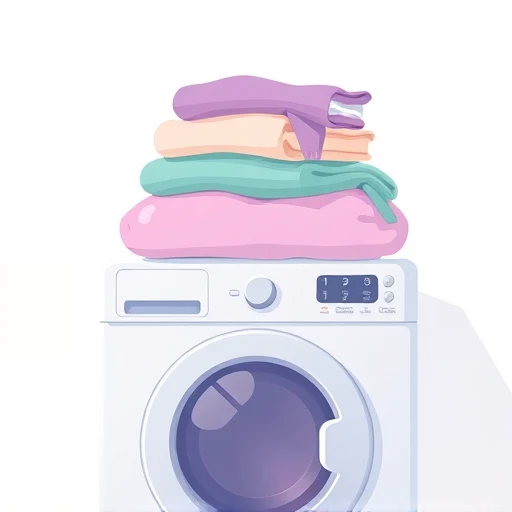
Imagine a giant, overflowing basket of colorful clothes sitting next to a white washing machine.
Word Web
تحدٍّ
Try to name five items in your laundry basket right now in English. For example: 'I have two shirts, one pair of jeans, and two socks in my laundry.'
أصل الكلمة
The word 'laundry' comes from the Middle English word 'lavendrye,' which was adapted from the Old French 'lavanderie.' This, in turn, stems from the Old French 'lavandier,' meaning a person who washes clothes. The ultimate root is the Latin verb 'lavare,' which means 'to wash.'
المعنى الأصلي: A place where washing is done or the act of washing.
Indo-European (Latin -> French -> English)السياق الثقافي
Be aware that 'money laundering' is a serious criminal term and should not be used jokingly in formal business or legal settings.
In the US, 'doing laundry' is the standard phrase. In the UK, 'doing the washing' is equally common.
تدرّب في الحياة الواقعية
سياقات واقعية
At Home
- Where is the laundry basket?
- I'm doing a load of whites.
- The dryer is finished.
- Can you help me fold this?
At a Laundromat
- Do you have change for a dollar?
- Which machine is free?
- How long is the wash cycle?
- Is this dryer hot?
In a Hotel
- I have some laundry to be picked up.
- When will my laundry be ready?
- Do you offer dry cleaning?
- Please put it on my bill.
Shopping
- I need laundry detergent.
- Is this safe for colors?
- Where are the laundry supplies?
- This softener smells great.
Conversations about Chores
- I hate doing laundry.
- Laundry day is so boring.
- I have so much laundry to do.
- The laundry never ends!
بدايات محادثة
"How often do you do your laundry during the week?"
"Do you prefer to hang your laundry outside or use a dryer?"
"What is your favorite scent for laundry detergent?"
"Do you find folding laundry to be relaxing or annoying?"
"Have you ever accidentally shrunk a piece of laundry in the wash?"
مواضيع للكتابة اليومية
Describe your typical laundry routine from start to finish.
Write about a time you ruined a piece of clothing while doing laundry.
Do you think doing laundry will be completely different in 50 years? How?
Compare doing laundry at home versus going to a public laundromat.
How does the smell of fresh laundry make you feel? Describe the memory.
الأسئلة الشائعة
10 أسئلةIt is uncountable. You should say 'some laundry' or 'a load of laundry' rather than 'a laundry' or 'laundries'. For example, 'I have a lot of laundry to do today' is correct.
They mean the same thing when referring to clothes. 'Laundry' is the preferred term in American English, while 'washing' is more common in British English. For example, an American says 'do the laundry' and a Brit says 'do the washing'.
In some places, people say this to mean they are going to a laundromat, but it's clearer to say 'I'm going to the laundromat' or 'I'm doing my laundry'.
It is an idiom that means talking about private or embarrassing secrets in public. For example, 'The couple was airing their dirty laundry in the middle of the restaurant'.
You can put it before other nouns to describe things related to washing. Examples include 'laundry basket', 'laundry detergent', and 'laundry room'.
It is a criminal act where illegally obtained money is processed through legitimate businesses to make it look legal. It has nothing to do with actual clothes.
A 'load' is the amount of clothes that fits into the washing machine at one time. If you have a lot of clothes, you might need to do 'three loads'.
Yes, when referring to clothes. You say 'The laundry is clean,' even if there are twenty shirts in the pile. You only use 'laundries' when talking about multiple washing businesses.
Literally, it's a list of clothes to be washed. Idiomatically, it means any very long and detailed list of things, like 'a laundry list of chores'.
It is pronounced LAWN-dree. The first part sounds like the word 'lawn' (grass), and the second part is a short 'dree' sound.
اختبر نفسك 180 أسئلة
Describe your laundry routine in three sentences.
Well written! Good try! Check the sample answer below.
Write a short dialogue between two roommates about laundry.
Well written! Good try! Check the sample answer below.
Explain the meaning of the idiom 'to air one's dirty laundry'.
Well written! Good try! Check the sample answer below.
Write a formal email to a hotel asking about their laundry services.
Well written! Good try! Check the sample answer below.
Compare doing laundry at home versus at a laundromat.
Well written! Good try! Check the sample answer below.
What are the benefits of sorting laundry before washing?
Well written! Good try! Check the sample answer below.
Write a sentence using 'laundry' as an adjective.
Well written! Good try! Check the sample answer below.
Describe the smell of fresh laundry using three adjectives.
Well written! Good try! Check the sample answer below.
Write a short paragraph about the history of laundry.
Well written! Good try! Check the sample answer below.
Explain why 'money laundering' is called 'laundering'.
Well written! Good try! Check the sample answer below.
What should you do if your laundry shrinks in the wash?
Well written! Good try! Check the sample answer below.
Write a sentence using the phrase 'laundry list'.
Well written! Good try! Check the sample answer below.
Describe a 'laundry room' in a modern apartment.
Well written! Good try! Check the sample answer below.
Why is it important to clean the lint filter in a laundry dryer?
Well written! Good try! Check the sample answer below.
Write a poem of four lines about laundry.
Well written! Good try! Check the sample answer below.
What are 'delicates' in the context of laundry?
Well written! Good try! Check the sample answer below.
How do you feel when you have a lot of laundry to do?
Well written! Good try! Check the sample answer below.
Write a sentence about 'commercial laundry'.
Well written! Good try! Check the sample answer below.
What is the difference between laundry detergent and fabric softener?
Well written! Good try! Check the sample answer below.
Write a creative story about a lost sock in the laundry.
Well written! Good try! Check the sample answer below.
Pronounce the word 'laundry' three times.
Read this aloud:
قلت:
Speech recognition is not supported in your browser. Try Chrome or Edge.
Say: 'I need to do a load of laundry.'
Read this aloud:
قلت:
Speech recognition is not supported in your browser. Try Chrome or Edge.
Ask a question about where the laundry room is.
Read this aloud:
قلت:
Speech recognition is not supported in your browser. Try Chrome or Edge.
Say: 'Don't forget the laundry detergent!'
Read this aloud:
قلت:
Speech recognition is not supported in your browser. Try Chrome or Edge.
Explain how to sort laundry in your own words.
Read this aloud:
قلت:
Speech recognition is not supported in your browser. Try Chrome or Edge.
Use the word 'laundry' in a sentence about a hotel.
Read this aloud:
قلت:
Speech recognition is not supported in your browser. Try Chrome or Edge.
Say the idiom 'airing dirty laundry' in a sentence.
Read this aloud:
قلت:
Speech recognition is not supported in your browser. Try Chrome or Edge.
Describe the smell of clean laundry out loud.
Read this aloud:
قلت:
Speech recognition is not supported in your browser. Try Chrome or Edge.
Say: 'The laundry is still damp, so leave it in the dryer.'
Read this aloud:
قلت:
Speech recognition is not supported in your browser. Try Chrome or Edge.
Tell a short story about a laundry mistake.
Read this aloud:
قلت:
Speech recognition is not supported in your browser. Try Chrome or Edge.
Say: 'Money laundering is a serious crime.'
Read this aloud:
قلت:
Speech recognition is not supported in your browser. Try Chrome or Edge.
Ask someone to help you fold the laundry.
Read this aloud:
قلت:
Speech recognition is not supported in your browser. Try Chrome or Edge.
Say: 'I have a laundry list of things to do today.'
Read this aloud:
قلت:
Speech recognition is not supported in your browser. Try Chrome or Edge.
Describe a laundromat you have seen.
Read this aloud:
قلت:
Speech recognition is not supported in your browser. Try Chrome or Edge.
Say: 'The laundry basket is overflowing.'
Read this aloud:
قلت:
Speech recognition is not supported in your browser. Try Chrome or Edge.
Explain the difference between laundry and dry cleaning.
Read this aloud:
قلت:
Speech recognition is not supported in your browser. Try Chrome or Edge.
Say: 'I prefer to hang my laundry outside.'
Read this aloud:
قلت:
Speech recognition is not supported in your browser. Try Chrome or Edge.
Use 'laundry' in a sentence about your weekend.
Read this aloud:
قلت:
Speech recognition is not supported in your browser. Try Chrome or Edge.
Say: 'Commercial laundry facilities are very efficient.'
Read this aloud:
قلت:
Speech recognition is not supported in your browser. Try Chrome or Edge.
Say: 'The laundry cycle is almost finished.'
Read this aloud:
قلت:
Speech recognition is not supported in your browser. Try Chrome or Edge.
Listen and write: 'The laundry is in the dryer.'
Listen and write: 'I need more laundry detergent.'
Listen and write: 'She is folding the laundry.'
Listen and write: 'The laundry basket is full.'
Listen and write: 'He does laundry every Monday.'
Listen and write: 'Don't air your dirty laundry.'
Listen and write: 'The laundry smells like lavender.'
Listen and write: 'I have two loads of laundry.'
Listen and write: 'The laundry room is down the hall.'
Listen and write: 'Money laundering is illegal.'
Listen and write: 'Sort the laundry by color.'
Listen and write: 'The laundry cycle is 30 minutes.'
Listen and write: 'Fresh laundry is so soft.'
Listen and write: 'I forgot the laundry in the washer.'
Listen and write: 'The laundry list was very long.'
/ 180 correct
Perfect score!
Summary
Laundry is a versatile A1-level noun that describes both the physical items (clothes/linens) and the process of cleaning them. Remember that it is uncountable and usually paired with the verb 'do.' Example: 'I need to do a load of laundry because I have no clean socks left.'
- Laundry refers to clothes, towels, and linens that need washing or have been recently cleaned in a cycle of domestic maintenance.
- It is an uncountable noun, so we use phrases like 'a load of laundry' or 'some laundry' instead of pluralizing it.
- The word is commonly used with the verb 'do,' as in 'doing the laundry,' which covers washing, drying, and folding.
- Beyond the home, it appears in idioms like 'money laundering' and 'airing dirty laundry,' which describe secrets or illegal financial acts.
Always Singular
Remember that 'laundry' takes a singular verb. Even if you have a mountain of clothes, always say 'The laundry is...' rather than 'The laundry are...'. This is a very common mistake for learners.
Use 'Do'
The most natural verb to use with laundry is 'do'. Instead of saying 'I will wash my laundry', say 'I will do the laundry'. It sounds much more like a native speaker.
Quantify with 'Load'
Since you can't count 'laundry', use the word 'load' to talk about quantity. 'I have three loads of laundry' is the perfect way to express a large amount.
Dirty Laundry
When you hear someone talk about 'dirty laundry' in a news story or a movie, check if they are talking about clothes or secrets. Most of the time, it's a metaphor for embarrassing information.