parkour في 30 ثانية
- Parkour is an urban movement discipline focused on efficiency, speed, and safety while navigating obstacles like walls and railings.
- Originating in France, it emphasizes using the human body to overcome physical challenges in the built environment.
- Practitioners, called traceurs, view the city as a playground, performing vaults, climbs, and jumps to find the most direct path.
- It differs from freerunning by prioritizing utility and speed over aesthetic flips and acrobatic stunts.
Parkour is a holistic physical discipline that emphasizes the ability to move through any environment with speed, efficiency, and safety. It is not merely a set of flashy tricks or acrobatic stunts; rather, it is a philosophy of movement that encourages practitioners to view the world as a series of opportunities rather than obstacles. The term originates from the French phrase 'parcours du combattant', which refers to the classic obstacle course training used by the military. In a modern urban context, parkour involves navigating the built environment—walls, railings, stairs, and rooftops—using a variety of techniques such as vaulting, climbing, and precision jumping. People use the word parkour to describe both the sport itself and the specific act of moving in this manner. It is commonly discussed in the context of extreme sports, urban fitness, and even cinematic stunt work. When someone says they are 'doing parkour,' they are referring to a focused practice of physical conditioning and spatial awareness. The discipline is deeply rooted in the idea of being 'useful,' a concept championed by Georges Hébert, whose 'Natural Method' laid the groundwork for what would become parkour. Today, it is a global phenomenon with a dedicated community of 'traceurs' (male practitioners) and 'traceuses' (female practitioners) who share videos of their 'lines'—the paths they take through a landscape—on social media platforms like YouTube and Instagram. The word is used in casual conversation to describe any impressive feat of urban agility, but for serious practitioners, it represents a lifelong commitment to self-improvement and physical mastery. It is a word that evokes images of fluid motion, high-stakes jumps, and the creative repurposing of public space. Whether discussed as a hobby, a professional career in stunts, or a form of moving meditation, parkour remains a powerful symbol of human adaptability and the drive to overcome physical limitations.
- The Core Philosophy
- At its heart, parkour is about 'être et durer' (to be and to last), emphasizing longevity and the avoidance of injury through perfect technique.
The athlete demonstrated incredible fluidity while performing parkour across the city square.
- Urban Navigation
- Parkour transforms the sterile architecture of a city into a dynamic playground for the human body.
Many young people in the neighborhood have taken up parkour as a way to stay fit without a gym membership.
The documentary explores the origins of parkour in the suburbs of Paris during the late 1980s.
- Mental Fortitude
- Practicing parkour requires immense focus and the ability to calculate risks in a split second.
He escaped the pursuers by using parkour to scale a ten-foot wall effortlessly.
The video game features a protagonist who uses parkour to travel across rooftops.
Using the word 'parkour' correctly requires an understanding of its grammatical function as both a noun and, increasingly in colloquial English, a verb. As a noun, it functions like other sports or disciplines such as 'gymnastics' or 'karate.' You 'practice' parkour, 'do' parkour, or 'study' parkour. For example, 'She has been practicing parkour for three years.' In this sentence, parkour is the direct object of the verb practicing. It can also be used as a modifier, as in 'parkour training' or 'parkour shoes.' When used as a verb, 'to parkour,' it describes the action of moving through an environment using these techniques. While some purists prefer to use 'practicing parkour,' the verbal form is widely accepted in casual speech: 'He parkoured over the fence to catch the bus.' It is important to note the spelling and pronunciation; the 'r' at the end is often soft or silent depending on the dialect, reflecting its French roots. When writing about parkour, one often encounters related terms like 'traceur' or 'vault.' A 'traceur' is someone who does parkour. You might say, 'The traceur performed a perfect cat leap.' The word 'parkour' is also frequently used in the context of film and television to describe action sequences. 'The movie is famous for its opening parkour chase.' In academic or technical writing, parkour might be described as 'utilitarian movement' or 'non-linear navigation.' It is also useful to understand the prepositions that typically accompany the word. You do parkour 'in' the city, 'on' the streets, or 'across' the rooftops. The versatility of the word allows it to fit into various sentence structures, from simple descriptions of exercise to complex metaphors about overcoming life's hurdles. Whether you are describing a professional athlete or a child jumping off a park bench, the word 'parkour' carries a connotation of intentionality and physical skill. It is not just falling or jumping; it is the controlled, deliberate mastery of one's surroundings. By incorporating 'parkour' into your vocabulary, you can more accurately describe a wide range of modern physical activities and the cultural movements associated with them.
- Verb Usage
- While originally a noun, 'parkour' is often used as a verb in modern English to describe the act of jumping and climbing.
I watched him parkour through the construction site with amazing speed.
- Noun as Object
- In formal contexts, it is better to treat 'parkour' as a noun representing the discipline.
The school decided to offer parkour as an alternative to traditional physical education.
She is parkouring her way across the obstacles in the park.
- Adjectival Use
- Use 'parkour' before another noun to describe things related to the sport.
The athlete's parkour skills were put to the test during the competition.
They spent the afternoon filming a parkour video for their YouTube channel.
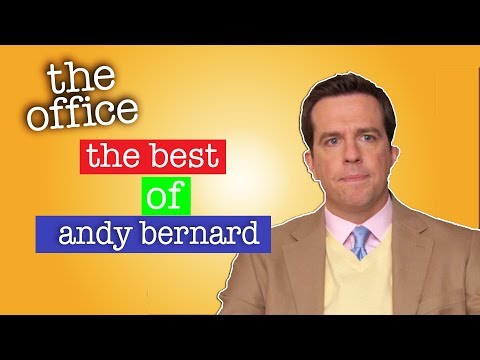
The word 'parkour' has permeated many layers of modern culture, making it a term you are likely to encounter in several different environments. One of the most common places to hear it is in the world of entertainment. Action movies have embraced parkour as a way to create thrilling, realistic chase scenes. Films like 'Casino Royale,' 'District 13' (Banlieue 13), and the 'Bourne' series feature characters using parkour to navigate urban landscapes. In these contexts, you'll hear directors, actors, and stunt coordinators discuss the technical aspects of 'parkour sequences.' Beyond the big screen, parkour is a staple of digital media. YouTube is home to thousands of parkour channels where athletes showcase their skills, often accompanied by high-energy music and first-person 'POV' (point of view) camera angles. In these videos, you'll hear terminology like 'flow,' 'line,' 'landing,' and 'bail.' Video games are another major domain for the word. Games such as 'Mirror's Edge,' 'Assassin's Creed,' and 'Dying Light' are built entirely around parkour mechanics, and players often discuss 'parkour puzzles' or 'parkour challenges.' In the real world, you might hear the word in urban planning meetings or architectural discussions. As cities become more crowded, there is a growing interest in 'parkour-friendly' spaces or 'parkour parks' designed specifically for movement training. Physical therapists and fitness coaches also use the word when discussing functional movement and agility training. You might hear a coach say, 'We're going to incorporate some parkour-inspired movements into today's workout to improve your coordination.' In casual social settings, 'parkour' has even become a bit of a meme, often shouted ironically when someone performs a clumsy or unnecessary jump, a trend popularized by the television show 'The Office.' This wide range of usage—from high-stakes professional stunts to internet humor—demonstrates how deeply the concept of parkour has integrated into the modern lexicon. Whether you are watching a documentary about the history of the sport, playing a fast-paced video game, or simply chatting with friends about new ways to stay active, the word 'parkour' is a key term for describing the dynamic relationship between the human body and the urban environment.
- In Cinema
- Parkour revolutionized action choreography by providing a grounded, athletic alternative to wire-work and CGI.
The stuntman specialized in parkour, allowing him to perform dangerous jumps without a harness.
- In Gaming
- Many modern games use 'parkour' as a core gameplay mechanic to allow for vertical exploration.
I love how the parkour in this game feels so smooth and responsive.
The city council is building a new parkour park to encourage outdoor activity among teenagers.
- In Social Media
- Short-form videos of parkour 'fails' or 'wins' are incredibly popular on platforms like TikTok.
That parkour clip went viral because of the incredible jump at the end.
He combined his interest in photography with parkour to get unique shots of the city.
When learning and using the word 'parkour,' there are several common pitfalls that speakers and writers should avoid. The most frequent mistake is confusing 'parkour' with 'freerunning.' While they are closely related and often practiced by the same people, they have distinct philosophies. Parkour is about efficiency and speed—getting from point A to point B as quickly as possible. Freerunning, on the other hand, is about self-expression and aesthetics, often incorporating flips, spins, and other 'flashy' moves that might actually slow a person down. Using the terms interchangeably can sometimes annoy purists of the discipline. Another common error is grammatical: using 'a parkour' as if it were a single move. You don't 'do a parkour'; you 'do a vault' or 'perform a parkour move.' Parkour is the name of the entire discipline, much like you wouldn't say you 'did a football' when you kicked a ball. Spelling is also a minor issue; because it is a French loanword, people sometimes forget the 'u' or try to spell it phonetically as 'parkore.' Additionally, the pronunciation of the final 'r' can vary, but it should never be overly emphasized in a way that sounds like 'park-OAR.' In terms of usage, people often mistakenly associate parkour only with dangerous rooftop jumping. This is a misconception fueled by sensationalist media. In reality, most parkour training happens at ground level and focuses on repetitive, low-impact movements to build strength and technique. Referring to any reckless jumping as 'parkour' misrepresents the discipline's focus on safety and risk management. Another mistake is the incorrect use of the word 'traceur.' Some people use it to refer to any athlete, but it specifically refers to a parkour practitioner. Finally, avoid using 'parkour' as a verb in very formal writing. While 'he parkoured over the wall' is fine for a novel or a blog post, in a formal report, it is better to say 'he used parkour techniques to scale the wall.' By being mindful of these distinctions, you can use the word 'parkour' with the precision and respect that practitioners of the sport appreciate. Understanding the difference between a sport's name and its individual actions, as well as its core philosophy, is essential for any language learner looking to sound like a native speaker.
- Parkour vs. Freerunning
- Parkour is the art of efficiency; freerunning is the art of expression. Don't mix them up in technical discussions.
Incorrect: He did a parkour over the bench. Correct: He performed a parkour vault over the bench.
- Misconception of Risk
- Parkour is not about being reckless; it is about calculated movement and knowing your limits.
Many people think parkour is just for daredevils, but it's actually a very disciplined practice.
The traceuse showed incredible balance on the narrow railing.
- Verb vs. Noun
- In professional contexts, use 'parkour' as a noun. In slang, it's often a verb.
Stop parkouring on the furniture!
The spelling parkour with a 'k' is the standard English form for the sport.
While 'parkour' is a very specific term, there are several other words and phrases that describe similar activities or can be used as alternatives depending on the context. The most common synonym is 'freerunning.' As mentioned before, freerunning is more about the artistic and expressive side of movement, but for a general audience, the two are often used interchangeably. Another related term is 'l'art du déplacement' (the art of displacement), which was the original name for the discipline before the word 'parkour' was coined. This term is still used by some of the founding members and emphasizes the journey and the physical challenge. In a more clinical or athletic sense, you might use 'urban acrobatics' or 'street stunts.' These terms focus more on the physical feats and less on the underlying philosophy. For those who focus on the climbing aspect, 'buildering' (a portmanteau of building and bouldering) is a specific type of parkour that involves climbing the exterior of buildings. If you are looking for a more general term for moving through obstacles, 'obstacle course racing' (OCR) is a related sport, though it usually takes place in a controlled environment like a mud run. In the context of military training, 'obstacle navigation' or 'tactical movement' are appropriate alternatives. For a more poetic or descriptive approach, you could use phrases like 'urban flow' or 'fluid navigation.' When describing the movement itself, verbs like 'vaulting,' 'bounding,' 'scaling,' and 'traversing' are excellent ways to provide more detail than just saying 'doing parkour.' For example, instead of saying 'he did parkour over the wall,' you could say 'he vaulted the wall with ease.' Understanding these alternatives allows you to tailor your language to your audience, whether you are speaking to a professional athlete, a casual observer, or a fellow enthusiast. It also helps in avoiding repetition in your writing. By choosing the right word—whether it's the technical 'traceur,' the artistic 'freerunner,' or the descriptive 'urban acrobat'—you can convey a much clearer picture of the activity you are describing.
- Freerunning
- Comparison: Freerunning includes flips and aesthetics; parkour focuses on efficiency. Example: 'He switched from parkour to freerunning to express his creativity.'
While parkour is about the shortest path, freerunning is about the most beautiful path.
- L'art du Déplacement
- Comparison: This is the original, more inclusive term for the discipline. Example: 'The group practices l'art du déplacement as a form of community building.'
The founders of parkour originally called their practice l'art du déplacement.
His style of parkour is so smooth it looks like urban gymnastics.
- Buildering
- Comparison: Buildering is specifically about climbing buildings, whereas parkour is about moving through the whole environment. Example: 'Buildering is a dangerous subset of parkour.'
He was arrested for buildering, which he considered just a part of his parkour training.
The soldiers used parkour techniques to navigate the complex assault course.
How Formal Is It?
حقيقة ممتعة
The 'k' was substituted for the 'c' in 'parcours' to make the word look more dynamic and modern.
دليل النطق
- Pronouncing it as 'park-OAR' with too much emphasis on the last vowel.
- Saying 'par-CORE' like the word 'core'.
- Adding an extra 's' at the end (parkours).
- Misplacing the stress on the first syllable.
- Pronouncing the 'k' as a soft 'c' sound.
مستوى الصعوبة
The word is easy to recognize due to its unique spelling.
The 'ou' and 'k' can be tricky for some learners.
Pronunciation requires attention to the French-style vowels.
Usually clear in context, though the final 'r' can be soft.
ماذا تتعلّم بعد ذلك
المتطلبات الأساسية
تعلّم لاحقاً
متقدم
قواعد يجب معرفتها
Gerunds as objects
He enjoys *practicing* parkour.
Noun adjuncts
He bought new *parkour* shoes.
Prepositions of movement
She jumped *over* the wall.
Zero article with sports
I play football and I do parkour.
Adverbs of manner
He moved *efficiently* through the course.
أمثلة حسب المستوى
I see a man doing parkour.
Je vois un homme faire du parkour.
Simple present tense with a gerund.
Parkour is fun.
Le parkour est amusant.
Subject + is + adjective.
He can do parkour.
Il peut faire du parkour.
Modal verb 'can' + base form.
Do you like parkour?
Aimes-tu le parkour ?
Interrogative form.
She jumps in parkour.
Elle saute en parkour.
Third person singular -s.
Look at that parkour!
Regarde ce parkour !
Imperative sentence.
They run and do parkour.
Ils courent et font du parkour.
Compound verb phrase.
Parkour is a sport.
Le parkour est un sport.
Noun as subject.
He is very good at parkour.
Il est très doué en parkour.
Adjective phrase 'good at'.
We practice parkour every Saturday.
Nous pratiquons le parkour tous les samedis.
Present simple for habits.
You need strong legs for parkour.
Tu as besoin de jambes fortes pour le parkour.
Verb 'need' + object.
The parkour video was very cool.
La vidéo de parkour était très cool.
Noun adjunct 'parkour video'.
She fell while doing parkour.
Elle est tombée en faisant du parkour.
Past simple with 'while' + gerund.
Is parkour dangerous for children?
Le parkour est-il dangereux pour les enfants ?
Question with adjective.
I want to try parkour one day.
Je veux essayer le parkour un jour.
Infinitive after 'want'.
They are jumping over walls in parkour.
Ils sautent par-dessus des murs en parkour.
Present continuous.
Parkour requires a lot of discipline and focus.
Le parkour demande beaucoup de discipline et de concentration.
Abstract nouns as objects.
He used parkour to get through the crowded city quickly.
Il a utilisé le parkour pour traverser rapidement la ville bondée.
Infinitive of purpose.
Many people confuse parkour with freerunning.
Beaucoup de gens confondent le parkour avec le freerunning.
Verb 'confuse' with 'with'.
The traceur performed a spectacular parkour move.
Le traceur a effectué un mouvement de parkour spectaculaire.
Specific terminology 'traceur'.
If you train hard, you can master parkour.
Si tu t'entraînes dur, tu peux maîtriser le parkour.
First conditional.
Parkour has become popular in many urban areas.
Le parkour est devenu populaire dans de nombreuses zones urbaines.
Present perfect.
I watched a documentary about the history of parkour.
J'ai regardé un documentaire sur l'histoire du parkour.
Prepositional phrase 'about the history'.
She enjoys the freedom that parkour gives her.
Elle apprécie la liberté que le parkour lui procure.
Relative clause.
The essence of parkour lies in its efficiency of movement.
L'essence du parkour réside dans son efficacité de mouvement.
Metaphorical use of 'lies in'.
Practitioners of parkour often emphasize the importance of safety.
Les pratiquants de parkour soulignent souvent l'importance de la sécurité.
Noun phrase 'practitioners of'.
The film features an incredible parkour chase sequence.
Le film présente une incroyable séquence de poursuite en parkour.
Compound noun 'chase sequence'.
Despite the risks, he continues to push his parkour limits.
Malgré les risques, il continue de repousser ses limites en parkour.
Concession with 'despite'.
Parkour encourages a creative reinterpretation of public space.
Le parkour encourage une réinterprétation créative de l'espace public.
Abstract object 'reinterpretation'.
He has been parkouring since he was a teenager.
Il fait du parkour depuis qu'il est adolescent.
Present perfect continuous (verbal use).
The parkour community is known for being very supportive.
La communauté du parkour est connue pour être très solidaire.
Passive voice 'is known for'.
Learning parkour involves mastering various landing techniques.
Apprendre le parkour implique de maîtriser diverses techniques d'atterrissage.
Gerund as subject and object.
Parkour serves as a testament to human adaptability in urban environments.
Le parkour témoigne de l'adaptabilité humaine dans les environnements urbains.
Formal phrase 'serves as a testament to'.
The traceur's movements were a seamless blend of power and parkour precision.
Les mouvements du traceur étaient un mélange harmonieux de puissance et de précision de parkour.
Complex noun phrase.
Critics often dismiss parkour as mere vandalism, but practitioners see it as art.
Les critiques rejettent souvent le parkour comme du simple vandalisme, mais les pratiquants le voient comme un art.
Contrast with 'but'.
The architectural design inadvertently created a perfect parkour playground.
La conception architecturale a involontairement créé un terrain de jeu de parkour parfait.
Adverb 'inadvertently'.
He analyzed the physics of the parkour vault to improve his technique.
Il a analysé la physique du saut de parkour pour améliorer sa technique.
Technical context.
The rise of parkour has influenced modern action choreography significantly.
L'essor du parkour a considérablement influencé la chorégraphie d'action moderne.
Present perfect with adverb.
She navigated the bureaucratic obstacles with the same agility she used in parkour.
Elle a navigué dans les obstacles bureaucratiques avec la même agilité qu'elle utilisait en parkour.
Metaphorical extension.
Parkour philosophy emphasizes the importance of 'being useful' to one's community.
La philosophie du parkour souligne l'importance d'être 'utile' à sa communauté.
Direct quote within a sentence.
Parkour represents a subversive appropriation of the urban landscape.
Le parkour représente une appropriation subversive du paysage urbain.
High-level vocabulary 'appropriation'.
The fluidity of his parkour was a physical manifestation of his mental clarity.
La fluidité de son parkour était une manifestation physique de sa clarté mentale.
Philosophical abstraction.
By deconstructing the intended use of architecture, parkour reclaims the city for the individual.
En déconstruisant l'usage prévu de l'architecture, le parkour réapproprie la ville pour l'individu.
Participial phrase for method.
The evolution of parkour from a French military exercise to a global subculture is fascinating.
L'évolution du parkour, d'un exercice militaire français à une sous-culture mondiale, est fascinante.
Complex subject phrase.
He spoke eloquently about the phenomenological experience of parkour.
Il a parlé avec éloquence de l'expérience phénoménologique du parkour.
Academic terminology.
The inherent risks of parkour are mitigated by rigorous training and self-awareness.
Les risques inhérents au parkour sont atténués par un entraînement rigoureux et une conscience de soi.
Passive voice with 'mitigated'.
Parkour challenges the hegemony of designated spaces within the metropolitan environment.
Le parkour remet en question l'hégémonie des espaces désignés au sein de l'environnement métropolitain.
Sociological context.
The traceur's journey is one of perpetual adaptation to the ever-shifting urban terrain.
Le voyage du traceur est celui d'une adaptation perpétuelle au terrain urbain en constante mutation.
Elevated literary style.
تلازمات شائعة
العبارات الشائعة
— A core belief in parkour that any environment can be used for movement.
In parkour, the world is your playground.
— The translation of 'être et durer,' emphasizing longevity in the sport.
He trains with the philosophy of 'to be and to last' to avoid injury.
— Identifying a specific path through a set of obstacles.
She spent ten minutes finding her line before attempting the run.
— Learning the fundamental technique of jumping over an object.
Mastering the vault is the first step for any new traceur.
— A mental state of total immersion and fluid movement.
He reached a flow state while parkouring through the forest.
— Often used alongside parkour to describe exploring hidden parts of a city.
They combined parkour with urban exploration to find the best rooftops.
— Both a physical act in parkour and a metaphor for life.
Parkour taught him the value of overcoming obstacles.
— A specific move where you land accurately on a small target.
The precision jump requires perfect balance and timing.
— A move where you jump to a wall and hang by your hands.
He performed a cat leap to reach the second-story ledge.
— The technique of absorbing impact to protect the joints.
Always remember to land soft to prevent knee injuries.
يُخلط عادةً مع
Freerunning is for show; parkour is for speed.
Gymnastics is usually indoors on mats; parkour is outdoors on concrete.
Parkour is a sport; trespassing is a legal violation. They sometimes happen in the same place.
تعبيرات اصطلاحية
— To navigate a complex situation with agility and unconventional thinking.
We had to parkour through the legal issues to get the project approved.
Informal— Rapidly changing one's thoughts or arguments to adapt to a situation.
His explanation was a bit of mental parkour to avoid the blame.
Colloquial— To quickly surpass rivals using superior skill or strategy.
The new startup managed to vault over the competition in just six months.
Business/Informal— To overcome a significant barrier, often metaphorical.
She finally scaled the walls of corporate bureaucracy.
Literary— To recover well from a difficult situation (common idiom, highly relevant to parkour).
Despite the company failing, he landed on his feet with a better job.
General— Identifying an opportunity where others see a barrier.
A good traceur is always finding the gap in the environment.
Sporting/Metaphorical— The city environment seen as a wild, challenging place to navigate.
He treats the urban jungle as his personal gym.
General— Gaining speed and power through continuous action.
The parkour movement is building momentum across the globe.
General— Making a bold or risky decision.
He finally took the leap and started his own parkour school.
General— Being fully immersed and performing at one's peak.
When she's parkouring, she's completely in the flow.
Generalسهل الخلط
It is the French spelling.
In English, 'parkour' with a 'k' is the standard spelling for the sport.
The sign said 'Parcours', but I was there for parkour.
Both involve impressive body movements.
Acrobatics is about the performance of the feat; parkour is about the movement between points.
He did some acrobatics on the stage, but he does parkour in the street.
Both involve going up walls.
Climbing is often slow and vertical; parkour is fast and includes horizontal movement.
He went rock climbing on Sunday and practiced parkour on Monday.
Both are urban movement styles.
Tricking is a mix of martial arts and flips, usually on flat ground; parkour uses obstacles.
Tricking looks like a dance, but parkour looks like a chase.
Both involve climbing without ropes.
Bouldering is a specific type of rock climbing; parkour is more varied.
He uses his bouldering skills when he does parkour.
أنماط الجُمل
I like [noun].
I like parkour.
He is [adjective] at [noun].
He is good at parkour.
They [verb] [noun] in the [place].
They practice parkour in the city.
[Noun] is a way to [verb].
Parkour is a way to stay fit.
The [noun] of [noun] is [adjective].
The philosophy of parkour is inspiring.
By [verb-ing], [noun] [verb] the [noun].
By vaulting, parkour redefines the environment.
She has been [verb-ing] [noun] for [time].
She has been doing parkour for years.
It is [adjective] to [verb] [noun].
It is challenging to learn parkour.
عائلة الكلمة
الأسماء
الأفعال
الصفات
مرتبط
كيفية الاستخدام
Common in urban centers and among younger generations.
-
Landing on flat feet.
→
Landing on the balls of the feet.
Landing flat-footed sends a shockwave through your skeleton, which can cause long-term damage to your knees and back.
-
Trying to flip before mastering the vault.
→
Mastering basic movements first.
Flips are part of freerunning, not parkour. Without a solid foundation of basic vaults, you are much more likely to injure yourself.
-
Wearing heavy, bulky shoes.
→
Wearing lightweight, flexible shoes.
Heavy shoes make it harder to feel the surface you are on, which is crucial for balance and precision in parkour.
-
Ignoring the 'exit' of a move.
→
Planning the entire movement from start to finish.
Many people focus only on the jump and forget how they will land or move next, leading to awkward or dangerous finishes.
-
Practicing on wet surfaces.
→
Waiting for dry conditions.
Concrete and metal become incredibly slippery when wet. Even experienced traceurs avoid training in the rain to prevent slips.
نصائح
Master the Landing
The most important skill in parkour is the landing. Always land on the balls of your feet and never your heels. This protects your joints and allows you to transition into the next move smoothly.
Build Core Strength
Parkour requires a strong core for balance and control. Incorporate planks and leg raises into your daily routine to improve your stability during jumps and vaults.
Know Your Limits
Don't try big jumps right away. Parkour is about gradual progress. If you feel scared, it's your body telling you that you might not be ready for that specific move yet.
Respect the Environment
Always check the surfaces you are jumping on. If a wall is crumbly or a railing is loose, don't use it. Also, be mindful of pedestrians and don't get in their way.
Check Your Grip
Before you start a session, make sure your shoes are clean. Dust or mud on your soles can cause you to slip, which is the leading cause of minor injuries in parkour.
Visualize the Move
Before you attempt a vault or a jump, close your eyes and imagine yourself doing it perfectly. This mental rehearsal helps reduce anxiety and improves physical performance.
Find a Training Partner
Training with others is safer and more fun. You can give each other feedback on technique and encourage each other to overcome mental blocks.
Focus on Flow
Parkour isn't just about individual jumps; it's about the connection between them. Try to make your movements as smooth and continuous as possible.
Warm Up Properly
Never start parkouring with cold muscles. Spend at least 10 minutes doing dynamic stretches and light jogging to prepare your body for the high-impact movements.
Record Yourself
Use your phone to film your training. Watching yourself in slow motion is one of the best ways to identify mistakes in your form and correct them.
احفظها
وسيلة تذكّر
Think of a 'Park' where 'Our' team runs. Park-Our. It's our way of moving through the park!
ربط بصري
Imagine a person in a bright red hoodie jumping over a gap between two gray city buildings.
Word Web
تحدٍّ
Try to use the word 'parkour' in three different sentences: one as a noun, one as a verb, and one as an adjective.
أصل الكلمة
The word 'parkour' was coined by Hubert Koundé in 1998. It is a derivative of the French phrase 'parcours du combattant'.
المعنى الأصلي: The original phrase refers to the traditional obstacle course used by the French military for training soldiers.
Indo-European, Romance, French.السياق الثقافي
Be aware that in some areas, parkour can be confused with trespassing or vandalism. Always emphasize the 'respect the environment' aspect.
In the US and UK, parkour is often associated with YouTube culture and extreme sports influencers.
تدرّب في الحياة الواقعية
سياقات واقعية
Sports and Fitness
- Full-body workout
- Agility training
- Functional strength
- Balance exercises
Movies and Media
- Action sequence
- Stunt double
- Chase scene
- Visual effects
Urban Planning
- Public space
- Architectural obstacles
- Pedestrian flow
- Recreational areas
Social Media
- Viral video
- POV footage
- Movement culture
- Skill showcase
Philosophy
- Overcoming barriers
- Path of least resistance
- Mental resilience
- Self-mastery
بدايات محادثة
"Have you ever seen anyone doing parkour in real life?"
"What do you think is the most difficult part of learning parkour?"
"Do you think parkour should be an Olympic sport?"
"If you could parkour anywhere in the world, where would it be?"
"Is parkour more of a sport or an art form to you?"
مواضيع للكتابة اليومية
Describe how you would feel if you could move through the city using parkour.
Write about a time you had to overcome a physical or mental obstacle.
Compare parkour to a traditional sport like basketball or swimming.
Imagine you are a traceur. Describe your favorite 'line' through your neighborhood.
Discuss the importance of safety and discipline in high-risk activities like parkour.
الأسئلة الشائعة
10 أسئلةYes, parkour is officially recognized as a sport in many countries, including the UK. It has competitions, professional athletes, and organized training programs. It focuses on the development of physical and mental strength through movement.
While you don't need expensive gear, good shoes are important. Most traceurs look for shoes with excellent grip, good cushioning for landings, and flexibility. Brands like Vans or specific parkour shoes like Ollo are popular.
Like any physical activity, parkour has risks. However, the philosophy of parkour emphasizes safety and knowing your limits. Beginners start with low-impact moves on the ground and only progress to harder jumps after years of training.
Parkour is about efficiency and getting from point A to point B as fast as possible. Freerunning is about self-expression and includes flips and tricks that are not necessarily efficient but look good.
The best way to start is by finding a local parkour gym or a community group. You can also find many beginner tutorials online that focus on basic landings, vaults, and balance exercises.
Yes! Parkour can be adapted for any age or fitness level. It's about moving through your environment in a way that is challenging for *you*. Many older adults use parkour-inspired movements to improve their balance and mobility.
The act of moving through a city is legal, but you must respect private property laws. Many traceurs practice in public parks or designated areas to avoid trespassing issues.
A traceur is a male practitioner of parkour. The female version is a traceuse. The word comes from the French verb 'tracer,' which means to move fast or to leave a trail.
It comes from the French 'parcours du combattant,' which means 'obstacle course.' The 'k' was added to make it look more unique and modern.
Absolutely. Parkour builds functional strength, agility, and spatial awareness, which are beneficial for almost any other sport, from football to martial arts.
اختبر نفسك 180 أسئلة
Describe what parkour is in your own words.
Well written! Good try! Check the sample answer below.
Explain the difference between parkour and freerunning.
Well written! Good try! Check the sample answer below.
Write a short story about a person doing parkour through a city.
Well written! Good try! Check the sample answer below.
Discuss the benefits of parkour for physical health.
Well written! Good try! Check the sample answer below.
Do you think parkour is dangerous? Why or why not?
Well written! Good try! Check the sample answer below.
Describe a parkour 'line' you might see in your neighborhood.
Well written! Good try! Check the sample answer below.
How has parkour influenced action movies?
Well written! Good try! Check the sample answer below.
Write an advertisement for a new parkour gym.
Well written! Good try! Check the sample answer below.
Explain the philosophy of 'to be and to last'.
Well written! Good try! Check the sample answer below.
Should cities be designed to be more parkour-friendly? Why?
Well written! Good try! Check the sample answer below.
Write a dialogue between a beginner and a parkour coach.
Well written! Good try! Check the sample answer below.
Describe the feelings of a traceur during a high-stakes jump.
Well written! Good try! Check the sample answer below.
How does parkour change a person's view of their environment?
Well written! Good try! Check the sample answer below.
Write a review of a parkour video you watched.
Well written! Good try! Check the sample answer below.
Discuss the importance of discipline in parkour.
Well written! Good try! Check the sample answer below.
What are the most important qualities of a good traceur?
Well written! Good try! Check the sample answer below.
Compare parkour to another extreme sport.
Well written! Good try! Check the sample answer below.
Write a letter to your city council asking for a parkour park.
Well written! Good try! Check the sample answer below.
Explain the etymology of the word 'parkour'.
Well written! Good try! Check the sample answer below.
How can parkour be used as a metaphor for life?
Well written! Good try! Check the sample answer below.
Explain what parkour is to a friend who has never heard of it.
Read this aloud:
قلت:
Speech recognition is not supported in your browser. Try Chrome or Edge.
Describe your favorite parkour move and how it is done.
Read this aloud:
قلت:
Speech recognition is not supported in your browser. Try Chrome or Edge.
Talk about the risks and rewards of practicing parkour.
Read this aloud:
قلت:
Speech recognition is not supported in your browser. Try Chrome or Edge.
Discuss whether parkour should be allowed in public spaces.
Read this aloud:
قلت:
Speech recognition is not supported in your browser. Try Chrome or Edge.
Give a short presentation on the history of parkour.
Read this aloud:
قلت:
Speech recognition is not supported in your browser. Try Chrome or Edge.
Debate the topic: Is parkour a sport or an art form?
Read this aloud:
قلت:
Speech recognition is not supported in your browser. Try Chrome or Edge.
Describe a parkour video you recently watched.
Read this aloud:
قلت:
Speech recognition is not supported in your browser. Try Chrome or Edge.
Talk about how parkour can help people overcome fear.
Read this aloud:
قلت:
Speech recognition is not supported in your browser. Try Chrome or Edge.
Explain the importance of landing correctly in parkour.
Read this aloud:
قلت:
Speech recognition is not supported in your browser. Try Chrome or Edge.
Discuss the influence of parkour on modern video games.
Read this aloud:
قلت:
Speech recognition is not supported in your browser. Try Chrome or Edge.
Roleplay: A coach teaching a beginner their first vault.
Read this aloud:
قلت:
Speech recognition is not supported in your browser. Try Chrome or Edge.
Describe an urban environment that would be perfect for parkour.
Read this aloud:
قلت:
Speech recognition is not supported in your browser. Try Chrome or Edge.
Talk about the 'to be and to last' philosophy.
Read this aloud:
قلت:
Speech recognition is not supported in your browser. Try Chrome or Edge.
Discuss the role of social media in the growth of parkour.
Read this aloud:
قلت:
Speech recognition is not supported in your browser. Try Chrome or Edge.
Explain the difference between a traceur and a freerunner.
Read this aloud:
قلت:
Speech recognition is not supported in your browser. Try Chrome or Edge.
Talk about the physical conditioning needed for parkour.
Read this aloud:
قلت:
Speech recognition is not supported in your browser. Try Chrome or Edge.
Describe a time you felt agile or strong.
Read this aloud:
قلت:
Speech recognition is not supported in your browser. Try Chrome or Edge.
Discuss the ethics of parkouring on private property.
Read this aloud:
قلت:
Speech recognition is not supported in your browser. Try Chrome or Edge.
Explain how parkour can be used in emergency situations.
Read this aloud:
قلت:
Speech recognition is not supported in your browser. Try Chrome or Edge.
Summarize the main points of parkour's origin story.
Read this aloud:
قلت:
Speech recognition is not supported in your browser. Try Chrome or Edge.
Listen to a description of a parkour move and identify it.
Listen to an interview with David Belle and list his motivations.
Listen to a parkour safety briefing and note the key rules.
Listen to a podcast about urban sports and identify when parkour is mentioned.
Listen to a commentary on a parkour competition.
Listen to the pronunciation of 'traceur' and repeat it.
Listen to a story about a traceur's first big jump.
Listen to a technical talk on biomechanics in parkour.
Listen to a news clip about a new parkour park opening.
Listen to a discussion on the philosophy of movement.
Listen to a list of parkour moves and write them down.
Listen to an actor talk about their parkour training for a movie.
Listen to a weather report and decide if it's safe for parkour.
Listen to a debate about parkour in schools.
Listen to a guided meditation for traceurs.
/ 180 correct
Perfect score!
Summary
Parkour is more than just jumping; it is a disciplined philosophy of movement that turns obstacles into opportunities. For example, a traceur sees a wall not as a dead end, but as a surface to scale or vault over to reach their destination faster.
- Parkour is an urban movement discipline focused on efficiency, speed, and safety while navigating obstacles like walls and railings.
- Originating in France, it emphasizes using the human body to overcome physical challenges in the built environment.
- Practitioners, called traceurs, view the city as a playground, performing vaults, climbs, and jumps to find the most direct path.
- It differs from freerunning by prioritizing utility and speed over aesthetic flips and acrobatic stunts.
Master the Landing
The most important skill in parkour is the landing. Always land on the balls of your feet and never your heels. This protects your joints and allows you to transition into the next move smoothly.
Build Core Strength
Parkour requires a strong core for balance and control. Incorporate planks and leg raises into your daily routine to improve your stability during jumps and vaults.
Know Your Limits
Don't try big jumps right away. Parkour is about gradual progress. If you feel scared, it's your body telling you that you might not be ready for that specific move yet.
Respect the Environment
Always check the surfaces you are jumping on. If a wall is crumbly or a railing is loose, don't use it. Also, be mindful of pedestrians and don't get in their way.