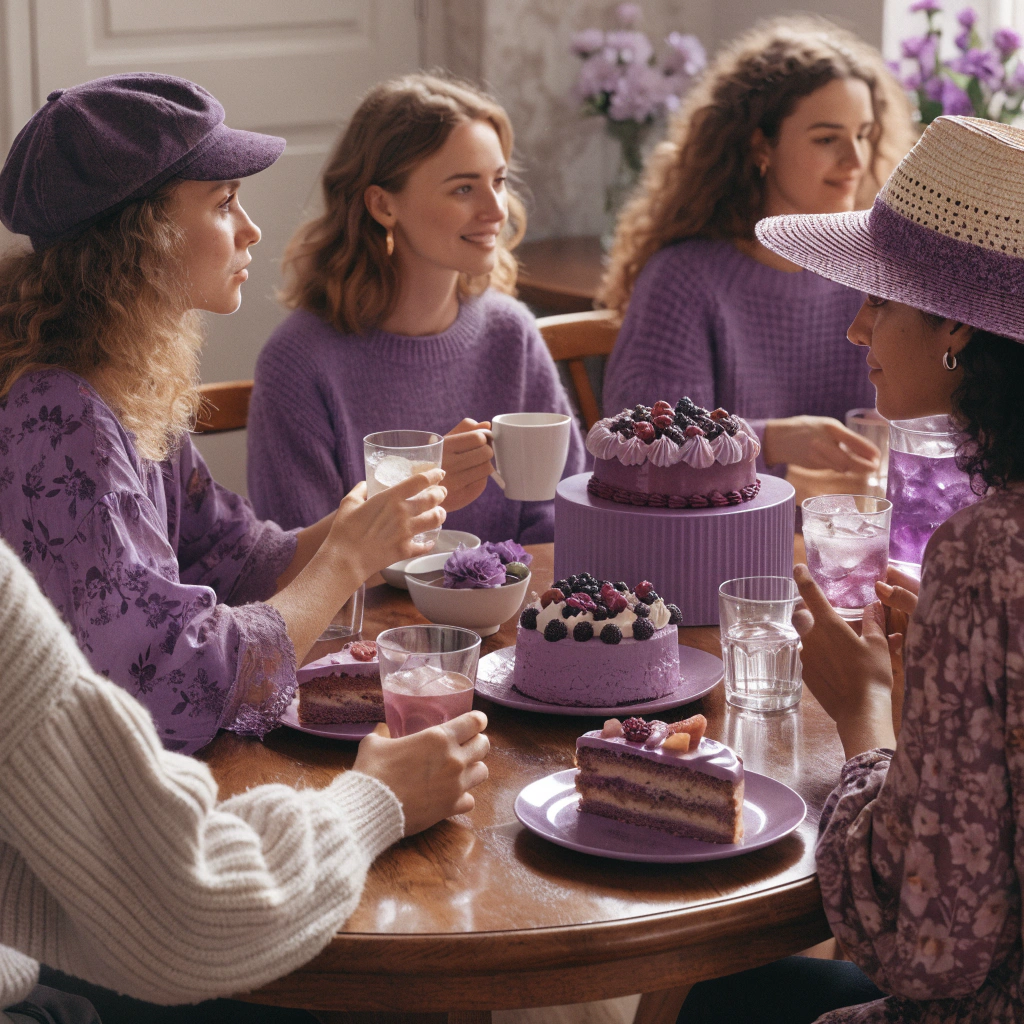
Coffee and Cake in Germany
Many people in Germany love a special tradition. It is called 'Kaffee und Kuchen'. This means coffee and cake. People usually eat this in the afternoon. They eat between 3:00 PM and 5:00 PM.
Families and friends sit together. They talk and drink hot coffee. Sometimes they drink tea. They eat delicious cakes. Sunday is a very popular day for this.
It is a time to relax. It is not a fast meal. People enjoy the food and the company. It is a very important part of German life.
Grammar Spotlight
Pattern: Present Simple (to be)
"It is a very important part of German life."
We use 'is' with singular subjects like 'it' to describe facts or states. It is the most common verb in English for giving information.
Pattern: Present Simple (Action Verbs)
"Families and friends sit together."
We use the base form of the verb for plural subjects. Here, 'families and friends' is plural, so we use 'sit' without an 's'.
Test Your Understanding
10 questions · A1 Beginner · 1 free preview
Test what you learned from this article. Answer all questions to earn XP!
When do people usually have coffee and cake?
Want to finish the quiz?
9 more questions are waiting for you. Sign up free to unlock the full quiz and earn XP!
Sign Up FreeAlready have an account? Sign In
Question Breakdown
When do people usually have coffee and cake?
Your answer:
Correct answer: In the afternoon
People only drink tea during this tradition.
Your answer:
Correct answer: False
What does 'delicious' mean?
Your answer:
Correct answer: Very good to eat
Sunday is a very _____ day for this.
Your answer:
Correct answer: popular
Coffee and Cake: A German Tradition
In Germany, many people love a special tradition called 'Kaffee und Kuchen.' This means 'coffee and cake' in English. It is not just a quick snack. It is an important part of German culture.
Families and friends usually meet in the afternoon, often on Sundays. They sit together between 3:00 PM and 5:00 PM. They talk about their lives while they eat delicious food. It is more social than a normal lunch because people stay at the table for a long time.
The cakes are often bigger and sweeter than simple cookies. Many people bake their own cakes at home. Popular choices include apple cake and chocolate cake. Adults drink hot coffee, but children usually have juice or milk.
This tradition started many years ago. In the past, coffee was very expensive, so only rich people had it. Later, it became popular for everyone. Today, Germans love this tradition because it is a relaxing way to spend time with people they love.
Grammar Spotlight
Pattern: Comparative Adjectives
"The cakes are often bigger and sweeter than simple cookies."
We use comparative adjectives to compare two things. For short words, we add '-er' to the end of the adjective and use the word 'than' after it.
Pattern: Past Simple
"This tradition started many years ago."
We use the past simple to talk about things that happened in the past. For regular verbs, we usually add '-ed' to the base form of the verb.
Test Your Understanding
11 questions · A2 Elementary · 1 free preview
Test what you learned from this article. Answer all questions to earn XP!
When do Germans usually have 'Kaffee und Kuchen'?
Want to finish the quiz?
10 more questions are waiting for you. Sign up free to unlock the full quiz and earn XP!
Sign Up FreeAlready have an account? Sign In
Question Breakdown
When do Germans usually have 'Kaffee und Kuchen'?
Your answer:
Correct answer: In the afternoon
The tradition only happens on Mondays.
Your answer:
Correct answer: False
What does 'expensive' mean?
Your answer:
Correct answer: Something that costs a lot of money
Families and friends usually _____ in the afternoon.
Your answer:
Correct answer: meet
What do adults usually drink during this time?
Your answer:
Correct answer: Hot coffee
Kaffee und Kuchen: A Sweet German Tradition
In Germany, there is a famous tradition that has lasted for centuries. It is called 'Kaffee und Kuchen', which translates to 'coffee and cake'. This social ritual is not just about eating; it is an important part of German culture. Usually, it takes place between 3:00 PM and 5:00 PM, especially on Sundays when families have more free time.
The history of coffee in Germany began in the 17th century. The first coffee houses were opened in cities like Leipzig and Hamburg. Since then, the practice of meeting in the afternoon has become very popular. In the past, it was a way for middle-class families to show their hospitality. Today, it is a moment where friends and family can relax together after a busy week.
Many different types of cakes are served during this time. You might find 'Schwarzwälder Kirschtorte' (Black Forest cake) or simple fruit tarts. These cakes are often homemade by the host, who has spent hours preparing the perfect treat. If you are invited to someone's home, it is common to bring a small gift or even a cake that you have bought from a local bakery.
Although modern life is very fast, many Germans have kept this tradition alive. It provides a necessary break from work and technology. People sit around a table, pour hot coffee, and talk about their lives. This ritual, which has been passed down through generations, remains a symbol of German 'Gemütlichkeit' — a word that describes a feeling of warmth and friendliness. If you visit Germany, you should definitely experience this sweet tradition.
Grammar Spotlight
Pattern: Passive Voice
"The first coffee houses were opened in cities like Leipzig and Hamburg."
The passive voice is used here because the action (opening the houses) is more important than who opened them. It is formed using 'to be' and the past participle.
Pattern: Relative Clauses
"This ritual, which has been passed down through generations, remains a symbol of German 'Gemütlichkeit'."
A relative clause gives extra information about a noun. In this sentence, 'which has been passed down' describes the ritual.
Test Your Understanding
11 questions · B1 Intermediate · 1 free preview
Test what you learned from this article. Answer all questions to earn XP!
What time does 'Kaffee und Kuchen' usually take place?
Want to finish the quiz?
10 more questions are waiting for you. Sign up free to unlock the full quiz and earn XP!
Sign Up FreeAlready have an account? Sign In
Question Breakdown
What time does 'Kaffee und Kuchen' usually take place?
Your answer:
Correct answer: Between 3:00 PM and 5:00 PM
The tradition of 'Kaffee und Kuchen' only started twenty years ago.
Your answer:
Correct answer: False
What does 'tradition' mean?
Your answer:
Correct answer: A long-lasting custom
The first coffee houses were _____ in cities like Leipzig.
Your answer:
Correct answer: opened
What is the main purpose of this tradition today?
Your answer:
Correct answer: To relax with friends and family
The Cultural Significance of Kaffee und Kuchen: More Than Just a Snack
While many cultures have designated times for refreshment, few traditions are as deeply ingrained in the national identity as the German 'Kaffee und Kuchen'. Often compared to the British afternoon tea, this ritualized practice represents a foundational pillar of social cohesion across the country. It is not merely a pause for caffeine; it is a deliberate act of domesticity and community that has persisted for centuries.
The practice was initially introduced to Germany in the 17th century, following the establishment of the first coffee houses in major trade hubs like Leipzig and Hamburg. During this era, coffee consumption was largely reserved for the elite, serving as a symbol of status and wealth. However, as the 19th century progressed, the ritual evolved into a hallmark of the middle class. Families began to gather in their homes, transforming an expensive luxury into a widespread social custom.
Typically occurring between 3:00 PM and 5:00 PM, the tradition is most prominently observed on Sundays. This timing is significant, as it offers a moment of respite before the work week begins. The spread of food is often elaborate, featuring a variety of regional specialties such as 'Schwarzwälder Kirschtorte' (Black Forest cake) or 'Apfelkuchen' (apple cake). The etiquette surrounding the event is equally important; it is a time for 'Gemütlichkeit'—a uniquely German concept that describes a state of warmth, friendliness, and good cheer.
From an analytical perspective, the persistence of Kaffee und Kuchen in the 21st century is remarkable. Despite the fast-paced nature of modern life and the rise of ‘to-go’ coffee culture, the traditional sit-down gathering remains vital. It serves as a necessary counter-balance to digital isolation, encouraging face-to-face dialogue and the strengthening of familial bonds. Furthermore, the tradition has adapted to contemporary tastes, with many bakeries now offering vegan or gluten-free alternatives to ensure the ritual remains inclusive.
In conclusion, Kaffee und Kuchen is far more than a simple culinary habit. It is a sophisticated social institution that reflects German history, values, and the enduring importance of community. Whether held in a grand city café or a modest living room, it remains a cherished moment of connection in an ever-changing world.
Grammar Spotlight
Pattern: Passive Voice
"The practice was initially introduced to Germany in the 17th century."
The passive voice is used here to focus on the historical action rather than the specific people who introduced it. It is formed using the verb 'to be' followed by the past participle.
Pattern: Non-defining Relative Clauses
"Kaffee und Kuchen, which translates literally to ‘coffee and cake,’ is a foundational pillar."
This pattern provides additional information about the subject without being essential to the sentence's meaning. It is always separated by commas and uses 'which' for things.
Pattern: Concessive Clauses with 'Despite'
"Despite the fast-paced nature of modern life and the rise of ‘to-go’ coffee culture, the traditional sit-down gathering remains vital."
'Despite' is a preposition used to show contrast. It is followed by a noun or a gerund (noun phrase) to introduce an idea that makes the main statement surprising.
Test Your Understanding
11 questions · B2 Upper Intermediate · 1 free preview
Test what you learned from this article. Answer all questions to earn XP!
What is the primary function of Kaffee und Kuchen according to the article?
Want to finish the quiz?
10 more questions are waiting for you. Sign up free to unlock the full quiz and earn XP!
Sign Up FreeAlready have an account? Sign In
Question Breakdown
What is the primary function of Kaffee und Kuchen according to the article?
Your answer:
Correct answer: To foster social cohesion and community
The tradition of coffee drinking was a middle-class custom from its very beginning in the 17th century.
Your answer:
Correct answer: False
What does the word 'elaborate' mean in the context of the text?
Your answer:
Correct answer: Detailed and complex
The first coffee houses in Germany were established in cities like Leipzig and _____.
Your answer:
Correct answer: Hamburg
Which German term describes the warmth and good cheer associated with this ritual?
Your answer:
Correct answer: Gemütlichkeit
The Architecture of Leisure: Deconstructing Germany's 'Kaffee und Kuchen' Tradition
Rarely does a cultural phenomenon encapsulate the German psyche as succinctly as the tradition of 'Kaffee und Kuchen.' To the uninitiated observer, the sight of families congregating over elaborate pastries might seem like a mere caloric indulgence. However, for those immersed in the culture, it is a deeply entrenched social institution, a foundational pillar of communal life that transcends simple gastronomy. The ritualization of this afternoon break serves as a crucial temporal anchor, providing a sense of stability in an increasingly fragmented and high-velocity modern existence.
The historical trajectory of this custom is as rich as the cream used in its desserts. While the initial proliferation of coffee houses in 17th-century Leipzig and Hamburg introduced the beverage to the elite, it was the 19th-century bourgeoisie who transformed its consumption into a domestic art form. The institutionalization of the afternoon gathering became a hallmark of middle-class respectability. Through the meticulous arrangement of fine porcelain and the presentation of multi-layered tortes, families were able to assert their socio-economic standing. This period saw the elevation of domesticity to a virtue, where the home became a sanctuary of curated comfort.
It is within these domestic spheres that the uniquely German concept of 'Gemütlichkeit'—a state of warmth, friendliness, and good cheer—finds its most potent expression. The 'Kaffeetafel' is not merely a table set for eating; it is a stage for the reinforcement of social bonds. It is the deliberate slowing down of time that distinguishes this ritual from the perfunctory coffee breaks of the corporate world. In these moments, the act of imbibing caffeine and dissecting the minutiae of daily life facilitates a collective decompression, allowing participants to navigate the complexities of their social reality with renewed vigor.
In the contemporary era, the sacrosanct nature of the Sunday afternoon gathering faces unprecedented challenges. The globalized 'coffee-to-go' culture, characterized by its emphasis on mobility and efficiency, stands in stark contrast to the stationary, reflective nature of 'Kaffee und Kuchen.' Critics often argue that the rigid scheduling of leisure—the so-called 'Terminkalender' approach to socializing—stifles spontaneity and authentic connection. Yet, one could counter that it is this very structure that ensures the preservation of human intimacy. The commitment to a specific time and place acts as a bulwark against the ephemeral and often superficial nature of digital-age interactions.
Ultimately, 'Kaffee und Kuchen' remains a vital vestige of a bygone era that continues to provide profound psychological meaning. Whether the centerpiece is a decadent Black Forest gateau or a rustic plum crumble, the specific culinary item is often secondary to the shared experience it facilitates. The tradition represents a defiant rejection of a productivity-obsessed culture, asserting that rest and social connection are not merely luxuries, but necessities. As long as the German public continues to value the sanctity of the afternoon table, this tradition will remain a steadfast affirmation of cultural identity and communal belonging.
Grammar Spotlight
Pattern: Negative Inversion
"Rarely does a cultural phenomenon encapsulate the German psyche as succinctly as the tradition of 'Kaffee und Kuchen.'"
When an adverb with a negative or restrictive meaning (like 'rarely') is placed at the beginning of a sentence for emphasis, the subject and auxiliary verb are inverted.
Pattern: Cleft Sentence
"It is the deliberate slowing down of time that distinguishes this ritual from the perfunctory coffee breaks of the corporate world."
Cleft sentences (It + be + focus + relative clause) are used to emphasize a specific part of the sentence, in this case, the 'deliberate slowing down of time'.
Pattern: Nominalisation
"The institutionalization of the afternoon gathering became a hallmark of middle-class respectability."
The use of nouns (institutionalization, gathering, respectability) instead of verbs or adjectives creates a more formal, academic tone typical of C1 level writing.
Test Your Understanding
12 questions · C1 Advanced · 1 free preview
Test what you learned from this article. Answer all questions to earn XP!
What is the primary sociological function of 'Kaffee und Kuchen' according to the text?
Want to finish the quiz?
11 more questions are waiting for you. Sign up free to unlock the full quiz and earn XP!
Sign Up FreeAlready have an account? Sign In
Question Breakdown
What is the primary sociological function of 'Kaffee und Kuchen' according to the text?
Your answer:
Correct answer: To reinforce social bonds and communal cohesion
The tradition of 'Kaffee und Kuchen' was originally established by the middle class in the 17th century.
Your answer:
Correct answer: False
Which word describes something that is 'regarded as too important to be changed'?
Your answer:
Correct answer: Sacrosanct
The commitment to a specific time and place acts as a _____ against the ephemeral nature of digital-age interactions.
Your answer:
Correct answer: bulwark
How does the author characterize the concept of 'Gemütlichkeit'?
Your answer:
Correct answer: A state of warmth, friendliness, and good cheer
The author suggests that the specific type of cake is less important than the shared experience.
Your answer:
Correct answer: True
The Semiotics of Sustenance: Deconstructing the Ritual of Kaffee und Kuchen
To analyze the German cultural landscape without acknowledging the ritual of 'Kaffee und Kuchen' would be to overlook a foundational pillar of its social architecture. Often translated with deceptive simplicity as 'coffee and cake,' the practice transcends mere caloric intake, functioning instead as a sophisticated temporal interstice. Should one venture into a German household on a Sunday afternoon, one would likely encounter a tableau of meticulously curated confectionery and aromatic brews, a scene that serves as a bulwark against the encroachment of modern acceleration. This tradition, while seemingly quaint, is a vestigial remnant of the 19th-century bourgeois milieu, yet it continues to exert a paradigmatic influence on contemporary communal life. Historically, the arrival of coffee in the 17th century—initially a luxury afforded only by the aristocracy—precipitated the rise of coffee houses in urban centers like Leipzig. However, it was the subsequent domesticization of this habit by the middle classes that cemented its status as a quintessential socio-cultural event. The ritualization of afternoon consumption serves as an ontological anchor, providing a sense of continuity and predictability in an increasingly ephemeral world. In scholarly terms, 'Kaffee und Kuchen' acts as a semiotic system where the choice of cake—be it a complex Schwarzwälder Kirschtorte or a humble Apfelkuchen—communicates specific social signals regarding hospitality, heritage, and labor. Not only does the ritual provide physical sustenance, but it also reinforces the socio-cultural fabric of the community by mandating a pause in the productive cycle. The preponderance of high-quality bakeries across even the most remote German villages underscores the hegemony of this tradition. Critics might argue that such rituals are exclusionary or archaic; however, from a functionalist perspective, they facilitate essential face-to-face interaction between interlocutors who might otherwise remain isolated in the digital sphere. Were it not for the enduring tenacity of this tradition, the German domestic sphere might have succumbed entirely to the atomization of the digital age. Furthermore, the practice exhibits an egalitarian potential, as the shared experience of the 'Kaffeetafel' often bridges generational divides, allowing for a synthesis of traditional values and modern discourse. Ultimately, 'Kaffee und Kuchen' is not merely a gastronomic preference but a deliberate assertion of human-centric time over the relentless demands of industrial and digital productivity. It remains a vital sanctuary where the nuances of German identity are both preserved and renegotiated over a slice of Sahnetorte.
Grammar Spotlight
Pattern: Subjunctive Mood in Conditionals
"Should one venture into a German household on a Sunday afternoon, one would likely encounter a tableau of meticulously curated confectionery."
The use of 'should' at the beginning of a conditional clause is a formal alternative to 'if'. It expresses a hypothetical situation with a high degree of literary sophistication.
Pattern: Negative Inversion
"Not only does the ritual provide physical sustenance, but it also reinforces the socio-cultural fabric of the community."
When a sentence begins with a negative expression like 'not only', the subject and auxiliary verb are inverted. This structure is used for rhetorical emphasis.
Pattern: Inverted Unreal Conditional
"Were it not for the enduring tenacity of this tradition, the German domestic sphere might have succumbed entirely to the atomization of the digital age."
The 'were it not for' structure is a formal way to express a second or third conditional meaning 'if it weren't for'. It emphasizes the necessity of the condition mentioned.
Test Your Understanding
12 questions · C2 Mastery · 1 free preview
Test what you learned from this article. Answer all questions to earn XP!
According to the article, what is the primary function of 'Kaffee und Kuchen' beyond nutrition?
Want to finish the quiz?
11 more questions are waiting for you. Sign up free to unlock the full quiz and earn XP!
Sign Up FreeAlready have an account? Sign In
Question Breakdown
According to the article, what is the primary function of 'Kaffee und Kuchen' beyond nutrition?
Your answer:
Correct answer: A sophisticated temporal interstice that resists modern acceleration
The tradition of drinking coffee in Germany originated in the domestic sphere before moving to coffee houses.
Your answer:
Correct answer: False
What does the word 'ephemeral' imply in the context of the modern world?
Your answer:
Correct answer: Fleeting and short-lived
The ritual of 'Kaffee und Kuchen' is described as a _____ against the encroachment of modern acceleration.
Your answer:
Correct answer: bulwark
What does the author suggest about the choice of cake served during this ritual?
Your answer:
Correct answer: It acts as a semiotic system communicating social signals.
The author argues that 'Kaffee und Kuchen' can help bridge gaps between different generations.
Your answer:
Correct answer: True
