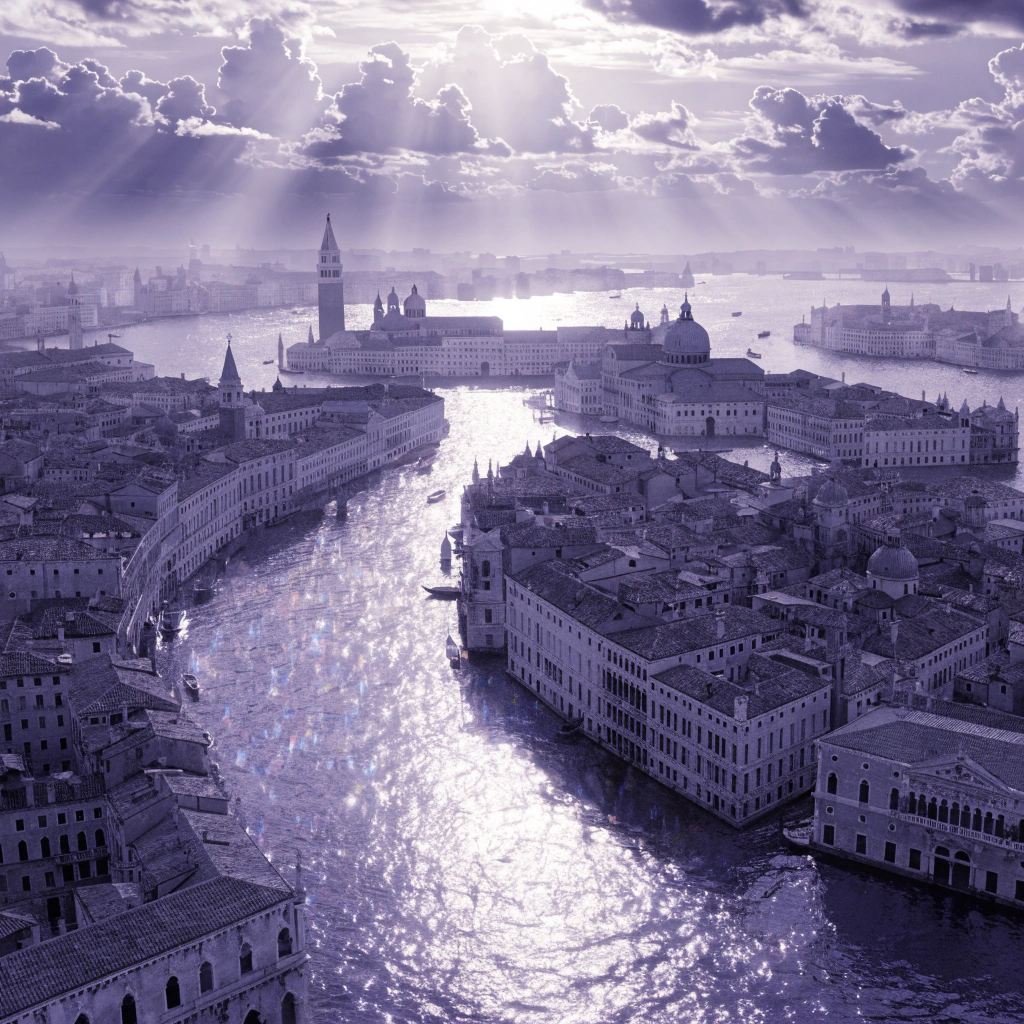
Venice: The City of Water
Venice is a beautiful city in Italy. It is very old. It is in the water. There are 118 small islands. People do not use cars in the city. There are no roads for cars.
There are many canals. The Grand Canal is the biggest one. People use boats to travel. The famous boats are called gondolas.
There are over 400 bridges. You can walk or take a boat. Many tourists visit Venice every year. It is a very special place.
Grammar Spotlight
Pattern: Present Simple (to be)
"Venice is a beautiful city in Italy."
We use 'is' with singular subjects like Venice. It is used to describe facts and states in the present.
Pattern: There is / There are
"There are many canals."
We use 'there are' to say that more than one thing exists. We use 'there is' for only one thing.
Test Your Understanding
10 questions · A1 Beginner · 1 free preview
Test what you learned from this article. Answer all questions to earn XP!
Where is the city of Venice?
Want to finish the quiz?
9 more questions are waiting for you. Sign up free to unlock the full quiz and earn XP!
Sign Up FreeAlready have an account? Sign In
Question Breakdown
Where is the city of Venice?
Your answer:
Correct answer: Italy
People use cars to travel inside Venice.
Your answer:
Correct answer: False
What is an island?
Your answer:
Correct answer: Land with water around it
There are many _____ in Venice.
Your answer:
Correct answer: canals
Venice: The Beautiful City of Canals
Venice is a very famous city in Italy. People call it the "City of Canals" because there are no roads for cars. Instead, there are 118 small islands and many narrow waterways. People use boats to travel from one place to another.
The city has a very interesting history. Long ago, people moved to these islands because they wanted to be safe from enemies. They used thousands of wooden poles to build the houses on the water. It was difficult work, but the city became very rich and powerful.
Today, Venice is one of the most beautiful places in the world. There are more than 400 bridges. Tourists love to ride in special boats called gondolas. Venice is quieter than other big cities because there is no traffic. However, the water is rising, so the city must protect its old buildings. It is a magical place to visit.
Grammar Spotlight
Pattern: Past Simple
"Long ago, people moved to these islands because they wanted to be safe from enemies."
We use the past simple to talk about completed actions in the past. For regular verbs, we usually add '-ed' to the end of the verb.
Pattern: Comparatives
"Venice is quieter than other big cities because there is no traffic."
We use comparatives to compare two things. For short adjectives like 'quiet', we add '-er' and use the word 'than' after it.
Test Your Understanding
11 questions · A2 Elementary · 1 free preview
Test what you learned from this article. Answer all questions to earn XP!
How many islands are there in Venice?
Want to finish the quiz?
10 more questions are waiting for you. Sign up free to unlock the full quiz and earn XP!
Sign Up FreeAlready have an account? Sign In
Question Breakdown
How many islands are there in Venice?
Your answer:
Correct answer: 118
There are many cars on the roads in Venice.
Your answer:
Correct answer: False
What does 'narrow' mean?
Your answer:
Correct answer: Small width
Venice has more than 400 _____.
Your answer:
Correct answer: bridges
Why did people move to the islands in the past?
Your answer:
Correct answer: To be safe from enemies
Venice: The Floating City of History
Venice is one of the most famous cities in the world, and it has been a popular destination for travelers for many centuries. Located in a shallow lagoon in the Adriatic Sea, this Italian city is built on 118 small islands. Instead of traditional roads, Venice has an intricate network of waterways which are connected by over 400 stone bridges. It is truly an architectural marvel that has survived for over a millennium.
The city was established in the 5th century by refugees who were fleeing barbarian invasions. Over the years, Venice has become a dominant maritime power and a major center of art and trade. The most famous waterway is the Grand Canal, which is lined with beautiful palaces that were built during the Renaissance. Because there are no cars in the historic center, people must travel by boat or on foot. Traditional boats called gondolas are still used for romantic trips, although most residents now use public water buses known as vaporetti.
Recently, Venice has faced some serious challenges that threaten its future. The city is often affected by Acqua Alta, or high water, which happens when the sea level rises and floods the squares. To protect the historic buildings, a special system of mobile barriers has been constructed at the lagoon's openings. Furthermore, the city is visited by millions of tourists every year. This has caused some concerns about how to preserve the local culture while welcoming visitors. Despite these modern problems, Venice remains a magical place where history and water meet in a unique way.
Grammar Spotlight
Pattern: Present Perfect
"Venice has become a dominant maritime power and a major center of art and trade."
The present perfect (has/have + past participle) is used here to describe a change or development that started in the past and is still relevant now.
Pattern: Passive Voice
"To protect the historic buildings, a special system of mobile barriers has been constructed."
The passive voice is used when the action is more important than the person doing it. It is formed using the verb 'to be' and the past participle.
Test Your Understanding
11 questions · B1 Intermediate · 1 free preview
Test what you learned from this article. Answer all questions to earn XP!
How many small islands make up the city of Venice?
Want to finish the quiz?
10 more questions are waiting for you. Sign up free to unlock the full quiz and earn XP!
Sign Up FreeAlready have an account? Sign In
Question Breakdown
How many small islands make up the city of Venice?
Your answer:
Correct answer: 118
Cars are the main form of transportation in the historic center of Venice.
Your answer:
Correct answer: False
What does the word 'intricate' mean?
Your answer:
Correct answer: Very complex and detailed
Venice is located in a shallow _____ in the Adriatic Sea.
Your answer:
Correct answer: lagoon
What is 'Acqua Alta'?
Your answer:
Correct answer: High water that causes flooding
The Engineering Marvel and Modern Challenges of Venice
Venice, often referred to as the 'Floating City,' represents one of the most remarkable engineering feats in human history. Situated in a shallow lagoon in the Adriatic Sea, the city consists of 118 small islands linked by an intricate network of over 400 bridges. While most cities are built on solid ground, Venice was constructed on millions of wooden piles driven deep into the soft mud of the lagoon. This unique foundation has supported the city’s immense weight for centuries, though it now faces unprecedented challenges due to rising sea levels and environmental shifts.
Historically, Venice emerged as a sanctuary for refugees fleeing barbarian invasions during the 5th century. Over time, the settlement evolved into a dominant maritime power, serving as a crucial bridge for trade between Europe and the East. The prosperity of the Venetian Republic is still reflected in its grand architecture, particularly the ornate palaces lining the Grand Canal. These structures were strategically designed to facilitate trade, with ground floors originally serving as warehouses and upper levels functioning as luxurious residences for the merchant elite.
However, the very elements that make Venice unique also threaten its long-term existence. The phenomenon known as 'Acqua Alta,' or high water, causes frequent flooding that damages the city's historical infrastructure. Consequently, the Italian government has implemented the MOSE project, a sophisticated system of mobile barriers designed to protect the lagoon from exceptionally high tides. Although this engineering solution has provided some relief, critics argue that it may not be sufficient to combat the long-term effects of climate change.
Furthermore, the impact of mass tourism cannot be ignored. While visitors contribute significantly to the local economy, the sheer volume of people places an immense strain on the city’s delicate ecosystem. Sustainable management strategies are now being prioritized by local authorities to ensure that Venice remains a living city rather than a mere museum. Preserving Venice requires a delicate balance between modern technological intervention and the conservation of its historical soul. Ultimately, the survival of this UNESCO World Heritage site depends on global efforts to mitigate environmental degradation.
Grammar Spotlight
Pattern: Passive Voice
"Venice was constructed on millions of wooden piles driven deep into the soft mud."
The passive voice is used here to focus on the city (the object) rather than the specific people who built it. It is formed using the verb 'to be' and the past participle.
Pattern: Present Perfect Simple
"The Italian government has implemented the MOSE project."
This tense is used for an action that happened at an unspecified time in the past but has a direct result or relevance to the present. It is formed with 'have/has' + past participle.
Pattern: Participle Clauses
"Situated in a shallow lagoon in the Adriatic Sea, the city consists of 118 small islands."
A past participle clause ('Situated in...') provides extra information about the subject in a concise way, often replacing a relative clause like 'Which is situated in...'
Test Your Understanding
11 questions · B2 Upper Intermediate · 1 free preview
Test what you learned from this article. Answer all questions to earn XP!
Why was Venice originally established in the 5th century?
Want to finish the quiz?
10 more questions are waiting for you. Sign up free to unlock the full quiz and earn XP!
Sign Up FreeAlready have an account? Sign In
Question Breakdown
Why was Venice originally established in the 5th century?
Your answer:
Correct answer: As a sanctuary for people fleeing invasions
The MOSE project is a permanent wall that blocks all water from entering the lagoon.
Your answer:
Correct answer: False
What does 'prosperity' mean?
Your answer:
Correct answer: The state of being successful and flourishing
The city consists of 118 small _____ linked by an intricate network of bridges.
Your answer:
Correct answer: islands
What is the primary function of the ground floors in traditional Venetian palaces?
Your answer:
Correct answer: Warehouses for trade goods
Venice: An Aqueous Paradox of Engineering and Decay
Rarely has a city captured the human imagination quite like Venice, often referred to as the 'Serenissima'. Rising from the marshy depths of the Adriatic lagoon, this architectural marvel stands as a testament to human ingenuity and the sheer will to survive. The establishment of the city in the 5th century was not a choice of aesthetic preference, but a desperate flight from barbarian incursions. By driving millions of timber stakes—primarily water-resistant larch and oak—into the clay subsoil, the early Venetians created a foundation that has defied the laws of decay for over a millennium. These wooden piles, deprived of oxygen in the mud, underwent a process of petrification, becoming as hard as stone.
The city’s labyrinthine network of canals served as the arteries of a vast maritime empire. At the height of its hegemony, Venice was the undisputed nexus of trade between the Orient and Western Europe, amassing wealth that manifested in the opulence of its Gothic and Renaissance palazzi. The Grand Canal, a sweeping S-shaped waterway, became the prestigious address for the merchant nobility. However, the very water that once provided security and wealth now presents a precarious challenge. It is the relentless encroachment of the Adriatic, coupled with the natural subsidence of the islands, that poses the greatest existential threat to the city today.
The implementation of the MOSE project, a sophisticated series of mobile barriers designed to isolate the lagoon from high tides, represents a contemporary attempt to mitigate the effects of 'Acqua Alta'. Yet, critics argue that such interventions may be merely ephemeral solutions to a permanent problem. The environmental impact of closing the lagoon—disrupting the natural flushing of sewage and sediment—raises significant ecological concerns. The delicate balance between the preservation of cultural heritage and the necessity of ecological adaptation remains a focal point of intense debate among scientists and conservationists.
Furthermore, the socio-economic fabric of Venice is under strain. The 'Disneyfication' of the city, driven by the overwhelming influx of cruise ships and day-trippers, has led to a dwindling local population and the erosion of traditional Venetian life. Small businesses are frequently replaced by souvenir shops, and the cost of living has skyrocketed. While the aesthetic allure remains undiminished, the resilience of Venice as a living, breathing community is increasingly questioned. Only through a synthesis of modern technology and traditional wisdom can this aqueous paradox be preserved for future generations.
Grammar Spotlight
Pattern: Negative Inversion
"Rarely has a city captured the human imagination quite like Venice..."
When using a negative or restrictive adverb like 'rarely' at the start of a sentence for emphasis, the subject and auxiliary verb are inverted.
Pattern: Cleft Sentences
"It is the relentless encroachment of the Adriatic... that poses the greatest existential threat."
Cleft sentences use 'It is/was... that' to focus on a specific piece of information, highlighting the cause of the threat in this context.
Pattern: Nominalisation
"The establishment of the city in the 5th century was not a choice of aesthetic preference..."
Nouns like 'establishment' are used instead of verbs ('establishing') to create a more formal, academic tone typical of C1 level writing.
Test Your Understanding
12 questions · C1 Advanced · 1 free preview
Test what you learned from this article. Answer all questions to earn XP!
What was the primary reason for the original settlement of Venice?
Want to finish the quiz?
11 more questions are waiting for you. Sign up free to unlock the full quiz and earn XP!
Sign Up FreeAlready have an account? Sign In
Question Breakdown
What was the primary reason for the original settlement of Venice?
Your answer:
Correct answer: Escape from barbarian invasions
The timber stakes used for Venice's foundation decayed quickly due to the salt water.
Your answer:
Correct answer: False
Which word describes the sinking of the ground?
Your answer:
Correct answer: Subsidence
At the height of its _____, Venice was the undisputed nexus of trade.
Your answer:
Correct answer: hegemony
What is one ecological concern regarding the MOSE project?
Your answer:
Correct answer: It prevents the natural flushing of sewage
The local population of Venice is currently increasing due to tourism.
Your answer:
Correct answer: False
The Serenissima: A Study in Aqueous Resilience and Architectural Defiance
Venice, often heralded as the 'Serenissima,' represents an unparalleled triumph of human ingenuity over the inherent volatility of the natural world. To perceive Venice merely as an aesthetic relic is to disregard the profound complexity of its aqueous foundations. Established in the fifth century by refugees seeking sanctuary from the relentless barbarian incursions that plagued the Italian mainland, the city emerged not as a terrestrial settlement, but as a liminal space where stone and water are inextricably intertwined. This thalassocracy, which once dominated the Mediterranean trade routes, was predicated upon a precarious hydrological balance that continues to challenge contemporary engineering.
The architectural majesty of Venice is sustained by a subterranean forest of larch and oak piles, driven deep into the caranto—a dense layer of clay. Were these timber supports to be exposed to oxygen, they would surely succumb to rot; however, submerged in the anaerobic environment of the lagoon's silt, they have petrified over centuries, becoming as resilient as iron. This idiosyncratic foundation supports the ostentatious palazzi that line the Grand Canal, structures that bear witness to the city’s historical opulence. Yet, this grandeur is increasingly overshadowed by the existential threat of subsidence and the eustatic rise in sea levels.
The phenomenon of 'Acqua Alta,' or high water, is no longer a seasonal curiosity but a frequent harbinger of the city’s potential demise. Should the lagoon’s delicate equilibrium be further disrupted by anthropogenic climate change, the very water that once served as a bulwark against invaders may become the instrument of the city’s erasure. The implementation of the MOSE project—a system of retractable gates designed to isolate the lagoon from the Adriatic during high tides—represents a desperate, albeit technologically sophisticated, attempt to forestall the inevitable.
Furthermore, Venice grapples with the socio-cultural vicissitudes of 'museumification.' As the permanent population dwindles, the city risks becoming a hollowed-out vestige of its former self, a stage set for the ephemeral gaze of mass tourism. It is imperative that Venice remain a living entity, rather than a petrified monument to a bygone era. The tension between the preservation of historical integrity and the requirements of a functional, modern urban environment is nowhere more palpable than in the labyrinthine calli of the Venetian archipelago.
In conclusion, Venice serves as a poignant palimpsest of human ambition and environmental fragility. It is a city that exists in a state of perpetual defiance—defiance of the tides, defiance of time, and defiance of the very logic that dictates where a civilization ought to flourish. Whether the Serenissima can navigate the turbulent waters of the twenty-first century remains an open question, yet its enduring legacy as a pinnacle of artistic and maritime achievement is beyond dispute.
Grammar Spotlight
Pattern: Inverted Conditional (Should)
"Should the lagoon’s delicate equilibrium be further disrupted by anthropogenic climate change, the very water that once served as a bulwark against invaders may become the instrument of the city’s erasure."
This formal structure replaces 'If the lagoon's equilibrium should be...' with an inversion of the subject and auxiliary verb. It is used in C2 level academic writing to express a hypothetical possibility with a more tentative or scholarly tone.
Pattern: Inverted Conditional (Were)
"Were these timber supports to be exposed to oxygen, they would surely succumb to rot."
This is a second conditional inversion used for hypothetical or unlikely situations. By placing 'Were' at the beginning, the sentence achieves a high degree of formality and literary sophistication.
Pattern: Subjunctive Mood
"It is imperative that Venice remain a living entity, rather than a petrified monument to a bygone era."
The subjunctive 'remain' (instead of 'remains') is used after adjectives expressing necessity or urgency (e.g., imperative, essential, crucial). It reflects a formal requirement or a desired state.
Test Your Understanding
12 questions · C2 Mastery · 1 free preview
Test what you learned from this article. Answer all questions to earn XP!
What was the primary reason for the initial settlement of Venice?
Want to finish the quiz?
11 more questions are waiting for you. Sign up free to unlock the full quiz and earn XP!
Sign Up FreeAlready have an account? Sign In
Question Breakdown
What was the primary reason for the initial settlement of Venice?
Your answer:
Correct answer: To escape barbarian invasions on the mainland.
The timber piles supporting Venice have rotted over time because they are submerged in water.
Your answer:
Correct answer: False
Which word describes a state that controls the sea?
Your answer:
Correct answer: Thalassocracy
The MOSE project is a technologically sophisticated attempt to _____ the city's eventual destruction.
Your answer:
Correct answer: forestall
What does the author suggest by the term 'museumification'?
Your answer:
Correct answer: The risk of the city losing its living population and becoming a mere tourist attraction.
The author views Venice as a metaphor for the fragility of human triumphs over nature.
Your answer:
Correct answer: True
