A Special Day for Morocco
Morocco is a beautiful country in Africa. Every year, people celebrate a special day on January 11th. This day is the Proclamation of Independence.
We remember a famous paper from the year 1944. Brave people write this paper because they want a free country. They show the paper to the world. It is a very important moment in history.
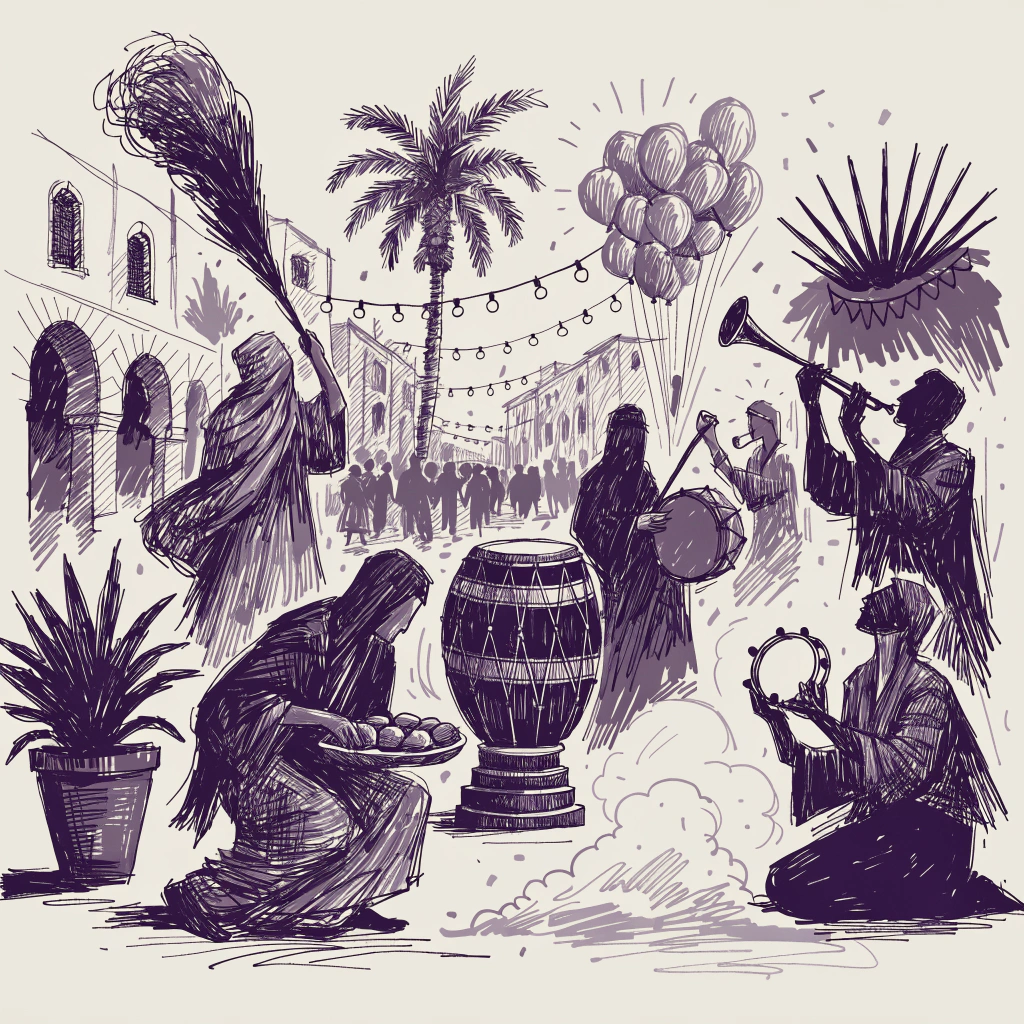
Today, people in Morocco are happy. They have big parades and green flags. Families eat together and talk. Children learn about the heroes of their country in school. It is a day of joy for all Moroccans.
Grammar Spotlight
Pattern: Present Simple (to be)
"Morocco is a beautiful country in Africa."
We use 'is' with singular subjects to describe a fact. It tells us what something or someone is like.
Pattern: Present Simple (Action Verbs)
"Families eat together and talk."
We use the base form of the verb for plural subjects like 'families'. This shows a regular action or a general truth.
Test Your Understanding
10 questions · A1 Beginner · 1 free preview
Test what you learned from this article. Answer all questions to earn XP!
When is the special day in Morocco?
Want to finish the quiz?
9 more questions are waiting for you. Sign up free to unlock the full quiz and earn XP!
Sign Up FreeAlready have an account? Sign In
Question Breakdown
When is the special day in Morocco?
Your answer:
Correct answer: January 11th
People in Morocco have parades on this day.
Your answer:
Correct answer: True
What does 'country' mean?
Your answer:
Correct answer: An area of land with its own government
Brave people want a _____ country.
Your answer:
Correct answer: free
A Special Day for Morocco: The Proclamation of Independence
January 11th is a very important national holiday in Morocco. On this day, people remember the Proclamation of Independence. It happened in 1944. Before this time, France and Spain controlled Morocco, but Moroccans wanted to be free.
Sixty-six brave men and women signed a special document called a manifesto. They were members of the Istiqlal Party. They presented this paper to Sultan Mohammed V and the French leaders. They asked for full independence because they wanted to decide their own future. It was the first time that the movement publicly asked for the end of colonial rule.
This document changed Moroccan history forever. It was more important than earlier protests because it was official. Today, schools and businesses are closed on January 11th. People fly the Moroccan flag and talk about their history. It is a day of pride for every Moroccan family. They celebrate because their country is strong and independent now.
Grammar Spotlight
Pattern: Past Simple
"It happened in 1944."
We use the past simple to talk about completed actions in the past. To form regular verbs like 'happen', we add '-ed' to the end of the word.
Pattern: Comparatives
"It was more important than earlier protests because it was official."
We use comparatives to compare two things. For long adjectives like 'important', we use the word 'more' before the adjective and 'than' after it.
Test Your Understanding
11 questions · A2 Elementary · 1 free preview
Test what you learned from this article. Answer all questions to earn XP!
When did the Proclamation of Independence happen?
Want to finish the quiz?
10 more questions are waiting for you. Sign up free to unlock the full quiz and earn XP!
Sign Up FreeAlready have an account? Sign In
Question Breakdown
When did the Proclamation of Independence happen?
Your answer:
Correct answer: 1944
Morocco was controlled by France and Spain before 1944.
Your answer:
Correct answer: True
What is a 'document'?
Your answer:
Correct answer: An official piece of paper
January 11th is a national _____ in Morocco.
Your answer:
Correct answer: holiday
Who did the nationalists give the document to?
Your answer:
Correct answer: The Sultan and French leaders
A Day of Courage: The Proclamation of Independence
Every year on January 11th, Morocco celebrates one of its most important national holidays: the Proclamation of Independence. This day marks a significant historical event that took place in 1944. At that time, Morocco was under French and Spanish colonial rule, but a group of brave people decided that it was time for a change.
The manifesto, which is a formal public statement, was signed by sixty-six Moroccan nationalists. Most of these men belonged to the Istiqlal Party. They presented this document to the colonial authorities and to the international community. They demanded the full independence of Morocco and the restoration of Sultan Mohammed V as the leader of the nation. This was a turning point because it was the first time that the resistance movement had publicly called for the end of the Protectorate.
The Sultan supported the nationalists because he believed in the freedom of his people. Although the country did not become independent immediately, the proclamation showed that Moroccans were united in their goal. It was a courageous act which inspired many others to join the struggle for their rights. The document has been described by historians as the foundation of modern Morocco.
Today, January 11th is a public holiday across the kingdom. Schools and businesses are closed so that families can spend time together and reflect on their history. Many people have visited national monuments and museums to learn more about the leaders who signed the manifesto. Since that day in 1944, the Proclamation of Independence has remained a symbol of courage and national identity. It reminds every generation that unity and determination are necessary for a nation to succeed.
Grammar Spotlight
Pattern: Passive Voice
"The manifesto... was signed by sixty-six Moroccan nationalists."
The passive voice is used when the action is more important than the person doing it. It is formed using the verb 'to be' and the past participle of the main verb.
Pattern: Relative Clauses
"It was a courageous act which inspired many others to join the struggle for their rights."
Relative clauses provide more information about a noun. We use 'which' or 'that' for things and 'who' for people to connect two ideas into one sentence.
Test Your Understanding
11 questions · B1 Intermediate · 1 free preview
Test what you learned from this article. Answer all questions to earn XP!
When did the Proclamation of Independence take place?
Want to finish the quiz?
10 more questions are waiting for you. Sign up free to unlock the full quiz and earn XP!
Sign Up FreeAlready have an account? Sign In
Question Breakdown
When did the Proclamation of Independence take place?
Your answer:
Correct answer: 1944
Sultan Mohammed V supported the movement for independence.
Your answer:
Correct answer: True
Who signed the historical manifesto mentioned in the text?
Your answer:
Correct answer: Sixty-six Moroccan nationalists
What does 'independence' mean in this context?
Your answer:
Correct answer: Freedom from foreign control
Morocco became a free country immediately on the same day the manifesto was signed.
Your answer:
Correct answer: False
A Turning Point: The 1944 Proclamation of Moroccan Independence
Every year on January 11th, Moroccans commemorate a pivotal moment in their modern history: the presentation of the Proclamation of Independence. While the country had long resisted colonial influence, this specific date in 1944 marked a fundamental shift from localized tribal resistance to a unified, diplomatic demand for national sovereignty. It was the day when sixty-six nationalists, including one woman, Malika Al-Fassi, signed a manifesto that would forever alter the trajectory of the nation.
The historical context of the 1940s played a crucial role in emboldening the Moroccan resistance. During World War II, the Allied forces met at the Anfa Conference in Casablanca. It was there that Sultan Mohammed V received informal assurances from U.S. President Franklin D. Roosevelt that post-war independence was a plausible outcome. Inspired by the Atlantic Charter’s principles of self-determination, Moroccan leaders realized that the time had come to challenge the French and Spanish Protectorates formally. Consequently, the newly formed Istiqlal Party drafted a document that didn't merely seek reforms, as previous movements had done, but explicitly demanded full independence under a constitutional monarchy.
The manifesto was presented to the French colonial authorities and the Sultan himself. The reaction from the French administration was swift and repressive; many signatories were arrested or exiled. Nonetheless, the document succeeded in galvanizing the Moroccan public. It bridged the gap between the intellectual elite and the common citizens, fostering a collective identity centered on the quest for freedom. The Sultan’s refusal to distance himself from the nationalists’ demands further solidified the bond between the throne and the people, a synergy that proved essential during the subsequent years of struggle.
Looking back, the Proclamation of Independence is regarded as the birth certificate of modern Morocco. It demonstrated that through strategic unity and political sophistication, a nation could confront colonial hegemony. Although total independence was not achieved until 1956, the events of January 11, 1944, provided the moral and political framework necessary for the eventual restoration of Moroccan sovereignty. Today, the holiday serves as a reminder of the courage required to envision a future free from external rule.
Grammar Spotlight
Pattern: Past Perfect Tense
"While the country had long resisted colonial influence..."
The past perfect (had + past participle) is used to describe an action that happened before another action in the past. Here, it emphasizes that resistance existed prior to the 1944 turning point.
Pattern: Passive Voice
"The Proclamation of Independence is regarded as the birth certificate of modern Morocco."
The passive voice is used when the focus is on the action or the object being acted upon rather than the person performing the action. It is common in formal and academic writing.
Pattern: Modal Verbs of Ability/Possibility
"...a nation could confront colonial hegemony."
The modal verb 'could' is used here to express the ability or theoretical possibility of achieving a result in a past context, showing the outcome of strategic unity.
Test Your Understanding
11 questions · B2 Upper Intermediate · 1 free preview
Test what you learned from this article. Answer all questions to earn XP!
What was the main difference between the 1944 Manifesto and previous resistance movements?
Want to finish the quiz?
10 more questions are waiting for you. Sign up free to unlock the full quiz and earn XP!
Sign Up FreeAlready have an account? Sign In
Question Breakdown
What was the main difference between the 1944 Manifesto and previous resistance movements?
Your answer:
Correct answer: It demanded full independence rather than just reforms
Only men were involved in signing the Proclamation of Independence.
Your answer:
Correct answer: False
What does 'plausible' mean in the context of the Sultan's meeting with Roosevelt?
Your answer:
Correct answer: Seeming reasonable or probable
The document succeeded in _____ the Moroccan public by bridging the gap between elites and citizens.
Your answer:
Correct answer: galvanizing
Which international event significantly influenced the timing of the Proclamation?
Your answer:
Correct answer: The Anfa Conference during World War II
A Legacy of Defiance: The Intellectual Architecture of the Proclamation of Independence
The history of Morocco is punctuated by moments of profound geopolitical transformation, yet few resonate with the same enduring significance as the events of January 11th, 1944. The Proclamation of Independence was not merely a document; it represented the culmination of years of clandestine intellectual ferment and grassroots mobilization against the Franco-Spanish Protectorate. At its core, the manifesto was an audacious reclamation of sovereignty that effectively pivoted the Moroccan resistance from a fragmented series of regional skirmishes to a unified national movement. This shift in strategy reflected a growing sophistication within the Moroccan political class, which sought to utilize the rhetoric of democracy and human rights that was gaining international traction during the Second World War.
Seldom had the French colonial authorities encountered such a sophisticated and legally grounded challenge to their hegemony. The manifesto, signed by sixty-six Moroccan nationalists—including one woman, Malika Al-Fassi—was meticulously drafted to appeal to the emerging post-war international order. It was the strategic timing of this declaration, occurring in the wake of the 1943 Anfa Conference, that provided the movement with its necessary diplomatic leverage. During that conference in Casablanca, Sultan Mohammed V had engaged in private discussions with US President Franklin D. Roosevelt, receiving tentative support for Morocco’s eventual self-determination—a prospect that struck at the very foundations of colonial rule. The juxtaposition of Allied war aims with the reality of Moroccan subjugation created a moral vacuum that the nationalists were eager to exploit.
What necessitated this sudden escalation of rhetoric was the growing realization that the Protectorate was no longer a temporary administrative arrangement but an entrenched system of systemic exploitation. Grievances shifted from simple complaints to an indictment of the institutionalized disenfranchisement of the Moroccan populace and the erosion of their cultural heritage. The document demanded the recognition of a constitutional monarchy under Sultan Mohammed V, whose symbolic and literal defiance of the French Residency-General served as the heartbeat of the revolution. The nationalists argued that the existing colonial framework was fundamentally incompatible with the principles of the Atlantic Charter, which advocated for the right of all people to choose the form of government under which they live.
However, the French response was characterized by immediate and severe repression. Arrests of key signatories followed, leading to widespread civil unrest and further galvanizing the public’s resolve. No sooner had the ink dried on the manifesto than the streets of Fes and Rabat were flooded with demonstrators, marking a transition from elite-led intellectualism to a populist struggle for liberation. The ensuing years were fraught with political maneuvering and the eventual exile of the Sultan in 1953, but the trajectory towards independence had become irreversible. The 'Revolution of the King and the People' was born from the seeds planted on that January morning.
In hindsight, the Proclamation of Independence serves as a testament to the power of collective vision and the efficacy of intellectual resistance. It was not until the presentation of this manifesto that the demand for absolute sovereignty became the non-negotiable cornerstone of the Moroccan identity. Today, the commemoration of January 11th provides an opportunity for critical analysis of how a singular act of civil disobedience can redefine the destiny of a nation. It remains a poignant reminder that the path to emancipation is often paved with sophisticated legal frameworks as much as it is with heroic sacrifice. The manifesto stands as a monumental pillar of Moroccan modern history, bridging the gap between a storied past and a self-determined future.
Grammar Spotlight
Pattern: Negative Inversion
"Seldom had the French colonial authorities encountered such a sophisticated and legally grounded challenge to their hegemony."
By placing a negative or restrictive adverb like 'seldom' at the beginning of the sentence, the auxiliary verb 'had' moves before the subject 'the French colonial authorities'. This is used to create a formal, emphatic tone common in academic writing.
Pattern: Cleft Sentences
"It was the strategic timing of this declaration, occurring in the wake of the 1943 Anfa Conference, that provided the movement with its necessary diplomatic leverage."
A cleft sentence uses the structure 'It + is/was + [focused part] + that/who' to emphasize a specific piece of information. Here, it highlights that the timing was the most critical factor for success.
Pattern: Nominalisation
"The juxtaposition of Allied war aims with the reality of Moroccan subjugation created a moral vacuum that the nationalists were eager to exploit."
Nominalisation involves turning verbs or adjectives into nouns (e.g., 'juxtaposition' from 'juxtapose' and 'subjugation' from 'subjugate'). This allows for complex ideas to be treated as subjects, leading to a more objective and sophisticated C1-level style.
Test Your Understanding
12 questions · C1 Advanced · 1 free preview
Test what you learned from this article. Answer all questions to earn XP!
What was the primary shift in the Moroccan resistance after the 1944 Proclamation?
Want to finish the quiz?
11 more questions are waiting for you. Sign up free to unlock the full quiz and earn XP!
Sign Up FreeAlready have an account? Sign In
Question Breakdown
What was the primary shift in the Moroccan resistance after the 1944 Proclamation?
Your answer:
Correct answer: A transition from fragmented resistance to a unified national movement
The Proclamation of Independence was signed exclusively by men.
Your answer:
Correct answer: False
What does 'hegemony' refer to in the context of the article?
Your answer:
Correct answer: Dominance or leadership by one group or state over others
The manifesto was an audacious reclamation of _____ that redefined the Moroccan identity.
Your answer:
Correct answer: sovereignty
Which international event provided Morocco with significant diplomatic leverage in 1943?
Your answer:
Correct answer: The Anfa Conference in Casablanca
The French response to the manifesto was immediately peaceful and reconciliatory.
Your answer:
Correct answer: False
A Watershed in Sovereignty: Deconstructing the 1944 Proclamation of Independence
The 11th of January, 1944, stands not merely as a pivotal date within the chronological annals of the Maghreb, but as a watershed moment that irrevocably altered the trajectory of Moroccan statehood. It was on this day that sixty-six Moroccan nationalists, constituting the intellectual and political vanguard of the nation, presented the Manifesto of Independence to the French and Spanish authorities, as well as the Allied powers. This document was far more than a list of grievances; it represented a paradigm shift from a policy of mere administrative reform under the Protectorate to an unambiguous demand for total sovereignty. To understand the gravity of this proclamation, one must contextualize it within the broader crucible of the Second World War, a period during which the established colonial hegemony began to show its first existential fissures.
Central to the emergence of this manifesto was the Istiqlal Party, whose members astutely recognized that the global landscape was in a state of flux. The Atlantic Charter of 1941, which ostensibly championed the right of all peoples to choose the form of government under which they will live, provided a moral and legal aegis for Moroccan aspirations. Seldom had a document of such localized intent carried such significant international weight. The signatories, led by figures such as Allal al-Fassi, were not merely agitators but sophisticated diplomats who understood that for their claims to be legitimate, they must be articulated in the language of the post-war order. They argued that the Protectorate had failed to fulfill its purported civilizing mission and had instead become an instrument of exploitation, inimical to the progress of the Moroccan people.
The role of Sultan Mohammed V during this period was equally nuanced. While he was nominally under the thumb of the French Resident-General, his tacit support for the nationalists lent the movement an indispensable sense of historical legitimacy. It is often argued that the Proclamation of Independence served as a catalyst for a new form of symbiosis between the monarchy and the masses. Were it not for this alignment of interests, the struggle for independence might have been fragmented and easily suppressed by the colonial apparatus. The French response was predictably recalcitrant, involving arrests and suppression, yet these actions only served to solidify the resolve of the resistance. The manifesto had effectively stripped the colonial administration of its veneer of consent, exposing the raw machinery of occupation.
Analytically speaking, the 1944 Manifesto was a masterpiece of academic hedging and bold assertion. It did not merely demand freedom; it sought the restoration of a historic Moroccan state that had existed long before European incursions. By framing their demands within the context of historical continuity, the nationalists avoided the charge of radicalism. They demanded that the French authorities relinquish their grip, insisting that the internal affairs of the kingdom be managed by Moroccans under the aegis of their sovereign. This demand for self-determination was reinforced by the Allied presence in Morocco following Operation Torch, which led many to believe that the United States would look favorably upon the end of European colonialism.
In retrospect, the Proclamation of Independence was the first definitive step toward the eventual triumph of 1956. It remains a cornerstone of Moroccan national identity, celebrated annually to commemorate the audacity of those who dared to envision a future free from foreign subjugation. The document serves as a reminder that sovereignty is not merely granted but must be articulated, defended, and reclaimed through intellectual and political rigor. As the nation reflects upon this legacy, the 1944 Manifesto continues to be a subject of scholarly discourse, symbolizing the enduring power of the written word in the quest for national liberation.
Grammar Spotlight
Pattern: Negative Inversion
"Seldom had a document of such localized intent carried such significant international weight."
When a sentence starts with a negative or restrictive adverb like 'seldom', the auxiliary verb is placed before the subject. This structure is used for rhetorical emphasis in formal or academic English.
Pattern: Subjunctive Mood (Formal Demand)
"They demanded that the French authorities relinquish their grip..."
In formal English, verbs like 'demand', 'insist', or 'suggest' are followed by a 'that' clause where the verb remains in the base form (without 's' or 'ed'). This expresses a desired or required action.
Pattern: Mixed Conditional (Hypothetical Past)
"Were it not for this alignment of interests, the struggle for independence might have been fragmented..."
This is a formal inversion of 'If it had not been for...'. It is used to discuss a hypothetical condition in the past and its likely consequence, adding a high degree of scholarly formality to the text.
Test Your Understanding
12 questions · C2 Mastery · 1 free preview
Test what you learned from this article. Answer all questions to earn XP!
What primary shift did the 1944 Manifesto represent in Moroccan political strategy?
Want to finish the quiz?
11 more questions are waiting for you. Sign up free to unlock the full quiz and earn XP!
Sign Up FreeAlready have an account? Sign In
Question Breakdown
What primary shift did the 1944 Manifesto represent in Moroccan political strategy?
Your answer:
Correct answer: A transition from requesting reforms to demanding full sovereignty
The Atlantic Charter was used by Moroccan nationalists as a moral and legal justification for their independence.
Your answer:
Correct answer: True
Which word best describes an attitude of obstinate uncooperativeness toward authority?
Your answer:
Correct answer: Recalcitrant
The Proclamation served as a _____ for a new symbiosis between the monarchy and the masses.
Your answer:
Correct answer: catalyst
How did the nationalists frame their demands to avoid being labeled as radicals?
Your answer:
Correct answer: By emphasizing the historical continuity of the Moroccan state
The French authorities immediately accepted the terms of the Manifesto without any arrests.
Your answer:
Correct answer: False
