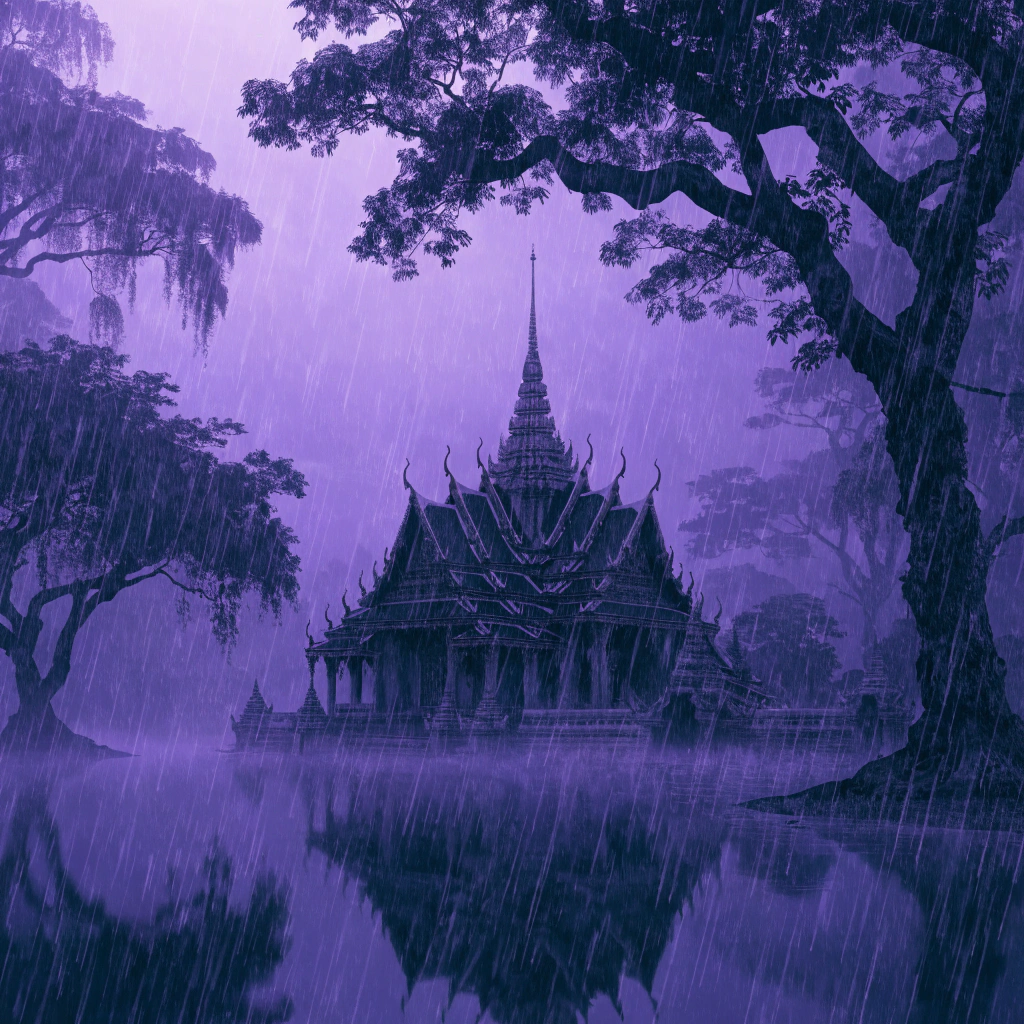
The Beautiful Temple of Bangkok
Wat Phra Kaew is a very famous temple in Bangkok, Thailand. It is inside the Grand Palace. It is very beautiful and old. King Rama I built this temple in 1782.
Many people visit the temple every day. They see the Emerald Buddha. It is a small green statue. The statue is very important for Thai people.
Visitors must wear long clothes. You cannot wear shorts inside. The temple is very quiet and special. There are many gold buildings and colorful statues. It is a great place to see Thai history.
Grammar Spotlight
Pattern: Present Simple (to be)
"Wat Phra Kaew is a very famous temple in Bangkok."
We use 'is' with singular subjects like 'Wat Phra Kaew' to describe facts and locations in the present.
Pattern: Modal Verb 'Must'
"Visitors must wear long clothes."
We use 'must' to talk about rules or things that are necessary to do.
Test Your Understanding
10 questions · A1 Beginner · 1 free preview
Test what you learned from this article. Answer all questions to earn XP!
Where is Wat Phra Kaew located?
Want to finish the quiz?
9 more questions are waiting for you. Sign up free to unlock the full quiz and earn XP!
Sign Up FreeAlready have an account? Sign In
Question Breakdown
Where is Wat Phra Kaew located?
Your answer:
Correct answer: In Bangkok, Thailand
The Emerald Buddha statue is blue.
Your answer:
Correct answer: False
What does 'famous' mean?
Your answer:
Correct answer: Known by many people
Visitors must wear long _____ to enter the temple.
Your answer:
Correct answer: clothes
The Famous Temple of Thailand
Wat Phra Kaew is a very famous temple in Bangkok, Thailand. It is inside the Grand Palace. King Rama I built this temple in 1782 because he wanted a special place for the Emerald Buddha. This temple is the most important Buddhist site in the country. The Emerald Buddha is a small statue, but it is very beautiful. It is made of green stone. People believe it brings good luck to Thailand. Interestingly, monks do not live in this temple. In other Thai temples, monks usually have rooms to sleep in, but Wat Phra Kaew is only for ceremonies. Visitors must follow rules when they visit. You must wear long trousers or a long skirt because it is a holy place. The buildings are taller and more colorful than many other houses in the city. There is a lot of gold and shiny glass on the walls. Thousands of tourists visit every year because the temple is a wonderful part of Thai history.
Grammar Spotlight
Pattern: Past Simple
"King Rama I built this temple in 1782 because he wanted a special place."
We use the past simple to talk about finished actions in the past. 'Built' is the irregular past form of 'build'.
Pattern: Comparatives
"The buildings are taller and more colorful than many other houses in the city."
We use 'adjective + er' for short words and 'more + adjective' for long words to compare two things.
Test Your Understanding
11 questions · A2 Elementary · 1 free preview
Test what you learned from this article. Answer all questions to earn XP!
Where is Wat Phra Kaew located?
Want to finish the quiz?
10 more questions are waiting for you. Sign up free to unlock the full quiz and earn XP!
Sign Up FreeAlready have an account? Sign In
Question Breakdown
Where is Wat Phra Kaew located?
Your answer:
Correct answer: Inside the Grand Palace in Bangkok
Monks live inside Wat Phra Kaew.
Your answer:
Correct answer: False
What does 'holy' mean?
Your answer:
Correct answer: Religious and special
The Emerald Buddha is made of green _____.
Your answer:
Correct answer: stone
What must visitors wear to enter the temple?
Your answer:
Correct answer: Long trousers or skirts
Exploring Wat Phra Kaew: The Heart of Thailand
Wat Phra Kaew, which is also known as the Temple of the Emerald Buddha, is located in the heart of Bangkok. It has been considered the most sacred Buddhist temple in Thailand since it was built in 1782. King Rama I, who founded the Chakri Dynasty, established the temple when he moved the capital to its current location.
The temple is famous for the Emerald Buddha, a small statue that has been carved from a single piece of green jade. Although it is called the 'Emerald' Buddha, it is actually made of precious stone. This statue is highly respected by Thai people, and it is believed to protect the country. Every season, the King of Thailand changes the gold clothes of the statue in a special ceremony to bring good luck to the nation.
Unlike most other temples in Thailand, Wat Phra Kaew does not have any living quarters for monks. Instead, the buildings are decorated with colorful glass and gold leaf, which creates a beautiful sight for visitors. The temple is located inside the grounds of the Grand Palace, which was once the home of the Thai kings. Many of the walls are covered with paintings that tell traditional stories.
Visitors who want to enter the temple must follow a strict dress code. This means that shoulders and legs should be covered to show respect to the holy site. Millions of tourists have visited this site to see its amazing architecture and learn about Thai history. It remains a powerful symbol of the country’s religion and monarchy. Because it is so important, the temple is carefully maintained by the government.
Grammar Spotlight
Pattern: Relative Clauses
"Wat Phra Kaew, which is also known as the Temple of the Emerald Buddha, is located in the heart of Bangkok."
We use relative clauses starting with 'which' or 'who' to provide extra information about a noun. In this sentence, the clause explains another name for the temple.
Pattern: Present Perfect Passive
"It has been considered the most sacred Buddhist temple in Thailand since it was built in 1782."
This pattern is formed using 'has/have been' + past participle. We use it to describe an action that started in the past and is still true now, focusing on the object rather than the person doing the action.
Test Your Understanding
11 questions · B1 Intermediate · 1 free preview
Test what you learned from this article. Answer all questions to earn XP!
Where is Wat Phra Kaew located?
Want to finish the quiz?
10 more questions are waiting for you. Sign up free to unlock the full quiz and earn XP!
Sign Up FreeAlready have an account? Sign In
Question Breakdown
Where is Wat Phra Kaew located?
Your answer:
Correct answer: In the heart of Bangkok
Monks live inside the buildings of Wat Phra Kaew.
Your answer:
Correct answer: False
What does 'precious' mean?
Your answer:
Correct answer: Of great value
The statue is carved from a single piece of green _____.
Your answer:
Correct answer: jade
What does the King change every season?
Your answer:
Correct answer: The statue's clothes
The Spiritual Heart of Bangkok: Exploring Wat Phra Kaew
Wat Phra Kaew, officially known as Wat Phra Si Rattana Satsadaram, represents the pinnacle of Thai architectural achievement and religious devotion. Situated within the historic heart of Bangkok, this sacred site was commissioned in 1782 by King Rama I, the founder of the Chakri Dynasty, during the relocation of the capital. Unlike conventional Thai temples, it is distinct because it lacks residential quarters for monks, serving exclusively as a place of worship and royal ceremony. This unique characteristic emphasizes its role as the spiritual sanctuary of the nation.
The temple's exterior is characterized by vibrant mosaics and shimmering gold leaf, reflecting the sun's rays in a display of breathtaking grandeur. Every surface is meticulously decorated, showcasing the intricate craftsmanship of the Rattanakosin era. At the core of the complex lies the Emerald Buddha, a small but profoundly significant statue carved from a single block of green jade. Despite its name, the figure is not made of emerald, yet its value to the Thai people is immeasurable. Legend has it that the statue was discovered in the 15th century after lightning struck a pagoda in northern Thailand, revealing the jade figure hidden within plaster.
The Emerald Buddha is regarded as a protective image that ensures the prosperity of the kingdom. Consequently, the King performs a solemn ritual three times a year, changing the statue's golden garments to mark the transition between the summer, rainy, and winter seasons. This practice underscores the profound connection between the monarchy and the spiritual health of the nation. It is a moment of great national importance, often broadcast to the public to reinforce cultural continuity.
For visitors, the temple offers an opportunity to analyze the complex intersection of art, history, and faith. While the crowds can be overwhelming, the atmosphere remains one of deep reverence. Visitors are expected to adhere to a strict dress code to respect the sanctity of the site. Preserving such a site requires constant maintenance and restoration, ensuring that future generations can appreciate its architectural and spiritual significance. Ultimately, Wat Phra Kaew stands as a testament to Thailand's enduring heritage and its ability to maintain ancient traditions in a rapidly modernizing world.
Grammar Spotlight
Pattern: Passive Voice
"This sacred site was commissioned in 1782 by King Rama I."
The passive voice is used here to focus on the temple (the object) rather than the King (the subject). It is formed using 'be' + past participle.
Pattern: Participial Phrases
"Situated within the historic heart of Bangkok, this sacred site was commissioned in 1782."
This phrase acts as an adjective to provide extra information about the subject. It helps to combine sentences and create a more formal, academic tone.
Pattern: Gerunds as Subjects
"Preserving such a site requires constant maintenance and restoration."
Here, the -ing form of the verb 'preserve' acts as a noun. It is used to discuss an abstract action or concept as the main topic of the sentence.
Test Your Understanding
11 questions · B2 Upper Intermediate · 1 free preview
Test what you learned from this article. Answer all questions to earn XP!
What is a unique feature of Wat Phra Kaew compared to other Thai temples?
Want to finish the quiz?
10 more questions are waiting for you. Sign up free to unlock the full quiz and earn XP!
Sign Up FreeAlready have an account? Sign In
Question Breakdown
What is a unique feature of Wat Phra Kaew compared to other Thai temples?
Your answer:
Correct answer: It lacks residential quarters for monks.
The Emerald Buddha is actually made of the gemstone emerald.
Your answer:
Correct answer: False
Which word describes a state of splendor and impressiveness?
Your answer:
Correct answer: Grandeur
The King changes the statue's golden _____ three times a year to mark the seasons.
Your answer:
Correct answer: garments
When was the temple commissioned?
Your answer:
Correct answer: 1782
The Spiritual Bastion: A Critical Appraisal of Wat Phra Kaew’s Cultural Hegemony
Situated within the opulent confines of the Grand Palace in Bangkok, Wat Phra Kaew—formally known as Wat Phra Si Rattana Satsadaram—stands as the preeminent symbol of Thai national identity. Established in 1782 by King Rama I, the inception of this temple coincided with the relocation of the capital to Bangkok, signaling a new era for the Chakri Dynasty. Rarely does one encounter a site where architecture and statehood are so inextricably linked. The temple serves not merely as a place of worship but as the spiritual heart of the kingdom, housing the Emerald Buddha, a palladium of immense historical and religious significance.
Architecturally, the complex is a masterclass in Thai aestheticism, characterized by its ornate gables, glittering mosaics, and the pervasive use of gold leaf. However, it is the absence of a resident monastic community that distinguishes Wat Phra Kaew from its contemporaries. Unlike standard Thai temples, which typically house living quarters for monks, this site is reserved exclusively for the performance of royal ceremonies and state rituals. This structural anomaly underscores the temple's role as a private chapel for the monarchy, reinforcing the divine link between the sovereign and the ecclesiastical order.
The Emerald Buddha itself, carved from a single block of jade, is the focal point of the main 'ubosot' (ordination hall). The meticulous preservation of this icon is a testament to its role in the nation’s collective consciousness. Thrice annually, in a ritual of profound solemnity, the King personally changes the statue's golden seasonal garments. This act is not merely ceremonial; it is a manifestation of the monarch’s duty to ensure the prosperity and stability of the realm.
Surrounding the central structures are the galleries featuring murals of the Ramakien, the Thai epic derived from the Hindu Ramayana. The juxtaposition of Buddhist iconography with Hindu narratives highlights the syncretic nature of Thai spirituality. Only by examining the intricate details of these murals can one truly grasp the complexity of the cultural synthesis that defines the Rattanakosin style. The narrative depicted—a struggle between good and evil—serves as a moral compass for the populace, further cementing the temple's status as a bastion of ethical and social order.
In conclusion, Wat Phra Kaew transcends its physical form as a collection of buildings. It is a profound expression of Thai sovereignty and religious devotion. The constant influx of pilgrims and tourists alike suggests that while its primary function is royal, its cultural resonance is universal. It remains an enduring monument to the continuity of the Thai state, where the ethereal beauty of the architecture meets the grounded reality of political and spiritual power.
Grammar Spotlight
Pattern: Negative Inversion
"Rarely does one encounter a site where architecture and statehood are so inextricably linked."
Inversion is used after negative or restrictive adverbs (rarely, seldom, never) for emphasis. The auxiliary verb 'does' moves before the subject 'one'.
Pattern: It-Cleft Sentence
"It is the absence of a resident monastic community that distinguishes Wat Phra Kaew from its contemporaries."
Cleft sentences are used to focus on a specific piece of information. The structure 'It is + [focused element] + that/who...' highlights the 'absence of a monastic community' as the key differentiator.
Pattern: Nominalisation
"The meticulous preservation of this icon is a testament to its role in the nation’s collective consciousness."
Nominalisation involves turning verbs (preserve) into nouns (preservation). This creates a more formal, academic tone typical of C1 level writing.
Test Your Understanding
12 questions · C1 Advanced · 1 free preview
Test what you learned from this article. Answer all questions to earn XP!
What primary feature distinguishes Wat Phra Kaew from most other Thai temples?
Want to finish the quiz?
11 more questions are waiting for you. Sign up free to unlock the full quiz and earn XP!
Sign Up FreeAlready have an account? Sign In
Question Breakdown
What primary feature distinguishes Wat Phra Kaew from most other Thai temples?
Your answer:
Correct answer: It lacks residential quarters for monks.
The temple was established during the transition of the capital to Bangkok in the late 18th century.
Your answer:
Correct answer: True
What does 'palladium' mean in the context of the article?
Your answer:
Correct answer: A source of protection or a safeguard.
The King changes the Emerald Buddha's garments three times a year to ensure the _____ of the realm.
Your answer:
Correct answer: prosperity
The murals of the Ramakien illustrate which aspect of Thai culture?
Your answer:
Correct answer: The syncretic blend of Buddhist and Hindu elements.
The Emerald Buddha is actually carved from solid gold.
Your answer:
Correct answer: False
The Locus of Sovereignty: An Analytical Inquiry into the Sublimity of Wat Phra Kaew
To traverse the threshold of Wat Phra Kaew, formally designated as Wat Phra Si Rattana Satsadaram, is to enter a realm where the metaphysical and the political converge with unparalleled intensity. Established in 1782 by King Rama I, the progenitor of the Chakri Dynasty, this ecclesiastical complex serves as the quintessential spiritual heart of Thailand. Rarely has a structure so effectively mirrored the evolution of a nation’s identity, functioning not merely as a site of veneration but as a potent symbol of Thai sovereignty. Unlike the standard architectural layout of Siamese temples, Wat Phra Kaew is idiosyncratic in its omission of a sangha—the resident monastic community. It is imperative that the observer recognize this absence, for it underscores the temple’s primary role as a royal chapel and a repository for the nation’s most sacred palladium: the Emerald Buddha.
The provenance of the Emerald Buddha is shrouded in an esoteric blend of historical record and hagiographical legend. Carved from a single block of jasper, this diminutive yet formidable icon is believed to confer legitimacy upon the ruling monarch. Its presence within the Grand Palace grounds suggests a deliberate juxtaposition of temporal power and divine sanction. Were one to scrutinize the seasonal rituals involving the statue, one would discern a profound manifestation of the King’s duty; it is the monarch himself who meticulously changes the deity's gold vestments thrice annually. This act is not merely ceremonial; it is a ritualistic reaffirmation of the cosmic order, ensuring the prosperity of the realm through a direct communion with the divine.
Architecturally, the complex is a masterclass in syncretism, blending traditional Thai motifs with influences that hint at a broader regional hegemony. The Phra Mondop, with its intricate mother-of-pearl inlay and forest of gilded pillars, stands as a testament to the aesthetic sublimity achieved during the early Rattanakosin period. Surrounding the central precinct, the galleries are adorned with murals depicting the Ramakien, the Thai adaptation of the Indian Ramayana. These illustrations serve as a moral and philosophical compass, weaving together the virtues of kingship and the struggle between order and chaos. The sheer density of ornamentation—the mosaics, the porcelain shards, and the gold leaf—creates an atmosphere that is almost overwhelming, yet meticulously ordered.
Furthermore, the temple’s endurance through centuries of geopolitical shifts highlights its role as a stable anchor in an often ephemeral landscape. While the surrounding city of Bangkok has undergone rapid modernization, the sanctity of the temple grounds remains inviolate. It is as if the very stones of the complex were imbued with a collective memory, guarding against the encroachment of secularism. The scholarly consensus suggests that to understand the Thai psyche, one must first grapple with the layers of meaning embedded within these walls. The temple is not a static relic; rather, it is a living organism that continues to breathe life into the cultural and spiritual fabric of the nation.
In conclusion, Wat Phra Kaew represents a sophisticated synthesis of art, religion, and statecraft. It demands an analytical gaze that looks beyond the gilded surfaces to the underlying structures of power and belief. Should the visitor approach with such a perspective, they will find that the temple offers more than mere visual splendor; it provides a profound insight into the enduring resilience of the Thai spirit and the complex interplay of tradition and modernity in Southeast Asia.
Grammar Spotlight
Pattern: Negative Inversion
"Rarely has a structure so effectively mirrored the evolution of a nation’s identity..."
This pattern involves placing a negative or restrictive adverb at the beginning of the sentence followed by an auxiliary verb and then the subject. It is used in formal English to add emphasis or dramatic effect.
Pattern: Present Subjunctive
"It is imperative that the observer recognize this absence..."
The subjunctive mood is used here after an adjective of necessity (imperative). Note that 'recognize' remains in its base form regardless of the subject.
Pattern: Mixed Conditional / Inverted Conditional
"Should the visitor approach with such a perspective, they will find that the temple offers more than mere visual splendor."
Using 'should' at the beginning of a conditional clause is a formal alternative to 'if'. It suggests a hypothetical possibility in a more scholarly or literary tone.
Test Your Understanding
12 questions · C2 Mastery · 1 free preview
Test what you learned from this article. Answer all questions to earn XP!
What distinguishes Wat Phra Kaew from most other traditional Siamese temples?
Want to finish the quiz?
11 more questions are waiting for you. Sign up free to unlock the full quiz and earn XP!
Sign Up FreeAlready have an account? Sign In
Question Breakdown
What distinguishes Wat Phra Kaew from most other traditional Siamese temples?
Your answer:
Correct answer: The absence of a resident monastic community
The Emerald Buddha is believed to provide divine legitimacy to the Thai monarch.
Your answer:
Correct answer: True
Which word describes something that is intended for a very small group with specialized knowledge?
Your answer:
Correct answer: Esoteric
The temple serves as the nation's most sacred _____, an object upon which the safety of the nation depends.
Your answer:
Correct answer: palladium
According to the text, what is the significance of the King changing the deity's vestments?
Your answer:
Correct answer: It is a ritualistic reaffirmation of the cosmic order.
The murals in the galleries depict scenes from the original Indian Ramayana without any local adaptation.
Your answer:
Correct answer: False
