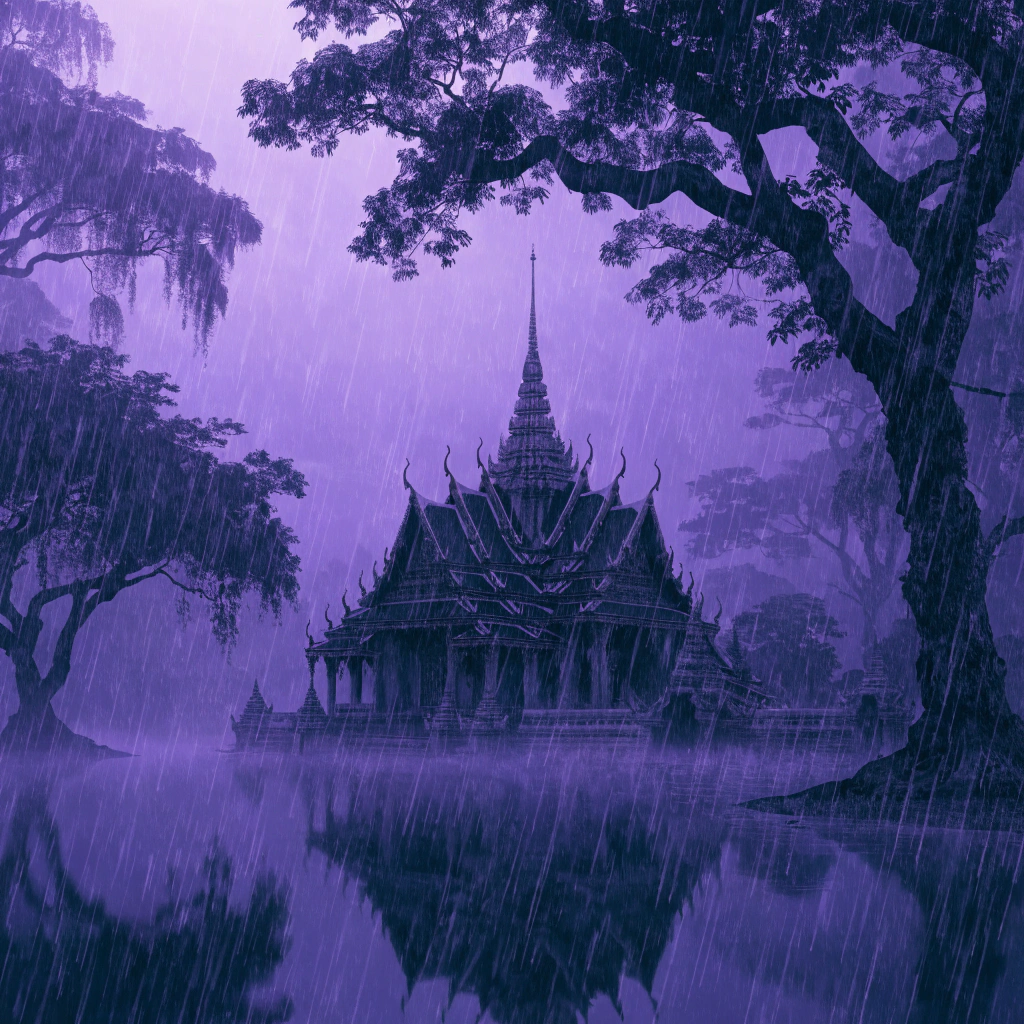
The Beautiful Temple of Bangkok
Wat Phra Kaew is a very famous temple in Bangkok, Thailand. It is inside the Grand Palace. It is very beautiful and old. King Rama I built this temple in 1782.
Many people visit the temple every day. They see the Emerald Buddha. It is a small green statue. The statue is very important for Thai people.
Visitors must wear long clothes. You cannot wear shorts inside. The temple is very quiet and special. There are many gold buildings and colorful statues. It is a great place to see Thai history.
语法聚焦
句型: Present Simple (to be)
"Wat Phra Kaew is a very famous temple in Bangkok."
We use 'is' with singular subjects like 'Wat Phra Kaew' to describe facts and locations in the present.
句型: Modal Verb 'Must'
"Visitors must wear long clothes."
We use 'must' to talk about rules or things that are necessary to do.
测试你的理解
10 个问题 · A1 初学 · 1 次免费预览
测试你从这篇文章中学到的知识。回答所有问题即可获得经验值!
题目详情
Where is Wat Phra Kaew located?
你的回答:
正确答案: In Bangkok, Thailand
The Emerald Buddha statue is blue.
你的回答:
正确答案: 错误
What does 'famous' mean?
你的回答:
正确答案: Known by many people
Visitors must wear long _____ to enter the temple.
你的回答:
正确答案: clothes
The Famous Temple of Thailand
Wat Phra Kaew is a very famous temple in Bangkok, Thailand. It is inside the Grand Palace. King Rama I built this temple in 1782 because he wanted a special place for the Emerald Buddha. This temple is the most important Buddhist site in the country. The Emerald Buddha is a small statue, but it is very beautiful. It is made of green stone. People believe it brings good luck to Thailand. Interestingly, monks do not live in this temple. In other Thai temples, monks usually have rooms to sleep in, but Wat Phra Kaew is only for ceremonies. Visitors must follow rules when they visit. You must wear long trousers or a long skirt because it is a holy place. The buildings are taller and more colorful than many other houses in the city. There is a lot of gold and shiny glass on the walls. Thousands of tourists visit every year because the temple is a wonderful part of Thai history.
语法聚焦
句型: Past Simple
"King Rama I built this temple in 1782 because he wanted a special place."
We use the past simple to talk about finished actions in the past. 'Built' is the irregular past form of 'build'.
句型: Comparatives
"The buildings are taller and more colorful than many other houses in the city."
We use 'adjective + er' for short words and 'more + adjective' for long words to compare two things.
测试你的理解
11 个问题 · A2 基础 · 1 次免费预览
测试你从这篇文章中学到的知识。回答所有问题即可获得经验值!
题目详情
Where is Wat Phra Kaew located?
你的回答:
正确答案: Inside the Grand Palace in Bangkok
Monks live inside Wat Phra Kaew.
你的回答:
正确答案: 错误
What does 'holy' mean?
你的回答:
正确答案: Religious and special
The Emerald Buddha is made of green _____.
你的回答:
正确答案: stone
What must visitors wear to enter the temple?
你的回答:
正确答案: Long trousers or skirts
Exploring Wat Phra Kaew: The Heart of Thailand
Wat Phra Kaew, which is also known as the Temple of the Emerald Buddha, is located in the heart of Bangkok. It has been considered the most sacred Buddhist temple in Thailand since it was built in 1782. King Rama I, who founded the Chakri Dynasty, established the temple when he moved the capital to its current location.
The temple is famous for the Emerald Buddha, a small statue that has been carved from a single piece of green jade. Although it is called the 'Emerald' Buddha, it is actually made of precious stone. This statue is highly respected by Thai people, and it is believed to protect the country. Every season, the King of Thailand changes the gold clothes of the statue in a special ceremony to bring good luck to the nation.
Unlike most other temples in Thailand, Wat Phra Kaew does not have any living quarters for monks. Instead, the buildings are decorated with colorful glass and gold leaf, which creates a beautiful sight for visitors. The temple is located inside the grounds of the Grand Palace, which was once the home of the Thai kings. Many of the walls are covered with paintings that tell traditional stories.
Visitors who want to enter the temple must follow a strict dress code. This means that shoulders and legs should be covered to show respect to the holy site. Millions of tourists have visited this site to see its amazing architecture and learn about Thai history. It remains a powerful symbol of the country’s religion and monarchy. Because it is so important, the temple is carefully maintained by the government.
语法聚焦
句型: Relative Clauses
"Wat Phra Kaew, which is also known as the Temple of the Emerald Buddha, is located in the heart of Bangkok."
We use relative clauses starting with 'which' or 'who' to provide extra information about a noun. In this sentence, the clause explains another name for the temple.
句型: Present Perfect Passive
"It has been considered the most sacred Buddhist temple in Thailand since it was built in 1782."
This pattern is formed using 'has/have been' + past participle. We use it to describe an action that started in the past and is still true now, focusing on the object rather than the person doing the action.
测试你的理解
11 个问题 · B1 中级 · 1 次免费预览
测试你从这篇文章中学到的知识。回答所有问题即可获得经验值!
题目详情
Where is Wat Phra Kaew located?
你的回答:
正确答案: In the heart of Bangkok
Monks live inside the buildings of Wat Phra Kaew.
你的回答:
正确答案: 错误
What does 'precious' mean?
你的回答:
正确答案: Of great value
The statue is carved from a single piece of green _____.
你的回答:
正确答案: jade
What does the King change every season?
你的回答:
正确答案: The statue's clothes
泰国玉佛寺:国家精神的象征与历史瑰宝
玉佛寺,其正式名称为瓦帕西拉达纳萨达兰佛寺(Wat Phra Si Rattana Satsadaram),被广泛认为是泰国最为重要的佛教寺庙。它坐落于曼谷历史悠久的市中心,毗邻大皇宫,是泰国精神与信仰的核心所在。这座宏伟的寺庙由查库里王朝的开国君主拉玛一世国王于1782年创建。当年,拉玛一世将首都从吞武里迁至湄南河东岸的现址,并在此奠定了曼谷王朝的基石。玉佛寺的建立,不仅标志着新王朝的崛起,更彰显了佛教在泰国社会中不可动摇的崇高地位。
与泰国大多数其他寺庙不同,玉佛寺内部并没有僧侣的居所。这一独特之处在于,它被设计为一个纯粹的皇家寺庙,主要功能是供奉泰国最神圣的佛像——玉佛。玉佛由一整块翡翠雕刻而成,据传拥有强大的神力,是泰国人民的精神寄托和国家繁荣的象征。每年,国王都会亲自主持玉佛的更衣仪式,以顺应季节变化,这一传统体现了泰国君主制与佛教信仰的紧密结合。
寺庙建筑群本身就是一件精湛的艺术品,融合了泰国传统建筑、雕塑和绘画的精华。金碧辉煌的佛塔、壁画、以及精致的雕刻无不展现了泰国工匠的卓越技艺。游客漫步其中,不仅能感受到浓厚的宗教氛围,还能领略到泰国文化的博大精深。这些建筑和艺术品不仅具有极高的审美价值,更承载着丰富的历史信息和宗教哲理。
玉佛寺不仅是宗教场所,它还见证了泰国的许多重要历史时刻,是国家庆典和皇家仪式的核心舞台。它不仅仅是一座寺庙,更是泰国国家认同和民族精神的具象化。因此,无论是对于虔诚的佛教徒,还是对历史文化感兴趣的游客来说,玉佛寺都是一个不可错过的目的地。它以其独特的魅力和深远的影响力,持续吸引着世界各地的目光,成为泰国最璀璨的文化遗产之一。
语法聚焦
句型: 不仅…更… (bùjǐn…gèng…)
"玉佛寺的建立,不仅标志着新王朝的崛起,更彰显了佛教在泰国社会中不可动摇的崇高地位。"
这个句式用于表示递进关系,强调后者比前者更进一步或更重要。“不仅”引出第一个方面,“更”引出更深层或更重要的第二个方面,常用于强调语气。
句型: 无不 (wúbù)
"金碧辉煌的佛塔、壁画、以及精致的雕刻无不展现了泰国工匠的卓越技艺。"
“无不”是一个双重否定句式,表示“没有不…的”,即“都…”或“全都…”。它用来强调所有事物都具有某种共同的特征或结果,语气强烈而肯定。
句型: 无论是…还是…都… (wúlùn shì…háishì…dōu…)
"无论是对于虔诚的佛教徒,还是对历史文化感兴趣的游客来说,玉佛寺都是一个不可错过的目的地。"
这个句式表示在任何情况下或任何选择中,结果都是一样的。它用来引出两个或更多并列的方面,然后用“都”来总结共同的结论,表达一种普遍性或无条件性。
测试你的理解
11 个问题 · B2 中高级 · 1 次免费预览
测试你从这篇文章中学到的知识。回答所有问题即可获得经验值!
题目详情
玉佛寺的正式名称是什么?
你的回答:
正确答案: 瓦帕西拉达纳萨达兰佛寺
玉佛寺是泰国唯一一座有僧侣居所的寺庙。
你的回答:
正确答案: 错误
“崇高”在文中是什么意思?
你的回答:
正确答案: 地位高尚,值得尊敬
玉佛寺是泰国精神与信仰的_____所在。
你的回答:
正确答案: 核心
拉玛一世国王何时创建了玉佛寺?
你的回答:
正确答案: 1782年
The Spiritual Bastion: A Critical Appraisal of Wat Phra Kaew’s Cultural Hegemony
Situated within the opulent confines of the Grand Palace in Bangkok, Wat Phra Kaew—formally known as Wat Phra Si Rattana Satsadaram—stands as the preeminent symbol of Thai national identity. Established in 1782 by King Rama I, the inception of this temple coincided with the relocation of the capital to Bangkok, signaling a new era for the Chakri Dynasty. Rarely does one encounter a site where architecture and statehood are so inextricably linked. The temple serves not merely as a place of worship but as the spiritual heart of the kingdom, housing the Emerald Buddha, a palladium of immense historical and religious significance.
Architecturally, the complex is a masterclass in Thai aestheticism, characterized by its ornate gables, glittering mosaics, and the pervasive use of gold leaf. However, it is the absence of a resident monastic community that distinguishes Wat Phra Kaew from its contemporaries. Unlike standard Thai temples, which typically house living quarters for monks, this site is reserved exclusively for the performance of royal ceremonies and state rituals. This structural anomaly underscores the temple's role as a private chapel for the monarchy, reinforcing the divine link between the sovereign and the ecclesiastical order.
The Emerald Buddha itself, carved from a single block of jade, is the focal point of the main 'ubosot' (ordination hall). The meticulous preservation of this icon is a testament to its role in the nation’s collective consciousness. Thrice annually, in a ritual of profound solemnity, the King personally changes the statue's golden seasonal garments. This act is not merely ceremonial; it is a manifestation of the monarch’s duty to ensure the prosperity and stability of the realm.
Surrounding the central structures are the galleries featuring murals of the Ramakien, the Thai epic derived from the Hindu Ramayana. The juxtaposition of Buddhist iconography with Hindu narratives highlights the syncretic nature of Thai spirituality. Only by examining the intricate details of these murals can one truly grasp the complexity of the cultural synthesis that defines the Rattanakosin style. The narrative depicted—a struggle between good and evil—serves as a moral compass for the populace, further cementing the temple's status as a bastion of ethical and social order.
In conclusion, Wat Phra Kaew transcends its physical form as a collection of buildings. It is a profound expression of Thai sovereignty and religious devotion. The constant influx of pilgrims and tourists alike suggests that while its primary function is royal, its cultural resonance is universal. It remains an enduring monument to the continuity of the Thai state, where the ethereal beauty of the architecture meets the grounded reality of political and spiritual power.
语法聚焦
句型: Negative Inversion
"Rarely does one encounter a site where architecture and statehood are so inextricably linked."
Inversion is used after negative or restrictive adverbs (rarely, seldom, never) for emphasis. The auxiliary verb 'does' moves before the subject 'one'.
句型: It-Cleft Sentence
"It is the absence of a resident monastic community that distinguishes Wat Phra Kaew from its contemporaries."
Cleft sentences are used to focus on a specific piece of information. The structure 'It is + [focused element] + that/who...' highlights the 'absence of a monastic community' as the key differentiator.
句型: Nominalisation
"The meticulous preservation of this icon is a testament to its role in the nation’s collective consciousness."
Nominalisation involves turning verbs (preserve) into nouns (preservation). This creates a more formal, academic tone typical of C1 level writing.
测试你的理解
12 个问题 · C1 高级 · 1 次免费预览
测试你从这篇文章中学到的知识。回答所有问题即可获得经验值!
What primary feature distinguishes Wat Phra Kaew from most other Thai temples?
题目详情
What primary feature distinguishes Wat Phra Kaew from most other Thai temples?
你的回答:
正确答案: It lacks residential quarters for monks.
The temple was established during the transition of the capital to Bangkok in the late 18th century.
你的回答:
正确答案: 正确
What does 'palladium' mean in the context of the article?
你的回答:
正确答案: A source of protection or a safeguard.
The King changes the Emerald Buddha's garments three times a year to ensure the _____ of the realm.
你的回答:
正确答案: prosperity
The murals of the Ramakien illustrate which aspect of Thai culture?
你的回答:
正确答案: The syncretic blend of Buddhist and Hindu elements.
The Emerald Buddha is actually carved from solid gold.
你的回答:
正确答案: 错误
The Locus of Sovereignty: An Analytical Inquiry into the Sublimity of Wat Phra Kaew
To traverse the threshold of Wat Phra Kaew, formally designated as Wat Phra Si Rattana Satsadaram, is to enter a realm where the metaphysical and the political converge with unparalleled intensity. Established in 1782 by King Rama I, the progenitor of the Chakri Dynasty, this ecclesiastical complex serves as the quintessential spiritual heart of Thailand. Rarely has a structure so effectively mirrored the evolution of a nation’s identity, functioning not merely as a site of veneration but as a potent symbol of Thai sovereignty. Unlike the standard architectural layout of Siamese temples, Wat Phra Kaew is idiosyncratic in its omission of a sangha—the resident monastic community. It is imperative that the observer recognize this absence, for it underscores the temple’s primary role as a royal chapel and a repository for the nation’s most sacred palladium: the Emerald Buddha.
The provenance of the Emerald Buddha is shrouded in an esoteric blend of historical record and hagiographical legend. Carved from a single block of jasper, this diminutive yet formidable icon is believed to confer legitimacy upon the ruling monarch. Its presence within the Grand Palace grounds suggests a deliberate juxtaposition of temporal power and divine sanction. Were one to scrutinize the seasonal rituals involving the statue, one would discern a profound manifestation of the King’s duty; it is the monarch himself who meticulously changes the deity's gold vestments thrice annually. This act is not merely ceremonial; it is a ritualistic reaffirmation of the cosmic order, ensuring the prosperity of the realm through a direct communion with the divine.
Architecturally, the complex is a masterclass in syncretism, blending traditional Thai motifs with influences that hint at a broader regional hegemony. The Phra Mondop, with its intricate mother-of-pearl inlay and forest of gilded pillars, stands as a testament to the aesthetic sublimity achieved during the early Rattanakosin period. Surrounding the central precinct, the galleries are adorned with murals depicting the Ramakien, the Thai adaptation of the Indian Ramayana. These illustrations serve as a moral and philosophical compass, weaving together the virtues of kingship and the struggle between order and chaos. The sheer density of ornamentation—the mosaics, the porcelain shards, and the gold leaf—creates an atmosphere that is almost overwhelming, yet meticulously ordered.
Furthermore, the temple’s endurance through centuries of geopolitical shifts highlights its role as a stable anchor in an often ephemeral landscape. While the surrounding city of Bangkok has undergone rapid modernization, the sanctity of the temple grounds remains inviolate. It is as if the very stones of the complex were imbued with a collective memory, guarding against the encroachment of secularism. The scholarly consensus suggests that to understand the Thai psyche, one must first grapple with the layers of meaning embedded within these walls. The temple is not a static relic; rather, it is a living organism that continues to breathe life into the cultural and spiritual fabric of the nation.
In conclusion, Wat Phra Kaew represents a sophisticated synthesis of art, religion, and statecraft. It demands an analytical gaze that looks beyond the gilded surfaces to the underlying structures of power and belief. Should the visitor approach with such a perspective, they will find that the temple offers more than mere visual splendor; it provides a profound insight into the enduring resilience of the Thai spirit and the complex interplay of tradition and modernity in Southeast Asia.
语法聚焦
句型: Negative Inversion
"Rarely has a structure so effectively mirrored the evolution of a nation’s identity..."
This pattern involves placing a negative or restrictive adverb at the beginning of the sentence followed by an auxiliary verb and then the subject. It is used in formal English to add emphasis or dramatic effect.
句型: Present Subjunctive
"It is imperative that the observer recognize this absence..."
The subjunctive mood is used here after an adjective of necessity (imperative). Note that 'recognize' remains in its base form regardless of the subject.
句型: Mixed Conditional / Inverted Conditional
"Should the visitor approach with such a perspective, they will find that the temple offers more than mere visual splendor."
Using 'should' at the beginning of a conditional clause is a formal alternative to 'if'. It suggests a hypothetical possibility in a more scholarly or literary tone.
测试你的理解
12 个问题 · C2 精通 · 1 次免费预览
测试你从这篇文章中学到的知识。回答所有问题即可获得经验值!
What distinguishes Wat Phra Kaew from most other traditional Siamese temples?
题目详情
What distinguishes Wat Phra Kaew from most other traditional Siamese temples?
你的回答:
正确答案: The absence of a resident monastic community
The Emerald Buddha is believed to provide divine legitimacy to the Thai monarch.
你的回答:
正确答案: 正确
Which word describes something that is intended for a very small group with specialized knowledge?
你的回答:
正确答案: Esoteric
The temple serves as the nation's most sacred _____, an object upon which the safety of the nation depends.
你的回答:
正确答案: palladium
According to the text, what is the significance of the King changing the deity's vestments?
你的回答:
正确答案: It is a ritualistic reaffirmation of the cosmic order.
The murals in the galleries depict scenes from the original Indian Ramayana without any local adaptation.
你的回答:
正确答案: 错误

