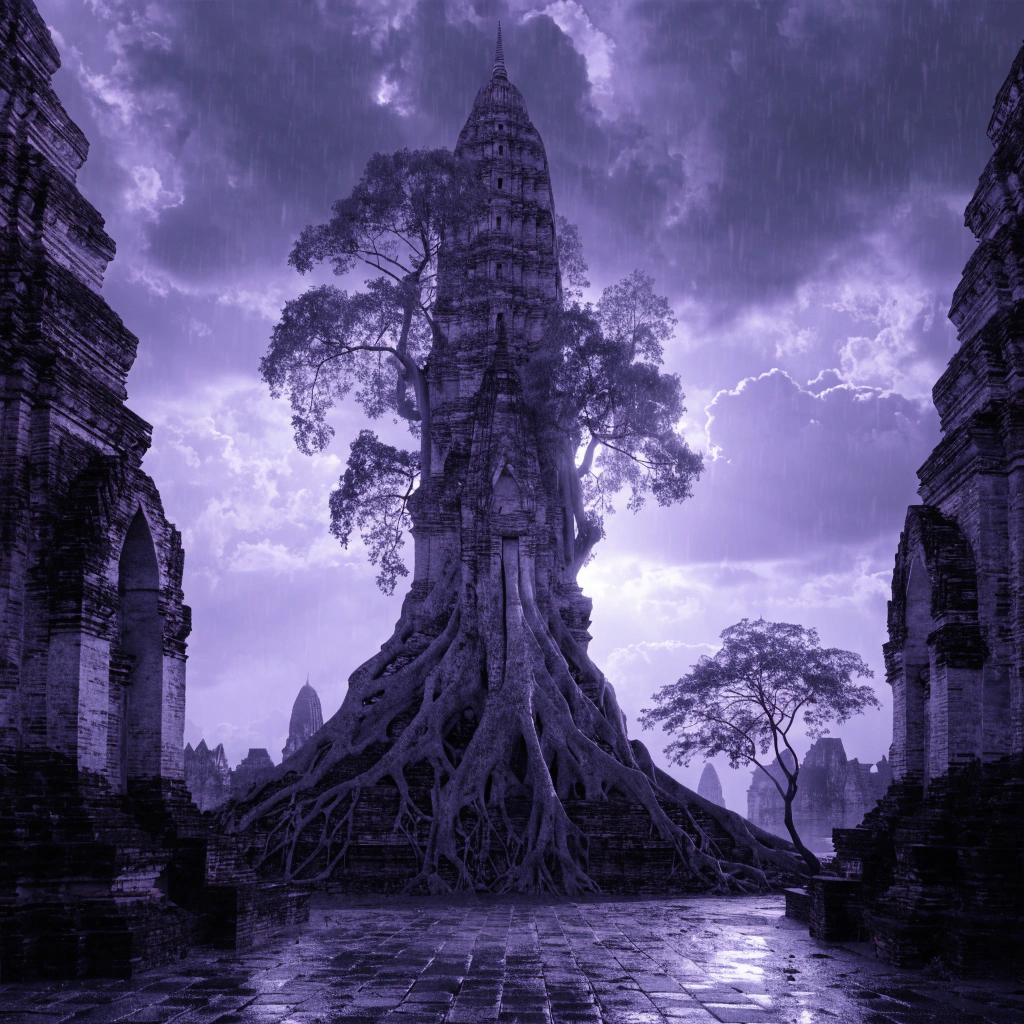
A Beautiful Park in Thailand
Sukhothai Historical Park is a beautiful place in Thailand. It is very old and very big. Many people visit the park every year. They see old buildings and statues.
Long ago, Sukhothai was a capital city. The name means "Dawn of Happiness." It is the home of Thai art and language. King Ramkhamhaeng lived here. He created the Thai alphabet.
Today, the park is famous. It is a UNESCO World Heritage site. Visitors like to ride bicycles and see the temples. It is a peaceful and happy place.
语法聚焦
句型: Present Simple: To Be
"It is very old and very big."
We use 'am', 'is', or 'are' to describe facts or states. Use 'is' for singular things like 'the park' or 'it'.
句型: Present Simple: Regular Verbs
"Many people visit the park every year."
We use the base form of the verb for plural subjects (people) to talk about habits or general truths.
测试你的理解
10 个问题 · A1 初学 · 1 次免费预览
测试你从这篇文章中学到的知识。回答所有问题即可获得经验值!
Where is Sukhothai Historical Park?
题目详情
Where is Sukhothai Historical Park?
你的回答:
正确答案: Thailand
The name Sukhothai means 'Dawn of Happiness.'
你的回答:
正确答案: 正确
What is a 'statue'?
你的回答:
正确答案: A stone or metal model of a person
The park is a UNESCO World Heritage _____.
你的回答:
正确答案: site
Sukhothai: The Dawn of Happiness
Sukhothai Historical Park is a very famous and beautiful place in Thailand. The name 'Sukhothai' means 'The Dawn of Happiness.' Many years ago, it was the first capital of the Sukhothai Kingdom. This kingdom was very strong and important during the 13th and 14th centuries.
King Ramkhamhaeng the Great was a very famous leader of this kingdom. He was smarter than many other kings at that time. He created the Thai alphabet to help his people write. He also acted like a father to his people, so they felt safe. Because of his work, the kingdom was peaceful and happy for a long time.
Today, the park is a UNESCO World Heritage site. There are many old ruins, temples, and beautiful statues of Buddha. The park is bigger and quieter than the busy streets of Bangkok. Many tourists visit the park every year to see the history of Thailand. They often rent bicycles because the park is very large. It is a wonderful place to learn about the past and see beautiful art.
语法聚焦
句型: Past Simple (Regular Verbs)
"He created the Thai alphabet to help his people write."
We use the past simple to talk about finished actions in the past. To form regular verbs, we add '-ed' to the base verb like 'create' becoming 'created'.
句型: Comparatives
"The park is bigger and quieter than the busy streets of Bangkok."
We use comparatives to compare two things. For short adjectives, we add '-er' and use the word 'than' after the adjective.
测试你的理解
11 个问题 · A2 基础 · 1 次免费预览
测试你从这篇文章中学到的知识。回答所有问题即可获得经验值!
What does the name 'Sukhothai' mean?
题目详情
What does the name 'Sukhothai' mean?
你的回答:
正确答案: The Dawn of Happiness
King Ramkhamhaeng created the Thai alphabet.
你的回答:
正确答案: 正确
What does 'capital' mean?
你的回答:
正确答案: The most important city
Today, the park is a UNESCO World _____ site.
你的回答:
正确答案: Heritage
Why do many tourists rent bicycles in the park?
你的回答:
正确答案: Because it is very large
素可泰历史公园:泰国的“幸福黎明”
泰国中部的素可泰历史公园是一个拥有丰富历史和文化遗产的古老遗址。这里曾是素可泰王国的首都,这个王国在13世纪到14世纪期间非常繁荣。素可泰在泰语中意为“幸福的黎明”,它被认为是泰国艺术、建筑和语言的诞生地。
公园里保存着许多古老的寺庙和佛像的遗迹,它们静静地讲述着过去的故事。其中最著名的是玛哈泰寺,它拥有巨大的佛塔和精美的雕塑。游客们经常会租一辆自行车,在公园内悠闲地骑行,感受这份宁静和历史的厚重。
素可泰王国最伟大的国王之一是兰甘亨大帝。他被广泛认为是泰国文字的创造者,也就是今天我们所知道的泰语字母。此外,他还建立了一种“家长式”的君主制度,这为现代泰国的国家基础奠定了基础。正是因为这些重要的历史贡献,素可泰历史公园在1991年被联合国教科文组织列为世界遗产。
今天,这个公园不仅是泰国人民的骄傲,也吸引了来自世界各地的游客。他们来到这里,不仅是为了欣赏美丽的遗址,更是为了了解泰国文化的根源。素可泰历史公园已经成为一个重要的文化地标,向世人展示着泰国辉煌的过去。
语法聚焦
句型: 被 (bèi) - 被动语态 (Passive Voice)
"它被认为是泰国艺术、建筑和语言的诞生地。"
“被”字表示被动语态,说明主语是动作的承受者而不是发出者。它的基本结构是:主语 + 被 + 动词 + (宾语)。这个结构在中文中很常用,用来强调动作的接受者或表达一种客观陈述。
句型: 的 (de) - 定语从句标记 (Relative Clause Marker)
"公园里保存着许多古老的寺庙和佛像的遗迹,它们静静地讲述着过去的故事。"
“的”在这里用于连接一个修饰成分(定语从句)和一个中心词。例如,“讲述着过去的故事”修饰“遗迹”,说明这些遗迹有什么特点。这个结构能让句子更具体、信息更丰富。
测试你的理解
11 个问题 · B1 中级 · 1 次免费预览
测试你从这篇文章中学到的知识。回答所有问题即可获得经验值!
题目详情
素可泰在泰语中是什么意思?
你的回答:
正确答案: 幸福的黎明
兰甘亨大帝被认为是泰国文字的创造者。
你的回答:
正确答案: 正确
“繁荣”的意思是什么?
你的回答:
正确答案: 发展得很好,兴盛
素可泰历史公园在1991年被联合国教科文组织列为世界______。
你的回答:
正确答案: 遗产
游客在素可泰历史公园里通常会做什么?
你的回答:
正确答案: 租一辆自行车骑行
The Echoes of a Golden Age: Exploring Sukhothai Historical Park
Spanning the 13th and 14th centuries, the Sukhothai Kingdom is often hailed as the cradle of Thai civilization. The name itself, which translates to 'The Dawn of Happiness,' reflects a period of unprecedented cultural prosperity and political stability. Situated in Northern Thailand, the Sukhothai Historical Park preserves the majestic ruins of this ancient capital, offering visitors a profound glimpse into a society that fundamentally shaped modern Thai identity.
Under the visionary leadership of King Ramkhamhaeng the Great, the kingdom flourished. He is a pivotal figure in history, credited with the invention of the Thai alphabet and the establishment of a paternalistic monarchy. This unique governance style, where the king acted as a father figure to his subjects, set the foundation for the Thai state. The legacy of this era is not merely historical; it is deeply woven into the linguistic and social fabric of Thailand today.
The architecture within the park is equally monumental. It showcases an intricate blend of Khmer and Mon influences, which eventually evolved into a distinct 'Sukhothai style.' Visitors can explore vast zones containing dozens of temples, or 'wats.' The most famous, Wat Mahathat, features a central stupa surrounded by smaller pagodas and serene Buddha images. The aesthetic appeal of these structures is enhanced by the surrounding landscape, where lotus ponds and greenery create a tranquil sanctuary.
Despite its eventual decline and the rise of the Ayutthaya Kingdom, the significance of Sukhothai remained intact. In recent decades, extensive restoration projects have been undertaken to protect these fragile ruins from the elements. The site has been designated a UNESCO World Heritage site, ensuring that its historical integrity is maintained for future generations.
Today, navigating the park by bicycle is a popular way to appreciate the scale of the ruins. As one wanders through the stone pillars and weathered walls, it becomes clear that Sukhothai was not just a political center, but a hub of artistic innovation. The preservation of such a site allows us to evaluate the evolution of Southeast Asian urban planning and religious devotion. Ultimately, Sukhothai stands as a testament to a golden age that continues to inspire Thai culture and national pride.
语法聚焦
句型: Passive Voice
"Sukhothai is often hailed as the cradle of Thai civilization."
The passive voice is used here to focus on the object (Sukhothai) rather than who is doing the hailing. It is formed using the verb 'to be' and the past participle.
句型: Non-defining Relative Clauses
"The name itself, which translates to 'The Dawn of Happiness,' reflects a period..."
This clause provides extra information about the subject. It is separated by commas and uses 'which' for things or 'who' for people.
句型: Present Perfect Passive
"The site has been designated a UNESCO World Heritage site."
This indicates an action that happened at an unspecified time in the past and has a result in the present. It is formed with 'has/have been' + past participle.
测试你的理解
11 个问题 · B2 中高级 · 1 次免费预览
测试你从这篇文章中学到的知识。回答所有问题即可获得经验值!
What is the English translation of the name 'Sukhothai'?
题目详情
What is the English translation of the name 'Sukhothai'?
你的回答:
正确答案: The Dawn of Happiness
Sukhothai is considered the birthplace of the Thai alphabet.
你的回答:
正确答案: 正确
What does 'intricate' mean in the context of the article?
你的回答:
正确答案: Very complicated or detailed
Extensive _____ projects have been undertaken to protect the ruins.
你的回答:
正确答案: restoration
Which king established a paternalistic monarchy in Sukhothai?
你的回答:
正确答案: King Ramkhamhaeng
The Dawn of Happiness: Unpacking the Legacy of Sukhothai
Seldom does a landscape resonate with as much historical gravity as the Sukhothai Historical Park. Nestled in the heart of modern-day Thailand, these ruins represent more than mere architectural remnants; they are the physical manifestation of the 'Dawn of Happiness.' It was during the 13th century that this nascent kingdom began to delineate the contours of Thai identity. What strikes the contemporary visitor is not merely the scale of the monuments, but the profound sense of order that the urban planning conveys. Through the meticulous preservation of these sites, we gain insight into a period defined by intellectual flourishing and political innovation.
Central to the Sukhothai narrative is the figure of King Ramkhamhaeng the Great. Not only did he oversee the expansion of the kingdom's borders, but he also facilitated the codification of the Thai script. This linguistic breakthrough was instrumental in consolidating power and fostering a cohesive national consciousness. Furthermore, the king's adoption of a paternalistic monarchy—a system where the ruler was viewed as a father figure accessible to his subjects—diverged sharply from the more autocratic Khmer traditions that preceded it. This shift in governance is often cited by historians as a pivotal moment in the evolution of Thai sociopolitical structures.
The aesthetic legacy of Sukhothai is equally compelling. The 'Sukhothai style' is characterized by its grace and fluidity, most notably seen in the 'walking Buddha' statues. These bronze figures, with their flame-like halos and serene expressions, represent a departure from the rigid forms of earlier eras. It is the architectural ingenuity of the lotus-bud chedi, however, that remains the most iconic symbol of the era. Such structures were not merely religious edifices; they were assertions of cultural independence and spiritual devotion. The intricate carvings and the strategic orientation of the temples reflect a sophisticated understanding of both geometry and cosmology.
However, the management of such a vast heritage site is not without its complexities. The designation of Sukhothai as a UNESCO World Heritage site has undoubtedly bolstered conservation efforts, yet it has also precipitated a surge in tourism that threatens the very integrity of the ruins. The challenge lies in balancing the imperatives of historical preservation with the economic demands of the present. Critically, one must ask whether the 'restoration' of these ruins reflects their original state or a modern reimagining of a golden age. The tension between authenticity and accessibility remains a subject of heated debate among archaeologists and urban planners alike.
In conclusion, Sukhothai Historical Park serves as a poignant reminder of the ephemeral nature of empires and the enduring power of cultural foundations. By examining the interplay between its art, language, and politics, we can better appreciate the complexities of the Thai state today. Seldom has the past felt so present as it does amidst the weathered stones of this ancient capital. The legacy of Sukhothai continues to permeate the modern Thai psyche, providing a sense of historical continuity in an ever-changing world.
语法聚焦
句型: Inversion with Negative Adverbials
"Seldom does a landscape resonate with as much historical gravity as the Sukhothai Historical Park."
When a sentence starts with a negative or restrictive adverbial like 'seldom', 'never', or 'hardly', the auxiliary verb comes before the subject. This is used in formal writing to add emphasis and dramatic effect.
句型: Cleft Sentences
"It was during the 13th century that this nascent kingdom began to delineate the contours of Thai identity."
A cleft sentence is used to focus on a specific piece of information. It follows the structure 'It + be + [focused part] + that/who...', allowing the writer to highlight 'when' the action occurred.
句型: Nominalisation
"Through the meticulous preservation of these sites, we gain insight into a period defined by intellectual flourishing and political innovation."
Nominalisation involves turning verbs (preserve) or adjectives into nouns (preservation). This technique is common in C1 writing to create a more academic tone and pack more information into a sentence.
测试你的理解
12 个问题 · C1 高级 · 1 次免费预览
测试你从这篇文章中学到的知识。回答所有问题即可获得经验值!
What is the primary purpose of the article?
题目详情
What is the primary purpose of the article?
你的回答:
正确答案: To analyze the historical, cultural, and political significance of Sukhothai.
King Ramkhamhaeng's paternalistic monarchy was a direct continuation of the autocratic Khmer style of governance.
你的回答:
正确答案: 错误
Which word describes something that is just beginning to exist or develop?
你的回答:
正确答案: Nascent
The challenge for modern planners lies in balancing the _____ of historical preservation with the economic demands of the present.
你的回答:
正确答案: imperatives
Why are the 'walking Buddha' statues considered significant in the text?
你的回答:
正确答案: They represent a shift from rigid artistic forms to grace and fluidity.
The author suggests that restoration efforts in the park are sometimes viewed as modern reinterpretations rather than perfect historical copies.
你的回答:
正确答案: 正确
素可泰历史公园:暹罗文明肇始的宏伟篇章
在东南亚历史的长河中,泰国的素可泰王朝无疑是其文明进程中一座光辉的里程碑。素可泰历史公园,这座被联合国教科文组织列为世界文化遗产的遗址群,不仅承载着十三至十五世纪暹罗民族的辉煌岁月,更被誉为“幸福的黎明”,是泰语、泰国艺术以及建筑风格的滥觞之地。
追溯素可泰王朝的兴起,我们不难发现其在地区政治格局中所扮演的 pivotal 角色。公元1238年,两位泰族首领成功摆脱了高棉帝国的统治,建立了独立的素可泰王国。彼时,其统治者并非仅仅满足于军事上的胜利,更致力于文化与社会制度的革新。毋庸置疑,其中最为人称道的便是兰甘亨大帝的赫赫功绩。他不仅在军事上开疆拓土,奠定了素可泰的霸主地位,更在文化领域留下了不朽的遗产。诚然,其最引人注目的贡献,莫过于创造了泰文字母,此举对泰民族文化的赓续与发展产生了深远影响,其重要性无论如何强调都不为过。可以说,没有兰甘亨大帝的文字创制,现代泰语的形成与传播恐将面临截然不同的境遇。
兰甘亨大帝所倡导的“父爱式君主制”亦是素可泰王朝的显著特色。这种统治模式,与其说是严苛的中央集权,不如说是君主与民众之间一种更为亲近、更具人情味的互动关系。国王被视为人民的父亲,倾听民意,裁决纠纷,甚至直接参与民众的日常生活。这种独特的政治哲学,无疑为后世泰国国家形态的构建奠定了基础,其影响甚至绵延至今,在某种程度上塑造了泰国政治文化的一些特质。从现代视角审视,这种模式或有其局限性,然则在彼时,它无疑是凝聚民心、稳定社会的重要保障。
步入素可泰历史公园,游客仿佛穿越时空,置身于昔日王国的繁华之中。园内散布着近200处寺庙、佛塔和宫殿遗址,其中最宏伟的莫过于玛哈泰寺(Wat Mahathat),其精美的佛像、莲花蓓蕾状的佛塔以及环绕的水池,无不彰显着素可泰艺术的巅峰造诣。这些建筑群兼容并蓄了高棉、斯里兰卡乃至印度艺术的元素,却又在此基础上发展出独具暹罗特色的风格,堪称东南亚文化融合与创新的典范。无论是精巧的浮雕,还是庄严的坐佛,均流淌着一种宁静而深邃的审美意蕴,使得观者无不为之驻足,为之叹服。
然而,任何王朝的兴衰皆是历史的必然。素可泰王朝在经历了约两百年的繁盛之后,最终在十五世纪逐渐被新兴的阿瑜陀耶(大城)王朝所取代,并最终并入其版图。尽管如此,素可泰所留下的精神遗产与物质财富,却并未因此而消逝。相反,它以一种更为深远的方式,继续滋养着泰民族的文化根基。今人所见的历史公园,不仅是考古学家和历史学家的研究宝库,更是泰国人民引以为傲的文化象征,是其民族认同感的重要构成部分。其深远影响,已然超越了地理与时间的限制,成为全人类共同的文化瑰宝,警示世人文明之脆弱与不朽并存的悖论。
总而言之,素可泰历史公园并非仅仅是断壁残垣的集合,它更是一部活生生的历史教科书,一个关于创造、传承与变迁的宏大叙事。它以其独特的方式,向世人昭示着一个民族如何在历史的洪流中,铸就其独特的文化印记,并将其智慧与美学理念,以不朽的形式镌刻于天地之间,供后人瞻仰与深思。
语法聚焦
句型: 与其说…,不如说… (Yǔ qí shuō…, bù rú shuō…)
"这种统治模式,与其说是严苛的中央集权,不如说是君主与民众之间一种更为亲近、更具人情味的互动关系。"
此句型用于比较两种不同的看法或解释,强调后者比前者更准确或更符合实际情况。它常用来修正或澄清一个可能存在的误解,指出事物的本质。句中“与其说A,不如说B”表示“与其说是A,还不如说是B”。
句型: 无论如何…,都不为过 (Wúlùn rúhé…, dōu bù wéi guò)
"其重要性无论如何强调都不为过。"
这个句型表示某事物的重要性、正确性或某种程度是极高的,无论怎样评价或强调都不会超出其应有的范围。它常用于表达对某事物的极度肯定或赞扬,语气强烈且不容置疑。句中的“无论如何”表示在任何情况下。
句型: 非但…,抑或… (Fēi dàn…, yì huò…)
"今人所见的历史公园,非但不是断壁残垣的集合,抑或更是泰国人民引以为傲的文化象征。"
这个句型用于连接两个并列的否定或肯定意义的陈述,表示“不仅不…,而且还…”或“不仅是…,而且更是…”。“非但”是“不但”的文言说法,更显书面语色彩;“抑或”表示“或者,甚至”。此句型增强了语气,强调了第二部分的更深层次的含义。
测试你的理解
12 个问题 · C2 精通 · 1 次免费预览
测试你从这篇文章中学到的知识。回答所有问题即可获得经验值!
题目详情
素可泰王朝被联合国教科文组织列为世界文化遗产,这主要因为它:
你的回答:
正确答案: 承载着暹罗民族的辉煌岁月,是泰语、泰国艺术和建筑的滥觞之地
兰甘亨大帝创造了泰文字母,对泰民族文化的发展没有产生深远影响。
你的回答:
正确答案: 错误
“滥觞”在文章中指的是什么意思?
你的回答:
正确答案: 事物的开端、起源
兰甘亨大帝所倡导的“父爱式君主制”为后世泰国国家形态的构建奠定了_____。
你的回答:
正确答案: 基础
文章中提到玛哈泰寺的艺术造诣融合了哪些元素?
你的回答:
正确答案: 高棉、斯里兰卡和印度艺术
素可泰王朝在经历了约两百年的繁盛之后,最终被新兴的阿瑜陀耶王朝所取代。
你的回答:
正确答案: 正确

