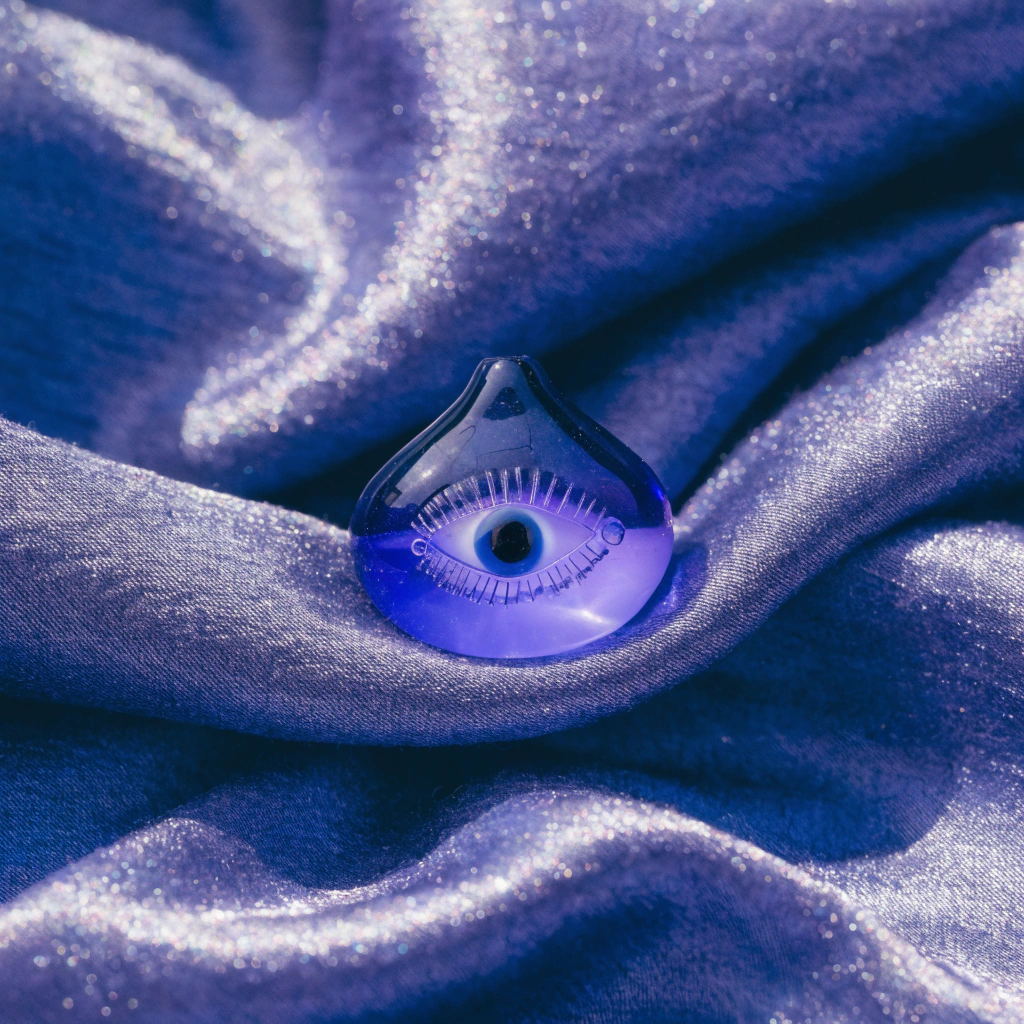
The Blue Eye of Turkey
Turkey is a beautiful country with many traditions. In Turkey, you see many blue eyes. These are called Nazar Boncugu. They are small and made of blue glass. People put them in their houses, offices, and cars. They also wear them on their clothes.
The blue eye is for protection. People believe it stops bad luck and bad feelings. It is a very important symbol of Turkish culture. When you walk in a street, you see the eye everywhere. It is a popular gift for family and friends. Everyone in Turkey knows and loves the Nazar Boncugu.
Grammar Spotlight
Pattern: Present Simple 'Be'
"Turkey is a beautiful country."
We use 'is' with singular subjects like 'Turkey' to describe a fact. It connects the subject to an adjective or noun.
Pattern: Present Simple with Plural Subjects
"People put them in their houses."
When the subject is plural like 'People', we use the base form of the verb. We do not add 's' to the end of the verb.
Test Your Understanding
10 questions · A1 Beginner · 1 free preview
Test what you learned from this article. Answer all questions to earn XP!
What color is the Nazar Boncugu?
Want to finish the quiz?
9 more questions are waiting for you. Sign up free to unlock the full quiz and earn XP!
Sign Up FreeAlready have an account? Sign In
Question Breakdown
What color is the Nazar Boncugu?
Your answer:
Correct answer: Blue
The Nazar Boncugu is made of wood.
Your answer:
Correct answer: False
What is a 'gift'?
Your answer:
Correct answer: Something you give to a friend
The blue eye is for _____.
Your answer:
Correct answer: protection
The Blue Eye: Turkey's Famous Amulet
When you visit Turkey, you will see blue glass eyes everywhere. These are called Nazar Boncuğu. They are very famous in Turkish culture. People believe that a jealous look can bring bad luck, illness, or problems. This belief is called the 'evil eye.'
The amulet is usually round and blue because people think this color has special power. It is more common than any other souvenir in Turkey. You can find them in houses, cars, and even on baby clothes. People use them because they want to protect their families from bad energy.
This tradition is older than many modern religions. In the past, people made them by hand with fire and glass. Today, they are still very important. If the glass eye breaks, people believe it is a good sign. It means the amulet protected you from bad luck and took the energy itself. Now, tourists buy them because they are beautiful and have a long history.
Grammar Spotlight
Pattern: Comparatives
"It is more common than any other souvenir in Turkey."
We use 'more + adjective + than' to compare two things. For long adjectives like 'common', we add 'more' before the word.
Pattern: Connector: Because
"People use them because they want to protect their families from bad energy."
The word 'because' is a connector used to give a reason. It connects the action (using the amulet) with the purpose (protecting the family).
Test Your Understanding
11 questions · A2 Elementary · 1 free preview
Test what you learned from this article. Answer all questions to earn XP!
What is the main color of the Nazar Boncuğu?
Want to finish the quiz?
10 more questions are waiting for you. Sign up free to unlock the full quiz and earn XP!
Sign Up FreeAlready have an account? Sign In
Question Breakdown
What is the main color of the Nazar Boncuğu?
Your answer:
Correct answer: Blue
People believe that a breaking amulet is a bad sign.
Your answer:
Correct answer: False
What does 'souvenir' mean?
Your answer:
Correct answer: Something you buy to remember a place
The amulet is usually round and _____ because people think this color is special.
Your answer:
Correct answer: blue
Why do people use the amulet?
Your answer:
Correct answer: To protect from bad luck
Nazar Boncuğu: The Blue Eye of Turkey
If you walk through the busy streets of Turkey, you will see thousands of blue eyes watching you. These small, glass circles are known as the "Nazar Boncuğu." They have been part of Turkish culture for a very long time. You can find them hanging in houses, pinned to baby clothes, or even attached to the mirrors of taxis.
The tradition is based on the ancient belief in "nazar," which is often translated as the "evil eye." Many people believe that a jealous look or even a compliment that is too strong can cause misfortune or illness. It is thought that the blue eye protects people by catching the negative energy before it can cause any harm. Because of this, the amulet has become a symbol of protection and safety.
The "Nazar Boncuğu" is usually made from blue glass, with white, light blue, and black circles in the center. The color blue is used because it has been considered a protective color in the Mediterranean region for centuries. These amulets are still handcrafted by local artisans who use traditional methods to melt the glass in hot ovens.
Today, the amulet has become more than just a religious or superstitious object. It has been transformed into a popular souvenir for tourists who visit Turkey. Although modern life has changed many things, this ancient tradition has remained a strong part of daily life. Whether you believe in its power or not, the "Nazar Boncuğu" is a beautiful piece of art that represents the history and hospitality of the Turkish people.
Grammar Spotlight
Pattern: Present Perfect
"They have been part of Turkish culture for a very long time."
The present perfect is used to describe a state or action that began in the past and continues to the present. It is formed using 'have' or 'has' plus the past participle.
Pattern: Passive Voice
"The 'Nazar Boncuğu' is usually made from blue glass..."
The passive voice is used when the focus is on the action or the object being acted upon, rather than who is doing it. It is formed using the verb 'to be' and the past participle.
Test Your Understanding
11 questions · B1 Intermediate · 1 free preview
Test what you learned from this article. Answer all questions to earn XP!
Why is the color blue used for the amulet?
Want to finish the quiz?
10 more questions are waiting for you. Sign up free to unlock the full quiz and earn XP!
Sign Up FreeAlready have an account? Sign In
Question Breakdown
Why is the color blue used for the amulet?
Your answer:
Correct answer: It is considered a protective color
The Nazar Boncuğu is only used by religious people in Turkey.
Your answer:
Correct answer: False
What is an 'artisan'?
Your answer:
Correct answer: A skilled worker who makes things by hand
The amulet has become a symbol of _____ and safety.
Your answer:
Correct answer: protection
Where can you find the Nazar Boncuğu in Turkey?
Your answer:
Correct answer: In houses, on clothes, and in taxis
The Unblinking Gaze: Deconstructing the Cultural Significance of the Nazar Boncuğu
Upon entering any Turkish bazaar or wandering through the narrow alleys of Istanbul, one is immediately struck by the pervasive presence of cobalt-blue glass discs known as the Nazar Boncuğu. To the casual observer, these unblinking eyes might appear to be merely aesthetic trinkets or mass-produced souvenirs. However, for the people of Turkey, they represent a deeply rooted sociological phenomenon that transcends simple superstition. The concept of 'nazar'—the belief that an envious or even an overly complimentary glance can inadvertently cause misfortune, illness, or professional failure—is a fundamental pillar of Anatolian culture.
Historically, the belief in the 'evil eye' is not unique to the Middle East, yet in Turkey, it has been refined into a sophisticated cultural practice. It is based on the premise that human emotions, particularly envy, possess a tangible energy that can harm others. Consequently, the Nazar Boncuğu acts as a symbolic shield, designed to 'reflect' the malevolent gaze back at the onlooker or to shatter, thereby absorbing the negative energy before it can reach its intended target. This explains why the amulets are frequently gifted to those most vulnerable to envy, such as newborn babies, or those who have recently achieved significant success.
The craftsmanship behind these amulets is equally fascinating. Traditionally, they are handcrafted in specialized furnaces by glass masters who have inherited their skills through generations. The choice of cobalt blue is intentional, as ancient traditions suggest that this specific hue possesses protective qualities. While modern Turkey is a rapidly developing, largely secular nation, the tradition of the Nazar Boncuğu persists with remarkable tenacity. It bridges the gap between ancient mysticism and contemporary secularism, appearing in corporate offices and luxury vehicles just as frequently as in rural households.
Furthermore, it is often argued that the amulet serves as a vital social lubricant. By acknowledging the potential for envy in human interactions, the Nazar Boncuğu allows individuals to celebrate their successes without fear of social backlash. In this sense, the amulet is not just a protective charm; it is a mechanism for maintaining communal harmony. Despite the pressures of globalization and the rise of scientific rationalism, the unblinking blue eye remains an essential element of the Turkish identity, proving that some cultural narratives are too deeply ingrained to be discarded.
Grammar Spotlight
Pattern: Present Perfect Passive
"Historically, the belief in the 'evil eye' is not unique to the Middle East, yet in Turkey, it has been refined into a sophisticated cultural practice."
This structure (has/have + been + past participle) is used to describe an action that began in the past and continues to the present, focusing on the action rather than the person performing it. It emphasizes the historical development of the practice.
Pattern: Concessive Clauses with 'While'
"While modern Turkey is a rapidly developing, largely secular nation, the tradition of the Nazar Boncuğu persists with remarkable tenacity."
The conjunction 'while' is used here to introduce a contrast between two facts. It acknowledges the country's modernization while highlighting that traditional beliefs still remain strong.
Pattern: Passive Reporting Verbs
"Furthermore, it is often argued that the amulet serves as a vital social lubricant."
The structure 'it is + past participle + that' is a formal way to report opinions or beliefs without attributing them to a specific person. It is common in academic or analytical English.
Test Your Understanding
11 questions · B2 Upper Intermediate · 1 free preview
Test what you learned from this article. Answer all questions to earn XP!
According to the article, what is the primary function of the Nazar Boncuğu in Turkish culture?
Want to finish the quiz?
10 more questions are waiting for you. Sign up free to unlock the full quiz and earn XP!
Sign Up FreeAlready have an account? Sign In
Question Breakdown
According to the article, what is the primary function of the Nazar Boncuğu in Turkish culture?
Your answer:
Correct answer: To serve as a symbolic shield against envious glances
The belief in the 'evil eye' is a concept found only within the borders of Turkey.
Your answer:
Correct answer: False
What does the word 'inadvertently' mean in the context of the article?
Your answer:
Correct answer: Without meaning to; accidentally
The concept of 'nazar' is described as a fundamental _____ of Anatolian culture.
Your answer:
Correct answer: pillar
Why is the Nazar Boncuğu often gifted to newborn babies?
Your answer:
Correct answer: Because they are considered particularly vulnerable to envy
The Cobalt Sentinel: Deconstructing the Cultural Semiotics of the Nazar Boncuğu
Seldom does one traverse the bustling thoroughfares of a Turkish metropolis without encountering the unblinking, concentric circles of the Nazar Boncuğu. This cobalt-blue glass amulet, arguably the most pervasive manifestation of Turkish material culture, serves as a silent guardian against the perceived malevolence of the 'evil eye.' To the uninitiated, these trinkets might appear as mere aestheticized baubles for the tourist trade; however, for the local populace, they represent a complex negotiation between ancient superstition and modern life. It is the profound fear of 'nazar'—the notion that a covetous or even an inadvertently admiring glance can precipitate misfortune—that serves as the primary catalyst for the amulet’s ubiquity. This belief posits that human envy possesses a literal, destructive energy. Whether it be a newborn child, a flourishing business, or a newly purchased vehicle, any manifestation of success or beauty is deemed susceptible to this metaphysical vulnerability.
Consequently, the Nazar Boncuğu is employed as an apotropaic device, designed to 'reflect' the harmful gaze back upon the beholder, thereby neutralizing its potential for harm. Historically, the conceptualization of the evil eye is not unique to the Anatolian plateau, yet it is within Turkish culture that the practice has been most meticulously refined. The craftsmanship involved in creating these talismans is a tradition spanning millennia, particularly in the Aegean region. Master glassworkers utilize high-heat furnaces to fuse cobalt, copper, and arsenic, creating the distinctive 'eye' pattern. The choice of blue is not arbitrary; historically, blue was a rare and precious pigment, often associated with divinity and protection in various Mediterranean civilizations.
In the contemporary era, the Nazar Boncuğu has undergone a significant transformation. While its traditional role remains steadfast in rural heartlands, in urban centers, the amulet has been somewhat commodified. It now adorns everything from high-fashion jewelry to digital emojis. Some critics argue that this commercialization has diluted the spiritual sincerity of the practice. However, others contend that the amulet’s adaptation to the digital age proves its enduring relevance. Furthermore, the social dynamics surrounding the Nazar Boncuğu are worth examining. The act of gifting an amulet is often more significant than purchasing one for oneself. This reciprocal exchange reinforces social bonds and signals a lack of envy from the giver, thereby fostering a sense of mutual security. In a society where communal ties are paramount, the 'eye' acts as a silent mediator, ensuring that admiration does not inadvertently morph into a source of harm. Ultimately, the Nazar Boncuğu represents more than just a folkloric curiosity. It is a testament to the human desire for agency over the unseen forces of fate. By externalizing the internal fear of envy into a tangible glass object, the culture provides a mechanism for managing social anxiety and protecting communal harmony.
Grammar Spotlight
Pattern: Negative Inversion
"Seldom does one traverse the bustling thoroughfares of a Turkish metropolis without encountering the unblinking, concentric circles of the Nazar Boncuğu."
When negative or restrictive adverbs like 'seldom' or 'never' start a sentence, the auxiliary verb comes before the subject. This is used for emphasis and stylistic flair in formal English.
Pattern: Cleft Sentences
"It is the profound fear of 'nazar'... that serves as the primary catalyst for the amulet’s ubiquity."
A cleft sentence is used to focus on a specific part of the sentence (the fear of nazar). It follows the structure: It + is/was + [focused element] + that/who/which clause.
Pattern: Nominalization
"The conceptualization of the evil eye is not unique to the Anatolian plateau."
Nominalization involves turning verbs or adjectives into nouns (conceptualize -> conceptualization). This creates a more academic and formal tone typical of C1 level writing.
Test Your Understanding
12 questions · C1 Advanced · 1 free preview
Test what you learned from this article. Answer all questions to earn XP!
What is the primary psychological function of the Nazar Boncuğu according to the text?
Want to finish the quiz?
11 more questions are waiting for you. Sign up free to unlock the full quiz and earn XP!
Sign Up FreeAlready have an account? Sign In
Question Breakdown
What is the primary psychological function of the Nazar Boncuğu according to the text?
Your answer:
Correct answer: To manage social anxiety regarding envy and fate
The belief in the 'evil eye' originated exclusively within Turkish culture.
Your answer:
Correct answer: False
Which word describes an object used to avert evil influences?
Your answer:
Correct answer: Apotropaic
The text suggests that the amulet acts as a silent _____ in social interactions.
Your answer:
Correct answer: mediator
Why was the color blue historically chosen for the amulet?
Your answer:
Correct answer: It was associated with divinity and protection
Gifting a Nazar Boncuğu is often considered more culturally significant than buying one for yourself.
Your answer:
Correct answer: True
The Sentinel of Anatolia: An Analytical Discourse on the Nazar Boncuğu
The omnipresence of the cobalt-blue ocular charm in Turkey—the Nazar Boncuğu—is not merely a testament to a lingering folk superstition but rather an intricate socio-cultural phenomenon that bridges the chasm between ancient Anatolian mysticism and contemporary secular identity. Were one to traverse the labyrinthine streets of Istanbul or the sun-drenched coastal towns of the Aegean, the encounter with these unblinking glass eyes would be inescapable. While the casual observer might dismiss them as quaint trinkets for the burgeoning tourist trade, their provenance is deeply rooted in the apotropaic tradition—the use of magic to avert evil influences.
Central to this practice is the concept of 'Nazar,' a term derived from the Arabic for 'sight' or 'vision.' It denotes the pernicious power of the 'envious eye,' a belief that an admiring glance, if not tempered by divine protection, can inadvertently manifest as misfortune, illness, or even structural failure. It is a psychological safeguard against the volatility of fortune; should an individual achieve sudden prosperity or display exceptional beauty, the subsequent gaze of the 'other' is perceived as a potential vector for malevolence. Thus, the Nazar Boncuğu serves as a prophylactic, a metaphysical lightning rod designed to attract and shatter the harmful energy before it can coalesce into a tangible curse.
The aesthetic of the amulet is as deliberate as its purpose. Traditionally hand-crafted in furnace-heated glass, its concentric circles of blue, white, and yellow mimic the human eye. The choice of cobalt blue is particularly significant, historically associated in the Mediterranean basin with protection and divinity. Seldom has a symbol maintained such consistency in form while undergoing such a radical shift in context. In contemporary Turkey, the amulet has been largely aestheticized, appearing on everything from high-fashion accessories to digital emojis. Yet, despite this commercial proliferation, the underlying cultural anxiety remains palpable. Even the most secular citizens might find themselves pinning a small glass eye to a newborn’s garment, lest they inadvertently invite tragedy by failing to acknowledge the weight of tradition.
From an anthropological perspective, the Nazar Boncuğu represents a fascinating instance of cultural syncretism. It synthesizes elements of shamanistic heritage, Islamic tradition, and ancient Mediterranean lore into a singular, ubiquitous icon. The fragility of the glass is itself a functional component of its talismanic nature; it is widely believed that if an amulet cracks or shatters, it has successfully absorbed a blow intended for its owner. In this sense, the object’s destruction is a celebratory event, signifying the efficacy of its protection.
Furthermore, the discourse surrounding the 'evil eye' provides a window into the collective psyche of a society that values communal harmony over individualistic ostentation. By attributing misfortune to an external, mystical force rather than personal failure or mere coincidence, the belief system offers a mechanism for social cohesion and psychological resilience. It is imperative that we view the Nazar Boncuğu not as a relic of an unenlightened past, but as a sophisticated tool for navigating the precariousness of human existence. As Turkey continues to modernize, the unblinking blue eye remains a steadfast sentinel, watching over a nation that, while looking toward the future, refuses to avert its gaze from the wisdom of its ancestors.
Grammar Spotlight
Pattern: Inverted Conditional
"Were one to traverse the labyrinthine streets of Istanbul... the encounter with these unblinking glass eyes would be inescapable."
This is a formal alternative to 'If one were to traverse'. It uses inversion to create a more literary or scholarly tone, typical of C2 writing.
Pattern: Negative Inversion
"Seldom has a symbol maintained such consistency in form while undergoing such a radical shift in context."
When a negative or restrictive adverb like 'seldom' starts a sentence, the auxiliary verb and subject are inverted for emphasis.
Pattern: Negative Subjunctive with 'Lest'
"...lest they inadvertently invite tragedy by failing to acknowledge the weight of tradition."
The word 'lest' is followed by the base form of the verb (subjunctive) to express a fear or to prevent a negative outcome.
Test Your Understanding
12 questions · C2 Mastery · 1 free preview
Test what you learned from this article. Answer all questions to earn XP!
What is the primary function of the Nazar Boncuğu according to the text?
Want to finish the quiz?
11 more questions are waiting for you. Sign up free to unlock the full quiz and earn XP!
Sign Up FreeAlready have an account? Sign In
Question Breakdown
What is the primary function of the Nazar Boncuğu according to the text?
Your answer:
Correct answer: To act as a metaphysical lightning rod to deflect harmful energy
The text suggests that the belief in the 'evil eye' is purely a relic of the past and is no longer practiced by secular citizens.
Your answer:
Correct answer: False
Which word describes the amalgamation of different cultural and religious traditions?
Your answer:
Correct answer: Syncretism
The amulet is considered _____ because it is present everywhere in Turkish society.
Your answer:
Correct answer: ubiquitous
What does the shattering of a glass amulet traditionally signify?
Your answer:
Correct answer: That the object successfully protected its owner from a blow
The term 'Nazar' originates from the Arabic word for 'vision'.
Your answer:
Correct answer: True
