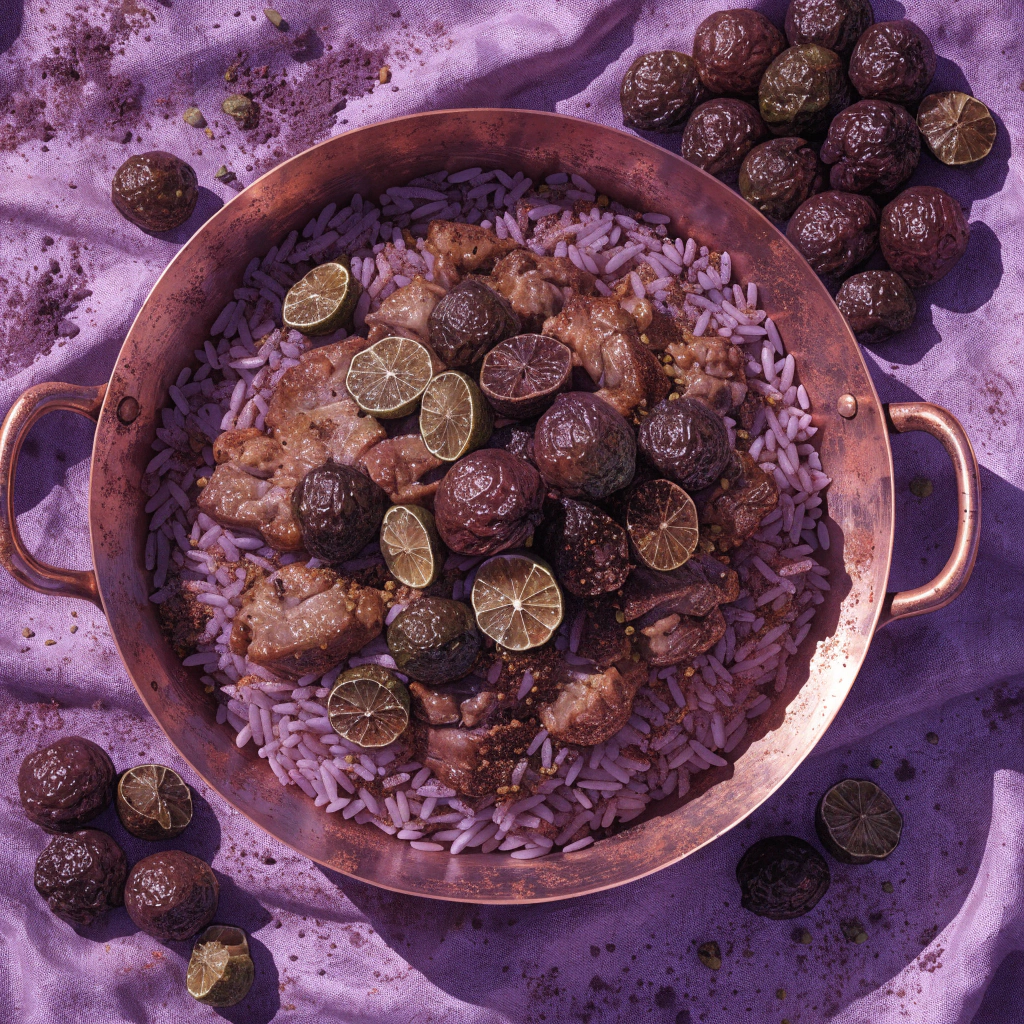
Machboos: A Tasty Meal in the UAE
Machboos is a very famous food in the United Arab Emirates. It is the national dish. People usually eat this meal for lunch. It is very popular in every home.
The dish has rice, meat, and many spices. You can use chicken, lamb, or fish. People also use loomi. This is a special dried black lime. It gives the food a sour taste.
Families cook Machboos in one big pot. They sit together and eat. The food is very delicious. Many people in the UAE love this traditional meal. It is a part of their culture.
Grammar Spotlight
Pattern: Present Simple 'To Be'
"It is the national dish."
We use 'is' with singular subjects like 'it' to state facts. This helps describe what something is.
Pattern: Present Simple for Habits
"People usually eat this meal for lunch."
We use the base verb 'eat' for plural subjects like 'people'. This pattern describes things that happen regularly.
Test Your Understanding
10 questions · A1 Beginner · 1 free preview
Test what you learned from this article. Answer all questions to earn XP!
Where is Machboos a famous food?
Want to finish the quiz?
9 more questions are waiting for you. Sign up free to unlock the full quiz and earn XP!
Sign Up FreeAlready have an account? Sign In
Question Breakdown
Where is Machboos a famous food?
Your answer:
Correct answer: In the United Arab Emirates
Machboos has rice and meat.
Your answer:
Correct answer: True
What does 'delicious' mean?
Your answer:
Correct answer: Very good taste
Families cook Machboos in one big _____.
Your answer:
Correct answer: pot
Machboos: The Most Famous Dish in the UAE
Machboos is the most famous food in the United Arab Emirates. It is the national dish and people usually eat it for lunch. Families enjoy this meal together, especially on Fridays because it is a special day.
The dish has rice, meat, and many spices. You can use chicken, lamb, or fish. The most important ingredient is the 'loomi.' These are dried black limes. They give the rice a sour and special taste that people love.
To make Machboos, the cook first fries onions and garlic in a big pot. Then, they add a special spice mix called 'Bezar.' This mix has many different flavors. After that, they cook the meat with water. Finally, they put the rice in the pot and wait for it to be ready.
Many people think Machboos is tastier than other rice dishes because the rice absorbs all the flavors from the meat and spices. It is a very healthy and traditional meal for everyone in the UAE. It is a great way to learn about Emirati culture.
Grammar Spotlight
Pattern: Superlatives
"Machboos is the most famous food in the United Arab Emirates."
We use superlatives to compare one thing to a whole group. For long adjectives like 'famous', we use 'the most' before the adjective.
Pattern: Comparatives
"Many people think Machboos is tastier than other rice dishes..."
We use comparatives to compare two things. For short adjectives ending in 'y', we change the 'y' to 'i' and add 'er' plus 'than'.
Test Your Understanding
11 questions · A2 Elementary · 1 free preview
Test what you learned from this article. Answer all questions to earn XP!
What is the most important ingredient in Machboos?
Want to finish the quiz?
10 more questions are waiting for you. Sign up free to unlock the full quiz and earn XP!
Sign Up FreeAlready have an account? Sign In
Question Breakdown
What is the most important ingredient in Machboos?
Your answer:
Correct answer: Loomi
People usually eat Machboos for breakfast.
Your answer:
Correct answer: False
What does 'traditional' mean?
Your answer:
Correct answer: Something done for a long time
Families enjoy this meal _____.
Your answer:
Correct answer: together
What is 'Bezar'?
Your answer:
Correct answer: A spice mix
The Heart of Emirati Cuisine: Discovering Machboos
Machboos is the most famous dish in the United Arab Emirates, and it has been enjoyed by families for generations. This traditional meal, which is often called the national dish, consists of spiced rice and meat. Although many countries in the Middle East have similar rice dishes, the Emirati version has a unique taste because of its special ingredients.
The preparation of Machboos is a careful process. First, onions and garlic are sautéed with a blend of spices known as Bezar. This local spice mix, which includes cinnamon, cardamom, and turmeric, gives the dish its deep flavor. The meat, which can be chicken, lamb, or fish, is cooked slowly until it is tender. One of the most important ingredients is 'loomi,' or dried black limes. These limes provide a sour taste that balances the rich spices.
In Emirati culture, Machboos is not just food; it represents hospitality. It is usually served on a large platter so that everyone can share the meal together. Recently, Machboos has become popular with tourists who visit Dubai and Abu Dhabi. Many local restaurants have added it to their menus to show the authentic flavors of the region.
If you have never tried Machboos, you should definitely taste it during your next trip to the UAE. It is a dish that has been perfected over many years, and it continues to be a favorite part of daily life. Whether it is cooked at home or in a restaurant, it remains a symbol of Emirati tradition.
Grammar Spotlight
Pattern: Present Perfect
"Recently, Machboos has become popular with tourists who visit Dubai and Abu Dhabi."
The present perfect (has/have + past participle) is used for actions that happened in the past but are connected to the present. Here, it describes a recent change in popularity.
Pattern: Passive Voice
"This traditional meal, which is often called the national dish, consists of spiced rice and meat."
The passive voice (is/are + past participle) is used when the focus is on the object of the action. It is common in formal writing or when the person doing the action is obvious or unknown.
Test Your Understanding
11 questions · B1 Intermediate · 1 free preview
Test what you learned from this article. Answer all questions to earn XP!
What ingredient gives Machboos its unique sour taste?
Want to finish the quiz?
10 more questions are waiting for you. Sign up free to unlock the full quiz and earn XP!
Sign Up FreeAlready have an account? Sign In
Question Breakdown
What ingredient gives Machboos its unique sour taste?
Your answer:
Correct answer: Loomi
Machboos is only served in private homes and cannot be found in restaurants.
Your answer:
Correct answer: False
What does 'authentic' mean in the context of the article?
Your answer:
Correct answer: Real and traditional
The meat used in Machboos is cooked until it is _____.
Your answer:
Correct answer: tender
How is Machboos usually served to represent hospitality?
Your answer:
Correct answer: On a large platter for sharing
Machboos: The Culinary Soul of the United Arab Emirates
In the heart of Emirati culture lies a dish that transcends mere sustenance, serving as a powerful symbol of national identity and hospitality. Machboos, often referred to as the undisputed king of the UAE's lunch table, is a sophisticated rice-based meal that reflects the rich history of trade and tradition in the Arabian Peninsula. While various spiced rice dishes like Biryani or Kabsa are prevalent throughout the Middle East, the Emirati Machboos is distinguished by its unique aromatic profile and the specific use of local ingredients. This dish is not merely a meal; it is a synthesis of history, meticulously crafted through generations of culinary practice.
The defining characteristic of Machboos is the 'Bezar' spice blend. This homegrown mixture typically includes cumin, coriander, cinnamon, and turmeric, creating a flavor profile that is both complex and deeply comforting. However, what truly sets the Emirati version apart is the inclusion of 'loomi'—dried black limes. These limes provide a subtle, citrusy acidity that balances the richness of the meat and the warmth of the spices. Whether the protein chosen is lamb, chicken, or a local fish such as Kingfish, the preparation remains an art form that requires patience and precision.
The cooking process begins with the meat being sautéed alongside onions and garlic until a golden-brown crust is achieved. Subsequently, the Bezar and loomi are added, allowing the aromas to permeate the kitchen. Water is then introduced, and the mixture is left to simmer, which ensures the meat becomes exceptionally tender while creating a flavorful broth. Once the meat has reached the desired consistency, it is removed, and the long-grain basmati rice is cooked directly in the remaining liquid. This technique allows every grain of rice to absorb the essence of the spices and the meat, resulting in a cohesive and flavorful dish.
Furthermore, Machboos serves a significant social function. In Emirati households, it is traditionally served on a large communal platter, encouraging a sense of unity and shared experience among diners. Consequently, the dish has remained a staple at weddings, religious festivals, and family gatherings, despite the rapid modernization of the UAE. Although international cuisines have become widely available in cities like Dubai and Abu Dhabi, Machboos continues to hold a quintessential place in the hearts of the local population. It represents a link to the past, reminding citizens of their nomadic ancestors while remaining a vibrant part of contemporary life.
Grammar Spotlight
Pattern: Passive Voice
"The cooking process begins with the meat being sautéed alongside onions and garlic until a golden-brown crust is achieved."
The passive voice is used here to focus on the action (sautéing and achieving a crust) rather than the person doing it. It is formed using a form of 'to be' plus the past participle.
Pattern: Relative Clauses
"In the heart of Emirati culture lies a dish that transcends mere sustenance..."
The relative pronoun 'that' introduces a clause that provides essential information about 'a dish'. This structure allows for more complex descriptions in a single sentence.
Pattern: Discourse Markers for Consequence
"Consequently, the dish has remained a staple at weddings, religious festivals, and family gatherings..."
'Consequently' is a formal transition word used to show the result of a previous statement. It helps create a logical flow in academic or formal writing.
Test Your Understanding
11 questions · B2 Upper Intermediate · 1 free preview
Test what you learned from this article. Answer all questions to earn XP!
What is the primary factor that distinguishes Emirati Machboos from other regional rice dishes?
Want to finish the quiz?
10 more questions are waiting for you. Sign up free to unlock the full quiz and earn XP!
Sign Up FreeAlready have an account? Sign In
Question Breakdown
What is the primary factor that distinguishes Emirati Machboos from other regional rice dishes?
Your answer:
Correct answer: The specific spice profile and the use of 'loomi'
The meat is typically boiled in water before being sautéed with onions.
Your answer:
Correct answer: False
What does 'quintessential' mean in the context of the article?
Your answer:
Correct answer: Representing the most typical or perfect example
The 'loomi' provides a citrusy _____ that balances the richness of the meat.
Your answer:
Correct answer: acidity
According to the text, why is the rice cooked in the remaining broth?
Your answer:
Correct answer: To allow the rice to absorb the essence of the spices and meat
Culinary Heritage and National Identity: The Socio-Cultural Significance of Emirati Machboos
Seldom does a single dish encapsulate the multifaceted history of a nation as poignantly as Machboos does for the United Arab Emirates. Often heralded as the undisputed sovereign of the Emirati lunch table, Machboos is far more than a mere culinary staple; it is a gastronomic testament to the UAE’s historical position as a nexus of maritime trade. While regional variations of spiced rice dishes, such as the Saudi Kabsa or the Indian-influenced Biryani, are ubiquitous across the Middle East, the Emirati iteration possesses a distinct identity forged through a specific aromatic profile and traditional preparation methods.
The meticulous assembly of 'Bezar', a bespoke homegrown spice blend, represents a confluence of global influences and local ingenuity. This amalgamation typically includes peppercorns, cumin, coriander, and cinnamon, yet it is the inclusion of 'loomi'—sun-dried black limes—that provides the dish with its characteristic citrusy depth. The preparation begins with the searing of protein—be it succulent lamb, chicken, or local fish like Kingfish—followed by a slow-tempering of onions and garlic. This foundational layer ensures that the subsequent addition of long-grain rice absorbs the nuanced essence of the broth, resulting in a dish that is both robust and sophisticated.
What distinguishes the Emirati approach to Machboos from its neighbors is not merely the ingredients, but the cultural philosophy underpinning its consumption. In an era of rapid globalization and the influx of international fast-food chains, the persistence of Machboos as a weekend ritual serves as an immutable anchor for national identity. It is an enactment of 'Karam' (generosity), a quintessential Khaleeji value where the communal plate serves as a space for social cohesion. The act of sharing Machboos transcends the simple intake of sustenance; it is a deliberate preservation of heritage against the tide of modernity.
Furthermore, the dish offers a fascinating lens through which to observe the evolution of Emirati society. Historically, the choice of protein was dictated by geography—coastal communities favored fish, while desert-dwelling Bedouins relied on camel or goat. Today, the ubiquity of chicken and lamb reflects the shifts in economic prosperity and logistics. However, despite these adaptations, the core technique remains sacred. The slow-cooking process, which allows the tartness of the loomi to permeate the rice, creates a sensory experience that is deeply evocative for any Emirati.
Ultimately, Machboos remains a resilient symbol of the UAE’s cultural landscape. Its ability to incorporate foreign spices while maintaining a distinct local character mirrors the nation’s broader historical trajectory. For the language learner, understanding the nuances of Machboos is not just a lesson in vocabulary, but an invitation to appreciate the complex interplay between tradition, trade, and the enduring power of the communal table.
Grammar Spotlight
Pattern: Inversion
"Seldom does a single dish encapsulate the multifaceted history of a nation as poignantly as Machboos does for the United Arab Emirates."
Inversion is used after negative or restrictive adverbs (like 'seldom' or 'never') to add emphasis. The auxiliary verb 'does' is placed before the subject 'a single dish'.
Pattern: Cleft Sentence
"It is the inclusion of 'loomi'—sun-dried black limes—that provides the dish with its characteristic citrusy depth."
A cleft sentence focuses on a specific part of the information by using 'It is/was... that...'. This structure highlights 'the inclusion of loomi' as the primary cause of the flavor.
Pattern: Nominalisation
"The meticulous assembly of 'Bezar', a bespoke homegrown spice blend, represents a confluence of global influences and local ingenuity."
Nominalisation involves turning verbs (assemble) or adjectives into nouns (assembly). This creates a more formal, academic tone suitable for C1 level writing.
Test Your Understanding
12 questions · C1 Advanced · 1 free preview
Test what you learned from this article. Answer all questions to earn XP!
What is identified as the primary factor distinguishing Emirati Machboos from other regional rice dishes?
Want to finish the quiz?
11 more questions are waiting for you. Sign up free to unlock the full quiz and earn XP!
Sign Up FreeAlready have an account? Sign In
Question Breakdown
What is identified as the primary factor distinguishing Emirati Machboos from other regional rice dishes?
Your answer:
Correct answer: The specific use of loomi and the Bezar spice blend
The article suggests that Machboos has been largely replaced by international fast food in Emirati households.
Your answer:
Correct answer: False
What does the word 'immutable' mean in the context of the article?
Your answer:
Correct answer: Unchanging and fixed over time
The act of sharing Machboos transcends the simple intake of _____; it is a deliberate preservation of heritage.
Your answer:
Correct answer: sustenance
How did geography historically influence the preparation of Machboos?
Your answer:
Correct answer: It dictated the specific protein used based on the community's environment
The preparation of Machboos begins by boiling the rice before adding any spices or meat.
Your answer:
Correct answer: False
The Gastronomic Semiotics of Machboos: A Socio-Cultural Analysis of the Emirati National Dish
Were one to traverse the multifaceted culinary landscape of the United Arab Emirates, the preeminence of Machboos would become immediately apparent. Far from being a mere sustenance-providing staple, Machboos functions as a quintessential palimpsest of the nation’s history, trade, and social stratification. While the uninitiated might erroneously conflate it with the Saudi Kabsa or the Indian Biryani, such a reductionist view ignores the clandestine nuances that define the Emirati iteration. The dish is an olfactory masterpiece, constructed upon a foundation of long-grain rice and protein—be it lamb, chicken, or the locally revered Kingfish—yet its soul resides in the complex interplay of spices known as 'Bezar' and the inclusion of 'loomi'.
The preparation of 'Bezar' is often a closely guarded heirloom, suggesting a clandestine transmission of ancestral knowledge across generations. This artisanal blend typically incorporates dried red chili, cumin, coriander, and turmeric, yet it is the idiosyncratic proportions that bestow upon each household’s Machboos a unique verisimilitude of tradition. Furthermore, the utilization of 'loomi'—sun-dried black limes—introduces a distinctive acidity that cuts through the richness of the meat. It is imperative that the 'loomi' be pierced subtly to release its astringent essence without compromising the structural integrity of the fruit, a technique that requires both patience and precision. One might posit that this specific ingredient serves as a pithy reminder of the UAE’s maritime heritage, harking back to an era when preserved goods were the lifeblood of seafaring merchants.
From a sociological perspective, the consumption of Machboos is an egalitarian ritual. Despite the rapid modernization and the influx of globalized fine dining, the act of sharing a singular, large platter of Machboos remains a vestige of communalism in an increasingly atomized world. The seating arrangement, typically on the floor, facilitates a horizontal social structure where discourse flows as freely as the spiced rice. It is widely conjectured that the persistence of this tradition serves as a cultural anchor, providing a sense of ontological security amidst the whirlwind of urban development. The dish, therefore, is not merely a culinary artifact but a living testament to the resilience of Emirati identity.
Moreover, the aesthetic presentation of the dish, often garnished with 'hashu'—a mixture of fried onions, raisins, and split peas—adds layers of textural complexity. The sweet and savory dichotomy within the hashu provides a sensory counterpoint to the piquant rice, ensuring that the palate remains engaged throughout the meal. Should a researcher examine the evolution of this dish, they would find that despite minor contemporary adaptations, the core methodology remains remarkably stagnant, reflecting a profound respect for culinary heritage. In conclusion, Machboos is more than a national dish; it is a semiotic vessel through which the history, values, and aspirations of the UAE are perpetually communicated and consumed.
Grammar Spotlight
Pattern: Inverted Conditionals
"Were one to traverse the multifaceted culinary landscape of the United Arab Emirates, the preeminence of Machboos would become immediately apparent."
This formal structure replaces 'If one were to traverse'. It is used in C2 academic writing to express hypothetical situations with a high degree of formality.
Pattern: Subjunctive Mood
"It is imperative that the 'loomi' be pierced subtly to release its astringent essence."
The base form of the verb ('be') is used after adjectives of urgency or importance (imperative, essential, crucial). It emphasizes the necessity of the action.
Pattern: Academic Hedging
"One might posit that this specific ingredient serves as a pithy reminder of the UAE’s maritime heritage."
Using 'might posit' or 'widely conjectured' allows the author to make claims without sounding overly dogmatic, which is a hallmark of scholarly C2 prose.
Test Your Understanding
12 questions · C2 Mastery · 1 free preview
Test what you learned from this article. Answer all questions to earn XP!
According to the text, what prevents Machboos from being a simple 'reductionist' version of Biryani?
Want to finish the quiz?
11 more questions are waiting for you. Sign up free to unlock the full quiz and earn XP!
Sign Up FreeAlready have an account? Sign In
Question Breakdown
According to the text, what prevents Machboos from being a simple 'reductionist' version of Biryani?
Your answer:
Correct answer: The clandestine nuances and specific spice profiles like Bezar and loomi
The author suggests that the preparation of Bezar is a public knowledge shared openly between all families.
Your answer:
Correct answer: False
What does 'palimpsest' mean in the context of the article?
Your answer:
Correct answer: A multilayered record of history and culture
The author describes the sharing of a large platter as an _____ ritual that promotes social equality.
Your answer:
Correct answer: egalitarian
What role does the 'loomi' play in the dish's flavor profile?
Your answer:
Correct answer: It introduces a distinctive acidity and astringent essence
The text implies that Machboos helps maintain a sense of identity amidst rapid urban change.
Your answer:
Correct answer: True
