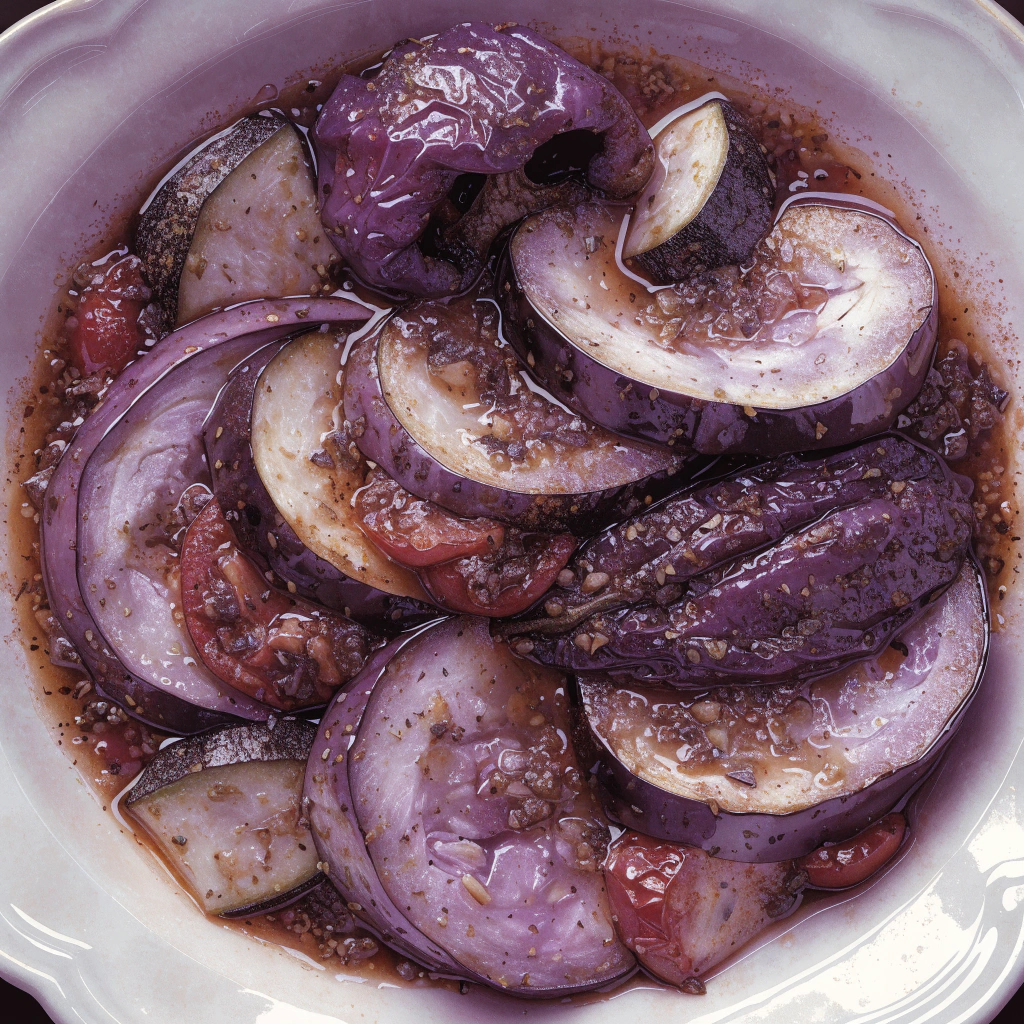
A Tasty Dish from France
Ratatouille is a famous food from France. It comes from a city called Nice. It is a healthy vegetable dish for the summer.
People use many fresh vegetables for this meal. They use red tomatoes, onions, and green peppers. They also use zucchini and eggplant. These vegetables are very good for you.
The name Ratatouille means to stir. It is easy to cook at home. You put the vegetables in a big pot. You stir them together over a fire. Many people love this tasty meal. It is popular all over the world.
Grammatik-Spotlight
Muster: Present Simple (To Be)
"Ratatouille is a famous food from France."
We use 'is' for singular subjects to state facts or descriptions. It connects the subject to a noun or adjective.
Muster: Present Simple (Action Verbs)
"You put the vegetables in a big pot."
We use the base form of the verb for 'you' in the present simple. This describes a regular action or a process.
Teste dein Verständnis
10 Fragen · A1 Anfänger · 1 kostenlose Vorschau
Teste, was du aus diesem Artikel gelernt hast. Beantworte alle Fragen und sammle XP!
Where does Ratatouille come from?
Möchtest du das Quiz beenden?
9 weitere Fragen warten auf dich. Registriere dich kostenlos, um das vollständige Quiz freizuschalten und XP zu sammeln!
Kostenlos registrierenHast du schon ein Konto? Anmelden
Gut gemacht!
Weiter üben!
Bereits abgeschlossen — keine zusätzlichen XP
Registriere dich, um XP zu verdienenFragenübersicht
Where does Ratatouille come from?
Deine Antwort:
Richtige Antwort: Nice
Ratatouille is a healthy dish with meat.
Deine Antwort:
Richtige Antwort: Falsch
What does 'tasty' mean?
Deine Antwort:
Richtige Antwort: Good flavor
You put the vegetables in a big _____.
Deine Antwort:
Richtige Antwort: pot
Ratatouille: A Delicious French Tradition
Ratatouille is a famous vegetable dish from France. It started in the city of Nice, which is near the sea. People in the south of France love this meal because it is fresh and healthy. In the past, poor farmers created Ratatouille. They had many vegetables at the end of summer, and they did not want to throw them away. They cooked everything together in a big pot. It was simpler than modern recipes, but it tasted delicious. The name comes from the French word 'touiller.' This verb means 'to stir' or 'to toss.' To make it, you need tomatoes, zucchini, peppers, and eggplant. Today, Ratatouille is more popular than before. You can find it in expensive restaurants all over the world. Many people know the dish because of a famous movie. It is a great way to eat many different vegetables in one meal.
Grammatik-Spotlight
Muster: Past Simple
"It started in the city of Nice."
We use the past simple to talk about finished actions in the past. For regular verbs like 'start' and 'create', we add '-ed' to the end of the verb.
Muster: Comparatives
"Ratatouille is more popular than before."
We use comparatives to compare two things or times. For long adjectives like 'popular', we put the word 'more' before the adjective and 'than' after it.
Teste dein Verständnis
11 Fragen · A2 Grundkenntnisse · 1 kostenlose Vorschau
Teste, was du aus diesem Artikel gelernt hast. Beantworte alle Fragen und sammle XP!
Where did Ratatouille originally start?
Möchtest du das Quiz beenden?
10 weitere Fragen warten auf dich. Registriere dich kostenlos, um das vollständige Quiz freizuschalten und XP zu sammeln!
Kostenlos registrierenHast du schon ein Konto? Anmelden
Gut gemacht!
Weiter üben!
Bereits abgeschlossen — keine zusätzlichen XP
Registriere dich, um XP zu verdienenFragenübersicht
Where did Ratatouille originally start?
Deine Antwort:
Richtige Antwort: Nice
Ratatouille is a dish made with meat and fish.
Deine Antwort:
Richtige Antwort: Falsch
What does 'stir' mean?
Deine Antwort:
Richtige Antwort: To mix ingredients by moving them around
The name comes from the French _____ 'touiller'.
Deine Antwort:
Richtige Antwort: word
Why did farmers create this dish?
Deine Antwort:
Richtige Antwort: Because they had many vegetables and did not want to waste them
Ratatouille: From Humble Stew to French Masterpiece
Ratatouille is a traditional French dish which has become famous all over the world. It comes from the coastal city of Nice, located in the sunny south of France. This meal is the perfect celebration of summer vegetables, and it is usually served when the harvest is ready. For many people, the smell of cooked tomatoes and herbs reminds them of warm Mediterranean evenings.
The name "Ratatouille" comes from the French verb "touiller," which means to stir or toss. Originally, it was known as a "poor man's stew." It was created by farmers who needed to use up an abundance of late-summer vegetables before they spoiled. In the past, it was just a simple, messy mix of ingredients, but today it is considered a masterpiece of French cuisine. Over the years, the recipe has been improved by many talented cooks.
The dish is made with a variety of fresh ingredients like eggplant, zucchini, peppers, onions, and tomatoes. These vegetables are seasoned with garlic and local herbs. Many people believe that the secret to a great Ratatouille is cooking each vegetable separately before mixing them together. This method has been used by chefs for many years to ensure that every flavor is preserved. If the vegetables are cooked correctly, the result is a beautiful and colorful plate of food.
Recently, the dish has gained even more popularity because of the famous animated movie with the same name. Although it started as a humble meal for workers, it is now served in expensive restaurants. It has been transformed from a basic stew into a gourmet experience. Whether you eat it hot or cold, Ratatouille remains a healthy and delicious symbol of Mediterranean culture. It shows how simple ingredients can create something truly special.
Grammatik-Spotlight
Muster: Relative Clauses
"Ratatouille is a traditional French dish which has become famous all over the world."
Relative clauses use 'which', 'who', or 'that' to give more information about a noun. In this case, 'which' connects the dish to its international fame.
Muster: Passive Voice
"It was created by farmers who needed to use up an abundance of late-summer vegetables."
The passive voice is formed using 'be' + past participle. It is used here to focus on the dish rather than the specific farmers who made it.
Teste dein Verständnis
11 Fragen · B1 Mittelstufe · 1 kostenlose Vorschau
Teste, was du aus diesem Artikel gelernt hast. Beantworte alle Fragen und sammle XP!
Where does Ratatouille originally come from?
Möchtest du das Quiz beenden?
10 weitere Fragen warten auf dich. Registriere dich kostenlos, um das vollständige Quiz freizuschalten und XP zu sammeln!
Kostenlos registrierenHast du schon ein Konto? Anmelden
Gut gemacht!
Weiter üben!
Bereits abgeschlossen — keine zusätzlichen XP
Registriere dich, um XP zu verdienenFragenübersicht
Where does Ratatouille originally come from?
Deine Antwort:
Richtige Antwort: Nice
Ratatouille was originally an expensive meal for rich people.
Deine Antwort:
Richtige Antwort: Falsch
What does the word 'cuisine' mean?
Deine Antwort:
Richtige Antwort: A style of cooking from a specific place
The dish is made with a _____ of fresh ingredients like eggplant and tomatoes.
Deine Antwort:
Richtige Antwort: variety
What does the French verb 'touiller' mean?
Deine Antwort:
Richtige Antwort: To stir or toss
The Culinary Evolution of Ratatouille: From Humble Roots to Global Fame
Ratatouille, a quintessential dish hailing from the sun-drenched coastal city of Nice, represents much more than a mere vegetable stew. Its etymology is rooted in the Occitan word ‘ratatolha’ and the French verb ‘touiller,’ which literally translates to ‘to stir’ or ‘to toss.’ While it is currently celebrated on menus worldwide, its origins were significantly more modest than its modern reputation suggests. Historically, it was regarded as a ‘poor man’s stew,’ serving as a practical solution for farmers who needed to utilize an abundance of late-summer vegetables before they succumbed to the heat and spoiled.
The composition of a traditional ratatouille involves a harmonious blend of eggplant, zucchini, bell peppers, onions, and tomatoes, seasoned with aromatic Provencal herbs. However, the preparation methods have sparked considerable debate among culinary experts. Some insist that the vegetables should be sautéed separately before being combined, ensuring that each ingredient retains its distinct texture and flavor profile. Conversely, others advocate for a slow-simmered approach where the flavors meld into a rich, complex medley. Regardless of the technique, the dish exemplifies the Mediterranean philosophy of highlighting seasonal produce through patience and care.
In the contemporary gastronomic landscape, ratatouille has undergone a remarkable transformation. No longer confined to the rustic kitchens of Provence, it has been elevated to the heights of haute cuisine by world-renowned chefs. This evolution was further accelerated by popular culture, most notably through the eponymous animated film, which introduced the dish to a global audience. Nevertheless, despite its newfound sophistication and the intricate plating styles often seen today, the essence of ratatouille remains unchanged. It continues to be a celebration of resourcefulness and the vibrant bounty of the earth.
Moreover, the nutritional benefits of ratatouille cannot be overlooked. As it is predominantly plant-based and rich in antioxidants, it aligns perfectly with modern dietary trends focusing on wellness and sustainability. For many, the act of preparing ratatouille is a meditative process, requiring patience as the vegetables slowly soften and release their natural sugars. Ultimately, ratatouille serves as a poignant reminder that even the most humble ingredients, when treated with respect and culinary skill, can be transformed into a masterpiece that transcends cultural and social boundaries.
Grammatik-Spotlight
Muster: Passive Voice
"While it is currently celebrated on menus worldwide..."
The passive voice is used here to focus on the dish (the object) rather than who is celebrating it. It is formed using 'to be' + the past participle.
Muster: Relative Clauses
"...farmers who needed to utilize an abundance of late-summer vegetables..."
The relative pronoun 'who' introduces a clause that provides essential information about the 'farmers'. This helps combine ideas into complex sentences.
Muster: Gerund Phrases as Subjects/Adjectives
"...serving as a practical solution for farmers..."
The present participle 'serving' introduces a phrase that describes the function of the stew in the previous clause, acting as a secondary descriptor.
Teste dein Verständnis
11 Fragen · B2 Obere Mittelstufe · 1 kostenlose Vorschau
Teste, was du aus diesem Artikel gelernt hast. Beantworte alle Fragen und sammle XP!
What was the original social status associated with ratatouille?
Möchtest du das Quiz beenden?
10 weitere Fragen warten auf dich. Registriere dich kostenlos, um das vollständige Quiz freizuschalten und XP zu sammeln!
Kostenlos registrierenHast du schon ein Konto? Anmelden
Gut gemacht!
Weiter üben!
Bereits abgeschlossen — keine zusätzlichen XP
Registriere dich, um XP zu verdienenFragenübersicht
What was the original social status associated with ratatouille?
Deine Antwort:
Richtige Antwort: A poor man's stew
Culinary experts all agree that all vegetables in ratatouille must be cooked together from the start.
Deine Antwort:
Richtige Antwort: Falsch
Which word describes a 'varied mixture'?
Deine Antwort:
Richtige Antwort: Medley
The dish was created to use an _____ of vegetables before they spoiled.
Deine Antwort:
Richtige Antwort: abundance
According to the text, what helped accelerate the global fame of ratatouille?
Deine Antwort:
Richtige Antwort: An eponymous animated film
From Peasant Fare to Gastronomic Icon: The Transmutation of Ratatouille
Seldom has a rustic stew garnered such international acclaim as the Provençal ratatouille. Originating from the sun-drenched coastal city of Nice, this dish represents far more than a mere culinary assembly; it is the definitive celebration of Mediterranean summer produce. Its etymology, rooted in the Occitan 'ratatolha' and the French verb 'touiller'—meaning to stir or toss—alludes to its unpretentious beginnings. What began as a 'poor man’s stew' was essentially a pragmatic solution for farmers seeking to utilize an abundance of late-summer vegetables before the inevitable onset of spoilage. In those early days, the dish was a messy, vibrant jumble, reflecting the chaotic bounty of the harvest.
The transmutation of ratatouille from a simple farmhand's meal into a sophisticated gastronomic icon is a fascinating study in cultural perception and the evolution of taste. It is the meticulous layering of seasonal produce that distinguishes the modern iteration from its humble origins. While traditionalists argue for the rustic charm of a roughly chopped, slow-simmered medley where flavors bleed into one another, contemporary chefs often opt for the 'confit byaldi' style. This version, famously showcased in global cinema, demands an almost surgical precision. Thinly sliced rounds of zucchini, eggplant, and bell peppers are arranged in mesmerizing, concentric spirals, then slow-baked to preserve their individual integrity while achieving a collective tenderness.
The elevation of ratatouille to the upper echelons of haute cuisine serves as a testament to the prowess of French culinary philosophy, which prides itself on the transformation of the mundane into the extraordinary. However, this aesthetic shift is not without its critics. There exists a palpable ambivalence among culinary purists who argue that the over-refinement of the dish strips it of its communal soul. They contend that by prioritizing visual symmetry over the 'touiller' method, the dish loses the depth of flavor only found in the caramelization of a shared pot. This tension between tradition and innovation is a recurring theme in French heritage, sparking nuanced debates in kitchens across the country.
Furthermore, the quintessential nature of the dish remains anchored in the quality of its ingredients. The ephemeral sweetness of the bell peppers, the earthy depth of the eggplant, and the acidic brightness of the tomatoes must be in perfect equilibrium. To achieve this, a chef must display a certain level of technical prowess, ensuring that no single vegetable overpowers the others. This delicate balance is what allows the dish to remain a staple of both the family table and the Michelin-starred restaurant.
In analyzing the global resonance of ratatouille, one must also consider the role of nostalgia. For many, the dish evokes a profound sense of place and time—a longing for the simplified, seasonal rhythms of rural life that seem increasingly distant in our modern era. Whether served as a humble side dish or a meticulously plated centerpiece, its versatility is unmatched. Ultimately, the enduring popularity of ratatouille lies in its unique ability to reconcile the rustic with the refined. It proves that even the most modest ingredients, when treated with reverence and a touch of artistic flair, can achieve a state of sublime excellence that resonates across cultures and generations.
Grammatik-Spotlight
Muster: Negative Inversion
"Seldom has a rustic stew garnered such international acclaim as the Provençal ratatouille."
Inversion is used after negative or restrictive adverbs like 'seldom' to add emphasis. The auxiliary verb comes before the subject, creating a more formal and dramatic tone.
Muster: Cleft Sentences
"It is the meticulous layering of seasonal produce that distinguishes the modern iteration from its humble origins."
Cleft sentences (It + is/was + [emphasized part] + that/who) are used to focus on a specific piece of information. Here, it emphasizes the 'meticulous layering' as the key difference.
Muster: Nominalisation
"The elevation of ratatouille to the upper echelons of haute cuisine serves as a testament to the prowess of French culinary philosophy."
Nominalisation turns verbs (elevate) into nouns (elevation). This is a hallmark of C1 writing as it allows for more abstract, concise, and academic expression of complex ideas.
Teste dein Verständnis
12 Fragen · C1 Fortgeschritten · 1 kostenlose Vorschau
Teste, was du aus diesem Artikel gelernt hast. Beantworte alle Fragen und sammle XP!
According to the text, what was the primary reason for the creation of ratatouille?
Möchtest du das Quiz beenden?
11 weitere Fragen warten auf dich. Registriere dich kostenlos, um das vollständige Quiz freizuschalten und XP zu sammeln!
Kostenlos registrierenHast du schon ein Konto? Anmelden
Gut gemacht!
Weiter üben!
Bereits abgeschlossen — keine zusätzlichen XP
Registriere dich, um XP zu verdienenFragenübersicht
According to the text, what was the primary reason for the creation of ratatouille?
Deine Antwort:
Richtige Antwort: To utilize surplus vegetables before they went bad
The word 'ratatouille' is derived from a verb meaning to fry vegetables quickly.
Deine Antwort:
Richtige Antwort: Falsch
Which word describes something that lasts for a very short time?
Deine Antwort:
Richtige Antwort: Ephemeral
The ______ of ratatouille from a simple meal to an icon is a study in cultural perception.
Deine Antwort:
Richtige Antwort: transmutation
Why do some culinary purists feel ambivalence toward the 'confit byaldi' style?
Deine Antwort:
Richtige Antwort: It prioritizes visual appearance over traditional flavor depth
The article suggests that nostalgia plays a role in the global popularity of the dish.
Deine Antwort:
Richtige Antwort: Richtig
The Gastronomic Metamorphosis of Ratatouille: From Provencal Peasantry to Global Haute Cuisine
Seldom does a culinary creation encapsulate the spirit of a region as poignantly as ratatouille does for the sun-drenched coastal city of Nice. To truly appreciate this Mediterranean staple, one must delve into its nomenclature, which serves as a linguistic fossil of the Occitan language. Derived from 'ratatolha' and the French verb 'touiller'—meaning to stir or toss—the name itself implies a certain rustic haphazardness. Were it not for the seasonal abundance of the Mediterranean basin, this dish might never have transcended its status as a mere 'poor man's stew.' Originally, it was a practical solution for farmers who, faced with an impending surplus of late-summer vegetables, sought to prevent spoilage through a slow, communal simmering of eggplant, zucchini, peppers, and tomatoes.
Notwithstanding its humble origins, ratatouille has undergone a profound semiotic shift within the global gastronomic landscape. It is no longer viewed solely as a messy jumble of vegetables; rather, it has become a canvas for culinary refinement. It is imperative that the modern chef decide whether to adhere to the traditional 'en touillant' method, where vegetables are sautéed together until they reach a melded, jam-like consistency, or to embrace the meticulous aesthetics of the 'tian' or 'Confit Byaldi.' In the latter, the juxtaposition of thinly sliced produce arranged in concentric circles elevates the dish from a rustic comfort food to a visual masterpiece of haute cuisine. This evolution was perhaps most famously catalyzed by the 2007 Pixar film of the same name, which reimagined the dish as a catalyst for sensory memory and emotional resonance.
From an analytical perspective, ratatouille represents a quintessential alchemy of terroir. The success of the dish hinges upon the quality of the produce, demanding that each component be harvested at the peak of its ripeness. Should the vegetables be of inferior quality, no amount of seasoning can mask the lack of depth. Furthermore, the dish serves as an egalitarian symbol within French culture. It is a testament to the idea that sophisticated flavor profiles need not rely on expensive proteins or rare spices, but can instead emerge from the thoughtful preparation of the earth's most basic offerings. In an era increasingly concerned with sustainability and plant-forward diets, ratatouille stands as a beacon of historical foresight.
Furthermore, the preparation of ratatouille requires a certain degree of academic hedging regarding its 'authentic' recipe. Purists argue that each vegetable must be sautéed independently to preserve its structural integrity before being combined, lest the dish descend into a mushy, indistinct pulp. This level of meticulousness highlights the tension between the dish's egalitarian roots and its current status as a refined delicacy. Ultimately, whether served as a robust accompaniment or a standalone centerpiece, ratatouille remains an ephemeral celebration of summer—a dish that, despite its international renown, remains tethered to the rhythmic cycles of the Provencal soil. It is this very persistence of tradition, coupled with its capacity for reinvention, that ensures ratatouille's place in the pantheon of world-class cuisine.
Grammatik-Spotlight
Muster: Negative Inversion
"Seldom does a culinary creation encapsulate the spirit of a region as poignantly as ratatouille does for the sun-drenched coastal city of Nice."
Inversion is used here for rhetorical emphasis. When a sentence begins with a negative or restrictive adverb like 'seldom', the auxiliary verb is placed before the subject.
Muster: Present Subjunctive
"It is imperative that the modern chef decide whether to adhere to the traditional 'en touillant' method."
The subjunctive mood is used after adjectives of importance or necessity (imperative, essential, vital). Note that 'decide' remains in its base form despite the singular subject.
Muster: Inverted Conditional (Second Conditional)
"Were it not for the seasonal abundance of the Mediterranean basin, this dish might never have transcended its status as a mere 'poor man's stew.'"
This structure replaces 'If it were not for' with 'Were it not for' to create a more formal, academic tone. It describes a hypothetical situation in the past or present.
Teste dein Verständnis
12 Fragen · C2 Meisterschaft · 1 kostenlose Vorschau
Teste, was du aus diesem Artikel gelernt hast. Beantworte alle Fragen und sammle XP!
What does the etymology of the word 'ratatouille' suggest about its original preparation?
Möchtest du das Quiz beenden?
11 weitere Fragen warten auf dich. Registriere dich kostenlos, um das vollständige Quiz freizuschalten und XP zu sammeln!
Kostenlos registrierenHast du schon ein Konto? Anmelden
Gut gemacht!
Weiter üben!
Bereits abgeschlossen — keine zusätzlichen XP
Registriere dich, um XP zu verdienenFragenübersicht
What does the etymology of the word 'ratatouille' suggest about its original preparation?
Deine Antwort:
Richtige Antwort: It involved a process of stirring or tossing ingredients together.
The article suggests that ratatouille was originally created by wealthy aristocrats in Nice.
Deine Antwort:
Richtige Antwort: Falsch
Which word describes something that lasts for a very short period?
Deine Antwort:
Richtige Antwort: Ephemeral
The name of the dish is partly derived from the _____ word 'ratatolha'.
Deine Antwort:
Richtige Antwort: Occitan
According to the text, how has the perception of ratatouille changed over time?
Deine Antwort:
Richtige Antwort: It has shifted from a simple peasant stew to a dish associated with culinary refinement.
Purists of the dish argue that all vegetables should be cooked together in one pot from the start.
Deine Antwort:
Richtige Antwort: Falsch

