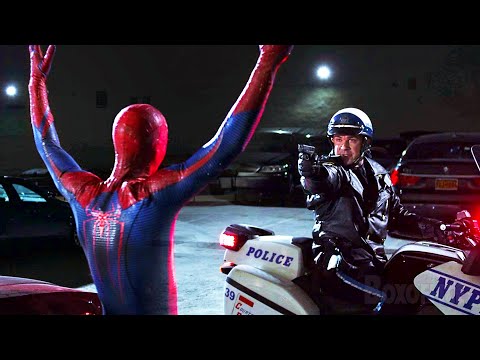
cop in 30 Sekunden
- Cop is a common informal noun used to refer to a police officer in everyday English conversation and media.
- The term is widely recognized globally due to its frequent use in movies, TV shows, and news headlines.
- While generally neutral, it should be avoided in formal writing or when addressing a police officer directly.
- It originates from the 19th-century verb 'to cop', meaning to seize or catch, rather than being an acronym.
The word cop is one of the most ubiquitous and enduring terms in the English language, serving as a primary informal designation for a police officer. While its origins are rooted in the 19th century, its contemporary usage spans across various social strata, media formats, and geographical regions. Understanding the word 'cop' requires more than just knowing it refers to law enforcement; it involves grasping the specific social frequency and the subtle shifts in tone that occur when one chooses this word over the more formal 'police officer' or 'constable'. In everyday conversation, 'cop' is the default term for many native speakers, used in stories, news headlines, and casual observations. It carries a sense of familiarity that 'police officer' lacks, often humanizing the individual behind the badge or, conversely, stripping away the institutional formality of the role. When you see a patrol car driving down the street, saying 'There goes a cop' feels natural and immediate. However, the word is not without its nuances. In some contexts, it can feel slightly dismissive, while in others, it is a term of respect among peers. The term is so deeply embedded in the lexicon that it has spawned numerous sub-terms and idioms that are essential for any B1-level learner to master. From the 'beat cop' walking the neighborhood to the 'traffic cop' directing cars at a busy intersection, the word provides a versatile shorthand for the complex machinery of law enforcement.
- Linguistic Register
- Informal and colloquial. While widely used in journalism and television, it is generally avoided in legal documents, formal reports, or when addressing an officer directly in a professional capacity, where 'Officer' or 'Sir/Ma'am' is preferred.
The neighborhood cop always waves to the children as he walks his morning route, making everyone feel a bit safer.
The word's versatility is evident in how it adapts to different emotional landscapes. In a high-stakes action movie, a character might shout, 'Cops! Run!'—here, the word is charged with urgency and perhaps a hint of defiance. In a heartwarming news story about a rescue, the headline might read, 'Local Cop Saves Kitten from Tree,' where the word feels approachable and heroic. This duality is a key feature of the term. It is also important to note that 'cop' is almost exclusively used as a noun in this context, though it can function as a verb meaning 'to seize' or 'to get' (as in 'to cop a plea'), which is a separate but related linguistic path. For a learner, the most important takeaway is that 'cop' is the word you will hear most often in movies, songs, and street-level English. It is the 'working man's' term for the police. It avoids the clinical coldness of 'law enforcement official' and the stiff formality of 'officer of the law'. By using 'cop', you are signaling a level of comfort with the English language that goes beyond textbook definitions.
- Geographic Variation
- While 'cop' is universal in the English-speaking world, it is particularly dominant in American English. In the UK, 'copper' is a frequent alternative, though 'cop' is perfectly understood and widely used due to the influence of American media.
I saw a cop pulling over a speeding car on the highway during my commute this morning.
Furthermore, the word 'cop' serves as a foundation for many compound nouns that describe specific roles within the police force. A 'rookie cop' is someone new to the job, often portrayed in media as eager but prone to mistakes. An 'undercover cop' is someone who disguises their identity to investigate criminal activity from the inside. These variations show how the word 'cop' is not just a label but a building block for describing the various facets of law enforcement life. In the realm of pop culture, the 'buddy cop' genre of films—where two mismatched partners must work together—has solidified the word's place in the global consciousness. Whether it is 'RoboCop' or the 'Beverly Hills Cop', the term is synonymous with the archetype of the urban protector. For the B1 learner, mastering 'cop' means gaining access to a vast array of cultural references and everyday expressions that make English feel more natural and less like a classroom exercise.
- Social Connotation
- The term is generally neutral to positive in casual conversation, but its tone can shift based on the speaker's attitude toward authority. It is far less offensive than terms like 'pig' but less formal than 'officer'.
The retired cop spent his afternoons teaching safety classes to the local teenagers.
You can't just park there; there's a cop right around the corner writing tickets.
Using the word cop correctly involves understanding its grammatical role as a countable noun and its placement within common sentence structures. Because it is an informal term, it fits most naturally in active, descriptive sentences that mirror spoken English. For instance, when describing an action, you might say, 'The cop chased the suspect through the alleyway.' Here, 'cop' acts as the subject, performing a clear, physical action. It can also be used in the plural form, 'cops', to refer to the police force as a whole or a group of officers. For example, 'The cops arrived just in time to stop the robbery.' This usage is very common in storytelling and news reporting where brevity is valued. When using 'cop' in a sentence, it is often accompanied by adjectives that provide more context about the officer's character or role. You might hear about a 'crooked cop' (one who is dishonest), a 'veteran cop' (one with many years of experience), or a 'beat cop' (one who patrols a specific area on foot). These modifiers help to paint a more vivid picture and are essential for moving beyond basic vocabulary.
- Common Subject-Verb Pairings
- Cops often: arrest, investigate, patrol, respond, protect, serve, testify, and intervene. Example: 'The cop intervened before the argument turned into a fight.'
My brother decided to become a cop because he wanted to make a difference in his community.
Another important aspect of using 'cop' is its role in prepositional phrases. You might say someone is 'talking to a cop' or 'running from the cops'. The word also appears frequently in possessive forms, such as 'the cop's badge' or 'the cop's uniform'. In these cases, it functions just like any other noun referring to a person. However, because of its informal nature, you should be careful with the surrounding vocabulary. Pairing 'cop' with very formal verbs can sometimes create a stylistic clash. For example, 'The cop apprehended the perpetrator' is a mix of informal ('cop') and formal ('apprehended', 'perpetrator'). While not grammatically wrong, 'The cop caught the guy' or 'The police officer apprehended the suspect' are more stylistically consistent. For B1 learners, the goal is to use 'cop' in ways that sound natural. This often means using it in the context of everyday observations or when recounting a plot from a movie or book. It is a 'high-utility' word, meaning it appears in a wide variety of contexts, from traffic violations to major criminal investigations.
- Sentence Position
- 'Cop' can be the subject (The cop saw me), the object (I saw the cop), or part of a compound noun (cop car, cop show).
The cop on the motorcycle sped past us with his sirens blaring.
In more complex sentences, 'cop' can be part of relative clauses that provide additional information. For example, 'The cop who helped me find my lost dog was very kind.' This structure is excellent for B1 learners to practice as it combines noun usage with descriptive clauses. You can also use it in conditional sentences: 'If a cop sees you doing that, you'll get a ticket.' This demonstrates an understanding of how the word fits into logical structures. Furthermore, the word 'cop' is often used in the context of 'good cop/bad cop' routines, a psychological tactic used in interrogations. This has become a common metaphor in business and negotiations: 'In the meeting, Sarah played the good cop while Jim played the bad cop.' Using the word in these metaphorical ways shows a high level of linguistic sophistication. Whether you are describing a scene in a city or discussing a complex negotiation tactic, 'cop' is a flexible tool in your English toolkit.
- Idiomatic Usage
- 'To cop out' means to avoid doing something you should do. 'To cop a plea' means to plead guilty to a lesser charge. These use 'cop' as a verb, but are related to the noun's history of 'taking' or 'seizing'.
I was nervous when the cop asked to see my driver's license, but I hadn't done anything wrong.
The cops are blocking off the street for the parade this afternoon.
The word cop is a staple of English-language media, appearing in everything from gritty police procedurals to lighthearted comedies. If you turn on a television in the United States or the United Kingdom, you are almost guaranteed to hear the word within an hour. It is the lifeblood of the 'cop show' genre, which includes legendary series like *Law & Order*, *The Wire*, and *Brooklyn Nine-Nine*. In these shows, characters rarely refer to themselves as 'law enforcement officers' in casual conversation; they are 'cops'. This media saturation has made the word globally recognizable. You will hear it in news broadcasts where the reporter might say, 'Cops are searching for a suspect in the downtown area.' In this context, the word provides a punchy, direct alternative to more long-winded titles. It is also a favorite of headline writers because it is short and fits easily into tight spaces: 'Cop Hero Saves Family' or 'Cops Crack Cold Case'. For a learner, paying attention to how 'cop' is used in the news can provide great insight into its role as a neutral-yet-informal descriptor.
- Music and Lyrics
- From hip-hop to rock, 'cop' is frequently used in lyrics to represent authority, conflict, or the reality of street life. Famous examples include N.W.A's 'Fuck tha Police' (using the formal term for impact) vs. many songs that use 'cops' for rhythm and rhyme.
'You're a good cop, Miller, but you need to follow the rules,' the captain shouted in the movie scene.
In the real world, you will hear 'cop' in everyday conversations among friends, family, and coworkers. If someone is running late because they were pulled over, they might say, 'A cop stopped me for a broken taillight.' If someone is warning a friend about a speed trap, they might text, 'Watch out, there's a cop hiding behind the billboard on I-95.' In these instances, 'cop' is the natural, unforced choice. It is also common in the workplace, particularly in jobs that interact with the public. A store manager might say, 'We had to call the cops because of a shoplifter.' The word is also used by the police themselves. While they use formal titles in official reports, among themselves, they might say, 'He's a good cop' or 'I've been a cop for twenty years.' This internal usage reinforces the word's status as a legitimate, if informal, identity. For a B1 learner, hearing 'cop' in these varied contexts—from the fictional streets of Baltimore in *The Wire* to a real-life conversation in a coffee shop—helps to build a multi-dimensional understanding of the word.
- Social Media and Internet
- On platforms like Twitter (X) or Reddit, 'cop' is the standard term. You'll see hashtags like #CopLife or discussions about 'cop cam' (body camera) footage. It is the most efficient way to tag content related to police.
The viral video showed a cop playing basketball with kids in the park, showing a friendlier side of the force.
Beyond entertainment and daily life, 'cop' appears in political discourse and social activism. Discussions about 'cop funding', 'cop reform', or 'cop accountability' are common in modern English-speaking societies. In these contexts, the word is used to represent the institution of policing as a whole. It is a powerful, monosyllabic word that carries a lot of weight. You might also hear it in the context of 'fashion cops' or 'grammar cops'—people who strictly (and often annoyingly) enforce unofficial rules. This metaphorical usage shows how the concept of a 'cop' as an enforcer has permeated almost every aspect of culture. Whether you are listening to a podcast about true crime or watching a comedy sketch about a 'mall cop', the word is an essential thread in the fabric of English communication. For the learner, the key is to recognize that 'cop' is not just a word for a person in a uniform; it is a symbol of authority, a character archetype, and a versatile tool for describing the world around us.
- Literature
- In crime novels and 'noir' fiction, 'cop' is used to set a specific tone—often one of cynicism or realism. Authors like Michael Connelly or Raymond Chandler use the term to ground their stories in the gritty reality of the streets.
Every cop in the city was on high alert after the prison break was announced on the radio.
The cop's flashlight cut through the darkness of the abandoned warehouse.
While cop is a relatively simple word, its informal nature leads to several common pitfalls for English learners. The most frequent mistake is using 'cop' in overly formal situations. For example, if you are writing a university essay on criminal justice or a formal report for a business, using 'cop' instead of 'police officer' or 'law enforcement official' can make your writing seem unprofessional or overly casual. It is important to match the word to the register of the situation. Another common error is using 'cop' when addressing an officer directly. While you might say to a friend, 'That cop was helpful,' you should never say, 'Excuse me, cop, can you help me?' This is considered disrespectful. Instead, use 'Officer'. This distinction between 'talking about' and 'talking to' is a crucial nuance for B1 learners to grasp. It is the difference between sounding like a fluent speaker and sounding accidentally rude.
- Formal vs. Informal
- Mistake: 'The cop submitted the evidence to the court.' (Too informal for a legal context). Correct: 'The officer submitted the evidence to the court.'
Incorrect: 'Hey cop, where is the station?' | Correct: 'Excuse me, Officer, where is the station?'
Another area of confusion is the verb form of 'cop'. As mentioned earlier, 'to cop' can mean 'to get' or 'to buy' (often used in the context of sneakers or drugs in slang: 'I'm going to cop those new Nikes'). Learners sometimes mix these up or assume that the noun 'cop' can be used as a verb in the same way. For example, saying 'He copped the criminal' to mean 'He arrested the criminal' is outdated and sounds strange in modern English. Stick to 'The cop arrested the criminal.' Additionally, learners often forget that 'cop' is a countable noun. You cannot say 'There was cop at the door'; it must be 'There was a cop at the door.' This is a basic grammar rule, but the informality of the word sometimes leads learners to treat it like an uncountable concept of 'police'. Always remember: one cop, two cops.
- Confusing with 'Copper'
- In British English, 'copper' is common. However, 'copper' also refers to the metal. Context usually makes it clear, but learners should be aware that 'cop' is the safer, more universal choice.
Mistake: 'I saw many cop in the street.' | Correct: 'I saw many cops in the street.'
Finally, there is the 'backronym' mistake. Many learners (and even native speakers) mistakenly believe 'cop' stands for 'Constable On Patrol'. While this is a fun story, it is linguistically incorrect. Believing this might lead you to capitalize the word as 'COP' in your writing, which is wrong. It should always be lowercase 'cop' unless it starts a sentence. Similarly, don't confuse 'cop' with 'cap' (a hat) or 'cup' (for drinking). Because it is a short, one-syllable word, clear pronunciation of the 'o' sound (like 'top' or 'hop') is essential. If you say 'cap' instead of 'cop', you might be telling someone there is a hat on the corner instead of a police officer! By avoiding these common formal, grammatical, and phonetic mistakes, you will use the word 'cop' with the confidence of a native speaker.
- The 'Cop-Out' Confusion
- 'Cop-out' is a noun meaning an excuse to avoid responsibility. It has nothing to do with actual police officers. Example: 'Quitting the team because you're tired is a total cop-out.'
Mistake: 'The COP arrested the man.' | Correct: 'The cop arrested the man.'
Mistake: 'He is a cop person.' | Correct: 'He is a cop.' or 'He is a police officer.'
When discussing law enforcement, the word cop is just one of many options. Choosing the right synonym depends entirely on the context and the level of formality you wish to convey. The most direct and formal alternative is 'police officer'. This is the standard term used in official documents, news reports, and respectful direct address. It is gender-neutral and professional. If you want to be even more specific, you might use 'officer', which is the preferred way to address a member of the police force directly. In the UK, you will often hear 'constable', which is a formal rank, or the informal 'copper'. Understanding these variations allows you to tailor your language to your audience. For example, in a formal interview, you would say, 'I saw a police officer,' but when telling a story to a friend, 'I saw a cop' is much more natural.
- Comparison: Cop vs. Police Officer
- 'Cop' is informal, short, and punchy. 'Police officer' is formal, professional, and precise. Use 'cop' for stories; use 'police officer' for reports.
While the witness called him a cop, the official report identified him as a Senior Police Officer.
There are also more colorful or slang-heavy alternatives. 'The Fuzz' is an older slang term that you might hear in movies from the 1960s or 70s; it sounds a bit dated today. 'The Po-Po' is a more modern, urban slang term often found in hip-hop culture. 'Five-O' (from the show *Hawaii Five-O*) is another slang term used to warn others that police are nearby. On the more negative side, 'pig' is a highly derogatory and offensive term for a cop. It should be avoided unless you are studying the language of protest or conflict. For a B1 learner, knowing these words exists is helpful for listening comprehension, but 'cop' and 'police officer' should be your primary tools for speaking and writing. Another interesting alternative is 'lawman', which has a Western or rural feel, often used in movies about the American frontier or small-town sheriffs.
- Comparison: Cop vs. Sheriff
- A 'cop' usually works for a city police department. A 'sheriff' is an elected official who manages law enforcement for an entire county. In conversation, people often use 'cop' for both, but they are legally different.
The cop on the beat knew every shopkeeper by name, unlike the state troopers who just drove through.
Finally, consider the term 'peace officer'. This is a broad legal term that includes cops, sheriffs, and sometimes even correctional officers or park rangers. It emphasizes the role of maintaining peace rather than just enforcing laws. In the UK, 'Bobby' is a famous, slightly old-fashioned nickname for a police officer, named after Sir Robert Peel, who founded the modern police force. While you might not use 'Bobby' in New York, knowing it helps when reading British literature or watching British TV. By understanding this spectrum of words—from the formal 'police officer' to the informal 'cop' and the slang 'fuzz'—you can navigate any conversation about law enforcement with ease and precision. You will know when to be respectful, when to be casual, and when someone is being intentionally provocative.
- Comparison: Cop vs. Fed
- A 'cop' is local (city/town). A 'Fed' (Federal Agent) works for national agencies like the FBI or DEA. In movies, the 'cops' and the 'feds' often argue over who has control of a case.
I'm not sure if he was a city cop or a state trooper, but he definitely gave me a ticket.
The cop stepped out of his cruiser and adjusted his belt before approaching the vehicle.
How Formal Is It?
Wusstest du?
The popular belief that 'cop' stands for 'Constable On Patrol' is a backronym—a fake acronym created after the word already existed. Another myth is that it refers to copper buttons on uniforms, but the 'seizing' origin is the true one.
Aussprachehilfe
- Pronouncing it like 'cup' (/kʌp/) with a central vowel.
- Pronouncing it like 'cap' (/kæp/) with a front vowel.
- Adding an extra 'e' sound at the end.
- Failing to pronounce the final 'p' clearly.
- Confusing the 'o' sound with the 'aw' sound in 'caught'.
Schwierigkeitsgrad
The word is very short and easy to recognize in text.
Simple to spell, but requires knowledge of when it is appropriate to use informally.
Requires correct vowel pronunciation to avoid sounding like 'cup' or 'cap'.
Very common in media, making it easy to hear once you know the sound.
Was du als Nächstes lernen solltest
Voraussetzungen
Als Nächstes lernen
Fortgeschritten
Wichtige Grammatik
Countable Nouns
You must say 'a cop' or 'cops', never just 'cop' alone in a sentence like 'I saw cop.'
Possessive S
The cop's hat fell off during the chase.
Plural Agreement
The cops were (not was) searching the building.
Capitalization
Do not capitalize 'cop' unless it starts a sentence or is part of a title like 'RoboCop'.
Adjective Placement
The 'brave cop' (adjective before noun) saved the day.
Beispiele nach Niveau
The cop is wearing a blue uniform.
The police officer is wearing a blue uniform.
'The cop' is the subject of the sentence.
I see a cop in the park.
I see a police officer in the park.
'A cop' is the direct object.
The cop has a big hat.
The police officer has a large hat.
Uses the verb 'has' to show possession.
Is he a cop?
Is he a police officer?
A simple question using 'is'.
The cop drives a fast car.
The police officer drives a fast car.
Present simple tense for a general fact.
Thank you, Mr. Cop!
Thank you, Mr. Police Officer!
Using 'cop' as a title (though 'Officer' is better).
The cop is very kind.
The police officer is very kind.
Adjective 'kind' describes the noun 'cop'.
Two cops are at the door.
Two police officers are at the door.
Plural form 'cops' with the plural verb 'are'.
The cop told us to stop our car.
The officer ordered us to stop our vehicle.
Past simple tense 'told'.
My uncle is a cop in New York.
My uncle works as a police officer in NYC.
'A cop' used to describe a profession.
The cop helped me find my way home.
The officer assisted me in finding my house.
'Help someone do something' structure.
We saw many cops at the football game.
We noticed many officers at the stadium.
'Many' used with the plural 'cops'.
The cop's car has loud sirens.
The officer's vehicle has noisy sirens.
Possessive form 'cop's'.
She wants to be a cop when she grows up.
She wants to be a police officer when she is older.
'Wants to be' + profession.
The cop wrote a ticket for the driver.
The officer gave the driver a fine.
'Write a ticket' is a common collocation.
Don't run when you see a cop.
Do not run when you notice an officer.
Imperative 'Don't run'.
The undercover cop was wearing a leather jacket.
The plainclothes officer was wearing a leather coat.
'Undercover cop' is a compound noun.
I was surprised when the cop let me go with just a warning.
I was shocked when the officer didn't give me a ticket.
'Let someone go' means to release without punishment.
The cop chased the thief through the crowded market.
The officer ran after the robber in the busy bazaar.
Action verb 'chased' with 'through' preposition.
Every cop on the force was looking for the missing child.
All officers in the department were searching for the lost kid.
'On the force' means 'in the police department'.
The cop asked for my identification and insurance papers.
The officer requested my ID and car documents.
'Ask for' + noun phrase.
He's a good cop who really cares about the neighborhood.
He is an officer who truly values the local community.
Relative clause starting with 'who'.
The cop blocked the road after the accident happened.
The officer closed the street following the crash.
'After' clause showing sequence of events.
You should always be polite when talking to a cop.
It is best to be respectful when speaking with an officer.
Modal verb 'should' for advice.
The veteran cop had seen everything in his twenty years on the job.
The experienced officer had witnessed many things during his career.
'Veteran cop' implies long experience.
The movie is about a rookie cop and his grumpy partner.
The film focuses on a new officer and his irritable colleague.
'Rookie cop' is a common trope.
The cop testified in court about what he saw that night.
The officer gave evidence in a legal setting regarding the incident.
'Testify' is a formal verb used with 'cop'.
Cops often have to make split-second decisions in dangerous situations.
Officers frequently must decide very quickly when in peril.
'Split-second decisions' is a high-level collocation.
The crooked cop was eventually caught by internal affairs.
The dishonest officer was finally arrested by the department's investigators.
'Crooked cop' means a corrupt or dishonest officer.
The cop's body camera recorded the entire interaction.
The officer's wearable camera filmed the whole event.
'Body camera' is a modern technical term.
The cop managed to de-escalate the situation without using force.
The officer was able to calm things down peacefully.
'De-escalate' is a professional term for reducing tension.
A traffic cop was directing cars because the lights were out.
An officer was managing the vehicles due to a power failure.
'Traffic cop' specifies the officer's role.
The portrayal of the cop in the novel was surprisingly complex and sympathetic.
The way the officer was depicted in the book was multifaceted.
'Portrayal' and 'complex' are C1-level academic terms.
The city is planning to hire more cops to address the rising crime rate.
The municipality intends to employ additional officers to combat crime.
'Address' used as a verb meaning 'to deal with'.
The cop's intuition told him that something wasn't quite right with the suspect's story.
The officer's gut feeling suggested the suspect was lying.
'Intuition' is a sophisticated noun for 'gut feeling'.
The documentary examines the strained relationship between the cops and the local community.
The film looks at the difficult bond between police and residents.
'Strained relationship' is a common social analysis phrase.
The cop acted with remarkable restraint despite being provoked by the crowd.
The officer showed great self-control even when teased.
'Remarkable restraint' and 'provoked' are high-level vocabulary.
The undercover cop had to maintain his cover for over six months.
The secret officer had to keep his false identity for half a year.
'Maintain his cover' is a specific idiomatic expression.
The cop was commended for his bravery during the rescue operation.
The officer was praised for his courage during the mission.
'Commended' is a formal synonym for 'praised'.
The retired cop wrote a memoir about his years on the homicide squad.
The former officer published a book about his career in the murder unit.
'Memoir' and 'homicide squad' are specific terms.
The systemic issues within the department cannot be blamed on a few 'bad cops'.
The institutional problems are not just the fault of a few individuals.
'Systemic issues' is a very advanced social concept.
The cop's testimony was the linchpin of the prosecution's case against the cartel.
The officer's evidence was the most vital part of the trial.
'Linchpin' is a sophisticated metaphor for 'most important part'.
The narrative of the 'hero cop' is deeply ingrained in American popular culture.
The idea of the heroic officer is a fundamental part of the culture.
'Ingrained' and 'narrative' are C2-level analytical terms.
The cop navigated the ethical quagmire of the investigation with surprising finesse.
The officer handled the difficult moral situation very skillfully.
'Ethical quagmire' and 'finesse' are very advanced words.
The budget cuts have left the precinct with fewer cops and outdated equipment.
Financial reductions have reduced the number of officers and tools.
'Precinct' is a specific term for a police district.
The cop's stoic demeanor masked the immense pressure he was under.
The officer's calm face hid the great stress he felt.
'Stoic demeanor' is a high-level descriptive phrase.
The interaction between the cop and the citizen was a masterclass in community policing.
The way they talked was a perfect example of good police work.
'Masterclass' is a metaphor for a perfect example.
The cop's legacy in the department is one of integrity and selfless service.
The officer's lasting impact is defined by honesty and hard work.
'Legacy' and 'integrity' are abstract C2 nouns.
Häufige Kollokationen
Häufige Phrasen
— To contact the police for help or to report a crime.
Someone is breaking into the car! Call the cops!
— A police officer who patrols a specific area, often on foot.
The neighborhood feels safer with a cop on the beat.
— An officer specifically assigned to manage vehicle traffic.
The traffic cop waved the cars through the intersection.
— A police officer who is new to the job and lacks experience.
The rookie cop made a mistake on his first report.
— An officer who works in secret without wearing a uniform.
The undercover cop successfully infiltrated the drug ring.
— A psychological tactic where one person is friendly and the other is aggressive.
My parents played good cop, bad cop when I stayed out late.
— A vehicle used by the police, usually equipped with sirens and lights.
A cop car pulled up to the curb with its lights flashing.
— A police officer who is corrupt or involved in illegal activities.
The thriller is about a dirty cop trying to hide his crimes.
— (Verb phrase) To avoid doing something by making an excuse.
He copped out of the race because he was afraid of losing.
Wird oft verwechselt mit
A 'cap' is a type of hat. Don't tell someone a 'cap' is coming if you mean a police officer!
A 'cup' is for drinking. The vowel sound is different (short 'u' vs short 'o').
A 'cab' is a taxi. If you call for a 'cop' when you want a 'cab', you'll get a very different kind of car!
Redewendungen & Ausdrücke
— A negotiation or interrogation style where two people take opposite approaches.
In the meeting, the manager played the good cop while the owner was the bad cop.
Informal/Business— To plead guilty to a lesser charge to avoid a more serious sentence.
The defendant decided to cop a plea rather than go to trial.
Legal Slang— To touch someone sexually without their permission (very offensive).
He was arrested for trying to cop a feel in the crowded club.
Slang/Offensive— To suddenly become rude, defiant, or uncooperative.
Don't cop an attitude with me just because I asked you to clean your room!
Informal— To spend time sunbathing or getting a tan.
We spent the whole afternoon at the beach copping some rays.
Slang/Dated— To withdraw from a commitment or responsibility in a cowardly way.
You can't cop out now; we've already paid for the tickets!
Informal— To get into trouble or receive punishment (mostly British).
You're going to cop it when your mom finds out you broke the vase!
Informal (UK)— An expression used to tell someone to look at or listen to something amazing.
Cop a load of this new car my brother just bought!
Informal (UK/Aus)— An admission that one has been caught doing something wrong (mostly British).
'Alright, it was me,' he said. 'Fair cop.'
Informal (UK)— A person who constantly corrects other people's grammar.
My sister is a total grammar cop; she corrects every text I send.
InformalLeicht verwechselbar
It sounds similar and is also a slang term for a cop.
'Copper' is more common in the UK and also refers to a reddish-brown metal. 'Cop' is more universal and informal.
The copper pipe was leaking, so I called a plumber, not a cop!
Both are law enforcement officers.
A cop usually works for a city; a sheriff is an elected official for a county. People often call sheriffs 'cops' informally.
The sheriff of the county has more power than a city cop.
Both wear uniforms and enforce laws.
A 'state trooper' usually patrols highways and works for the state government, not a specific city.
The trooper pulled me over on the highway, far from any city cops.
Both work for the police.
A detective is a higher-ranking officer who investigates crimes in plain clothes, while a 'cop' usually refers to a uniformed patrol officer.
The cop secured the scene until the detective arrived to investigate.
Both are law enforcement.
'Agent' usually refers to federal level (FBI, CIA), while 'cop' is local. Agents don't usually wear standard police uniforms.
The FBI agent worked with the local cops to solve the case.
Satzmuster
The cop is [adjective].
The cop is nice.
I saw a cop [prepositional phrase].
I saw a cop in the street.
The cop [verb in past tense] the [noun].
The cop arrested the thief.
If you [verb], the cop will [verb].
If you speed, the cop will stop you.
He has been a cop for [number] years.
He has been a cop for ten years.
The [adjective] cop [verb] the [noun].
The undercover cop followed the suspect.
Despite [noun/gerund], the cop [verb].
Despite the danger, the cop entered the building.
The very essence of being a cop involves [gerund phrase].
The very essence of being a cop involves maintaining public order.
Wortfamilie
Substantive
Verben
Adjektive
Verwandt
So verwendest du es
Extremely high in daily spoken English and media.
-
Calling a police officer 'cop' to their face.
→
Calling them 'Officer'.
Addressing an officer as 'cop' can be seen as disrespectful or rude. Use 'Officer' for direct communication.
-
Using 'cop' in a formal university essay.
→
Using 'police officer' or 'law enforcement official'.
'Cop' is an informal, colloquial term and is not appropriate for academic or professional writing.
-
Saying 'I saw many cop.'
→
Saying 'I saw many cops.'
'Cop' is a countable noun and must be pluralized when referring to more than one person.
-
Pronouncing 'cop' as 'cup'.
→
Pronouncing it with a short 'o' sound like 'top'.
'Cup' and 'cop' are different words. Mispronouncing the vowel can lead to confusion.
-
Capitalizing 'cop' in the middle of a sentence.
→
Keeping it lowercase: 'The cop arrived.'
'Cop' is a common noun, not a proper noun or an acronym, so it should not be capitalized.
Tipps
Know Your Audience
Use 'cop' when talking to friends, but use 'police officer' in a job interview or a school essay. Matching your vocabulary to the situation is key to sounding fluent.
The Short O
Make sure your 'o' in 'cop' sounds like the 'o' in 'stop' or 'hot'. If it sounds like 'cup', people might think you are talking about coffee!
Be Respectful
Even though 'cop' is a common word, always use 'Officer' when you are actually talking to a member of the police. It shows you respect their authority.
Learn Compounds
Words like 'cop car' and 'cop show' are very common. Learning these pairs will help you understand native speakers much better.
Watch Cop Shows
Shows like 'Brooklyn Nine-Nine' or 'Law & Order' are great for hearing how the word 'cop' is used in many different ways.
Count Your Cops
Remember that 'cop' is a countable noun. You always need 'a', 'the', or a plural 's'. 'I saw a cop' is correct; 'I saw cop' is not.
Good Cop, Bad Cop
This is a very famous phrase. Even if you aren't talking about police, you can use it to describe two people working together in different ways.
Dialogue Secret
If you are writing a story, having your characters say 'cop' instead of 'police officer' makes them sound much more like real people.
Listen for Slang
If you hear 'the fuzz' or 'the po-po', remember they are just different (and more informal) ways of saying 'the cops'.
Global Word
Because of Hollywood, almost everyone in the world understands the word 'cop'. It's one of the most useful informal words you can learn!
Einprägen
Eselsbrücke
COP: Catching Offending People. (While not the true origin, it helps you remember what they do!)
Visuelle Assoziation
Imagine a police officer holding a giant 'C' shaped pair of handcuffs to 'catch' a criminal.
Word Web
Herausforderung
Try to find three different 'cop' characters in three different movies or TV shows and describe their personalities.
Wortherkunft
The word 'cop' emerged in the mid-19th century, derived from the verb 'to cop', which meant 'to seize' or 'to catch'. This verb likely came from the Old French 'caper', meaning 'to seize'.
Ursprüngliche Bedeutung: Originally, 'to cop' meant to capture a criminal. Eventually, the person who did the 'copping' became known as a 'copper', which was later shortened to 'cop'.
Germanic/Romance hybrid (Old French root into English slang).Kultureller Kontext
Be aware that in some communities, 'cop' can be used with a tone of hostility. In formal settings, always use 'police officer'.
In the US, 'cop' is almost neutral. In the UK, 'copper' is slightly more common in older generations. In Australia, 'cop' is standard.
Im Alltag üben
Kontexte aus dem Alltag
Traffic Violations
- pulled over by a cop
- speeding ticket
- license and registration
- breathalyzer test
Crime Reporting
- call the cops
- file a report
- witnessed by a cop
- cops on the scene
Movies and TV
- cop show
- buddy cop movie
- dirty cop
- undercover cop
Directions and Safety
- ask a cop for help
- safe with a cop nearby
- find a cop
- cop on the corner
Job Discussions
- become a cop
- work as a cop
- retired cop
- cop's salary
Gesprächseinstiege
"Have you ever been pulled over by a cop for something silly?"
"What is the most famous cop movie in your country?"
"Do you think being a cop is one of the hardest jobs in the world?"
"If you saw a cop helping someone today, what would they be doing?"
"Would you ever want to be an undercover cop for a day?"
Tagebuch-Impulse
Write about a time you had an interaction with a cop. Was it a positive or negative experience?
Imagine you are a rookie cop on your first day of work. Describe your feelings and what you see.
Do you think 'cop shows' on TV are realistic? Why or why not?
If you were a cop, what part of the city would you want to patrol and why?
Discuss the importance of having cops in a community. How do they make a difference?
Häufig gestellte Fragen
10 FragenGenerally, no. It is a standard informal term used by almost everyone. However, it can be used in a disrespectful way depending on your tone of voice. In formal situations, it is better to use 'police officer'.
It is not recommended. It can sound a bit rude or overly familiar. It is always safer and more polite to address them as 'Officer'.
It comes from the 19th-century verb 'to cop', which means 'to seize' or 'to catch'. It is related to the Old French word 'caper'.
No, that is a common myth or 'backronym'. The word existed long before that phrase was created to explain it.
Yes, 'copper' is the original form of the word. Today, 'copper' is more common in British English, while 'cop' is more common in American English.
A 'mall cop' is a security guard who works in a shopping mall. They are not real police officers, and the term is often used in a slightly humorous way.
It is a legal term meaning to plead guilty to a smaller crime so that you don't get punished for a bigger one.
Yes, it is very common in the UK, although 'copper' and 'police officer' are also frequently used.
Yes, in slang it can mean 'to get' or 'to buy', as in 'I'm going to cop those shoes.' But this is a different usage from the noun 'cop'.
A 'rookie' is someone who is new to a job. A 'rookie cop' is a police officer who has just started their career and doesn't have much experience.
Teste dich selbst 180 Fragen
Write a simple sentence about a cop.
Well written! Good try! Check the sample answer below.
What does a cop drive? Write one sentence.
Well written! Good try! Check the sample answer below.
Describe what a cop wears in two sentences.
Well written! Good try! Check the sample answer below.
Write a sentence about a cop helping someone.
Well written! Good try! Check the sample answer below.
Explain what an undercover cop does in your own words.
Well written! Good try! Check the sample answer below.
Write a short story (3 sentences) about a chase involving a cop.
Well written! Good try! Check the sample answer below.
Compare a 'rookie cop' and a 'veteran cop'.
Well written! Good try! Check the sample answer below.
Discuss the 'good cop, bad cop' technique.
Well written! Good try! Check the sample answer below.
Write a paragraph about the portrayal of cops in modern television.
Well written! Good try! Check the sample answer below.
Analyze the social impact of the word 'cop' compared to 'police officer'.
Well written! Good try! Check the sample answer below.
Write a question you would ask a cop.
Well written! Good try! Check the sample answer below.
Write a sentence using the plural 'cops'.
Well written! Good try! Check the sample answer below.
Use the phrase 'call the cops' in a sentence.
Well written! Good try! Check the sample answer below.
Describe a 'dirty cop' in a movie you have seen.
Well written! Good try! Check the sample answer below.
Explain the etymology of the word 'cop'.
Well written! Good try! Check the sample answer below.
What color is a cop's uniform?
Well written! Good try! Check the sample answer below.
Write a sentence about a cop car.
Well written! Good try! Check the sample answer below.
What is a 'traffic cop'?
Well written! Good try! Check the sample answer below.
Write a sentence using 'cop out'.
Well written! Good try! Check the sample answer below.
Discuss the pros and cons of 'community policing'.
Well written! Good try! Check the sample answer below.
Say: 'The cop is here.'
Read this aloud:
Du hast gesagt:
Speech recognition is not supported in your browser. Try Chrome or Edge.
Say: 'I see a cop car.'
Read this aloud:
Du hast gesagt:
Speech recognition is not supported in your browser. Try Chrome or Edge.
Say: 'The cop helped me find my dog.'
Read this aloud:
Du hast gesagt:
Speech recognition is not supported in your browser. Try Chrome or Edge.
Say: 'Is that man a cop?'
Read this aloud:
Du hast gesagt:
Speech recognition is not supported in your browser. Try Chrome or Edge.
Say: 'We should call the cops right now.'
Read this aloud:
Du hast gesagt:
Speech recognition is not supported in your browser. Try Chrome or Edge.
Say: 'The undercover cop was very brave.'
Read this aloud:
Du hast gesagt:
Speech recognition is not supported in your browser. Try Chrome or Edge.
Say: 'The rookie cop was nervous on his first day.'
Read this aloud:
Du hast gesagt:
Speech recognition is not supported in your browser. Try Chrome or Edge.
Say: 'They used a good cop, bad cop routine.'
Read this aloud:
Du hast gesagt:
Speech recognition is not supported in your browser. Try Chrome or Edge.
Say: 'The cop testified in court about the incident.'
Read this aloud:
Du hast gesagt:
Speech recognition is not supported in your browser. Try Chrome or Edge.
Say: 'The portrayal of the cop was very realistic.'
Read this aloud:
Du hast gesagt:
Speech recognition is not supported in your browser. Try Chrome or Edge.
Say: 'Thank you, Officer.'
Read this aloud:
Du hast gesagt:
Speech recognition is not supported in your browser. Try Chrome or Edge.
Say: 'The cop's siren is very loud.'
Read this aloud:
Du hast gesagt:
Speech recognition is not supported in your browser. Try Chrome or Edge.
Say: 'He copped a plea to avoid jail.'
Read this aloud:
Du hast gesagt:
Speech recognition is not supported in your browser. Try Chrome or Edge.
Say: 'The veteran cop had a lot of stories.'
Read this aloud:
Du hast gesagt:
Speech recognition is not supported in your browser. Try Chrome or Edge.
Say: 'The city is hiring more cops for the beat.'
Read this aloud:
Du hast gesagt:
Speech recognition is not supported in your browser. Try Chrome or Edge.
Say: 'Cops wear blue.'
Read this aloud:
Du hast gesagt:
Speech recognition is not supported in your browser. Try Chrome or Edge.
Say: 'Don't run from the cops.'
Read this aloud:
Du hast gesagt:
Speech recognition is not supported in your browser. Try Chrome or Edge.
Say: 'The traffic cop gave me a ticket.'
Read this aloud:
Du hast gesagt:
Speech recognition is not supported in your browser. Try Chrome or Edge.
Say: 'The dirty cop was finally caught.'
Read this aloud:
Du hast gesagt:
Speech recognition is not supported in your browser. Try Chrome or Edge.
Say: 'The cop's intuition was correct.'
Read this aloud:
Du hast gesagt:
Speech recognition is not supported in your browser. Try Chrome or Edge.
Listen and identify the word: 'The cop is tall.'
Listen and identify the word: 'I see two cops.'
Listen and identify the word: 'The cop car is fast.'
Listen and identify the word: 'The cop's badge is gold.'
Listen and identify the phrase: 'Call the cops!'
Listen and identify the phrase: 'Undercover cop.'
Listen and identify the phrase: 'Rookie cop.'
Listen and identify the phrase: 'Good cop, bad cop.'
Listen and identify the word: 'Testimony.'
Listen and identify the word: 'Precinct.'
Listen: 'The cop is nice.' Is the cop mean?
Listen: 'The cop has a hat.' What does the cop have?
Listen: 'The traffic cop is busy.' What kind of cop is he?
Listen: 'The veteran cop is retired.' Is he still working?
Listen: 'The cop's restraint was noted.' What was noted?
/ 180 correct
Perfect score!
Summary
The word 'cop' is your go-to informal term for a police officer. Use it when telling stories or talking casually, but remember to use 'Officer' for direct, respectful communication. Example: 'The cop gave me directions to the station.'
- Cop is a common informal noun used to refer to a police officer in everyday English conversation and media.
- The term is widely recognized globally due to its frequent use in movies, TV shows, and news headlines.
- While generally neutral, it should be avoided in formal writing or when addressing a police officer directly.
- It originates from the 19th-century verb 'to cop', meaning to seize or catch, rather than being an acronym.
Know Your Audience
Use 'cop' when talking to friends, but use 'police officer' in a job interview or a school essay. Matching your vocabulary to the situation is key to sounding fluent.
The Short O
Make sure your 'o' in 'cop' sounds like the 'o' in 'stop' or 'hot'. If it sounds like 'cup', people might think you are talking about coffee!
Be Respectful
Even though 'cop' is a common word, always use 'Officer' when you are actually talking to a member of the police. It shows you respect their authority.
Learn Compounds
Words like 'cop car' and 'cop show' are very common. Learning these pairs will help you understand native speakers much better.