









面条 in 30 Sekunden
- 面条 (miàntiáo) means noodles, a staple Chinese food made from wheat flour dough.
- It is a symbol of longevity in Chinese culture and is essential for birthday celebrations.
- The word is a noun, commonly used with the measure word '碗' (wǎn) for a bowl.
- While it refers to wheat noodles, rice-based strands are called '粉' (fěn) or '米线' (mǐxiàn).
The term 面条 (miàntiáo) is the quintessential Chinese word for noodles, representing one of the most fundamental staples in the global culinary landscape. Etymologically, it is composed of two characters: 面 (miàn), which originally referred to wheat flour or things made from it, and 条 (tiáo), a classifier or noun indicating a long, thin strip. Together, they describe the physical form of the food—long, slender strands of dough typically made from wheat, though the term can broadly encompass various grain-based strips. In the context of Chinese culture, noodles are far more than just sustenance; they are a symbol of longevity, a testament to agricultural history, and a medium for regional identity. From the silk-road influenced hand-pulled noodles of the Northwest to the delicate rice-based strands of the South, miàntiáo serves as a linguistic umbrella for a vast array of textures, shapes, and flavors. When you say 'miàntiáo', you are not just referring to a dish, but to a 4,000-year-old tradition that began in the Neolithic period, as evidenced by the discovery of preserved noodles in Lajia, Qinghai. This word is the entry point for any learner into the rich world of Chinese gastronomy.
- Literal Meaning
- Flour strips or wheat-based strands.
- Grammatical Role
- Common noun, usually used with the measure word 碗 (wǎn - bowl) or 根 (gēn - single strand).
- Symbolism
- Longevity (长寿), which is why they are served at birthdays.
我最喜欢吃妈妈做的面条。 (I love eating the noodles my mother makes most.)
To understand miàntiáo is to understand the geography of China. In Northern China, where wheat is the primary crop, noodles are the daily bread. They vary in thickness—from the hair-thin Longxu mian (Dragon Beard noodles) to the thick, belt-like Biangbiang mian of Shaanxi. The preparation methods are equally diverse: they can be pulled (拉), cut (切), sliced (削), or flicked (拨). Each method imparts a different 'mouthfeel' (口感 - kǒugǎn), a concept highly prized in Chinese dining. For a beginner, the word is a safe harbor; in any restaurant, 'miàntiáo' will get you a filling meal. For the advanced learner, it is a gateway to specific regional dialects and specialized culinary terms. The versatility of the word allows it to be combined with hundreds of ingredients, from simple soy sauce and scallion oil to complex, slow-cooked beef broths. It is the ultimate comfort food, transcending social classes and age groups.
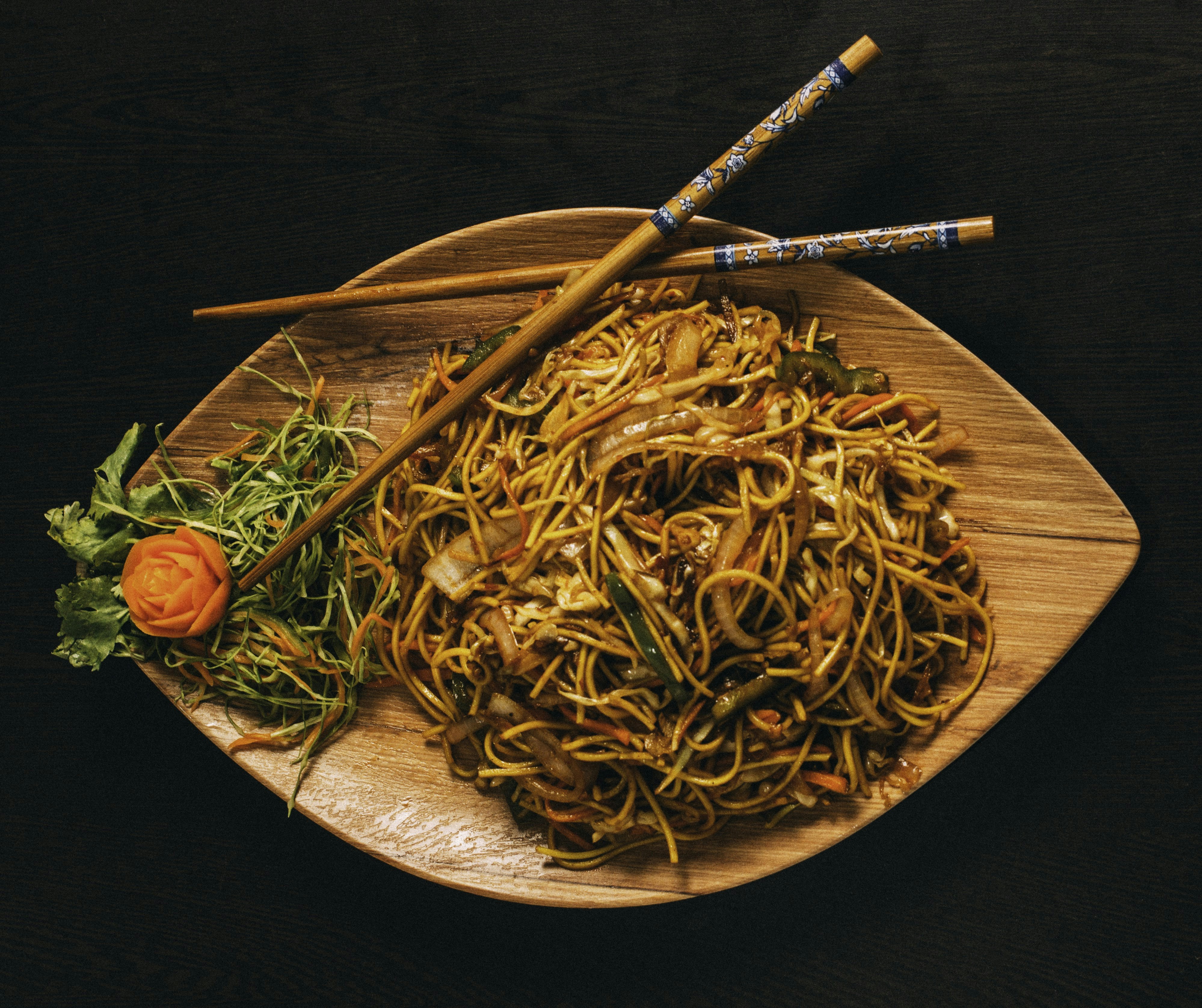
Furthermore, the word reflects the evolution of Chinese technology. The transition from grinding grain to creating dough, and then to the sophisticated techniques of stretching gluten, is encapsulated in these two characters. In modern urban China, miàntiáo also covers the world of 'Instant Noodles' (方便面 - fāngbiànmiàn), showing how the language adapts to the fast-paced lifestyle of the 21st century. Whether you are eating at a five-star hotel or a roadside stall, the request for miàntiáo remains a constant, unifying thread in the Chinese experience.
Using 面条 (miàntiáo) in a sentence is relatively straightforward for English speakers because it functions similarly to the word 'noodles'. However, there are nuances in measure words and verb pairings that are essential for sounding natural. The most common measure word is 碗 (wǎn), meaning 'bowl'. For example, '一碗面条' (a bowl of noodles). If you are referring to individual strands, you use 根 (gēn), as in '这根面条很长' (This strand of noodle is very long). When ordering in a restaurant, the word is often shortened to just 面 (miàn) for efficiency, such as in '牛肉面' (Beef noodles) or '担担面' (Dandan noodles). The full term miàntiáo is more formal or descriptive, used when talking about the food category as a whole.
- Verb Pairings
- 吃 (chī - eat), 煮 (zhǔ - boil/cook), 擀 (gǎn - roll out dough), 拉 (lā - pull), 拌 (bàn - mix with sauce).
- Common Adjectives
- 筋道 (jìndao - chewy/al dente), 细 (xì - thin), 粗 (cū - thick), 香 (xiāng - fragrant/delicious).
In terms of sentence structure, miàntiáo usually occupies the object position. '我想吃面条' (I want to eat noodles). It can also be the subject: '面条凉了' (The noodles have gone cold). When describing the type of noodles, the modifier always comes before '面条'. For instance, '鸡蛋面条' (egg noodles) or '手工面条' (handmade noodles). It is important to note that while miàntiáo technically refers to the noodles themselves, in casual conversation, it often refers to the entire dish including the soup and toppings. If you want to specify 'dry' noodles vs 'soup' noodles, you would use '干拌面' (gān bàn miàn) or '汤面' (tāng miàn).
For learners moving into the intermediate level, understanding the 'resultative complements' used with cooking noodles is helpful. For example, '煮熟了' (zhǔ shú le - cooked until done) or '煮烂了' (zhǔ làn le - overcooked/mushy). Mastering these nuances allows you to express specific preferences for how your noodles are prepared. In Northern China, people often prefer their noodles '筋道' (chewy), while in other regions, a softer texture might be preferred for certain dishes like '阳春面' (Yangchun noodles). Using the word miàntiáo correctly involves not just the vocabulary, but an appreciation for these textural distinctions.
You will encounter the word 面条 (miàntiáo) in a multitude of environments, ranging from the most domestic settings to high-energy commercial hubs. The most frequent place is, of course, a 面馆 (miànguǎn) or noodle shop. These are ubiquitous across China, often identifiable by the steam rising from large pots near the entrance. In these settings, you'll hear the word shouted by waitstaff calling out orders to the kitchen: '两碗肉丝面条!' (Two bowls of shredded pork noodles!). In a household setting, it is the sound of a parent asking a child, '晚餐想吃面条吗?' (Do you want noodles for dinner?). It is the ultimate 'lazy' meal—quick to prepare and universally loved.
“老板,来一碗大份的面条,多放点辣!” (Boss, give me a large bowl of noodles, and add extra spice!)
Beyond physical locations, miàntiáo is a frequent guest in Chinese media. In TV dramas, a character might cook a bowl of noodles for a loved one as a sign of care or reconciliation—a trope so common it has become a meme ('你饿不饿?我煮碗面给你吃?' - Are you hungry? Shall I cook some noodles for you?). In advertising, you will see it on packaging for instant noodles in supermarkets, often accompanied by vibrant images of steaming bowls. In travel shows, hosts often explore the 'Noodle Culture' of different provinces, using miàntiáo as a focal point to discuss local history and agriculture. You'll also hear it in markets (菜市场 - càishìchǎng) where vendors sell fresh, wet noodles by the catty (斤 - jīn). The rhythmic sound of a chef pulling Lamian in a restaurant window is often accompanied by the word being used to describe the specific thickness the customer wants.
In the digital age, miàntiáo appears in food blogs, TikTok (Douyin) cooking tutorials, and restaurant review apps like Meituan or Dianping. Users will debate which shop has the most 'authentic' (正宗 - zhèngzōng) miàntiáo or which region's style is superior. It is a word that carries the warmth of home and the excitement of urban street life, making it one of the most resonant words in the Chinese auditory landscape.
While 面条 (miàntiáo) seems simple, learners often stumble over its usage in specific contexts. One of the most common errors is the confusion between 面 (miàn) as 'noodles' and 面 (miàn) as 'face' or 'surface'. While the character is the same, the context usually clarifies the meaning, but beginners might be puzzled by phrases like '见面' (jiànmiàn - to meet/see a face) and think it has something to do with eating noodles. Another frequent mistake is using the wrong measure word. English speakers often say '一个面条' (one noodle), which is grammatically incorrect. You must use '一碗' (a bowl) or '一份' (a portion).
- Mistake 1: Measure Words
- Incorrect: 一个面条 (yī gè miàntiáo). Correct: 一碗面条 (yī wǎn miàntiáo).
- Mistake 2: Rice vs. Wheat
- Incorrect: Using '面条' for rice noodles. Correct: Use '米粉' (mǐfěn) or '米线' (mǐxiàn) for rice-based strands.
A significant cultural-linguistic mistake is failing to distinguish between wheat noodles (面条) and rice noodles. In many Western countries, 'noodles' is a generic term for any long pasta-like food. In Chinese, however, miàntiáo specifically implies wheat flour. If you are in Southern China and want rice noodles, calling them miàntiáo might lead to confusion or the wrong dish. You should use mǐfěn (米粉) or mǐxiàn (米线). Additionally, learners often forget the 'tiáo' when they should include it, or include it when a shorter dish name is more appropriate. For example, you wouldn't usually say '牛肉面条' in a restaurant; '牛肉面' is the standard term.
Finally, there is the issue of 'over-translation'. Some students try to translate 'pasta' as miàntiáo. While technically a type of noodle, Western pasta is usually specifically called '意大利面' (Yìdàlì miàn) or '意面' for short. Using the general miàntiáo for a plate of spaghetti might sound slightly childish or imprecise to a native speaker. Understanding these boundaries helps in achieving a more native-like fluency and avoiding culinary misunderstandings.
To truly master 面条 (miàntiáo), one must understand its place within a family of related culinary terms. The most immediate relative is 面 (miàn), which is the shortened version used in almost all specific dish names (e.g., 炸酱面, 担担面). Then there are the regional variations that use different characters entirely. For instance, 粉 (fěn) refers to noodles made from non-wheat starches, most commonly rice, but also mung bean or sweet potato. Understanding the difference between miàn and fěn is crucial for navigating any Chinese menu.
- 米粉 (mǐfěn)
- Rice noodles, common in Southern China and Southeast Asia.
- 拉面 (lāmiàn)
- Hand-pulled noodles, famous in Lanzhou style.
- 方便面 (fāngbiànmiàn)
- Instant noodles, literally 'convenient noodles'.
Another set of similar words involves the shape and preparation. 面片 (miànpiàn) refers to flat, square-ish pieces of dough rather than long strands. 疙瘩 (gēda) refers to small, irregular dough lumps (as in 疙瘩汤 - dough drop soup). There is also 挂面 (guàmiàn), which are dried, factory-made noodles sold in straight bundles, often used for quick home cooking. In terms of texture, 筋道 (jìndao) is the word you use to describe high-quality, chewy noodles, similar to 'al dente' in Italian. If noodles are too soft, they are 烂 (làn).
In a broader linguistic sense, miàntiáo is part of the 'flour-based food' family. This includes 馒头 (mántou) (steamed buns), 饺子 (jiǎozi) (dumplings), and 包子 (bāozi) (stuffed buns). While these are not 'noodles', they share the same base ingredient (面粉 - miànfěn) and are often sold in the same types of establishments in Northern China. Distinguishing between these terms allows a learner to move from simply 'ordering food' to 'discussing cuisine'. For example, knowing that '凉面' (liángmiàn) is a specific type of cold noodle dish served in summer adds a layer of cultural and seasonal awareness to your vocabulary.
How Formal Is It?
Schwierigkeitsgrad
Wichtige Grammatik
Measure words
Noun modifiers with 'de'
Simple subject-verb-object
Comparison with 'bi'
Sequence with 'xian... ranhou'
Beispiele nach Niveau
我想吃面条。
I want to eat noodles.
Subject + 想 (want) + 吃 (eat) + Object.
面条很好吃。
The noodles are very delicious.
Subject + 很 (very) + Adjective.
这是一碗面条。
This is a bowl of noodles.
Use of measure word 碗 (wǎn).
面条多少钱?
How much are the noodles?
Question word 多少钱 (how much money).
我不吃面条。
I don't eat noodles.
Negative particle 不 (bù).
你要面条吗?
Do you want noodles?
Question particle 吗 (ma).
面条在桌子上。
The noodles are on the table.
Prepositional phrase 在...上 (on...).
爸爸喜欢面条。
Dad likes noodles.
Verb 喜欢 (like).
这家店的面条很出名。
The noodles in this shop are very famous.
Possessive particle 的 (de).
我要一碗鸡蛋面条。
I want a bowl of egg noodles.
Noun modifier (鸡蛋) before the main noun.
面条太烫了,等一下再吃。
The noodles are too hot, wait a moment before eating.
Structure 太...了 (too...).
你会做面条吗?
Can you cook noodles?
Modal verb 会 (can/know how to).
超市里的面条很便宜。
The noodles in the supermarket are very cheap.
Location phrase as a modifier.
我每天中午都吃面条。
I eat noodles every day at noon.
Adverb 都 (all/always) with 每天 (every day).
这种面条比那种好吃。
This kind of noodle is tastier than that kind.
Comparison structure 比 (bǐ).
请给我一双筷子吃面条。
Please give me a pair of chopsticks to eat noodles.
Measure word 双 (shuāng) for chopsticks.
这些手工面条非常筋道。
These handmade noodles are very chewy.
Adjective 筋道 (jìndao) specifically for texture.
过生日的时候一定要吃长寿面。
You must eat longevity noodles when it's your birthday.
Time phrase ...的时候 (when...).
先把水烧开,然后再放面条。
First boil the water, then put the noodles in.
Sequence markers 先...然后... (first... then...).
我不喜欢吃太软的面条。
I don't like eating noodles that are too soft.
Modifier phrase with 的.
这种面条是用小麦粉做的。
This kind of noodle is made from wheat flour.
Passive-like structure 是用...做的.
北方人更习惯吃面条,南方人喜欢吃米饭。
Northerners are more used to eating noodles, while Southerners like rice.
Contrast using 更 (more) and parallel structure.
他在面条里加了很多辣椒。
He added a lot of chili to the noodles.
Verb 加 (add) and location phrase.
这碗面条的味道很地道。
The flavor of this bowl of noodles is very authentic.
Adjective 地道 (dìdao - authentic).
面条的种类繁多,每个地区都有自己的特色。
There are many types of noodles, and every region has its own specialty.
Idiom 种类繁多 (zhǒnglèi fánduō - a wide variety).
为了保持面条的口感,煮好后要立刻过凉水。
To maintain the texture of the noodles, rinse them in cold water immediately after boiling.
Purpose clause 为了 (in order to).
兰州拉面以其独特的拉制工艺闻名世界。
Lanzhou Lamian is world-famous for its unique pulling technique.
Structure 以...闻名 (famous for...).
面条在中国文化中象征着长寿和好运。
Noodles symbolize longevity and good luck in Chinese culture.
Verb 象征 (symbolize).
虽然只是简单的面条,但要做得好吃也不容易。
Although it's just simple noodles, it's not easy to make them delicious.
Conjunction 虽然...但... (although... but...).
随着快节奏生活的发展,方便面变得越来越受欢迎。
With the development of a fast-paced lifestyle, instant noodles have become increasingly popular.
Structure 越来越... (more and more...).
这种面条的韧性很好,不容易断。
This noodle has great elasticity and doesn't break easily.
Noun 韧性 (rènxìng - toughness/elasticity).
他对面条的研究非常深入,甚至写了一本书。
His research on noodles is very deep; he even wrote a book.
Structure 对...的研究 (research on...).
面条的历史可以追溯到四千多年前的青海喇家遗址。
The history of noodles can be traced back to the Lajia site in Qinghai over 4,000 years ago.
Phrase 追溯到 (trace back to).
面条的形态各异,从细如发丝到宽如腰带,体现了中国人的创造力。
Noodles come in various forms, from as thin as hair to as wide as a belt, reflecting Chinese creativity.
Structure 从...到... (from... to...).
一碗地道的炸酱面,关键在于那碗熬制得当的酱料。
The key to an authentic bowl of Zhajiangmian lies in the properly simmered sauce.
Structure 关键在于 (the key lies in).
面条不仅是主食,更是连接家乡情感的纽带。
Noodles are not just a staple food, but a bond that connects one to their hometown emotions.
Structure 不仅...更是... (not only... but even more...).
面条的制作讲究火候和力度的完美结合。
The making of noodles requires a perfect combination of heat control and physical strength.
Verb 讲究 (to be particular about/require).
在文学作品中,面条常被赋予浓厚的乡土气息。
In literary works, noodles are often endowed with a strong sense of local flavor.
Passive structure 被赋予 (be endowed with).
不同省份的面条口味差异,折射出中国地理环境的多样性。
The differences in noodle flavors across provinces reflect the diversity of China's geographical environment.
Verb 折射 (reflect/refract).
这种面条采用古法制作,不含任何添加剂。
This noodle is made using ancient methods and contains no additives.
Phrase 采用古法 (using ancient methods).
面条作为一种跨文化的符号,见证了东西方文明在餐桌上的交汇。
As a cross-cultural symbol, noodles have witnessed the intersection of Eastern and Western civilizations at the dining table.
Verb 见证 (witness).
探讨面条的起源,实际上是在梳理人类早期农耕文明的发展脉络。
Exploring the origins of noodles is, in fact, tracing the developmental threads of early human agricultural civilizations.
Gerund-like structure 探讨...实际上是在... (Exploring... is actually...).
面条的简约与包容,使其在漫长的历史岁月中始终保持着旺盛的生命力。
The simplicity and inclusiveness of noodles have allowed them to maintain a vibrant vitality throughout the long course of history.
Abstract nouns 简约 (simplicity) and 包容 (inclusiveness).
在当代语境下,面条的工业化生产与手工作坊的坚守构成了一种有趣的张力。
In the contemporary context, the industrial production of noodles and the persistence of artisanal workshops form an interesting tension.
Noun 张力 (tension).
面条的口感往往承载着一种难以言说的文化记忆和身份认同。
The texture of noodles often carries an inexpressible cultural memory and identity recognition.
Verb 承载 (carry/bear).
对一碗面条的极致追求,体现了匠人精神在平凡生活中的投射。
The ultimate pursuit of a bowl of noodles reflects the projection of the craftsman's spirit in everyday life.
Noun 投射 (projection).
面条的流变史,是一部关于迁徙、融合与创新的宏大叙事。
The history of the evolution of noodles is a grand narrative about migration, fusion, and innovation.
Noun 宏大叙事 (grand narrative).
在全球化的浪潮中,面条正经历着从地方特色向普世美食的华丽蜕变。
In the wave of globalization, noodles are undergoing a magnificent transformation from local specialties to universal delicacies.
Noun 华丽蜕变 (magnificent transformation).
Häufige Kollokationen
Häufige Phrasen
Wird oft verwechselt mit
Redewendungen & Ausdrücke
Leicht verwechselbar
Satzmuster
Wortfamilie
Verwandt
So verwendest du es
Often shortened to '面' in compound words.
Distinct from '粉' (rice noodles).
Tipps
Don't Cut Them
Never cut noodles on a birthday; it's bad luck for longevity.
Shorten It
In a restaurant, just say 'miàn' to sound like a pro.
Texture Matters
Look for 'handmade' (shǒugōng) for the best texture.
Dried vs Fresh
Fresh noodles are in the refrigerated section; dried are on the shelf.
Measure Word
Always use 'wǎn' (bowl) when ordering.
North vs South
Expect more noodles in the North and more rice in the South.
Whole Wheat
Look for 全麦 (quánmài) for a healthier option.
Chopstick Skills
Noodles are the best way to practice your chopstick technique.
Related Words
Learn 'miànfěn' (flour) to understand the root.
Sharing
Noodle dishes are often individual, unlike many other Chinese dishes.
Einprägen
Wortherkunft
面 (wheat flour) + 条 (strip). First appeared in historical records during the Han Dynasty.
Kultureller Kontext
Slurping is often seen as a sign that the food is delicious.
Symbolizes long life due to its shape.
North favors wheat noodles; South favors rice noodles.
Im Alltag üben
Kontexte aus dem Alltag
Gesprächseinstiege
"你喜欢吃面条还是米饭?"
"你最喜欢哪种面条?"
"你会自己做面条吗?"
"这附近有出名的面馆吗?"
"你吃过兰州拉面吗?"
Tagebuch-Impulse
描述你最喜欢的一碗面条。
写一写你第一次尝试中国面条的经历。
如果你要发明一种新面条,它会是什么样的?
为什么面条在你的文化中(或中国文化中)很重要?
比较面条和意大利面的异同。
Häufig gestellte Fragen
10 Fragen面条 is the full noun for 'noodles'. 面 is a shorter version often used in specific dish names like 牛肉面.
Technically yes, but it's better to use 意大利面 (Yìdàlì miàn).
Use 碗 (wǎn) for a bowl or 份 (fèn) for a portion.
In Chinese, yes, it usually implies wheat. Rice noodles are called 粉 (fěn).
Because the long shape of the noodles symbolizes a long life.
方便面 (fāngbiànmiàn).
It describes a chewy, elastic texture, which is a sign of good noodles.
Yes, it is generally acceptable and shows you are enjoying the meal.
Ask for 干拌面 (gān bàn miàn).
长寿面 (chángshòumiàn), eaten to celebrate birthdays.
Teste dich selbst 180 Fragen
/ 180 correct
Perfect score!
Summary
面条 (miàntiáo) is the foundational term for noodles in Chinese. It specifically implies wheat-based strands and carries deep cultural significance as a symbol of long life. Mastery of this word involves understanding its regional varieties and correct measure words.
- 面条 (miàntiáo) means noodles, a staple Chinese food made from wheat flour dough.
- It is a symbol of longevity in Chinese culture and is essential for birthday celebrations.
- The word is a noun, commonly used with the measure word '碗' (wǎn) for a bowl.
- While it refers to wheat noodles, rice-based strands are called '粉' (fěn) or '米线' (mǐxiàn).
Don't Cut Them
Never cut noodles on a birthday; it's bad luck for longevity.
Shorten It
In a restaurant, just say 'miàn' to sound like a pro.
Texture Matters
Look for 'handmade' (shǒugōng) for the best texture.
Dried vs Fresh
Fresh noodles are in the refrigerated section; dried are on the shelf.
Verwandte Inhalte
Dieses Wort in anderen Sprachen
Verwandte Redewendungen
Mehr food Wörter
一两
B1Fifty grams; a Chinese unit of weight (approx. 50g).
一斤
B1Half a kilogram; a Chinese unit of weight (approx. 500g).
一袋
B1A bag of.
少一点儿
A2Ein bisschen weniger; etwas weniger. Wird verwendet, um eine geringere Menge oder einen geringeren Grad zu erbitten. (Beispiel: Ich möchte weniger Zucker in meinem Kaffee.)
多一点儿
A2Ein bisschen mehr. Wird verwendet, um nach einer kleinen zusätzlichen Menge zu fragen oder um Dinge zu vergleichen.
一口
B1A mouthful; a bite; a small amount (of food or drink).
一瓶
B1Eine Flasche von.
一碗
B1Eine Schüssel voll...
一盒
B1Eine Schachtel von. Zum Beispiel eine Schachtel Pralinen.
一杯
B1Eine Tasse / Ein Glas. 'Ich möchte eine Tasse Tee.'

