Un Día Especial en Italia: La Fiesta de la República
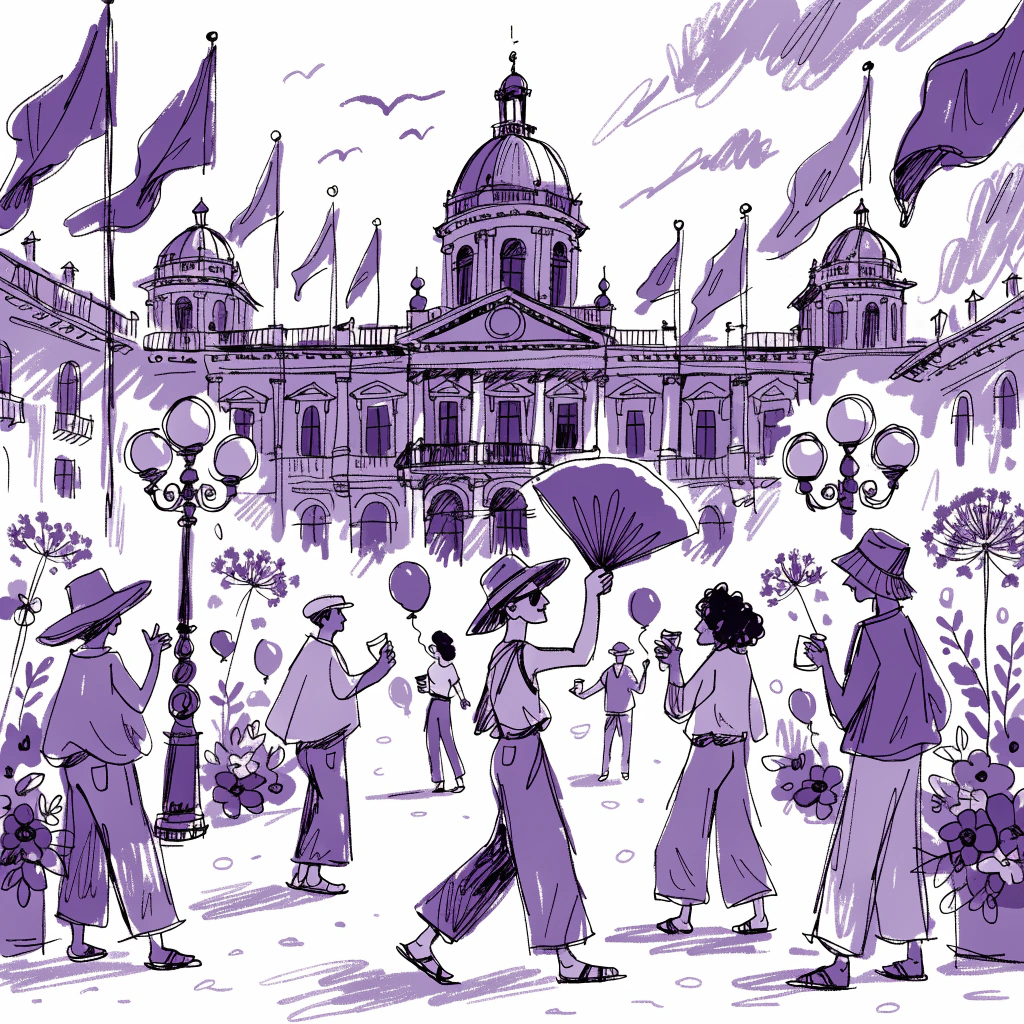
Hoy hablamos de un día importante en Italia. Es el 2 de junio y se celebra la Festa della Repubblica. Este día es como el Día Nacional de Italia. Es una gran fiesta para todos.
La gente celebra que Italia es una república. Antes, Italia tenía un rey. Pero en 1946, las personas votaron. Ellos decidieron: "Queremos una república, no un rey". Por eso, Italia ahora es una república.
El 2 de junio es un día especial para recordar esta historia. Es un día festivo. Hay desfiles y mucha alegría en las ciudades. Es un momento feliz para el país.
Gramática destacada
Patrón: El Verbo "Ser" (para identificar)
"Este día es como el Día Nacional de Italia."
Usamos el verbo 'ser' para decir qué es algo o identificarlo. También lo usamos para hablar de la nacionalidad o el origen. Se conjuga: yo soy, tú eres, él/ella/usted es, nosotros somos, vosotros sois, ellos/ellas/ustedes son.
Patrón: Hay (Existe/Existen)
"Hay desfiles y mucha alegría en las ciudades."
Usamos 'hay' para decir que algo existe o está presente. Es una forma impersonal del verbo 'haber'. Siempre es 'hay', no cambia con el número de cosas que existen (singular o plural).
Pon a prueba tu comprensión
10 preguntas · A1 Principiante · 1 vista previa gratis
Pon a prueba lo que aprendiste en este artículo. ¡Responde todas las preguntas para ganar XP!
¿Cuándo se celebra la Festa della Repubblica?
¿Quieres terminar el quiz?
9 preguntas más te esperan. ¡Regístrate gratis para desbloquear el quiz completo y ganar XP!
Regístrate gratis¿Ya tienes cuenta? Acceder
Desglose de preguntas
¿Cuándo se celebra la Festa della Repubblica?
Tu respuesta:
Respuesta correcta: El 2 de junio
Italia tiene un rey ahora.
Tu respuesta:
Respuesta correcta: Falso
¿Qué significa "república"?
Tu respuesta:
Respuesta correcta: Un tipo de gobierno sin rey
La gente ______ que Italia es una república.
Tu respuesta:
Respuesta correcta: celebra
El Día de la República en Italia: Una Fiesta Importante
El 2 de junio, Italia celebra un día muy especial: la Festa della Repubblica. Este día es como el cumpleaños de la República Italiana. Es una fiesta nacional, y la gente no trabaja. Muchas tiendas y oficinas están cerradas para la celebración.
En 1946, después de la Segunda Guerra Mundial, los italianos votaron. Ellos decidieron qué tipo de gobierno querían: ¿una monarquía con un rey o una república con un presidente? La mayoría de las personas eligieron la república. ¡Fue un momento histórico para el país!
Por eso, cada año, el 2 de junio, Italia recuerda este importante evento. Hay desfiles militares en Roma, la capital. También hay conciertos y muchas celebraciones en todo el país. Es un día para recordar la historia y la unidad de Italia. La Festa della Repubblica es más que una fiesta; es un símbolo de libertad y democracia para los italianos. Es similar a otros días nacionales en otros países, pero tiene su propia historia única.
Gramática destacada
Patrón: El pretérito indefinido (verbos regulares e irregulares)
"En 1946, los italianos **votaron**. Ellos **decidieron** qué tipo de gobierno querían."
Usamos el pretérito indefinido para hablar de acciones que pasaron y terminaron en un momento específico en el pasado. Por ejemplo, 'votaron' viene del verbo 'votar' y 'decidieron' viene del verbo 'decidir'. Ambos nos dicen que la acción ya está completa.
Patrón: Comparativos de superioridad (más que)
"La Festa della Repubblica es **más que** una fiesta; es un símbolo de libertad."
Usamos 'más que' para decir que una cosa tiene una cualidad en mayor cantidad o importancia que otra. Es similar a 'more than' en inglés. Aquí, la fiesta es importante, pero el símbolo de libertad es aún más importante.
Pon a prueba tu comprensión
11 preguntas · A2 Básico · 1 vista previa gratis
Pon a prueba lo que aprendiste en este artículo. ¡Responde todas las preguntas para ganar XP!
¿Cuándo celebra Italia la Festa della Repubblica?
¿Quieres terminar el quiz?
10 preguntas más te esperan. ¡Regístrate gratis para desbloquear el quiz completo y ganar XP!
Regístrate gratis¿Ya tienes cuenta? Acceder
Desglose de preguntas
¿Cuándo celebra Italia la Festa della Repubblica?
Tu respuesta:
Respuesta correcta: El 2 de junio
Después de la Segunda Guerra Mundial, la mayoría de los italianos querían una monarquía.
Tu respuesta:
Respuesta correcta: Falso
¿Qué significa "votaron"?
Tu respuesta:
Respuesta correcta: Eligieron con su voz
La mayoría de las personas ______ la república.
Tu respuesta:
Respuesta correcta: eligieron
¿Qué tipo de celebraciones hay en Italia para este día?
Tu respuesta:
Respuesta correcta: Desfiles militares y conciertos
La Festa della Repubblica: Un Día Esencial para Italia
El 2 de junio es, sin duda, una fecha de enorme importancia para todos los italianos. Cada año, en este día, Italia celebra la Festa della Repubblica, que es su Día Nacional y el Día de la República. Esta jornada conmemora un acontecimiento histórico trascendental que ha moldeado el destino del país.
En 1946, justo después del final de la Segunda Guerra Mundial y tras la caída del fascismo, Italia se encontraba en una encrucijada y necesitaba decidir su futuro. La población italiana fue convocada a las urnas para un referéndum institucional. Fue un momento histórico porque, por primera vez, se aplicó el sufragio universal, lo que significaba que tanto hombres como mujeres tuvieron la oportunidad de votar. Los ciudadanos debían elegir la forma de gobierno que preferían: ¿continuar con una monarquía o establecer una república?
La decisión fue clara: la mayoría de los italianos votó a favor de una república. Así, el 2 de junio de 1946, la República Italiana fue oficialmente establecida. Este evento no solo marcó el fin de la monarquía, sino también el nacimiento del Estado italiano moderno, tal como lo conocemos hoy. Desde entonces, esta fecha se ha convertido en un día festivo nacional muy significativo.
Las celebraciones de la Festa della Repubblica son impresionantes. En Roma, la capital, se organiza un gran desfile militar a lo largo de la Via dei Fori Imperiali, donde participan las fuerzas armadas y otras instituciones del estado. Es una demostración de unidad y orgullo. El Presidente de la República ha depositado tradicionalmente una corona de laurel en el Altar de la Patria, rindiendo homenaje a los soldados caídos que han defendido la nación. Además de los actos oficiales, en muchas ciudades italianas se han organizado conciertos, exposiciones y eventos culturales que involucran a la ciudadanía.
Este día es una oportunidad para que los italianos recuerden su historia, la importancia de la democracia y la unidad que los ha caracterizado. La bandera italiana, con sus colores verde, blanco y rojo, se ve por todas partes, y el sentimiento de orgullo nacional es muy palpable. La Festa della Repubblica nos recuerda que la libertad y la elección popular son pilares fundamentales para cualquier nación que aspira a la justicia y la paz.
Gramática destacada
Patrón: La Voz Pasiva con 'Ser'
"La población italiana fue convocada a las urnas para un referéndum institucional."
Usamos la voz pasiva con 'ser' (ser + participio pasado) para hablar de una acción que recibe el sujeto, no que realiza. Es útil cuando no sabemos quién realiza la acción o cuando la acción es más importante que el agente. El participio debe concordar en género y número con el sujeto.
Patrón: Cláusulas Relativas con 'que'
"Esta jornada conmemora un acontecimiento histórico trascendental que ha moldeado el destino del país."
Las cláusulas relativas con 'que' se usan para añadir información sobre un sustantivo o pronombre (el antecedente) sin repetir la palabra. 'Que' puede referirse a personas o cosas y funciona como sujeto o complemento directo en la cláusula relativa.
Pon a prueba tu comprensión
11 preguntas · B1 Intermedio · 1 vista previa gratis
Pon a prueba lo que aprendiste en este artículo. ¡Responde todas las preguntas para ganar XP!
¿Qué día se celebra la Festa della Repubblica en Italia?
¿Quieres terminar el quiz?
10 preguntas más te esperan. ¡Regístrate gratis para desbloquear el quiz completo y ganar XP!
Regístrate gratis¿Ya tienes cuenta? Acceder
Desglose de preguntas
¿Qué día se celebra la Festa della Repubblica en Italia?
Tu respuesta:
Respuesta correcta: El 2 de junio
En el referéndum de 1946, solo los hombres pudieron votar.
Tu respuesta:
Respuesta correcta: Falso
¿Qué significa la palabra 'conmemora'?
Tu respuesta:
Respuesta correcta: Celebra o recuerda un evento importante
La Festa della Repubblica conmemora el _____ institucional de 1946.
Tu respuesta:
Respuesta correcta: referéndum
¿Qué forma de gobierno eligieron los italianos en 1946?
Tu respuesta:
Respuesta correcta: Una república
The Birth of a Republic: Celebrating Italy’s National Day
Every year on June 2nd, Italians gather to celebrate the Festa della Repubblica, a pivotal moment in the nation’s modern history. This public holiday commemorates the institutional referendum of 1946, an event that fundamentally altered the country's political structure. Following the devastation of World War II and the collapse of the Fascist regime, the Italian people were called upon to determine their future form of government. For the first time in Italian history, universal suffrage was implemented, allowing both men and women to cast their votes.
The choice presented was stark: to remain a monarchy or to transition into a republic. With a significant majority choosing the latter, the modern Italian State was born. Had the citizens chosen differently, the nation’s political landscape would have evolved in a completely different direction. This transition was not merely a change in leadership but a profound shift toward democratic values and civil liberties.
In the capital city of Rome, the celebrations are particularly grand. The President of the Republic lays a wreath at the Altare della Patria, a monument dedicated to the 'Unknown Soldier.' This symbolic gesture pays tribute to those who sacrificed their lives for the nation's freedom. Furthermore, a massive military parade takes place along Via dei Fori Imperiali, showcasing the various branches of the armed forces. One of the most breathtaking highlights is the flyover by the Frecce Tricolori, the Italian Air Force aerobatic team, which paints the sky with the colors of the national flag.
Beyond the military displays, the day serves as a moment of reflection on the principles of solidarity and unity. It is an opportunity for Italians to evaluate their progress as a democratic society. Despite the various political and economic challenges faced over the decades, the republic has remained a symbol of resilience. The republic was officially proclaimed after a tense period of transition, and since then, the holiday has fostered a sense of national identity.
In conclusion, the Festa della Repubblica is more than just a day off work; it is a celebration of the collective will of a people who chose democracy over autocracy. By commemorating this historical event, which took place in 1946, Italy reinforces its commitment to the republican ideals of liberty and equality. As the nation looks toward the future, the legacy of the referendum continues to inspire new generations to uphold the democratic foundations of their country.
Gramática destacada
Patrón: Third Conditional
"Had the citizens chosen differently, the nation’s political landscape would have evolved in a completely different direction."
Used to describe a hypothetical situation in the past and its imaginary result. It is formed with 'Had + past participle' and 'would have + past participle'.
Patrón: Passive Voice (Past Simple)
"The republic was officially proclaimed after a tense period of transition."
Used when the focus is on the action or the receiver of the action rather than the performer. It is formed with 'was/were + past participle'.
Patrón: Non-defining Relative Clause
"By commemorating this historical event, which took place in 1946, Italy reinforces its commitment to republican ideals."
Used to provide extra information about a noun without being essential to the sentence's meaning. It is separated by commas and often uses 'which'.
Pon a prueba tu comprensión
11 preguntas · B2 Intermedio alto · 1 vista previa gratis
Pon a prueba lo que aprendiste en este artículo. ¡Responde todas las preguntas para ganar XP!
What was the primary purpose of the 1946 referendum in Italy?
¿Quieres terminar el quiz?
10 preguntas más te esperan. ¡Regístrate gratis para desbloquear el quiz completo y ganar XP!
Regístrate gratis¿Ya tienes cuenta? Acceder
Desglose de preguntas
What was the primary purpose of the 1946 referendum in Italy?
Tu respuesta:
Respuesta correcta: To decide between a monarchy and a republic
Universal suffrage in the 1946 referendum allowed both men and women to vote for the first time in Italian history.
Tu respuesta:
Respuesta correcta: Verdadero
What does 'suffrage' mean?
Tu respuesta:
Respuesta correcta: The right to vote in political elections
The republic was officially _____ after a tense period of transition.
Tu respuesta:
Respuesta correcta: proclaimed
Where does the massive military parade take place every June 2nd?
Tu respuesta:
Respuesta correcta: Rome
The Crucible of Sovereignty: Re-evaluating the Legacy of Italy’s 1946 Referendum
The 2nd of June marks a watershed moment in the Italian socio-political consciousness. Known as 'Festa della Repubblica,' this national holiday serves as a poignant reminder of the 1946 institutional referendum, an event that redefined the nation’s trajectory. Hardly had the smoke of the Second World War cleared when the Italian populace was summoned to the polls to decide between the continuation of the monarchy and the birth of a republic. This choice was not merely an administrative preference; it was a profound reclamation of agency after decades of fascist suppression and the devastation of global conflict.
It was the collective yearning for a fresh start that propelled the republican movement to a narrow but decisive victory. Crucially, this referendum marked the first time universal suffrage was implemented in a national Italian vote, granting women the right to cast their ballots. The inclusion of the female electorate was a paradigm shift that fundamentally altered the democratic landscape. Notwithstanding the precarious state of the post-war economy, the voter turnout was staggering, reflecting a desperate need for legitimacy and a clear break from the vestiges of the House of Savoy.
However, the transition was fraught with tension. The dismantling of the old order faced significant opposition, particularly in the southern regions where monarchist sentiment remained entrenched. This regional disparity highlighted a deep-seated fragmentation that the new republic would have to address through rigorous institutional building. The subsequent exile of the royal family was a symbolic act, signifying that the era of dynastic rule had been irrevocably superseded by a constitutional mandate.
In contemporary Italy, the commemoration of this day involves a grand military parade in Rome and the laying of a wreath at the Altare della Patria. Yet, beyond the spectacle of the Frecce Tricolori—the national aerobatic team—lies a deeper reflection on democratic resilience. The annual celebration provides an opportunity for critical analysis of how far the nation has progressed in upholding the values of liberty and equality. It is not merely a celebration of a historical date, but a continuous re-engagement with the principles that were inaugurated during that pivotal summer of 1946. Ultimately, the Festa della Repubblica stands as a testament to the enduring power of popular sovereignty and the ongoing refinement of the Italian democratic identity.
Gramática destacada
Patrón: Inversion with Negative/Restrictive Adverbs
"Hardly had the smoke of the Second World War cleared when the Italian populace was summoned to the polls."
This structure is used for emphasis and to create a more formal, dramatic tone. When 'Hardly' starts a sentence, the auxiliary verb 'had' comes before the subject 'the smoke'.
Patrón: Cleft Sentences
"It was the collective yearning for a fresh start that propelled the republican movement to a narrow but decisive victory."
Cleft sentences (It + is/was + [emphasized part] + that/who) are used to focus on specific information. Here, it emphasizes 'the collective yearning' as the primary cause of the victory.
Patrón: Nominalisation
"The dismantling of the old order faced significant opposition, particularly in the southern regions."
Nominalisation involves turning verbs or adjectives into nouns (e.g., 'dismantle' to 'dismantling'). This is common in C1 academic writing to make the text more concise and abstract.
Pon a prueba tu comprensión
12 preguntas · C1 Avanzado · 1 vista previa gratis
Pon a prueba lo que aprendiste en este artículo. ¡Responde todas las preguntas para ganar XP!
What was the primary purpose of the referendum on June 2nd, 1946?
¿Quieres terminar el quiz?
11 preguntas más te esperan. ¡Regístrate gratis para desbloquear el quiz completo y ganar XP!
Regístrate gratis¿Ya tienes cuenta? Acceder
Desglose de preguntas
What was the primary purpose of the referendum on June 2nd, 1946?
Tu respuesta:
Respuesta correcta: To choose between a monarchy and a republic
The 1946 referendum was the first time women in Italy were allowed to vote in a national election.
Tu respuesta:
Respuesta correcta: Verdadero
What does 'suffrage' mean in the context of the article?
Tu respuesta:
Respuesta correcta: The right to vote
The institutional transition to a republic required the _____ of the previous monarchical structures.
Tu respuesta:
Respuesta correcta: dismantling
Which region was mentioned as having strong monarchist sentiment?
Tu respuesta:
Respuesta correcta: The southern regions
The transition to a republic was unanimous and faced no opposition.
Tu respuesta:
Respuesta correcta: Falso
The Crucible of Sovereignty: Ontological Reflections on the Italian Festa della Repubblica
The genesis of the modern Italian state is inextricably linked to the seismic shift of June 2nd, 1946. This date represents far more than a mere commemorative milestone; it serves as the ontological foundation of a nation recalibrating its identity in the wake of totalitarian collapse. The Festa della Repubblica stands as a testament to the collective agency of a citizenry that, for the first time in its history, exercised universal suffrage to dismantle the vestigial structures of monarchy. Were one to scrutinize the socio-political landscape of post-war Italy, one would discern a nation grappling with the ghosts of its past while yearning for a democratic future.
Central to this epochal transformation was the institutional referendum, a plebiscite that demanded the Italian populace choose between the House of Savoy and a republican model. It was not merely a choice of governance, but an existential pivot. The monarchy, once the progenitor of national unity during the Risorgimento, had seen its legitimacy erode through complicity with Fascist hegemony. Consequently, the transition to a republic was perceived as a moral imperative, an act of national catharsis. Seldom has a single ballot carried such profound weight, as it effectively redefined the sovereign status of millions.
The introduction of universal suffrage, including the long-overdue enfranchisement of women, marked a radical departure from previous electoral paradigms. This inclusivity was paramount; without the participation of the entire adult population, any claim to democratic legitimacy would have been tenuous at best. It is through this lens that we must view the Festa della Repubblica—not as a static holiday, but as a dynamic reaffirmation of the social contract. To suggest that the transition was seamless would be an oversimplification; nonetheless, the referendum provided a definitive mandate for the constituent assembly to draft a constitution that remains the bedrock of Italian democracy.
From a scholarly perspective, the celebration of the Republic is an exercise in collective memory. It necessitates a nuanced understanding of how historical trauma is reconciled with the aspirations of progress. The institutional framework established in 1946 sought to insulate the state from the recurrence of autocracy, embedding checks and balances that reflect a profound skepticism of centralized power. This skepticism is a recurring motif in Italian political discourse, often manifesting as a tension between regional autonomy and national cohesion.
Furthermore, the aesthetic and symbolic elements of the Festa—the military parades, the flyover of the Frecce Tricolori, and the laying of wreaths at the Altare della Patria—serve to reinforce a shared sense of belonging. Yet, for the discerning observer, these rituals also invite reflection on the fragility of democratic institutions. It is imperative that the significance of the referendum not be obscured by the pomp and circumstance of the day. Instead, it should serve as a perennial reminder of the arduous journey from disenfranchisement to active citizenship.
In conclusion, the Festa della Repubblica encapsulates the spirit of a nation that dared to reimagine itself. It remains an enduring symbol of the triumph of republicanism over dynastic rule. As Italy continues to navigate the complexities of the 21st century, the legacy of 1946 provides a vital compass, guiding the state toward the ideals of justice, liberty, and equality. Only by acknowledging the gravity of that historical moment can one truly appreciate the resilience of the Italian Republic.
Gramática destacada
Patrón: Negative Inversion
"Seldom has a single ballot carried such profound weight, as it effectively redefined the sovereign status of millions."
When negative or limiting adverbs like 'seldom' or 'rarely' start a sentence for emphasis, the auxiliary verb and subject are inverted. This creates a formal and rhetorical tone common in C2 academic writing.
Patrón: Second Conditional with Inversion (Subjunctive)
"Were one to scrutinize the socio-political landscape of post-war Italy, one would discern a nation grappling with the ghosts of its past."
The 'if' is omitted and 'were' is moved to the front to express a hypothetical or formal condition. This structure is highly sophisticated and used to speculate about present or future situations.
Patrón: It-Cleft Sentences
"It was through this lens that we must view the Festa della Repubblica."
A cleft sentence is used to focus on a specific part of the information. By using 'It was... that...', the writer emphasizes the specific perspective (the lens) through which the holiday should be analyzed.
Pon a prueba tu comprensión
12 preguntas · C2 Dominio · 1 vista previa gratis
Pon a prueba lo que aprendiste en este artículo. ¡Responde todas las preguntas para ganar XP!
According to the text, why did the Italian monarchy lose its legitimacy?
¿Quieres terminar el quiz?
11 preguntas más te esperan. ¡Regístrate gratis para desbloquear el quiz completo y ganar XP!
Regístrate gratis¿Ya tienes cuenta? Acceder
Desglose de preguntas
According to the text, why did the Italian monarchy lose its legitimacy?
Tu respuesta:
Respuesta correcta: Because of its association and cooperation with the Fascist regime.
The author suggests that the transition from monarchy to republic was a completely smooth and easy process.
Tu respuesta:
Respuesta correcta: Falso
What does the word 'tenuous' imply in the context of democratic legitimacy?
Tu respuesta:
Respuesta correcta: Fragile and easily questioned
The referendum provided a definitive _____ for the constituent assembly to draft a new constitution.
Tu respuesta:
Respuesta correcta: mandate
What is described as a 'recurring motif' in Italian political discourse?
Tu respuesta:
Respuesta correcta: The tension between regional self-governance and national unity.
The institutional framework of 1946 was designed to prevent the rise of another autocracy.
Tu respuesta:
Respuesta correcta: Verdadero
Italia: ¡Un Día Grande!
Hola. Es Italia.
Hoy es un día muy especial. Es la Festa della Repubblica. Es el dos de junio.
La gente vota. Mucha gente. Vota: ¿República o monarquía? La gente dice: ¡República!
Es un día importante para Italia. Familia y amigos. ¡Feliz día!
Gramática destacada
Patrón: El verbo 'Ser' (Es)
"Es un día muy especial."
'Es' significa 'is' en inglés. Lo usamos para decir qué o cómo es algo. Por ejemplo, 'Es Italia' (It is Italy) o 'Es un día' (It is a day). Es muy útil y fácil.
Pon a prueba tu comprensión
9 preguntas · A0 Pre-principiante · 1 vista previa gratis
Pon a prueba lo que aprendiste en este artículo. ¡Responde todas las preguntas para ganar XP!
¿Qué día es la Festa della Repubblica?
¿Quieres terminar el quiz?
8 preguntas más te esperan. ¡Regístrate gratis para desbloquear el quiz completo y ganar XP!
Regístrate gratis¿Ya tienes cuenta? Acceder
Desglose de preguntas
¿Qué día es la Festa della Repubblica?
Tu respuesta:
Respuesta correcta: El día dos de junio
La gente vota en este día en Italia.
Tu respuesta:
Respuesta correcta: Verdadero
¿Qué significa 'Gente'?
Tu respuesta:
Respuesta correcta: Muchas personas

