A Special Day in Italy
Today is June 2nd. It is a big holiday in Italy. People call it 'Festa della Repubblica.' It is the birthday of the Italian Republic.
In 1946, the people of Italy choose a new government. They vote for a republic. Now, Italy is a modern country.
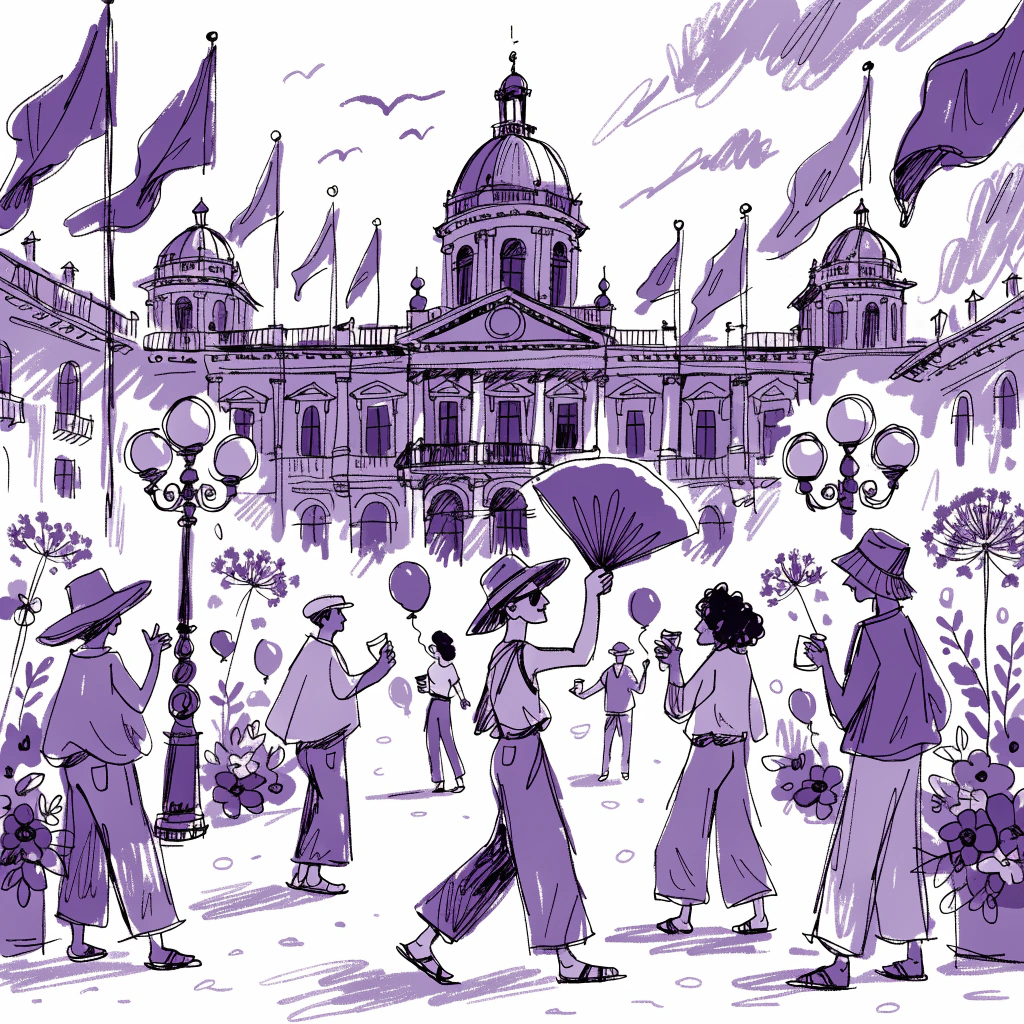
There is a big parade in Rome. Soldiers march in the streets. Airplanes fly in the sky. They make the colors of the Italian flag: green, white, and red. Families eat food together and celebrate.
Grammar Spotlight
Pattern: Present Simple (to be)
"It is a big holiday in Italy."
We use 'is' for singular subjects to talk about facts or states. It connects the subject to a description.
Pattern: Present Simple (plural verbs)
"Families eat food together."
With plural subjects like 'families', we use the base form of the verb without adding an -s.
Test Your Understanding
10 questions · A1 Beginner · 1 free preview
Test what you learned from this article. Answer all questions to earn XP!
When is the Italian National Day?
Want to finish the quiz?
9 more questions are waiting for you. Sign up free to unlock the full quiz and earn XP!
Sign Up FreeAlready have an account? Sign In
Question Breakdown
When is the Italian National Day?
Your answer:
Correct answer: June 2nd
There is a big parade in Rome.
Your answer:
Correct answer: True
What is a piece of cloth that represents a country?
Your answer:
Correct answer: A flag
There is a big _____ in Rome.
Your answer:
Correct answer: parade
Italy's Big Celebration: Republic Day
June 2nd is a very special day in Italy. It is called "Festa della Repubblica," or Republic Day. This holiday celebrates the birth of the modern Italian country.
After the Second World War, Italy changed a lot. In 1946, the people had a big election. They had to choose between a king or a republic. It was a historic moment because it was the first time women voted in Italy. Most people chose a republic because they wanted a more democratic future.
Now, Italians celebrate this day every year. In Rome, there is a large parade with soldiers and music. The most famous part is the "Frecce Tricolori." These are fast planes that fly over the city. They leave smoke in the colors of the Italian flag: green, white, and red.
Because it is a public holiday, schools and offices are closed. Families often meet and eat a big lunch together. This day is more important than other days for many Italians because it represents their freedom and unity.
Grammar Spotlight
Pattern: Past Simple
"In 1946, the people had a big election."
We use the past simple to talk about finished actions in the past. To form it, we usually add -ed to the verb, but some verbs like 'had' and 'voted' are irregular or follow specific spelling rules.
Pattern: Comparatives
"This day is more important than other days for many Italians."
We use comparatives to compare two things. For long adjectives like 'important', we use 'more' + adjective + 'than'.
Test Your Understanding
11 questions · A2 Elementary · 1 free preview
Test what you learned from this article. Answer all questions to earn XP!
When do Italians celebrate Republic Day?
Want to finish the quiz?
10 more questions are waiting for you. Sign up free to unlock the full quiz and earn XP!
Sign Up FreeAlready have an account? Sign In
Question Breakdown
When do Italians celebrate Republic Day?
Your answer:
Correct answer: June 2nd
The 1946 election was the first time women voted in Italy.
Your answer:
Correct answer: True
What does 'flag' mean?
Your answer:
Correct answer: A piece of cloth with national colors
The "Frecce Tricolori" leave smoke in the colors of the Italian _____.
Your answer:
Correct answer: flag
Why did people choose a republic in 1946?
Your answer:
Correct answer: They wanted a more democratic future
Celebrating Italy's Republic Day: A Journey of Democracy
Every year on June 2nd, the streets of Italy are filled with flags and celebrations to mark 'Festa della Repubblica.' This special day, which is known as Republic Day in English, is the Italian National Day. It commemorates a historical moment in 1946 when the Italian people were asked to make a very important choice.
After the Second World War and the end of Fascism, a national referendum was held. For the first time in Italian history, universal suffrage was granted, which meant that both men and women could vote. They had to decide whether Italy should remain a monarchy or become a republic. The majority of the population voted for a republic, and this is how the modern Italian State was born.
Since that day, many traditions have been established to celebrate the birth of the nation. In Rome, a large military parade is organized, which is attended by the President of the Republic and other high-ranking officials. One of the most exciting parts of the day is the flyover by the 'Frecce Tricolori.' These are specialized planes that fly over the city, leaving trails of green, white, and red smoke in the sky to represent the Italian flag.
Wreaths are also laid at the Altare della Patria to honor the 'Unknown Soldier,' who represents all those who have died in wars. Throughout the country, official ceremonies are held in various cities, and many people enjoy the public holiday with their families.
The 'Festa della Repubblica' has become a symbol of unity and freedom for Italians. It is a day when the history of the country is remembered, and the values of democracy are celebrated. Although many years have passed since 1946, the importance of this day has not changed. It remains a time for Italians to feel proud of their republic and the choices their ancestors made.
Grammar Spotlight
Pattern: Passive Voice
"In Rome, a large military parade is organized..."
The passive voice is used when the focus is on the action rather than the person performing it. It is formed using 'to be' and the past participle of the main verb.
Pattern: Relative Clauses
"These are specialized planes that fly over the city..."
Relative clauses provide essential or extra information about a noun. The relative pronoun 'that' connects the description to the subject 'planes'.
Test Your Understanding
11 questions · B1 Intermediate · 1 free preview
Test what you learned from this article. Answer all questions to earn XP!
What happened on June 2nd, 1946 in Italy?
Want to finish the quiz?
10 more questions are waiting for you. Sign up free to unlock the full quiz and earn XP!
Sign Up FreeAlready have an account? Sign In
Question Breakdown
What happened on June 2nd, 1946 in Italy?
Your answer:
Correct answer: A national referendum was held
Both men and women were allowed to vote in the 1946 referendum.
Your answer:
Correct answer: True
What is a 'referendum'?
Your answer:
Correct answer: A vote on a specific political question
The Italian _____ has three colors: green, white, and red.
Your answer:
Correct answer: flag
Where is the main military parade organized?
Your answer:
Correct answer: Rome
The Birth of a Republic: Celebrating Italy’s National Day
Every year on June 2nd, Italians gather to celebrate the Festa della Repubblica, a pivotal moment in the nation’s modern history. This public holiday commemorates the institutional referendum of 1946, an event that fundamentally altered the country's political structure. Following the devastation of World War II and the collapse of the Fascist regime, the Italian people were called upon to determine their future form of government. For the first time in Italian history, universal suffrage was implemented, allowing both men and women to cast their votes.
The choice presented was stark: to remain a monarchy or to transition into a republic. With a significant majority choosing the latter, the modern Italian State was born. Had the citizens chosen differently, the nation’s political landscape would have evolved in a completely different direction. This transition was not merely a change in leadership but a profound shift toward democratic values and civil liberties.
In the capital city of Rome, the celebrations are particularly grand. The President of the Republic lays a wreath at the Altare della Patria, a monument dedicated to the 'Unknown Soldier.' This symbolic gesture pays tribute to those who sacrificed their lives for the nation's freedom. Furthermore, a massive military parade takes place along Via dei Fori Imperiali, showcasing the various branches of the armed forces. One of the most breathtaking highlights is the flyover by the Frecce Tricolori, the Italian Air Force aerobatic team, which paints the sky with the colors of the national flag.
Beyond the military displays, the day serves as a moment of reflection on the principles of solidarity and unity. It is an opportunity for Italians to evaluate their progress as a democratic society. Despite the various political and economic challenges faced over the decades, the republic has remained a symbol of resilience. The republic was officially proclaimed after a tense period of transition, and since then, the holiday has fostered a sense of national identity.
In conclusion, the Festa della Repubblica is more than just a day off work; it is a celebration of the collective will of a people who chose democracy over autocracy. By commemorating this historical event, which took place in 1946, Italy reinforces its commitment to the republican ideals of liberty and equality. As the nation looks toward the future, the legacy of the referendum continues to inspire new generations to uphold the democratic foundations of their country.
Grammar Spotlight
Pattern: Third Conditional
"Had the citizens chosen differently, the nation’s political landscape would have evolved in a completely different direction."
Used to describe a hypothetical situation in the past and its imaginary result. It is formed with 'Had + past participle' and 'would have + past participle'.
Pattern: Passive Voice (Past Simple)
"The republic was officially proclaimed after a tense period of transition."
Used when the focus is on the action or the receiver of the action rather than the performer. It is formed with 'was/were + past participle'.
Pattern: Non-defining Relative Clause
"By commemorating this historical event, which took place in 1946, Italy reinforces its commitment to republican ideals."
Used to provide extra information about a noun without being essential to the sentence's meaning. It is separated by commas and often uses 'which'.
Test Your Understanding
11 questions · B2 Upper Intermediate · 1 free preview
Test what you learned from this article. Answer all questions to earn XP!
What was the primary purpose of the 1946 referendum in Italy?
Want to finish the quiz?
10 more questions are waiting for you. Sign up free to unlock the full quiz and earn XP!
Sign Up FreeAlready have an account? Sign In
Question Breakdown
What was the primary purpose of the 1946 referendum in Italy?
Your answer:
Correct answer: To decide between a monarchy and a republic
Universal suffrage in the 1946 referendum allowed both men and women to vote for the first time in Italian history.
Your answer:
Correct answer: True
What does 'suffrage' mean?
Your answer:
Correct answer: The right to vote in political elections
The republic was officially _____ after a tense period of transition.
Your answer:
Correct answer: proclaimed
Where does the massive military parade take place every June 2nd?
Your answer:
Correct answer: Rome
The Crucible of Sovereignty: Re-evaluating the Legacy of Italy’s 1946 Referendum
The 2nd of June marks a watershed moment in the Italian socio-political consciousness. Known as 'Festa della Repubblica,' this national holiday serves as a poignant reminder of the 1946 institutional referendum, an event that redefined the nation’s trajectory. Hardly had the smoke of the Second World War cleared when the Italian populace was summoned to the polls to decide between the continuation of the monarchy and the birth of a republic. This choice was not merely an administrative preference; it was a profound reclamation of agency after decades of fascist suppression and the devastation of global conflict.
It was the collective yearning for a fresh start that propelled the republican movement to a narrow but decisive victory. Crucially, this referendum marked the first time universal suffrage was implemented in a national Italian vote, granting women the right to cast their ballots. The inclusion of the female electorate was a paradigm shift that fundamentally altered the democratic landscape. Notwithstanding the precarious state of the post-war economy, the voter turnout was staggering, reflecting a desperate need for legitimacy and a clear break from the vestiges of the House of Savoy.
However, the transition was fraught with tension. The dismantling of the old order faced significant opposition, particularly in the southern regions where monarchist sentiment remained entrenched. This regional disparity highlighted a deep-seated fragmentation that the new republic would have to address through rigorous institutional building. The subsequent exile of the royal family was a symbolic act, signifying that the era of dynastic rule had been irrevocably superseded by a constitutional mandate.
In contemporary Italy, the commemoration of this day involves a grand military parade in Rome and the laying of a wreath at the Altare della Patria. Yet, beyond the spectacle of the Frecce Tricolori—the national aerobatic team—lies a deeper reflection on democratic resilience. The annual celebration provides an opportunity for critical analysis of how far the nation has progressed in upholding the values of liberty and equality. It is not merely a celebration of a historical date, but a continuous re-engagement with the principles that were inaugurated during that pivotal summer of 1946. Ultimately, the Festa della Repubblica stands as a testament to the enduring power of popular sovereignty and the ongoing refinement of the Italian democratic identity.
Grammar Spotlight
Pattern: Inversion with Negative/Restrictive Adverbs
"Hardly had the smoke of the Second World War cleared when the Italian populace was summoned to the polls."
This structure is used for emphasis and to create a more formal, dramatic tone. When 'Hardly' starts a sentence, the auxiliary verb 'had' comes before the subject 'the smoke'.
Pattern: Cleft Sentences
"It was the collective yearning for a fresh start that propelled the republican movement to a narrow but decisive victory."
Cleft sentences (It + is/was + [emphasized part] + that/who) are used to focus on specific information. Here, it emphasizes 'the collective yearning' as the primary cause of the victory.
Pattern: Nominalisation
"The dismantling of the old order faced significant opposition, particularly in the southern regions."
Nominalisation involves turning verbs or adjectives into nouns (e.g., 'dismantle' to 'dismantling'). This is common in C1 academic writing to make the text more concise and abstract.
Test Your Understanding
12 questions · C1 Advanced · 1 free preview
Test what you learned from this article. Answer all questions to earn XP!
What was the primary purpose of the referendum on June 2nd, 1946?
Want to finish the quiz?
11 more questions are waiting for you. Sign up free to unlock the full quiz and earn XP!
Sign Up FreeAlready have an account? Sign In
Question Breakdown
What was the primary purpose of the referendum on June 2nd, 1946?
Your answer:
Correct answer: To choose between a monarchy and a republic
The 1946 referendum was the first time women in Italy were allowed to vote in a national election.
Your answer:
Correct answer: True
What does 'suffrage' mean in the context of the article?
Your answer:
Correct answer: The right to vote
The institutional transition to a republic required the _____ of the previous monarchical structures.
Your answer:
Correct answer: dismantling
Which region was mentioned as having strong monarchist sentiment?
Your answer:
Correct answer: The southern regions
The transition to a republic was unanimous and faced no opposition.
Your answer:
Correct answer: False
The Crucible of Sovereignty: Ontological Reflections on the Italian Festa della Repubblica
The genesis of the modern Italian state is inextricably linked to the seismic shift of June 2nd, 1946. This date represents far more than a mere commemorative milestone; it serves as the ontological foundation of a nation recalibrating its identity in the wake of totalitarian collapse. The Festa della Repubblica stands as a testament to the collective agency of a citizenry that, for the first time in its history, exercised universal suffrage to dismantle the vestigial structures of monarchy. Were one to scrutinize the socio-political landscape of post-war Italy, one would discern a nation grappling with the ghosts of its past while yearning for a democratic future.
Central to this epochal transformation was the institutional referendum, a plebiscite that demanded the Italian populace choose between the House of Savoy and a republican model. It was not merely a choice of governance, but an existential pivot. The monarchy, once the progenitor of national unity during the Risorgimento, had seen its legitimacy erode through complicity with Fascist hegemony. Consequently, the transition to a republic was perceived as a moral imperative, an act of national catharsis. Seldom has a single ballot carried such profound weight, as it effectively redefined the sovereign status of millions.
The introduction of universal suffrage, including the long-overdue enfranchisement of women, marked a radical departure from previous electoral paradigms. This inclusivity was paramount; without the participation of the entire adult population, any claim to democratic legitimacy would have been tenuous at best. It is through this lens that we must view the Festa della Repubblica—not as a static holiday, but as a dynamic reaffirmation of the social contract. To suggest that the transition was seamless would be an oversimplification; nonetheless, the referendum provided a definitive mandate for the constituent assembly to draft a constitution that remains the bedrock of Italian democracy.
From a scholarly perspective, the celebration of the Republic is an exercise in collective memory. It necessitates a nuanced understanding of how historical trauma is reconciled with the aspirations of progress. The institutional framework established in 1946 sought to insulate the state from the recurrence of autocracy, embedding checks and balances that reflect a profound skepticism of centralized power. This skepticism is a recurring motif in Italian political discourse, often manifesting as a tension between regional autonomy and national cohesion.
Furthermore, the aesthetic and symbolic elements of the Festa—the military parades, the flyover of the Frecce Tricolori, and the laying of wreaths at the Altare della Patria—serve to reinforce a shared sense of belonging. Yet, for the discerning observer, these rituals also invite reflection on the fragility of democratic institutions. It is imperative that the significance of the referendum not be obscured by the pomp and circumstance of the day. Instead, it should serve as a perennial reminder of the arduous journey from disenfranchisement to active citizenship.
In conclusion, the Festa della Repubblica encapsulates the spirit of a nation that dared to reimagine itself. It remains an enduring symbol of the triumph of republicanism over dynastic rule. As Italy continues to navigate the complexities of the 21st century, the legacy of 1946 provides a vital compass, guiding the state toward the ideals of justice, liberty, and equality. Only by acknowledging the gravity of that historical moment can one truly appreciate the resilience of the Italian Republic.
Grammar Spotlight
Pattern: Negative Inversion
"Seldom has a single ballot carried such profound weight, as it effectively redefined the sovereign status of millions."
When negative or limiting adverbs like 'seldom' or 'rarely' start a sentence for emphasis, the auxiliary verb and subject are inverted. This creates a formal and rhetorical tone common in C2 academic writing.
Pattern: Second Conditional with Inversion (Subjunctive)
"Were one to scrutinize the socio-political landscape of post-war Italy, one would discern a nation grappling with the ghosts of its past."
The 'if' is omitted and 'were' is moved to the front to express a hypothetical or formal condition. This structure is highly sophisticated and used to speculate about present or future situations.
Pattern: It-Cleft Sentences
"It was through this lens that we must view the Festa della Repubblica."
A cleft sentence is used to focus on a specific part of the information. By using 'It was... that...', the writer emphasizes the specific perspective (the lens) through which the holiday should be analyzed.
Test Your Understanding
12 questions · C2 Mastery · 1 free preview
Test what you learned from this article. Answer all questions to earn XP!
According to the text, why did the Italian monarchy lose its legitimacy?
Want to finish the quiz?
11 more questions are waiting for you. Sign up free to unlock the full quiz and earn XP!
Sign Up FreeAlready have an account? Sign In
Question Breakdown
According to the text, why did the Italian monarchy lose its legitimacy?
Your answer:
Correct answer: Because of its association and cooperation with the Fascist regime.
The author suggests that the transition from monarchy to republic was a completely smooth and easy process.
Your answer:
Correct answer: False
What does the word 'tenuous' imply in the context of democratic legitimacy?
Your answer:
Correct answer: Fragile and easily questioned
The referendum provided a definitive _____ for the constituent assembly to draft a new constitution.
Your answer:
Correct answer: mandate
What is described as a 'recurring motif' in Italian political discourse?
Your answer:
Correct answer: The tension between regional self-governance and national unity.
The institutional framework of 1946 was designed to prevent the rise of another autocracy.
Your answer:
Correct answer: True
