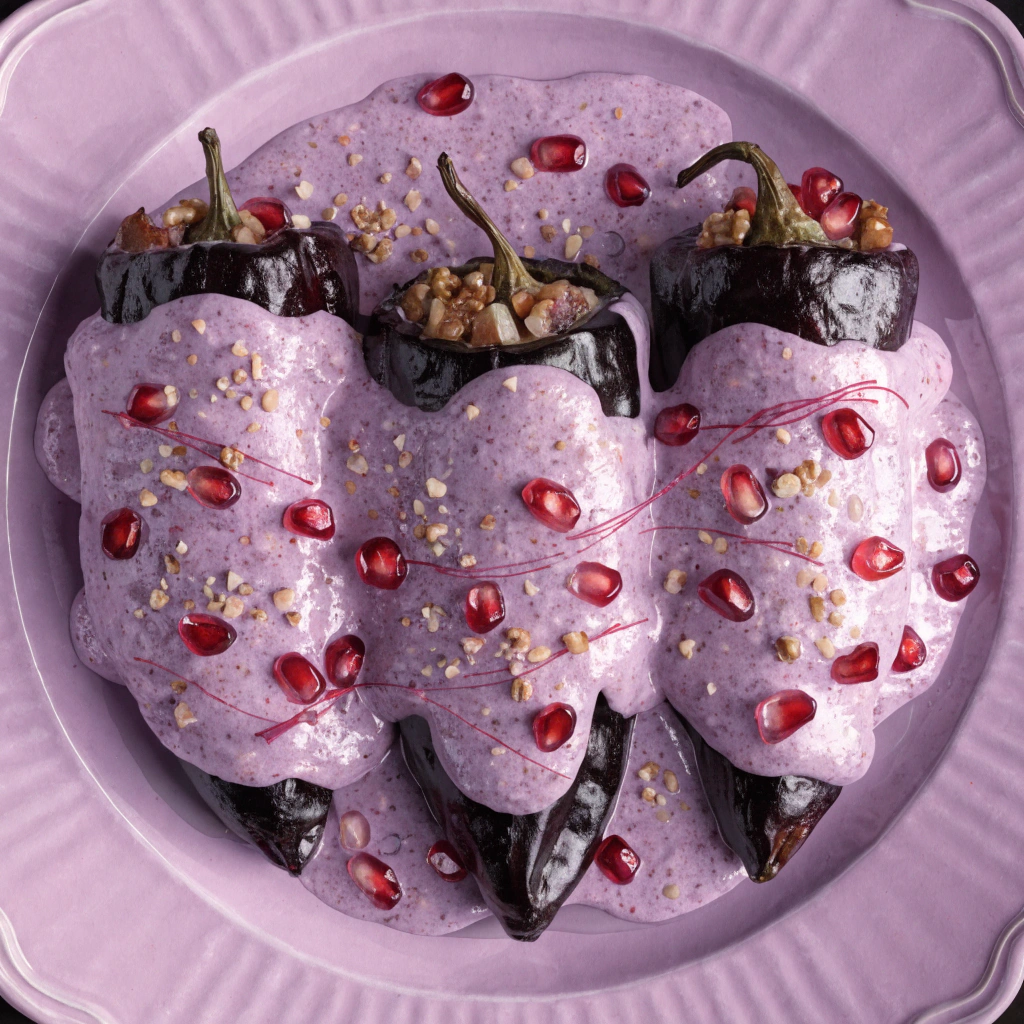
A Famous Mexican Dish: Chiles en Nogada
Mexico has a special food in August. It is called Chiles en Nogada. This dish is very famous and beautiful. It has three colors: green, white, and red. These are the colors of the Mexican flag.
The dish uses green peppers. Inside the peppers, there is meat and fruit. On top, there is a white sauce. This sauce is made of walnuts. Then, people put red pomegranate seeds on it.
People eat this dish to celebrate Mexican independence. It is a very important tradition. Families eat together and enjoy the delicious food. It is only available in late summer.
Gramática destacada
Patrón: Present Simple (Be verb)
"It is a very important tradition."
We use 'is' with singular subjects like 'it' or 'he'. It is used to describe facts or characteristics.
Patrón: There is / There are
"Inside the peppers, there is meat and fruit."
We use 'there is' to say that something exists. Use 'there is' for singular or uncountable nouns.
Pon a prueba tu comprensión
10 preguntas · A1 Principiante · 1 vista previa gratis
Pon a prueba lo que aprendiste en este artículo. ¡Responde todas las preguntas para ganar XP!
When is this dish usually available?
¿Quieres terminar el quiz?
9 preguntas más te esperan. ¡Regístrate gratis para desbloquear el quiz completo y ganar XP!
Regístrate gratis¿Ya tienes cuenta? Acceder
Desglose de preguntas
When is this dish usually available?
Tu respuesta:
Respuesta correcta: In August
The dish has the same colors as the Mexican flag.
Tu respuesta:
Respuesta correcta: Verdadero
What is a 'tradition'?
Tu respuesta:
Respuesta correcta: A custom from the past
Families eat _____ and enjoy the delicious food.
Tu respuesta:
Respuesta correcta: together
A Special Mexican Dish: Chiles en Nogada
In Mexico, August is a very special month for food. People wait all year to eat Chiles en Nogada. This dish is only available in late summer because the ingredients are seasonal. You need fresh walnuts and sweet pomegranates to make it.
The dish is famous because it has the colors of the Mexican flag. There is a green chili pepper filled with meat and fruit. Then, there is a white sauce made of walnuts. Finally, there are red pomegranate seeds on top. It looks more colorful than most other meals in the country.
The history of the dish is very interesting. In 1821, some nuns in the city of Puebla wanted to celebrate a famous general. They created this recipe for him because he helped Mexico become independent. Today, families eat this meal together to celebrate their country and history. It is a delicious and important tradition for every Mexican person.
Gramática destacada
Patrón: Comparative Adjectives
"It looks more colorful than most other meals in the country."
We use 'more' with long adjectives to compare two things. We use 'than' after the adjective to introduce the second thing.
Patrón: Past Simple (Regular Verbs)
"They created this recipe for him because he helped Mexico become independent."
We add '-ed' to regular verbs like 'create' and 'help' to talk about finished actions in the past. This is used for historical events.
Pon a prueba tu comprensión
11 preguntas · A2 Básico · 1 vista previa gratis
Pon a prueba lo que aprendiste en este artículo. ¡Responde todas las preguntas para ganar XP!
When is Chiles en Nogada usually available?
¿Quieres terminar el quiz?
10 preguntas más te esperan. ¡Regístrate gratis para desbloquear el quiz completo y ganar XP!
Regístrate gratis¿Ya tienes cuenta? Acceder
Desglose de preguntas
When is Chiles en Nogada usually available?
Tu respuesta:
Respuesta correcta: In late summer
The dish has the same colors as the Mexican flag.
Tu respuesta:
Respuesta correcta: Verdadero
What does 'independent' mean?
Tu respuesta:
Respuesta correcta: Free from control
The dish has the colors of the Mexican _____.
Tu respuesta:
Respuesta correcta: flag
Where did the nuns who created the recipe live?
Tu respuesta:
Respuesta correcta: Puebla
Chiles en Nogada: Un Sabor con Historia y Tradición Mexicana
Con la llegada del mes de agosto a México, una especial anticipación culinaria llena el aire. Hablamos, por supuesto, de los famosos Chiles en Nogada. Este plato, que es un verdadero símbolo patrio, solo está disponible durante los meses de finales de verano y principios de otoño. Su existencia se debe a la cosecha de sus ingredientes clave de temporada, como la nuez de Castilla fresca y las granadas maduras. Cada año, miles de personas en todo el país esperan con ilusión la oportunidad de probar esta delicia única.
La historia de los Chiles en Nogada está profundamente ligada a la independencia de México. Según una leyenda popular, las monjas agustinas recoletas del Convento de Santa Mónica en Puebla crearon esta receta en 1821. Ellas querían honrar a Agustín de Iturbide, un militar importante de la época, cuando él visitó la ciudad después de firmar la Independencia. Las monjas pensaron en un plato que representara los colores de la nueva bandera mexicana: el verde del chile poblano y el perejil, el blanco de la nogada y el rojo vibrante de la granada.
La preparación es elaborada y ha sido pasada de generación en generación. El ingrediente principal es el chile poblano, que se rellena con un picadillo dulce y salado. Este picadillo contiene carne de cerdo y res, y una variedad de frutas frescas y secas como manzana, pera, durazno y pasas. Luego, el chile relleno se cubre generosamente con una salsa cremosa y blanca, hecha con nuez de Castilla fresca, leche, queso y especias. Finalmente, el plato es decorado con granos de granada roja y hojas de perejil fresco, completando así los colores de la bandera.
Este platillo no solo es delicioso por su combinación de sabores dulces y salados, sino que también ha sido declarado Patrimonio Cultural de la Nación. Su preparación es un arte y su degustación, una tradición que se celebra con orgullo en todo el país. Es una experiencia que combina historia, cultura y gastronomía de una manera inolvidable, mostrando la riqueza culinaria de México.
Gramática destacada
Patrón: Voz Pasiva con 'se'
"El chile poblano, que se rellena con un picadillo dulce y salado."
La voz pasiva con 'se' se usa para hablar de acciones donde el agente que realiza la acción no es importante o no se menciona. Se forma con 'se' + el verbo en tercera persona del singular o plural, dependiendo del sujeto de la acción.
Patrón: Presente Perfecto (Pretérito Perfecto Compuesto)
"Este platillo no solo es delicioso... sino que también ha sido declarado Patrimonio Cultural de la Nación."
El presente perfecto se usa para hablar de acciones pasadas que tienen una conexión con el presente o que ocurrieron en un período de tiempo que aún no ha terminado. Se forma con el verbo 'haber' en presente (he, has, ha, hemos, habéis, han) y el participio pasado del verbo principal.
Pon a prueba tu comprensión
11 preguntas · B1 Intermedio · 1 vista previa gratis
Pon a prueba lo que aprendiste en este artículo. ¡Responde todas las preguntas para ganar XP!
¿Por qué los Chiles en Nogada solo están disponibles en los meses de finales de verano y principios de otoño?
¿Quieres terminar el quiz?
10 preguntas más te esperan. ¡Regístrate gratis para desbloquear el quiz completo y ganar XP!
Regístrate gratis¿Ya tienes cuenta? Acceder
Desglose de preguntas
¿Por qué los Chiles en Nogada solo están disponibles en los meses de finales de verano y principios de otoño?
Tu respuesta:
Respuesta correcta: Coincide con la cosecha de sus ingredientes principales de temporada.
Según la leyenda, las monjas crearon los Chiles en Nogada para honrar a un rey español.
Tu respuesta:
Respuesta correcta: Falso
¿Qué significa la palabra 'patrio' en el contexto del artículo?
Tu respuesta:
Respuesta correcta: Que se refiere a la patria o al país de uno.
El chile poblano se ______ con un picadillo dulce y salado.
Tu respuesta:
Respuesta correcta: rellena
¿Qué colores de la bandera mexicana representan los Chiles en Nogada?
Tu respuesta:
Respuesta correcta: Verde, blanco y rojo.
Chiles en Nogada: Un Símbolo Culinario de la Identidad Mexicana
Cada agosto, una particular anticipación culinaria se apodera de México, marcando el inicio de la temporada de uno de sus platillos más emblemáticos y patrióticos: los Chiles en Nogada. Este manjar efímero, cuya disponibilidad está intrínsecamente ligada a la cosecha de sus ingredientes clave – la nuez de Castilla y la granada –, trasciende la mera gastronomía para convertirse en un símbolo de la historia y la identidad nacional.
La narrativa de los Chiles en Nogada está profundamente arraigada en el contexto de la Independencia de México. La leyenda más difundida sostiene que fueron las monjas agustinas recoletas del Convento de Santa Mónica en Puebla quienes, en 1821, concibieron esta receta para agasajar a Agustín de Iturbide, el entonces líder del Ejército Trigarante. Se dice que el plato fue diseñado meticulosamente para reflejar los colores de la bandera del ejército: el verde del chile poblano y el perejil, el blanco de la salsa de nogada y el rojo de la granada. Esta convergencia de sabor y simbolismo lo elevó rápidamente a la categoría de icono nacional.
Más allá de la anécdota fundacional, la preparación de los Chiles en Nogada es un arte que demanda paciencia y dedicación. El chile poblano, asado y pelado, se rellena con un picadillo elaborado con carne de cerdo y/o res, frutas de temporada como manzana, pera y durazno, y frutos secos. La verdadera estrella, no obstante, es la salsa de nogada, una emulsión aterciopelada a base de nuez de Castilla fresca, leche, queso de cabra y especias, que confiere al plato su carácter distintivo y su nombre. La granada y el perejil finamente picado son el toque final, aportando frescura, color y un contraste textural que deleita el paladar.
La estacionalidad de sus componentes es crucial. La nuez de Castilla, por ejemplo, solo se recolecta a finales del verano, ofreciendo un sabor dulce y delicado que no se encuentra en otras variedades de nuez. Del mismo modo, la granada alcanza su punto óptimo de maduración en estas fechas. Esta dependencia de los ciclos naturales subraya la conexión del plato con la tierra y sus ritmos, haciendo de cada degustación una experiencia genuina y esperada.
En definitiva, los Chiles en Nogada no son solo un plato; son una celebración de la cultura, la historia y la riqueza agrícola de México. Su complejidad de sabores y su profunda carga simbólica los consolidan como una joya de la culinaria mexicana, cuya presencia anual es esperada con entusiasmo por locales y visitantes por igual.
Gramática destacada
Patrón: El Subjuntivo para expresar propósito o finalidad
"La leyenda más difundida sostiene que fueron las monjas agustinas recoletas del Convento de Santa Mónica en Puebla quienes, en 1821, concibieron esta receta para agasajar a Agustín de Iturbide."
El subjuntivo se utiliza después de 'para que' o 'para' + infinitivo para indicar el propósito o la finalidad de una acción. En este caso, 'para agasajar' expresa el objetivo de la creación de la receta. Es común usarlo cuando el sujeto del verbo principal es diferente al del verbo subordinado, aunque aquí se usa con infinitivo por ser el mismo sujeto implícito.
Patrón: La Voz Pasiva Refleja
"Se dice que el plato fue diseñado meticulosamente para reflejar los colores de la bandera del ejército."
La voz pasiva refleja se construye con 'se' más un verbo en tercera persona (singular o plural). Se usa para describir una acción sin especificar quién la realiza, enfocándose en la acción o el objeto. Es muy común en español para generalizaciones o para evitar mencionar al agente de la acción.
Patrón: Uso de 'cuya' para establecer posesión o relación
"Este manjar efímero, cuya disponibilidad está intrínsecamente ligada a la cosecha de sus ingredientes clave, trasciende la mera gastronomía."
'Cuyo', 'cuya', 'cuyos', 'cuyas' son pronombres relativos posesivos que se utilizan para indicar que algo pertenece o está relacionado con el antecedente. Concuerdan en género y número con el sustantivo al que preceden, no con el antecedente. En este ejemplo, 'cuya disponibilidad' se refiere a la disponibilidad del 'manjar efímero'.
Pon a prueba tu comprensión
11 preguntas · B2 Intermedio alto · 1 vista previa gratis
Pon a prueba lo que aprendiste en este artículo. ¡Responde todas las preguntas para ganar XP!
¿Cuál es la principal razón por la que los Chiles en Nogada son considerados un platillo de temporada?
¿Quieres terminar el quiz?
10 preguntas más te esperan. ¡Regístrate gratis para desbloquear el quiz completo y ganar XP!
Regístrate gratis¿Ya tienes cuenta? Acceder
Desglose de preguntas
¿Cuál es la principal razón por la que los Chiles en Nogada son considerados un platillo de temporada?
Tu respuesta:
Respuesta correcta: Sus ingredientes clave solo están disponibles en ciertas épocas del año.
Según la leyenda, las monjas de Puebla crearon los Chiles en Nogada para Agustín de Iturbide.
Tu respuesta:
Respuesta correcta: Verdadero
¿Qué significa la palabra 'efímero' en el contexto del artículo?
Tu respuesta:
Respuesta correcta: Que dura por muy poco tiempo.
La salsa de nogada se elabora principalmente con __________ de Castilla fresca.
Tu respuesta:
Respuesta correcta: nuez
¿Qué colores de la bandera del ejército se dice que representan los Chiles en Nogada?
Tu respuesta:
Respuesta correcta: Verde, blanco y rojo.
Chiles en Nogada: The Ephemeral Intersection of Gastronomy and National Identity
Seldom has a culinary creation so perfectly encapsulated the nascent spirit of a nation as the Chile en Nogada. As the sweltering heat of the Mexican summer reaches its zenith in August, a palpable sense of anticipation permeates the gastronomic landscape. This dish is not merely a seasonal delicacy; it is a temporal phenomenon, strictly dictated by the unforgiving laws of seasonality. The arrival of the ‘nuez de Castilla’ (walnuts) and the vibrant pomegranate seeds signals a fleeting window of availability that food enthusiasts across the globe observe with reverence.
It was the Augustinian Recollect nuns of the Santa Monica Convent in Puebla who, in 1821, allegedly orchestrated this complex recipe to honor Agustín de Iturbide. Following the signing of the Treaty of Córdoba, which solidified Mexican independence, the dish was presented as a visual homage to the new national flag. The green of the poblano chili, the white of the walnut sauce, and the red of the pomegranate seeds represent a confluence of culinary artistry and political symbolism. While historical veracity regarding the exact origin is often debated by scholars, the cultural significance of the dish remains undisputed.
The preparation of Chiles en Nogada is notoriously arduous, requiring a level of patience that defies modern fast-food sensibilities. Central to its quintessential flavor profile is the meticulous peeling of individual walnuts to ensure the nogada sauce remains ivory-white and free from bitterness. This labor-intensive process, often involving entire families, highlights the communal nature of Mexican heritage. The filling—a sophisticated picadillo of meat, dried fruits, and local spices—further complicates the palate, offering a nuanced balance between savory and sweet notes.
In contemporary Mexico, the commodification of this tradition presents a fascinating sociological study. Not only does the dish serve as a source of local pride, but it also prompts critical discussions regarding the preservation of authentic ingredients versus modern culinary innovation. The tension between maintaining the integrity of the 19th-century recipe and adapting to globalized supply chains reflects broader societal shifts. Ultimately, the consumption of Chiles en Nogada transcends mere sustenance; it is a ritualistic participation in history, a fleeting taste of a revolution that continues to define the Mexican psyche.
Gramática destacada
Patrón: Negative Inversion
"Seldom has a culinary creation so perfectly encapsulated the nascent spirit of a nation as the Chile en Nogada."
Inversion is used after negative or restrictive adverbs like 'seldom' to create a formal or dramatic effect. The auxiliary verb precedes the subject.
Patrón: Cleft Sentences
"It was the Augustinian Recollect nuns of the Santa Monica Convent in Puebla who, in 1821, allegedly orchestrated this complex recipe."
This structure (It + be + subject + relative clause) is used to focus on a specific piece of information, in this case, the creators of the dish.
Patrón: Nominalisation
"The commodification of this tradition presents a fascinating sociological study."
Nominalisation involves turning verbs or adjectives into nouns. Here, 'commodification' (from commodify) makes the tone more academic and objective.
Pon a prueba tu comprensión
12 preguntas · C1 Avanzado · 1 vista previa gratis
Pon a prueba lo que aprendiste en este artículo. ¡Responde todas las preguntas para ganar XP!
What is the primary reason for the dish's limited seasonal availability?
¿Quieres terminar el quiz?
11 preguntas más te esperan. ¡Regístrate gratis para desbloquear el quiz completo y ganar XP!
Regístrate gratis¿Ya tienes cuenta? Acceder
Desglose de preguntas
What is the primary reason for the dish's limited seasonal availability?
Tu respuesta:
Respuesta correcta: The harvest time of walnuts and pomegranates
The historical origins of the dish are definitively proven and never questioned by scholars.
Tu respuesta:
Respuesta correcta: Falso
Which word describes a task that is extremely difficult and requires much effort?
Tu respuesta:
Respuesta correcta: Arduous
The meticulous _____ of walnuts is necessary to prevent the sauce from becoming bitter.
Tu respuesta:
Respuesta correcta: peeling
What do the colors of the dish represent?
Tu respuesta:
Respuesta correcta: The colors of the Mexican national flag
The text suggests that the dish is both a source of pride and a subject of sociological debate.
Tu respuesta:
Respuesta correcta: Verdadero
The Gastronomic Palimpsest: Deciphering the Cultural Semiotics of Chiles en Nogada
As the zenith of the Mexican summer wanes, a palpable sense of culinary anticipation permeates the high plateaus of Puebla. It is during this ephemeral window, when the walnut trees yield their prized 'nuez de Castilla' and the pomegranates burst with rubicund seeds, that the quintessential Mexican dish, Chiles en Nogada, makes its annual debut. To the uninitiated, it may appear as a mere stuffed poblano pepper; however, to the scholar of cultural semiotics, it represents a complex palimpsest of colonial heritage, revolutionary sovereignty, and ecclesiastical artistry. The convergence of seasonal bounty and revolutionary fervor in this dish provides a unique lens through which one might examine the construction of Mexican national identity.
The provenance of the dish is steeped in a narrative that borders on hagiography. Legend dictates that in 1821, following the signing of the Treaty of Córdoba, the Augustinian Recollect nuns of the Santa Monica Convent in Puebla sought to honor Agustín de Iturbide, the military commander who secured Mexican independence. Had the nuns not possessed such a keen sense of chromatic symbolism, the dish might have lacked its defining tricolor aesthetic. By draping the green poblano pepper in a velvety white walnut sauce and crowning it with crimson pomegranate arils, they mirrored the fledgling nation’s flag, thereby cementing a symbiosis between gastronomy and national identity. Lest the historical record be perceived as purely factual, one must acknowledge the hagiographic layers that shroud the dish's inception. Some historians posit that the recipe predates the revolutionary era, suggesting that the nuns merely adapted an existing vestige of Spanish-Moorish influence to suit the political climate.
Regardless of its exact nomenclature or chronological origin, the dish’s organoleptic profile is undeniably intricate. The 'Baroque' culinary tradition of Puebla, characterized by its 'horror vacui'—a metaphorical fear of simple flavors—finds its ultimate expression here. The picadillo filling is not a monolith of flavor but a nuanced tapestry. It incorporates panochera apples, sweet milk pears, and criollo peaches, varieties that are themselves vestiges of a colonial agricultural landscape that is slowly eroding under the pressure of globalized monocultures. The inclusion of acitron (candied cactus) points to a historical reliance on the surrounding arid ecosystems, though its use today is fraught with ecological concerns.
The labor-intensive nature of Chiles en Nogada underscores its status as a ritualistic performance. The peeling of the walnuts, a process that demands meticulous precision to avoid bitterness, is a communal activity that bridges generations. It is within this painstaking preparation that the gustatory experience transcends mere sustenance. The dish serves as a seasonal anchor, a reminder of the cyclicality of nature and the enduring legacy of the Mexican struggle for autonomy. Furthermore, the contemporary consumption of Chiles en Nogada is not merely a matter of preference but a performative act of 'Mexicanidad'.
Seldom does a single culinary creation encapsulate the multifaceted narrative of a nation's birth so poignantly. As scholars analyze the dish through various theoretical lenses, it remains a testament to the power of food as a vehicle for historical memory. Whether viewed as an ecclesiastical tribute or a revolutionary emblem, Chiles en Nogada continues to captivate the collective imagination, proving that the most profound histories are often written in the language of the palate. The dish remains a seasonal bulwark against the homogenization of modern cuisine, requiring a level of patience that defies the logic of fast-food convenience.
Gramática destacada
Patrón: Inverted Conditional (Third Conditional)
"Had the nuns not possessed such a keen sense of chromatic symbolism, the dish might have lacked its defining tricolor aesthetic."
This formal structure replaces 'If the nuns had not' by inverting the auxiliary verb 'had' and the subject. It is used to express hypothetical past situations and their consequences in scholarly writing.
Patrón: The Subjunctive after 'Lest'
"Lest the historical record be perceived as purely factual, one must acknowledge the hagiographic layers that shroud the dish's inception."
The word 'lest' is followed by the base form of the verb (the subjunctive 'be') to express a negative purpose or a fear of something happening. It is a hallmark of C2-level academic prose.
Patrón: Negative Inversion for Emphasis
"Seldom does a single culinary creation encapsulate the multifaceted narrative of a nation's birth so poignantly."
Starting a sentence with a negative adverb like 'seldom' requires inverting the subject and the auxiliary verb. This shifts the focus to the rarity or significance of the action.
Pon a prueba tu comprensión
12 preguntas · C2 Dominio · 1 vista previa gratis
Pon a prueba lo que aprendiste en este artículo. ¡Responde todas las preguntas para ganar XP!
According to the article, why is the dish considered a 'palimpsest'?
¿Quieres terminar el quiz?
11 preguntas más te esperan. ¡Regístrate gratis para desbloquear el quiz completo y ganar XP!
Regístrate gratis¿Ya tienes cuenta? Acceder
Desglose de preguntas
According to the article, why is the dish considered a 'palimpsest'?
Tu respuesta:
Respuesta correcta: Because it contains multiple layers of historical and cultural meaning.
The article suggests that the story of the nuns creating the dish in 1821 is an undisputed historical fact.
Tu respuesta:
Respuesta correcta: Falso
What does the word 'ephemeral' imply regarding the dish's availability?
Tu respuesta:
Respuesta correcta: It is only available for a very brief seasonal period.
The dish mirrors the colors of the Mexican _____.
Tu respuesta:
Respuesta correcta: flag
What is the primary reason the peeling of walnuts is described as 'painstaking'?
Tu respuesta:
Respuesta correcta: It must be done to prevent a bitter taste.
The author argues that modern fast-food logic is compatible with the preparation of Chiles en Nogada.
Tu respuesta:
Respuesta correcta: Falso

