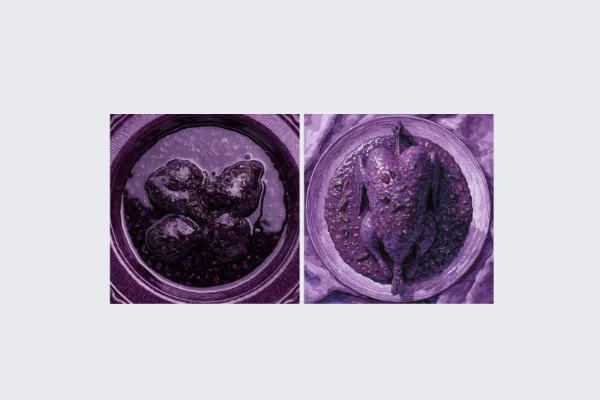
La Semana Santa en Braga: Una Fiesta Especial
Braga es una ciudad en Portugal. Es una ciudad muy bonita y antigua. Muchas personas llaman a Braga la "Roma de Portugal" porque hay muchas iglesias aquí.
La Semana Santa es una fiesta importante en Braga. Es una semana muy especial. La ciudad cambia mucho para esta celebración. Las ventanas de las casas tienen telas moradas. El aire huele a incienso y a pinos.
Hay procesiones en las calles. Las personas caminan despacio. Es una tradición muy vieja. La Semana Santa en Braga es muy famosa. Muchas personas visitan Braga para ver esta fiesta. Es una experiencia bonita y tranquila.
Gramática destacada
Patrón: Verbo SER
"Braga es una ciudad en Portugal."
Usamos el verbo 'ser' para hablar de la identidad o características permanentes de algo o alguien. También para decir de dónde es algo o su profesión.
Patrón: Expresión HAY
"Hay muchas iglesias aquí."
Usamos 'hay' para decir que algo existe o está presente en un lugar. Es una forma impersonal del verbo 'haber' y se usa para singular y plural.
Pon a prueba tu comprensión
10 preguntas · A1 Principiante · 1 vista previa gratis
Pon a prueba lo que aprendiste en este artículo. ¡Responde todas las preguntas para ganar XP!
¿Cómo se llama a veces a la ciudad de Braga?
¿Quieres terminar el quiz?
9 preguntas más te esperan. ¡Regístrate gratis para desbloquear el quiz completo y ganar XP!
Regístrate gratis¿Ya tienes cuenta? Acceder
Desglose de preguntas
¿Cómo se llama a veces a la ciudad de Braga?
Tu respuesta:
Respuesta correcta: La Roma de Portugal
El aire en Braga huele a café durante la Semana Santa.
Tu respuesta:
Respuesta correcta: Falso
¿Qué significa la palabra "iglesias"?
Tu respuesta:
Respuesta correcta: Edificios donde las personas van a rezar
Las ventanas de las casas tienen telas _____.
Tu respuesta:
Respuesta correcta: moradas
Semana Santa en Braga: Una Tradición Única
La Semana Santa es una celebración muy importante en Portugal, pero la ciudad de Braga tiene los eventos más famosos y bonitos. Braga es conocida como la "Roma de Portugal" porque tiene muchas iglesias y una historia religiosa muy profunda. Durante esta semana, la ciudad se transforma por completo.
Las ventanas de las casas se adornan con telas moradas, y el olor a incienso y a ramas de pino fresco llena el aire de las calles. La ciudad tiene un ambiente muy especial y antiguo. No son solo servicios religiosos; son ritos y procesiones que la gente celebra con mucha fe.
Estos ritos antiguos son una parte importante de la cultura de Braga. Muchas personas, jóvenes y mayores, participan activamente en estas celebraciones. El año pasado, miles de turistas visitaron Braga para ver esta fiesta. Es una experiencia única para todos los que visitan Braga en esta época del año. La Semana Santa en Braga es más que una fiesta; es una tradición que se vive con el corazón.
Gramática destacada
Patrón: El Pretérito Indefinido (Pasado Simple)
"El año pasado, miles de turistas **visitaron** Braga para ver esta fiesta."
Usamos el pretérito indefinido para hablar de acciones que empezaron y terminaron en el pasado. Indica un momento específico en el tiempo. Para verbos terminados en -ar como 'visitar', quitamos -ar y añadimos -é, -aste, -ó, -amos, -asteis, -aron.
Patrón: Comparativo de Superioridad ('más... que')
"La ciudad de Braga tiene los eventos **más famosos y bonitos**."
Usamos 'más... que' para comparar dos cosas y decir que una tiene una cualidad en mayor grado que la otra. Se forma con 'más' + adjetivo + 'que'. Por ejemplo: 'El coche es más rápido que la moto'.
Pon a prueba tu comprensión
11 preguntas · A2 Básico · 1 vista previa gratis
Pon a prueba lo que aprendiste en este artículo. ¡Responde todas las preguntas para ganar XP!
¿Cómo es conocida la ciudad de Braga?
¿Quieres terminar el quiz?
10 preguntas más te esperan. ¡Regístrate gratis para desbloquear el quiz completo y ganar XP!
Regístrate gratis¿Ya tienes cuenta? Acceder
Desglose de preguntas
¿Cómo es conocida la ciudad de Braga?
Tu respuesta:
Respuesta correcta: La Roma de Portugal
El artículo dice que la Semana Santa no es una celebración importante en Portugal.
Tu respuesta:
Respuesta correcta: Falso
¿Qué significa la palabra 'incienso'?
Tu respuesta:
Respuesta correcta: Una sustancia que produce un olor agradable al quemarse
Las ventanas de las casas se adornan con telas _______.
Tu respuesta:
Respuesta correcta: moradas
El olor a _______ y a ramas de pino fresco llena el aire.
Tu respuesta:
Respuesta correcta: incienso
Discovering Holy Week in the City of Braga
Braga is a beautiful city in the north of Portugal which is often called the 'Rome of Portugal'. This name has been given to the city because it has many churches and a long religious history. Every year, during the spring, thousands of people visit Braga to see the 'Semana Santa', or Holy Week. These celebrations are famous all over the world for their beauty and tradition.
During this special week, the city is transformed into a place of reflection. Windows are decorated with purple drapes, and the streets are covered with damp pine branches. The air is filled with the strong scent of incense. It is an experience that touches all the senses and makes visitors feel like they have traveled back in time.
The most famous parts of the celebration are the processions. One of the most interesting traditions involves the 'Farricocos'. These are figures who wear black clothes and carry torches through the streets. They represent people who are doing penance. During these parades, the silence of the crowd is broken only by the sound of drums and heavy footsteps. It is a very atmospheric event that creates a serious but beautiful mood.
Many tourists have traveled to Braga to witness these ancient rites. Although the events are religious, they are also a significant part of Portuguese culture. If you visit, you will see how traditions have been preserved for centuries. It is a time when the past and the present meet in a very special way, showing the deep identity of the local people.
Gramática destacada
Patrón: Relative Clauses
"Braga is a beautiful city in the north of Portugal which is often called the 'Rome of Portugal'."
Relative clauses start with words like 'which' or 'who' to give more information about a noun. In this case, 'which' adds detail about the city of Braga.
Patrón: Passive Voice
"the city is transformed into a place of reflection."
The passive voice is used when the action is more important than the person doing it. It is formed using the verb 'to be' plus the past participle.
Pon a prueba tu comprensión
11 preguntas · B1 Intermedio · 1 vista previa gratis
Pon a prueba lo que aprendiste en este artículo. ¡Responde todas las preguntas para ganar XP!
Why is Braga known as the 'Rome of Portugal'?
¿Quieres terminar el quiz?
10 preguntas más te esperan. ¡Regístrate gratis para desbloquear el quiz completo y ganar XP!
Regístrate gratis¿Ya tienes cuenta? Acceder
Desglose de preguntas
Why is Braga known as the 'Rome of Portugal'?
Tu respuesta:
Respuesta correcta: Because it has many churches and a religious history
The streets of Braga are covered with red flowers during Holy Week.
Tu respuesta:
Respuesta correcta: Falso
What does the word 'ancient' mean?
Tu respuesta:
Respuesta correcta: From the very distant past
The air in the city is filled with the strong scent of _____.
Tu respuesta:
Respuesta correcta: incense
Who are the 'Farricocos' in the celebrations?
Tu respuesta:
Respuesta correcta: Figures in black clothes carrying torches
The Living History of Braga: Exploring the Solemnity of Semana Santa
Braga, frequently referred to as the 'Rome of Portugal,' serves as the epicenter of one of Europe’s most profound cultural and religious manifestations: Semana Santa. While Holy Week is observed throughout the Iberian Peninsula, the celebrations in this northern Portuguese city are distinguished by their unparalleled historical depth and atmospheric intensity. During this period, the city undergoes a remarkable transformation, blending ancient traditions with a contemporary sense of community and devotion.
As visitors wander through the narrow streets of the historic center, they are immediately struck by the sensory shift. Windows are traditionally adorned with purple drapes, a color symbolizing penance and mourning in the Christian tradition. Furthermore, the air is thick with the scent of incense and damp pine branches, which are scattered across the pavement to pave the way for the numerous processions. These elements combined create a somber yet captivating environment that transports observers back through centuries of religious heritage.
One of the most iconic moments of the week is the 'Ecce Homo' procession. This event is led by the 'Farricocos,' mysterious figures dressed in black tunics and hoods, carrying torches and rattles. Historically, these individuals represented penitents who sought forgiveness, and their presence today continues to evoke a sense of mystery and reflection. The rhythmic sound of the rattles, echoing against the stone walls, serves as a poignant reminder of the event's gravity.
Nevertheless, Semana Santa in Braga is not merely a reenactment of the past; it is a dynamic cultural event that requires meticulous planning and significant community involvement. Local guilds and brotherhoods spend months preparing the elaborate floats, known as 'passos,' which are carried through the streets. These floats, decorated with intricate flowers and statues, depict scenes from the Passion of Christ, serving as mobile altars for the thousands of spectators who line the route.
From an analytical perspective, the enduring popularity of these rites highlights the intersection of faith, identity, and tourism. While the religious significance remains paramount for many, the event also serves as a vital expression of regional heritage. Consequently, Braga has succeeded in preserving its ancient customs while simultaneously welcoming a global audience. Whether one approaches the week from a spiritual or a historical viewpoint, the experience of Semana Santa in Braga remains an unforgettable encounter with the soul of Portugal.
Gramática destacada
Patrón: Passive Voice
"Windows are traditionally adorned with purple drapes..."
The passive voice is used here to focus on the objects being decorated rather than who is decorating them. It is formed using the verb 'to be' and the past participle of the main verb.
Patrón: Non-defining Relative Clauses
"...damp pine branches, which are scattered across the pavement..."
This pattern provides extra, non-essential information about a noun. It is separated from the rest of the sentence by commas and uses 'which' for objects.
Patrón: Present Perfect Simple
"Braga has succeeded in preserving its ancient customs..."
This tense is used to describe an action that happened at an unspecified time in the past and has a result or relevance in the present.
Pon a prueba tu comprensión
11 preguntas · B2 Intermedio alto · 1 vista previa gratis
Pon a prueba lo que aprendiste en este artículo. ¡Responde todas las preguntas para ganar XP!
Why is Braga often called the 'Rome of Portugal'?
¿Quieres terminar el quiz?
10 preguntas más te esperan. ¡Regístrate gratis para desbloquear el quiz completo y ganar XP!
Regístrate gratis¿Ya tienes cuenta? Acceder
Desglose de preguntas
Why is Braga often called the 'Rome of Portugal'?
Tu respuesta:
Respuesta correcta: Due to its high concentration of churches and religious history.
Purple drapes are used in the city to symbolize celebration and joy.
Tu respuesta:
Respuesta correcta: Falso
What does the word 'meticulous' mean in the context of the article?
Tu respuesta:
Respuesta correcta: Very careful and precise
The air in the city is thick with the scent of _____ and damp pine branches.
Tu respuesta:
Respuesta correcta: incense
Who are the 'Farricocos' mentioned in the text?
Tu respuesta:
Respuesta correcta: Hooded figures carrying torches and rattles.
El misticismo de la 'Roma portuguesa': Un análisis de la Semana Santa de Braga
Resulta imperativo destacar que, si bien la Semana Santa se celebra con fervor en toda la geografía lusa, es en la ciudad de Braga donde la tradición alcanza su cénit estético y espiritual. Conocida popularmente como la 'Roma portuguesa' debido a su densa proliferación de templos y su honda raigambre eclesiástica, la ciudad se erige como el escenario idóneo para ritos que parecen suspendidos en el tiempo. No es simplemente una sucesión de actos litúrgicos lo que aquí acontece, sino una transformación integral del tejido urbano y social que sumerge al visitante en una atmósfera de sobriedad y misticismo.
Lo que verdaderamente confiere a esta festividad su carácter distintivo es la amalgama de sensaciones táctiles y olfativas que permean el ambiente. Las ventanas de los edificios históricos se engalanan con pesados paños púrpuras, mientras que el pavimento de granito queda tapizado por ramas de pino húmedas. Este aroma boscoso, al entrelazarse con las densas columnas de incienso que emanan de los incensarios, crea una experiencia sensorial casi onírica. Es precisamente esta puesta en escena la que facilita la introspección, independientemente de las convicciones religiosas del observador.
Dentro del nutrido programa de procesiones, destaca por su singularidad la del 'Ecce Homo'. Es en este desfile donde cobran protagonismo los Farricocos, figuras enigmáticas que caminan descalzas, cubiertas con túnicas negras y capirotes, portando matracas o teas encendidas. Su presencia evoca la época medieval, recordando a los antiguos penitentes que buscaban la reconciliación pública. La sobriedad de su marcha, puntuada rítmicamente por el sonido seco de las matracas, genera un contraste estremecedor con la opulencia barroca de las iglesias circundantes.
Desde una perspectiva analítica, la preservación de estas tradiciones en pleno siglo XXI plantea un debate fascinante sobre la identidad cultural frente a la secularización. La Semana Santa de Braga no ha sucumbido a la mercantilización banal; al contrario, ha sabido integrar el flujo turístico sin sacrificar la autenticidad de su liturgia. La participación activa de las cofradías y el respeto reverencial de la ciudadanía demuestran que lo sagrado y lo profano pueden coexistir en un equilibrio delicado. En última instancia, la celebración trasciende lo dogmático para convertirse en un ejercicio de memoria colectiva, donde la historia de una nación se narra a través del silencio, la luz de las velas y el eco de los pasos sobre la piedra.
Gramática destacada
Patrón: Oraciones hendidas (Cleft sentences)
"Lo que verdaderamente confiere a esta festividad su carácter distintivo es la amalgama de sensaciones..."
Se utiliza para enfatizar un elemento específico de la frase. Se estructura con 'Lo que' + verbo + 'es' + el elemento que se quiere resaltar.
Patrón: Inversión del sujeto
"Es en la ciudad de Braga donde la tradición alcanza su cénit..."
Se altera el orden lógico (Sujeto + Verbo) para dar énfasis al lugar o al contexto, una técnica común en el registro literario y formal de nivel C1.
Patrón: Nominalización
"La preservación de estas tradiciones en pleno siglo XXI plantea un debate fascinante..."
Consiste en transformar verbos (preservar) en sustantivos (preservación) para aumentar la densidad informativa y el nivel de abstracción del texto.
Pon a prueba tu comprensión
12 preguntas · C1 Avanzado · 1 vista previa gratis
Pon a prueba lo que aprendiste en este artículo. ¡Responde todas las preguntas para ganar XP!
¿Por qué se le otorga a Braga el sobrenombre de la 'Roma portuguesa'?
¿Quieres terminar el quiz?
11 preguntas más te esperan. ¡Regístrate gratis para desbloquear el quiz completo y ganar XP!
Regístrate gratis¿Ya tienes cuenta? Acceder
Desglose de preguntas
¿Por qué se le otorga a Braga el sobrenombre de la 'Roma portuguesa'?
Tu respuesta:
Respuesta correcta: Por su alta concentración de iglesias y su importancia eclesiástica.
El artículo sugiere que la Semana Santa de Braga ha perdido su esencia debido al turismo de masas.
Tu respuesta:
Respuesta correcta: Falso
¿Qué término describe mejor algo que parece sacado de un sueño?
Tu respuesta:
Respuesta correcta: Onírico
¿Quiénes son los Farricocos en la procesión del 'Ecce Homo'?
Tu respuesta:
Respuesta correcta: Figuras encapuchadas que evocan a antiguos penitentes.
El suelo de la ciudad se cubre con ramas de _____ para crear un aroma boscoso.
Tu respuesta:
Respuesta correcta: pino
La procesión del 'Ecce Homo' se caracteriza por el uso de matracas y teas.
Tu respuesta:
Respuesta correcta: Verdadero
Sacred Echoes and Temporal Palimpsests: The Ontological Weight of Braga’s Holy Week
To traverse the labyrinthine streets of Braga during the Holy Week is to witness a city where the temporal and the transcendental intersect with profound intensity. Often characterized as the 'Rome of Portugal,' Braga possesses an ecclesiastical heritage so dense that it serves as a living palimpsest of European religious history. The Semana Santa celebrations are not merely vestigial rites of a bygone era; rather, they constitute a visceral reassertion of identity in an increasingly secularized world. Should one venture into the city’s historic core during these seven days, the sensory shift is immediate. The air, thick with the evocative scent of incense and damp pine branches, carries a weight of solemnity that demands a departure from the mundane.
Central to this liturgical drama are the processions, which function as an elaborate form of public mourning and theological exposition. The 'Ecce Homo' procession, arguably the most iconic, features the 'Farricocos'—barefooted figures clad in coarse tunics who evoke a medieval penitential ethos. It is imperative that the observer recognize the dual nature of these participants; they are both an anachronism and a contemporary necessity, bridging the gap between historical guilt and modern introspection. The flickering torches they carry do not merely illuminate the cobblestones; they cast long shadows over the very concept of modernity, suggesting that beneath the veneer of progress, the human need for ritual remains unyielding.
One might posit that the efficacy of these celebrations lies in their idiosyncrasy. Unlike the more flamboyant festivities found elsewhere in the Iberian Peninsula, Braga’s Holy Week is marked by a rigorous, almost austere devotion. The city is transformed into a theatre of the sacred, where windows are draped in purple—the liturgical color of penance—and the rhythmic tolling of bells creates a temporal distortion. Scarcely has the incense settled before the next procession begins, each one adding a new layer to the city’s spiritual narrative. This cyclical nature of the event ensures that the ephemeral moments of grace are captured within a permanent structure of tradition.
Furthermore, the sociological impact of the Semana Santa cannot be understated. It is through the scent of pine and the sight of the 'Burial of the Lord' that the community reaffirms its collective memory. While academic hedging might suggest that such traditions are subject to the erosion of time, Braga’s resilience suggests otherwise. The city does not merely host the event; it is consumed by it. The interplay between the sacred liturgy and the secular public space creates a liminality where the boundaries of the self are momentarily dissolved into the greater whole of the congregation. It is this very transcendence that attracts scholars and pilgrims alike, seeking to understand the enduring power of faith in a post-metaphysical age.
In conclusion, the Semana Santa de Braga remains a cornerstone of Portuguese cultural identity. It is a testament to the fact that even in an age of digital immediacy, the slow, deliberate pace of ritual holds a unique power. Whether viewed through a theological lens or as a sociological phenomenon, the event demands an engagement with the profound. As the purple drapes are finally folded away, the city returns to its daily rhythms, yet the echoes of the processions linger, a reminder of the enduring dialogue between the human and the divine.
Gramática destacada
Patrón: Inverted Conditional
"Should one venture into the city’s historic core during these seven days, the sensory shift is immediate."
This formal structure replaces 'If one should venture' by moving the auxiliary verb to the front. It is commonly used in C2 academic or literary prose to sound more sophisticated.
Patrón: The Subjunctive Mood
"It is imperative that the observer recognize the dual nature of these participants."
The base form 'recognize' (instead of 'recognizes') is used after adjectives of urgency or importance. This highlights the necessity of an action in a formal register.
Patrón: Negative Inversion
"Scarcely has the incense settled before the next procession begins."
When a sentence starts with a negative or restrictive adverb like 'scarcely', the subject and auxiliary verb are inverted. This creates emphasis and a more dramatic narrative flow.
Pon a prueba tu comprensión
12 preguntas · C2 Dominio · 1 vista previa gratis
Pon a prueba lo que aprendiste en este artículo. ¡Responde todas las preguntas para ganar XP!
What does the author suggest about the 'Farricocos' in the Ecce Homo procession?
¿Quieres terminar el quiz?
11 preguntas más te esperan. ¡Regístrate gratis para desbloquear el quiz completo y ganar XP!
Regístrate gratis¿Ya tienes cuenta? Acceder
Desglose de preguntas
What does the author suggest about the 'Farricocos' in the Ecce Homo procession?
Tu respuesta:
Respuesta correcta: They represent a bridge between historical guilt and modern self-reflection.
Braga's Holy Week is described as being more flamboyant than other Iberian celebrations.
Tu respuesta:
Respuesta correcta: Falso
Which word describes a thing belonging to a period other than that in which it exists?
Tu respuesta:
Respuesta correcta: Anachronism
The air in Braga during Holy Week is thick with the scent of incense and damp _____ branches.
Tu respuesta:
Respuesta correcta: pine
What is the primary function of the purple drapes mentioned in the text?
Tu respuesta:
Respuesta correcta: To signify the liturgical color of penance.
The author argues that the human need for ritual has been completely replaced by modern progress.
Tu respuesta:
Respuesta correcta: Falso
Semana Santa en Braga
Hola. Esto es Braga. Braga es una ciudad en Portugal. En Braga hay muchas iglesias. La Semana Santa es una fiesta aquí. Las casas tienen color morado. Hay incienso. Es una fiesta muy bonita. Mucha gente viene. Es una semana especial en Braga.
Gramática destacada
Patrón: Es / Hay
"Braga es una ciudad. Hay muchas iglesias."
"Es" (del verbo "ser") se usa para describir o identificar algo. "Hay" (del verbo "haber") se usa para decir que algo existe o está en un lugar.
Pon a prueba tu comprensión
9 preguntas · A0 Pre-principiante · 1 vista previa gratis
Pon a prueba lo que aprendiste en este artículo. ¡Responde todas las preguntas para ganar XP!
¿Qué es Braga?
¿Quieres terminar el quiz?
8 preguntas más te esperan. ¡Regístrate gratis para desbloquear el quiz completo y ganar XP!
Regístrate gratis¿Ya tienes cuenta? Acceder
Desglose de preguntas
¿Qué es Braga?
Tu respuesta:
Respuesta correcta: Una ciudad
¿Hay muchas iglesias en Braga?
Tu respuesta:
Respuesta correcta: Verdadero
¿Qué significa "morado"?
Tu respuesta:
Respuesta correcta: Un color

