cluck در ۳۰ ثانیه
- Cluck is the primary onomatopoeic word for the sound made by a hen, often used to describe animal communication and domestic farm environments.
- In human contexts, clucking refers to making a clicking sound with the tongue to express disapproval, sympathy, or a sense of being annoyed.
- The word also describes the behavior of a person who is overly fussy or protective, similar to the actions of a 'mother hen.'
- It functions as both a regular verb (cluck, clucked) and a countable noun, appearing in various idiomatic expressions about gossip and concern.
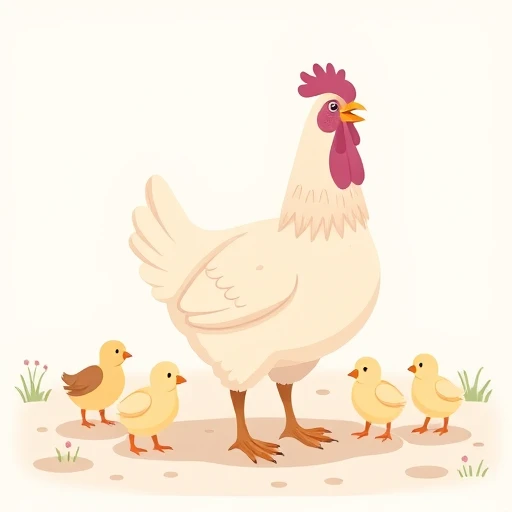
The word cluck is a fascinating example of onomatopoeia, where the sound of the word mimics the actual noise it represents. Primarily, it refers to the short, low, and rhythmic sound made by a hen. This sound is central to the communication system of domestic fowl, used by mother hens to gather their chicks or to signal a sense of safety and contentment while pecking at the ground. When you are on a farm or near a coop, the steady rhythm of clucking is the background music of poultry life. It is not a loud squawk of alarm, but rather a functional, everyday vocalization.
- Literal Usage
- The most direct use of cluck is in the context of ornithology or farming, describing the specific vocalization of a female chicken. It is often used as both a verb ('The hen clucked') and a noun ('We heard a soft cluck').
- Human Behavior
- In a metaphorical sense, humans 'cluck' when they make a clicking sound with their tongue against the roof of the mouth. This is usually done to express disapproval, annoyance, or sometimes a patronizing form of sympathy. It is the sound of 'tsk-tsk' made audible and repetitive.
Beyond the sound itself, the word has evolved to describe a specific type of human interaction. To cluck over someone is to fuss over them with excessive, often unnecessary, concern. This is closely tied to the idiom 'mother hen,' suggesting a person who is overly protective or busy with the minute details of someone else's well-being. You might hear this in a social setting where one person is constantly adjusting a friend's collar or worrying about their health in a way that feels slightly intrusive yet well-meaning.
The old woman began to cluck her tongue in disappointment when she saw the messy room.
In literature and descriptive writing, 'clucking' is used to create a specific atmosphere. It can evoke a sense of domesticity, a busy kitchen, or a crowded marketplace where people are gossiping. The sound is inherently busy and small-scale; it never describes a grand or silent event. It is the sound of the mundane, the domestic, and the social micro-interactions that fill our daily lives. Whether it is a hen in a yard or a grandmother in a kitchen, clucking signifies a state of active, albeit sometimes annoying, engagement with one's immediate surroundings.
As the guests arrived, the host began to cluck around the table, ensuring every fork was perfectly aligned.
- Social Context
- In social circles, 'clucking' can refer to a group of people gossiping or talking incessantly about trivial matters. This usage draws a parallel between a group of people talking and a flock of chickens in a yard.
The hens gave a satisfied cluck as the farmer scattered the grain across the dusty floor.
Using 'cluck' effectively requires an understanding of its dual nature as both a literal animal sound and a figurative human action. When writing about animals, 'cluck' is a straightforward verb of action. It describes the vocalization of chickens. However, when applied to humans, it becomes a more nuanced verb of expression or behavior. It often appears in the form of 'clucking one's tongue' or 'clucking about,' which changes the meaning significantly from a simple sound to a complex social signal.
- As a Verb of Sound
- When a hen clucks, she is performing a natural function. Example: 'The mother hen clucked loudly to call her straying chicks back to the safety of the coop.'
- As a Verb of Disapproval
- When a human clucks, they are often expressing a judgment. Example: 'The librarian clucked her tongue at the teenagers who were whispering in the corner.'
Grammatically, 'cluck' is a regular verb (cluck, clucked, clucking). It can also function as a countable noun. You can hear 'a cluck' or 'several clucks.' In figurative usage, 'clucking' is often used as a gerund to describe an ongoing state of fussing. For instance, 'Her constant clucking over the wedding arrangements was starting to stress the bride.' This implies a repetitive, perhaps annoying, level of attention to detail.
He could only cluck in sympathy as his friend described the unfortunate series of events.
In more creative writing, you might use 'cluck' to describe mechanical sounds that resemble the staccato rhythm of a chicken. For example, a malfunctioning engine or a rhythmic tapping could be described as a 'clucking sound.' This adds a layer of imagery to your writing, suggesting something that is small, repetitive, and perhaps slightly irritating. It is a word that brings a sense of texture to the auditory landscape of a story.
The old clock gave a rhythmic cluck every time the second hand passed the twelve.
- Idiomatic Use
- 'Clucking like a hen' is a common simile used to describe someone who is talking a lot or making a lot of noise about nothing important.
Stop clucking about the weather and just get in the car!
The word 'cluck' is most frequently heard in rural environments, but its figurative use is widespread in urban and domestic settings. On a farm, it is the primary word used to describe chicken behavior. Farmers, children visiting petting zoos, and bird enthusiasts use it daily. It is a fundamental part of the vocabulary for anyone dealing with poultry. You will hear it in documentaries about nature, in children's books about farm animals, and in agricultural reports.
- Domestic Settings
- In the home, you might hear a parent 'clucking' over a child who has a small scrape on their knee. This isn't a literal chicken sound, but the repetitive, comforting, yet slightly anxious vocalizations parents make.
- Social Commentary
- In social commentary or literature, 'clucking' is often used to describe the reaction of a conservative or judgmental group of people to a scandal. 'The town was clucking with gossip after the news broke.'
You will also encounter 'cluck' in the context of cooking, though less frequently. Sometimes, people refer to chicken meat informally as 'cluck,' though this is often considered slang or humorous. In British English, 'clucking' can also be heard in the context of 'clucking for a cigarette' or something else one is craving, though this is a very specific regional slang. Most commonly, however, you hear it in the context of disapproval. A teacher might cluck their tongue at a student's poor handwriting, or a neighbor might cluck at the state of your overgrown lawn.
The audience began to cluck in disapproval when the politician refused to answer the question.
In pop culture, 'clucking' is often used in animated films or cartoons to characterize chickens. Think of any movie set on a farm; the sound design will be filled with clucks. It is a sound that immediately signals 'farm' or 'countryside' to an audience. Furthermore, in British sitcoms, you often see characters 'clucking' over babies or new pets, emphasizing a stereotypical maternal or paternal instinct that is both sweet and slightly over-the-top.
The hens' cluck was the only sound in the quiet morning air.
- Professional Environments
- While rare in formal business, you might hear it in the breakroom where colleagues are 'clucking' over the latest office rumors or changes in management.
She heard the cluck of the tongue from behind her, signaling her mother's arrival.
One of the most common mistakes learners make with 'cluck' is confusing it with other animal sounds or similar-sounding words like 'click' or 'chuck.' While a 'cluck' and a 'click' are both short sounds, a cluck is specifically guttural and associated with the tongue or a hen, whereas a click is sharper and usually mechanical or made with the fingers. Using 'click' when you mean the sound of disapproval made with the tongue is a frequent error.
- Cluck vs. Cackle
- A 'cluck' is a low, quiet sound. A 'cackle' is a loud, shrill laugh or the loud sound a hen makes after laying an egg. Confusing these two can change the intensity of the scene you are describing.
- Cluck vs. Chirp
- Chicks 'chirp' or 'cheep,' but they do not 'cluck' until they are older. Using 'cluck' for a baby bird is biologically inaccurate and sounds odd to native speakers.
Another mistake is the over-application of the figurative meaning. While you can 'cluck' in disapproval, you shouldn't use it for every type of talking. It specifically implies a repetitive, fussy, or judgmental quality. If someone is just talking normally, 'clucking' is the wrong word. It carries a specific connotation of 'mothering' or 'gossiping' that doesn't fit all conversations. Additionally, learners sometimes forget that 'cluck' is a regular verb and try to use irregular forms, which is incorrect.
Incorrect: The hen clucken when she saw the grain. Correct: The hen clucked when she saw the grain.
Finally, be careful with the slang usage. In some very informal British contexts, 'clucking' refers to drug withdrawal or intense craving. Using this in a formal or general context could lead to significant misunderstandings. Stick to the 'hen' or 'disapproval/fussing' meanings unless you are very familiar with the specific local slang of the area you are in. Misusing this could make a sentence sound much more aggressive or strange than intended.
He clucked his tongue, a habit he had when he was thinking deeply.
- Preposition Errors
- Don't say 'cluck with someone' if you mean you are fussing over them. Use 'cluck over someone.' Prepositions are key to the figurative meaning.
When looking for synonyms or alternatives to 'cluck,' the choice depends entirely on whether you are describing a sound, an emotion, or a behavior. If you are focusing on the sound of a bird, 'chirp,' 'peep,' or 'cackle' might be appropriate, but they each describe a different pitch and volume. If you are describing the human sound of disapproval, 'tsk' or 'tut' are the most direct alternatives. These are often used interchangeably with 'clucking one's tongue.'
- Cluck vs. Tsk/Tut
- 'Tsk' and 'tut' are almost exclusively used for disapproval. 'Cluck' can also imply sympathy or simply a rhythmic sound. 'Cluck' is more descriptive of the physical action of the tongue.
- Cluck vs. Fuss
- To 'fuss' is a broader verb. 'Clucking' is a specific way of fussing that suggests a maternal or busybody-like quality. You can fuss silently, but clucking usually involves some level of sound or visible activity.
If you want to describe a group of people talking, alternatives like 'chatter,' 'babble,' or 'gossip' are useful. 'Chatter' suggests a high-pitched, fast-paced conversation, while 'clucking' suggests a more judgmental or trivial conversation. In a literary context, you might use 'murmur' if the sound is softer and less rhythmic. Choosing the right word helps paint a clearer picture of the social dynamics at play in your writing.
Instead of clucking over the broken vase, he quietly swept up the pieces.
For the sound of an object, 'click,' 'tick,' or 'tap' are common alternatives. A 'tick' is very precise (like a clock), a 'tap' is a single strike, and a 'cluck' is a more muffled, rhythmic sound. If a machine is making a 'clucking' noise, it suggests something is slightly loose or moving in a way that isn't quite sharp. This distinction is vital for technical or descriptive writing where precision in sound is required.
The hens clucked contentedly in the afternoon sun, a sound far more peaceful than the earlier squawking.
- Register Comparison
- 'Cluck' is neutral to informal. In a formal report, you would use 'vocalized' for the bird or 'expressed disapproval' for the person.
چقدر رسمی است؟
""
""
""
""
""
نکته جالب
The word has been used to describe human fussing since at least the 1600s, showing that we have been comparing people to chickens for centuries.
راهنمای تلفظ
- Pronouncing it like 'clock' (/klɒk/) with an 'o' sound.
- Pronouncing it like 'cloak' (/kləʊk/) with a long 'o' sound.
- Confusing the ending with 'ch' as in 'clutch'.
- Making the 'u' too long like 'clook'.
- Failing to aspirate the 'k' at the end.
سطح دشواری
Easy to recognize in context.
Requires understanding of figurative prepositions.
Onomatopoeic pronunciation is usually simple.
Distinctive sound makes it easy to hear.
بعداً چه یاد بگیریم؟
پیشنیازها
بعداً یاد بگیرید
پیشرفته
گرامر لازم
Onomatopoeic verbs often follow regular conjugation patterns.
cluck -> clucked
Gerunds can function as nouns to describe a continuous sound.
The clucking was constant.
Prepositions change the target of the verb 'cluck'.
Cluck 'at' vs Cluck 'over'.
Similes using 'like' often pair 'cluck' with 'hen'.
Clucking like a hen.
Noun phrases can be formed with 'cluck of'.
A cluck of sympathy.
مثالها بر اساس سطح
The hen says cluck.
La poule fait cluck.
Simple subject-verb sentence.
Cluck, cluck, cluck!
Cluck, cluck, cluck !
Repetition for emphasis of sound.
I hear a cluck.
J'entends un cluck.
Used as a noun.
The red hen can cluck.
La poule rousse peut clousser.
Use of modal verb 'can'.
A cluck is a sound.
Un cluck est un son.
Defining the noun.
Do hens cluck?
Est-ce que les poules cloussent ?
Simple question form.
The hen does not cluck now.
La poule ne clousse pas maintenant.
Negative form.
Listen to the cluck.
Écoute le cluck.
Imperative form.
The chickens cluck when they see food.
Les poulets cloussent quand ils voient de la nourriture.
Present simple for habitual action.
I heard the hen cluck in the morning.
J'ai entendu la poule clousser le matin.
Past simple tense.
She made a soft cluck with her tongue.
Elle a fait un petit cluck avec sa langue.
Noun usage with 'made'.
The mother hen is clucking to her babies.
La mère poule clousse pour ses bébés.
Present continuous tense.
Is that a cluck or a chirp?
Est-ce un cluck ou un pépiement ?
Comparison of nouns.
The farmer likes the sound of clucking.
Le fermier aime le son du cloussement.
Gerund used as a noun.
We can hear the hens clucking outside.
Nous pouvons entendre les poules clousser dehors.
Verb + object + -ing form.
The hen clucked and ran away.
La poule a cloussé et s'est enfuie.
Compound predicate.
The teacher clucked her tongue at the messy desk.
L'enseignante a fait claquer sa langue devant le bureau en désordre.
Figurative use for disapproval.
Stop clucking over me; I am fine!
Arrête de t'agiter autour de moi ; je vais bien !
Phrasal verb 'cluck over'.
He clucked in sympathy when he heard the news.
Il a fait un bruit de langue par sympathie en apprenant la nouvelle.
Expressing emotion through sound.
The room was full of people clucking about the scandal.
La pièce était pleine de gens qui jacassaient sur le scandale.
Describing gossip.
She gave a little cluck of disappointment.
Elle a poussé un petit gloussement de déception.
Noun phrase 'cluck of [emotion]'.
The engine made a strange clucking noise before it stopped.
Le moteur a fait un étrange bruit de cliquetis avant de s'arrêter.
Describing mechanical sound.
My grandmother is always clucking around the kitchen.
Ma grand-mère s'agite toujours dans la cuisine.
Describing busy behavior.
He clucked his tongue and shook his head.
Il a fait claquer sa langue et a secoué la tête.
Coordinated actions.
The hens clucked contentedly as they pecked at the scattered corn.
Les poules gloussaient de contentement en picorant le maïs dispersé.
Adverbial modification.
The neighbors were clucking like a flock of hens over the new fence.
Les voisins jacassaient comme une troupe de poules à propos de la nouvelle clôture.
Simile usage.
She couldn't help clucking over the details of the party arrangements.
Elle ne pouvait s'empêcher de s'agiter sur les détails de l'organisation de la fête.
Gerund after 'couldn't help'.
A disapproving cluck was all the response he received.
Un claquement de langue réprobateur fut la seule réponse qu'il reçut.
Noun as the subject of the sentence.
The rhythm of the machine had a distinct cluck to it.
Le rythme de la machine avait un cliquetis distinct.
Describing abstract qualities of sound.
He spent the whole afternoon clucking about the house, tidying up.
Il a passé tout l'après-midi à s'affairer dans la maison, à ranger.
Participial phrase for background action.
The sound of clucking tongues filled the courtroom as the verdict was read.
Le son des langues qui claquaient a rempli la salle d'audience à la lecture du verdict.
Metonymy (tongues for people).
Don't just stand there clucking; do something to help!
Ne reste pas là à t'agiter ; fais quelque chose pour aider !
Imperative with present participle.
The socialites spent the evening clucking over the latest fashion faux pas.
Les mondains ont passé la soirée à glousser sur les derniers faux pas de la mode.
High-level vocabulary context.
Her tendency to cluck over her adult children was a source of constant friction.
Sa tendance à couver ses enfants adultes était une source de friction constante.
Abstract noun phrase as subject.
The author uses the clucking of the hens as a metaphor for the village's gossip.
L'auteur utilise le gloussement des poules comme métaphore des commérages du village.
Literary analysis context.
He dismissed their concerns with a sharp cluck of his tongue.
Il a balayé leurs inquiétudes d'un coup sec de la langue.
Prepositional phrase 'with a...'
The old machinery clucked and groaned as it struggled to life.
La vieille machinerie a cliqueté et a gémi en s'animant avec difficulté.
Personification of machinery.
There was a lot of clucking in the press about the minister's resignation.
Il y a eu beaucoup de rumeurs dans la presse à propos de la démission du ministre.
Existential 'there was' with gerund.
She clucked sympathetically, though her eyes remained cold.
Elle a gloussé avec sympathie, bien que ses yeux soient restés froids.
Contrastive clause with 'though'.
The sound was a rhythmic cluck, almost like a heartbeat but more metallic.
Le son était un cliquetis rythmique, presque comme un battement de cœur mais plus métallique.
Simile and comparative structure.
The performative clucking of the pundits failed to mask their underlying indifference.
Le gloussement de façade des experts n'a pas réussi à masquer leur indifférence sous-jacente.
Complex noun phrase with adjectives.
To cluck one's tongue in such a setting was considered the height of rudeness.
Faire claquer sa langue dans un tel cadre était considéré comme le comble de l'impolitesse.
Infinitive phrase as subject.
The ambient clucking of the domestic sphere provided a stark contrast to the chaos outside.
Le gloussement ambiant de la sphère domestique offrait un contraste saisissant avec le chaos extérieur.
Abstract thematic usage.
He found the constant clucking of his colleagues to be an insufferable distraction.
Il trouvait le jacassement constant de ses collègues comme une distraction insupportable.
Object complement structure.
The poem evokes the clucking of ancestral voices, echoing through the farmhouse.
Le poème évoque le gloussement des voix ancestrales, résonnant à travers la ferme.
Evocative literary usage.
Her disapproval was not voiced in words, but in the eloquent cluck of her tongue.
Sa désapprobation ne s'exprimait pas par des mots, mais par le claquement éloquent de sa langue.
Parallelism and metaphor.
The bureaucracy clucked along, oblivious to the urgent needs of the citizens.
La bureaucratie suivait son petit bonhomme de chemin, inconsciente des besoins urgents des citoyens.
Metaphorical verb usage for a system.
One could almost hear the collective cluck of the nation as the scandal unfolded.
On pouvait presque entendre le claquement de langue collectif de la nation au fur et à mesure que le scandale éclatait.
Hypothetical 'one could' with collective noun.
ترکیبهای رایج
عبارات رایج
— To talk a lot or fuss over something trivial.
She was clucking like a hen about the seating chart.
— To show excessive or motherly concern for someone.
The nurses were clucking over the new patient.
— The physical act of making a clicking sound to show a reaction.
With a cluck of the tongue, she dismissed the idea.
— To move around busily or talk incessantly about something.
They were clucking about the new manager all day.
— To express shock or sadness through a tongue sound.
He clucked in dismay at the sight of the ruins.
— A rare slang term meaning no chance or no luck (very regional).
I tried to get a ticket, but no cluck.
— Slang for desperately wanting something (British).
I'm clucking for a cup of tea right now.
— Continuous noise or fussing.
The constant clucking of the neighbors was annoying.
— To express anxiety through small sounds or actions.
She began to cluck with worry when he didn't call.
اغلب اشتباه گرفته میشود با
A click is sharper and often mechanical; a cluck is guttural or made with the tongue.
A clock is a timepiece; the pronunciation is different (/ɒ/ vs /ʌ/).
To chuck means to throw; it sounds similar but has no relation to sound.
اصطلاحات و عبارات
— An overprotective person looking after their group.
The manager was like a mother hen clucking over her brood of interns.
informal— To act in a panicked, disorganized way (variation of 'run like a headless chicken').
He was clucking like a headless chicken trying to find his keys.
informal— Not a single sound or word.
I asked him what happened, but he didn't give a cluck.
informal— A play on 'pecking order,' referring to social hierarchy in a gossipy group.
In that office, the clucking order was very strict.
humorous— A pun on 'luck of the draw,' sometimes used in farming contexts.
Getting the best hen is just the cluck of the draw.
slang/pun— A rare variation of 'click one's heels,' implying a more muffled sound.
He clucked his heels together in a mock salute.
literary— Very angry or crazy (British slang variation of 'clucking').
He was clucking mad when he saw the bill.
slang— A dismissive way to describe someone's complaining.
All I hear from them is cluck-cluck all day long.
informal— A play on 'cock and bull story,' implying a fussy or feminine lie.
Don't give me that cluck and bull story about why you're late.
humorous— A rare positive use, meaning a sound of satisfaction.
The chef gave a cluck of approval after tasting the sauce.
neutralبهراحتی اشتباه گرفته میشود
Both are chicken sounds.
A cluck is low and quiet; a cackle is loud and shrill.
The hen clucked to her chicks but cackled when she laid an egg.
Both are bird sounds.
Chirp is high-pitched and for small birds; cluck is low and for hens.
The chick chirped, and the mother hen clucked in response.
Both represent the tongue sound of disapproval.
'Tsk' is the sound itself; 'cluck' is the verb describing the action.
He clucked his tongue, making a loud tsk sound.
Both are farm bird sounds.
Quack is for ducks; cluck is for chickens.
The duck quacked, but the hen clucked.
Both are chicken sounds.
Crow is for roosters (male); cluck is for hens (female).
The rooster crows at dawn, while the hen clucks all day.
الگوهای جملهسازی
The [animal] [verb].
The hen clucks.
I hear a [noun].
I hear a cluck.
[Subject] clucked [possessive] tongue.
She clucked her tongue.
Stop [verb-ing] over [object].
Stop clucking over me.
[Subject] was [verb-ing] like a [noun].
He was clucking like a hen.
With a [adjective] cluck, [subject] [verb].
With a sharp cluck, he left.
The [adjective] clucking of [noun] [verb].
The incessant clucking of the crowd annoyed him.
[Subject] found [object] to be [adjective].
She found his clucking to be patronizing.
خانواده کلمه
اسمها
فعلها
صفتها
مرتبط
نحوه استفاده
Common in fiction and daily speech; rare in technical writing.
-
The rooster clucked loudly.
→
The rooster crowed loudly.
Roosters crow; hens cluck.
-
She clicked her tongue in disapproval.
→
She clucked her tongue in disapproval.
While 'clicked' is sometimes used, 'clucked' is the traditional term for this specific sound.
-
I heard a clock from the hen.
→
I heard a cluck from the hen.
'Clock' is a timepiece; 'cluck' is the sound.
-
He was clucking with his homework.
→
He was clucking over his homework.
The correct preposition for fussing is 'over.'
-
The baby chick clucked.
→
The baby chick chirped.
Chicks chirp or cheep; they don't cluck until they are adults.
نکات
Animal Accuracy
Only use 'cluck' for hens, not roosters or ducks.
Avoid Sexism
Be careful using 'clucking' to describe women talking, as it can be patronizing.
Sensory Detail
Use 'cluck' to add sound to your descriptions of farm life.
Preposition Power
Remember: cluck 'at' for disapproval, cluck 'over' for fussing.
Short Vowel
Keep the 'u' short like in 'luck' or 'duck.'
Synonym Choice
Use 'tsk' for a more modern way to describe the tongue sound.
Mother Hen
Use the 'mother hen' idiom to describe an overprotective person.
Context Clues
If you hear 'cluck' in a kitchen, it's likely about a person, not a bird.
Metaphor
Try using 'cluck' for a rhythmic, non-animal sound like a clock.
Slang Warning
Be aware of the British slang meaning of 'clucking' before using it in the UK.
حفظ کنید
روش یادسپاری
Think of a 'CL-uck' as a 'CL-ick' made by a 'ch-UCK-en'.
تداعی تصویری
Imagine a hen wearing a motherly apron and 'clucking' over a messy kitchen.
شبکه واژگان
چالش
Try to use 'cluck' in three different ways today: for an animal, for a sound of disapproval, and for a person fussing.
ریشه کلمه
Of onomatopoeic origin, mimicking the sound made by a hen. It emerged in Middle English as 'clokken'.
معنای اصلی: To make a noise like a hen.
Germanic (Old English 'cloccian', related to Dutch 'klokken' and German 'glucken').بافت فرهنگی
Be careful when using it to describe people, as it can imply they are being trivial or annoying.
Commonly used in British and American English with similar meanings, though British English uses the slang 'clucking for' more often.
تمرین در زندگی واقعی
موقعیتهای واقعی
On a farm
- The hens are clucking.
- A loud cluck.
- Stop the clucking.
- Feed the clucking hens.
Expressing disapproval
- Cluck your tongue.
- A cluck of annoyance.
- He clucked at me.
- She gave a sharp cluck.
Fussing over someone
- Clucking over the kids.
- Stop clucking around.
- A mother hen clucking.
- Clucking about the house.
Gossiping
- The group was clucking.
- Clucking about the news.
- Stop clucking like hens.
- A lot of clucking going on.
Mechanical sounds
- The engine clucked.
- A rhythmic clucking.
- The clock's cluck.
- A strange clucking noise.
شروعکنندههای مکالمه
"Have you ever heard a hen cluck in real life?"
"Why do you think people cluck their tongues when they are annoyed?"
"Is there someone in your life who 'clucks' over you like a mother hen?"
"What other animal sounds do we use to describe human behavior?"
"Does your native language have a word for the sound of a hen?"
موضوعات نگارش
Describe a time when someone clucked their tongue at you. How did it make you feel?
Write a story about a farm where the animals can talk, starting with a loud cluck.
Reflect on the idea of 'clucking' as a form of care. Is it always annoying, or can it be sweet?
Describe the sounds of a busy morning using the word 'cluck' at least twice.
Compare the literal cluck of a bird with the figurative cluck of a person.
سوالات متداول
10 سوالRoosters can make a variety of sounds, but 'cluck' is almost exclusively used for hens. Roosters are known for 'crowing.'
It can be. If you tell someone they are 'clucking like a hen,' you are implying they are talking too much about unimportant things.
It is usually written as 'cluck' or 'cluck-cluck.'
Yes, it is a basic English word known by most native speakers from a young age.
You can say, 'She clucked her tongue at the messy room.'
It means to fuss over them or show too much motherly concern.
Yes, the word is intended to sound like the noise a hen makes.
Yes, if a machine makes a rhythmic, muffled tapping sound, you can describe it as clucking.
A cluck is a 'hollow' sound made by a hen or tongue; a click is a 'sharp' sound like a button being pressed.
Yes, in some dialects, it means to be desperate for something, like a cigarette.
خودت رو بسنج 180 سوال
Write a sentence using 'cluck' to describe a hen.
خوب نوشتید! تلاش خوبی بود! پاسخ نمونه را ببینید.
Write a sentence using 'cluck' to show disapproval.
خوب نوشتید! تلاش خوبی بود! پاسخ نمونه را ببینید.
Describe a 'mother hen' person using the word 'clucking.'
خوب نوشتید! تلاش خوبی بود! پاسخ نمونه را ببینید.
Use 'cluck' as a noun in a sentence.
خوب نوشتید! تلاش خوبی بود! پاسخ نمونه را ببینید.
Write a short dialogue where someone clucks in sympathy.
خوب نوشتید! تلاش خوبی بود! پاسخ نمونه را ببینید.
Describe a mechanical sound using 'cluck.'
خوب نوشتید! تلاش خوبی بود! پاسخ نمونه را ببینید.
Use the phrase 'clucking like a hen' in a sentence.
خوب نوشتید! تلاش خوبی بود! پاسخ نمونه را ببینید.
Write a sentence about a librarian using 'cluck.'
خوب نوشتید! تلاش خوبی بود! پاسخ نمونه را ببینید.
Use 'clucking' as an adjective.
خوب نوشتید! تلاش خوبی بود! پاسخ نمونه را ببینید.
Write a sentence about a scandal using 'cluck.'
خوب نوشتید! تلاش خوبی بود! پاسخ نمونه را ببینید.
Describe a person's reaction to a mess using 'cluck.'
خوب نوشتید! تلاش خوبی بود! پاسخ نمونه را ببینید.
Use 'cluck over' in a sentence about a pet.
خوب نوشتید! تلاش خوبی بود! پاسخ نمونه را ببینید.
Write a sentence using 'cluck' in the past tense.
خوب نوشتید! تلاش خوبی بود! پاسخ نمونه را ببینید.
Use 'cluck' to describe a group of people.
خوب نوشتید! تلاش خوبی بود! پاسخ نمونه را ببینید.
Write a sentence about a rhythmic sound using 'cluck.'
خوب نوشتید! تلاش خوبی بود! پاسخ نمونه را ببینید.
Use 'cluck' in a question.
خوب نوشتید! تلاش خوبی بود! پاسخ نمونه را ببینید.
Write a sentence using 'cluck' and 'sympathy.'
خوب نوشتید! تلاش خوبی بود! پاسخ نمونه را ببینید.
Use 'clucking' to describe a busy person.
خوب نوشتید! تلاش خوبی بود! پاسخ نمونه را ببینید.
Write a sentence using 'cluck' as a verb of action.
خوب نوشتید! تلاش خوبی بود! پاسخ نمونه را ببینید.
Use 'cluck' in a sentence about a scandal.
خوب نوشتید! تلاش خوبی بود! پاسخ نمونه را ببینید.
Pronounce the word 'cluck' clearly.
این را بلند بخوانید:
تو گفتی:
تشخیص گفتار در مرورگر شما پشتیبانی نمیشود. از کروم یا اج استفاده کنید.
Say the sentence: 'The hen clucked softly.'
این را بلند بخوانید:
تو گفتی:
تشخیص گفتار در مرورگر شما پشتیبانی نمیشود. از کروم یا اج استفاده کنید.
Explain the difference between a cluck and a cackle.
این را بلند بخوانید:
تو گفتی:
تشخیص گفتار در مرورگر شما پشتیبانی نمیشود. از کروم یا اج استفاده کنید.
Use 'cluck' in a sentence about a worried parent.
این را بلند بخوانید:
تو گفتی:
تشخیص گفتار در مرورگر شما پشتیبانی نمیشود. از کروم یا اج استفاده کنید.
Describe the sound of a cluck using other words.
این را بلند بخوانید:
تو گفتی:
تشخیص گفتار در مرورگر شما پشتیبانی نمیشود. از کروم یا اج استفاده کنید.
Make the sound of a cluck with your tongue.
این را بلند بخوانید:
تو گفتی:
تشخیص گفتار در مرورگر شما پشتیبانی نمیشود. از کروم یا اج استفاده کنید.
Say the phrase: 'Mother hen clucking over her brood.'
این را بلند بخوانید:
تو گفتی:
تشخیص گفتار در مرورگر شما پشتیبانی نمیشود. از کروم یا اج استفاده کنید.
Use 'cluck' to describe a noisy office.
این را بلند بخوانید:
تو گفتی:
تشخیص گفتار در مرورگر شما پشتیبانی نمیشود. از کروم یا اج استفاده کنید.
Say: 'She clucked her tongue in disapproval.'
این را بلند بخوانید:
تو گفتی:
تشخیص گفتار در مرورگر شما پشتیبانی نمیشود. از کروم یا اج استفاده کنید.
Explain what 'clucking for' means in British slang.
این را بلند بخوانید:
تو گفتی:
تشخیص گفتار در مرورگر شما پشتیبانی نمیشود. از کروم یا اج استفاده کنید.
Say: 'The old clock gave a rhythmic cluck.'
این را بلند بخوانید:
تو گفتی:
تشخیص گفتار در مرورگر شما پشتیبانی نمیشود. از کروم یا اج استفاده کنید.
Use 'cluck' in a sentence about a farm.
این را بلند بخوانید:
تو گفتی:
تشخیص گفتار در مرورگر شما پشتیبانی نمیشود. از کروم یا اج استفاده کنید.
Say: 'Stop clucking over me!'
این را بلند بخوانید:
تو گفتی:
تشخیص گفتار در مرورگر شما پشتیبانی نمیشود. از کروم یا اج استفاده کنید.
Describe a person who clucks a lot.
این را بلند بخوانید:
تو گفتی:
تشخیص گفتار در مرورگر شما پشتیبانی نمیشود. از کروم یا اج استفاده کنید.
Say: 'A cluck of sympathy.'
این را بلند بخوانید:
تو گفتی:
تشخیص گفتار در مرورگر شما پشتیبانی نمیشود. از کروم یا اج استفاده کنید.
Use 'cluck' to describe a broken machine.
این را بلند بخوانید:
تو گفتی:
تشخیص گفتار در مرورگر شما پشتیبانی نمیشود. از کروم یا اج استفاده کنید.
Say: 'The hens clucked contentedly.'
این را بلند بخوانید:
تو گفتی:
تشخیص گفتار در مرورگر شما پشتیبانی نمیشود. از کروم یا اج استفاده کنید.
Explain why 'cluck' is onomatopoeic.
این را بلند بخوانید:
تو گفتی:
تشخیص گفتار در مرورگر شما پشتیبانی نمیشود. از کروم یا اج استفاده کنید.
Say: 'He clucked his tongue and shook his head.'
این را بلند بخوانید:
تو گفتی:
تشخیص گفتار در مرورگر شما پشتیبانی نمیشود. از کروم یا اج استفاده کنید.
Use 'cluck' in a sentence about gossip.
این را بلند بخوانید:
تو گفتی:
تشخیص گفتار در مرورگر شما پشتیبانی نمیشود. از کروم یا اج استفاده کنید.
Listen to the sentence: 'The hen clucked.' What made the sound?
Listen to the sentence: 'She clucked her tongue.' What was her emotion?
Listen to the sound [Cluck]. Is it a bird or a dog?
Listen: 'Stop clucking over the details.' What is the speaker's tone?
Listen: 'The engine clucked.' Is the engine working perfectly?
Listen: 'He clucked in sympathy.' Is he being mean?
Listen: 'The room was full of clucking.' What are the people doing?
Listen: 'A sharp cluck.' Is the sound loud or quiet?
Listen: 'The mother hen clucked.' Who is she calling?
Listen: 'Clucking for a smoke.' What does the person want?
/ 180 درست
نمره کامل!
Summary
The word 'cluck' bridges the gap between animal sounds and human social signals. While it literally describes a hen's call, it most often describes a person's fussy disapproval or motherly concern. Example: 'The aunt clucked over the child's messy hair.'
- Cluck is the primary onomatopoeic word for the sound made by a hen, often used to describe animal communication and domestic farm environments.
- In human contexts, clucking refers to making a clicking sound with the tongue to express disapproval, sympathy, or a sense of being annoyed.
- The word also describes the behavior of a person who is overly fussy or protective, similar to the actions of a 'mother hen.'
- It functions as both a regular verb (cluck, clucked) and a countable noun, appearing in various idiomatic expressions about gossip and concern.
Animal Accuracy
Only use 'cluck' for hens, not roosters or ducks.
Avoid Sexism
Be careful using 'clucking' to describe women talking, as it can be patronizing.
Sensory Detail
Use 'cluck' to add sound to your descriptions of farm life.
Preposition Power
Remember: cluck 'at' for disapproval, cluck 'over' for fussing.