









sandwich
A sandwich is a common and easy-to-eat food. It usually has two pieces of bread with something tasty inside, like cheese, meat, or vegetables. Many people eat sandwiches for lunch because they are simple to make and carry. You can take a sandwich to school, work, or on a picnic. It's a very popular meal all around the world.
A sandwich, at its core, is an expedient and versatile culinary construct, fundamentally characterized by a filling nestled between two pieces of bread or, less commonly, placed atop a single slice. This ubiquitous food item has transcended its humble origins to become a globally recognized staple, particularly valued for its portability and ease of consumption in diverse settings such as professional environments, educational institutions, and recreational outings. Its enduring popularity stems from its adaptability, accommodating an extensive array of ingredients from conventional deli meats and cheeses to more gourmet and exotic combinations. The sandwich thus serves not merely as sustenance, but as a testament to culinary ingenuity and practical design in everyday eating.
§ Understanding 'Sandwich' as a Noun
The word 'sandwich' is primarily used as a noun. This means it names a person, place, thing, or idea. In this case, it names a specific type of food. Understanding its role as a noun is the first step to using it correctly in sentences.
- Definition
- A sandwich is a food item typically consisting of vegetables, sliced cheese or meat, placed on or between slices of bread. It is a popular type of lunch food, often taken to work, school, or picnics because it is easy to carry and eat.
§ Basic Sentence Structures with 'Sandwich'
As a noun, 'sandwich' can be the subject of a sentence, meaning it performs the action, or the object of a sentence, meaning it receives the action.
- Subject: The sandwich was delicious.
- Object: I ate a sandwich for lunch.
The sandwich is easy to make.
She packed a sandwich for her picnic.
§ Using Articles with 'Sandwich'
When using 'sandwich', you will often need to use articles (a, an, the).
- 'A' or 'An': Use 'a' before 'sandwich' because 'sandwich' starts with a consonant sound. For example, 'I want a sandwich.'
- 'The': Use 'the' when you are talking about a specific sandwich that both you and the listener know about. For example, 'The sandwich on the table is mine.'
Can I have a sandwich, please?
The sandwich I ordered has cheese.
§ Plural Form: Sandwiches
The plural form of 'sandwich' is 'sandwiches'. You add '-es' to the end of the word.
- Singular: One sandwich
- Plural: Many sandwiches
We made many sandwiches for the party.
§ Common Prepositions Used with 'Sandwich'
Prepositions help connect 'sandwich' to other words in a sentence, showing relationships like location, time, or purpose.
- For: 'For' can indicate purpose or recipient. For example, 'I bought a sandwich for lunch.' or 'This sandwich is for you.'
- With: 'With' can describe what is inside or accompanies the sandwich. For example, 'A sandwich with cheese and ham.'
- Of: 'Of' can show possession or what something is made of. For example, 'A type of sandwich.' (though less common directly preceding 'sandwich' in this context).
- On/Between: These prepositions are used in the definition to describe the components of a sandwich, but less frequently when discussing a prepared sandwich. For example, 'vegetables... placed on or between slices of bread.'
She made a sandwich for her friend.
He prefers a chicken sandwich with lettuce and tomato.
§ Adjectives Describing 'Sandwich'
You can use many adjectives to describe a sandwich, giving more detail about its taste, size, or type.
- Delicious: That was a delicious sandwich.
- Big/Small: I ate a big sandwich for dinner.
- Hot/Cold: Do you want a hot sandwich or a cold sandwich?
- Ham, Cheese, Tuna, etc.: These words can act as adjectives to specify the type of sandwich. For example, 'a ham sandwich'.
I enjoy a fresh vegetable sandwich.
§ Common Phrases with 'Sandwich'
Here are some common phrases where 'sandwich' is used:
- Grab a sandwich: To quickly get and eat a sandwich.
- Make a sandwich: To prepare a sandwich.
- Pack a sandwich: To put a sandwich in a bag or container, often for later consumption.
Let's grab a sandwich before the movie.
Can you make me a sandwich?
§ Common Mistakes with "Sandwich"
Even though "sandwich" is a common and seemingly simple word, learners of English, especially at the A1 CEFR level, can sometimes make a few small mistakes. Understanding these can help you use the word more accurately and confidently.
§ 1. Pluralization: Sandwiches, not Sandwichs
- DEFINITION
- The most common mistake is incorrect pluralization. The correct plural form of "sandwich" is "sandwiches," not "sandwichs." This follows a common English rule where nouns ending in -ch, -sh, -s, -x, or -z form their plural by adding -es.
I usually eat two sandwiches for lunch.
The picnic basket has many delicious sandwiches.
§ 2. Using "a" or "an" with "Sandwich"
- DEFINITION
- "Sandwich" is a countable noun, meaning you can have one sandwich, two sandwiches, and so on. When referring to a single sandwich, you should use the indefinite article "a" before it. Some learners might forget to use an article or use the wrong one, like "an sandwich," which is incorrect because "sandwich" starts with a consonant sound.
I want to make a sandwich for my breakfast.
Do you have a sandwich in your bag?
§ 3. Confusing "Sandwich" with other similar foods
- DEFINITION
- Sometimes learners might use "sandwich" to describe other similar foods that are not technically sandwiches. While the core idea of bread with fillings is similar, specific names exist for different items. For example, a hot dog is not typically called a sandwich, nor is a taco or a burger, even though they involve fillings in some form of bread or wrapper. A sandwich specifically implies slices of bread, usually two, with fillings in between.
Consider these examples:
- **Hot Dog:** A sausage served in a sliced bun.
- **Burger:** A patty of ground meat (or vegetarian alternative) served in a sliced bun.
- **Taco:** A folded or rolled tortilla filled with various ingredients.
I ate a sandwich with cheese and ham.
For dinner, I want a burger, not a sandwich.
§ 4. Using "Sandwich" as a Verb (Informally)
- DEFINITION
- While primarily a noun, "sandwich" can also be used informally as a verb, meaning to squeeze something or someone between two other things or people. This is a more advanced usage and can be confusing for A1 learners. Stick to using "sandwich" as a noun for now.
The car was sandwiched between two trucks.
§ Summary of Key Takeaways
To avoid common mistakes with "sandwich" at the A1 level:
- Always use "sandwiches" for the plural form.
- Use "a sandwich" for a single one.
- Remember that a sandwich is specifically bread slices with filling, not other types of similar foods like burgers or tacos.
- Focus on using "sandwich" as a noun for the food item.
By keeping these points in mind, you can confidently use "sandwich" correctly in your English conversations and writing!
§ Similar Words and When to Use "Sandwich" vs. Alternatives
The word "sandwich" is quite versatile, but depending on the specific type of food or its preparation, other words might be more precise. Understanding these alternatives can help you communicate more clearly.
§ Common Alternatives and Their Meanings
- Sub/Hoagie/Grinder/Hero/Po'Boy (Regional Variations)
- These terms typically refer to a type of sandwich made on a long, cylindrical bread roll, often filled with meat, cheese, vegetables, and condiments. The specific name often depends on the region. While they are technically sandwiches, using these more specific terms can convey a clearer image of the food's shape and size.
I'm going to grab a sub for lunch today.
- Wrap
- A wrap is similar to a sandwich but uses a soft flatbread (like a tortilla or pita) that is rolled around the filling instead of traditional sliced bread. The key difference is the bread type and the way it encloses the ingredients.
She prefers a chicken wrap to a traditional sandwich.
- Panini
- A panini is an Italian grilled sandwich, typically made with ciabatta or focaccia bread and pressed in a specialized grill. The defining characteristic is that it's heated and often has grill marks.
I ordered a delicious ham and cheese panini.
- Burger
- While a burger could be considered a type of sandwich (meat between bread), it's almost always referred to as a "burger." This is because of its specific form: a cooked patty (usually ground beef, but can be veggie, chicken, etc.) served in a sliced bun.
He always orders a cheeseburger with extra pickles. I love a good veggie burger for dinner.
- Taco/Burrito
- These are distinct Mexican dishes using tortillas as the base. While they involve fillings wrapped in a bread-like item, they are culturally and gastronomically separate from what is typically called a "sandwich."
Let's get some tacos for dinner tonight.
§ When to Use "Sandwich"
Use "sandwich" as a general term when you refer to food placed between two pieces of bread, especially sliced bread. It's the most common and widely understood term for this type of meal.
- When the bread is standard sliced bread (white, wheat, rye, etc.).
- When you are not referring to a specific regional variant or preparation method.
- When you want to convey the general idea of a quick, portable meal.
I'm packing a ham sandwich for my lunch tomorrow.
§ Nuances and Context
The choice between "sandwich" and an alternative often comes down to the desired level of specificity and cultural context. For example, while a hot dog is meat in a bun, it's rarely called a sandwich. Similarly, an ice cream sandwich is called a sandwich because of its structure (ice cream between two cookies), even though it's a dessert.
- Open-faced Sandwich
- This is a specific type of sandwich where the filling rests on a single slice of bread, not between two. Despite not fitting the strict 'between slices' definition, it still uses the word 'sandwich' because it's a variation of the core concept.
She prepared an open-faced sandwich with avocado and smoked salmon.
In summary, "sandwich" is a broad and useful term. However, to be more descriptive or to fit specific cultural food names, you might opt for alternatives like "sub," "wrap," or "panini." Always consider the context and what information you want to convey about the food item.
مثالها بر اساس سطح
I eat a sandwich for lunch.
The sandwich has cheese.
She likes a big sandwich.
He makes a sandwich.
Can I have a sandwich?
We eat sandwiches at the park.
My sandwich is tasty.
They buy a sandwich.
I eat a sandwich for lunch every day.
Yo como un sándwich para el almuerzo todos los días.
Simple present tense for a habitual action.
She made a delicious turkey sandwich.
Ella hizo un delicioso sándwich de pavo.
Past simple tense for a completed action.
Can I have a cheese sandwich, please?
¿Puedo tomar un sándwich de queso, por favor?
Polite request using 'Can I have'.
My favorite sandwich has a lot of vegetables.
Mi sándwich favorito tiene muchas verduras.
Possessive adjective 'My' and descriptive adjective 'favorite'.
He took a sandwich to the park for a picnic.
Él llevó un sándwich al parque para un picnic.
Past simple tense, preposition of place 'to'.
We need to buy bread to make sandwiches.
Necesitamos comprar pan para hacer sándwiches.
Infinitive 'to make' expressing purpose.
The sandwich shop is open until 6 PM.
La tienda de sándwiches está abierta hasta las 6 de la tarde.
Preposition 'until' indicating a time limit.
Would you like a sandwich or a salad?
¿Te gustaría un sándwich o una ensalada?
Asking a choice using 'or'.
I usually make myself a cheese sandwich for lunch when I'm in a hurry.
Usually: 'normalmente', 'por lo general'. Make myself: 'me preparo'. In a hurry: 'con prisa'.
The present simple tense is used to describe habitual actions.
For our picnic, my mom prepared a variety of sandwiches, including ham and turkey.
Prepared: 'preparó'. Variety: 'variedad'. Including: 'incluyendo'. Ham: 'jamón'. Turkey: 'pavo'.
The past simple tense is used to describe a completed action in the past.
Do you prefer your sandwich toasted or cold? I like mine warm.
Prefer: 'preferir'. Toasted: 'tostado'. Cold: 'frío'. Mine: 'el mío'. Warm: 'tibio'.
The verb 'prefer' can be followed by a noun or a gerund.
He accidentally dropped his sandwich on the floor, so he had to get another one.
Accidentally: 'accidentalmente'. Dropped: 'se le cayó'. Floor: 'suelo'. Had to get: 'tuvo que conseguir'. Another one: 'otro'.
The past simple tense is used for a sequence of completed actions in the past.
If you're going to the beach, don't forget to pack a sandwich for later.
Don't forget: 'no olvides'. Pack: 'empacar'. Later: 'más tarde'.
The imperative form is used to give advice or instructions.
The café offers a delicious vegetarian sandwich with avocado and grilled vegetables.
Offers: 'ofrece'. Delicious: 'delicioso'. Vegetarian: 'vegetariano'. Avocado: 'aguacate'. Grilled vegetables: 'verduras a la parrilla'.
The present simple tense is used to describe a general fact or offering.
She carefully wrapped her sandwich in foil to keep it fresh until lunchtime.
Carefully: 'cuidadosamente'. Wrapped: 'envolvió'. Foil: 'papel de aluminio'. Keep it fresh: 'mantenerlo fresco'. Until lunchtime: 'hasta la hora del almuerzo'.
The past simple tense is used to describe a specific action completed in the past.
I think I'll just have a simple sandwich for dinner tonight; I'm not very hungry.
Just have: 'solo comeré'. Simple: 'sencillo'. Dinner: 'cena'. Not very hungry: 'no tengo mucha hambre'.
The future simple tense with 'will' is used to express a spontaneous decision.
He quickly prepared a sandwich before rushing out the door to catch his train.
Past simple tense for a completed action.
For a healthy lunch, I often opt for a whole-wheat sandwich packed with fresh vegetables.
'Opt for' means to choose, and 'packed with' means filled with.
The recipe calls for a specific type of bread to make the perfect club sandwich.
'Calls for' means requires.
She carefully wrapped each sandwich in foil to keep it fresh for the picnic.
Past simple tense, 'to keep it fresh' indicates purpose.
I'm trying to cut down on processed foods, so I'm making my own sandwiches from now on.
'Cut down on' means to reduce, and 'from now on' means from this point forward.
The deli offers an impressive array of gourmet sandwiches, including vegetarian options.
'Impressive array' means a wide and notable selection.
Could you please pass me another sandwich? I'm still feeling a bit hungry after our walk.
Polite request using 'Could you please...?'
It's common practice to pack a sandwich for lunch if you're planning a long day of sightseeing.
'Common practice' means a usual or established way of doing things.
The sheer versatility of a sandwich, from a humble ham and cheese to an elaborate gourmet creation, truly underscores its culinary ubiquity.
Its adaptability, from basic to fancy, shows how common it is in cooking.
Uses 'sheer versatility' for emphasis on adaptability and 'culinary ubiquity' to denote its widespread presence in cuisine.
One might argue that the deconstruction of a traditional sandwich into its constituent elements, served alongside, offers a novel gastronomic experience.
Separating a sandwich into parts and serving them next to each other can be a new eating experience.
Employs 'deconstruction' and 'constituent elements' for a more analytical description of food preparation, and 'novel gastronomic experience' for an upscale dining feel.
The ephemeral satisfaction derived from a perfectly crafted sandwich often belies the intricate balance of flavors and textures within.
The quick pleasure from a good sandwich hides the complex mix of tastes and feelings in it.
Uses 'ephemeral satisfaction' for fleeting pleasure and 'belies' to mean 'gives a false impression of', emphasizing hidden complexity.
In a culinary landscape increasingly dominated by exotic fare, the enduring appeal of the simple sandwich speaks volumes about its inherent comfort and practicality.
Even with many new and foreign foods, the simple sandwich remains popular because it's comforting and useful.
Uses 'culinary landscape' to describe the food scene and 'speaks volumes' to convey profound meaning without explicitly stating it.
To dismiss the sandwich as mere sustenance overlooks its potential as a canvas for innovative culinary expression and cultural fusion.
Thinking a sandwich is just food ignores that it can be a way to show new cooking ideas and mix cultures.
Employs 'mere sustenance' to downplay its basic function and 'canvas for innovative culinary expression' to elevate its creative potential.
The societal ritual of the lunch break is often inextricably linked to the consumption of a sandwich, a portable and convenient culinary mainstay.
Lunch breaks are often strongly connected to eating a sandwich, which is a common, easy-to-carry food.
Uses 'societal ritual' for a widespread custom and 'inextricably linked' to show a strong, unavoidable connection. 'Culinary mainstay' refers to a principal food item.
Beyond its utilitarian function, the sandwich often serves as a poignant reminder of childhood picnics and leisurely afternoons.
More than just being useful, a sandwich can bring back strong memories of childhood picnics and relaxing afternoons.
Uses 'utilitarian function' for its practical purpose and 'poignant reminder' for a memory that evokes a sense of sadness or regret.
While readily available in countless iterations, the truly exemplary sandwich distinguishes itself through the quality of its components and the artistry of its assembly.
Even though many kinds exist, a truly great sandwich stands out because of good ingredients and how well it's put together.
Uses 'readily available in countless iterations' to describe wide availability in many versions, and 'truly exemplary' for something serving as a good model. 'Artistry of its assembly' highlights the skill in making it.
The geopolitical sandwich that left the small nation vulnerable to the whims of two superpowers ultimately led to its annexation.
A 'geopolitical sandwich' implies being caught between two powerful entities, similar to how filling is caught between bread.
Here, 'sandwich' is used metaphorically to describe a precarious geopolitical position.
Her argument was carefully sandwiched between irrefutable facts, making it almost impossible for her opponent to dismantle.
To 'sandwich' something between other things means to place it tightly or inconspicuously between them.
Used as a verb, 'sandwiched' implies a strategic placement.
He found himself in an awkward social sandwich, caught between two feuding friends, each demanding his allegiance.
An 'awkward social sandwich' describes a situation where one is uncomfortably positioned between two conflicting parties.
This is another metaphorical use of 'sandwich' to describe a difficult interpersonal dynamic.
The director managed to sandwich an impromptu meeting with the stakeholders into his already packed schedule, demonstrating his commitment to the project.
To 'sandwich something into a schedule' means to fit it in tightly or with difficulty.
Here, 'sandwich' is used as a verb, indicating the act of inserting something into a limited space.
The tiny cafe, sandwiched between a bustling supermarket and a noisy construction site, somehow managed to maintain its serene ambiance.
Being 'sandwiched between' two locations means being tightly positioned or enclosed by them.
The passive voice 'sandwiched between' emphasizes the cafe's enclosed location.
The novel's most poignant chapter was deliberately sandwiched in the middle, allowing its themes to resonate throughout the entire narrative.
To 'sandwich' a part of a narrative means to strategically place it within the larger structure.
Used as a verb, 'sandwiched' highlights a conscious authorial decision.
Despite the financial sandwich created by rising costs and stagnant wages, the family remained remarkably optimistic.
A 'financial sandwich' refers to a situation where one is squeezed financially from multiple directions.
This metaphorical usage illustrates a challenging economic predicament.
The ancient artifact was meticulously sandwiched between layers of protective foam before being transported to the museum.
To be 'sandwiched between layers' means to be securely placed or cushioned between them.
The passive voice emphasizes the careful handling and protection of the artifact.
اغلب اشتباه گرفته میشود با
A single slice of bread with toppings, which might not immediately be recognized as a 'sandwich' by someone expecting two slices.
A grilled sandwich, often made in a specific press, which might be seen as distinct from a general 'sandwich' due to its preparation method.
Another regional term for a specific type of submarine sandwich, often interchangeable with 'sub' in some areas.
الگوهای دستوری
اصطلاحات و عبارات
"to be the bread and butter of something"
To be the main source of income or the most important part of something.
Farming is the bread and butter of this community.
neutral"to have a lot on one's plate"
To have many responsibilities or things to do.
I can't take on any more projects right now; I have a lot on my plate.
neutral"to go against the grain"
To be contrary to what is generally accepted or done.
Her decision to pursue art went against the grain of her family's expectations.
neutral"to bite off more than one can chew"
To take on a task that is too big or difficult to handle.
He bit off more than he could chew by agreeing to manage two departments.
informal"to be on the same page"
To be in agreement about something.
Before we start, let's make sure we're all on the same page regarding the project goals.
neutral"to butter someone up"
To flatter someone in order to get something from them.
He's trying to butter up his boss so he can get a raise.
informal"to have a bun in the oven"
To be pregnant.
Did you hear? Sarah has a bun in the oven!
informal"to take something with a pinch of salt"
To be skeptical about something; not to believe it completely.
You should take his promises with a pinch of salt; he often exaggerates.
neutral"to be sandwiched between"
To be located or placed tightly between two other things or people.
My small car was sandwiched between two large trucks in the parking lot.
neutral"to have one's cake and eat it too"
To want to have two good things at the same time that are impossible to have simultaneously.
You can't have your cake and eat it too; you either save money or spend it.
informalبهراحتی اشتباه گرفته میشود
A 'sub' is a type of sandwich, but not all sandwiches are subs. Some might confuse the specific term for the general.
A 'sub' or 'submarine sandwich' specifically refers to a sandwich served on a long roll, typically sliced lengthwise. 'Sandwich' is a broader term for food between two slices of bread, or on one slice (open-faced).
I'm going to get a sub for lunch today. My mom packed me a peanut butter and jelly sandwich.
Both burgers and sandwiches often involve meat and bread, leading to potential confusion, especially with open-faced burgers.
A 'burger' specifically refers to a patty of ground meat (or a vegetarian substitute) served in a sliced bun. A 'sandwich' can contain any filling, not just a patty, and is often made with various types of bread.
He ordered a cheeseburger with fries. I made a chicken salad sandwich for my picnic.
Tacos involve fillings in a folded tortilla, which shares a structural similarity to how some might broadly define a sandwich (filling within an edible casing).
A 'taco' uses a folded tortilla as its base, typically made from corn or wheat flour. A 'sandwich' traditionally uses slices of bread, rolls, or buns.
We had tacos for dinner on Tuesday. I prefer a turkey sandwich for lunch.
Wraps also encase fillings in a soft, flat bread, making them very similar in function and appearance to some sandwiches.
A 'wrap' typically uses a soft, flatbread like a tortilla or lavash that is folded or rolled around fillings. A 'sandwich' usually involves two separate slices of bread or a sliced roll.
She ordered a chicken Caesar wrap. He packed a ham and cheese sandwich.
Toast can be a component of a sandwich or eaten with toppings, leading to confusion about when it's just toast versus when it becomes a sandwich.
'Toast' is bread that has been browned by exposure to heat. It only becomes a sandwich if other ingredients are placed between two slices of toast or on a single slice of toast to form an open-faced sandwich.
I had buttered toast for breakfast. My favorite sandwich is a toasted BLT.
الگوهای جملهسازی
This is a [sandwich].
This is a sandwich.
I like [sandwiches].
I like sandwiches.
I eat a [sandwich] for lunch.
I eat a sandwich for lunch.
Do you want a [sandwich]?
Do you want a sandwich?
He has a [sandwich].
He has a sandwich.
She makes a [sandwich].
She makes a sandwich.
It is a big [sandwich].
It is a big sandwich.
Can I have a [sandwich]?
Can I have a sandwich?
نحوه استفاده
A sandwich can be open-faced, meaning it has only one slice of bread at the bottom, or it can have two slices of bread, one at the bottom and one on top. When describing a sandwich, you can mention its fillings, like a 'chicken sandwich' or 'cheese and ham sandwich'.
A common mistake is to use 'sandwich' as a verb, such as 'I sandwiched my food.' The correct way is to say 'I made a sandwich' or 'I ate a sandwich.' Also, be careful with pluralizing it: it's 'sandwiches', not 'sandwichs'.
نکات
Active Recall for Vocabulary
After learning a new word like sandwich, try to recall its meaning and usage without looking it up. This strengthens memory.
Spaced Repetition
Review words like sandwich at increasing intervals over time. Use flashcards or apps to help with this.
Contextual Learning
Don't just memorize definitions. See how sandwich is used in sentences, stories, or real-life conversations.
Create Sentences
Form your own sentences using the new word, for example, 'I will eat a sandwich for lunch.' This helps solidify understanding.
Visual Association
Associate words like sandwich with an image. This can make recall easier and more vivid.
Categorize Words
Group similar words together. For sandwich, you might group it with 'food,' 'lunch,' or 'meal.'
Practice Pronunciation
Say the word sandwich aloud. Listen to native speakers pronounce it and try to imitate them.
Use a Monolingual Dictionary
Once you're comfortable, try looking up sandwich in an English-English dictionary to understand nuances.
Review Regularly
Set aside dedicated time each day or week to review previously learned words like sandwich.
Engage with English Media
Watch English movies, listen to English music, or read English books. You might encounter sandwich in natural contexts.
تمرین در زندگی واقعی
موقعیتهای واقعی
Eating lunch at work or school.
- I'm having a sandwich for lunch.
- Do you want a bite of my sandwich?
- This sandwich is really good.
Packing food for a picnic or trip.
- I'll pack some sandwiches for the picnic.
- Don't forget your sandwich!
- Sandwiches are easy to take on the go.
Ordering food at a cafe or deli.
- I'd like a chicken sandwich, please.
- What kind of sandwiches do you have?
- Can I get that sandwich to go?
Describing food preferences.
- I love a good sandwich.
- My favorite sandwich has turkey and cheese.
- I'm not a big fan of peanut butter sandwiches.
Making food at home.
- I'm going to make a sandwich.
- Do we have bread for sandwiches?
- This is a simple sandwich to make.
شروعکنندههای مکالمه
"What's your favorite kind of sandwich to eat?"
"Do you usually make your own sandwiches or buy them?"
"What's the best sandwich you've ever had?"
"Do you prefer hot or cold sandwiches?"
"What ingredients do you think make a perfect sandwich?"
موضوعات نگارش
Describe your ideal sandwich. What ingredients would it have, and why?
Write about a time you had a memorable sandwich experience (good or bad).
If you could create a new sandwich, what would you call it and what would be in it?
Think about the role sandwiches play in different cultures. Are there any unique sandwiches you know of?
Reflect on how sandwiches have evolved over time as a popular food item.
سوالات متداول
10 سوالA sandwich is basically food between two slices of bread, or sometimes just on one slice. You can put all sorts of things in it like vegetables, cheese, or meat.
Not always! While often it's between two slices, sometimes a sandwich can be just one slice of bread with toppings.
You can put many things! Common fillings include vegetables, sliced cheese, or various kinds of meat. It's really up to what you like!
They're very popular for lunch because they are easy to carry and easy to eat, which makes them perfect for work, school, or picnics.
Absolutely! Many sandwiches are made without meat, using only vegetables and cheese, or even just peanut butter and jelly.
It depends on what you put in them! A sandwich with lots of vegetables and lean protein can be very healthy, while others with fatty meats or cheeses might be less so. You can definitely make healthy sandwiches.
That's a good question! Many people consider a burger to be a type of sandwich because it has a patty (usually meat) between two buns, which are a form of bread. So, yes, often it is!
Sandwiches can be both! Many popular sandwiches, like a grilled cheese or a Philly cheesesteak, are served hot. So, they can be hot or cold.
The sandwich is believed to be named after the 4th Earl of Sandwich. Legend says he asked for meat to be served between slices of bread so he could eat without interrupting his card game. It became popular in the 18th century.
Yes, there are many different types of bread you can use for sandwiches! White, whole wheat, rye, sourdough, and baguettes are just a few examples. Each one gives a different taste and texture.
خودت رو بسنج 114 سوال
I eat a ___ for lunch every day.
A sandwich is a common lunch food.
A sandwich has bread and ___ inside.
Meat is a common filling for a sandwich.
You can take a sandwich to ___ or school.
Sandwiches are often taken to work for lunch.
My favorite sandwich has cheese and ___.
Chicken is a common filling for a sandwich.
It is ___ to carry a sandwich.
Sandwiches are easy to carry.
I like to eat a sandwich with a ___.
Sandwiches are often eaten by hand.
Listen for what I like to eat for lunch.
Listen for the ingredients in my sandwich.
Listen for why a sandwich is a good lunch.
این را بلند بخوانید:
I want a sandwich.
تمرکز: sandwich
تو گفتی:
تشخیص گفتار در مرورگر شما پشتیبانی نمیشود. از کروم یا اج استفاده کنید.
این را بلند بخوانید:
Do you like sandwiches?
تمرکز: sandwiches
تو گفتی:
تشخیص گفتار در مرورگر شما پشتیبانی نمیشود. از کروم یا اج استفاده کنید.
این را بلند بخوانید:
My favorite sandwich has chicken.
تمرکز: favorite, chicken
تو گفتی:
تشخیص گفتار در مرورگر شما پشتیبانی نمیشود. از کروم یا اج استفاده کنید.
Write a short sentence about your favorite food for lunch. Try to use the word 'sandwich' if you like sandwiches.
خوب نوشتید! تلاش خوبی بود! پاسخ نمونه را ببینید.
پاسخ نمونه
My favorite lunch food is a sandwich with cheese.
Imagine you are packing a lunchbox. What two things would you put in it besides a sandwich? Write two words.
خوب نوشتید! تلاش خوبی بود! پاسخ نمونه را ببینید.
پاسخ نمونه
I would pack an apple and juice.
Complete the sentence: 'A sandwich is good for a quick ___.'
خوب نوشتید! تلاش خوبی بود! پاسخ نمونه را ببینید.
پاسخ نمونه
A sandwich is good for a quick lunch.
What does Maria often bring for lunch?
این متن را بخوانید:
Maria likes to eat lunch at school. She often brings a sandwich from home. Her sandwich usually has ham and cheese inside. Sometimes, she also brings an apple.
What does Maria often bring for lunch?
The passage says, 'She often brings a sandwich from home.'
How many sandwiches did Tom make?
این متن را بخوانید:
Tom is going to the park for a picnic. He prepared some food to take with him. He made two sandwiches with chicken. He also packed some juice and cookies.
How many sandwiches did Tom make?
The passage states, 'He made two sandwiches with chicken.'
What kind of food does dad like?
این متن را بخوانید:
My mom made a big sandwich for my dad. It has a lot of vegetables like lettuce and tomato. My dad likes healthy food. He will eat it for lunch at work.
What kind of food does dad like?
The passage says, 'My dad likes healthy food.'
I usually eat a ___ for lunch.
A sandwich is a common lunch food, as mentioned in the definition.
A sandwich often has meat and cheese ___ bread.
The definition states a sandwich is 'on or between slices of bread'. 'Between' is a good fit here.
You can put many different ___ in a sandwich, like vegetables or meat.
Vegetables and meat are types of ingredients that go into a sandwich.
Sandwiches are popular for picnics because they are easy to ___.
The definition mentions sandwiches are 'easy to carry and eat'.
My favorite type of ___ is a chicken sandwich.
The sentence is talking about a specific type of sandwich.
Would you like a ___ with cheese and tomato?
Cheese and tomato are common ingredients for a sandwich.
Imagine you are making a sandwich for your friend. What ingredients would you use? Write three sentences describing your sandwich.
خوب نوشتید! تلاش خوبی بود! پاسخ نمونه را ببینید.
پاسخ نمونه
I would use two slices of bread. Then, I would add some ham and cheese. Finally, I would put a few slices of tomato on it.
Write two sentences about why sandwiches are good for lunch.
خوب نوشتید! تلاش خوبی بود! پاسخ نمونه را ببینید.
پاسخ نمونه
Sandwiches are good for lunch because they are easy to carry. You can also eat them quickly.
Describe your favorite type of sandwich in three sentences.
خوب نوشتید! تلاش خوبی بود! پاسخ نمونه را ببینید.
پاسخ نمونه
My favorite sandwich has chicken and lettuce. I like it on brown bread. It tastes very fresh and delicious.
What does Sarah put in her sandwich?
این متن را بخوانید:
Sarah loves to eat sandwiches for lunch. She often makes a sandwich with turkey, cheese, and lettuce on whole wheat bread. Sometimes, she adds a slice of tomato. She takes her sandwich to work every day.
What does Sarah put in her sandwich?
The passage states that 'She often makes a sandwich with turkey, cheese, and lettuce on whole wheat bread.'
Why are sandwiches popular?
این متن را بخوانید:
Many people enjoy sandwiches because they are quick and easy to make. You can put almost anything between two slices of bread. They are also a popular choice for picnics and school lunches.
Why are sandwiches popular?
The passage says, 'Many people enjoy sandwiches because they are quick and easy to make.'
What kind of sandwich did Tom make?
این متن را بخوانید:
Tom decided to make a sandwich for his school lunch. He used white bread, butter, and jam. It was a sweet sandwich, and he enjoyed it very much.
What kind of sandwich did Tom make?
Tom used butter and jam, which makes it a sweet sandwich.
For a quick and easy lunch, I often make a ___ with turkey and cheese.
A sandwich is a common and convenient lunch item made with fillings between bread.
The children packed a picnic basket with juice, fruit, and several ___ to enjoy at the park.
Sandwiches are a popular and practical food for picnics because they are easy to transport and eat.
When you're in a hurry, a simple ___ can be a very satisfying meal.
Sandwiches are known for being quick and easy to prepare, making them ideal for hurried meals.
My favorite type of ___ includes grilled chicken, lettuce, and a special sauce, all served on a fresh baguette.
This describes a specific type of sandwich with various fillings and a baguette as the bread.
Instead of eating out, I usually bring a homemade ___ to work to save money and eat healthier.
Bringing a homemade sandwich to work is a common way to have a packed lunch.
The cafe offers a wide variety of ___, from classic ham and cheese to vegetarian options with avocado and sprouts.
The options listed, such as 'ham and cheese' and 'vegetarian options with avocado and sprouts,' are typical fillings for sandwiches.
Which of the following best describes a sandwich?
The definition clearly states what a sandwich is made of and how it's assembled.
Why is a sandwich considered a popular lunch food?
The definition mentions that it is popular because 'it is easy to carry and eat.'
Where might someone typically take a sandwich for lunch?
The definition explicitly lists 'work, school, or picnics' as common places to take a sandwich.
A sandwich always contains meat.
The definition states 'vegetables, sliced cheese or meat', indicating that meat is an option, not a requirement.
Sandwiches are difficult to transport.
The definition states that sandwiches are popular 'because it is easy to carry and eat.'
Bread is a key component of a sandwich.
The definition mentions that ingredients are placed 'on or between slices of bread', highlighting bread as essential.
Imagine you are preparing a sandwich for a friend. Describe the ingredients you would use and why you chose them. Include at least two types of fillings.
خوب نوشتید! تلاش خوبی بود! پاسخ نمونه را ببینید.
پاسخ نمونه
I would use whole wheat bread, as it's healthier. For fillings, I'd choose sliced turkey and Swiss cheese because they pair well together. I'd also add lettuce and tomato for freshness and a bit of mustard for extra flavor. My friend likes classic combinations, so this would be a tasty and satisfying sandwich for them.
Write a short paragraph about your favorite type of sandwich. What makes it special to you? Where do you usually eat it?
خوب نوشتید! تلاش خوبی بود! پاسخ نمونه را ببینید.
پاسخ نمونه
My favorite sandwich is a classic BLT. The crispy bacon, fresh lettuce, and ripe tomatoes, all nestled between toasted bread with a hint of mayonnaise, create a perfect balance of textures and flavors. It's special to me because it reminds me of summer picnics with my family. I usually enjoy it outdoors, perhaps in a park or by the beach, as it tastes best when accompanied by fresh air and sunshine.
You are explaining to someone who has never heard of a sandwich what it is. Describe what a sandwich typically consists of and give an example of a common type.
خوب نوشتید! تلاش خوبی بود! پاسخ نمونه را ببینید.
پاسخ نمونه
A sandwich is essentially a food item made from one or more slices of bread, with various fillings placed in between or on top. The fillings can be almost anything, like sliced meats, cheeses, vegetables, or even spreads. It's very popular because it's easy to carry and eat on the go. A common example is a ham and cheese sandwich, which usually has slices of ham and cheese between two pieces of bread, often with some mustard or mayonnaise.
What is highlighted as a key reason for the global popularity of sandwiches?
این متن را بخوانید:
Sandwiches are incredibly versatile and have evolved over time to include a vast array of ingredients. While the traditional sandwich often features meat and cheese, vegetarian and vegan options are becoming increasingly popular. Many cultures have their own unique versions, reflecting local tastes and available produce. This adaptability is one of the main reasons for their enduring popularity worldwide.
What is highlighted as a key reason for the global popularity of sandwiches?
The passage states, 'This adaptability is one of the main reasons for their enduring popularity worldwide,' directly answering the question.
According to the passage, why did the Earl of Sandwich request his food to be served between bread?
این متن را بخوانید:
The concept of putting food between slices of bread can be traced back centuries, but the modern sandwich as we know it is often attributed to John Montagu, the 4th Earl of Sandwich, in the 18th century. Legend has it that he asked for meat to be served between slices of bread so he could eat while gambling without getting his cards greasy. This practical innovation quickly caught on.
According to the passage, why did the Earl of Sandwich request his food to be served between bread?
The passage explicitly states he asked for meat between bread 'so he could eat while gambling without getting his cards greasy,' which implies he didn't want to interrupt his game or get his hands dirty.
Which of the following best describes the main idea of this passage?
این متن را بخوانید:
Beyond their common use as a quick lunch, sandwiches also play a significant role in various culinary traditions. For example, the French 'croque monsieur' is a grilled ham and cheese sandwich, while the Vietnamese 'bánh mì' incorporates a baguette with diverse fillings like grilled pork, pickled vegetables, and herbs. These examples demonstrate how a simple concept can be transformed into diverse and culturally rich dishes.
Which of the following best describes the main idea of this passage?
The passage provides examples of the 'croque monsieur' and 'bánh mì' to illustrate how sandwiches are interpreted and transformed in different culinary traditions, supporting the idea of cultural adaptation.
This sentence describes a key characteristic of a sandwich.
This sentence explains how a sandwich is typically constructed.
This sentence lists common ingredients found in a sandwich.
The restaurant offers a wide array of gourmet _____ made with artisanal bread and fresh, locally sourced ingredients.
The context of 'artisanal bread' and 'fresh, locally sourced ingredients' strongly suggests 'sandwiches' as the best fit among the food options.
For a quick and convenient lunch, I often opt for a pre-made _____ from the deli.
'Pre-made' and 'from the deli' are common associations with a 'sandwich' as a quick lunch option.
He meticulously prepared a multi-layered _____ with various fillings, showcasing his culinary skills.
The phrase 'multi-layered' and 'various fillings' points directly to the construction of a 'sandwich'.
Despite its humble origins, the simple _____ has evolved into a versatile dish with countless regional variations.
The description of evolving into a 'versatile dish with countless regional variations' aptly describes the global phenomenon of the 'sandwich'.
The picnic basket was filled with an assortment of drinks, fruit, and freshly made _____.
For a picnic, 'sandwiches' are a very common and practical food item to bring, fitting the context of other portable foods.
She ordered a vegetarian _____ with avocado, hummus, and grilled vegetables on whole wheat bread.
The description of ingredients 'on whole wheat bread' is a clear indicator that the food item is a 'sandwich'.
Which of the following best describes the primary components of a sandwich?
The definition states that a sandwich typically consists of vegetables, sliced cheese or meat, placed on or between slices of bread, making this the most accurate description.
Why is a sandwich considered a popular lunch food?
The definition highlights that sandwiches are popular for lunch because they are 'easy to carry and eat,' which aligns with the provided option.
In which of these settings would a sandwich be a particularly convenient food choice?
The definition explicitly mentions 'picnics' as a suitable occasion for sandwiches due to their portability, making a picnic in the park the most appropriate choice.
A sandwich is exclusively made with meat as its primary filling.
The definition states that a sandwich typically consists of 'vegetables, sliced cheese or meat,' indicating that meat is not the only possible filling.
The convenience of a sandwich is primarily due to its complex preparation process.
The definition indicates the opposite, stating sandwiches are popular because they are 'easy to carry and eat,' implying a simple rather than complex preparation.
Sandwiches are often consumed at places like work, school, or picnics.
The definition explicitly states that sandwiches are 'often taken to work, school, or picnics,' making this statement true.
Focus on the evolution and current status of sandwiches.
Consider who benefits most from the sandwich's convenience.
Listen for the name associated with the popularization of the sandwich.
این را بلند بخوانید:
Can you discuss the cultural significance of the sandwich in various countries?
تمرکز: cultural significance
تو گفتی:
تشخیص گفتار در مرورگر شما پشتیبانی نمیشود. از کروم یا اج استفاده کنید.
این را بلند بخوانید:
Describe your ideal sandwich, including the ingredients and why you would choose them.
تمرکز: ideal sandwich, ingredients
تو گفتی:
تشخیص گفتار در مرورگر شما پشتیبانی نمیشود. از کروم یا اج استفاده کنید.
این را بلند بخوانید:
Explain how the concept of a 'sandwich' has expanded beyond its traditional definition, incorporating new forms and ingredients.
تمرکز: expanded beyond, traditional definition
تو گفتی:
تشخیص گفتار در مرورگر شما پشتیبانی نمیشود. از کروم یا اج استفاده کنید.
The culinary artist meticulously crafted a gourmet ___ with artisanal bread, locally sourced charcuterie, and a mélange of exotic microgreens.
In this context, 'sandwich' refers to a sophisticated, carefully prepared food item.
Despite its seemingly humble origins, the simple ___ has evolved into a versatile gastronomic canvas, accommodating an array of global flavors and ingredients.
Here, 'sandwich' is used metaphorically to represent a food item that has undergone significant culinary evolution.
The economist posited that the escalating cost of basic foodstuffs, including the ubiquitous lunch-time ___, was a significant indicator of inflationary pressures.
The word 'sandwich' is used as a representative example of a common, everyday food item affected by economic trends.
Her discerning palate dictated that only the most exquisitely assembled ___ would suffice for her high-society picnic, a stark contrast to the more pedestrian fare often consumed.
This sentence uses 'sandwich' to describe a meticulously prepared, upscale food item, emphasizing quality and refinement.
The architectural historian theorized that the layered structure of the ancient Roman aqueduct bore a striking resemblance to a colossal, inverted ___.
Here, 'sandwich' is used metaphorically to describe a layered structure, drawing a parallel between food and architecture.
To navigate the complexities of modern dietary preferences, chefs often deconstruct the traditional ___, presenting its components as an artful, customizable array.
In this context, 'sandwich' refers to the conventional form of the food item, which is then reinterpreted in a modern culinary approach.
The culinary versatility of a sandwich allows for an almost infinite array of fillings, from the quintessential ham and cheese to more exotic combinations featuring artisanal ingredients. This adaptability underscores its enduring popularity as a portable meal. Which of the following best describes the 'culinary versatility' of a sandwich?
Culinary versatility refers to the broad range of ways a dish can be prepared and the diverse ingredients it can incorporate, making 'the wide variety of ingredients that can be used as fillings' the best fit.
While the sandwich is often perceived as a simplistic meal, its evolution reflects a fascinating interplay of cultural preferences, economic conditions, and culinary innovation. From humble beginnings, it has transcended its initial utilitarian purpose to become a canvas for gastronomic expression. What does it mean for the sandwich to have 'transcended its initial utilitarian purpose'?
To 'transcend its initial utilitarian purpose' means that something has moved beyond being solely functional or practical, becoming more sophisticated or expressive, which aligns with becoming 'more complex and sophisticated than merely serving a practical need'.
The global omnipresence of the sandwich testifies to its fundamental appeal, adapting seamlessly to regional tastes and dietary strictures. Whether a banh mi in Vietnam or a falafel pita in the Middle East, its core concept of filling between bread remains universally recognized. What does 'global omnipresence' imply about the sandwich?
'Omnipresence' means being present everywhere, so 'global omnipresence' indicates that the sandwich, in its various forms, is found and recognized all over the world.
The term 'sandwich' invariably refers to a dish containing meat.
The definition states that a sandwich typically consists of 'vegetables, sliced cheese or meat', indicating that meat is not an invariable component.
A key reason for the sandwich's popularity is its ease of portability and consumption.
The definition explicitly states that it is popular 'because it is easy to carry and eat'.
The concept of a sandwich is limited to fillings placed exclusively between two slices of bread.
The definition says 'on or between slices of bread', indicating it's not exclusively between two slices.
The sentence begins with the subject 'Culinary creativity' and follows with the verb 'often finds its zenith'. The prepositional phrase 'in the humble sandwich' specifies where this creativity is found, and the participial phrase 'transforming simple ingredients into gastronomic delights' describes the result.
The sentence starts with the main noun phrase 'The ubiquitous sandwich', followed by an appositive phrase 'a paradigm of culinary versatility'. The verb 'transcends' then leads to the object 'mere sustenance' and the infinitive phrase 'to become a canvas for epicures' describes the sandwich's elevated status.
The gerund phrase 'Crafting a truly sublime sandwich' acts as the subject, followed by the verb 'necessitates'. The direct object 'a meticulous selection of artisanal breads and complementary fillings' describes what is needed, and the relative clause 'that harmonize in texture and flavor' elaborates on the fillings.
The clandestine meeting was abruptly interrupted when a waiter inadvertently dropped a platter of canapés, scattering miniature ___ across the opulent marble floor.
The context implies small, finger-food versions of sandwiches, which 'canapés' further supports. 'Miniature sandwiches' fits perfectly.
Despite her meticulously planned diet, the tantalizing aroma of the artisanal pastrami ___ proved an irresistible indulgence, a momentary lapse in her dietary discipline.
The sentence describes a single, specific food item that is 'artisanal pastrami.' 'Sandwich' is the most logical fit in this context.
The geopolitical analyst, in a rare moment of levity, quipped that the delicate balance of power in the region was as precarious as a poorly constructed triple-decker ___, threatening to collapse at the slightest disturbance.
The analogy compares the 'delicate balance of power' to a 'poorly constructed triple-decker' food item that might collapse. 'Sandwich' is the clear and most fitting choice for this descriptive analogy.
The renowned culinary critic, known for his acerbic wit, declared the establishment's signature 'deconstructed' ___ to be an audacious, albeit ultimately misguided, attempt at gastronomic innovation.
The phrase 'deconstructed' implies taking a traditional food item and presenting its components separately. A 'deconstructed sandwich' fits this description perfectly in a culinary context.
Engaged in an intellectual discourse of profound complexity, the philosopher, with a sardonic twinkle in his eye, likened the paradoxical nature of existence to a perpetual state of being caught in an existential ___ of opposing forces.
The phrase 'existential sandwich' metaphorically conveys being pressed or trapped between two opposing forces, aligning with the idea of paradoxical existence. This is a common idiomatic extension of the word.
The archivist, amidst stacks of ancient manuscripts and dusty tomes, often found solace in a simple midday repast, a humble cheese and pickle ___, a stark contrast to the weighty historical narratives he meticulously preserved.
The sentence describes a 'midday repast' consisting of 'cheese and pickle.' 'Sandwich' is the most natural and expected food item in this context, signifying a light meal.
The politician tried to ______ his controversial policies, hoping to make them more palatable to the public.
To 'sandwich' in this context means to insert or place something tightly between two other things, often to make it less noticeable or more acceptable. The politician is trying to place his policies between more agreeable elements.
Critics argued that the director's artistic vision was ______ by the studio's incessant demands for commercial appeal.
Here, 'sandwiched' implies that the director's vision was confined or constrained by the demands, much like something placed between two slices of bread. 'Eclipsed' means to overshadow, which is close, but 'sandwiched' more accurately conveys the idea of being squeezed between two forces.
The small independent film, despite its critical acclaim, found itself ______ between two blockbuster releases at the box office.
To be 'sandwiched' between two blockbusters means it was tightly positioned between them, likely making it difficult to gain traction or visibility. It conveys a sense of being squeezed or overshadowed by more dominant entities.
When a company attempts to 'sandwich' a new product between two established brands, it is often trying to make the new product appear more legitimate or part of an existing trend.
This is true. 'Sandwiching' a new product can be a marketing strategy to associate it with successful entities, leveraging their credibility or popularity to benefit the new offering.
If a speaker 'sandwiches' a critical comment between two compliments, their intention is usually to emphasize the harshness of the criticism.
False. This technique, often called a 'sandwich feedback' method, is typically used to soften the blow of criticism by buffering it with positive remarks, making it easier for the recipient to accept.
In a narrative context, an author might 'sandwich' a moment of intense introspection between two action sequences to provide a brief respite and deepen character development.
True. This narrative technique allows for a pause in the action, giving the reader insight into a character's thoughts or feelings, and enriching the overall story.
Consider the sophisticated vocabulary and abstract concepts.
Pay attention to the nuanced meaning of 'belies' and 'interplay'.
Focus on understanding the advanced descriptive language and the concept of 'sphere'.
این را بلند بخوانید:
Elucidate the cultural significance and historical trajectory of the sandwich as a culinary phenomenon.
تمرکز: Elucidate, cultural, significance, trajectory, culinary, phenomenon
تو گفتی:
تشخیص گفتار در مرورگر شما پشتیبانی نمیشود. از کروم یا اج استفاده کنید.
این را بلند بخوانید:
Analyze the interplay of economic factors, social trends, and gastronomic innovation that have contributed to the global proliferation of the sandwich.
تمرکز: Analyze, interplay, economic, factors, social, trends, gastronomic, innovation, contributed, global, proliferation
تو گفتی:
تشخیص گفتار در مرورگر شما پشتیبانی نمیشود. از کروم یا اج استفاده کنید.
این را بلند بخوانید:
Debate the assertion that the sandwich, in its contemporary manifestations, represents a pinnacle of culinary ingenuity, rather than a mere utilitarian sustenance.
تمرکز: Debate, assertion, contemporary, manifestations, pinnacle, culinary, ingenuity, utilitarian, sustenance
تو گفتی:
تشخیص گفتار در مرورگر شما پشتیبانی نمیشود. از کروم یا اج استفاده کنید.
This phrase describes a rich and varied experience, fitting the C2 level of complexity.
This sentence uses advanced vocabulary like 'ubiquity' and 'contrivance' to discuss the widespread nature of a sandwich, suitable for C2.
This sentence explores the deeper reasons behind the sandwich's popularity, using sophisticated terms like 'pervasive appeal' and 'gustatory gratification', appropriate for C2.
/ 114 درست
نمره کامل!
Active Recall for Vocabulary
After learning a new word like sandwich, try to recall its meaning and usage without looking it up. This strengthens memory.
Spaced Repetition
Review words like sandwich at increasing intervals over time. Use flashcards or apps to help with this.
Contextual Learning
Don't just memorize definitions. See how sandwich is used in sentences, stories, or real-life conversations.
Create Sentences
Form your own sentences using the new word, for example, 'I will eat a sandwich for lunch.' This helps solidify understanding.
مثال
I usually pack a ham and cheese sandwich for my lunch at work.
محتوای مرتبط
در ویدیوها ببینید

Black Friday Grilled Cheese with Kitchen Sink Cranberry Sauce | Food Wishes
"The sandwich is important."
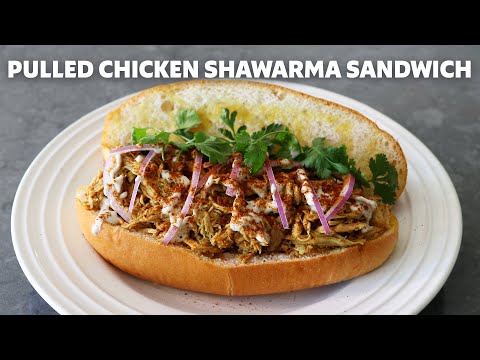
Pulled Chicken Shawarma Sandwich | Food Wishes
"The sandwich is important."

THE BEST ENGLISH CONVERSATION FOR BEGINNERS || ENGLISH FOR BEGINNERS
"I usually pack a ham and cheese sandwich for my lunch at work."
این کلمه در زبانهای دیگر
واژههای بیشتر Food
tasting
B1امتحان کردن مقدار کمی از غذا یا نوشیدنی برای فهمیدن طعم و کیفیتش. به دورهمیهایی که برای چشیدن خوراکیها برگزار میشه هم میگن.
macaroni
B1نوعی پاستای خشک لولهای شکل و خمیده که در غذای «ماکارونی و پنیر» معروف است.
blackcurrant
B2توصیفکننده طعم، عطر یا رنگ بنفش تیره که مخصوص میوه انگور فرنگی سیاهه.
blueberry
B2یک توت کوچک، گرد و خوراکی به رنگ آبی یا بنفش. به خاطر مواد مغذیاش به عنوان «فوقخوراک» شناخته میشود.
bourbon
B2مربوط به خاندان سلطنتی بوربون فرانسه، یا کسی که به شدت به عقاید سنتی پایبنده.
steak
A1استیک یه تیکه گوشت ضخیمه، معمولاً گوشت گاو، که کباب یا سرخ میشه. توی رستورانها خیلی طرفدار داره.
appetite
C1Appetite refers to a natural desire to satisfy a bodily need, most commonly for food. In a broader sense, it describes a strong desire or liking for a specific activity, experience, or object, such as power or knowledge.
bland
C1Describing something that lacks strong features, characteristics, or flavor, and is therefore uninteresting or dull. It is frequently used to describe food that is tasteless, personalities that lack excitement, or artistic works that are mediocre and uninspiring.
additive
B2A substance added to something in small quantities to improve, strengthen, or preserve it. It is most commonly used in the context of food processing, fuel production, and industrial manufacturing to enhance specific qualities like flavor, shelf life, or performance.
aquaculture
B2To farm aquatic organisms such as fish, shellfish, and plants in controlled environments. This practice involves cultivating freshwater and saltwater populations under managed conditions rather than harvesting them from the wild.
