









sandwich in 30 Seconds
- A sandwich is a versatile food item consisting of fillings between bread slices, primarily eaten as a portable lunch.
- The word can also be used as a verb meaning to squeeze or insert something between two other objects.
- It is named after the Earl of Sandwich and has numerous regional variations like subs, wraps, and paninis.
- Commonly used in metaphors like the 'sandwich generation' or 'sandwich feedback' in professional and social contexts.
At its most fundamental level, a sandwich is a culinary construction consisting of two or more slices of bread with one or more fillings between them. However, this simple definition belies the immense cultural and gastronomic significance the item holds globally. In the English-speaking world, the sandwich is the quintessential lunch food, prized for its portability, versatility, and the infinite variety of textures and flavors it can accommodate. Whether it is a simple peanut butter and jelly sandwich or an elaborate multi-layered club sandwich, the core concept remains the same: bread acting as a vessel for sustenance.
- The Structural Component
- The bread serves as the 'handle' and the primary carbohydrate source, ranging from white sliced loaves to artisanal sourdough or rye.
- The Filling
- This is the heart of the sandwich, typically comprising proteins like ham, turkey, or tofu, accompanied by vegetables, cheeses, and condiments.
- The Adhesive
- Condiments like mayonnaise, mustard, or butter prevent the sandwich from being dry and help 'glue' the components together.
"I'll have what she's having—a turkey sandwich on rye with extra mustard."
The term also functions as a verb, meaning to insert something tightly between two other things. This metaphorical usage is common in both casual and professional contexts. For instance, one might 'sandwich' a meeting between two other appointments. This dual nature of the word—as both a physical object and a spatial action—makes it a versatile tool in the English language. Linguistically, it is a 'toponym-turned-eponym,' named after the 4th Earl of Sandwich, who reportedly requested meat between bread so he could continue gambling without getting his cards greasy.
The child carefully placed the cheese inside the sandwich.
He was sandwiched between two tall men on the bus.
A club sandwich usually has three slices of bread.
Using the word 'sandwich' correctly involves understanding its role as a countable noun and its flexibility as a verb. As a noun, it follows standard pluralization rules ('sandwiches'). When ordering or describing one, it is common to use the preposition 'on' to describe the bread type and 'with' for the fillings. For example, 'I'd like a ham sandwich on whole wheat with no mayo.' This structure is essential for clear communication in restaurants and delis.
- Noun Usage
- 'I packed a sandwich for my hike.' (Physical object)
- Verb Usage
- 'The house was sandwiched between a factory and a school.' (Spatial relationship)
- Compound Nouns
- Ice-cream sandwich, finger sandwich, sub sandwich.
In a professional or academic setting, the verb form 'to sandwich' is often used to describe the placement of information. The 'Sandwich Method' of feedback is a well-known management technique where a piece of criticism is placed between two compliments to make it easier to digest. This figurative use is highly effective and widely understood in corporate English. When using it as a verb, it is almost always used in the passive voice or as a participle (e.g., 'being sandwiched').
The manager sandwiched the bad news between two positive updates.
The word 'sandwich' is ubiquitous in daily life, appearing in diverse environments from the domestic kitchen to high-stakes business meetings. In a domestic context, you will hear it every morning during school lunch preparation or at the weekend during a picnic. It is perhaps the most common food-related word in the English language due to the sandwich's status as a staple meal. In public spaces, you will see it on every cafe menu, usually categorized by the type of bread used (wraps, paninis, baguettes).
In media and literature, the sandwich often serves as a symbol of the mundane or the practical. A character eating a sandwich is often portrayed as being in a hurry or having a simple, unpretentious nature. Conversely, in the world of urban planning or architecture, you might hear experts talk about 'sandwich panels'—a specific type of building material consisting of two thin layers with a core in between. This demonstrates how the concept of the sandwich has transcended the kitchen to become a structural metaphor.
"Can you grab me a sandwich from the deli on your way back?"
One of the most frequent mistakes learners make is with the pronunciation and spelling. The 'd' in the middle is often silent in casual speech, leading learners to misspell it as 'sanwich' or 'samwich'. While 'samwich' is a common dialectal variation, it is considered incorrect in formal writing. Another common error involves the plural form; because it ends in 'ch', you must add '-es' to form 'sandwiches'.
From a grammatical perspective, learners often struggle with the prepositions used with 'sandwich'. You eat a sandwich *for* lunch, not *at* lunch (though you can eat it *during* lunch). When describing the contents, we use 'with' (a sandwich with ham) or a noun adjunct (a ham sandwich). Using 'of' (a sandwich of ham) is technically possible but sounds archaic and unnatural to modern ears. Finally, avoid using 'sandwich' as an uncountable noun; always use an article or a plural marker.
- Incorrect
- 'I would like two sandwich, please.'
- Correct
- 'I would like two sandwiches, please.'
While 'sandwich' is the general term, English has a rich vocabulary for specific types of bread-based meals. A 'wrap' uses a flatbread like a tortilla. A 'sub' or 'hoagie' uses a long Italian roll. A 'panini' is a pressed, toasted sandwich. Understanding these nuances helps in navigating menus and sounding more like a native speaker. In the UK, you might hear 'sarnie' or 'butty' (e.g., a chip butty), which are informal, colloquial terms for a sandwich.
- Burger
- Specifically refers to a patty (usually meat) in a round bun. In many regions, a burger is *not* called a sandwich.
- Toastie
- A British term for a toasted sandwich, usually made in a sandwich press.
- Roll
- Often used when the bread is a small, individual loaf rather than slices.
How Formal Is It?
Difficulty Rating
Grammar to Know
Pluralization of nouns ending in -ch
Prepositions of place (between)
Compound nouns
Passive voice
Articles with countable nouns
Examples by Level
I eat a ham sandwich.
Je mange un sandwich au jambon.
Subject + Verb + Object.
Do you like cheese sandwiches?
Aimes-tu les sandwichs au fromage ?
Question form with 'do'.
This is my lunch sandwich.
C'est mon sandwich pour le déjeuner.
Possessive adjective 'my'.
I want a big sandwich.
Je veux un grand sandwich.
Adjective before noun.
She makes a sandwich every day.
Elle fait un sandwich chaque jour.
Present simple third person 's'.
The sandwich is on the table.
Le sandwich est sur la table.
Preposition 'on'.
Bread is for the sandwich.
Le pain est pour le sandwich.
Preposition 'for'.
I have a tomato sandwich.
J'ai un sandwich à la tomate.
Verb 'have' for possession.
I am making a chicken sandwich for you.
Je prépare un sandwich au poulet pour toi.
Present continuous.
Would you like a toasted sandwich?
Voudrais-tu un sandwich grillé ?
Polite request with 'would like'.
He bought two sandwiches from the shop.
Il a acheté deux sandwichs au magasin.
Plural '-es'.
There is some lettuce in my sandwich.
Il y a de la laitue dans mon sandwich.
'There is' + uncountable 'some'.
My favorite sandwich has eggs and mayo.
Mon sandwich préféré contient des œufs et de la mayo.
Compound subject.
I forgot to pack my sandwich today.
J'ai oublié d'emporter mon sandwich aujourd'hui.
Infinitive 'to pack'.
Is that a tuna sandwich?
Est-ce un sandwich au thon ?
Demonstrative pronoun 'that'.
We ate sandwiches in the park.
Nous avons mangé des sandwichs dans le parc.
Past simple 'ate'.
I was sandwiched between two heavy suitcases.
J'étais coincé entre deux lourdes valises.
Passive voice figurative use.
Could you tell me what's in this sandwich?
Pourriez-vous me dire ce qu'il y a dans ce sandwich ?
Indirect question.
I prefer wraps to sandwiches for lunch.
Je préfère les wraps aux sandwichs pour le déjeuner.
Prefer X to Y.
The sandwich was surprisingly filling.
Le sandwich était étonnamment rassasiant.
Adverb modifying adjective.
If I had bread, I would make a sandwich.
Si j'avais du pain, je ferais un sandwich.
Second conditional.
He's the one who invented the sandwich.
C'est lui qui a inventé le sandwich.
Relative clause.
The shop offers a wide variety of sandwiches.
La boutique propose une grande variété de sandwichs.
Noun phrase 'wide variety of'.
Don't forget to cut the sandwich in half.
N'oublie pas de couper le sandwich en deux.
Imperative.
The presentation was sandwiched between two long meetings.
La présentation était intercalée entre deux longues réunions.
Metaphorical verb use.
Despite being a simple sandwich, it was delicious.
Bien que ce soit un simple sandwich, c'était délicieux.
Concession with 'despite'.
The layers of the sandwich were perfectly balanced.
Les couches du sandwich étaient parfaitement équilibrées.
Passive voice with adverb.
I'm looking for a sandwich that doesn't contain gluten.
Je cherche un sandwich qui ne contient pas de gluten.
Defining relative clause.
Sandwiching the critique helped soften the blow.
Intercaler la critique a aidé à adoucir le coup.
Gerund as subject.
The sandwich culture in this city is quite unique.
La culture du sandwich dans cette ville est assez unique.
Noun adjunct 'sandwich culture'.
She opted for a club sandwich instead of a salad.
Elle a opté pour un club sandwich au lieu d'une salade.
Phrasal verb 'opt for'.
The bread had become soggy by the time I ate the sandwich.
Le pain était devenu détrempé au moment où j'ai mangé le sandwich.
Past perfect.
The structural integrity of the sandwich was compromised.
L'intégrité structurelle du sandwich était compromise.
Formal academic register.
The narrative is sandwiched between two pivotal scenes.
Le récit est pris en sandwich entre deux scènes charnières.
Literary analysis.
The 'sandwich generation' faces unique financial pressures.
La 'génération sandwich' fait face à des pressions financières uniques.
Sociological term.
He meticulously assembled the sandwich, layer by layer.
Il a méticuleusement assemblé le sandwich, couche par couche.
Adverbial placement.
Whether a taco is a sandwich remains a point of contention.
Savoir si un taco est un sandwich reste un point de discorde.
Noun clause as subject.
The sandwich paneling provides excellent thermal insulation.
Le panneau sandwich offre une excellente isolation thermique.
Technical jargon.
His comments were sandwiched with layers of irony.
Ses commentaires étaient enveloppés de couches d'ironie.
Abstract metaphor.
The deli specializes in artisanal, hand-crafted sandwiches.
Le traiteur se spécialise dans les sandwichs artisanaux faits à la main.
Compound adjectives.
The historical record is often sandwiched between myth and reality.
Le récit historique est souvent pris en étau entre le mythe et la réalité.
Philosophical metaphor.
The sheer audacity of sandwiching such a radical proposal there!
L'audace pure d'insérer une proposition aussi radicale à cet endroit !
Exclamatory gerund phrase.
The sandwiching effect of the two mountains created a microclimate.
L'effet d'étau des deux montagnes a créé un microclimat.
Geographical description.
One might argue the sandwich is the pinnacle of culinary efficiency.
On pourrait soutenir que le sandwich est le summum de l'efficacité culinaire.
Modal 'might' for formal argument.
The protagonist found himself sandwiched between conflicting loyalties.
Le protagoniste se retrouva pris entre des loyautés conflictuelles.
Reflexive verb with figurative participle.
The complexity of the sandwich's construction mirrored the plot.
La complexité de la construction du sandwich reflétait l'intrigue.
Analogy.
The layers were so thin they were barely a sandwich at all.
Les couches étaient si fines qu'il s'agissait à peine d'un sandwich.
Adverbial 'barely'.
To sandwich a lie between two truths is a classic deception.
Glisser un mensonge entre deux vérités est une tromperie classique.
Infinitive phrase as subject.
Common Collocations
Common Phrases
Often Confused With
Idioms & Expressions
Easily Confused
Sentence Patterns
How to Use It
In some regions, 'sandwich' only refers to sliced bread; if it's a roll, they call it a 'roll' or 'bap'.
The verb form is very common in journalism to describe people caught in the middle of conflicts.
- Spelling it as 'sanwich' or 'samwich'.
- Using 'sandwichs' as the plural instead of 'sandwiches'.
- Saying 'a sandwich of ham' instead of 'a ham sandwich'.
- Confusing 'sandwich' with 'burger' in a restaurant context.
- Treating 'sandwich' as an uncountable noun (e.g., 'I want some sandwich').
Tips
Remember the 'D'
Even if you don't hear the 'd' when people speak, you must include it in writing. Think of 'sand' and 'wich' joined together. This is the most common spelling error for this word. Practice writing it ten times to build muscle memory.
The 'CH' Sound
Make sure to pronounce the 'ch' at the end clearly. It should sound like the 'ch' in 'church'. If you pronounce it like 'sh', it might sound like 'sand-wish'. Clear ending sounds are key for A1 learners.
Ordering Bread
When ordering at a deli, specify the bread first. Say 'A [filling] sandwich on [bread type]'. For example: 'A turkey sandwich on sourdough'. This is the most natural way to order.
Plural Form
Always use 'sandwiches' for more than one. Because it ends in 'ch', the 'es' is mandatory. This rule applies to other words like 'watches' and 'boxes' too. It adds an extra syllable to the word.
Regional Names
Be aware that 'sandwich' is a general term. In different cities, they might use 'sub', 'grinder', 'hero', or 'hoagie'. If you are in a new place, look at the menu headers. This will help you learn local vocabulary.
The Feedback Sandwich
Use the 'sandwich method' when you need to tell a friend something negative. Start with a compliment, then the critique, then another compliment. It helps maintain the friendship while being honest. It is a very common social tool in English-speaking cultures.
Soggy Bread
To avoid a soggy sandwich, put the 'wet' ingredients (like tomatoes) in the middle. Keep them away from the bread by using cheese or lettuce as a barrier. This is a practical tip for packing lunches. It keeps the sandwich fresh for hours.
The 'Picnic' Idiom
Use 'a sandwich short of a picnic' carefully. It is funny but can be offensive if used about someone who is present. It is best used in casual conversation with friends. It's a great way to show off your idiomatic knowledge.
Spatial Description
Use the verb 'sandwiched' to describe being crowded. 'I was sandwiched on the subway' is a very common and natural expression. It perfectly describes the feeling of being squeezed. It works for objects and people.
Tea Sandwiches
If you go to a formal tea in London, expect very small sandwiches. Don't be surprised that they have no crusts. They are meant to be light, not a full meal. This is a specific cultural tradition.
Memorize It
Mnemonic
Think of the 'sand' between two 'wiches' (witches) - though the spelling is 'wich'!
Word Origin
Named after John Montagu, 4th Earl of Sandwich (1718–1792).
Cultural Context
Often called a 'sarnie'. Famous for the 'cucumber sandwich' at high tea.
Known for the 'PB&J' (Peanut Butter and Jelly) and large deli sandwiches.
The 'Banh Mi' is a famous fusion sandwich using French baguettes.
Practice in Real Life
Real-World Contexts
Conversation Starters
"What is your favorite sandwich filling?"
"Do you prefer your sandwiches toasted or cold?"
"Is a hot dog a sandwich in your opinion?"
"Have you ever tried an ice-cream sandwich?"
"What's the best sandwich shop in this city?"
Journal Prompts
Describe the most delicious sandwich you have ever eaten.
If you had to eat only one type of sandwich for a year, what would it be?
Write about a time you felt 'sandwiched' between two difficult choices.
Invent a new type of sandwich and list its ingredients.
Discuss the history of the sandwich and why it became so popular.
Frequently Asked Questions
10 questionsTechnically, yes, as it is filling between bread, but most people categorize it separately. In a restaurant, you will usually see 'Burgers' and 'Sandwiches' in different sections. The distinction often lies in the type of bun and the hot patty. However, linguistically, it fits the broad definition. It remains a popular topic for lighthearted debate.
The plural is spelled 'sandwiches'. Because the word ends in the 'ch' sound, English grammar rules require an 'es' to be added. This makes it easier to pronounce the plural form. Avoid the common mistake of just adding 's'. Always use 'sandwiches' in both formal and informal writing.
It is named after John Montagu, the 4th Earl of Sandwich. He was an 18th-century English nobleman who liked to eat meat between slices of bread. This allowed him to eat with one hand while playing cards. The name became popular and stuck to the food item. It is one of the most famous examples of an eponym in English.
This term refers to people, typically in their 40s or 50s, who are 'sandwiched' between responsibilities. They must care for their aging parents while also supporting their own children. It describes the social and financial pressure of being in the middle. This is a common metaphorical use of the word. It highlights the 'squeezed' feeling of the situation.
No, 'samwich' is not a correct spelling in standard English. It is a phonetic spelling of how some people pronounce the word. You might see it in very informal texting or dialect writing, but it should be avoided. Always use 'sandwich' in any professional or educational context. The 'd' must be included in the spelling.
This is a British idiom used to describe someone who is perceived as not very intelligent or slightly crazy. It implies that their 'mental picnic' is incomplete. It is a humorous and slightly insulting way to describe someone. Similar to 'a few fries short of a Happy Meal'. It is very informal.
Yes, 'sandwich' can be used as a verb meaning to insert something between two other things. For example, 'I sandwiched the photo between the pages of the book.' It is often used in the passive voice: 'The car was sandwiched between two trucks.' This usage is very common in descriptive English. It can be used for both physical and abstract things.
An open-faced sandwich consists of a single slice of bread with toppings on top. It is not covered by a second slice of bread. In many European countries, like Denmark, these are very traditional. In the US and UK, they are less common than the two-slice version. Some people argue they are not 'true' sandwiches. They are often eaten with a knife and fork.
This is a communication strategy used by managers. You start with a positive comment (the first slice of bread). Then you give the criticism or 'area for improvement' (the filling). Finally, you end with another positive comment (the second slice of bread). It is designed to make the criticism easier to accept. Many people find it a helpful way to give difficult feedback.
Finger sandwiches are very small, delicate sandwiches. They are usually rectangular or triangular and have the crusts removed. They are traditionally served at afternoon tea or formal parties. They are designed to be eaten in one or two bites. Common fillings include cucumber, egg salad, or smoked salmon. They are a classic part of British food culture.
Test Yourself 180 questions
/ 180 correct
Perfect score!
Summary
The sandwich is more than just a meal; it is a fundamental linguistic and cultural concept representing portability, layered structure, and the practical insertion of one thing between two others in both literal and figurative senses.
- A sandwich is a versatile food item consisting of fillings between bread slices, primarily eaten as a portable lunch.
- The word can also be used as a verb meaning to squeeze or insert something between two other objects.
- It is named after the Earl of Sandwich and has numerous regional variations like subs, wraps, and paninis.
- Commonly used in metaphors like the 'sandwich generation' or 'sandwich feedback' in professional and social contexts.
Remember the 'D'
Even if you don't hear the 'd' when people speak, you must include it in writing. Think of 'sand' and 'wich' joined together. This is the most common spelling error for this word. Practice writing it ten times to build muscle memory.
The 'CH' Sound
Make sure to pronounce the 'ch' at the end clearly. It should sound like the 'ch' in 'church'. If you pronounce it like 'sh', it might sound like 'sand-wish'. Clear ending sounds are key for A1 learners.
Ordering Bread
When ordering at a deli, specify the bread first. Say 'A [filling] sandwich on [bread type]'. For example: 'A turkey sandwich on sourdough'. This is the most natural way to order.
Plural Form
Always use 'sandwiches' for more than one. Because it ends in 'ch', the 'es' is mandatory. This rule applies to other words like 'watches' and 'boxes' too. It adds an extra syllable to the word.
Example
I usually pack a ham and cheese sandwich for my lunch at work.
Related Content
See it in Videos
 9:49
9:49
Black Friday Grilled Cheese with Kitchen Sink Cranberry Sauce | Food Wishes
"The sandwich is important."
 8:50
8:50
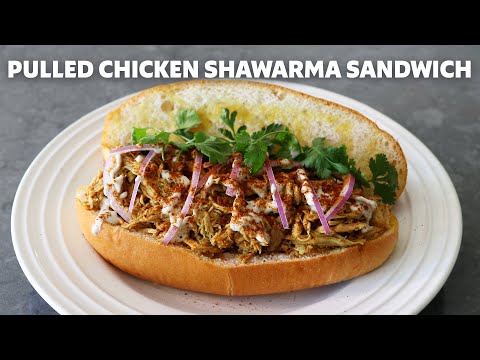
Pulled Chicken Shawarma Sandwich | Food Wishes
"The sandwich is important."
 12:50
12:50
THE BEST ENGLISH CONVERSATION FOR BEGINNERS || ENGLISH FOR BEGINNERS
"I usually pack a ham and cheese sandwich for my lunch at work."
This Word in Other Languages
More Food words
wheat
B1Wheat is a cereal grain that is widely cultivated as a primary food source for humans and animals. It is typically ground into flour to make bread, pasta, pastries, and many other staple food products.
buttermilk
B2Describes food or drink made with or having the characteristics of the sour, fermented liquid remaining after butter has been churned. In modern culinary contexts, it refers to a cultured dairy product used to provide a tangy flavor and tender texture to baked goods and meats.
salt
A2A common white crystalline substance, chemically sodium chloride (NaCl), used widely for seasoning and preserving food. It is an essential nutrient for humans and animals.
pineapple
A1A large, tropical fruit with a tough, scaly skin and a tuft of green leaves on top. It has sweet, juicy yellow flesh inside and is eaten fresh, canned, or as juice.
mushrooms
B1Mushrooms are the fleshy, spore-bearing fruiting bodies of fungi, typically produced above ground on soil or on their food source. While many varieties are edible and popular in cooking, others are highly toxic or even fatal if consumed.
truffles
C1Truffles are rare, edible underground fungi known for their strong aroma and high culinary value, often used as a gourmet delicacy. The term also refers to a type of rich chocolate confection coated in cocoa powder, named for its resemblance to the fungus.
snack
A1A snack is a small amount of food eaten between main meals such as breakfast, lunch, or dinner. It is typically something quick to prepare and easy to consume when you feel a little hungry.
coca
B1A tropical shrub native to the Andes whose leaves contain a stimulant alkaloid. It is widely known for its traditional use by indigenous people and as the botanical source of cocaine.
corn
A1Corn is a tall plant that produces yellow grains on a large cob, which are eaten as a vegetable or ground into flour. It is one of the most popular cereal grains in the world and is a staple food in many cultures.
salmon
B1A large, edible fish with pink or reddish-orange flesh that is known for its ability to swim upstream against strong currents to spawn. It is also the name of a pinkish-orange color that resembles the fish's meat.

