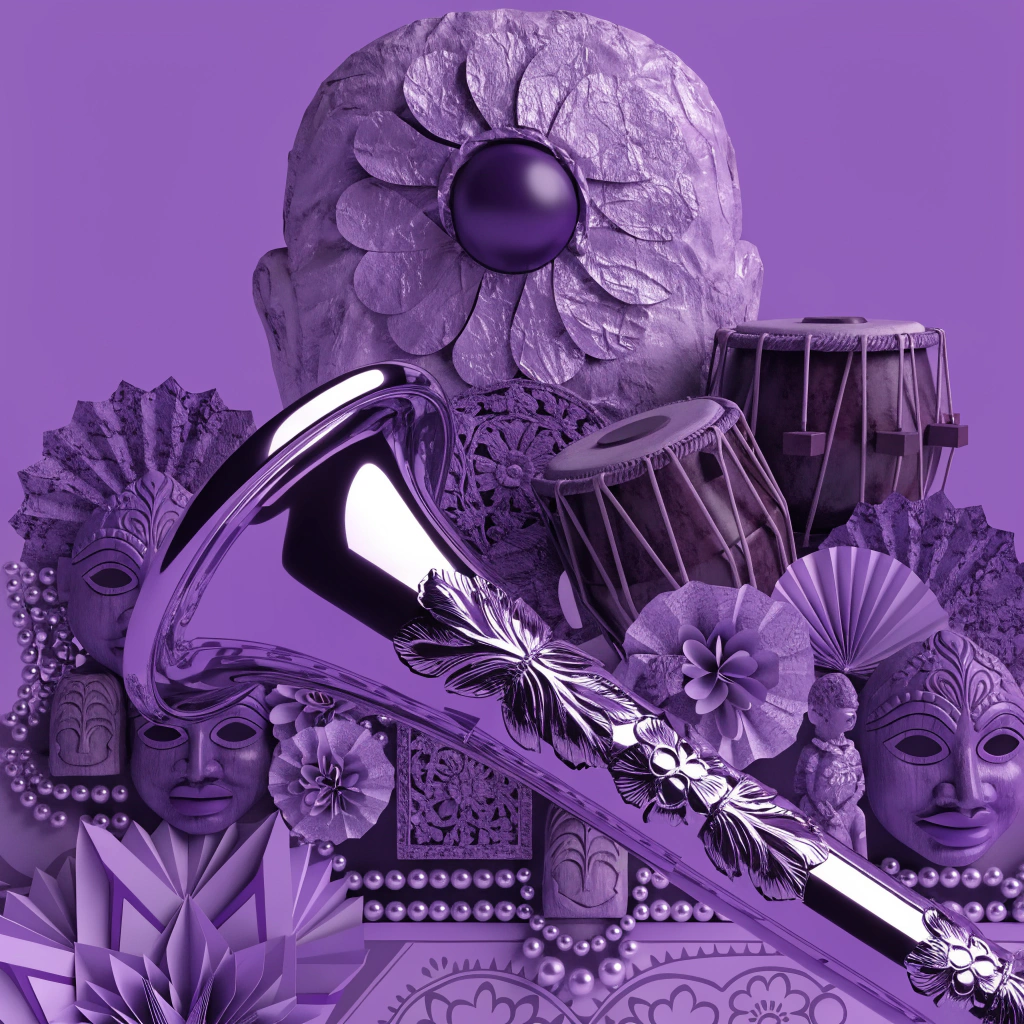
An Old Art from India
Kutiyattam is a very old theatre from India. It is more than two thousand years old. It comes from Kerala. Artists perform this art in beautiful temples.
The actors wear bright clothes and paint their faces. They do not speak much. They use their eyes and hands to tell stories. The music is loud and beautiful.
UNESCO says Kutiyattam is a special treasure for the world. Many people go to India to see it. It is a very important part of Indian history.
Point grammaire
Structure: Present Simple (To Be)
"Kutiyattam is a very old theatre from India."
We use 'is' with singular subjects like Kutiyattam to describe facts or states. It helps us say what something is.
Structure: Present Simple (Action Verbs)
"The actors wear bright clothes."
We use the base form of the verb for plural subjects like 'actors' to talk about regular habits or general truths.
Teste ta compréhension
10 questions · A1 Débutant · 1 aperçu gratuit
Teste ce que tu as appris dans cet article. Réponds à toutes les questions pour gagner des XP !
Where does Kutiyattam come from?
Tu veux terminer le quiz ?
9 questions supplémentaires t'attendent. Inscris-toi gratuitement pour débloquer le quiz complet et gagner des XP !
S'inscrire gratuitementTu as dj un compte ? Connexion
Bien joué !
Continue à pratiquer !
Déjà terminé — pas de XP supplémentaire
Inscris-toi pour gagner des XPDétail des questions
Where does Kutiyattam come from?
Ta réponse:
Bonne réponse: Kerala, India
The actors speak a lot during the show.
Ta réponse:
Bonne réponse: Faux
What does 'old' mean?
Ta réponse:
Bonne réponse: Something from a long time ago
They use their eyes and _____ to tell stories.
Ta réponse:
Bonne réponse: hands
Kutiyattam: The Ancient Theatre of India
Kutiyattam is a very old type of theatre from Kerala, a state in South India. It is more than two thousand years old. It is the oldest theatre in India and perhaps the world. In 2001, UNESCO said it was a masterpiece because it is very special and rare.
The actors wear colorful costumes and bright face paint. They tell stories from ancient books. These actors are very talented. They do not speak much, but they use their eyes and hands to show feelings. This is more difficult than normal acting because the movements are very slow.
In the past, people only watched Kutiyattam in special temples called Koothambalams. These buildings are very large and made of wood. Today, more people can see it in different places. It is slower than modern movies, but it is very beautiful. Many students go to Kerala to learn this art because it is a famous part of Indian history. It is an amazing experience for everyone.
Point grammaire
Structure: Comparative Adjectives
"This is more difficult than normal acting."
We use 'more + adjective + than' for long adjectives to compare two things. This shows that one thing has more of a quality than the other.
Structure: Past Simple (to be)
"In 2001, UNESCO said it was a masterpiece..."
We use 'was' as the past form of 'is' for singular subjects. It describes a state or identity in the past.
Teste ta compréhension
11 questions · A2 mentaire · 1 aperçu gratuit
Teste ce que tu as appris dans cet article. Réponds à toutes les questions pour gagner des XP !
Where does Kutiyattam come from?
Tu veux terminer le quiz ?
10 questions supplémentaires t'attendent. Inscris-toi gratuitement pour débloquer le quiz complet et gagner des XP !
S'inscrire gratuitementTu as dj un compte ? Connexion
Bien joué !
Continue à pratiquer !
Déjà terminé — pas de XP supplémentaire
Inscris-toi pour gagner des XPDétail des questions
Where does Kutiyattam come from?
Ta réponse:
Bonne réponse: Kerala, India
Kutiyattam is a very new type of theatre.
Ta réponse:
Bonne réponse: Faux
What are 'costumes'?
Ta réponse:
Bonne réponse: Special clothes for actors
It is the _____ theatre in India and perhaps the world.
Ta réponse:
Bonne réponse: oldest
What do actors use to show feelings?
Ta réponse:
Bonne réponse: Their eyes and hands
Kutiyattam: India's Ancient Living Theatre
Kutiyattam is a unique form of Sanskrit theatre that comes from the state of Kerala in South India. It is considered the oldest surviving theatre in the world, with a history that has lasted for more than two thousand years. For centuries, this ancient art has been performed in special temple buildings called Koothambalams, which were built specifically for these plays.
In 2001, Kutiyattam was recognized by UNESCO as a Masterpiece of the Oral and Intangible Heritage of Humanity. This was the first time that an Indian art form had received such a prestigious title. Since then, international interest in the art has grown significantly. Because of this recognition, more people around the world have started to appreciate its incredible beauty and historical value.
The performance is very different from modern Western theatre. It is famous for its slow pace and very detailed expressions. Actors use their eyes and hands to tell stories from ancient Indian poems. These hand gestures, which are called Mudras, are extremely complex and require years of practice. A single scene can sometimes take several hours because the actors explain every small detail of the story through their movements.
Music also plays an important role in Kutiyattam. The main instrument is a large copper drum called the Mizhavu. The rhythm of the drum, which is played by a specialized musician, helps the actors to move correctly. Traditionally, Kutiyattam has been practiced by specific families who have passed the skills down through many generations. Today, although it is still performed in temples, students from different backgrounds are being taught this amazing art in modern schools. It remains a vital part of India's cultural history that has survived into the modern age.
Point grammaire
Structure: Relative Clauses
"Koothambalams, which were built specifically for these plays."
We use 'which' to give more information about a thing. It helps combine two sentences into one more complex sentence.
Structure: Passive Voice
"Kutiyattam was recognized by UNESCO as a Masterpiece of the Oral and Intangible Heritage of Humanity."
The passive voice is used when the action is more important than the person doing it. It is formed with 'be' + past participle.
Teste ta compréhension
11 questions · B1 Intermédiaire · 1 aperçu gratuit
Teste ce que tu as appris dans cet article. Réponds à toutes les questions pour gagner des XP !
Where is the state of Kerala located?
Tu veux terminer le quiz ?
10 questions supplémentaires t'attendent. Inscris-toi gratuitement pour débloquer le quiz complet et gagner des XP !
S'inscrire gratuitementTu as dj un compte ? Connexion
Bien joué !
Continue à pratiquer !
Déjà terminé — pas de XP supplémentaire
Inscris-toi pour gagner des XPDétail des questions
Where is the state of Kerala located?
Ta réponse:
Bonne réponse: South India
Kutiyattam performances are usually very fast-paced.
Ta réponse:
Bonne réponse: Faux
What does 'ancient' mean?
Ta réponse:
Bonne réponse: Very old and from the distant past
The main musical _____ used in Kutiyattam is a copper drum.
Ta réponse:
Bonne réponse: instrument
Why can a single scene take several hours?
Ta réponse:
Bonne réponse: Because actors explain every detail through movement
Kutiyattam: The Ancient Soul of Indian Theatre
Kutiyattam, a unique form of Sanskrit theatre from the southern state of Kerala, represents one of the oldest living theatrical traditions in the world. Having survived for over two millennia, it serves as a profound link to India’s classical past. In 2001, this art form received the prestigious distinction of being recognized by UNESCO as a Masterpiece of the Oral and Intangible Heritage of Humanity. This recognition highlighted not only its historical depth but also the intricate skills required to master its performance. Traditionally, Kutiyattam has been performed in specialized temple theatres known as Koothambalams, where the atmosphere is specifically designed to complement the spiritual nature of the plays.
The performance itself is remarkably elaborate, often taking several days or even weeks to complete a single play. This slow pace allows actors to explore every nuance of a character’s emotions through a highly stylized language of gestures and facial expressions. Central to this art is 'Netra Abhinaya,' a technique where the actor communicates complex narratives using only their eyes. Consequently, performers must undergo rigorous training for many years to achieve the necessary level of control and precision. The costumes and makeup are equally symbolic, with vibrant colors and heavy ornaments used to indicate the character's moral status and social position.
Despite its ancient origins, Kutiyattam faces significant challenges in the modern era. The preservation of such a specialized tradition is difficult because it requires a deep understanding of Sanskrit and ancient performance codes. Furthermore, the transition from temple-based performances to public stages has sparked debates regarding the balance between tradition and accessibility. Nevertheless, dedicated institutions have been working tirelessly to ensure that this cultural treasure is passed down to future generations. By maintaining its core aesthetic values while adapting to contemporary audiences, Kutiyattam continues to be a vibrant example of human creativity and artistic devotion. Ultimately, the survival of Kutiyattam illustrates the resilience of traditional arts in an increasingly globalized world.
Point grammaire
Structure: Present Perfect Passive
"Traditionally, Kutiyattam has been performed in specialized temple theatres known as Koothambalams."
This pattern is used to describe an action that started in the past and continues to the present, focusing on the action rather than the performer. It is formed using 'has/have + been + past participle'.
Structure: Participle Clauses
"Having survived for over two millennia, it serves as a profound link to India’s classical past."
Perfect participle clauses (Having + past participle) are used to show that one action happened before another. They help to provide background information or reasons in a concise, formal way.
Structure: Gerund as Subject
"The preservation of such a specialized tradition is difficult because it requires a deep understanding of Sanskrit."
Using a gerund or a noun phrase acting as a subject allows for a more academic and analytical tone. It focuses the sentence on the concept or process being discussed.
Teste ta compréhension
11 questions · B2 Intermédiaire supérieur · 1 aperçu gratuit
Teste ce que tu as appris dans cet article. Réponds à toutes les questions pour gagner des XP !
Why was Kutiyattam recognized by UNESCO in 2001?
Tu veux terminer le quiz ?
10 questions supplémentaires t'attendent. Inscris-toi gratuitement pour débloquer le quiz complet et gagner des XP !
S'inscrire gratuitementTu as dj un compte ? Connexion
Bien joué !
Continue à pratiquer !
Déjà terminé — pas de XP supplémentaire
Inscris-toi pour gagner des XPDétail des questions
Why was Kutiyattam recognized by UNESCO in 2001?
Ta réponse:
Bonne réponse: As a Masterpiece of the Oral and Intangible Heritage of Humanity.
A single Kutiyattam play is usually finished within two hours.
Ta réponse:
Bonne réponse: Faux
What does 'intricate' mean in the context of the article?
Ta réponse:
Bonne réponse: Having many complex and detailed parts.
Performers must undergo _____ training for many years to master the art form.
Ta réponse:
Bonne réponse: rigorous
What is 'Netra Abhinaya'?
Ta réponse:
Bonne réponse: A technique of communicating through eye expressions.
The Resonating Echoes of Antiquity: Unveiling Kutiyattam’s Sanskrit Legacy
Rarely does a contemporary audience witness a spectacle that has remained virtually unchanged for over two millennia. Yet, in the verdant landscapes of Kerala, India, Kutiyattam stands as a formidable repository of ancient dramatic theory. As the oldest surviving theatrical form in the world, it offers a window into a bygone era, where the boundaries between the sacred and the secular blur into a meticulously choreographed ritual. It was the formal recognition by UNESCO in 2001 that catapulted this esoteric art form into the global limelight, designating it a Masterpiece of the Oral and Intangible Heritage of Humanity. This accolade, however, only scratches the surface of a tradition deeply rooted in the socio-religious fabric of South India.
At the heart of Kutiyattam lies the Koothambalam, a consecrated temple theatre specifically designed to house these performances. The architectural precision of these structures ensures that the acoustics and visual vantage points align perfectly with the performer’s needs. Traditionally, the performance of Kutiyattam was the exclusive prerogative of the Chakyar and Nambiar communities. The Chakyars assume the roles of the actors, while the Nambiars provide the rhythmic backbone through the Mizhavu, a large copper drum. The systematic codification of these gestures, known as Mudras, allows for a sophisticated narrative depth that transcends linguistic barriers. Through an intricate system of 'Netra Abhinaya'—the stylized movement of the eyes—the actor can convey a spectrum of human emotions with profound intensity.
What distinguishes Kutiyattam from other classical forms is its leisurely pace. A single act of a play can span several nights, allowing for a dense evocation of character motivations and philosophical subplots. Such an expansive approach to storytelling suggests a lineage of performance that values the ephemeral moment of artistic transcendence over the hurried consumption of plot. However, the preservation of this tradition is not without its challenges. The rigorous training required—often spanning over a decade—makes it an arduous path for the modern practitioner. Furthermore, the anachronistic nature of Sanskrit dialogue in a rapidly globalizing world poses a significant barrier to accessibility.
Despite these hurdles, Kutiyattam remains a vital link to India’s classical past. The transition from temple-bound ritual to a globally recognized performance art represents a delicate balancing act. It is the preservation of its core aesthetic values, rather than a concession to modern brevity, that will ensure its survival. By maintaining its meticulous standards, Kutiyattam continues to challenge our perceptions of time, narrative, and the very essence of the theatrical experience.
Point grammaire
Structure: Negative Inversion
"Rarely does a contemporary audience witness a spectacle that has remained virtually unchanged for over two millennia."
When a sentence starts with a negative or restrictive adverb like 'rarely', the subject and auxiliary verb are inverted to add emphasis and a formal tone.
Structure: Cleft Sentences
"It was the formal recognition by UNESCO in 2001 that catapulted this esoteric art form into the global limelight."
A cleft sentence uses 'It is/was' to focus on a specific piece of information, highlighting the cause or the subject of the sentence.
Structure: Nominalization
"The systematic codification of these gestures, known as Mudras, allows for a sophisticated narrative depth."
Nominalization involves turning verbs or adjectives into nouns (e.g., 'codify' to 'codification'). This makes the writing more concise and academic.
Teste ta compréhension
12 questions · C1 Avancé · 1 aperçu gratuit
Teste ce que tu as appris dans cet article. Réponds à toutes les questions pour gagner des XP !
What primary factor contributed to Kutiyattam's global visibility in the 21st century?
Tu veux terminer le quiz ?
11 questions supplémentaires t'attendent. Inscris-toi gratuitement pour débloquer le quiz complet et gagner des XP !
S'inscrire gratuitementTu as dj un compte ? Connexion
Bien joué !
Continue à pratiquer !
Déjà terminé — pas de XP supplémentaire
Inscris-toi pour gagner des XPDétail des questions
What primary factor contributed to Kutiyattam's global visibility in the 21st century?
Ta réponse:
Bonne réponse: UNESCO's recognition as a Masterpiece of Heritage
Kutiyattam performances were traditionally held in general public town squares.
Ta réponse:
Bonne réponse: Faux
Which word describes something intended for a small group with specialized knowledge?
Ta réponse:
Bonne réponse: Esoteric
The Chakyars act in the plays, while the Nambiars play the Mizhavu, which is a large copper _____.
Ta réponse:
Bonne réponse: drum
According to the text, what is unique about the pace of Kutiyattam?
Ta réponse:
Bonne réponse: A single act can be performed over several nights.
Netra Abhinaya refers to the stylized movement of the eyes to convey emotion.
Ta réponse:
Bonne réponse: Vrai
Le Kutiyattam : Une Épopée Scénique Millénaire au Cœur du Kerala
Le Kutiyattam, cette forme ancestrale de théâtre sanskrit originaire du Kerala, en Inde, représente bien plus qu'une simple performance artistique ; il est un véritable palimpseste culturel, un témoignage vivant de la pérennité et de la profondeur de la tradition théâtrale indienne. Nonobstant une histoire qui s'étend sur plus de deux millénaires, ce genre dramatique, dont la complexité et la richesse ne sauraient être surestimées, a su traverser les âges, se prémunissant contre l'oubli et les vicissitudes du temps.
En 2001, la reconnaissance internationale est venue couronner cette persévérance : l'UNESCO l'a proclamé « Chef-d'œuvre du patrimoine oral et immatériel de l'humanité », une consécration qui, pour la première fois, mettait en lumière une forme d'art indienne sur la scène mondiale. Cette distinction n'était pas fortuite ; elle attestait de la valeur universelle exceptionnelle du Kutiyattam, de son rôle pivot dans la préservation d'une langue et d'une dramaturgie antique, ainsi que de son caractère intrinsèquement lié à des pratiques rituelles et spirituelles.
Traditionnellement, les représentations de Kutiyattam se déroulent dans les Koothambalams, des théâtres spécialisés intégrés aux enceintes des temples. Ces espaces ne sont pas de simples lieux de divertissement, mais des sanctuaires où l'art et le sacré s'entremêlent inextricablement. L'atmosphère y est imprégnée d'une solennité particulière, propice à la contemplation et à l'immersion dans un univers où le temps semble suspendu. Les acteurs, issus principalement des communautés Chakyar et Nambiar, héritent de leur art par une transmission lignagère rigoureuse, faisant de cette pratique l'apanage d'une élite formée dès le plus jeune âge à la maîtrise des gestes, des expressions et de la prosodie sanskrite.
La singularité du Kutiyattam réside également dans son approche du temps. Là où le théâtre occidental tend vers une narration linéaire et un rythme soutenu, le Kutiyattam, lui, déploie ses récits avec une lenteur exquise, une délectation quasi méditative. Une seule scène peut s'étendre sur plusieurs jours, voire des semaines, permettant une exégèse approfondie de chaque vers, de chaque émotion. Les acteurs n'hésitent pas à s'arrêter pour commenter l'action, s'adresser directement au public, ou même improviser des digressions qui enrichissent le sens de la pièce. Cette herméneutique scénique invite le spectateur à une participation intellectuelle et émotionnelle plus intense, l'éloignant de la simple réception passive.
Le répertoire du Kutiyattam puise dans les grandes épopées hindoues, telles que le Ramayana et le Mahabharata, mais aussi dans des pièces de dramaturges sanskrits classiques comme Bhasa et Kalidasa. La langue employée est un mélange savant de sanskrit, de prakrit (dialectes anciens) et de malayalam (la langue locale du Kerala), ce qui en fait un défi linguistique et culturel d'une ampleur considérable. Les mimiques (abhinaya), les gestes codifiés (mudras) et le maquillage élaboré (aharya abhinaya) constituent un langage visuel d'une sophistication rare, permettant d'exprimer des nuances d'émotion et de pensée inaccessibles par le seul verbe.
Que l'on soit un érudit en quête de connaissance ou un simple curieux avide de découvertes, force est de constater que le Kutiyattam représente un pan inestimable du patrimoine culturel mondial. Sa survie, d'autant plus remarquable qu'elle est le fruit d'une transmission ininterrompue sur des millénaires, interpelle quant à la puissance de l'art à transcender les époques. Il n'est pas anodin que, dans un monde en constante mutation, cette forme d'art archaïque continue de fasciner et d'inspirer, prouvant que la richesse de l'expression humaine réside parfois dans la lenteur, la profondeur et la fidélité à des racines immémoriales.
Point grammaire
Structure: Le subjonctif après une expression impersonnelle
"Il n'est pas anodin que, dans un monde en constante mutation, cette forme d'art archaïque continue de fasciner et d'inspirer..."
Le subjonctif est souvent requis après des expressions impersonnelles qui expriment un jugement, un sentiment, une nécessité ou une incertitude, comme « il n'est pas anodin que ». Il souligne ici le caractère significatif et non négligeable de la pérennité de cet art.
Structure: L'inversion interrogative pour une emphase rhétorique
"Sa survie, d'autant plus remarquable qu'elle est le fruit d'une transmission ininterrompue sur des millénaires, interpelle quant à la puissance de l'art à transcender les époques."
Bien que n'étant pas une question directe, cette construction utilise la structure d'une interrogation indirecte (« interpelle quant à ») pour soulever une réflexion profonde. Elle permet de mettre en relief une idée complexe, invitant le lecteur à une considération approfondie sans attendre de réponse immédiate.
Structure: La locution conjonctive « nonobstant »
"Nonobstant une histoire qui s'étend sur plus de deux millénaires, ce genre dramatique, dont la complexité et la richesse ne sauraient être surestimées, a su traverser les âges..."
« Nonobstant » est une locution conjonctive de style soutenu qui introduit une concession, signifiant « malgré » ou « en dépit de ». Elle est utilisée pour marquer une opposition entre deux faits, le second se produisant en dépit du premier, et confère une certaine formalité au discours.
Teste ta compréhension
12 questions · C2 Maîtrise · 1 aperçu gratuit
Teste ce que tu as appris dans cet article. Réponds à toutes les questions pour gagner des XP !
Quelle distinction majeure le Kutiyattam a-t-il reçue en 2001 ?
Tu veux terminer le quiz ?
11 questions supplémentaires t'attendent. Inscris-toi gratuitement pour débloquer le quiz complet et gagner des XP !
S'inscrire gratuitementTu as dj un compte ? Connexion
Bien joué !
Continue à pratiquer !
Déjà terminé — pas de XP supplémentaire
Inscris-toi pour gagner des XPDétail des questions
Quelle distinction majeure le Kutiyattam a-t-il reçue en 2001 ?
Ta réponse:
Bonne réponse: La proclamation par l'UNESCO comme « Chef-d'œuvre du patrimoine oral et immatériel de l'humanité »
Les représentations de Kutiyattam se déroulent généralement dans des théâtres modernes spécialement construits pour le grand public.
Ta réponse:
Bonne réponse: Faux
Que signifie le mot « apanage » dans le contexte de l'article ?
Ta réponse:
Bonne réponse: Un privilège ou droit exclusif à un groupe
La lenteur ______ du Kutiyattam permet une exégèse approfondie de chaque vers.
Ta réponse:
Bonne réponse: exquise
Quelles langues sont utilisées dans le répertoire du Kutiyattam ?
Ta réponse:
Bonne réponse: Sanskrit, prakrit et malayalam
Le Kutiyattam est une forme théâtrale relativement récente, apparue au cours des derniers siècles.
Ta réponse:
Bonne réponse: Faux

