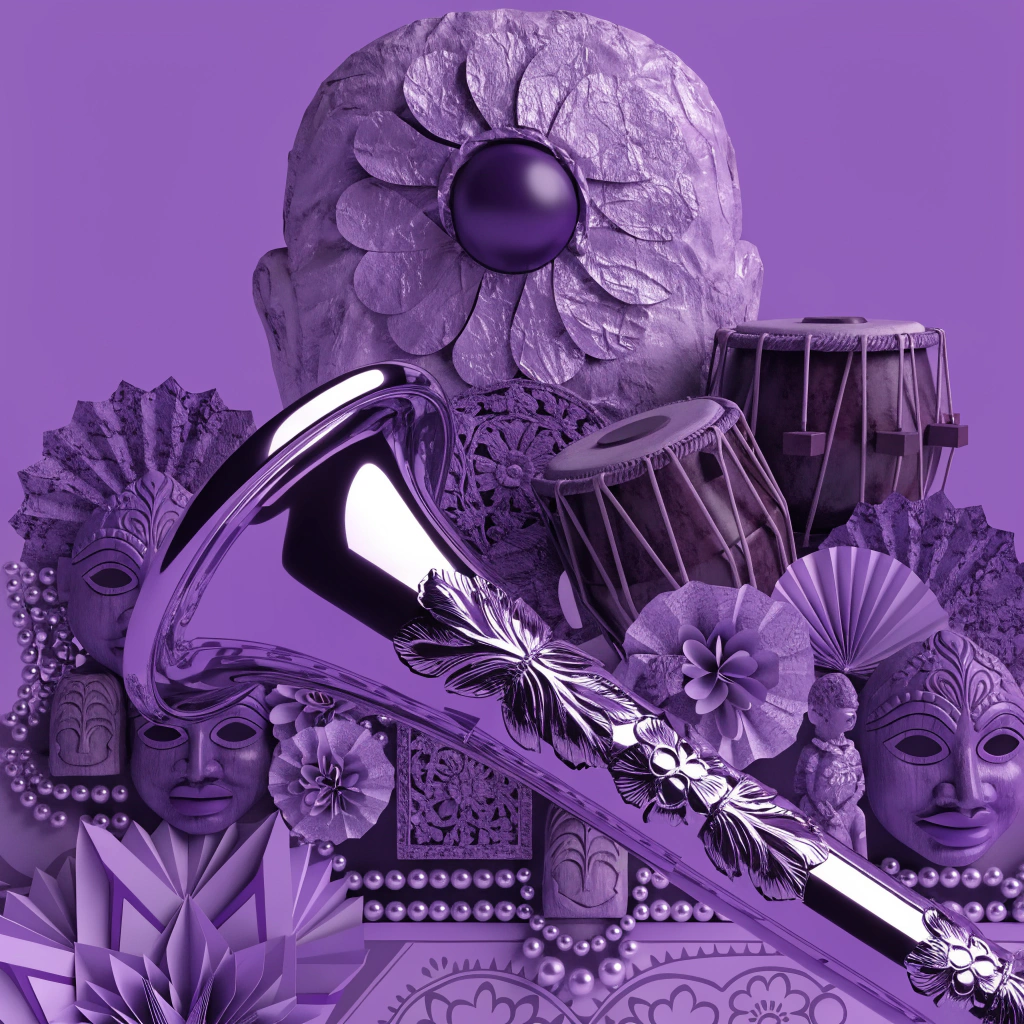
An Old Art from India
Kutiyattam is a very old theatre from India. It is more than two thousand years old. It comes from Kerala. Artists perform this art in beautiful temples.
The actors wear bright clothes and paint their faces. They do not speak much. They use their eyes and hands to tell stories. The music is loud and beautiful.
UNESCO says Kutiyattam is a special treasure for the world. Many people go to India to see it. It is a very important part of Indian history.
문법 스포트라이트
패턴: Present Simple (To Be)
"Kutiyattam is a very old theatre from India."
We use 'is' with singular subjects like Kutiyattam to describe facts or states. It helps us say what something is.
패턴: Present Simple (Action Verbs)
"The actors wear bright clothes."
We use the base form of the verb for plural subjects like 'actors' to talk about regular habits or general truths.
이해도를 테스트하세요
10 질문 · A1 초급 · 무료 미리보기 1회
이 기사에서 배운 내용을 테스트하세요. 모든 질문에 답하여 XP를 획득하세요!
Where does Kutiyattam come from?
문제별 결과
Where does Kutiyattam come from?
내 답변:
정답: Kerala, India
The actors speak a lot during the show.
내 답변:
정답: 거짓
What does 'old' mean?
내 답변:
정답: Something from a long time ago
They use their eyes and _____ to tell stories.
내 답변:
정답: hands
Kutiyattam: The Ancient Theatre of India
Kutiyattam is a very old type of theatre from Kerala, a state in South India. It is more than two thousand years old. It is the oldest theatre in India and perhaps the world. In 2001, UNESCO said it was a masterpiece because it is very special and rare.
The actors wear colorful costumes and bright face paint. They tell stories from ancient books. These actors are very talented. They do not speak much, but they use their eyes and hands to show feelings. This is more difficult than normal acting because the movements are very slow.
In the past, people only watched Kutiyattam in special temples called Koothambalams. These buildings are very large and made of wood. Today, more people can see it in different places. It is slower than modern movies, but it is very beautiful. Many students go to Kerala to learn this art because it is a famous part of Indian history. It is an amazing experience for everyone.
문법 스포트라이트
패턴: Comparative Adjectives
"This is more difficult than normal acting."
We use 'more + adjective + than' for long adjectives to compare two things. This shows that one thing has more of a quality than the other.
패턴: Past Simple (to be)
"In 2001, UNESCO said it was a masterpiece..."
We use 'was' as the past form of 'is' for singular subjects. It describes a state or identity in the past.
이해도를 테스트하세요
11 질문 · A2 초등급 · 무료 미리보기 1회
이 기사에서 배운 내용을 테스트하세요. 모든 질문에 답하여 XP를 획득하세요!
Where does Kutiyattam come from?
문제별 결과
Where does Kutiyattam come from?
내 답변:
정답: Kerala, India
Kutiyattam is a very new type of theatre.
내 답변:
정답: 거짓
What are 'costumes'?
내 답변:
정답: Special clothes for actors
It is the _____ theatre in India and perhaps the world.
내 답변:
정답: oldest
What do actors use to show feelings?
내 답변:
정답: Their eyes and hands
Kutiyattam: India's Ancient Living Theatre
Kutiyattam is a unique form of Sanskrit theatre that comes from the state of Kerala in South India. It is considered the oldest surviving theatre in the world, with a history that has lasted for more than two thousand years. For centuries, this ancient art has been performed in special temple buildings called Koothambalams, which were built specifically for these plays.
In 2001, Kutiyattam was recognized by UNESCO as a Masterpiece of the Oral and Intangible Heritage of Humanity. This was the first time that an Indian art form had received such a prestigious title. Since then, international interest in the art has grown significantly. Because of this recognition, more people around the world have started to appreciate its incredible beauty and historical value.
The performance is very different from modern Western theatre. It is famous for its slow pace and very detailed expressions. Actors use their eyes and hands to tell stories from ancient Indian poems. These hand gestures, which are called Mudras, are extremely complex and require years of practice. A single scene can sometimes take several hours because the actors explain every small detail of the story through their movements.
Music also plays an important role in Kutiyattam. The main instrument is a large copper drum called the Mizhavu. The rhythm of the drum, which is played by a specialized musician, helps the actors to move correctly. Traditionally, Kutiyattam has been practiced by specific families who have passed the skills down through many generations. Today, although it is still performed in temples, students from different backgrounds are being taught this amazing art in modern schools. It remains a vital part of India's cultural history that has survived into the modern age.
문법 스포트라이트
패턴: Relative Clauses
"Koothambalams, which were built specifically for these plays."
We use 'which' to give more information about a thing. It helps combine two sentences into one more complex sentence.
패턴: Passive Voice
"Kutiyattam was recognized by UNESCO as a Masterpiece of the Oral and Intangible Heritage of Humanity."
The passive voice is used when the action is more important than the person doing it. It is formed with 'be' + past participle.
이해도를 테스트하세요
11 질문 · B1 중급 · 무료 미리보기 1회
이 기사에서 배운 내용을 테스트하세요. 모든 질문에 답하여 XP를 획득하세요!
Where is the state of Kerala located?
문제별 결과
Where is the state of Kerala located?
내 답변:
정답: South India
Kutiyattam performances are usually very fast-paced.
내 답변:
정답: 거짓
What does 'ancient' mean?
내 답변:
정답: Very old and from the distant past
The main musical _____ used in Kutiyattam is a copper drum.
내 답변:
정답: instrument
Why can a single scene take several hours?
내 답변:
정답: Because actors explain every detail through movement
Kutiyattam: The Ancient Soul of Indian Theatre
Kutiyattam, a unique form of Sanskrit theatre from the southern state of Kerala, represents one of the oldest living theatrical traditions in the world. Having survived for over two millennia, it serves as a profound link to India’s classical past. In 2001, this art form received the prestigious distinction of being recognized by UNESCO as a Masterpiece of the Oral and Intangible Heritage of Humanity. This recognition highlighted not only its historical depth but also the intricate skills required to master its performance. Traditionally, Kutiyattam has been performed in specialized temple theatres known as Koothambalams, where the atmosphere is specifically designed to complement the spiritual nature of the plays.
The performance itself is remarkably elaborate, often taking several days or even weeks to complete a single play. This slow pace allows actors to explore every nuance of a character’s emotions through a highly stylized language of gestures and facial expressions. Central to this art is 'Netra Abhinaya,' a technique where the actor communicates complex narratives using only their eyes. Consequently, performers must undergo rigorous training for many years to achieve the necessary level of control and precision. The costumes and makeup are equally symbolic, with vibrant colors and heavy ornaments used to indicate the character's moral status and social position.
Despite its ancient origins, Kutiyattam faces significant challenges in the modern era. The preservation of such a specialized tradition is difficult because it requires a deep understanding of Sanskrit and ancient performance codes. Furthermore, the transition from temple-based performances to public stages has sparked debates regarding the balance between tradition and accessibility. Nevertheless, dedicated institutions have been working tirelessly to ensure that this cultural treasure is passed down to future generations. By maintaining its core aesthetic values while adapting to contemporary audiences, Kutiyattam continues to be a vibrant example of human creativity and artistic devotion. Ultimately, the survival of Kutiyattam illustrates the resilience of traditional arts in an increasingly globalized world.
문법 스포트라이트
패턴: Present Perfect Passive
"Traditionally, Kutiyattam has been performed in specialized temple theatres known as Koothambalams."
This pattern is used to describe an action that started in the past and continues to the present, focusing on the action rather than the performer. It is formed using 'has/have + been + past participle'.
패턴: Participle Clauses
"Having survived for over two millennia, it serves as a profound link to India’s classical past."
Perfect participle clauses (Having + past participle) are used to show that one action happened before another. They help to provide background information or reasons in a concise, formal way.
패턴: Gerund as Subject
"The preservation of such a specialized tradition is difficult because it requires a deep understanding of Sanskrit."
Using a gerund or a noun phrase acting as a subject allows for a more academic and analytical tone. It focuses the sentence on the concept or process being discussed.
이해도를 테스트하세요
11 질문 · B2 중상급 · 무료 미리보기 1회
이 기사에서 배운 내용을 테스트하세요. 모든 질문에 답하여 XP를 획득하세요!
Why was Kutiyattam recognized by UNESCO in 2001?
문제별 결과
Why was Kutiyattam recognized by UNESCO in 2001?
내 답변:
정답: As a Masterpiece of the Oral and Intangible Heritage of Humanity.
A single Kutiyattam play is usually finished within two hours.
내 답변:
정답: 거짓
What does 'intricate' mean in the context of the article?
내 답변:
정답: Having many complex and detailed parts.
Performers must undergo _____ training for many years to master the art form.
내 답변:
정답: rigorous
What is 'Netra Abhinaya'?
내 답변:
정답: A technique of communicating through eye expressions.
The Resonating Echoes of Antiquity: Unveiling Kutiyattam’s Sanskrit Legacy
Rarely does a contemporary audience witness a spectacle that has remained virtually unchanged for over two millennia. Yet, in the verdant landscapes of Kerala, India, Kutiyattam stands as a formidable repository of ancient dramatic theory. As the oldest surviving theatrical form in the world, it offers a window into a bygone era, where the boundaries between the sacred and the secular blur into a meticulously choreographed ritual. It was the formal recognition by UNESCO in 2001 that catapulted this esoteric art form into the global limelight, designating it a Masterpiece of the Oral and Intangible Heritage of Humanity. This accolade, however, only scratches the surface of a tradition deeply rooted in the socio-religious fabric of South India.
At the heart of Kutiyattam lies the Koothambalam, a consecrated temple theatre specifically designed to house these performances. The architectural precision of these structures ensures that the acoustics and visual vantage points align perfectly with the performer’s needs. Traditionally, the performance of Kutiyattam was the exclusive prerogative of the Chakyar and Nambiar communities. The Chakyars assume the roles of the actors, while the Nambiars provide the rhythmic backbone through the Mizhavu, a large copper drum. The systematic codification of these gestures, known as Mudras, allows for a sophisticated narrative depth that transcends linguistic barriers. Through an intricate system of 'Netra Abhinaya'—the stylized movement of the eyes—the actor can convey a spectrum of human emotions with profound intensity.
What distinguishes Kutiyattam from other classical forms is its leisurely pace. A single act of a play can span several nights, allowing for a dense evocation of character motivations and philosophical subplots. Such an expansive approach to storytelling suggests a lineage of performance that values the ephemeral moment of artistic transcendence over the hurried consumption of plot. However, the preservation of this tradition is not without its challenges. The rigorous training required—often spanning over a decade—makes it an arduous path for the modern practitioner. Furthermore, the anachronistic nature of Sanskrit dialogue in a rapidly globalizing world poses a significant barrier to accessibility.
Despite these hurdles, Kutiyattam remains a vital link to India’s classical past. The transition from temple-bound ritual to a globally recognized performance art represents a delicate balancing act. It is the preservation of its core aesthetic values, rather than a concession to modern brevity, that will ensure its survival. By maintaining its meticulous standards, Kutiyattam continues to challenge our perceptions of time, narrative, and the very essence of the theatrical experience.
문법 스포트라이트
패턴: Negative Inversion
"Rarely does a contemporary audience witness a spectacle that has remained virtually unchanged for over two millennia."
When a sentence starts with a negative or restrictive adverb like 'rarely', the subject and auxiliary verb are inverted to add emphasis and a formal tone.
패턴: Cleft Sentences
"It was the formal recognition by UNESCO in 2001 that catapulted this esoteric art form into the global limelight."
A cleft sentence uses 'It is/was' to focus on a specific piece of information, highlighting the cause or the subject of the sentence.
패턴: Nominalization
"The systematic codification of these gestures, known as Mudras, allows for a sophisticated narrative depth."
Nominalization involves turning verbs or adjectives into nouns (e.g., 'codify' to 'codification'). This makes the writing more concise and academic.
이해도를 테스트하세요
12 질문 · C1 고급 · 무료 미리보기 1회
이 기사에서 배운 내용을 테스트하세요. 모든 질문에 답하여 XP를 획득하세요!
What primary factor contributed to Kutiyattam's global visibility in the 21st century?
문제별 결과
What primary factor contributed to Kutiyattam's global visibility in the 21st century?
내 답변:
정답: UNESCO's recognition as a Masterpiece of Heritage
Kutiyattam performances were traditionally held in general public town squares.
내 답변:
정답: 거짓
Which word describes something intended for a small group with specialized knowledge?
내 답변:
정답: Esoteric
The Chakyars act in the plays, while the Nambiars play the Mizhavu, which is a large copper _____.
내 답변:
정답: drum
According to the text, what is unique about the pace of Kutiyattam?
내 답변:
정답: A single act can be performed over several nights.
Netra Abhinaya refers to the stylized movement of the eyes to convey emotion.
내 답변:
정답: 참
The Ontological Persistence of Kutiyattam: A Hermeneutic of India’s Oldest Living Theatrical Tradition
Should one venture into the dimly lit, incense-perfumed confines of a Koothambalam in Kerala, one would find themselves transported into a temporal vacuum that defies the frenetic pace of modern existence. Kutiyattam, the venerable Sanskrit theatre of South India, represents a formidable synthesis of ancient dramaturgy and esoteric ritual. With a lineage stretching back over two millennia, it is not merely a performance; it is a repository of the collective memory of the Indian subcontinent. In 2001, UNESCO appropriately recognized its profound significance by proclaiming it a Masterpiece of the Oral and Intangible Heritage of Humanity, marking the first time an Indian art form received such a distinction. This recognition serves as a testament to the resilience of a tradition that has survived the vicissitudes of history, remaining anchored in its sacrosanct origins within temple complexes.
Seldom has a theatrical tradition maintained such rigid adherence to its primordial tenets while navigating the complexities of the contemporary era. Historically, the practice of Kutiyattam was the exclusive prerogative of the Chakyar and Nambiar communities. This hereditary pedagogical structure ensured the meticulous preservation of the ‘Attaprakaram’—the acting manuals—and the ‘Kramadipika’—the production guides. The training is arduous, requiring a decade or more of disciplined apprenticeship before a performer is deemed fit to grace the stage. It might be argued that this exclusivity was instrumental in safeguarding the art form from the diluting effects of popular culture, though it also necessitated a hermeneutic approach to understand its layered semiotic language.
The hallmark of Kutiyattam is its protracted temporal scale. A single act of a Sanskrit play, which might be read in minutes, can be expanded into a performance lasting several consecutive nights. This is achieved through the intricate technique of ‘Abhinaya,’ specifically ‘Netrabhinaya,’ where the actor uses the eyes to narrate entire subplots and philosophical digressions. The actor does not merely represent a character; they inhabit a metaphysical space where the boundaries between the human and the divine become porous. Were one to witness the elaborate eye movements and hand gestures, or ‘Mudras,’ one would perceive a complex grammar that transcends linguistic barriers, yet demands an epistemological shift from the audience to be fully appreciated.
Furthermore, the role of the ‘Mizhavu,’ a large copper drum, provides a sonic architecture that is as essential as the gestural language. The Nambiar drummers and the Nangiar women, who portray female roles and maintain the rhythmic cymbals, form an indispensable triad with the Chakyar actor. This collaboration is not merely artistic but liturgical, as the performance is traditionally viewed as a ‘Yagna’ or sacrifice. However, the secularization of Indian society and the gradual erosion of the feudal systems that once supported these temple arts have posed significant challenges. The transition from the sacrosanct Koothambalam to the proscenium stage of the modern theatre has sparked debates regarding the potential loss of the art form's spiritual essence.
In conclusion, Kutiyattam stands as an anachronistic marvel in an age of digital transience. Its survival is an ontological triumph, proving that high art can persist if its practitioners remain devoted to its core epistemological values. It challenges the observer to slow down, to engage with the semiotic depth of every movement, and to acknowledge the profound continuity of human creativity. As we move further into the 21st century, the preservation of Kutiyattam remains a vital imperative for those who value the depth of intangible heritage over the shallowness of globalized entertainment.
문법 스포트라이트
패턴: The Subjunctive Mood
"Should one venture into the dimly lit, incense-perfumed confines of a Koothambalam..."
The word 'Should' is used here to express a hypothetical condition in a formal, literary style. It functions as an alternative to 'If one were to venture,' emphasizing the speculative nature of the action.
패턴: Negative Inversion
"Seldom has a theatrical tradition maintained such rigid adherence to its primordial tenets..."
When a negative or restrictive adverb like 'seldom' starts a sentence, the subject and the auxiliary verb are inverted. This structure is used in C2 level academic prose to add rhetorical weight and emphasis.
패턴: Academic Hedging with Modal Verbs
"It might be argued that this exclusivity was instrumental in safeguarding the art form..."
The use of 'might be argued' is a form of academic hedging, allowing the writer to propose a theory without stating it as an absolute fact. This is a hallmark of scholarly and analytical writing.
이해도를 테스트하세요
12 질문 · C2 마스터 · 무료 미리보기 1회
이 기사에서 배운 내용을 테스트하세요. 모든 질문에 답하여 XP를 획득하세요!
What was the significance of the 2001 UNESCO proclamation for Kutiyattam?
문제별 결과
What was the significance of the 2001 UNESCO proclamation for Kutiyattam?
내 답변:
정답: It was the first Indian art form to receive this specific heritage status.
Kutiyattam performances traditionally take place within temple complexes.
내 답변:
정답: 참
What does 'semiotic' refer to in the context of the article?
내 답변:
정답: The system of signs and symbolic gestures used by actors.
The actor uses the technique of Netrabhinaya to narrate subplots through _____ movements.
내 답변:
정답: eye
Which community is traditionally responsible for the female roles and rhythmic cymbals?
내 답변:
정답: The Nangiars
The transition to modern proscenium stages is universally accepted as a positive development for the art's spiritual essence.
내 답변:
정답: 거짓

