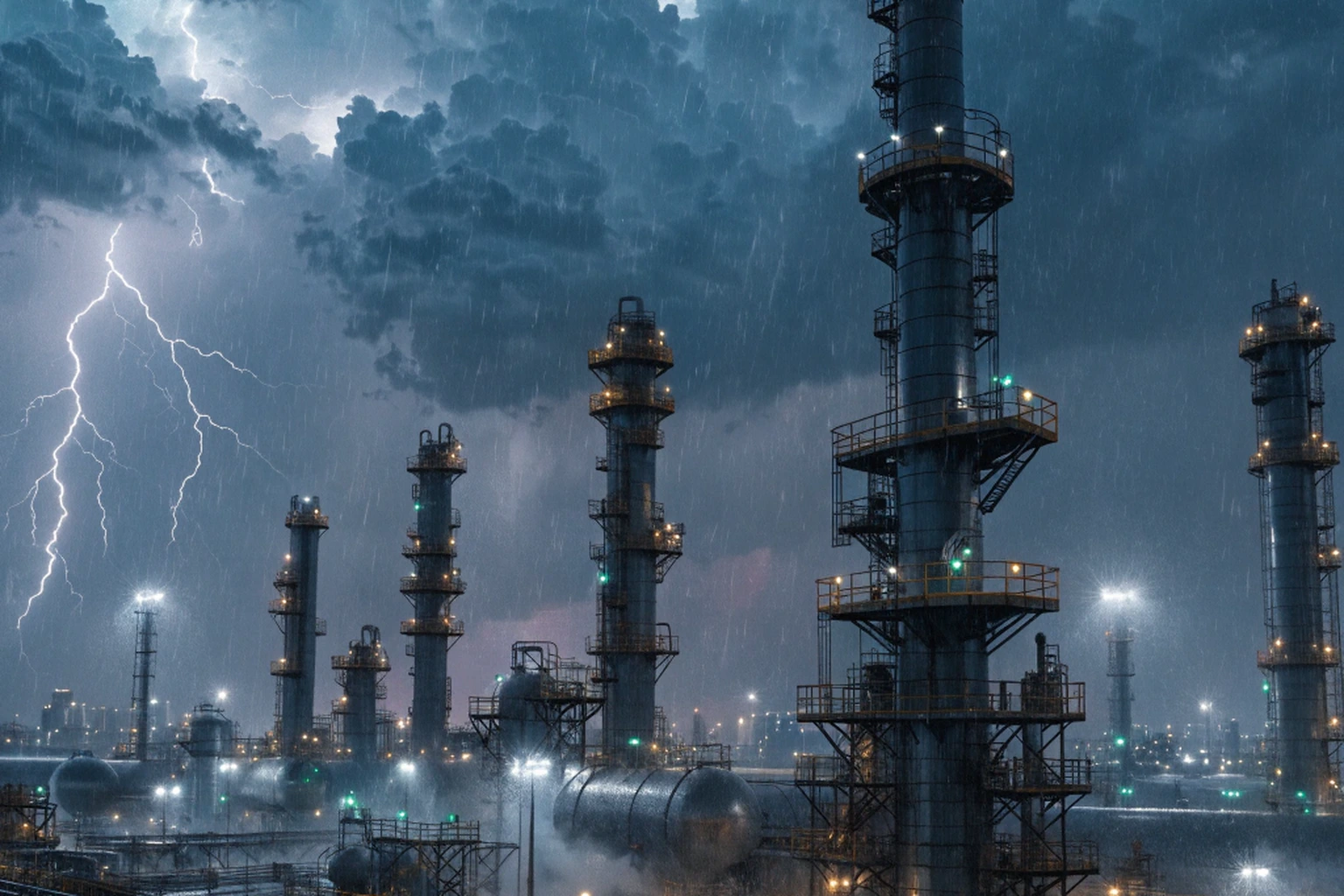
Oil in Saudi Arabia
Saudi Arabia is a country in the Middle East. It has a lot of oil. Oil is very important for the world. It gives power to cars and homes.
A big company works with the oil. The company is called Aramco. It gets the oil from the ground. Then, it sells the oil to other countries. This makes a lot of money for Saudi Arabia.
From the oil, they also make other things. They make gas for cars. They also make plastic. Oil is a big part of life in Saudi Arabia.
Point grammaire
Structure: Le Présent Simple
"It has a lot of oil."
Nous utilisons le présent simple pour des faits qui sont toujours vrais. Pour 'he' (il), 'she' (elle) ou 'it' (ça), on ajoute un 's' au verbe, comme 'has', 'gets' ou 'makes'.
Structure: Les Majuscules
"A big company works with the oil."
Nous utilisons une majuscule pour le premier mot d'une phrase. Nous utilisons aussi des majuscules pour les noms de personnes, de lieux et d'entreprises, comme 'Saudi Arabia' et 'Aramco'.
Teste ta compréhension
10 questions · A1 Débutant · 1 aperçu gratuit
Teste ce que tu as appris dans cet article. Réponds à toutes les questions pour gagner des XP !
Quel est le nom de la grande compagnie pétrolière ?
Tu veux terminer le quiz ?
9 questions supplémentaires t'attendent. Inscris-toi gratuitement pour débloquer le quiz complet et gagner des XP !
S'inscrire gratuitementTu as dj un compte ? Connexion
Bien joué !
Continue à pratiquer !
Déjà terminé — pas de XP supplémentaire
Inscris-toi pour gagner des XPDétail des questions
Quel est le nom de la grande compagnie pétrolière ?
Ta réponse:
Bonne réponse: Aramco
Le pétrole n'est pas important pour le monde.
Ta réponse:
Bonne réponse: Faux
Que signifie 'country' ?
Ta réponse:
Bonne réponse: Un lieu avec son propre gouvernement
Cela rapporte beaucoup de _____ pour l'Arabie Saoudite.
Ta réponse:
Bonne réponse: money
Oil and Industry in Saudi Arabia
In 1938, Saudi Arabia found oil in a famous well called Dammam No. 7. Before this discovery, life in the Kingdom was very simple. But everything changed after that year. The country became rich and powerful because of its natural resources.
Today, a huge company called Saudi Aramco manages the oil. It is the largest energy company in the world. Saudi Arabia produces more oil than many other nations. It sells this energy to countries all around the globe. This trade helps the Saudi economy grow every year.
The country also has a big petrochemical industry. Petrochemicals are useful products made from oil, like plastic and fertilizer. This sector is bigger now than it was in the past. Saudi Arabia wants to make many different things, not just sell raw oil. It is an exciting time for the industry because it is always developing.
Point grammaire
Structure: Past Simple
"Before this discovery, life in the Kingdom was very simple."
We use the past simple to talk about finished actions or states in the past. For 'be', we use 'was' or 'were'.
Structure: Comparatives
"This sector is bigger now than it was in the past."
We use comparatives to compare two things. For short adjectives like 'big', we add '-er' (bigger) and often use 'than'.
Teste ta compréhension
11 questions · A2 mentaire · 1 aperçu gratuit
Teste ce que tu as appris dans cet article. Réponds à toutes les questions pour gagner des XP !
When did Saudi Arabia find oil in Dammam No. 7?
Tu veux terminer le quiz ?
10 questions supplémentaires t'attendent. Inscris-toi gratuitement pour débloquer le quiz complet et gagner des XP !
S'inscrire gratuitementTu as dj un compte ? Connexion
Bien joué !
Continue à pratiquer !
Déjà terminé — pas de XP supplémentaire
Inscris-toi pour gagner des XPDétail des questions
When did Saudi Arabia find oil in Dammam No. 7?
Ta réponse:
Bonne réponse: 1938
Saudi Aramco is a small company.
Ta réponse:
Bonne réponse: Faux
What does 'discovery' mean?
Ta réponse:
Bonne réponse: finding something for the first time
Saudi Arabia produces _____ oil than many other nations.
Ta réponse:
Bonne réponse: more
What are petrochemicals made from?
Ta réponse:
Bonne réponse: Oil
Fueling the World: The Story of Saudi Oil
Saudi Arabia is famous for its vast energy resources. This journey began in 1938 when oil was discovered at the Dammam No. 7 well. Since that time, the Kingdom has transformed from a desert nation into a global economic powerhouse. This discovery changed the nation's identity forever.
Today, the industry is managed by Saudi Aramco, which is the largest energy company in the world. The company manages huge crude oil reserves that are found deep underground. Saudi Arabia is often called a 'swing producer' because it can change its production levels to keep global prices stable. This role has been essential for the world economy during difficult times.
However, the industry is not only about pumping oil out of the ground. The Kingdom has also developed a massive petrochemical sector. In this sector, oil and gas are processed to create chemicals that are used in everyday products like plastics and medicines. These materials have been exported to many countries around the world.
In recent years, new technologies have been introduced to make the industry more efficient. The government has invested heavily in these projects to ensure a strong future. This industry, which started with a single well, continues to be the backbone of the Saudi economy.
Point grammaire
Structure: Passive Voice
"Oil was discovered at the Dammam No. 7 well."
The passive voice is used when the action is more important than who did it. It is formed using 'be' + the past participle.
Structure: Relative Clauses
"Saudi Aramco, which is the largest energy company in the world, manages the industry."
Relative clauses give more information about a noun. 'Which' is used here to add extra details about Saudi Aramco.
Teste ta compréhension
11 questions · B1 Intermédiaire · 1 aperçu gratuit
Teste ce que tu as appris dans cet article. Réponds à toutes les questions pour gagner des XP !
When was oil first discovered in Saudi Arabia?
Tu veux terminer le quiz ?
10 questions supplémentaires t'attendent. Inscris-toi gratuitement pour débloquer le quiz complet et gagner des XP !
S'inscrire gratuitementTu as dj un compte ? Connexion
Bien joué !
Continue à pratiquer !
Déjà terminé — pas de XP supplémentaire
Inscris-toi pour gagner des XPDétail des questions
When was oil first discovered in Saudi Arabia?
Ta réponse:
Bonne réponse: 1938
Saudi Arabia is called a 'swing producer' because it keeps global prices stable.
Ta réponse:
Bonne réponse: Vrai
What does the word 'sector' mean in the text?
Ta réponse:
Bonne réponse: A specific part of the economy
The petroleum industry is the _____ of the Saudi economy.
Ta réponse:
Bonne réponse: backbone
What are petrochemicals used to create?
Ta réponse:
Bonne réponse: Plastics and medicines
The Evolution of Saudi Arabia's Energy Landscape: Beyond Crude Oil
Since the monumental discovery of oil at the Dammam No. 7 well in 1938, Saudi Arabia’s economic identity has been inextricably linked to the petroleum industry. This single event transformed the Kingdom from a desert nation into a global economic powerhouse. Today, Saudi Aramco, the state-owned energy giant, which manages the world’s largest proven crude oil reserves, maintains a production capacity that allows it to act as a 'swing producer.' This means the Kingdom plays a pivotal role in stabilizing global markets during periods of high volatility by adjusting supply to meet international demand.
However, the industry is no longer limited to the extraction of crude oil. In recent decades, there has been a significant shift toward the petrochemical sector, often referred to as 'downstream' operations. By converting oil and gas into high-value chemicals, plastics, and polymers, the Kingdom has managed to maximize the value of its natural resources. These petrochemical products serve as essential feedstock for various global industries, ranging from automotive manufacturing to healthcare. Consequently, the development of massive industrial cities like Jubail and Yanbu has positioned Saudi Arabia as a global leader in chemical production.
Furthermore, under the ambitious framework of Vision 2030, the Saudi government is pursuing a strategy of economic diversification to reduce its historic dependence on oil revenues. This involves investing heavily in advanced infrastructure and exploring sustainable energy solutions, such as green hydrogen. While petroleum remains the backbone of the economy, the growth of the petrochemical industry represents a move toward a more resilient and technologically advanced industrial base. This transition is crucial for ensuring long-term stability in an era where global energy preferences are rapidly shifting.
Despite the inevitable fluctuations in global energy prices, Saudi Arabia continues to modernize its refineries and expand its global footprint through international partnerships. The integration of upstream extraction and downstream processing ensures that the Kingdom remains at the forefront of the energy transition. Ultimately, the evolution of this industry is not merely a matter of historical record but a strategic blueprint for a sustainable future where innovation and traditional resources coexist effectively.
Point grammaire
Structure: Present Perfect Passive
"Saudi Arabia’s economic identity has been inextricably linked to the petroleum industry."
This pattern is used to describe an action that started in the past and continues to have relevance now, where the focus is on the recipient of the action. It is formed using 'have/has + been + past participle'.
Structure: Non-defining Relative Clauses
"Today, Saudi Aramco, the state-owned energy giant, which manages the world’s largest proven crude oil reserves, maintains a production capacity..."
These clauses provide extra information about a noun but are not essential for the sentence to make sense. They are always separated by commas and usually use 'which' or 'who'.
Structure: Participial Phrases (Result/Method)
"By converting oil and gas into high-value chemicals, plastics, and polymers, the Kingdom has managed to maximize the value of its natural resources."
Starting a sentence with 'By + -ing' explains the method used to achieve a particular result. It is a common feature of academic and formal writing to show cause and effect.
Teste ta compréhension
11 questions · B2 Intermédiaire supérieur · 1 aperçu gratuit
Teste ce que tu as appris dans cet article. Réponds à toutes les questions pour gagner des XP !
What is the primary role of Saudi Arabia as a 'swing producer'?
Tu veux terminer le quiz ?
10 questions supplémentaires t'attendent. Inscris-toi gratuitement pour débloquer le quiz complet et gagner des XP !
S'inscrire gratuitementTu as dj un compte ? Connexion
Bien joué !
Continue à pratiquer !
Déjà terminé — pas de XP supplémentaire
Inscris-toi pour gagner des XPDétail des questions
What is the primary role of Saudi Arabia as a 'swing producer'?
Ta réponse:
Bonne réponse: To stabilize global markets by adjusting oil supply
The petrochemical sector is referred to as 'upstream' operations in the article.
Ta réponse:
Bonne réponse: Faux
Which word describes the raw materials used to supply an industrial process?
Ta réponse:
Bonne réponse: Feedstock
Under Vision 2030, the government is pursuing a strategy of economic _____ to reduce oil dependence.
Ta réponse:
Bonne réponse: diversification
Which two cities are mentioned as global leaders in chemical production?
Ta réponse:
Bonne réponse: Jubail and Yanbu
Black Gold and Beyond: The Metamorphosis of Saudi Industry
Scarcely had the drill bit pierced the limestone at Dammam No. 7 in 1938 when the destiny of the Arabian Peninsula was irrevocably altered. This serendipitous event marked the genesis of Saudi Arabia's ascent as a global energy titan. For decades, the extraction and export of crude oil have constituted the backbone of the Kingdom's economy, with Saudi Aramco standing as the colossus of the energy sector. Yet, mere reliance on raw extraction is no longer deemed sufficient for a nation with ambitious developmental horizons. It is the strategic pivot towards the downstream petrochemical industry that now defines the Kingdom's economic trajectory.
The volatility inherent in global oil markets has long necessitated a broadening of the economic base. Consequently, the establishment of the Saudi Basic Industries Corporation (SABIC) in 1976 served as a catalyst for industrial diversification. By converting hydrocarbon feedstocks into high-value products such as polymers, fertilizers, and chemicals, Saudi Arabia has successfully captured a significant share of the global value chain. Not only does this maximize revenue, but it also fosters the creation of a skilled indigenous workforce, a prerequisite for sustainable growth.
Under the auspices of Vision 2030, the integration of refining and petrochemical processing has accelerated. The rationale is clear: the transformation of raw resources into finished goods mitigates exposure to crude price fluctuations. Furthermore, it is this very integration that attracts foreign direct investment, facilitating technology transfer and innovation. Were the Kingdom to remain solely a crude exporter, its economic resilience would be perpetually at the mercy of external market forces. The expansion into specialized chemicals represents a deliberate move up the value chain, ensuring that the Kingdom extracts maximum utility from every barrel of oil produced.
Environmental stewardship has also moved to the forefront of the industrial agenda. The sector is increasingly adopting circular carbon economy frameworks, aiming to reduce emissions while maintaining productivity. What distinguishes the modern Saudi energy sector is its commitment to balancing hydrocarbon utilization with ecological responsibility. Advanced technologies are being deployed to capture and utilize carbon dioxide, transforming a potential pollutant into a valuable industrial input. This dual focus on economic expansion and environmental sustainability demonstrates a nuanced understanding of future global trends.
In conclusion, while oil remains the bedrock of Saudi Arabia's prosperity, the landscape is undergoing a profound evolution. The synergy between upstream extraction and downstream petrochemical manufacturing illustrates a sophisticated approach to resource management. Only through such calculated diversification can the Kingdom ensure its continued economic preeminence in a rapidly evolving global landscape.
Point grammaire
Structure: Inversion (Negative Adverbials)
"Scarcely had the drill bit pierced the limestone at Dammam No. 7 in 1938 when the destiny of the Arabian Peninsula was irrevocably altered."
In formal English, starting a sentence with a negative or restrictive adverb (like 'scarcely', 'rarely', 'not only') triggers inversion. The auxiliary verb ('had') comes before the subject ('the drill bit') to add dramatic emphasis.
Structure: Cleft Sentences
"It is the strategic pivot towards the downstream petrochemical industry that now defines the Kingdom's economic trajectory."
Cleft sentences are used to focus on a specific part of the sentence. Here, the structure 'It is X that Y' highlights 'the strategic pivot' as the most important information, distinguishing it from other factors.
Structure: Inversion (Conditional)
"Were the Kingdom to remain solely a crude exporter, its economic resilience would be perpetually at the mercy of external market forces."
This is an inverted conditional structure, replacing 'If the Kingdom were to remain...'. It is a formal and sophisticated way to express hypothetical situations, often used in academic or professional writing.
Teste ta compréhension
12 questions · C1 Avancé · 1 aperçu gratuit
Teste ce que tu as appris dans cet article. Réponds à toutes les questions pour gagner des XP !
According to the article, what was the primary effect of establishing SABIC?
Tu veux terminer le quiz ?
11 questions supplémentaires t'attendent. Inscris-toi gratuitement pour débloquer le quiz complet et gagner des XP !
S'inscrire gratuitementTu as dj un compte ? Connexion
Bien joué !
Continue à pratiquer !
Déjà terminé — pas de XP supplémentaire
Inscris-toi pour gagner des XPDétail des questions
According to the article, what was the primary effect of establishing SABIC?
Ta réponse:
Bonne réponse: It acted as a driver for diversifying the industrial base.
The article suggests that environmental concerns are being ignored in favor of higher production.
Ta réponse:
Bonne réponse: Faux
Which word is closest in meaning to 'stewardship'?
Ta réponse:
Bonne réponse: Management
The volatility of global markets made economic __________ a necessity.
Ta réponse:
Bonne réponse: diversification
What does the author imply about 'mere reliance on raw extraction'?
Ta réponse:
Bonne réponse: It is no longer considered enough for the country's ambitions.
What does 'irrevocably' mean in the context of the text?
Ta réponse:
Bonne réponse: Permanently
Hydrocarbon Hegemony and the Petrochemical Renaissance: A Critical Analysis
Since the serendipitous discovery of the Dammam No. 7 well in 1938, Saudi Arabia’s economic trajectory has been inextricably bound to the extraction of hydrocarbons. Yet, to characterize the Kingdom merely as a global reservoir of crude oil would be a reductionist oversimplification of its sophisticated industrial evolution. The nation has meticulously cultivated a petrochemical sector that stands as a testament to its strategic foresight, transforming raw natural resources into high-value derivatives. This transition from a primary resource exporter to a titan of chemical synthesis represents a profound paradigm shift in the global energy landscape.
At the vanguard of this sector is Saudi Aramco, a sovereign entity whose influence extends far beyond mere extraction. Managing the world’s most extensive proven crude oil reserves, Aramco functions as a stabilizing force within the global market. Were the market to experience sudden fluctuations, Aramco’s capacity to act as a 'swing producer' allows it to ameliorate potential economic shocks. However, the reliance on upstream activities—exploration and production—poses inherent risks given the notorious volatility of oil prices. Consequently, strategic diversification into downstream activities has become imperative.
Enter the petrochemical industry, the industrial catalyst that has allowed Saudi Arabia to capture value across the entire hydrocarbon chain. The Saudi Basic Industries Corporation (SABIC), a conglomerate now majority-owned by Aramco, exemplifies this integration. By utilizing associated gas—historically flared as waste—as feedstock for petrochemical production, the Kingdom has fostered an indigenous manufacturing base capable of producing fertilizers, polymers, and specialized chemicals. This symbiotic relationship between upstream oil production and downstream chemical processing has precipitated a surge in industrial efficiency, ensuring that every molecule of hydrocarbon yields maximum economic return.
Under the aegis of Vision 2030, the current strategic mandate is to further refine this ecosystem. The objective is not merely to produce commodity chemicals but to advance into specialty chemicals and advanced materials. It is essential that the industry innovate to remain competitive in a decarbonizing world. The focus has thus shifted toward circular carbon economies and sustainability initiatives. For instance, the capture and utilization of carbon dioxide for chemical synthesis addresses environmental concerns while simultaneously creating economic value. Critics might argue that such measures are paradoxical in a petroleum-based economy; however, they represent a pragmatic approach to energy transition, balancing economic hegemony with ecological responsibility.
Furthermore, the integration of cutting-edge technologies—such as artificial intelligence in refinery operations and digitalization of supply chains—has bolstered the sector's resilience. Rarely has a nation demonstrated such agility in pivoting its industrial base while maintaining its dominant market position. The Kingdom is effectively hedging its bets, utilizing the revenue from its legacy assets to fund the next generation of industrial infrastructure.
In conclusion, the Saudi petroleum and petrochemical industry is a complex, multi-faceted organism that defies simple categorization. It is a sector in flux, navigating the delicate balance between traditional resource exploitation and modern industrial innovation. As the world moves toward renewable energy, the Kingdom’s ability to adapt its petrochemical capabilities will undoubtedly determine its future economic sovereignty. The narrative is no longer solely about oil; it is about the mastery of molecular science to fuel the future.
Point grammaire
Structure: Inversion for Emphasis
"Rarely has a nation demonstrated such agility in pivoting its industrial base while maintaining its dominant market position."
In formal English, negative adverbials (like 'rarely', 'never', 'seldom') placed at the beginning of a sentence trigger the inversion of the subject and auxiliary verb to add rhetorical emphasis.
Structure: The Subjunctive Mood
"It is essential that the industry innovate to remain competitive in a decarbonizing world."
The subjunctive is used after adjectives expressing importance or necessity (e.g., 'essential that', 'imperative that'). The base form of the verb ('innovate') is used regardless of the subject.
Structure: Conditional Inversion (Second Conditional)
"Were the market to experience sudden fluctuations, Aramco’s capacity to act as a 'swing producer' allows it to ameliorate potential economic shocks."
This is a formal alternative to 'If the market were to experience...'. Inverting 'Were' and the subject eliminates the need for 'if' and creates a more academic tone.
Teste ta compréhension
12 questions · C2 Maîtrise · 1 aperçu gratuit
Teste ce que tu as appris dans cet article. Réponds à toutes les questions pour gagner des XP !
According to the article, what role does the petrochemical industry play in Saudi Arabia's economic strategy?
Tu veux terminer le quiz ?
11 questions supplémentaires t'attendent. Inscris-toi gratuitement pour débloquer le quiz complet et gagner des XP !
S'inscrire gratuitementTu as dj un compte ? Connexion
Bien joué !
Continue à pratiquer !
Déjà terminé — pas de XP supplémentaire
Inscris-toi pour gagner des XPDétail des questions
According to the article, what role does the petrochemical industry play in Saudi Arabia's economic strategy?
Ta réponse:
Bonne réponse: It acts as a mechanism to capture value across the entire hydrocarbon chain.
The article suggests that environmental sustainability and a petroleum-based economy are mutually exclusive concepts that cannot be reconciled.
Ta réponse:
Bonne réponse: Faux
Which word best matches the definition: 'Liability to change rapidly and unpredictably'?
Ta réponse:
Bonne réponse: Volatility
The use of associated gas as feedstock has fostered an ________ manufacturing base within the Kingdom.
Ta réponse:
Bonne réponse: indigenous
What is the primary function of a 'swing producer' as described in the text?
Ta réponse:
Bonne réponse: To stabilize global markets during periods of volatility.
What does 'ameliorate' mean in the context of economic shocks?
Ta réponse:
Bonne réponse: To make better or mitigate

